- Stretch fabric is lighter, wrinkle-free, foldable, and produces vivid, glare-free prints — the right choice for most indoor events.
- PVC vinyl costs less per print and handles outdoor moisture, but adds weight and reflects ambient light.
- Setup time favours fabric: a 3000 x 2200 mm wall goes up in about 20 minutes with two people.
- Over 5+ events, stretch fabric costs less per use despite a higher upfront price.
- Both materials print at full color fidelity when files are supplied at 150 DPI at finished size.
Choosing the wrong material for your media wall can mean glare in every press photo, a backdrop that arrives creased, or a print that stays in storage because it costs too much to ship. Stretch fabric and PVC vinyl both deliver full-color large-format print, but they serve different needs. This guide compares both materials across every decision point so you can choose with confidence.
Custom sizes, full-color print, wrinkle-free fabric — ships flat and sets up in minutes.
Material Composition and Manufacturing Process
Stretch fabric media walls are printed on woven polyester fabric using dye-sublimation. The process pushes heat-activated dye directly into the fiber matrix, so color is embedded in the material rather than sitting on the surface. The fabric is then cut and finished with silicone bead edging — a thin rubber strip sewn around the perimeter that locks into a channel on the aluminum tension frame.
PVC vinyl banners and media walls use solvent or UV-curable inkjet printing on a coated polyvinyl chloride sheet. The ink bonds to the vinyl’s coating layer. Finished panels are hemmed and fitted with metal grommets for hanging, or attached to a retractable banner stand or pole-and-base frame system.
The key manufacturing difference is tension versus hanging. Fabric relies on an internal frame that stretches the panel taut from all four sides simultaneously. Vinyl relies on external fasteners (grommets, clips, or a pole pocket) that apply tension at discrete points, which is why vinyl panels can sag or gap at the center on taller walls.
Visual Quality and Color Reproduction
Both materials support full-color print and reproduce corporate palettes, photographic gradients, and fine text accurately when files are supplied at 150 DPI at finished size. The differences appear under specific lighting conditions.
| Factor | Stretch Fabric | PVC Vinyl |
|---|---|---|
| Surface finish | Matte / semi-matte | Gloss or semi-gloss |
| Flash photography glare | None — absorbs light | Hotspots visible in photos |
| Color saturation | Rich; dye in fiber | Accurate; ink on surface |
| Fine text legibility | Excellent | Excellent |
| Crease / fold lines visible? | No — tension removes them | Yes — permanent if stored folded |
For events where photography is a primary goal — brand activations, product launches, red-carpet moments, or wedding photo booths — the fabric’s matte surface is a significant advantage. Flash photography on a vinyl wall can blow out logo details and brand colors in the final image.
Setup Time and Crew Requirements
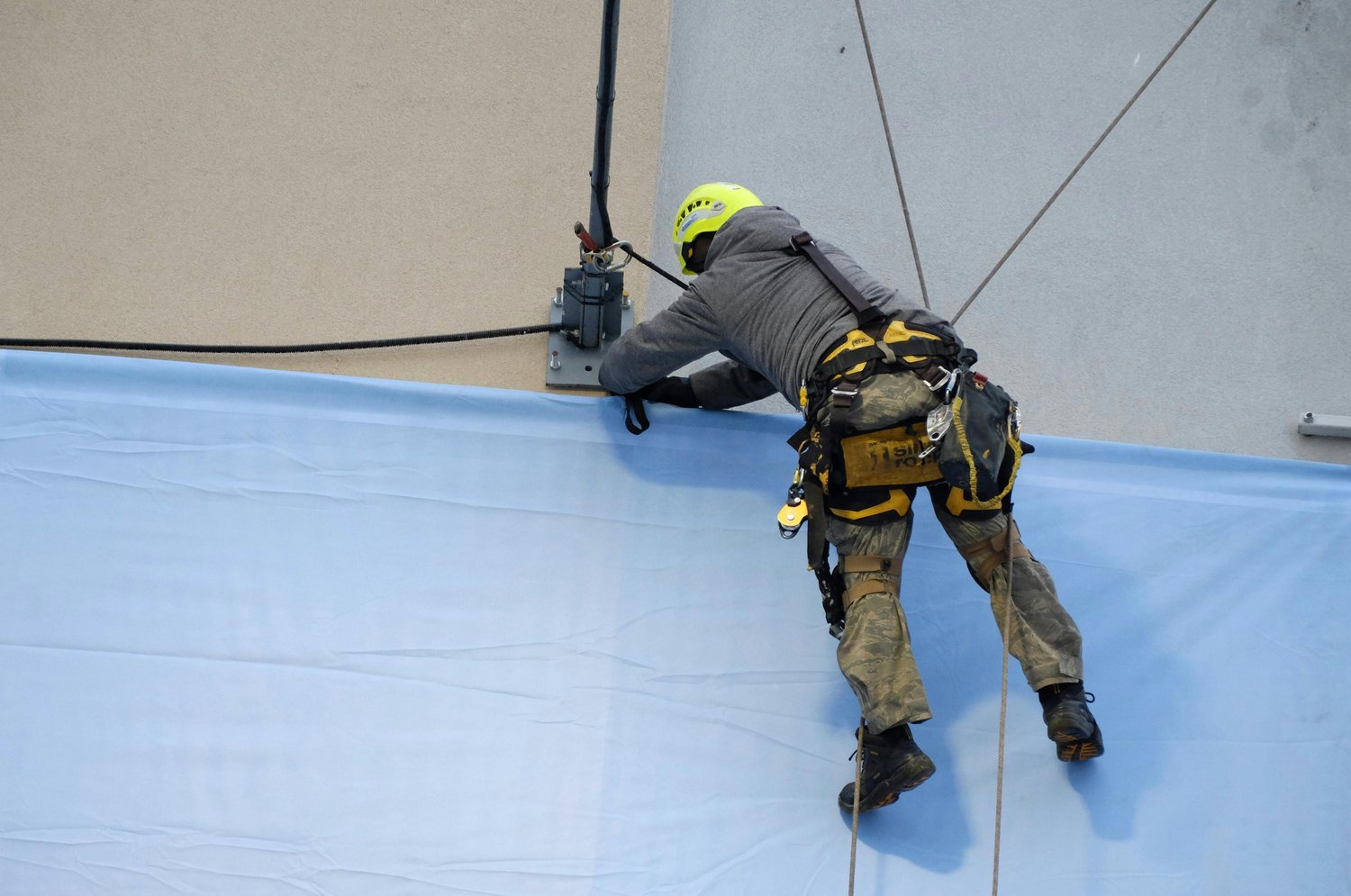
A standard 3000 x 2200 mm stretch fabric media wall arrives as an aluminium frame (typically in two to four sections) plus a folded fabric panel. Two people with no prior training can assemble the frame and seat the silicone bead into the channel in 15 to 25 minutes. No tools are required. Disassembly takes less than 10 minutes.
Vinyl media walls mounted on retractable banner stands are faster for small-format setups (under 1800 mm wide) — one person, two minutes. For larger walls using a pole-and-base or grommet system, setup requires attaching panels to an external frame, tensioning grommets evenly, and managing a heavier overall system. Expect 30 to 45 minutes for a 3000 x 2200 mm install and two to three crew members for levelling and tensioning.
| Setup factor | Stretch Fabric | PVC Vinyl |
|---|---|---|
| 15 to 25 min | 30 to 45 min | |
| Minimum crew | 2 people | 2 to 3 people |
| Tools required | None | Level, sometimes hardware |
| 2 to 4 kg | 8 to 12 kg |
Storage and Reusability
Stretch fabric folds like a garment — crumple it into the carry bag and the tension frame removes all fold marks on installation. Store the aluminum frame sections in their carry case and the fabric panel in any flat or soft bag. A full 3000 x 2200 mm system fits in a bag the size of a large sports holdall.
Vinyl must be rolled (never folded) to avoid permanent crease lines. A rolled 3000 x 2200 mm vinyl panel requires a rigid shipping tube or case, which takes up significant storage space and adds complexity to transport. After 15 to 20 roll cycles, most vinyl panels show surface micro-cracking along repeated flex lines.
Reusability lifespan at a glance: stretch fabric supports 20 to 50 event cycles; vinyl supports 5 to 15 cycles before print degradation or cracking becomes visible.
Outdoor vs. Indoor Performance
Vinyl’s PVC surface is inherently water-resistant, which gives it an advantage in uncovered outdoor environments. Light rain, morning dew, and humidity do not affect the surface. Fabric polyester blends are moisture-wicking and handle light outdoor exposure under a tent or marquee, but sustained rain in an unsheltered position risks dye migration.
For indoor events — which account for the majority of media wall deployments at conferences, galas, corporate launches, and weddings — stretch fabric wins on every dimension: lighter, easier to transport, no glare under venue lighting, and no crease lines in the final setup.
| Condition | Stretch Fabric | PVC Vinyl |
|---|---|---|
| Indoor event (any size) | Excellent | Good |
| Outdoor under tent/marquee | Good | Excellent |
| Outdoor, no cover | Fair (light rain only) | Excellent |
| High-humidity climate | Good | Excellent |
| Air conditioning / HVAC movement | Excellent (stays taut) | Good (may flutter) |
Cost per Use Across 1, 5, and 10 Events
Stretch fabric media walls carry a higher upfront print cost than vinyl because dye-sublimation fabric printing is a more involved process. Over multiple events, the math reverses. Fabric does not need to be reprinted between uses as long as the artwork stays current, while vinyl typically requires a fresh print after 5 to 15 uses and cannot be easily repaired if creased or torn.
Indicative cost-per-use estimates for a 3000 x 2200 mm single-sided media wall (print plus frame amortised over reuse cycles):
| Usage scenario | Stretch Fabric (est.) | PVC Vinyl (est.) |
|---|---|---|
| 1 event (one-off) | Higher upfront cost | Lower upfront cost |
| 5 events (same artwork) | Cost per use ~40% of vinyl | Likely requires reprint |
| 10 events (same artwork) | Cost per use ~20% of vinyl | Requires 1 to 2 reprints |
| Frame reuse value | Frame lasts 5 to 10 years | Frame or stand lasts 3 to 5 years |
For a one-off event where budget is the primary driver and the wall will not be reused, vinyl is the more economical choice. For any event series, recurring activation, or annual event, stretch fabric reduces total cost over the program’s lifetime.
Which Material Is Right for Your Event?
| Event type | Recommended material | Key reason |
|---|---|---|
| Corporate conference (indoor) | Stretch fabric | No glare, easy transport, professional finish |
| Brand activation / product launch | Stretch fabric | Photography quality, reuse across activations |
| Wedding photo backdrop | Stretch fabric | Wrinkle-free, no flash glare, lightweight |
| Trade show booth | Stretch fabric | Packs into carry bag, fast setup, reusable |
| Outdoor festival (uncovered) | PVC vinyl | Weather resistance, lower reprint cost |
| One-off event, budget priority | PVC vinyl | Lower upfront print cost |
| Recurring annual event | Stretch fabric | Cost per use drops sharply over time |
| PR / red-carpet photo wall | Stretch fabric | Matte finish, no hotspots in press photos |
Whichever material you choose for the indoor media wall, consider adding teardrop banners outside the venue for arrival-point branding. They use the same dye-sublimated polyester print as a stretch-fabric media wall, so colours match across both formats, and they handle outdoor wind that would damage a vinyl wall.
Frequently Asked Questions
Can I print the same design on both fabric and vinyl?
Yes. Both materials accept full-color printing from the same digital artwork file. Submit your design at 150 DPI at the finished wall size (for example, a file 17,717 x 12,992 px for a 3000 x 2200 mm wall at 150 DPI). Fabric may render saturated colors slightly richer because the dye-sublimation process embeds ink into the fibers rather than laying it on the surface.
How many times can a stretch fabric media wall be reused?
A quality stretch fabric panel will hold print fidelity and shape through 20 to 50 event cycles when properly folded and stored. Fabric does not crack at fold lines the way vinyl does after repeated rolling and unrolling, so the usable lifespan is significantly longer.
Does stretch fabric show wrinkles when installed?
No. The tension frame pulls the fabric taut as you install it, which eliminates any fold marks that form during storage or shipping. Vinyl, by contrast, can develop permanent crease lines if it has been tightly rolled or stored folded for extended periods.
Is vinyl better for outdoor events?
Vinyl’s PVC surface repels water and tolerates brief rain exposure, giving it an edge in uncovered outdoor settings. Stretch fabric is still viable outdoors under a tent or marquee, and modern polyester blends are moisture-wicking, but an unsheltered position during heavy rain risks dye bleeding. If your event is fully outdoors and weather is uncertain, vinyl is the safer choice for the print panel. Either way, the aluminum tension frame should be staked or ballast-weighted against wind.
Which material is better for photography?
Stretch fabric is the clear winner for photography. Its matte finish absorbs light evenly, so camera flashes and venue spotlights do not create hotspots or glare in the frame. Vinyl’s semi-gloss surface can produce a bright reflection in direct flash photography, which reduces print legibility in the final image — a significant problem for branded media walls where logo clarity matters.
How does shipping compare between the two materials?
Stretch fabric packs into a compact carry bag or flat shipping box, typically weighing 2 to 4 kg for a standard 3000 x 2200 mm panel — easy to check as airline luggage or ship as a standard parcel. Vinyl for the same wall size is heavier (8 to 12 kg) and usually ships in a rigid tube or rolled carton, which incurs oversized parcel surcharges on most carriers.
This comparison was written by the Paperlust Print Shop team, which has produced stretch fabric and PVC vinyl large-format print for events across Australia and the US since 2015. Specifications and cost estimates reflect current production standards as of 2026.
Custom sizes, full-color print, wrinkle-free fabric — ships flat and sets up in minutes.