- Weddings (5): floral arch with names, monogram, hexagonal panels, greenery wall, bold geometric
- Brand launches (4): hero product reveal, logo repeat grid, gradient brand wash, neon-on-dark
- Corporate (3): minimal logo on neutral, multi-sponsor grid, branded data visualization
- Charity / gala (3): mission statement text wall, cause photo collage, pattern plus logo overlay
- Material rule of thumb: stretch fabric works for every design below; vinyl is only viable for simple 1-2 color logo-only designs
The backdrop is the first thing guests photograph and the last thing they forget. Whether you’re organizing an intimate ceremony or a high-traffic press activation, the design of your media wall determines how every image from that event looks for years. These 15 ideas span four event types, each with an 80-100 word description, a when-to-use note, and a material recommendation drawn from real production experience.
Wedding Media Wall Ideas
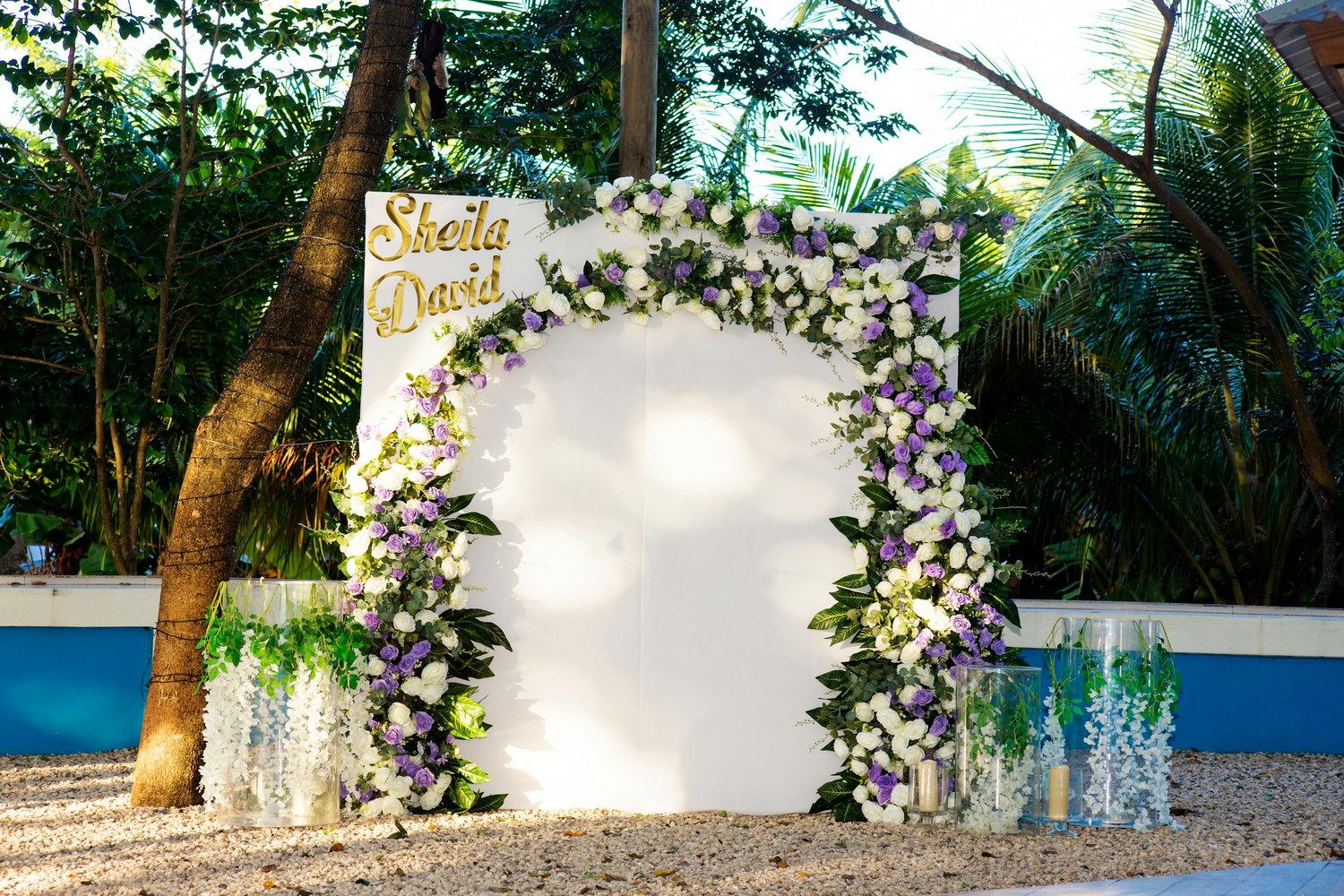
Idea 1: Floral Arch with Couple Names
A garden arch silhouette printed on a full-bleed stretch fabric backdrop, combined with the couple’s names in an elegant serif font, creates an instantly recognizable wedding signature. Use blush, ivory, and sage tones to stay neutral across photography styles. The arch works as foreground framing when guests stand inside it or as a standalone backdrop for portrait sessions. Because the print is flat, guests with floral phobias or allergies are not affected, and the wall stores flat and reuses cleanly. Plan for a 2400 x 2200 mm or 3000 x 2200 mm print to accommodate full-length couple portraits.
When to use: Outdoor garden ceremonies, indoor ballroom receptions with botanical themes, or any couple who wants a floral aesthetic without a real flower wall.
Material recommendation: Stretch fabric. Fine detail in the petals and foliage requires the dye-sublimation resolution that fabric delivers; vinyl shows pixelation in organic patterns at close range.
Idea 2: Classic Monogram
A large intertwined monogram centered on a champagne, ivory, or navy ground is the quietest media wall design that still reads as refined in every photograph. The design scales from a 2400 x 2200 mm cocktail hour station to a 3000 x 2200 mm ceremony arch without losing impact. Choose a script font for traditional aesthetics or a geometric sans-serif for a modern twist. Surround the monogram with a thin border or subtle wreath detail to add visual weight without competing. A metallic-ink rendering on fabric gives the shimmer of foil without requiring hot-stamping processes.
When to use: Traditional church or estate weddings, cocktail hour photo stations, and any couple who wants a timeless design that photographs well in every light.
Material recommendation: Stretch fabric with metallic-ink printing for a shimmer effect. No real foil is needed when fabric dye-sublimation renders the metallic tones accurately.
Idea 3: Hexagonal Geometric Panels
Interlocking hexagons in gold, white, and blush create a modern art-deco feel that reads graphically on camera and carries strong editorial energy at receptions. The pattern works especially well when lit from the side, creating a subtle three-dimensional shadow effect across the repeating geometry. You can tile the hexagons as a full surface fill or arrange them as a single large honeycomb cluster centered on the wall. The geometric framework means any color palette slots in without a redesign. For maximum flexibility, print the entire design on one seamless stretch fabric frame.
When to use: Modern-glam weddings, art-deco-themed events, and reception photo stations where couples want geometry over florals.
Material recommendation: Stretch fabric as a single seamless print, or modular hexagonal fabric panels if the venue has an unusual wall shape. Either option eliminates visible seams.
Idea 4: Lush Greenery and Foliage Wall
A floor-to-ceiling expanse of tropical or eucalyptus-style foliage is consistently one of the most saved wedding backdrop styles on social media. A printed greenery wall on stretch fabric captures the same lush aesthetic as a real flower wall at roughly a third of the cost, with zero wilt risk over a multi-hour event. The design looks best with overlapping leaf layers that create depth, rather than a flat single-layer pattern. Allow a 10% bleed on all edges so the greenery appears to extend beyond the frame boundaries. Finish the composition with a small sign or neon-style name plate centered in the foliage.
When to use: Boho, garden party, and eco-conscious ceremonies; large events where a real floral wall is cost-prohibitive; destination weddings where transport makes real botanicals impractical.
Material recommendation: Stretch fabric exclusively. Leaf texture and color gradients in foliage prints demand the fine resolution of dye-sublimation fabric; vinyl cannot faithfully reproduce fine organic detail.
Idea 5: Bold Geometric Pattern
Strong chevrons, Moroccan-tile motifs, or arched alcove patterns in a two-tone color scheme (black and white, navy and gold, dusty rose and ivory) create a theatrical photo backdrop that photographs as upscale without requiring real props or elaborate staging. The geometric precision means the design looks intentional at any scale. Bold geometrics also work as secondary backdrops for dessert tables, lounge areas, or guest books stations, giving the venue multiple photo moments beyond the main ceremony arch. Keep the palette to two or three colors for maximum graphic impact.
When to use: Rehearsal dinners, engagement parties, modern minimalist weddings, and events where the couple wants a bold graphic statement over natural motifs.
Material recommendation: Stretch fabric for the sharpest geometric lines. Simple 1-2 color designs on a tight budget can use economy banner vinyl, though sharp corners and fine lines print cleaner on fabric.
Brand Launch Backdrop Ideas
Idea 6: Hero Product Reveal Wall
A full-bleed product photograph or a floating 3D product render takes up 60% of the wall height, with the brand logo above and a campaign tagline or launch date below. When press photographers arrive, every image automatically frames the product without requiring careful framing. The composition works across all orientations because the product occupies the visual center regardless of crop. For product launches with multiple SKUs, tile the products symmetrically across the lower half of the wall with the brand name anchored at the top. Ensure the product file is provided at 300 DPI or as a vector before the print deadline.
When to use: Consumer product launches, tech hardware reveals, beauty brand activations, and any event where the product itself is the news.
Material recommendation: Stretch fabric for smooth gradients and photo-quality product rendering. Vinyl is viable only if the venue has hard surfaces that prevent fabric frame assembly.
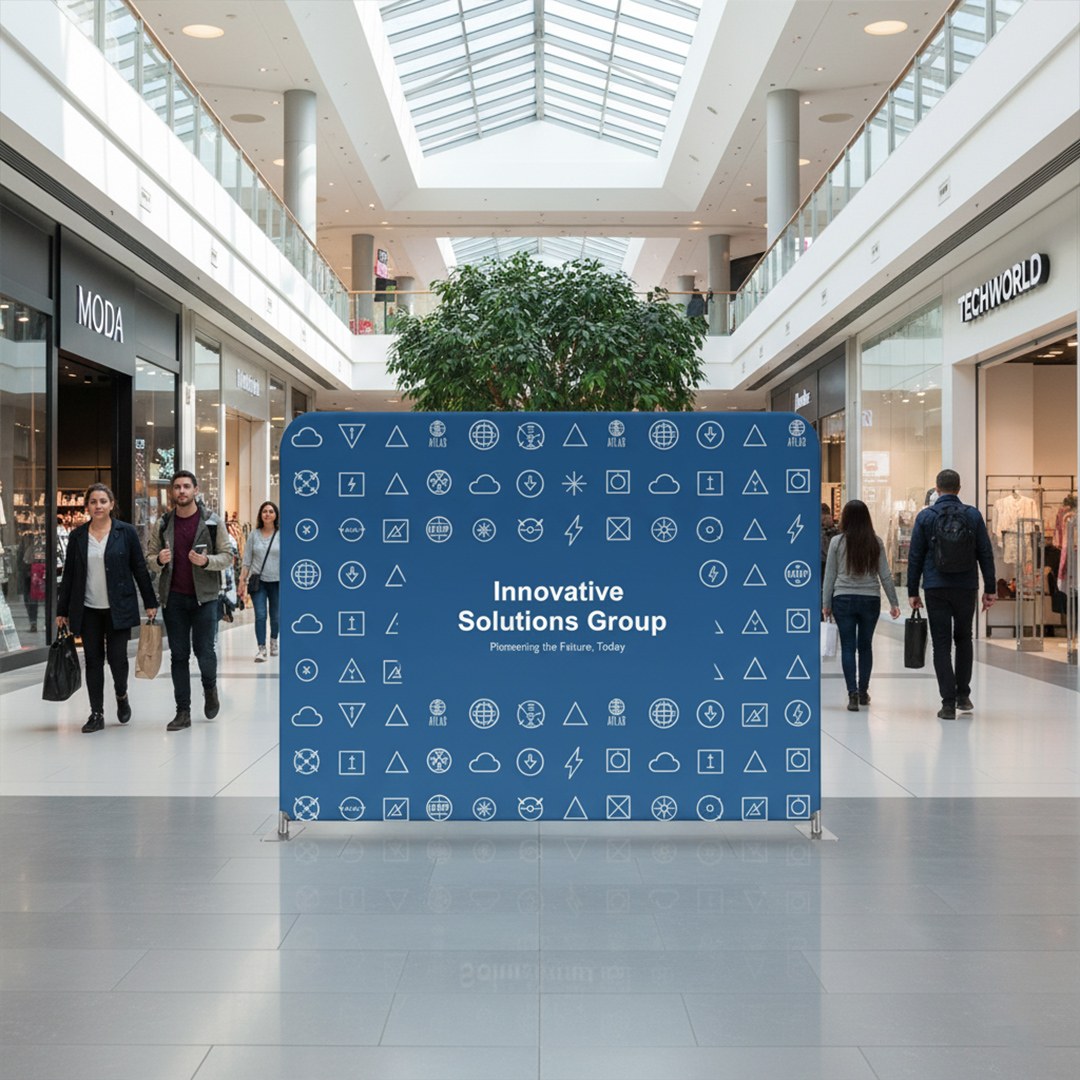
Idea 7: Repeat Logo Grid
The classic step-and-repeat layout tessellates the brand logo in a diagonal checkerboard grid so every crop of a photograph includes brand identification. For multi-sponsor events, alternate logos in a set sequence across the grid rows. Scale the individual logo tiles so the brand name reads clearly at a 6-foot shooting distance: a 14-inch repeat unit is typically the minimum for legibility in press photographs. Keep at least 25% white space around each logo within its tile to prevent optical crowding. The step-and-repeat is the lowest-risk brand backdrop because it photographs well under any lighting condition.
When to use: PR events, brand partnership activations, industry awards ceremonies, and any occasion where guaranteeing brand visibility in press photography is the primary objective. For prize handovers, donations and sponsor announcements, oversized novelty cheques can be styled with the same branding to give press photographers an additional visual anchor.
Material recommendation: Stretch fabric with a silicone-edge graphic (SEG) tension system, which keeps logos crisp and flat across the full wall width without rippling under event lighting.
Idea 8: Gradient Brand Wash
A smooth horizontal or diagonal color gradient built from the brand’s primary palette gives a contemporary editorial quality that social media designers frequently repurpose as a story background or presentation slide backdrop. The gradient approach works particularly well for brands in the beauty, wellness, fashion, and DTC sectors, where aesthetic consistency across social channels is a measurable brand asset. Choose gradient stops that represent the brand’s full color range from lightest to deepest tone. Anchor the brand logo in a high-contrast area of the gradient where it remains legible at every light level the event space produces.
When to use: Creative agency announcements, fashion and beauty launches, DTC brand activations, and any event where social-media-ready imagery is as important as press photography.
To extend that social-media moment beyond the backdrop, custom selfie frames give guests a portable, on-brand prop for shareable photos.
Material recommendation: Stretch fabric is essential. Gradients reveal banding artifacts on vinyl because vinyl printing uses fewer ink layers. Fabric dye-sublimation produces continuous tone gradients across the full wall area.
Idea 9: Neon-on-Dark Statement Wall
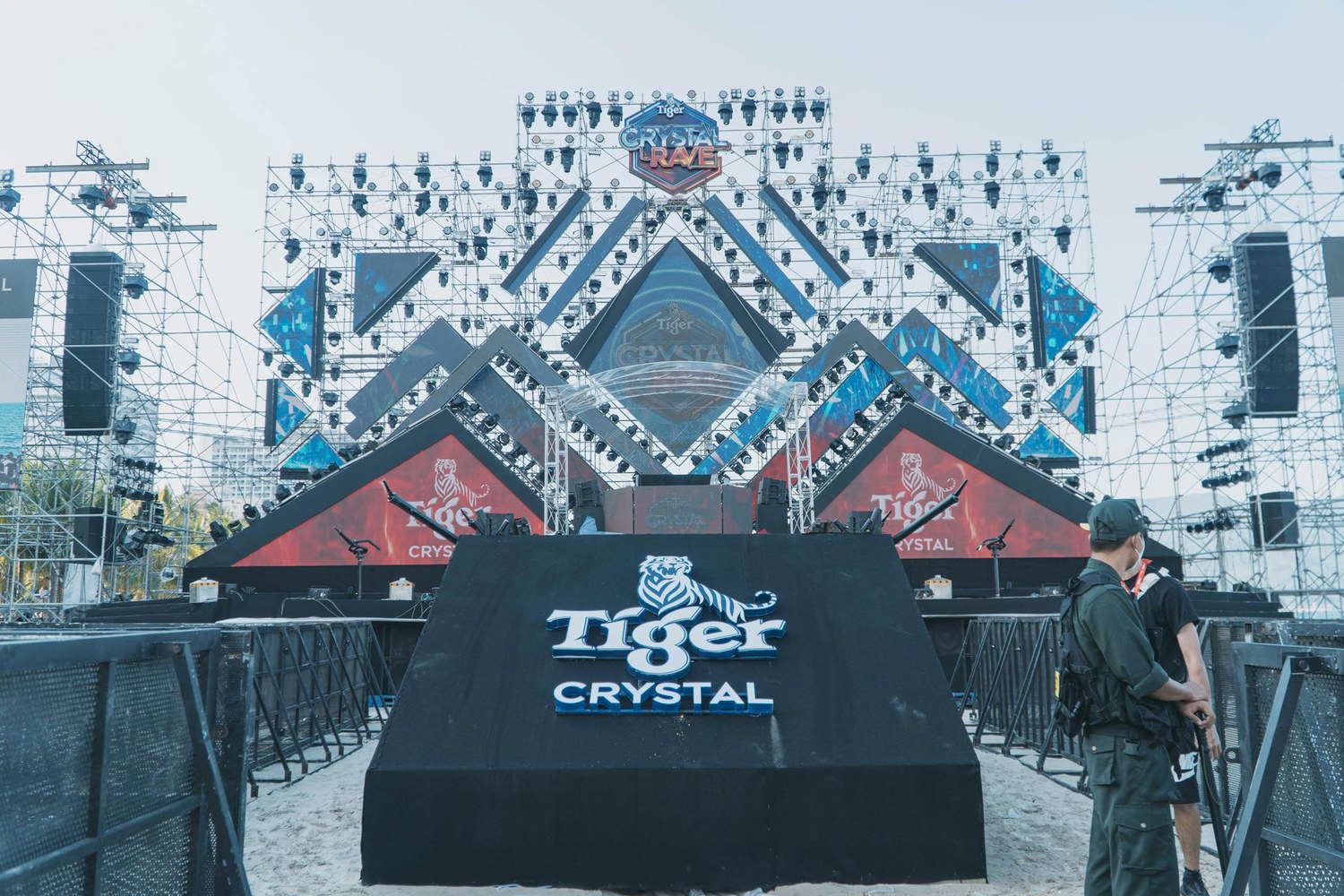
A deep charcoal, near-black, or saturated dark navy ground with the brand name or campaign slogan in a neon-style high-contrast color creates maximum camera drama. This design choice performs particularly well at evening events where ambient light is low: the dark ground absorbs any wash from event lighting, and the bright typography pops in both flash photography and available-light shots. Add a secondary brand element (pattern, icon, or logo mark) at reduced opacity in the background to add depth without crowding the main type. Specify the dark base color in CMYK and confirm it with a printed proof before final production.
When to use: Nighttime activations, after-party brand moments, tech and gaming launches, and any event where a bold, graphic statement matches the brand personality.
Material recommendation: Stretch fabric. Dark backgrounds on vinyl tend to show surface defects, roller marks, and seam shadows under direct event lighting. Fabric absorbs and diffuses light more evenly.
Corporate Event Media Wall Ideas
Idea 10: Minimal Logo on Neutral Ground
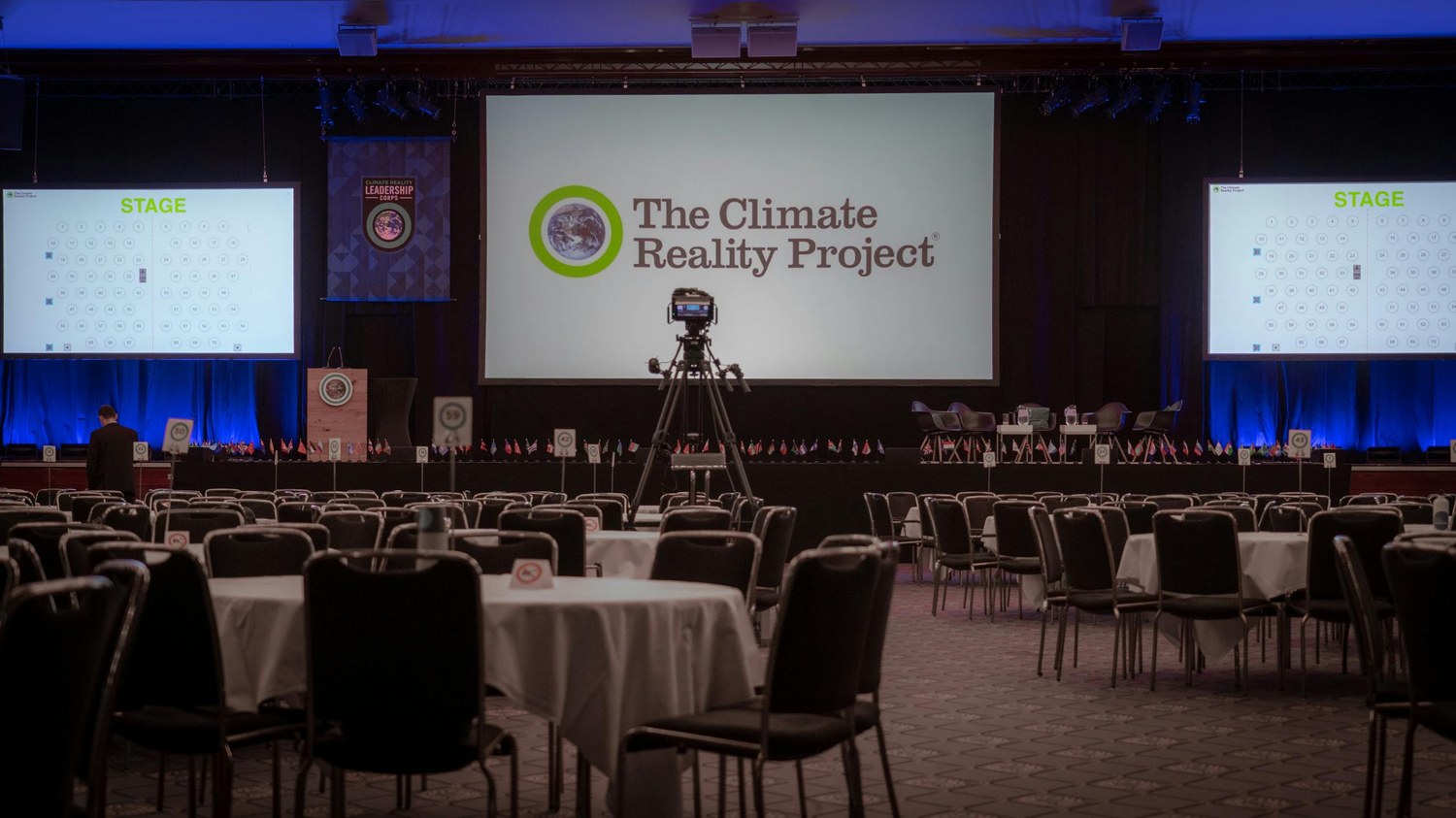
A single centered logo on a white, light grey, or warm off-white ground is the safest and most versatile corporate media wall choice. The neutral background does not compete with speaker attire, which is important for stages where the backdrop is visible in televised or livestreamed recordings. The design is also inherently reusable: because it carries only a permanent brand mark, no event-specific copy, it can be shipped and used across multiple conferences each year. Keep the logo at approximately 30-40% of the total wall width for correct visual proportion. Include a thin baseline in a secondary brand color for a finished, intentional look.
When to use: Press conferences, investor days, analyst presentations, internal company events, and staged keynote addresses where simplicity and reusability are priorities.
Material recommendation: Stretch fabric. The wrinkle-free surface ensures the backdrop looks professional behind a presenter in both live and recorded contexts where close-up backgrounds are visible.
Idea 11: Multi-Sponsor Grid
A structured layout of sponsor logos across a branded ground allows events with 8-20 sponsors to give each equitable placement. Build three logo tiers into the layout: title sponsor at largest scale (center, top row), gold sponsors at medium scale (second row), and silver/community sponsors at smallest scale (bottom band). Ensure the tiers have visibly distinct size ratios: at minimum a 1.5x size difference between each tier. Collect all sponsor logo files in the same color mode (either full color or reversed to white on dark), verify each file at 300 DPI equivalent, and confirm with sponsors before sending to print.
When to use: Industry conferences, trade association annual meetings, charity galas with multi-tier sponsorship packages, and any event where sponsor recognition is a contractual deliverable.
Material recommendation: Stretch fabric. Verify that every sponsor’s logo file is provided as SVG or high-resolution PNG before the print deadline to avoid last-minute resolution issues.
Idea 12: Branded Data Visualization
An infographic or key statistic built directly into the backdrop design transforms a standard photo wall into a brand storytelling surface. Examples include milestone numbers (“10 years, 50,000 customers served”), a stylized timeline showing company growth, or a world map highlighting global reach. When guests and press photograph against the wall, the data travels with every image and extends the story beyond the event itself. Keep the data element to a single primary fact or graphic, and use brand colors consistently throughout the composition. This design is event-specific by nature, making it single-use, so on-demand fabric printing is the most cost-efficient production method.
When to use: Company anniversary celebrations, IPO or funding announcement events, investor days, and milestone moments where brand narrative is the centerpiece.
Material recommendation: Stretch fabric. Text and data lines require the sharpest resolution available, and fabric dye-sublimation delivers crisper small-type rendering than vinyl at equivalent DPI.
Charity and Gala Backdrop Ideas
Idea 13: Mission Statement Text Wall
Leading with the cause’s core mission in large, emotive typography, followed by the organization’s logo and the event name at the base, ensures that every photograph taken in front of the wall carries the message forward. Typography should be sized so the primary line is readable in a cropped social-media portrait. Use a clean, bold sans-serif or a refined serif for cause-led organizations; avoid decorative scripts that reduce legibility at distance. Choose one impactful line from the mission statement rather than a paragraph: “Every child deserves a classroom” is more effective than three sentences. The cause name can appear as a watermark pattern in the background.
When to use: Fundraising galas, charity auctions, nonprofit annual dinners, and advocacy events where spreading the mission message is as important as raising funds on the night.
Material recommendation: Stretch fabric. The sharp text rendering of direct-to-fabric digital printing ensures the mission statement is crisp and legible from every angle and at every zoom level in event photography.
Idea 14: Cause Photo Collage
A grid of beneficiary photography, campaign imagery, or behind-the-scenes program documentation creates an emotional backdrop that makes the cause tangible and visible to donors and guests. Design the grid so each individual image is a minimum of 30 x 30 cm printed, ensuring the faces and scenes are identifiable in standard event photography. Use a consistent color grade (warm, cool, or high-contrast) across all panel images to unify the collage aesthetically. Frame the grid with a thin border in the cause’s primary color and place the logo in a corner or centered at the base. Obtain image rights for all beneficiary photographs before print.
When to use: Documentary-style charity events, awareness campaign launches, NGO international donor gatherings, and any gala where emotional storytelling is the primary engagement lever.
Material recommendation: Stretch fabric is essential for photo-quality reproduction. Vinyl introduces banding artifacts in tonal photography and cannot achieve the color fidelity required for faces and skin tones to render accurately at event scale.
Idea 15: Pattern Plus Logo Overlay
A repeating geometric or floral pattern in the charity’s brand colors with the logo centered or tiled at every third repeat creates a sophisticated gala aesthetic that keeps branding present throughout the backdrop without making it feel like a commercial activation. The pattern provides visual texture so the wall looks designed and intentional in photography, while the logo maintains organizational identity. Choose a pattern scale that reads at a 6-foot distance: too small and it renders as a solid color, too large and it competes with the logo. For formal black-tie galas, a tonal pattern in a single-color family photographs as elegant and understated.
When to use: Annual galas with a dress-code theme, charity balls, heritage organization events, and any occasion where the cause requires a polished premium aesthetic.
Material recommendation: Stretch fabric. Intricate repeating patterns benefit from the fine resolution of direct-to-fabric digital printing, which captures subtle texture and tonal variation across the full wall area.
Material Selection at a Glance
| Design Type | Recommended Material | Key Reason |
|---|---|---|
| Floral and organic patterns | Stretch fabric | Fine petal detail, full color fidelity, no seaming across pattern |
| Gradient fills | Stretch fabric only | Only material that renders continuous-tone gradients without banding |
| Logo grid / step-and-repeat | Stretch fabric (SEG) | Tension-true logos stay crisp and flat across full wall width |
| Simple 1-2 color geometric | Stretch fabric or vinyl | Vinyl viable on a tight budget for very simple, solid-color designs only |
| Dark-ground designs | Stretch fabric | Vinyl shows roller marks and surface defects on dark backgrounds |
| Photo collages | Stretch fabric | Photo-quality color; vinyl pixelates faces at close viewing distance |
| Copy-forward text walls | Stretch fabric | Sharpest small-text rendering; legible at any viewing distance |
More from the Media Wall Guide Series
These articles cover the full picture from definitions to specifications:
- What Is a Media Wall: Complete Guide for Events, Weddings and Branding
- Stretch Fabric vs Vinyl Media Walls: Which Material Wins?
- Media Wall Sizes Guide: Dimensions for Events, Weddings and Corporate
- Step and Repeat vs Media Wall: Choosing the Right Event Backdrop
Ready to print your media wall?
Custom stretch fabric media walls printed and shipped Australia-wide. Any size, any design, wrinkle-free finish.
Frequently Asked Questions
What size should a media wall be for a wedding?
The Small 2400 x 2200 mm media wall is the practical choice for photo stations, while the Large 3000 x 2200 mm size suits ceremony arches where the wall frames the couple. For large reception rooms with high ceilings, a custom size beyond 3000 x 2200 mm can be quoted on request. Both stocked sizes are 2200 mm high, so if full-length portrait photography is a priority, ask the team about a taller custom height. See the full sizing guide at Media Wall Sizes Guide.
How far in advance should I order a media wall for an event?
Allow at least 5-7 business days from artwork approval to delivery for standard stretch fabric media walls. For events with complex designs or formats wider than 3000 mm, contact the team for a custom quote and confirm lead times. Artwork approval is the most common delay: have your finalized, print-ready file ready before placing the order. Rush production is available for an additional fee, but it is always safer to order early and store the flat-packed frame until the event date.
Can I reuse a stretch fabric media wall?
Yes. Stretch fabric walls are designed for repeated use. The fabric slides off the aluminium frame, can be hand-washed or dry-cleaned, and re-attaches without wrinkling. The frame packs flat into a carry bag and reassembles without tools. A well-maintained stretch fabric wall can be reused across dozens of events. The only designs that limit reuse are those with event-specific dates or one-time campaign messages; logo-only and pattern designs are indefinitely reusable.
What file format do I need to supply for a media wall print?
Supply artwork as a PDF (print-ready, CMYK, bleed included) or as a high-resolution JPG or PNG at 72-100 DPI at the final print size (which equates to 300 DPI at A4, scaled up). Vector logos should be embedded or outlined. For very large walls (wider than 3000 mm), 72 DPI at final size is sufficient because viewing distance compensates for the lower pixel density. Always confirm the specific file requirements with your print supplier before starting artwork, as bleed and resolution requirements vary.
Is stretch fabric or vinyl better for outdoor events?
Stretch fabric handles light outdoor conditions well (overcast, light breeze) because the fabric has slight give that absorbs wind without billowing the way a rigid panel would. However, for sustained outdoor wind exposure or rain risk, a weighted base and wind vents are essential regardless of material. Vinyl is heavier and stiffer and is not recommended for outdoor walls over 2400 mm because wind load can destabilise the frame. For fully exposed outdoor events, consult your supplier about weighted bases, ground stakes, or retractable banner systems designed for outdoor use. Read more at Stretch Fabric vs Vinyl Media Walls.
How do I brief a graphic designer for a media wall?
Provide the designer with: (1) final wall dimensions in mm, (2) bleed requirement (typically 50-100 mm on each edge), (3) a list of all elements to include in priority order (logo, tagline, images, sponsor logos), (4) brand guidelines including approved colors in CMYK or Pantone, and (5) any physical constraints such as frame pole positions that the design must avoid. Request a scaled proof at A4 or A3 before approving the final print-ready file, and view it from about 1.8 m to simulate the event shooting distance.
About this guide
This article was written by the Paperlust Print Shop content team, drawing on production experience across hundreds of custom media wall orders for weddings, corporate events, brand activations, and charity galas. Facts and material recommendations are reviewed against current production capabilities. Last updated May 2026.