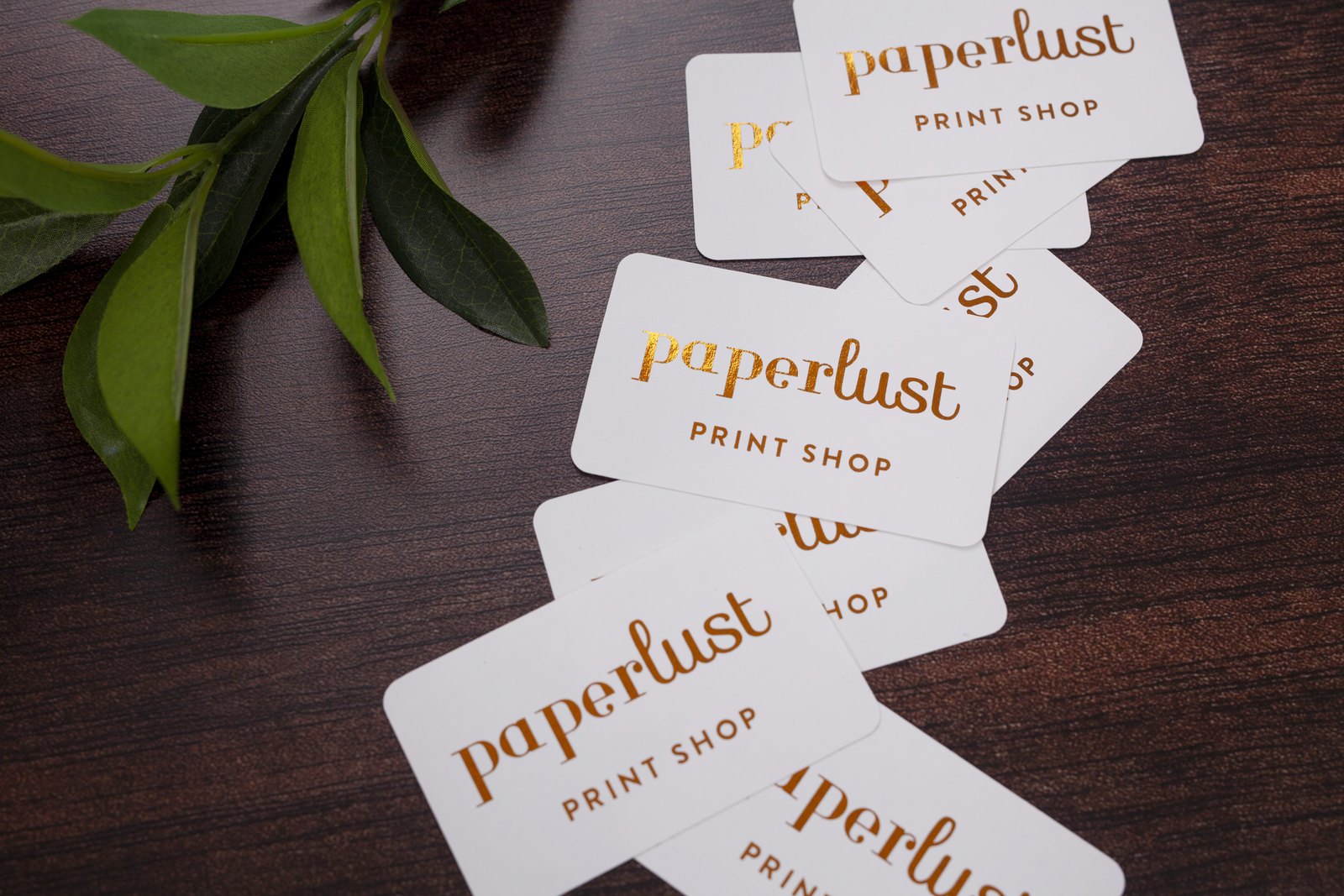
Saturday afternoon, the line is three deep, and a regular slides her card across the counter with a question you have heard before. Her sister’s birthday is next week and she wants to give something from your shop rather than a generic card off a rack. You can write an amount on a receipt, or you can hand over a printed card with your logo on it. That moment is where gift certificates earn their keep, and it is also where plenty of owners realize they never built a system for them.
A certificate does two jobs that pull against each other. On the way out the door it has to feel like a gift: heavy card, a foil title, an envelope that does not look like an invoice. When it comes back it has to behave as a record, with a number you can trace, terms anyone can read, and a clear line in a register. Sell the first job well and you move more of them. Fumble the second and you end up in a polite argument at the counter about whether the balance was already spent. The sections below cover what goes on each side, the formats and envelopes, numbering, stock and foil, and how a run moves from artwork to a box at your door.
The short version
- Print the value or the named service, a certificate number and the terms on the card, with redemption instructions on the back.
- Choose the size and the envelope in the same sitting, so the card never gets folded to fit.
- Number every certificate and keep a register showing what was sold, to whom, and what has come back.
- Check the rules where you trade before you print an expiration date or a fee on the card.
- Foil sits on the front face only, which leaves the back clean for conditions.
- Production time and delivery time are quoted separately, and one does not absorb the other.
Why printed gift certificates still earn their place
Salons, spas, cafes, restaurants, boutique retailers, trades and service operations order custom gift certificates for the same reason: their customers already want to give the experience, and there has been no tidy way to package it. Paperlust Print Shop stocks them for exactly that counter conversation. A printed certificate can be bought and given on the spot, which matters more than it sounds. An emailed code suits the buyer who plans three weeks ahead. A card in an envelope suits the one who decides on the drive over.
There is a second effect owners notice after the first batch goes out. A card handed over in an envelope reads as a gift rather than a receipt, and the person who opens it walks into your shop as someone who has never been there before, already holding a reason to spend. That is a different visitor from the regular who knows the menu by heart.
Seasonal promotions lean on the same mechanics. A stack beside the register in the weeks before the holidays does the work of a display without taking up shelf space. A stack of unsigned cards is inventory, though. A numbered stack with a register behind it is a program you can actually run.
What to print on the front and back
Front only is the standard setup, and the back stays blank. Front and back printing opens the second side for terms and conditions, a redemption grid, or a To and From block with the expiration line. Printing runs in full color either way. What goes where depends on how much you want the card to explain itself, but a certificate carrying the following has answered almost every question that comes up at the counter.
- Your business name and logo, large enough to read from arm’s length.
- The words that name it, printed plainly rather than in a script nobody can parse.
- The value or the named service, whether that is an amount or a description such as one dinner for two.
- To and From lines, left blank for handwriting or merged from your list.
- The certificate number, printed and legible.
- How to redeem: call ahead, book online, or present it at the counter before the service starts.
- The expiration date if you use one, plus short terms such as no cash value and not replaceable if lost.
Terms belong where they can be read before the card goes into a wallet. If you print both sides, the back is the natural home for a short block of conditions and a row of boxes for the redemption grid. If you print the front only, the terms end up in small type along the bottom edge, and you accept that some of them will be missed.
None of this is decoration. Each line exists to answer a question before someone has to ask it out loud.
Size, format and the envelope that fits
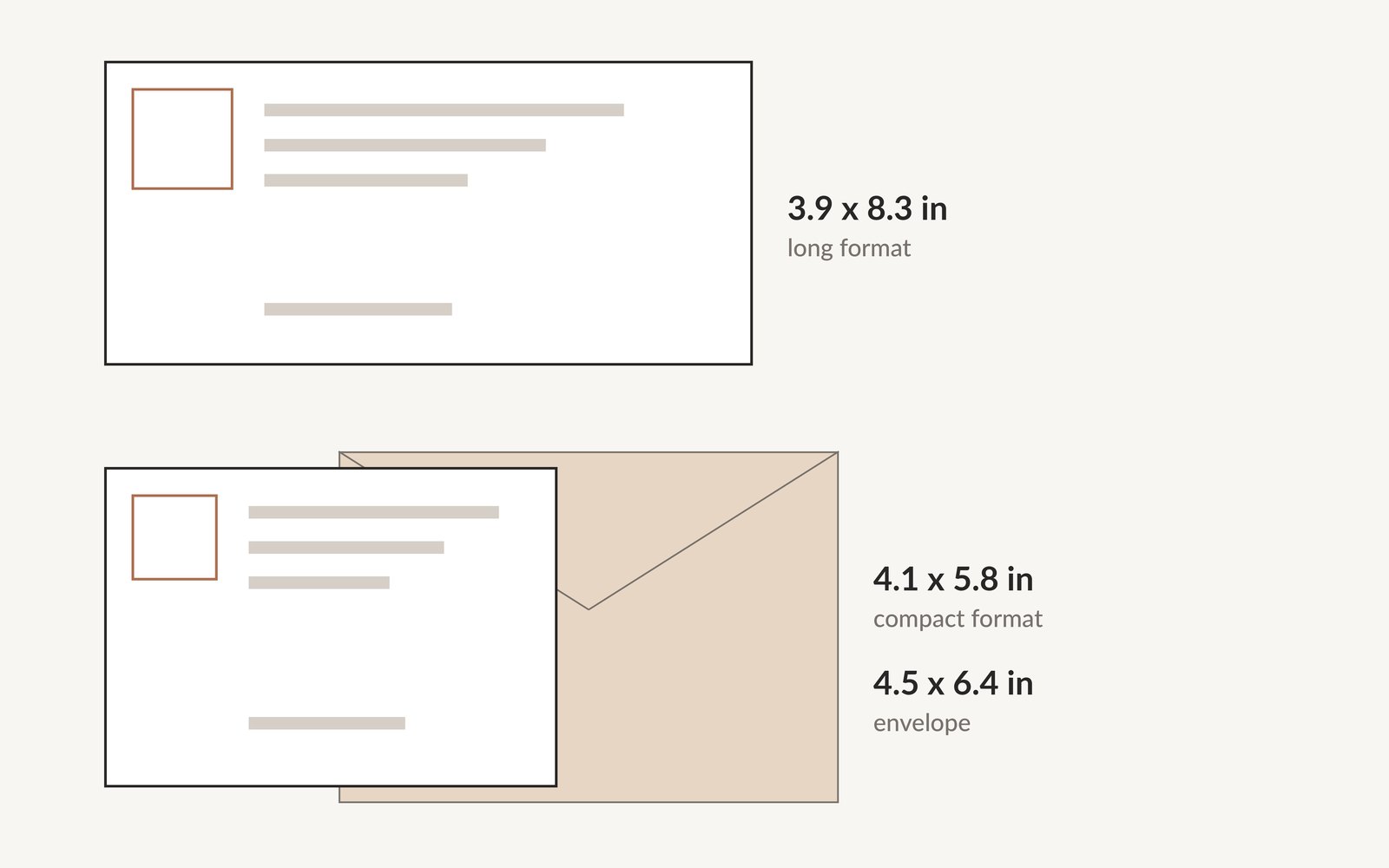
Two flat formats cover most of what a small business needs. The long format measures 3.9 x 8.3 in and reads like a check or a bookmark, with room for a logo at one end and a value line at the other. The compact format measures 4.1 x 5.8 in and sits in a card-sized space, which suits a stack beside the register or a small display at the front desk.
| Format | Size | Envelope |
|---|---|---|
| Long format | 3.9 x 8.3 in | Matching envelope available |
| Compact format | 4.1 x 5.8 in | 4.5 x 6.4 in |
Matching envelopes in six colors can be added in the order form. The 4.1 x 5.8 in certificate has a listed envelope at 4.5 x 6.4 in, sized to hold it without a fold. Ordering the envelope alongside the card is the step people skip, and it is the difference between handing over a gift and handing over a loose piece of card stock.
A logo can also print on the front of every envelope. Black or color ink goes on the light envelope colors, and white ink is the option on black envelopes. The logo file is uploaded at the Upload Artwork step in its own box beside the certificate file, and a vector AI, EPS, PDF or SVG file gives the sharpest result. A logo pulled from a website header will usually show its edges on an envelope.
Gift certificate numbers, a register and the expiration date
Numbering is the line between a pile of cards and something you can audit. Variable Data merges a spreadsheet into the design, so sequential numbering, a unique code, a recipient name or a personalized amount arrives without anyone typing it by hand. It works on every quantity and with any stock or foil choice.
The emailed PDF proof includes a data-merge sample, and that sample deserves more than a glance. It shows the layout with real fields in place. If a long recipient name pushes a line into the border, or a number runs to four digits in a field sized for three, the sample is where you catch it. Nothing prints until you approve the proof.
Then keep a register. A spreadsheet is enough: date sold, value, buyer, and the date it comes back. A number marked used cannot be redeemed a second time, and the register shows at a glance how much value is still outstanding across a batch. Without it, a lost card and a spent card look exactly alike.
One caution before any date goes on the card. Rules on expiration dates and fees are set by federal and state law and differ from state to state, so check the current position where your business trades before the date or any fee is printed. A deadline you cannot enforce is worse than no deadline at all, because it promises a limit you never had the standing to set.
Stock, foil and the corner shape
Stock decides how the card feels in the hand before anyone reads it. Matt 110 lb cover Digital is the base heavyweight matte card. 125 lb cover Luxe is thicker and more rigid, for a more substantial feel, and it is the one people notice when they lift a certificate out of an envelope.
| Choice | Options | Notes |
|---|---|---|
| Stock | Matt 110 lb cover Digital or 125 lb cover Luxe | Base matte card, or a thicker, more rigid sheet |
| Foil | Gold, Silver or Rose Gold | Title, logo or border, front face only |
| Corners | Square, rounded or custom die cut | Square is standard, rounded and custom die cut are options |
| Sides | Front only or front and back | Back suits terms, a redemption grid or a To and From block |
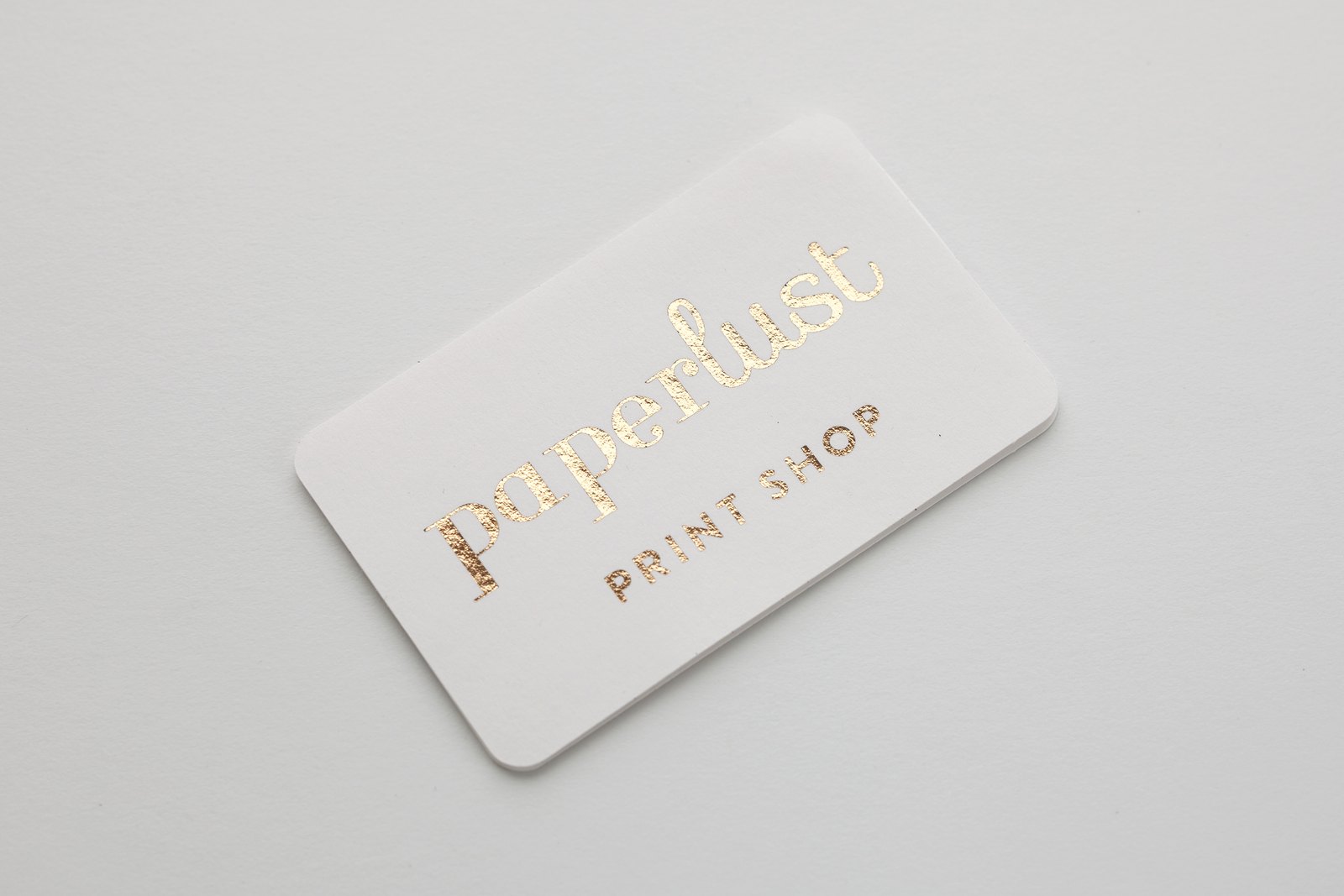
Foil comes in Gold, Silver or Rose Gold and can be applied to a title, a logo or a border on either stock. It is restricted to the front face, which is a production fact rather than a loss. That leaves the back clear for conditions and a grid of redemption boxes, where a metallic patch would only make small type harder to read.
Corners are square as standard, with rounded corners and custom die cut shapes there to choose from when the piece should feel less like a form and more like something worth keeping. Spend the decision on the side people are looking at, and keep the reverse plain enough to be read under counter lighting.
Gift certificate printing: how the order runs
An order from Paperlust Print Shop moves in five steps, and only one of them starts a clock.
- Set the quantity. Choose 25, 50, 100, 250 or 500, with custom quantities on request. The minimum order is 25.
- Start the artwork. Work from a catalog of business-ready templates or upload your own, and allow 1/8 in bleed so nothing important sits at the trim edge.
- Send the files. Every uploaded file is reviewed, and our team gets in touch if something needs to change. This is the step where a soft logo or a missing bleed gets caught.
- Approve the proof. A PDF proof arrives by email, and nothing prints until you approve it. Read the data-merge sample here if you ordered Variable Data.
- Plan around two clocks. Production takes 2 to 4 business days, counted after proof approval. Delivery is a separate estimate, with Standard at 6 to 10 business days and Express at 3 to 6 business days. Checkout shows the delivery options for the order.
Quantity is where most orders really begin, since the run size sets how many numbers your register will carry before the first card leaves the counter. It is also the first decision in gift certificate printing, and everything after it, from proof to delivery, follows the size of the run.
A gift certificate carries monetary value and is redeemed against a later purchase. An award or completion certificate marks an achievement and carries no cash value, so the wording, the layout and the artwork all change with it. If that is the piece you need, our custom certificates are a separate product built for it.
Two products, two jobs. Mix them up and someone tries to spend an award certificate on a haircut.
Frequently asked questions
What should a business print on its gift certificates?
Front: your business name and logo, the words gift certificate, the value or the named service, To and From lines, and the certificate number. Front and back printing adds room for redemption instructions, an expiration date if you use one, and short terms such as no cash value and not replaceable if lost. Printing is in full color, and the back stays unprinted if you choose the standard front-only setup.
Can each certificate be numbered or carry a name?
Variable Data merges a spreadsheet into the design, so sequential numbering, unique gift certificate codes, recipient names or personalized amounts arrive without anyone writing them by hand. It works on every quantity and with any stock or foil choice. The emailed PDF proof includes a data-merge sample so you can check the layout and the fields before printing. A number marked as used in your register cannot be redeemed a second time.
What sizes are available, and do envelopes come with them?
The two flat formats are 3.9 x 8.3 in and 4.1 x 5.8 in. Matching envelopes in six colors can be added in the order form rather than arriving automatically, and the 4.1 x 5.8 in certificate has a listed envelope at 4.5 x 6.4 in. A logo can also print on the front of the envelope, in black or color ink on the light envelope colors or white ink on black envelopes.
What is the minimum order, and what quantities are offered?
The minimum order is 25. Standard quantities are 25, 50, 100, 250 and 500, with custom quantities on request. Variable Data works at every one of those quantities, so a small first run can still be individually numbered and logged in a register. Ordering a small batch first is a sensible way to test demand before the holiday season.
Should the certificate show an expiration date?
That depends on the rules where you trade. Expiration dates and fees on gift certificates are governed by federal and state law, and the rules differ from state to state. Check the current position before you print a date, and check again before you reprint a batch, since a rule that was right last year may not be right now.
How are gift certificates different from award certificates?
A gift certificate carries monetary value and is redeemed against a later purchase, so it needs a number, a value and a register behind it. An award or completion certificate marks an achievement and carries no cash value, which changes the wording and the artwork entirely. They are separate products, and ordering one when you meant the other is an expensive mix-up.