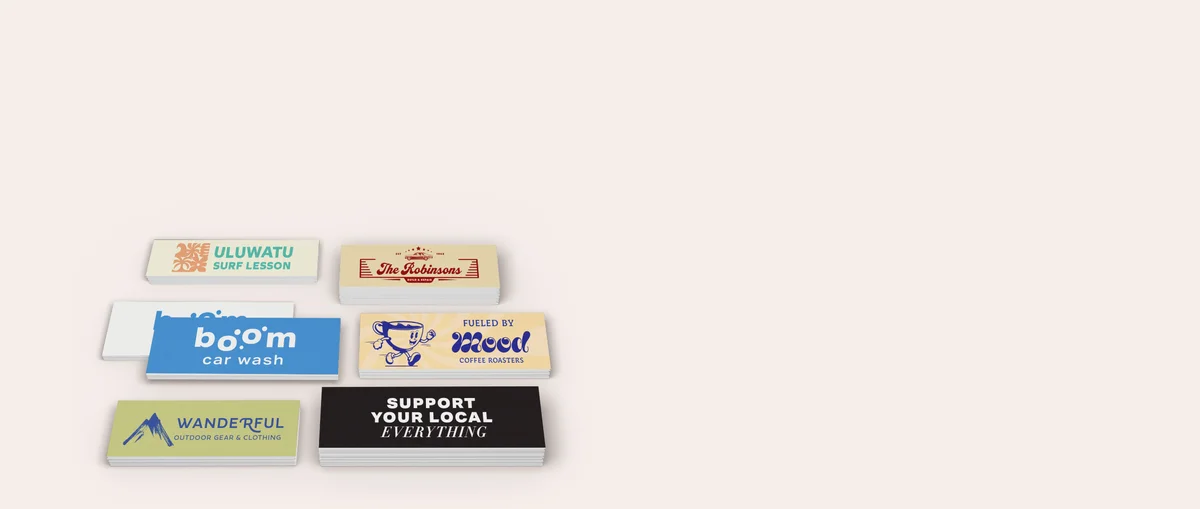
Forget the faded political slogan peeling off the back of a 2003 Corolla. Today’s bumper sticker is a precision-printed vinyl decal that has print durability of up to 2 years, survives a Melbourne winter and a Queensland summer, and can make a tradie’s ute look as sharp as a brand vehicle.
The medium didn’t change. The execution did.
At a Glance
Modern bumper stickers stop looking like bumper stickers when you commit to vinyl, restrained typography, and a 30-foot read — slogan + URL + phone number stacked together is the giveaway.
Vinyl is non-negotiable in Australian sun, minimum size is 200mm × 75mm for in-traffic visibility, and the right brand fit is niche-community signaling (cafés, podcasts, climbing gyms) — not novelty slogans or family-decal stacks.
- Vinyl is non-negotiable — paper or paper-laminate fail to UV and heat in months on an Australian car.
- Modern bumper-sticker design = restrained type + one strong icon. Not slogan + URL + phone number stacked together.
- Sized for a 30-foot read: minimum 200mm × 75mm for usable visibility from the car behind in traffic.
- Adhesive choice matters: permanent for car owners committing to the brand; removable for clients and event handouts.
- Best modern use: niche-community brand signals (café chain, podcast, climbing gym) — not “BABY ON BOARD” novelty.
Why Vinyl Is Non-Negotiable for Outdoor Stickers
If your sticker is going anywhere near sunlight, rain, or a car wash – you need vinyl. Full stop.
Order custom bumper stickers
Bumper Stickers use White Gloss Removable or Clear Removable stock and a removable adhesive that holds in all weather. From 10 pieces, ships Australia-wide.
Paper stickers fade within weeks. They bubble, peel at the edges, and turn yellow in UV. Vinyl doesn’t. Quality outdoor vinyl is:
- UV-resistant – colours hold for years, not months
- Waterproof – survives rain, splashes, pressure washing
- Flexible – conforms to curved surfaces without cracking
- Repositionable during application – forgives a crooked peel-and-stick
Our Vinyl Stickers use UV cured ink on either White Matte Vinyl or Clear Vinyl, and the stock and ink are waterproof as standard. The difference between cast and calendered vinyl matters here too: cast vinyl is thinner, more conformable, and lasts longer on curved surfaces like bumpers and helmets. Calendered is fine for flat indoor surfaces.
Our Bumper Stickers come with White Gloss Removable or Clear Removable stock and a removable adhesive, and that adhesive has to hold onto painted metal, plastic bumper covers and glass. It should stay put at highway speed and through the car wash, but still peel cleanly without destroying the paint when you eventually remove it.
Design for Distance: How to Make a Bumper Sticker Actually Work
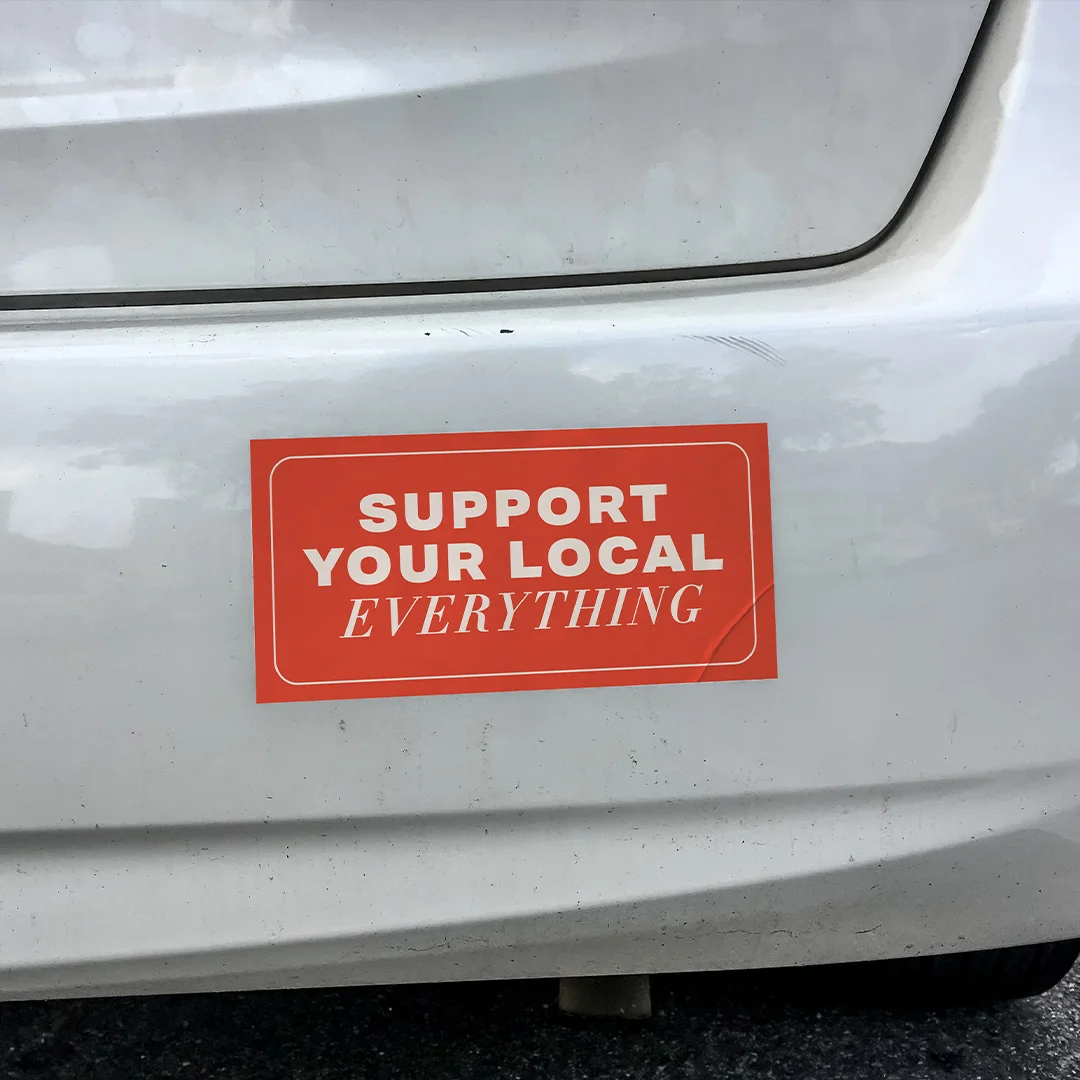
Bumper stickers are read from 3-10 metres away, usually while moving. That changes everything about how you design one.
The 3-metre test: Print your design and tape it to a wall. Step back 3 metres. Can you read it in under 2 seconds? If not, it needs simplifying.
What works at distance
- High contrast – dark text on white/light background, or reversed white on dark. No light grey on white. No yellow on white. No gradients as backgrounds.
- Thick, bold typefaces – thin script fonts vanish at distance. Minimum weight: medium. Condensed bold fonts pack more characters into the horizontal format.
- One key message – your business name, your URL, or your tagline. Pick one. Not all three.
- Minimal colour palette – 2 colours maximum reads cleaner and prints truer.
Standard bumper sticker sizes
| Use | Dimensions |
|---|---|
| Classic bumper sticker | 75 × 250mm |
| Wide bumper sticker | 75 × 300mm |
| Mini bumper sticker | 75 × 175mm |
| Euro-style square | 100 × 100mm |
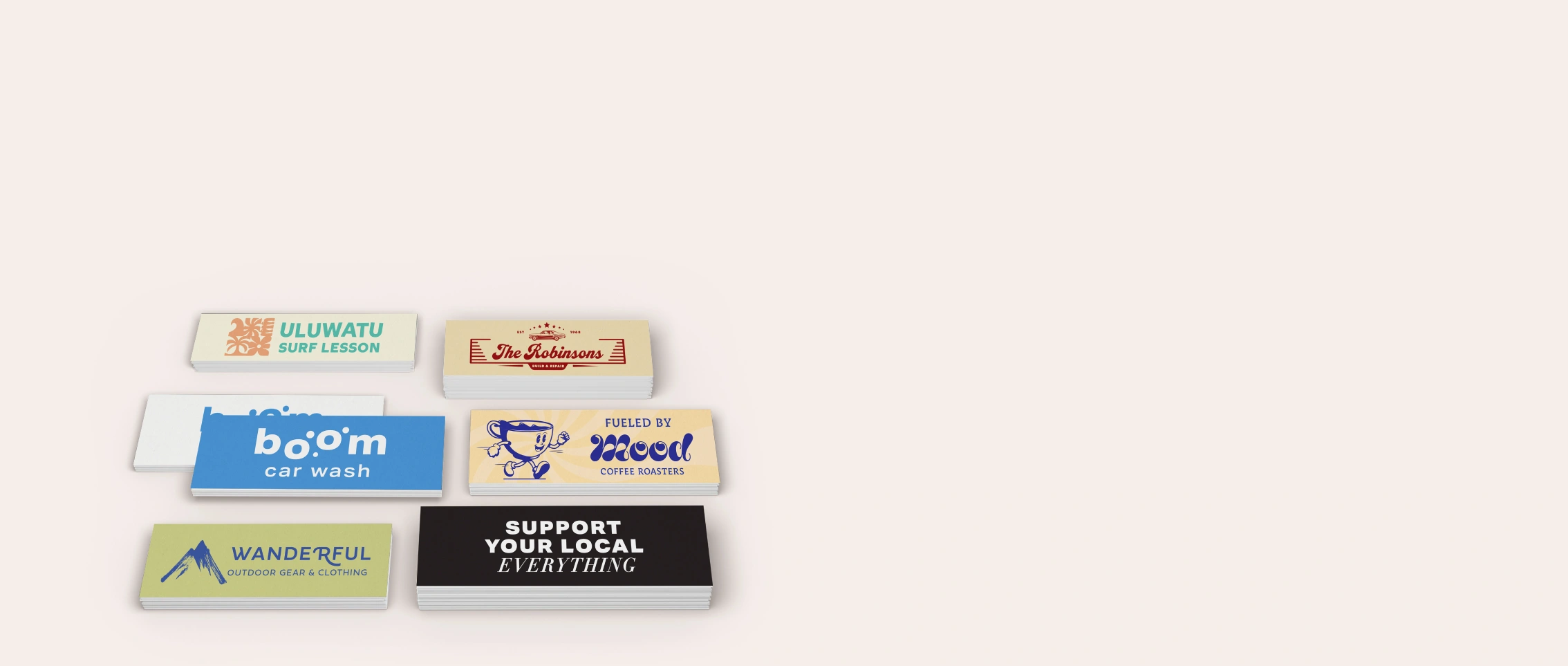
The horizontal rectangle is standard for a reason – it mirrors the visual weight of a rear bumper and reads naturally in landscape orientation. Don’t fight it.
Use Cases Beyond the Car
“Bumper sticker” is a format, not a destination. The same product works across a huge range of surfaces:
Laptops and cases
Tech workers, creatives, and students plaster their laptops with stickers as personality markers. A well-designed sticker on a designer’s MacBook at a coffee shop is a business card that travels. Size sweet spot: 75-100mm wide.
Helmets
Tradies, cyclists, motorbike riders – helmet stickers are a moving billboard. Vinyl holds up to sweat, UV, and impact. Curved helmet surfaces need the flexibility of cast vinyl. Rounded corners prevent peeling at the edges.
Equipment and fleet vehicles
Tools, trailers, toolboxes, generators, hard cases. Any equipment that leaves your site becomes a marketing opportunity. A sticker with your business name and number on a power tool left at a job site has a longer marketing life than any flyer.
Wheelie bins, utility boxes, site signage
For construction, landscaping, and tradies: branding your equipment with vinyl bumper stickers is faster and cheaper than vehicle signage, and they hold up to outdoor conditions.
Skateboards, surfboards, sporting equipment
Youth brands, outdoor retailers, sports clubs – the bumper sticker format has a natural home in action sports culture. Bold, simple, high-contrast designs work best.
Ordering Tips: Get It Right the First Time
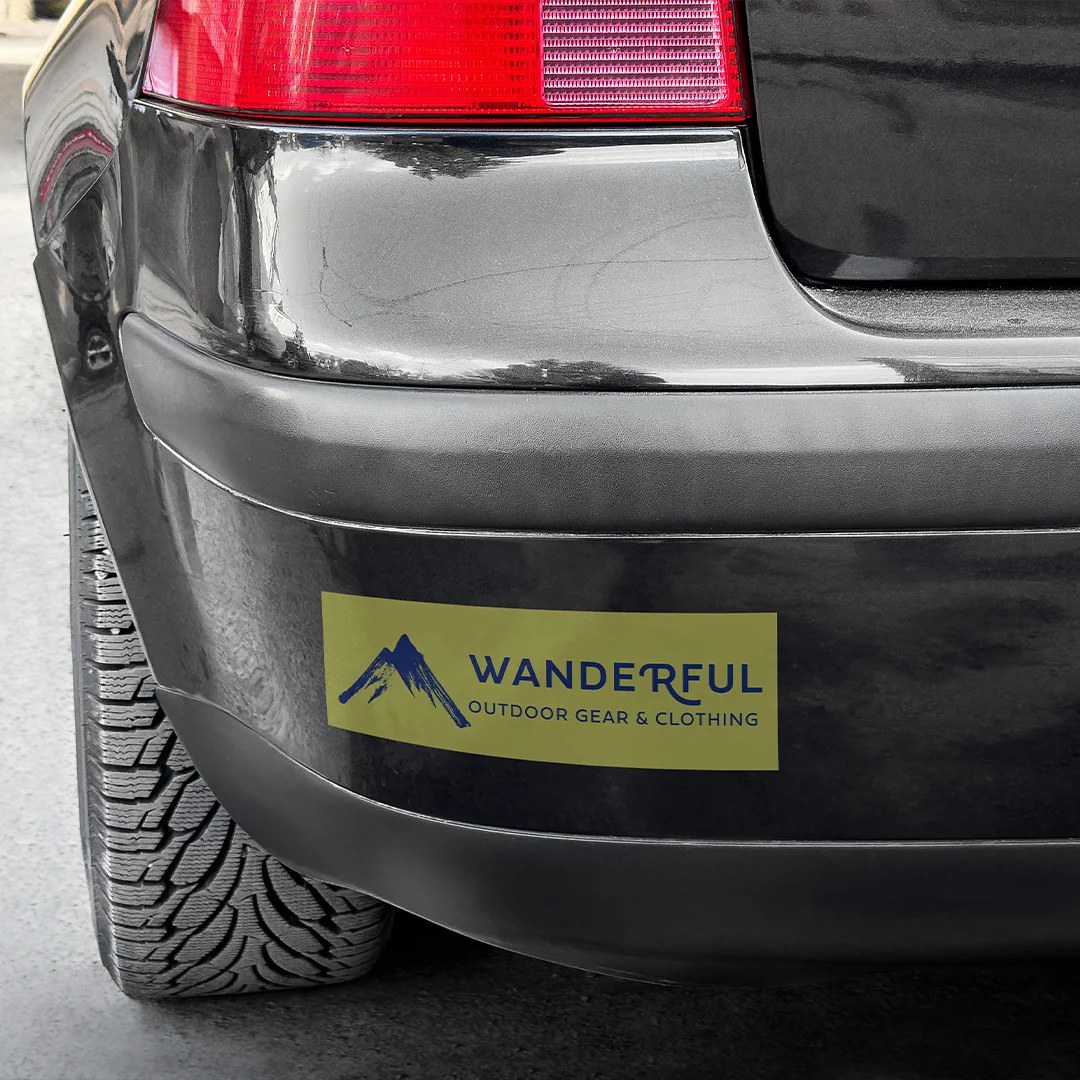
A few things that trip people up when ordering bumper stickers:
File format: Vector files (AI, EPS, PDF) are ideal. High-res PNG at 300dpi works. Low-res JPEG from a website does not – the print will be blurry.
Bleed area: Your design should extend 2-3mm beyond the trim line. Any background colour or image needs to fill the bleed, or you’ll get white edges.
Rounded corners vs. straight: Rounded corners are more than aesthetic – they genuinely improve outdoor durability. Straight corners are the first place peeling starts. Worth the small design tweak.
Quantities: The unit cost drops significantly at higher quantities. If you need 50, it’s worth checking the price at 100 – the difference per unit is often dramatic enough that you’ll wish you’d ordered more.
Browse our bumper stickers to configure size, material, and finish – or upload your artwork and get an instant quote.
Related reading:
The Bottom Line
Modern bumper stickers have nothing to do with the political relics you’re picturing. Done right, they’re durable, professional vinyl decals that work on cars, bikes, helmets, laptops, and equipment. They travel, they stay, and they’re seen by people who’d never see your social media post or flyer.
The format’s been around for 70 years because it works. The only thing that’s changed is how good they can look now.
Ready to brand something that moves? Upload your logo or get a custom quote on our bumper sticker page – from $0.14 per sticker, with flat-rate $10 shipping Australia-wide.
Ready to print? Browse bumper stickers and vinyl stickers at Paperlust Print Shop – from $0.09 per sticker with $10 flat-rate shipping Australia-wide.
Who Is Actually Ordering Bumper Stickers in 2026?
The customer profile for bumper stickers has shifted significantly. It is no longer dominated by political campaigns and novelty retailers. Today’s buyers are practical business owners and brand-conscious individuals using the format as a legitimate marketing channel.
Trades and service businesses
Plumbers, electricians, HVAC technicians, and landscapers apply vinyl bumper stickers to their vehicles and equipment. A sticker with a phone number and service area on a work truck covers more local ground per day than any social media post. For a solo tradie, a set of 50 bumper stickers applied across vehicles, trailers, tool cases, and equipment generates ongoing local brand awareness at a fixed print cost – no recurring ad spend required. The key is keeping the design clean: business name, trade, phone number, and suburb or service area. Nothing more.
Indie brands and product businesses
Small consumer brands – particularly in food, lifestyle, outdoor gear, and apparel – use bumper stickers as merchandise and brand-building tools. A sticker included with an online order costs a few cents to print but can end up on a customer’s laptop, water bottle, or car for years. If the design is genuinely good, customers will apply it. A sticker that someone chooses to display is an endorsement, not just an advertisement.
Sports clubs, schools, and community groups
Organizations use bumper stickers as member merchandise and fundraising items. A football club selling stickers as part of a membership pack, or a school producing stickers for a spirit week, is getting a tangible, wearable piece of branding at a cost that fits tight non-profit budgets. These buyers typically order in bulk (100-500 units) and need consistent color reproduction to match club colors exactly.
Event organizers and music venues
Concerts, festivals, and venues produce bumper stickers as merchandise that carries marketing value long after the event. A sticker from a memorable gig gets applied to guitar cases, record collection bins, and notebooks – reaching new audiences in music communities for years. Limited-edition event stickers also have collectible appeal that drives purchase intent among regular attendees.
How to Choose Materials and Adhesives: What to Specify
Not all vinyl bumper stickers are the same. The material specification determines how long the sticker lasts, how it adheres, and whether it can be removed cleanly. When ordering, these are the variables that matter most:
| Spec | Options | When to use |
|---|---|---|
| Material | White Gloss Removable, Clear Removable | White Gloss Removable suits a solid white background while Clear Removable shows the surface around the design |
| Adhesive | Removable | It stays put in all weather and comes off without paint damage when you apply it carefully |
| Laminate finish | No Laminate | Bumper Stickers have no laminate so no finish needs to be picked |
| Corner style | Rounded vs. straight | Rounded for outdoor durability; straight for design intent (accept faster edge wear) |
Practical Application Tips
Even a well-printed sticker fails if it is applied incorrectly. These steps help ensure a clean, long-lasting application on vehicle bumpers and flat surfaces:
Surface preparation
Clean the application surface thoroughly with isopropyl alcohol. Remove dust, oil, and residue before applying. On painted vehicle surfaces, ensure any recent touch-up paint is fully cured (typically 30 days) before applying vinyl stickers – fresh paint is softer and adhesive can bond too aggressively, making future removal difficult.
Wet vs. dry application
For large stickers on flat surfaces, a wet application (spray surface with a diluted soapy water solution) allows you to reposition the sticker before it bonds. Once positioned, use a squeegee to push out air bubbles and water from the center outward. For small bumper stickers on curved bumpers, dry application with firm pressure is usually sufficient.
Post-application care
Avoid washing the vehicle for 48-72 hours after applying stickers to allow the adhesive to fully cure. When using a pressure washer, avoid directing the spray directly at sticker edges. Edge lifting is the most common failure mode on outdoor stickers – a small amount of vinyl-safe edge sealer can extend outdoor life significantly.
Ready to order? Browse bumper stickers and vinyl stickers at Paperlust Print Shop – configure your size, material, and finish, then upload your artwork for an instant quote.
Need a different format?
Window cling, magnetic, removable vinyl — all available in the same vehicle-safe materials.
Frequently Asked Questions
What makes a bumper sticker look professional rather than cheap?
Three things: material quality, design restraint, and finish. Our Bumper Stickers are printed using White Gloss Removable or Clear Removable stock, with print durability of up to 2 years. Design-wise, the most professional-looking stickers treat the format like a small billboard – one clear message, strong contrast, and no overcrowding. A cluttered sticker with five colors and a paragraph of text reads as amateur regardless of print quality. Finally, Bumper Stickers have no laminate, so choose White Gloss Removable when you want a solid white background or Clear Removable when the surface should show through. The goal is a sticker that looks like it belongs on the vehicle, not something added as an afterthought.
What’s the best size for a bumper sticker?
The classic bumper sticker size is around 300 x 75 mm (approximately 12 x 3 inches) – wide and narrow to fit standard bumpers. However, modern vehicle graphics often use more flexible dimensions. A square or near-square format (100 x 100 mm to 150 x 150 mm) works well for logo-only applications and fits a wider range of placement positions on a vehicle. The right size depends on placement – rear bumper, side window, or toolbox. For brand-first applications, a die-cut shape that follows your logo outline will always look more intentional than a rectangular sticker. See bumper stickers for size options.
Is vinyl bumper sticker material safe for car paint?
Quality outdoor vinyl is designed to be paint-safe when applied and removed correctly. The key factors are adhesive strength and how long the sticker stays on – high-performance permanent adhesives on aged or UV-damaged paint can cause issues on removal. You do not need to ask for anything extra because our Bumper Stickers are already made with a removable adhesive. When removing any vinyl sticker, heat it with a heat gun or hair dryer first to soften the adhesive, then peel at a low angle slowly. Avoid using sharp tools on painted surfaces. Stickers applied to glass or plastic bumpers are lower risk than those applied to painted body panels.
How do I design a bumper sticker for a vehicle?
Start by deciding on placement and measure the available space. Design at the final print size, not scaled down, so you can judge legibility accurately. Use high-contrast color combinations – light on dark or dark on light – because a sticker needs to be readable in motion from 5-10 meters away. Avoid thin strokes and small text (anything under 8pt will be hard to read). Keep the message to 5-7 words maximum for a traditional bumper strip format. If your brand is primarily a logo or icon, let that be the entire sticker – a clean logo on a vehicle is more memorable than a sticker trying to communicate too much.
What’s the minimum order for bumper stickers?
The smallest run you can order at Paperlust Print Shop is 10 stickers per design. The listed runs begin at 50 and step up to 5,000 stickers, and the charge for each sticker becomes lower as the order size increases, so comparing different quantity tiers before ordering is sensible. When the right quantity is unclear, begin with a smaller run and check how the printed stickers look on the vehicle they are meant for, then order more once the design has worked for you. For current pricing at each size and quantity, see the car and bumper stickers page.