Most banner stands go against a wall. That works most of the time. But some venues put you in the middle of things: a trade show floor with foot traffic flowing from two directions, a conference foyer where delegates arrive from multiple entry points, or a queue barrier that needs to pull double duty. A single-sided stand in those spots means one face earns your brand, and the other earns nothing.
Double-sided retractable banner stands are built for exactly that situation. Two independent printed panels, one compact aluminium base, and a setup time of around two minutes. If your display location puts foot traffic on both sides, a double-sided stand converts that second face from wasted space into working signage.
This guide covers the scenarios where double-sided stands pay off, how they are constructed, and how to position them so both panels earn their keep.
Cheat sheet
- Best for: trade show aisles, conference foyers, queue environments, and freestanding centre-of-room placements
- Format: 850mm wide x 2100mm tall per face, two independent artwork panels
- Base: single weighted anodised aluminium cassette housing both panels
- Setup: approximately 2 minutes, no tools required
- When single-sided beats it: wall-adjacent, corner, or backdrop placements
- Production: 2-3 business days from artwork approval
- Current pricing and ordering: printshop.paperlust.co/products/pull-up-banners
When a Single-Sided Stand Stops Making Sense
A standard single-sided retractable banner stand is the right call the majority of the time. It is lighter, typically lower cost, and performs perfectly against walls, in corners, beside registration desks, or as a backdrop anchor. The blank reverse side is never seen, so it costs you nothing.
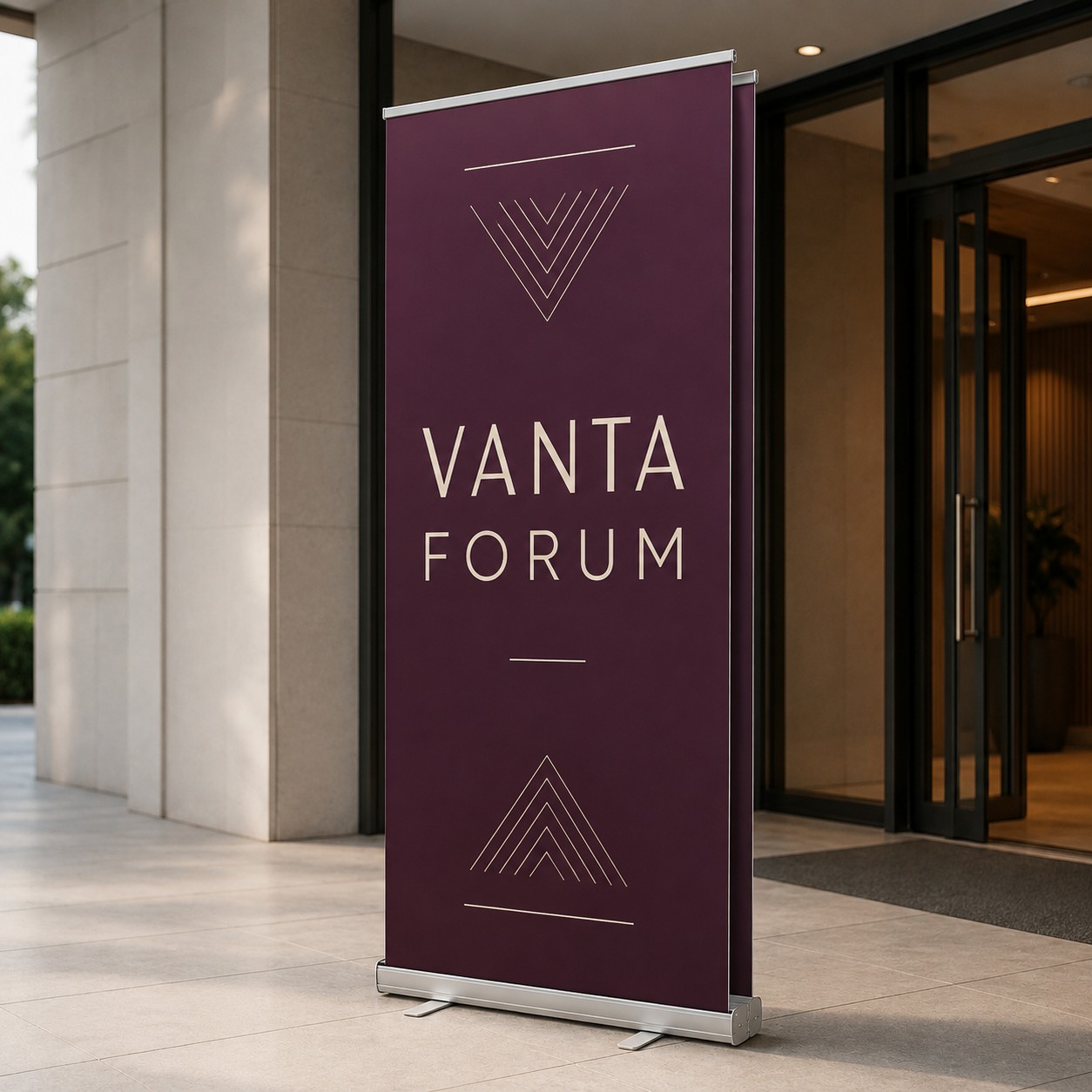
The problem arrives when the stand ends up in a position where both sides face audience. A single-sided unit in that position shows your brand to half the room and presents a blank panel to the other half. That blank face does not just waste the surface, it reads as an unfinished display.
The placements where this happens most often:
- Expo and trade show aisles. When your stand sits at the front of a booth on a thoroughfare, or in a cross-aisle position, attendees approach from both ends. The panel facing one direction captures traffic from the left; the reverse captures the walkway from the right.
- Conference registration areas. Foyers and registration desks often have delegates arriving from multiple entry points. A stand positioned at the centre earns visibility regardless of which door people come through.
- Queue environments. Entry queues, ticketing lines, and bag-check stations route people along a defined path, often passing both sides of a display. A double-sided stand placed alongside the queue means the arrival direction and the departure direction both get brand coverage.
- Retail aisle dividers. High-traffic retail environments use banner stands to direct customers or promote seasonal ranges. Placed mid-aisle, the stand needs to read from both the approaching and the returning direction.
- Shopping centre activations. Pop-up promotions and sampling activations in mall corridors sit in the middle of pedestrian traffic flowing in both directions continuously.
If your placement matches any of those scenarios, the double-sided format is the appropriate choice.
How a Double-Sided Stand Is Built
Understanding the construction helps you plan your artwork and manage expectations around weight and portability.
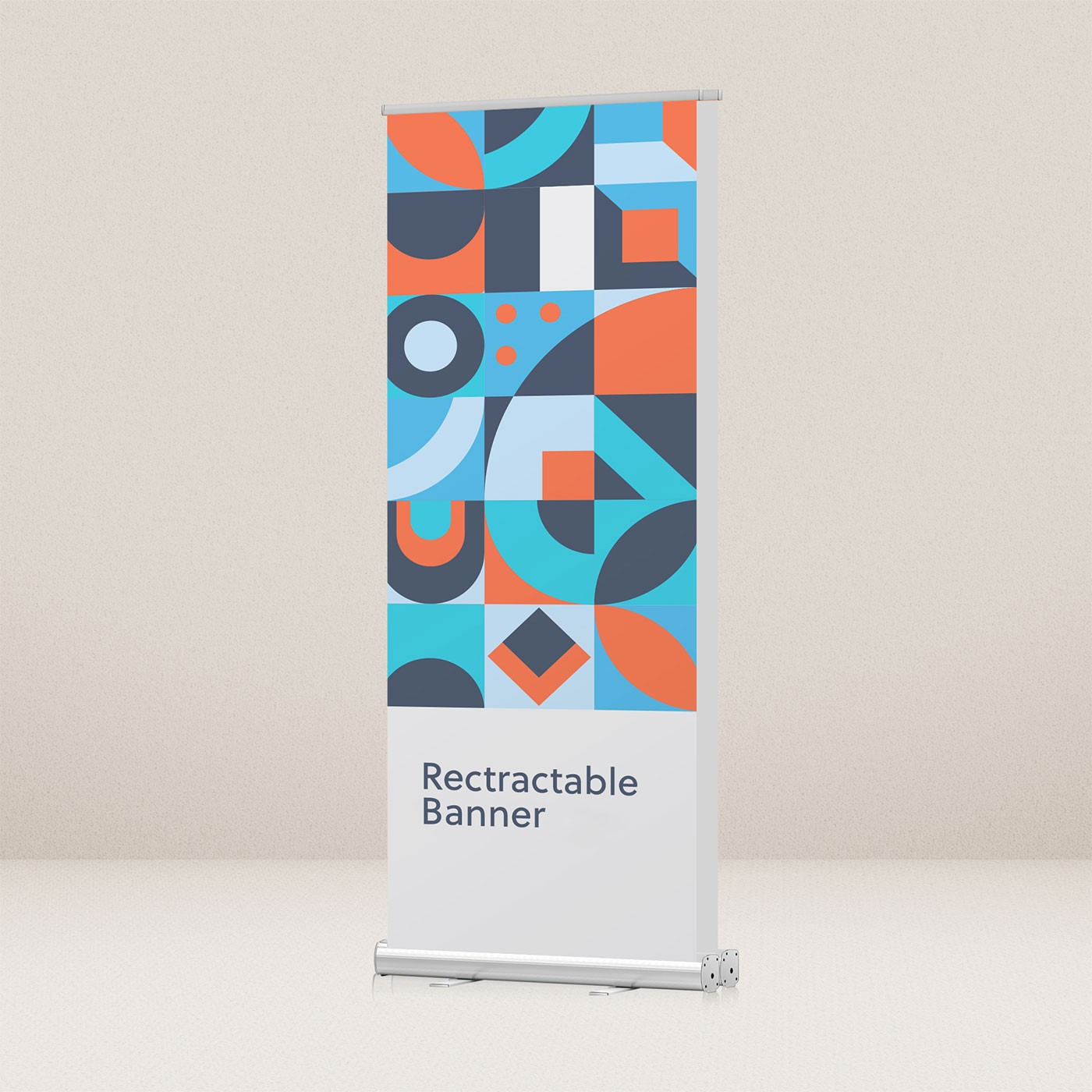
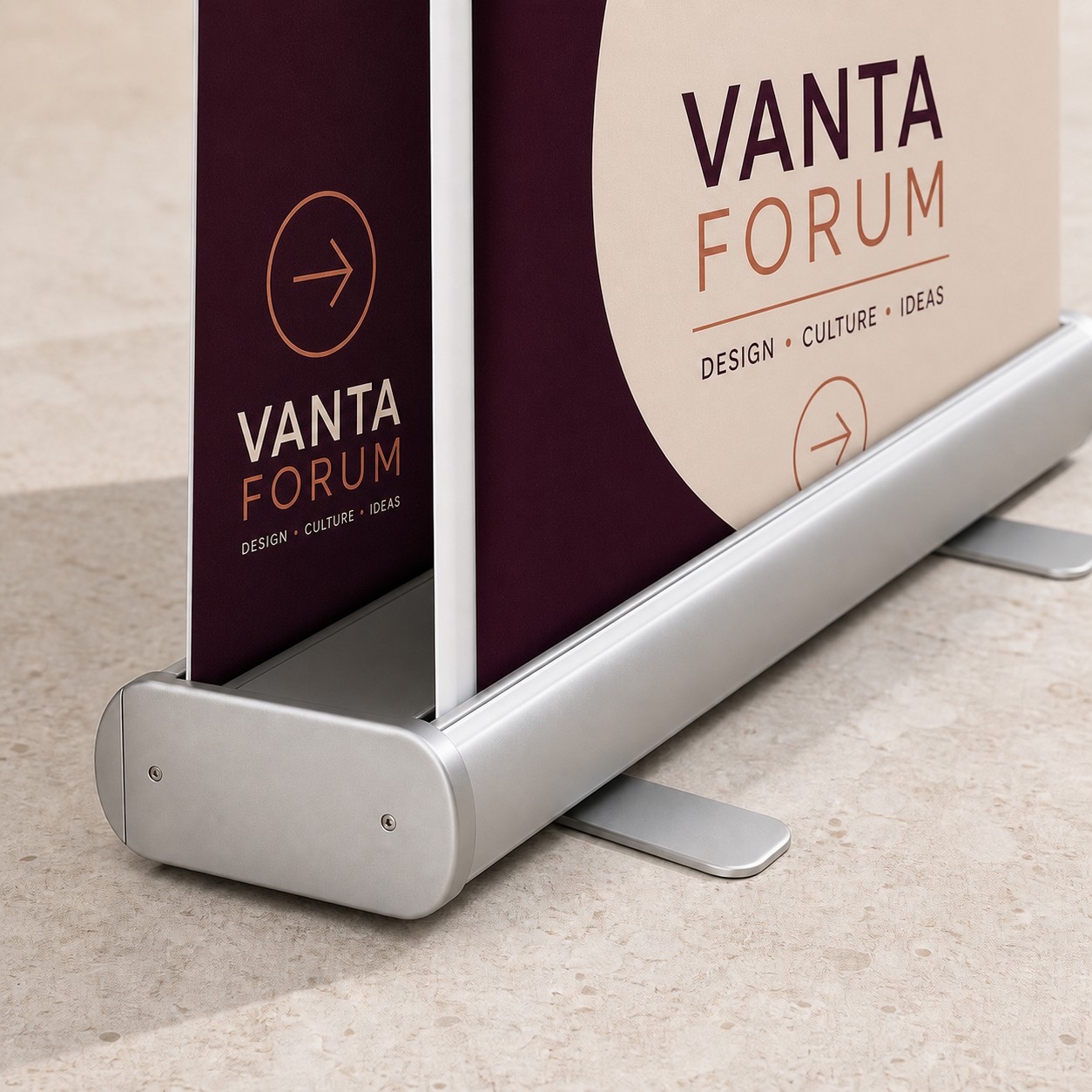
A double-sided retractable stand uses a single base cassette, in this case a weighted anodised aluminium unit, that houses retraction mechanisms for both printed panels simultaneously. When you set up the stand, both panels pull upward from the same base and attach to the top support rail, creating two independent display faces back to back.
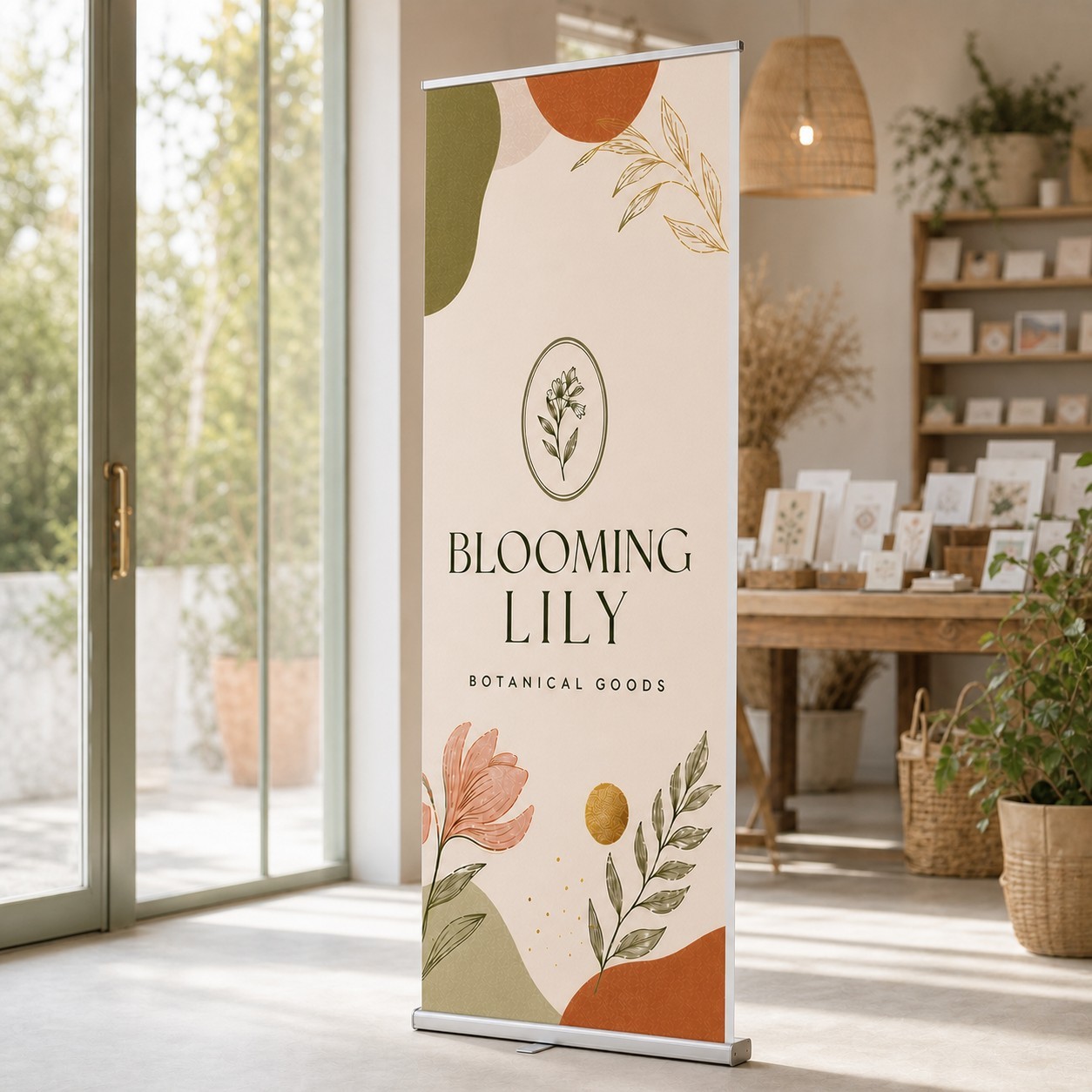
Each face carries its own artwork. The panels sit separated by an opaque layer within the cassette assembly, which prevents one print from showing through to the other when lit from behind. In practice, this means you can run completely different messaging, imagery, or calls to action on each face without visual interference between the two sides.
A few practical notes on the construction:
- The dual-panel design adds weight compared to a single-sided stand. Budget extra carry time if you are moving stands between venues or rooms during an event.
- The base is weighted to compensate for the additional surface area of two tall panels, improving stability in lightly trafficked indoor environments.
- Both panels pack into a carry bag for transport, keeping the kit self-contained.
Single vs. Double: Is the Upgrade Worth It?
The honest answer depends entirely on where the stand will live.
| Placement Scenario | Single-Sided | Double-Sided |
|---|---|---|
| Against a wall or corner | Best choice | Wasted investment |
| End of a table or booth | Works well | Small gain |
| Centre-of-room, freestanding | One side blank | Both sides working |
| Conference foyer, bidirectional traffic | Half the audience | Full audience |
| Queue or aisle divider | One direction only | Both directions |
| Outdoor activation, open ground | Adequate | Worth considering |
A double-sided stand costs more than a single-sided unit. If the placement is wall-adjacent, that extra cost buys you nothing. If the placement is freestanding with bidirectional foot traffic, a single-sided stand effectively leaves half your display investment idle.
A useful test before ordering: stand at the intended placement spot and face in every direction foot traffic might come from. If there is a meaningful approach path behind the back of a hypothetical single-sided stand, the double-sided format pays for itself.
For wall placements, a premium pull up banner stand delivers better value and is easier to transport. For budget-conscious setups or outdoor events where a lighter, simpler frame suits the environment, an X-banner stand is worth considering as an alternative format.
Placement Strategy
Choosing the right format is step one. Getting the position right at the venue is equally important.
Angle to foot traffic. Both panels should face the primary directions foot traffic moves. If the main flow runs north-south through a space, position the stand with one panel facing each direction. Angling the stand 45 degrees away from that axis loses significant visibility from the primary approaches.
Give it clearance. A double-sided stand in a narrow corridor forces passing traffic to squeeze around it. A stand that creates congestion will be moved by venue staff or pushed into a corner. Plan for at least 800mm of clearance on each side in a corridor, wider in higher-traffic environments.
Height works for queues. Queue environments often have competing signage at multiple levels. A banner stand at 2100mm tall clears most crowd-height obstructions and reads above the heads of queuing customers.
Front the key message to the entry point. If one side of a double-sided stand faces a door or natural entry point, front that panel with your primary message or call to action. The reverse panel, facing the interior of the venue, can carry supporting information, secondary offers, or a QR code linking to more detail.
Outdoor use. Double-sided stands are heavier and present greater surface area than single-sided units, which means wind load matters more. In lightly exposed outdoor environments, a weighted base performs adequately. In open outdoor sites or exposed windy conditions, seek additional anchoring or consider a purpose-built outdoor format.
Setup and Portability
Setting up a double-sided pull up banner stand takes around two minutes and requires no tools.
The weighted base sits flat on the floor. Both panels pull upward from the cassette and attach to the support pole and top rail. The process mirrors a single-sided stand, with the addition of a second panel. No specialist knowledge or event installation experience is needed, and the stand packs down equally quickly at the end of an event.
For transport, the stand comes with a carry bag. The combined weight of a dual-panel stand is higher than a single-sided equivalent. If the stand needs to travel between multiple venues in a day or move between rooms during a multi-session event, factor that extra weight into your logistics planning.
Frequently Asked Questions
Can I use a completely different design on each side?
Yes. Each face accepts its own independent artwork file. There is no requirement for the two sides to share colours, layout, or messaging. Common approaches include running two different products on each face, a campaign message on one side and pricing or contact details on the other, or two languages for bilingual events.
Does the opaque layer prevent light-bleed between the two panels?
Double-sided stands use an opaque separator between the two panels in the cassette assembly. This prevents light from transmitting through the print from one side to the other. In normal indoor lighting, each face reads as a standalone panel without visible bleed from the reverse.
Is a double-sided stand stable enough for outdoor use?
Double-sided stands are designed primarily for indoor use. The weighted aluminium base provides reasonable stability in lightly exposed outdoor conditions, but open outdoor sites with wind exposure increase the risk of the stand tipping. If you need outdoor display, position the stand in a sheltered spot or use additional anchoring appropriate for the site.
How much heavier is a double-sided stand compared to a single-sided unit?
The dual-panel construction and weighted base make a double-sided stand noticeably heavier than a single-sided equivalent. If you need to move the stand frequently through an event, plan for that extra weight when working out your logistics.
Can I update or replace just one panel after the initial order?
Contact the Paperlust Print Shop team at the time of ordering to confirm options for your specific requirements. Planning both artwork files upfront before ordering gives you the best outcome and the cleanest turnaround.
What are the panel dimensions?
Each panel is 850mm wide by 2100mm tall. Both faces on a double-sided stand share the same dimensions, so your artwork files for each side should be set up to those specifications.