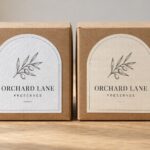
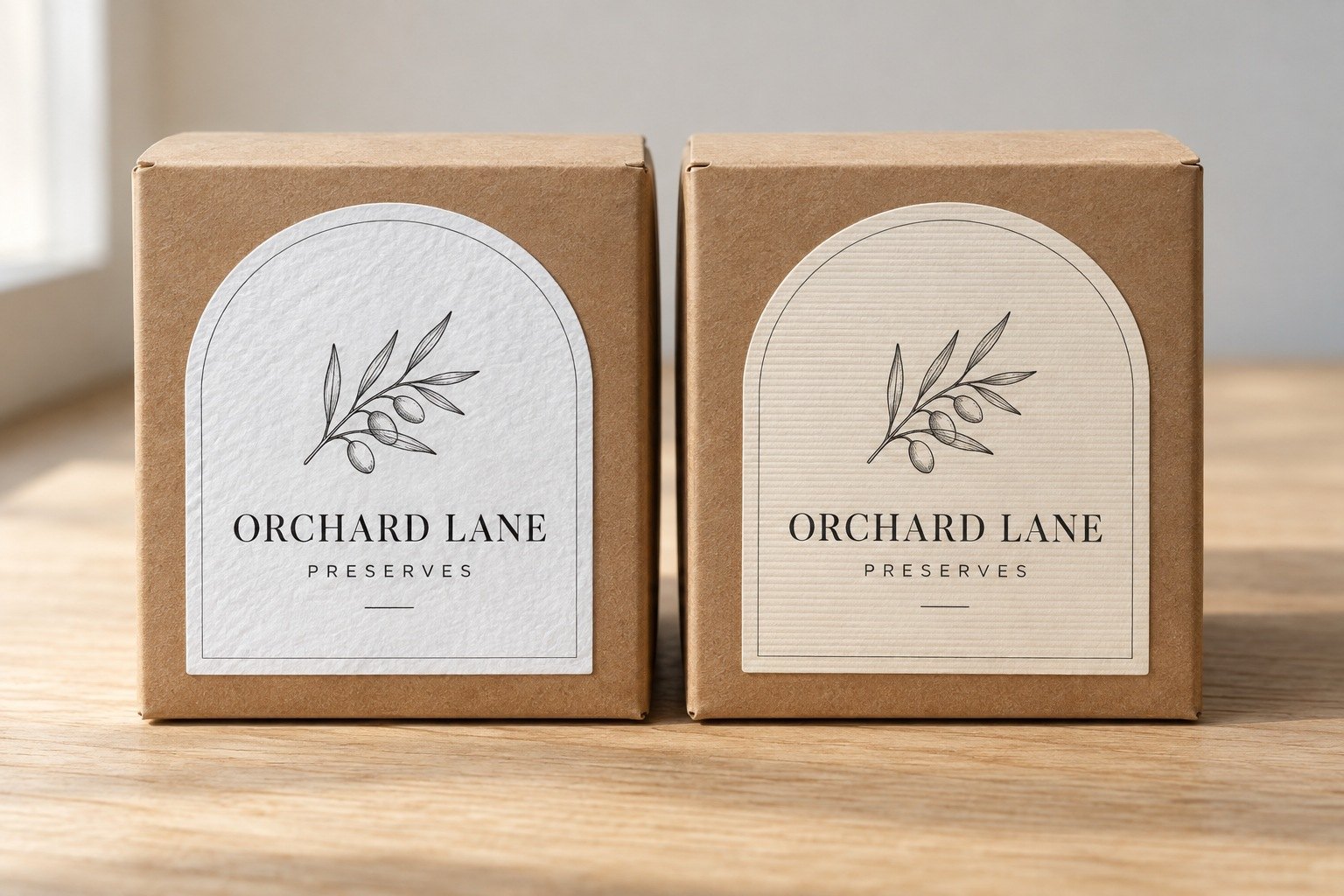
A candle maker holds two sample sheets up to a jar under the kitchen light and cannot decide. One is bright white with a soft felt mark. The other is warm white with a fine ribbed linen texture, and the choice between the two textured stickers looks larger than the differences suggest.
It is not a large difference. Both stocks cost the same and print the same way. What changes is the white and the texture, and both matter more in packaging than they sound.
This guide compares the Felt and Linen stocks, the product and palette each suits, artwork that works on a textured face, the unlaminated limit, and how to order.
The short version
- Felt is bright white with a soft felt mark.
- Linen is warm white with a fine ribbed surface.
- Both cost the same, in any shape.
- Both are supplied unlaminated so the texture stays tactile.
- Both are made for packaging kept indoors.
Felt vs Linen: the two textured paper stocks side by side
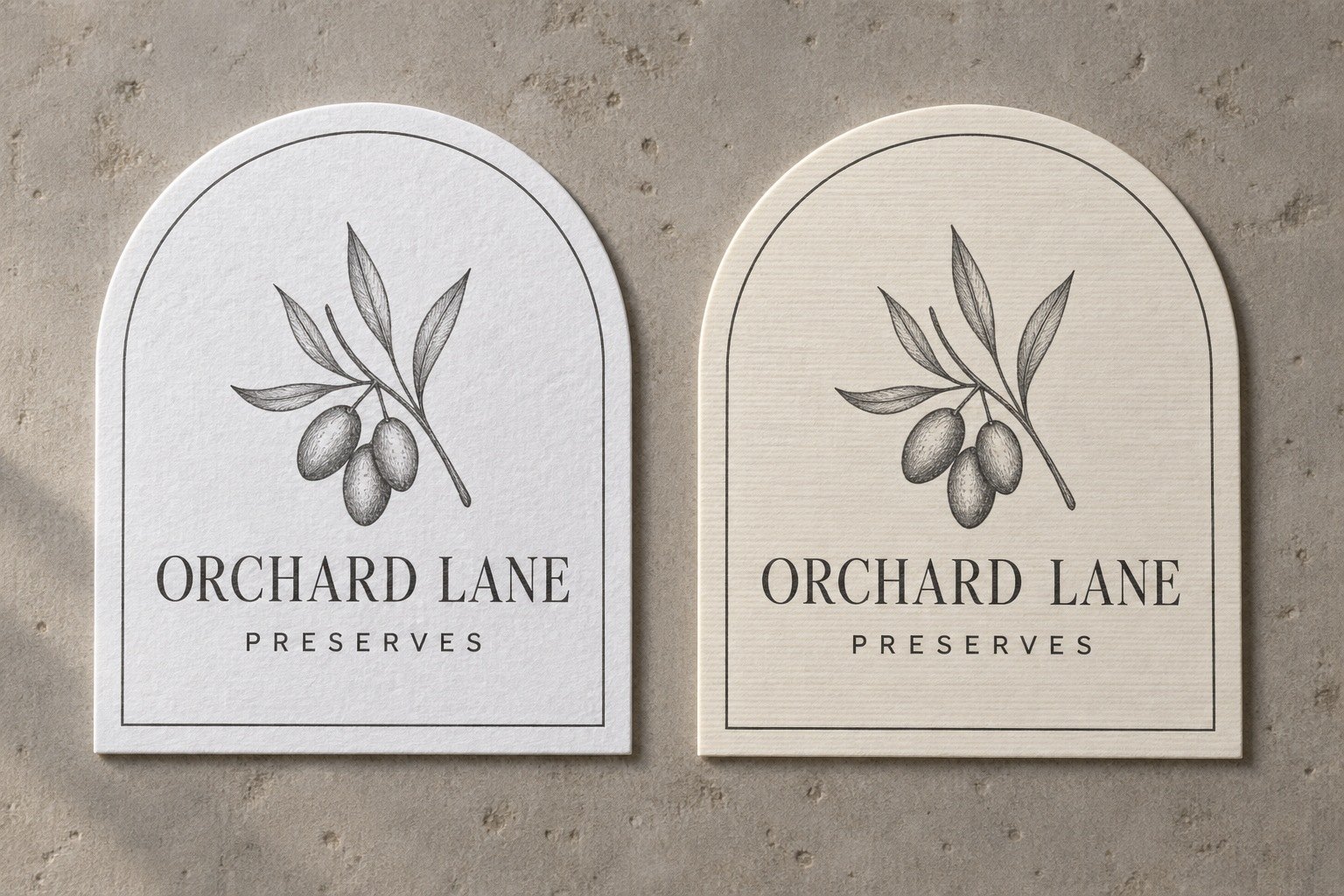
The practical difference is small but visible. Felt is the brighter of the two premium uncoated stocks, and Linen is the warmer of the two premium uncoated stocks. The table below holds the short comparison. The sections after it explain how each difference plays out on packaging people will hold.
| Quality | Felt | Linen |
|---|---|---|
| Base colour | Bright white premium uncoated paper | Warm white premium uncoated paper |
| Texture | Soft felt mark pressed into the sheet | Fine ribbed linen texture |
| Laminate | Unlaminated | Unlaminated |
| Price | Same price in any shape | Same price in any shape |
| Best suited to | Cool, crisp palettes and products that suit a brighter white | Warm, earthy and natural palettes and products that suit a softer white |
Neither stock is better quality than the other. They differ in base white and texture only, so the choice should follow the product, the palette and the artwork. If you have held both samples, you already know which white feels right for the jar in your hand.
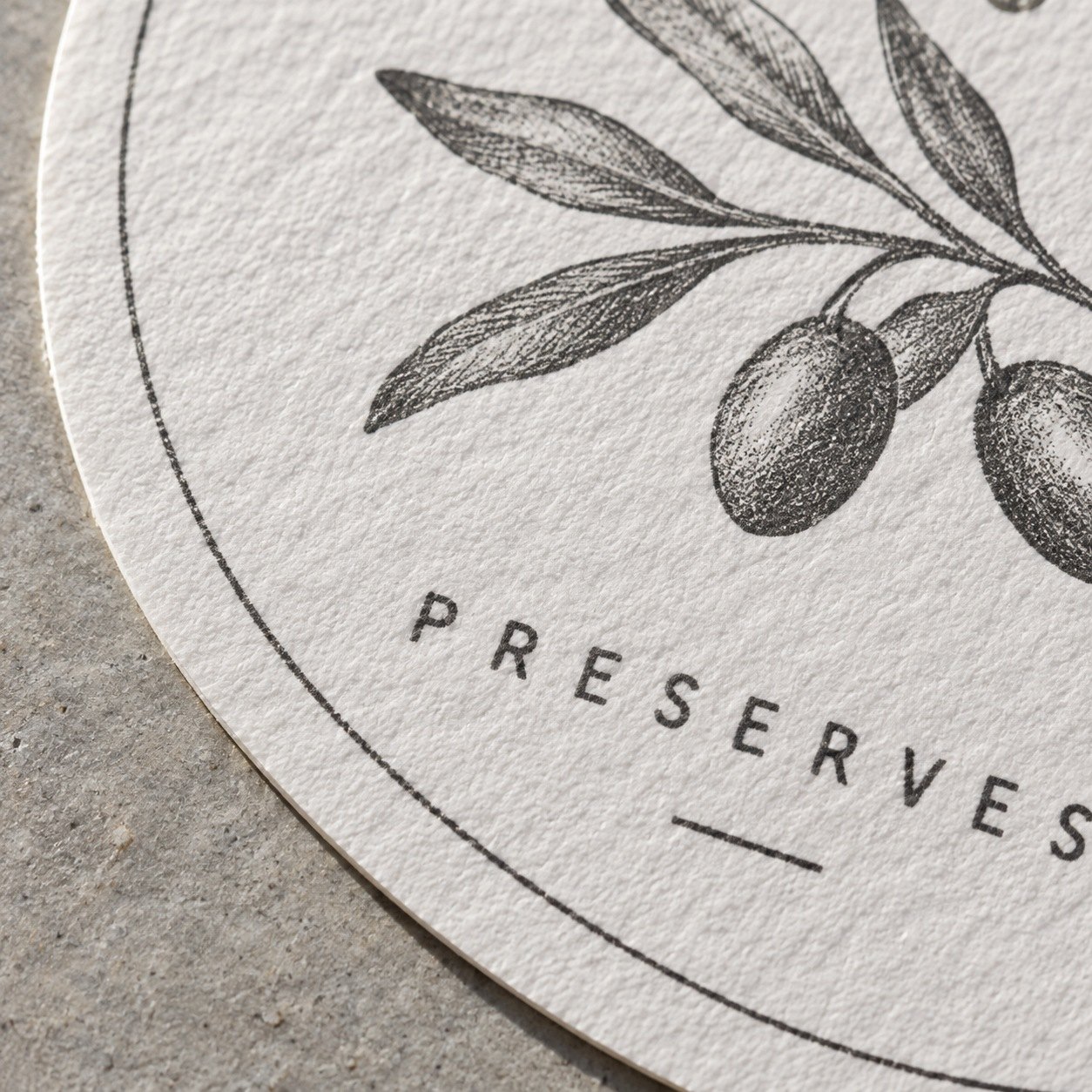
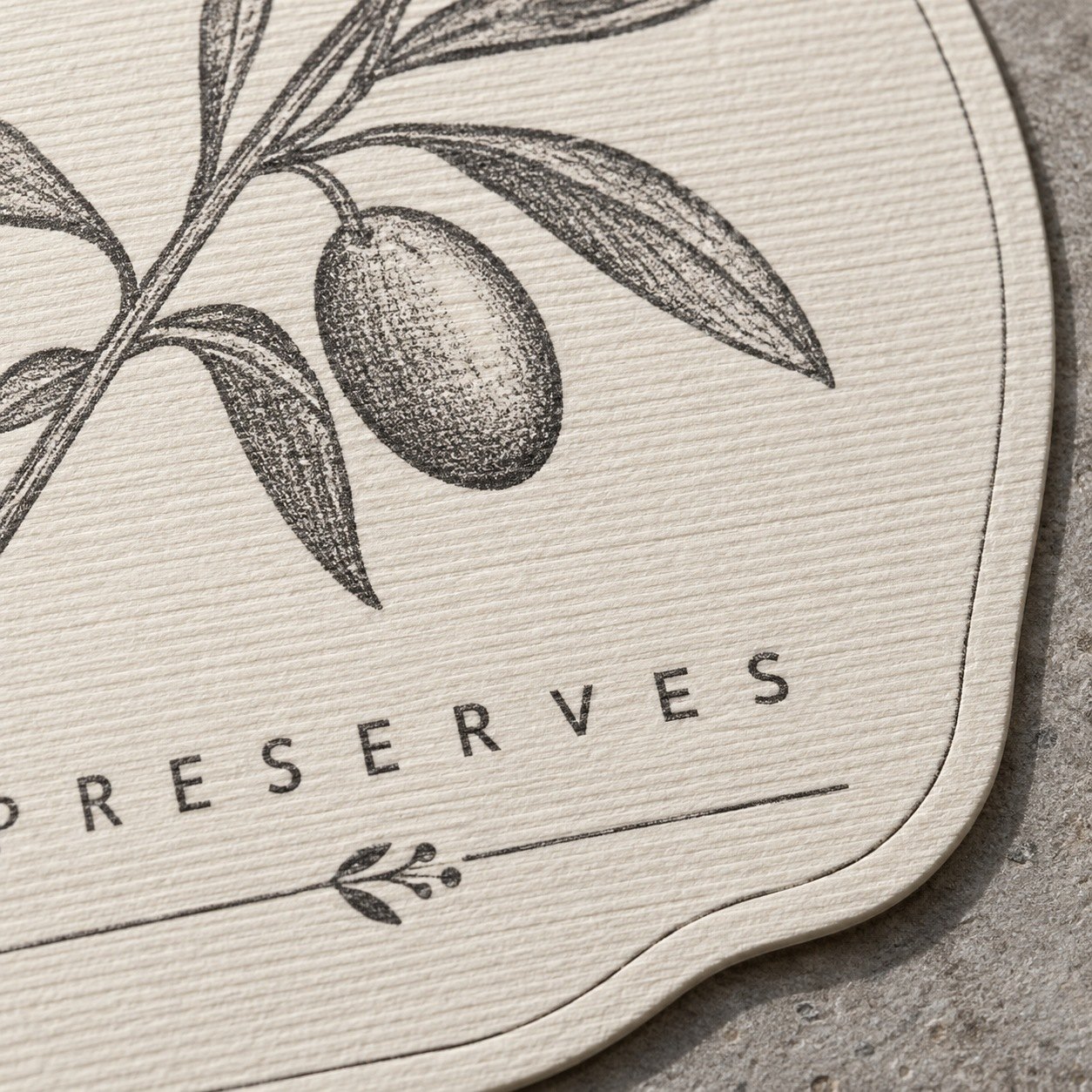
Choosing the right stock for your product and packaging palette
These are premium packaging stickers, and the base white sets the mood before the artwork is read. A bright white base keeps cool and crisp palettes clean. Felt stickers work well on white labels, pale jars, clear glass and packaging with a sharp, modern art direction. If your soap boxes use a clean line illustration on white, the bright sheet keeps the contrast high.
Linen stickers use a warm white base, so they sit comfortably with warm, earthy and natural palettes. On kraft boxes, amber glass and cream paper, the fine ribbed surface feels like part of the packaging rather than a label pasted over it. A candle with a pale sage label may settle on Felt, while the same candle in a brown tin with cream artwork may settle on Linen.
Then think about the moment the customer lifts the finished product from the shelf. A bright white Felt label reads as clean and precise on a clear candle jar or a pale box. A warm white Linen label feels more settled on a brown jar or a kraft bag, as though the label and the packaging belong to the same family. The product list is the same. The white and the texture decide which end of that list a label suits.
Designing artwork for a textured face
Both stocks are printed digitally in CMYK. Because the texture reads through printed areas, solid colours and bold type print cleanly on the tactile surface. That is one reason these two textured paper labels reward simple, high contrast artwork rather than soft gradients or thin serif details.
Designs that leave bare paper showing let the texture do the talking. Line art, minimal logos and unprinted borders all work well. A small batch candle label with lots of open paper will feel more tactile on either stock than a fully printed label would.
Think of Felt as the high-contrast option for artwork. Its bright white base gives solid colour and bold type a crisp edge, and open paper stays visibly clean. Linen’s warm white base does something quieter: solid colour still prints cleanly, but the fine ribbing behind the ink makes the whole label feel more grounded. A minimal logo in one solid colour works on both. The choice is whether you want the open areas to feel bright and sharp, or warm and softly textured.
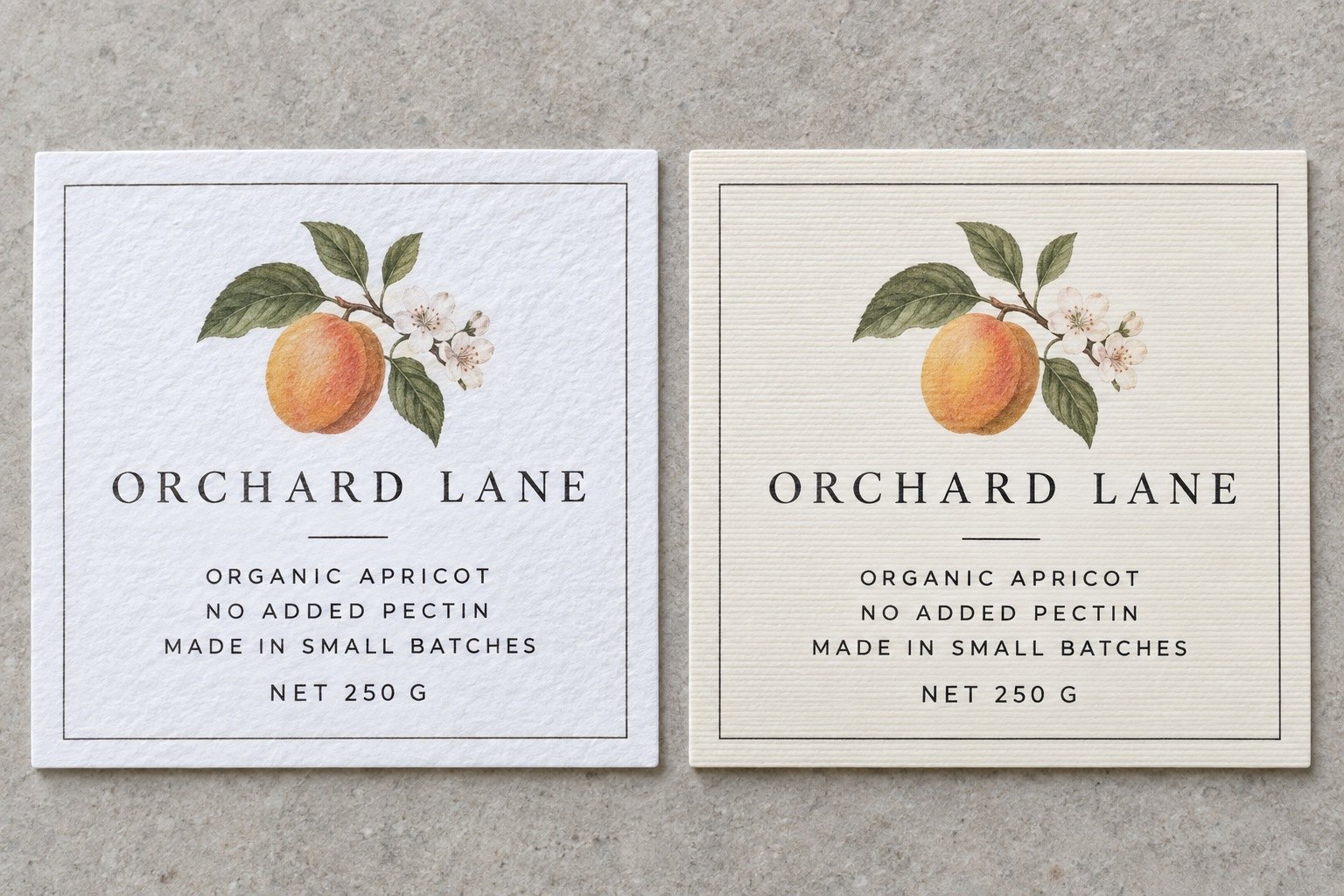
If you reverse fine type or small detail out of a solid block, keep the reversed out detail a little larger than you would on a smooth laminated surface. The uncoated textured face softens the edge, and fine detail can close up.
Why these textured stickers are unlaminated, and what that means
Both stocks are supplied unlaminated because a laminate film would flatten the felt mark or the ribbed linen surface. Unlaminated, the surface stays tactile under the ink. That is the point of the stock.
The trade-off is that these are paper stickers with a permanent acrylic adhesive, suited to jars, bottles, tins and boxes indoors. They are not waterproof, and they are not recommended for prolonged outdoor use. If the package might get wet or live outdoors, choose waterproof vinyl stickers instead.
For indoor packaging, the permanent acrylic adhesive is made for jars, bottles, tins and boxes. If you need a coated finish, the discussion changes, and you can compare glossy and matte sticker finishes before you commit.
Sizes, shapes, quantities and how to order
The two stocks are the same price, and the texture choice never changes the cost. Every design is kiss cut to any shape, whether square, circle, rectangle, oval or a custom outline, and every shape is the same price.
Ordering starts with eight preset sizes from 30 x 30 mm to 102 x 127 mm. Custom sizes are available by request. Quantities run from 25, 50, 100, 250 and 500 per design, with custom quantities by request, and the minimum is 25 per design.
A PDF proof is emailed before printing. The stickers are printed and kiss cut in Australia, and delivered Australia-wide. If you are in the United States, use the textured stickers for US orders page.
Frequently asked questions
What is the difference between Felt and Linen textured stickers?
Felt is a bright white premium uncoated paper with a soft felt mark pressed into the sheet. Linen is a warm white premium uncoated paper with a fine ribbed linen texture. They cost the same and print the same way.
Do Felt and Linen cost the same?
Yes. The two stocks are the same price, and the texture choice never changes the cost.
Are textured stickers waterproof?
No. Textured stickers are not waterproof, and they are not recommended for prolonged outdoor use. They are made for packaging kept indoors.
Why are textured stickers not laminated?
They are not laminated because a laminate film would flatten the felt mark or the ribbed linen surface. Leaving them unlaminated keeps the surface tactile under the ink.
Which shapes are possible for textured stickers?
Every design is kiss cut to any shape. That includes square, circle, rectangle, oval and a custom outline, and every shape is the same price.
What is the minimum quantity for textured stickers?
The minimum is 25 per design. Quantities of 25, 50, 100, 250 and 500 per design are available, with custom quantities by request.