The photos from your event will keep circulating long after the day itself. A well-designed backdrop turns every guest snap into branded content and every group shot into organic reach across social media. The challenge is picking the right format for your venue, your audience, and the number of people you need to move through the photo moment in a session.
This guide covers the three most popular photo backdrop options for Australian events: stretch fabric media walls, selfie frames, and step-and-repeat logo walls. We cover how each works, when to use it, how to size for groups, and how to design for maximum photo impact.
Whether you are running a product launch, a gala, a birthday activation, or a brand pop-up, the right backdrop takes your event photography from amateur to polished.
Cheat sheet
- Step-and-repeat: tiled logo grid printed on a full-size backdrop; suited to press calls, sponsor walls, and multi-brand activations
- Stretch fabric media wall: 230gsm dye-sublimated polyester on an aluminium frame; two standard sizes: 2400 x 2200 mm and 3000 x 2200 mm; tool-free assembly in 5-10 minutes
- Selfie frame: rigid 5mm TEKpvc foamboard at A1 size (594mm x 841mm); lightweight, portable, and reusable across multiple events
- Sizing guide for groups: 2400 mm wide for groups up to four people; 3000 mm wide for groups of four to six people; contact the team for custom sizing above six people
- Design files: supply vector artwork in AI, EPS, or SVG format for sharp results at large print scale
- Production: media walls produced in 3-5 business days after artwork approval; selfie frames in 3-4 working days
- Flat-rate shipping Australia-wide on all products
What Is a Step-and-Repeat Backdrop?
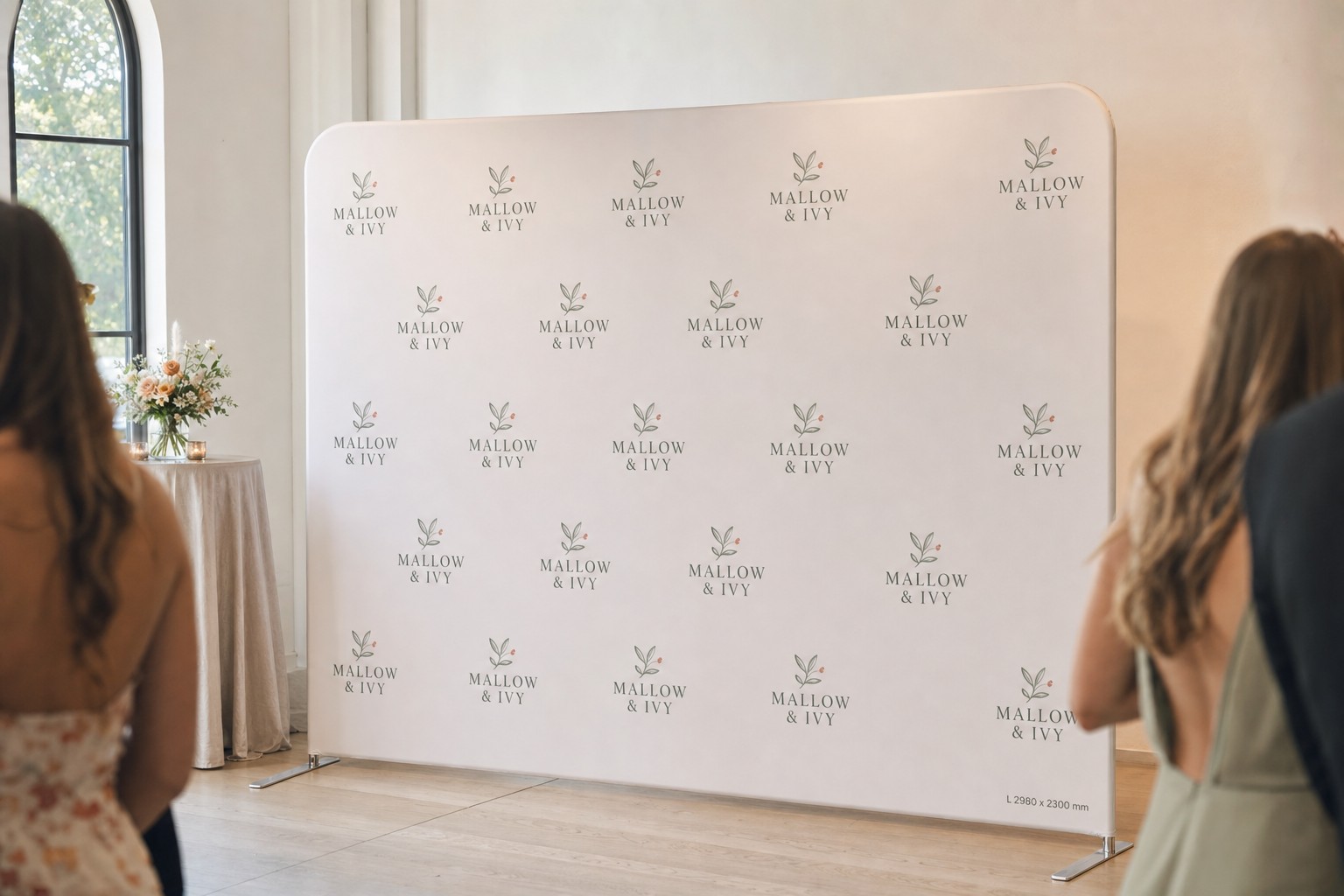
The term “step and repeat” describes a design layout, not a product type. The artwork is a single logo or a set of sponsor logos repeated in a tiled grid across the backdrop’s full surface. Guests step in front of it and the pattern repeats behind them at every position, so the brand appears in each photo regardless of where the subject stands in the frame.
In practice, step-and-repeat artwork is printed onto a stretch fabric media wall or a vinyl banner. The format is standard for red carpet events, press conferences, award ceremonies, product launches, and sponsor activations. For a single-brand event, the logo tiles can carry your company mark, event name, hashtag, or all three combined in a repeating unit.
Selfie Frame vs Media Wall: Choosing the Right Format
Both formats serve photo booth functions but solve different problems at an event.
A selfie frame is a rigid printed board with a cutout aperture at face height. Guests pick it up, position themselves behind it, and the frame becomes part of the photograph. Because it is a handheld prop, it travels easily between rooms, works in any available space, and does not require a fixed photo zone in your floor plan. The A1 format (594mm x 841mm) is comfortable for one or two people and suits smaller events, breakout areas, and roaming activations where a full backdrop is impractical.
A stretch fabric media wall is a full-sized backdrop on an aluminium frame. It anchors your brand in one location, creates a clear dedicated photo zone, and accommodates groups of any size depending on the width you choose. The matte finish on the 230gsm Expo stretch polyester minimises glare under event lighting, which is a practical advantage over vinyl or gloss alternatives.
| Format | Best for | Group size | Setup requirement | Price from |
|---|---|---|---|---|
| Selfie frame | Smaller events, roaming props, portable activation | 1-2 people | No setup | $114.34 AUD |
| Stretch fabric media wall | Dedicated photo zones, larger groups | 2-10+ people | 5-10 min, tool-free | |
| Step-and-repeat design | Press calls, sponsor walls, multi-brand events | Any | Printed onto media wall | Included in media wall |
Sizing a Media Wall for Group Photos
The standard height across both media wall formats is 2200 mm, which keeps full-length standing subjects in frame without the backdrop behind them appearing cropped. Width is the variable you choose based on group size and venue footprint.
- Small (2400 x 2200 mm): solo portraits, couples and groups of up to about four people
- Large (3000 x 2200 mm): groups of about four to six people, press lines and wider sponsor walls
Custom dimensions are available on request. Measure your venue’s available space before ordering, as a backdrop that is too wide for the room creates setup issues and photographs awkwardly.
Designing Your Step-and-Repeat: Logos, Spacing and Pattern
Every design decision on a step-and-repeat backdrop shapes how the final photo reads, not only how the product looks in the room.
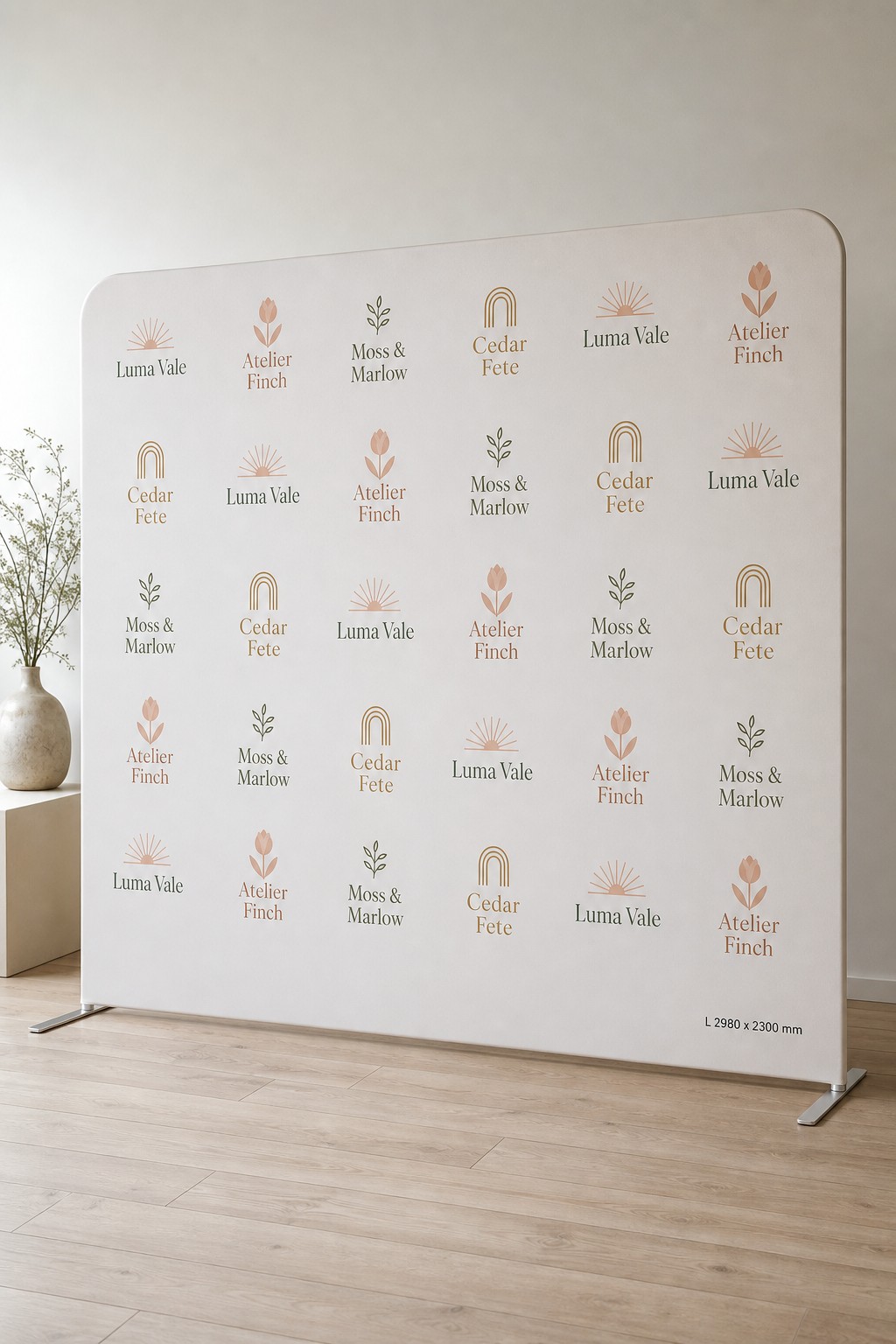
Logo size: Each tile should be large enough to read clearly in a cropped social media photo. At a standard photo booth distance of 1.5-2 metres from the camera, keep individual logo instances no smaller than 250-300mm in height. Below that, logos read as texture rather than identifiable brand marks.
Spacing: Tiles are typically spaced 300-450mm apart, centre to centre. This density ensures at least three or four full logo instances appear behind a subject at most crop ratios, giving every post a consistent branded backdrop.
Stagger vs straight grid: A staggered (offset) row layout is industry standard for step-and-repeat. Odd and even rows shift horizontally by half a tile width, creating a visual rhythm that reads as intentional design. A straight grid works for geometric or typographic branding but can look repetitive rather than refined in photography.
Single brand vs multi-sponsor: For single-brand activations, tile your logo and event hashtag as a paired unit. For multi-sponsor walls, give each sponsor equal visual weight by scaling logos to occupy the same perceived area, not the same pixel width. A wide horizontal logo and a compact square logo need different widths to look balanced next to each other.
File format: Supply artwork as AI, EPS, or SVG files. Rasterised images (JPEG or PNG) lose sharpness at large print scale. If you are designing in Canva, export as SVG rather than PNG before submitting.
Setup and Reuse
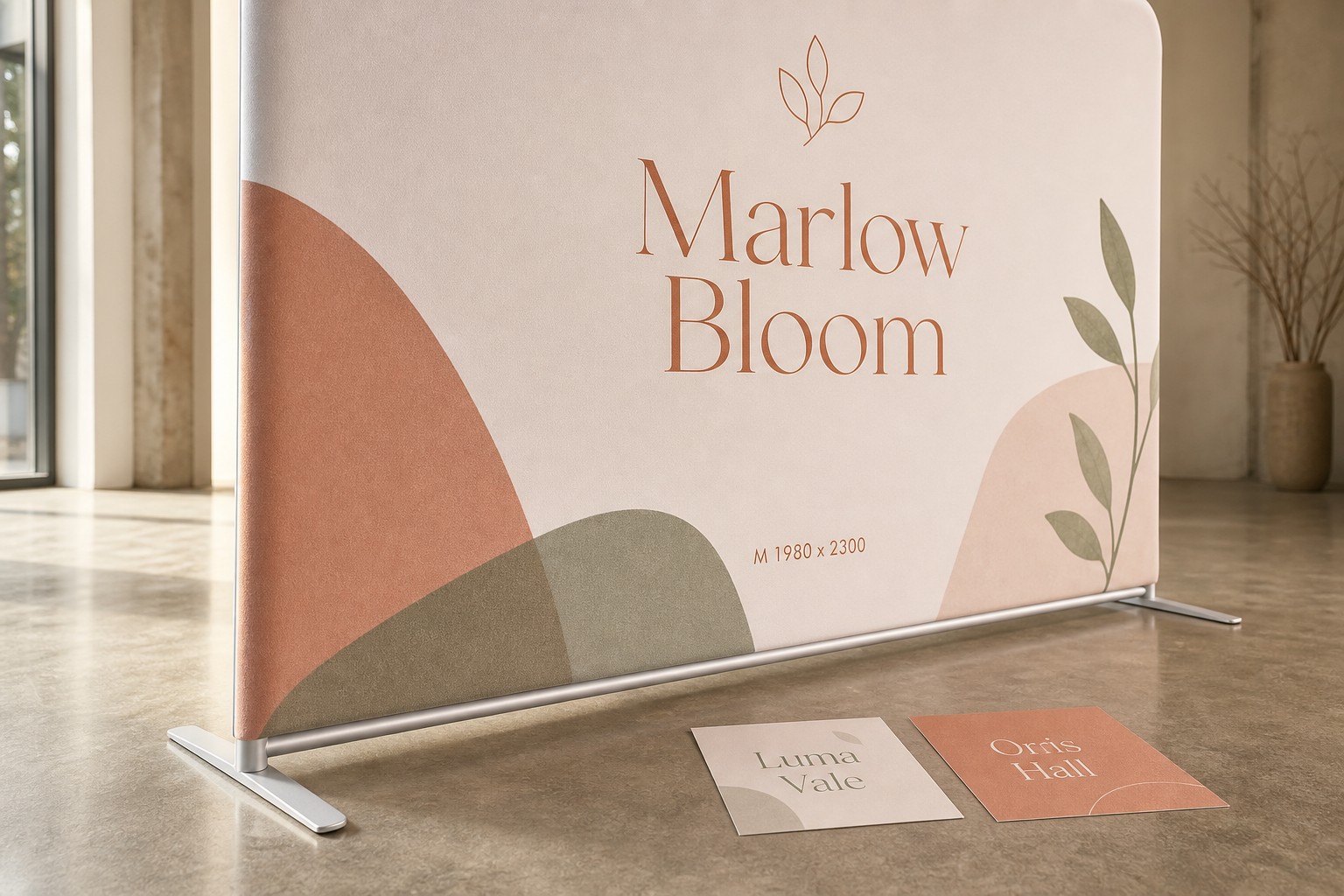
Stretch fabric media walls arrive as a fabric skin, an aluminium frame kit, and a carry bag. The frame snaps together without tools and the Small 2400mm wide wall takes around 5 to 10 minutes for one person to assemble, while the Large 3000mm wall is easier with two. The fabric sleeve stretches over the assembled frame under tension, producing the seamless, wrinkle-resistant surface.
The fabric skin removes from the frame, stores flat in the carry bag, and travels without damage. Replacement skins are available separately, which means the aluminium frame is a long-term asset rather than a single-use cost.
For larger events, pair your backdrop with a teardrop banner at the entrance to the photo zone to direct foot traffic and reinforce brand presence across the perimeter of the event space.
Selfie Frame Design Tips
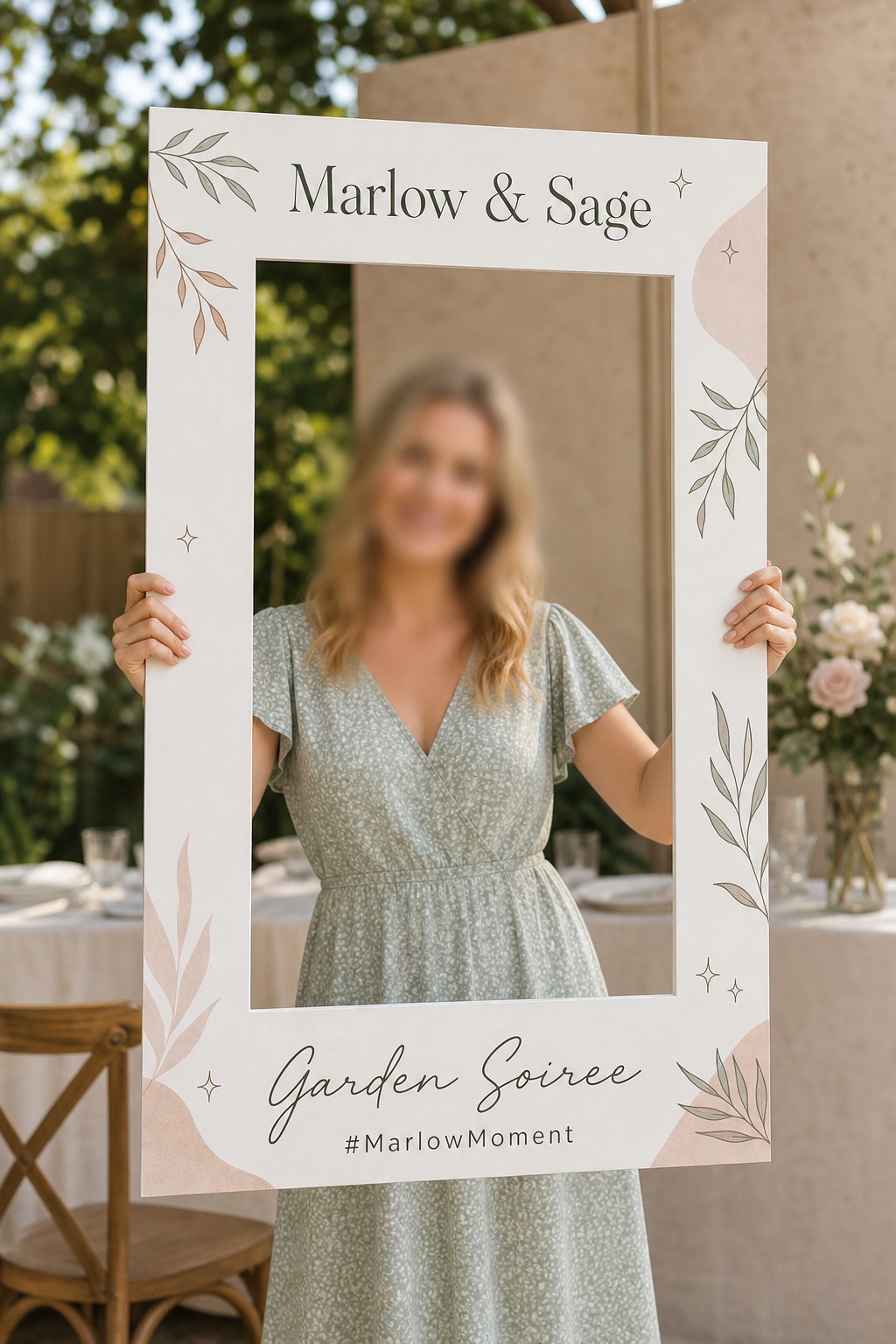
The aperture on a selfie frame should sit at face height for most of your guests when the frame is held at arm’s length. If the frame will be positioned on a stand or table as a stand-behind prop rather than held, adjust the aperture position in your design brief accordingly.
Design the printed border with your event name, brand mark, hashtag, and any supporting graphic elements. Keep the artwork bold rather than intricate, fine detail compresses significantly when photographed close-range on a phone camera. Use high-contrast colours so the frame reads clearly against a range of backgrounds, from white venue walls to outdoor settings.
Frequently Asked Questions
What is the difference between a step-and-repeat and a media wall?
A media wall is the physical product: a stretch fabric backdrop on an aluminium frame. Step-and-repeat is a design layout where logos are tiled in a repeated grid across the artwork surface. A media wall can carry step-and-repeat artwork or any other full-print design. The two terms are used interchangeably in the events industry, which causes confusion at the brief stage. The simplest way to think about it: step-and-repeat is the design style, media wall is the product you print it on.
What size media wall do I need for a photo booth?
For a standard photo booth setup where 2-4 guests will pose together, the 2400 mm wide media wall is the most practical choice. For larger groups of about four to six people or a more visually dominant backdrop, the 3000 mm option gives more coverage. Both standard sizes share the same 2200 mm height, which is sufficient for full-length standing subjects without cropping the backdrop above their heads.
What file format should I supply for a step-and-repeat backdrop?
Vector files are strongly preferred: AI, EPS, and SVG formats produce sharp results at any print scale. JPEG or PNG files lose quality when enlarged to backdrop dimensions. Full-bleed CMYK artwork in PDF format is also accepted. Confirm your file meets the required spec with the Paperlust Print Shop team before submitting.
Can a selfie frame be used without a separate backdrop?
Yes. A selfie frame is a standalone prop. Guests pick it up and photograph through the aperture against any background, whether a plain wall, a venue feature, or an outdoor setting. It does not require a dedicated backdrop to function, which makes it practical for events without a fixed photo zone or for activations that move through a space.
What is the production turnaround for a custom media wall or selfie frame?
Stretch fabric media walls are produced in 3-5 business days after artwork approval. Selfie frames are produced in 3-4 working days after design approval. Flat-rate shipping applies to both products across Australia.