Holographic stickers either look expensive or they look like a school craft project. There’s very little middle ground.
The difference isn’t the sticker – it’s whether the effect suits the brand and whether the design is set up to work with it. A beauty brand can use holographic foil and look like a luxury collectible. A law firm can use the exact same sticker stock and look like they printed it in a hurry. This guide covers everything you need to know about holographic stickers: what they are, when they work, how to design for them, and what to expect from the print process.
At a Glance
Holographic stickers either look luxe or look like a school craft project — context decides which.
The rainbow prismatic effect needs the right brand, the right design, and intentional placement. Beauty and youth-focused brands tend to win with it; B2B and traditional categories tend to lose.
- Best for: beauty, gaming, youth fashion, novelty, limited-edition packaging
- Avoid for: law firms, financial services, traditional B2B, conservative brands
- Two effects to know: rainbow prismatic (whole sticker) vs holographic foil (selective accents)
- Minimum order: 50 stickers per order; the maximum is 1,000 stickers per order
What “Holographic” Actually Means
The word gets used loosely. There are two distinct effects that people often call holographic:
Rainbow prismatic (true holographic)
This is the classic rainbow-shifting effect – the surface diffracts light and shows the full color spectrum as you tilt it. It’s created by a micro-embossed pattern on the material itself. The effect is always there, regardless of what’s printed on top. Your printed colors sit over the prismatic film, and the two interact: the holographic effect shows through wherever the ink allows.
This is what most people picture when they say “holographic sticker.”
Holographic foil
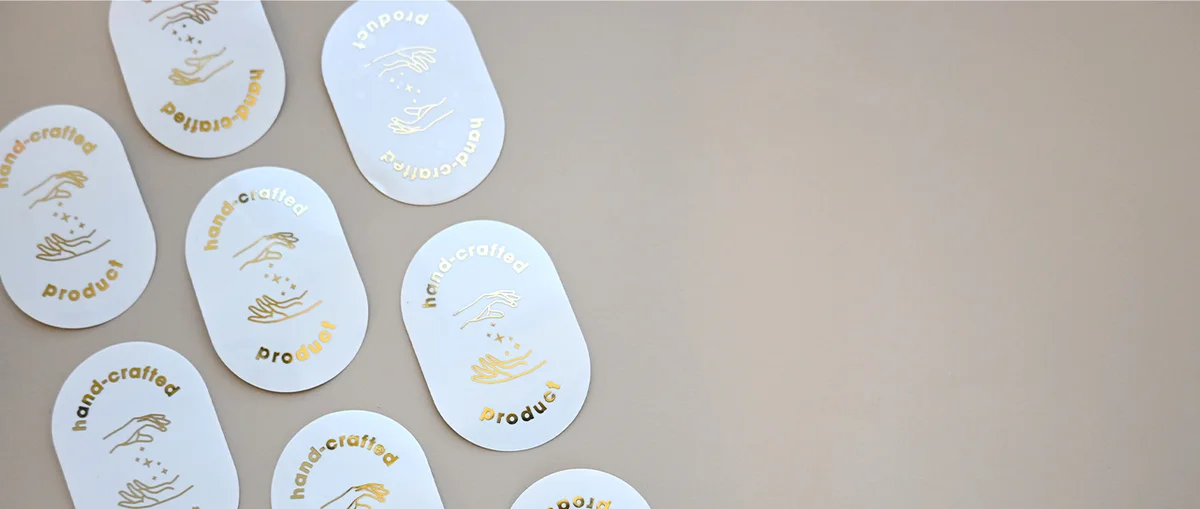
A metallic foil layer with a holographic prismatic pattern, heat-transferred onto specific areas of a sticker. Instead of covering the whole sticker in rainbow effect, foil can be applied to outlines, text, or specific design elements. The result is more controlled – you can have a clean matte background with just the logo or border in holographic foil. Check out foil stickers for this kind of targeted metallic effect.
If you are ordering from the United States, both treatments are available in the US shop. You can order the full film as holographic vinyl stickers in the US shop, with the effect built into the material across the whole design. For a controlled accent, choose the holographic foil color on foil stickers in the US shop, applied only to the areas you select.
The key difference: rainbow prismatic affects the whole surface. Foil is selective.
How Holographic Film Is Made
The prismatic effect in holographic stickers comes from a process called embossing – a microscopic diffraction grating is stamped into a metallized polyester film. The grating breaks white light into its component wavelengths, producing the shifting rainbow effect as the angle of the light source or the viewer’s position changes. Unlike printed iridescent effects, which simulate the look with ink, genuine holographic film produces the effect physically through the material structure. This is why holographic stickers cannot be convincingly counterfeited with standard printing – a fact that makes them useful for authenticity seals and anti-tamper applications.
Holographic foil as a controlled accent
Holographic is one of five foil colors on Foil Stickers, applied only to your chosen areas on white gloss, white matte or clear stock, not vinyl.
When Holographic Effects Actually Work
Not every brand can pull this off. But some can – and when they do, it’s remarkable.
Beauty and cosmetics
The premium beauty market has fully adopted iridescent packaging. Holographic stickers on cosmetics, skincare, and haircare products read as modern, fashionable, and worth the price. The effect communicates something like: this is special. It also photographs beautifully, which matters in an Instagram-driven market.
Works especially well for: lip glosses, highlighters, serums, limited-edition collections.
Music and creative industries
Artists, record labels, indie musicians, and creative studios use holographic stickers to create collectible merchandise and branded packaging that feels like an artifact. When someone gets a holographic sticker with a vinyl record or handmade zine, the sticker itself becomes part of the experience. It says: we care about the details.
Works for: merch packs, album releases, artist prints, creative studio branding.
Youth and streetwear brands
The streetwear and skate market has used foil and holographic effects for decades. It’s expected, not gimmicky, in these categories. The aesthetic is intentional – shiny, loud, visually complex.
Works for: sneaker brands, skate/surf companies, youth fashion, gaming merchandise.
Limited editions and collectibles
Holographic stickers signal rarity. Used on a limited run of packaging, a seasonal product, or a collector’s edition, the effect communicates that this isn’t the standard product. It’s special. It’s worth keeping.
Works for: seasonal releases, anniversary editions, event merchandise, subscription box packaging.
Security and Authentication Labels
Because holographic film cannot be reproduced with standard printing, holographic stickers are widely used as tamper-evident seals and authenticity markers. Electronics manufacturers, pharmaceutical companies, and luxury goods brands use custom holographic labels to verify that a product is genuine and has not been opened or tampered with. The rainbow effect is immediately recognizable and very difficult to copy – giving customers a quick visual cue that the product is legitimate. If you need a label that is tamper evident or serialized, tell us what the label has to do before ordering so we can confirm what is possible. If you want the look on packaging or merchandise, you can order our holographic stickers.
How to Decide if Holographic is Right for Your Brand
Three quick checks before committing to holographic stock: brand fit, design discipline, and use case.
Brand fit. Holographic reads as playful, premium-novelty, or futuristic. If your brand sits in beauty, gaming, music, fashion-forward apparel, collectible toys, or limited-edition food and drink, it tends to amplify the brand. If your brand is conservative, professional services, or aimed at over-50 buyers, it usually undercuts authority.
Design discipline. The prismatic effect competes with anything else trying to grab attention. Designs that work pair the holographic effect with restrained typography, generous white (clear) space, and a single colour ink or no ink at all. Designs that fail try to do prismatic plus full-colour artwork plus heavy text — the holographic effect gets buried.
Use case. Holographic excels at unboxing moments, limited-edition seals, fan packs, event giveaways, and packaging where the goal is delight on first sight. It is less effective for utilitarian labelling, repeated daily-use surfaces, or contexts where the rainbow effect feels gimmicky after the first encounter.
When Holographic Effects Backfire
The same effect that elevates a beauty brand will undermine these:
Corporate and professional services
If your business involves finance, law, accounting, consulting, or healthcare – holographic stickers signal immaturity. The rainbow-prismatic effect reads as fun and youthful. In a context where you need clients to trust you with serious things, that’s the wrong signal.
The fix: choose a plain white sticker, either White Matte Vinyl or a paper based White Matte Sticker with a Matte Laminate. A clean, professional design suits corporate and professional services brands. For a premium touch, keep it restrained with one foil color such as silver or gold on Foil Stickers, not a rainbow effect.
Food and pharmaceutical products
Regulatory-adjacent products – food labels, pharmaceutical packaging, supplements – need to communicate safety, clarity, and compliance. A holographic label on a food product creates visual noise where you need clarity. It can also make required text (ingredients, warnings, dates) harder to read.
The fix: choose clear or white stock with clean typography. Premium can come from label shape and finish, not rainbow shimmer. That trade off is built into our custom labels, where the foil tones are gold, silver and rose gold. There is no holographic option on labels.
B2B and industrial brands
If you’re putting stickers on equipment, tools, or trade products – holographic is almost always the wrong choice. It looks fragile. It communicates consumer, not professional.
The fix: White or clear vinyl with strong, legible branding.
Budget or value-positioned brands
A brand that sells on price sends a mixed signal with a holographic effect. Custom sticker sheets offer a practical way to cover several designs in one order: white gloss or white matte paper based sticker stock, or clear, with 1 to 5 designs per order.
| Effect | Coverage | How it is made | Order it as |
|---|---|---|---|
| Rainbow holographic film | Whole sticker face, with a smooth mirror silver and soft rainbow sheen | UV printed directly onto silver rainbow holographic vinyl | Holographic Vinyl Stickers, Rainbow Holographic material, Australian and US shops |
| Glitter flake | Whole sticker face with a true sparkle finish | Printed on silver metal flake vinyl with UV color | Holographic Vinyl Stickers, Glitter Flake material, Australian and US shops |
| Holographic foil accent | Selected areas of the design only, where the artwork calls for it | Foil applied with heat and pressure to chosen design areas | Foil Stickers, holographic foil color, Australian and US shops |
| Metallic foil in gold, rose gold, silver or copper | Chosen areas only, in one of four metallic colors | Foil applied with heat and pressure to selected areas | Foil Stickers, Australian and US shops |
| Silver metallic vinyl | Whole sticker face in a bright, reflective silver metallic vinyl | One vinyl stock with no laminate, leaving the metallic surface exposed | Foil Vinyl Stickers, Silver Vinyl Sticker stock, Australian and US shops |
Design Tips for Holographic Readability
If you’re committed to holographic, these design choices make it work:
Dark backgrounds beat light ones. Dark navy, black, or deep colors contrast against the rainbow effect and keep your design readable. Light backgrounds let the holographic effect dominate – your actual design gets lost.
Bold, simple typography. Thin script fonts become unreadable over a busy holographic background. Stick to condensed bold, heavy weight, or block lettering. The text needs to win the contrast battle with the background.
Keep element count low. Complex, multi-element designs compete with the holographic movement. A single logo or wordmark over holographic film is powerful. A detailed illustration over the same film is chaos.
Back critical text with white ink. Color printed straight onto holographic film picks up the rainbow shimmer, so any text that must be read works best with a white ink base that prints as solid, opaque color. Tell us which areas should shimmer when you supply artwork. Check fine detail against the chosen size, especially 30 x 30 mm, because small text can close up.
Test in motion. Holographic effects look different in motion versus in a flat photo. If you can, look at a sample in real lighting conditions – under fluorescent office light, in natural daylight, under a single spotlight. They behave differently in each.
File Preparation for Holographic Stickers
Setting up artwork for holographic stickers has a few extra considerations versus standard vinyl. Submit artwork as a vector file in AI, EPS, or PDF with all text converted to outlines. Raster images can be included but should be at 300 DPI minimum at the final print size. Think about three kinds of area in the design. Bare unprinted areas stay mirror silver. Color printed straight on the film keeps the rainbow shimmer. Color printed over a white ink base prints as solid opaque color. When you supply artwork, tell us which areas should shimmer. Include a clearly labeled cut path on its own separate layer, and add 3mm of bleed on all sides to prevent white edges after cutting.
Holographic vs. Foil vs. Glitter: Choosing the Right Metallic Effect
Holographic is one of several metallic sticker effects available, and it’s worth knowing how they compare before committing to a run.
Holographic (prismatic): The face is a smooth mirror silver with a soft rainbow sheen that shifts as the light or viewing angle changes. Colors UV printed directly onto the film take on that rainbow shimmer. Areas backed with white ink print as solid opaque color, while bare unprinted areas stay mirror silver. Tell us which areas should shimmer when you supply artwork. This suits designs that use a mix of solid color and exposed silver to make the shimmer part of the layout.
Foil stickers: a metallic effect applied with heat and pressure to chosen areas. You choose from five foil colors, including holographic, with Foil Only or Foil + Digital Print on white gloss, white matte or clear sticker stock. The effect is more controlled than a full rainbow film. See the foil stickers page for the stock and finish choices.
Glitter vinyl: Glitter Flake is a silver metallic flake vinyl with a true sparkle. Where the holographic film shifts smoothly, Glitter Flake catches the light in a fine sparkle. Full color is UV printed over the flake, so the sparkle reads through printed color and bare areas stay silver flake. You choose it under Material on the holographic stickers page.
Chrome and silver vinyl: chrome usually means a plain reflective silver with no color shift. The nearest thing we print is the Silver Vinyl Sticker stock on foil vinyl stickers. The whole face is bright silver, with no rainbow sheen and no laminate, suited to vehicles, equipment, machinery and storefront signage. It is a metallic vinyl, not a holographic sticker.
For most branding applications that want a premium metallic effect without the full rainbow of holographic, foil stickers on a matte backing offer a more versatile and controlled result. Holographic is the right choice when you specifically want the color-shift movement and the visual energy it creates.
If the brief calls for subtlety rather than maximum visual impact, clear and transparent stickers are the opposite end of the same spectrum: instead of drawing attention with reflection, they recede so the surface beneath does the work. Useful for brands where the substrate (glass, packaging, product) is part of the design language.
For readers in the United States, foil vinyl stickers in the US shop are available. The sticker and label sample pack in the US shop includes foil, foil plus digital print and foil vinyl samples, so you can compare the metallic stocks in hand. Holographic film is not included in the pack.
Holographic and foil stickers and labels →
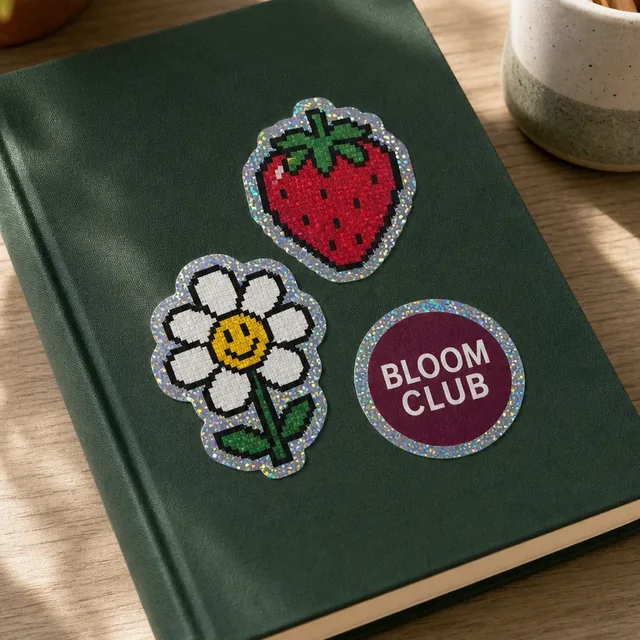
Holographic Vinyl StickersCustom Stickers
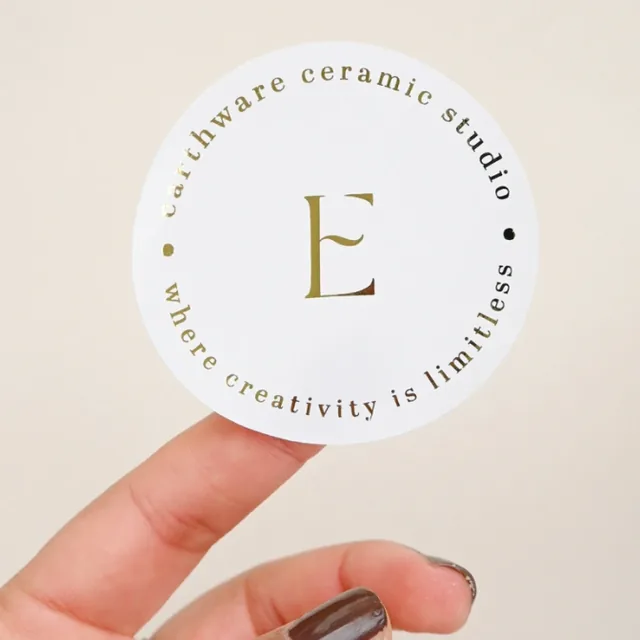
Foil StickersCustom Stickers
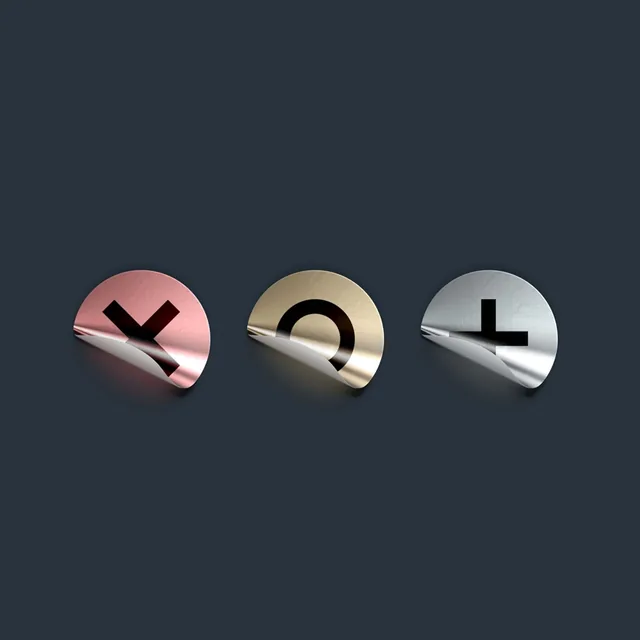
Foil Vinyl StickersCustom Stickers
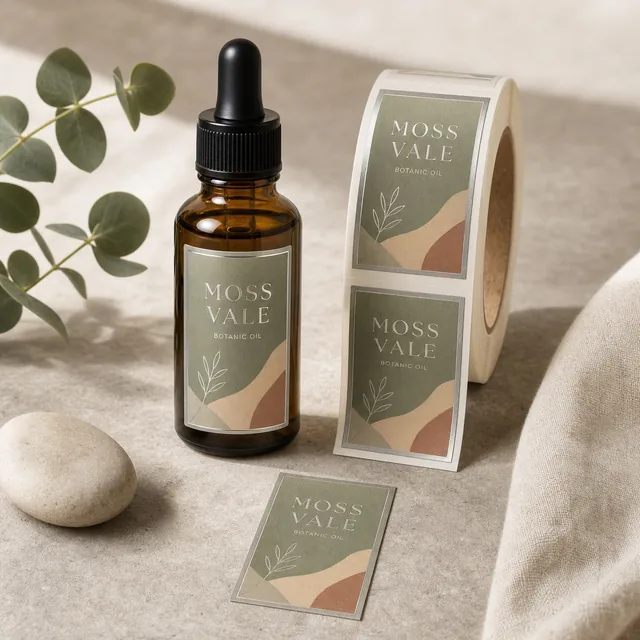
Foil LabelsCustom Labels
Getting a Custom Quote
You can order the prismatic full film look straight from the holographic stickers page. Artwork is UV printed on rainbow holographic vinyl and die cut to the exact outline of the design. A Glitter Flake material option is also available for a dense silver flake with true sparkle when the brief calls for texture. If you’re based in Australia, visit this holographic stickers page, which delivers to Australian addresses; if you’re in the United States, visit this holographic stickers page, shipped by our US shop.
For foil effects on specific design elements (rather than the full prismatic background), our foil stickers give you the metallic premium look with more design control.
Related reading:
The Honest Answer
Holographic works when it’s intentional. When the product, the audience, and the brand all align with the “special, collectible, creative” signals that holographic sends – it’s one of the most striking things you can put on a product.
When it doesn’t align, it’s a liability.
Before you commit: Ask yourself if your best customer would keep a holographic sticker from your brand. If the answer is yes – because they’re a collector, a fan, or a beauty enthusiast – you’re probably in the right territory. If you can’t picture it, that’s useful information too.
Ready to explore the options? You can browse our sticker printing range to compare the products side by side. The Sticker and Label Sample Pack covers the foil and foil vinyl stocks, but holographic film is not in it. To see the rainbow film in hand before a larger run, order the smallest quantity of 50 stickers.
Want eye-catching stickers? Browse foil stickers and custom stickers at Paperlust Print Shop.
Prefer full-coverage rainbow prismatic?
You choose from eight sizes running 30 x 30 mm up to 200 x 200 mm, or set a custom size in the calculator. Every sticker is die cut to the outline of your design, so the shape follows the artwork. Ideal for unboxing inserts and limited drops.
Common Holographic Sticker Use Cases by Industry
Holographic works best when the brand context invites a moment of delight. These are the highest-leverage use cases we see across categories.
- Beauty & cosmetics — holographic seals on premium product boxes communicate luxury and Instagram-ability
- Indie music & merch — fan-pack stickers, album release inserts, tour merch holograms build collectibility
- Gaming & tabletop — limited-edition rewards, Kickstarter add-ons, tournament prizes
- Skincare subscription boxes — monthly seal stickers in holographic that change colour create a small monthly delight ritual
- Specialty food & beverage — limited-run craft beer, small-batch chocolate, premium tea — holographic communicates rarity
- Streetwear & sneaker drops — drop-day holographic stickers on packaging signal authenticity
- Convention & festival merchandise — fan-pack collectibles where the rainbow effect is the point

Frequently Asked Questions
What makes a sticker holographic?
Holographic stickers get their shifting, rainbow-like appearance from a special metallized film that has been embossed with a microscopic diffraction grating pattern. When light hits this surface, it diffracts and separates into the visible spectrum, producing color shifts as the viewing angle changes. The printed design sits on top of or is integrated with this holographic base, so the final sticker combines your artwork with the prismatic background. The effect is impossible to replicate with standard printing and gives holographic stickers an eye-catching, premium quality that stands out on packaging, merchandise, and promotional materials.
What are holographic stickers best used for?
Holographic stickers work particularly well for premium product packaging, limited-edition merchandise, brand authentication labels, and high-end giveaways. Beauty brands use them on product labels to signal luxury. Musicians and artists use them on merch and album packaging to create a collectible feel. Businesses use them as security or authenticity seals because the holographic surface is difficult to copy. Holographic stickers also perform well as standalone branded merchandise – customers are more likely to keep and display a sticker with an unusual, visually striking finish than a standard matte or gloss option.
How should I design artwork for holographic stickers?
Design artwork with three kinds of area in mind. Any bare unprinted film remains mirror silver. Color printed straight onto the film takes on the rainbow shimmer. Color backed by a white ink base prints as solid, opaque color, so use that for text that must stay readable. Tell us which areas should shimmer when you supply artwork. Keep text large and bold, and check fine detail at the smallest size, 30 x 30 mm, because small text can close up. Supply a vector file with bleed and a defined cut path.
Is there a minimum order quantity for holographic stickers?
Yes. You can order holographic stickers in any quantity from 50 up to 1,000 units, which is a practical range for small brands and artists trying a design. The holographic film costs more than standard vinyl or paper, so short runs carry a higher per sticker price, and that price falls as your quantity increases. Ordering a small first run to check the rainbow effect in person before a larger production order is a sensible approach.
How durable are holographic stickers?
Holographic stickers are water resistant and suited to indoor use, and they can handle up to 2 to 3 years outdoors. On drinkware, hand wash only; the stickers are not dishwasher safe. If the piece will face long term sun, rain or frequent washing, standard vinyl stickers are the more practical choice.