If you have ever attended a brand launch, walked a red carpet, or posed for photos at a wedding reception, you have almost certainly stood in front of a media wall. These large-format printed backdrops are among the most versatile branding tools in events, yet the term can mean different things depending on who you ask. This guide covers what a media wall is, its uses, materials, and how to choose the right one.
Quick guide
What Is a Media Wall: At a Glance
A media wall is a large printed backdrop used at events for branding, photography, and atmosphere.
- Originally called step-and-repeat backdrops, media walls date to 1980s Hollywood red-carpet events.
- Used everywhere from weddings and product launches to corporate conferences and charity galas.
- Four main materials: stretch fabric, PVC vinyl, lattice/mesh, and hexagonal modular panels.
- Standard sizes are Small 2400 x 2200 mm and Large 3000 x 2200 mm; custom dimensions are quoted on request.
- Stretch fabric is the preferred choice for most indoor events: wrinkle-free, lightweight, reusable.
- See our full media wall sizes guide to match dimensions to crowd size.
What Is a Media Wall?
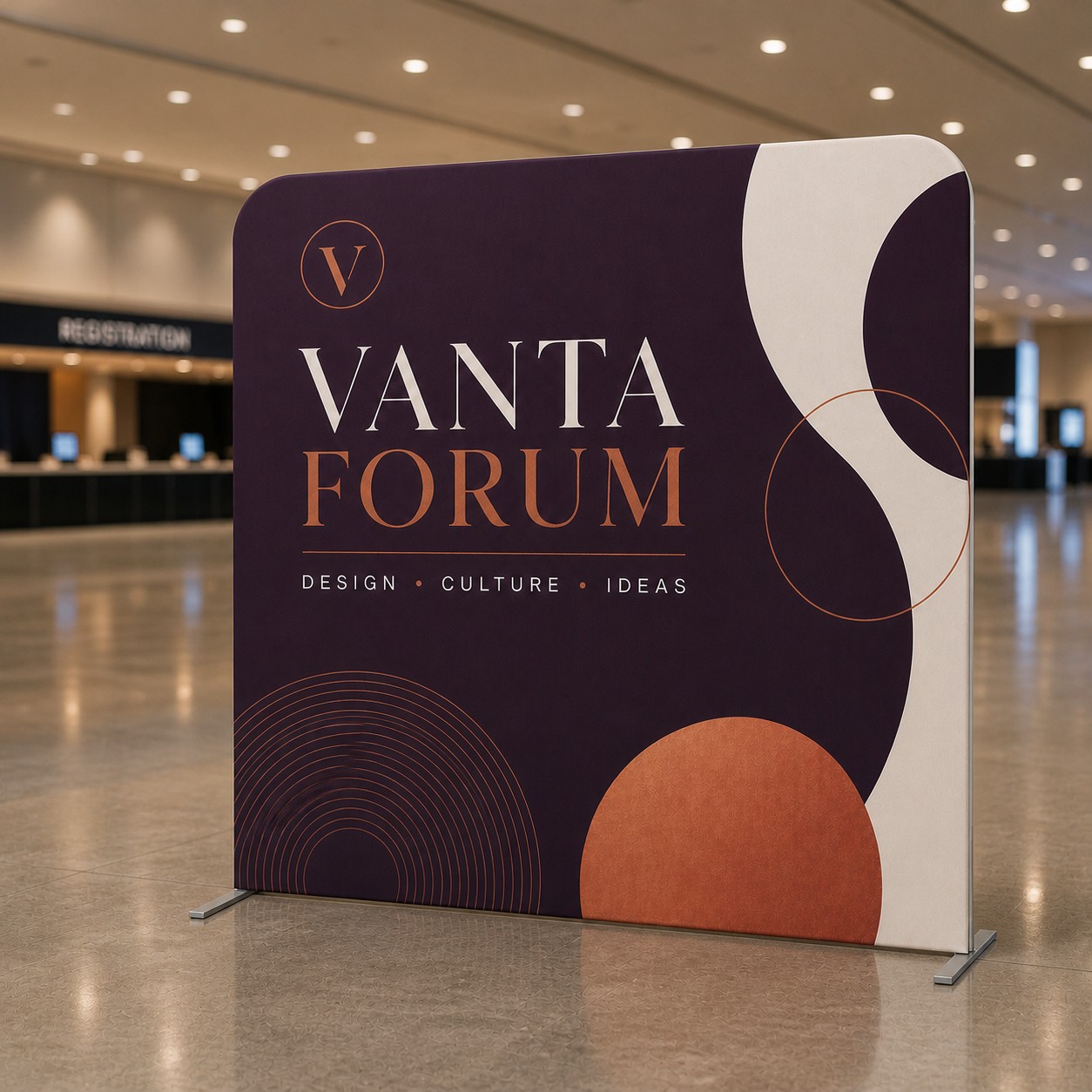
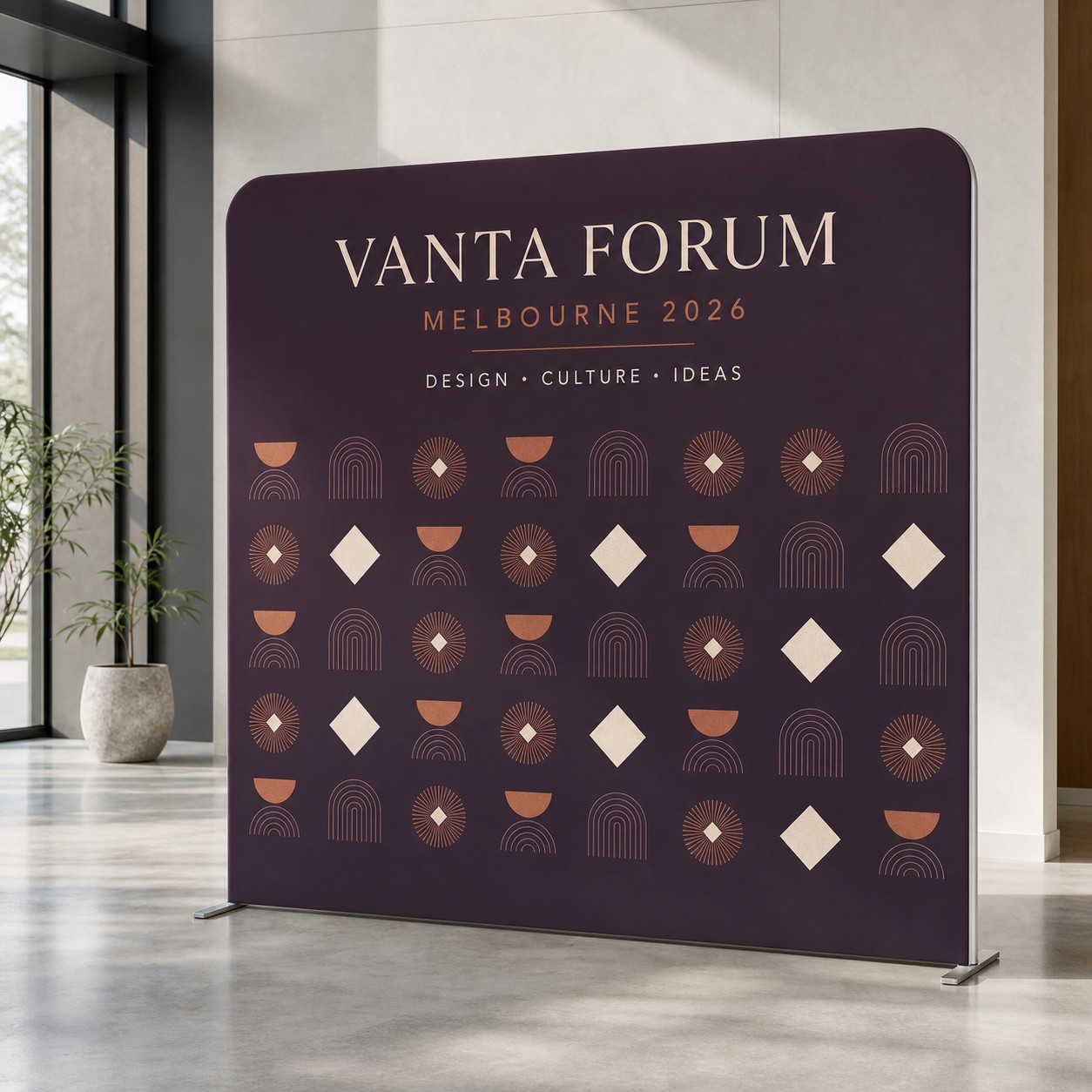
A media wall is a large-format printed backdrop, typically 2400 mm to 3000 mm wide, designed to serve as a branded or decorative focal point at an event, with custom sizes quoted on request. The print can cover the entire surface with a single image, a logo repeat pattern, event branding, or artistic design. Frames are usually lightweight aluminium pop-up or tension systems that can be assembled without tools in under 30 minutes.
The term “media wall” became common in the 2000s as the format migrated from Hollywood press junkets into mainstream events. Today it covers step-and-repeat logo grids, full-bleed photographic prints, wedding monogram backdrops, and everything in between. The unifying feature is a rigid or semi-rigid frame holding a printed fabric or vinyl surface taut enough to photograph cleanly.
History: From Step-and-Repeat to Modern Media Wall
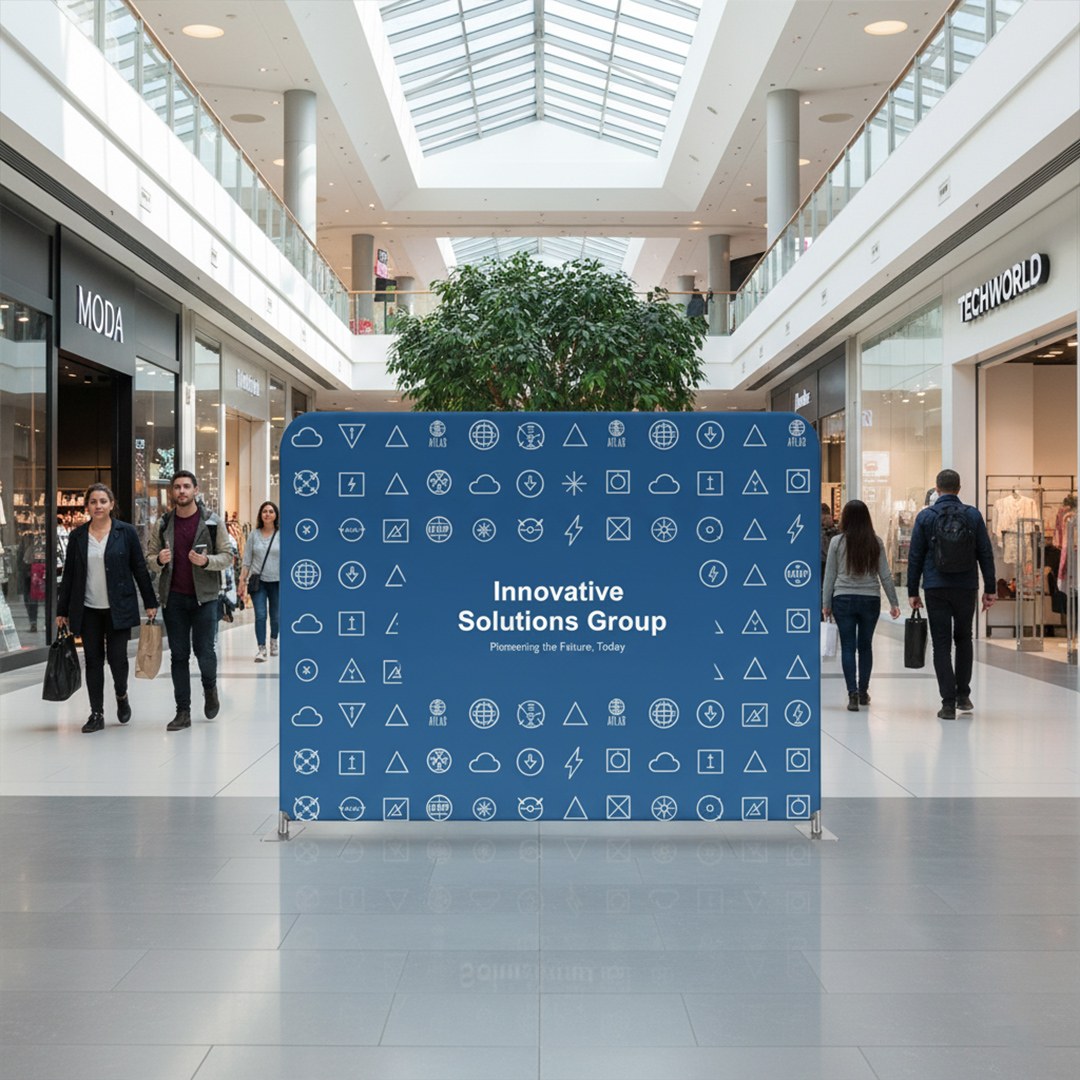
The step-and-repeat format originated in the entertainment industry in the 1980s. Film studios needed a backdrop that placed multiple sponsor logos in every press photo, regardless of crop. By tiling logos in a repeating diagonal grid, every frame captured at least one clear logo. As event production scaled, organizers began printing full-bleed images for product launches, award ceremonies, and weddings. Today “step-and-repeat” typically refers to tiled logo backdrops for press use, while “media wall” covers the full range of large-format event backdrops.
Where Media Walls Are Used
Media walls appear at a remarkably wide range of events. Understanding where each type is most effective helps you spec the right material, size, and design for your brief.
Weddings and Private Celebrations
Wedding media walls serve double duty: they are both decor and a dedicated photo opportunity zone. Popular designs include monogram walls (couple’s initials framed by floral illustration), full-bleed venue photography, and patterned foliage prints. Because weddings prioritise visual quality and often involve natural light, stretch fabric is the dominant choice for its colour fidelity and glare-free surface. A well-placed media wall typically draws every guest through it at least once during a reception, generating hundreds of social media posts organically. A set of printed selfie frames nearby gives guests a fun handheld alternative while they wait for a turn at the wall.
Brand Launches and Product Activations
Product launches use media walls as the backdrop for hero shots: a new vehicle on a seamless gradient, a skincare line against a branded colour field, or a fashion collection on a full-bleed lifestyle image. The wall frames every press and influencer photo, extending the campaign’s visual identity beyond the room. Stretch fabric’s sharp print quality and zero-glare surface are critical when professional photographers and LED flash are involved.
Corporate Events and Conferences
Conference stage walls, award ceremony backdrops, and keynote presentation sets use media walls to create a cohesive branded environment. The wall typically carries the company logo, event name, and sponsor marks. Stretch fabric is easy to fold, ship, and re-tension without visible crease lines in stage photography, making it ideal for walls used at 10-20 events per year. When the program moves from stage branding to a prize handover or sponsor announcement, oversized presentation novelty cheques provide a photo-ready prop that fits the same branded setting.
PR and Red-Carpet Events
The classic step-and-repeat grid is still the standard for entertainment and PR activations: awards ceremonies, film premieres, sports sponsorships, and charity galas with headline sponsors. Each logo repeats 8-12 times across the wall so every photograph captures at least two or three clear impressions. For full details on this format, see our guide to step-and-repeat vs media wall backdrops.
Trade Shows and Exhibitions
Exhibition halls require fast setup and teardown. Stretch fabric tension walls pack into a carry bag and assemble in under 20 minutes, surviving repeated use. Vinyl suits outdoor pavilions where moisture resistance outweighs print quality.
Charity Galas and Fundraisers
Gala events use media walls to anchor donor photography, increase sponsor visibility, and set the tone for the evening. A well-designed backdrop raises perceived production value and encourages guests to share photos, reaching supporters who could not attend.
Media Wall Materials Compared
The material you choose affects print quality, weight, setup time, reusability, and outdoor performance. Here is how the four main types compare:
| Material | Print Quality | Setup | Reusability | Best For |
|---|---|---|---|---|
| Stretch Fabric | Excellent, no glare | 15-20 min, 1-2 people | High (washable, foldable) | Indoor events, photography |
| PVC Vinyl | Good, prone to glare | 20-30 min, 2 people | Medium (rolls, can crack) | Outdoor, short-term |
| Lattice / Mesh | Moderate, see-through | 30+ min, 2-3 people | Medium | Outdoor where wind is a factor |
| Hexagonal Modular | Very good per panel | 45+ min, 2-3 people | High (panels swap out) | Rotating brand activations |
For a detailed head-to-head analysis of the two most popular options, read our full guide: Stretch Fabric vs Vinyl Media Walls.
Media Wall Sizing: A Quick Primer
Relative widths shown to scale. Full sizing guidance (including how many people fit in frame, lens working distance and venue ceiling clearance) is in our media wall sizes guide.
The two stocked media wall dimensions are Small 2400 x 2200 mm and Large 3000 x 2200 mm, with custom sizes on request. Choosing the right size depends on the expected crowd volume, the photography setup (single-frame vs. wide-angle), and the venue footprint available behind the wall for the frame anchors.
As a rule of thumb: a 2400 mm wide wall comfortably fits couples and groups of up to about four people for press-style shots, while a 3000 mm wide wall suits groups of about four to six people, press lines, and wider sponsor walls. For venue entrance walls and keynote stages, custom widths are common. Our dedicated media wall sizes guide maps standard dimensions to crowd size, camera framing distances, and logo legibility at 3, 6, and 9 metres.
Setup Considerations
A media wall that looks great in a print proof can underperform on the day if setup logistics are not planned. Here are the key variables to consider:
Indoor vs Outdoor
Indoor events benefit most from stretch fabric: the controlled lighting environment means there is no wind to stress the frame, no UV to fade the print, and no moisture to warp vinyl. Outdoor settings introduce three risks: wind loading (use weighted feet or ground stakes), direct sunlight (vinyl can glare badly; mesh is more appropriate), and unexpected rain (PVC vinyl is waterproof; stretch fabric is not). Always specify your event environment when ordering.
Lighting
Bounce flash and LED panels should sit at 45-degree angles to the wall, not directly front-on, to avoid flat, overexposed shots. Stretch fabric absorbs light evenly with virtually no hotspots. PVC vinyl reflects flash back at the camera, creating washed-out patches across logos or faces, which is why stretch fabric is the safer choice for professional photography.
Traffic Flow
Position the wall where guest movement creates a natural photo moment: the entrance to a reception hall, near the bar, or between dinner and dancing. Leave at least 1.8 to 2.4 m of clear floor space in front for guests to pose and for photographers to step back to full-height framing distance.
Lead Time and Logistics
Standard production turnaround is listed on the product page. Allow 2-3 days for design approval and file preparation, plus shipping to venue. Complex multi-sponsor grids or very large custom sizes may need an extra 2-3 days for revisions.
Choosing between stretch fabric and vinyl often comes down to one question: is the event indoors with professional photography, or outdoors where moisture and wind are factors? For 95% of branded events, weddings, and corporate activations, stretch fabric delivers better results at similar or lower total cost of ownership across multiple uses.
Why Stretch Fabric Wins for Most Use Cases
Stretch fabric has become the default choice for professional event producers for several interconnected reasons. The polyester-spandex blend grips the aluminium frame without hardware, eliminating visible seams. The fabric folds flat into a carry bag, making storage and transport simple. A 3000 x 2200 mm stretch fabric wall weighs under 3 kg complete with frame, compared to 6-8 kg for an equivalent vinyl banner.
Stretch fabric is machine washable and reusable across 20-30 events without visible degradation. Dye-sublimation printing produces vivid, brand-accurate colours with no banding or glare, making it the professional standard for events where the backdrop will appear in press photography or video.
Ready to print a stretch fabric media wall for your next event? Explore Paperlust Print Shop stretch fabric media walls and get a custom quote.
Explore the Full Media Wall Guide Series
- Stretch Fabric vs Vinyl Media Walls: Which Material Wins?
- Media Wall Sizes Guide: Dimensions for Events, Weddings and Corporate
- Step and Repeat vs Media Wall: Choosing the Right Event Backdrop
- 15 Media Wall Design Ideas: Weddings, Brand Launches and Corporate Events
Frequently Asked Questions
What is a media wall used for?
A media wall is used as a branded or decorative large-format backdrop at events. Common uses include step-and-repeat logo backdrops for press and influencer photography, branded stage walls at conferences, wedding photo moments, product launch hero walls, and entrance decor at galas and award ceremonies.
What is the difference between a media wall and a step-and-repeat?
A step-and-repeat tiles logos in a repeating grid so every press photo crop captures at least one sponsor mark. “Media wall” is the broader term covering all large-format event backdrops: full-bleed images, wedding monograms, and artistic prints. All step-and-repeats are media walls, but not all media walls are step-and-repeats.
How big should a media wall be?
The two standard media wall sizes are 2400 x 2200 mm for solo portraits, couples, and groups of up to about four people, and 3000 x 2200 mm for groups of about four to six people, press lines, and wider sponsor walls. More than about six people, or any width beyond 3000 mm, is a custom size quoted on request. The right size depends on how many people will pose in front of it at once, how far back the photographer will stand, and how much floor space is available behind the frame. See our media wall sizes guide for a full breakdown.
What material is best for a media wall?
Stretch fabric (polyester-spandex blend, dye-sublimation printed) is the best material for most indoor events. It is lightweight, wrinkle-free, glare-free, machine washable, and reusable. PVC vinyl is better for outdoor events where moisture resistance and wind loading are concerns but produces more glare under flash photography. See our full stretch fabric vs vinyl comparison.
How long does it take to set up a media wall?
A standard stretch fabric pop-up media wall takes 15-20 minutes to assemble with one or two people, no tools required. PVC vinyl banner walls take slightly longer (20-30 minutes) because the print must be attached with clips or rails.
Can a media wall be used outdoors?
Yes, but material choice matters. PVC vinyl and mesh are water-resistant and available in perforated formats that reduce wind loading. Stretch fabric works in covered outdoor settings but not in direct rain. Always use weighted feet or ground stakes outdoors regardless of material.
How is a media wall different from a banner stand?
A banner stand is a single pull-up unit typically 85 to 100 cm wide, designed for solo display or information points. A media wall spans 2400 mm to 3000 mm wide, uses a rigid frame, and is designed as a full photography backdrop. Media walls produce significantly more visual impact than banner stands.
How do I design a media wall?
Set artwork at 1:1 scale, 100-150 DPI (larger prints are viewed from distance, so 300 DPI is unnecessary). Use CMYK colour space with vector or high-resolution logo files, and leave 100 to 150 mm of bleed on all sides. For step-and-repeat grids, arrange logos diagonally and size them for legibility at 3 m. See our 15 media wall design ideas for inspiration.
Are media walls reusable?
Yes. Stretch fabric can be machine washed, re-tensioned on the frame, and used for 20-30 events or more. The aluminium frame is essentially permanent, making the cost-per-use substantially lower than a single-use PVC vinyl banner.
Ready to Print Your Media Wall?
Paperlust Print Shop produces stretch fabric media walls with vivid dye-sublimation printing, lightweight aluminium frames, and fast turnaround. Custom sizes available.
Written by the Paperlust Print Shop content team, with input from professional event producers and large-format print specialists. Paperlust Print Shop has produced stretch fabric media walls for corporate events, weddings, charity galas, and brand activations across Australia and internationally. All product specifications, sizing, and material details are verified against current production capabilities.