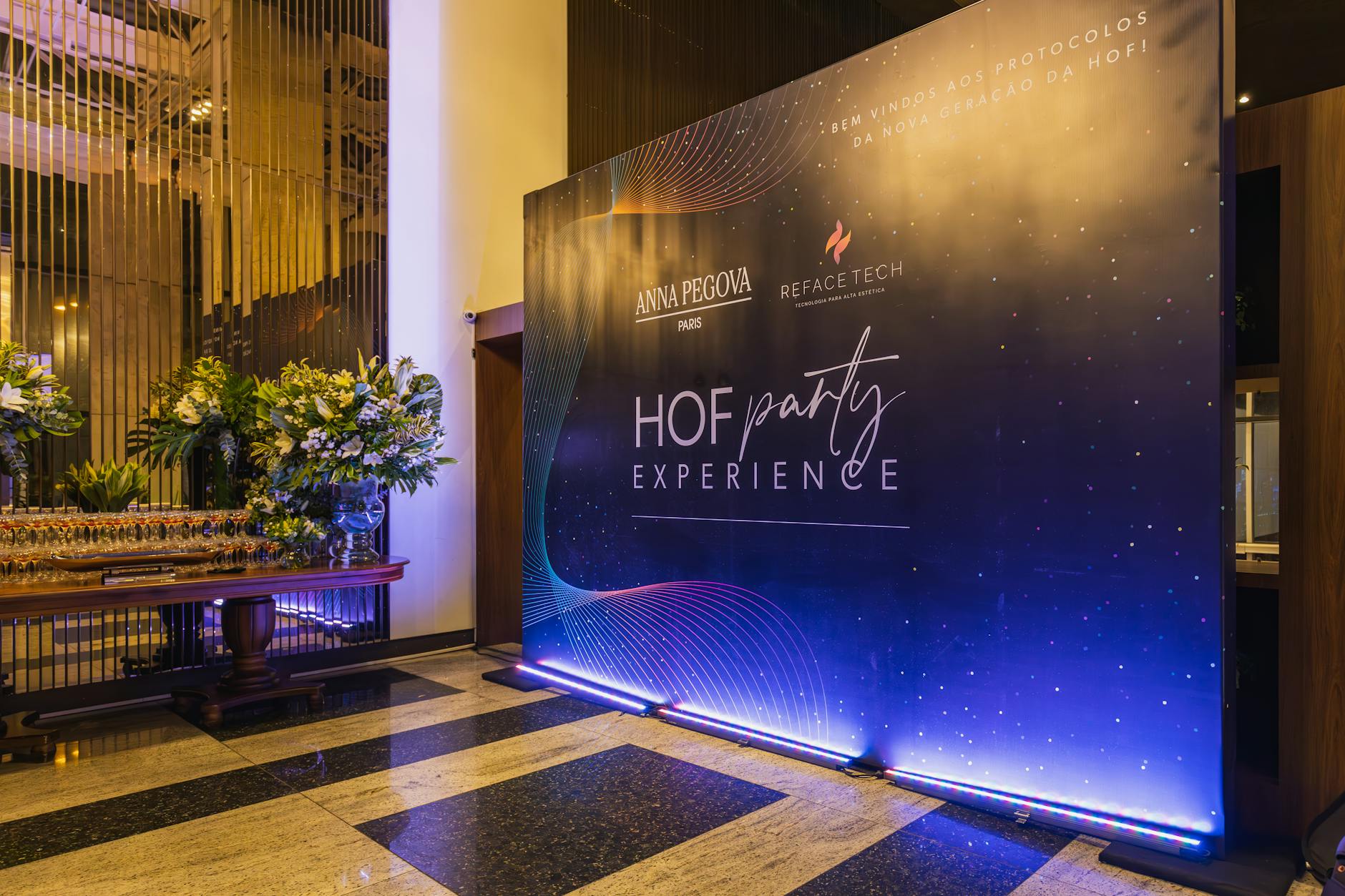
Walk into any product launch, charity gala, or influencer meet-and-greet and you will see the same backdrop: a tall fabric wall covered in repeating logos. Marketing teams call it a step-and-repeat. Event designers call it a media wall. Neither camp is wrong, and understanding the distinction helps you choose the right design and the right material before you order.
- Step-and-repeat = tiled logo grid, classic PR format
- Full-print media wall = single custom graphic, weddings and branded events
- Both use the same frame; stretch fabric works for either print style
- Logo grid: 3-4 logos per 30 cm square is the standard PR press-call density
- Stretch fabric is wrinkle-free, reusable, and ships folded in a carry bag
The Terminology: When Both Terms Describe the Same Thing
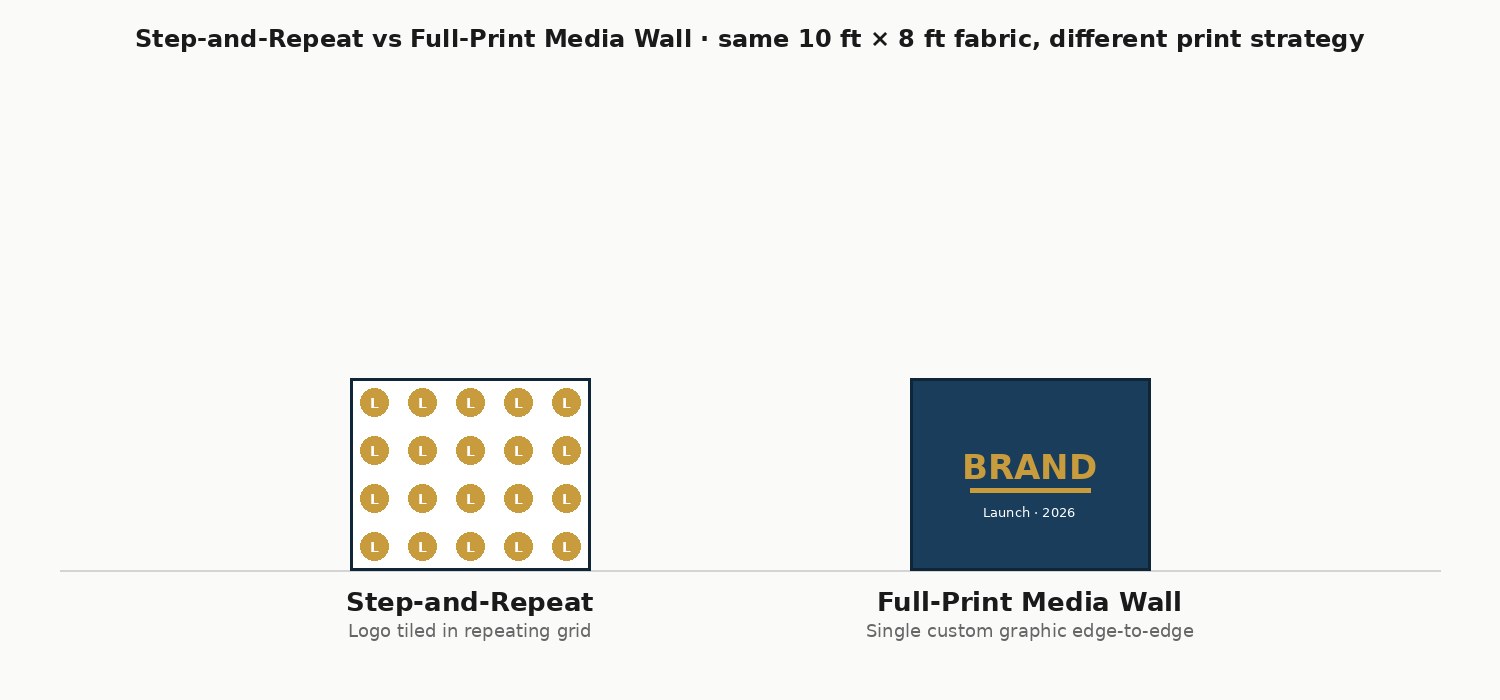
A step-and-repeat banner is technically a subset of the broader media wall category. The name comes from the layout technique: one logo or a small set of logos is repeated across the print in a diagonal or staggered grid so that no matter where a photographer frames the shot, at least two or three complete logos appear behind the subject. This repetition makes the format indispensable for press calls, product launches, and charity galas where brand visibility needs to survive tight crops and mid-shot close-ups.
A media wall is any large-format printed fabric or vinyl backdrop used as a photo or video background. It can carry a step-and-repeat logo grid, a single full-bleed graphic, a monogram, or a custom event design. In practice, event planners use “media wall” and “step-and-repeat” interchangeably when describing a PR-format logo backdrop. The distinction only matters when you move away from the tiled logo layout.
Bottom line: every step-and-repeat is a media wall, but not every media wall is a step-and-repeat. The frame hardware, the stretch fabric material, and the installation process are identical; only the artwork file changes.
Step-and-Repeat Use Cases: PR, Influencers, and Red Carpet Events
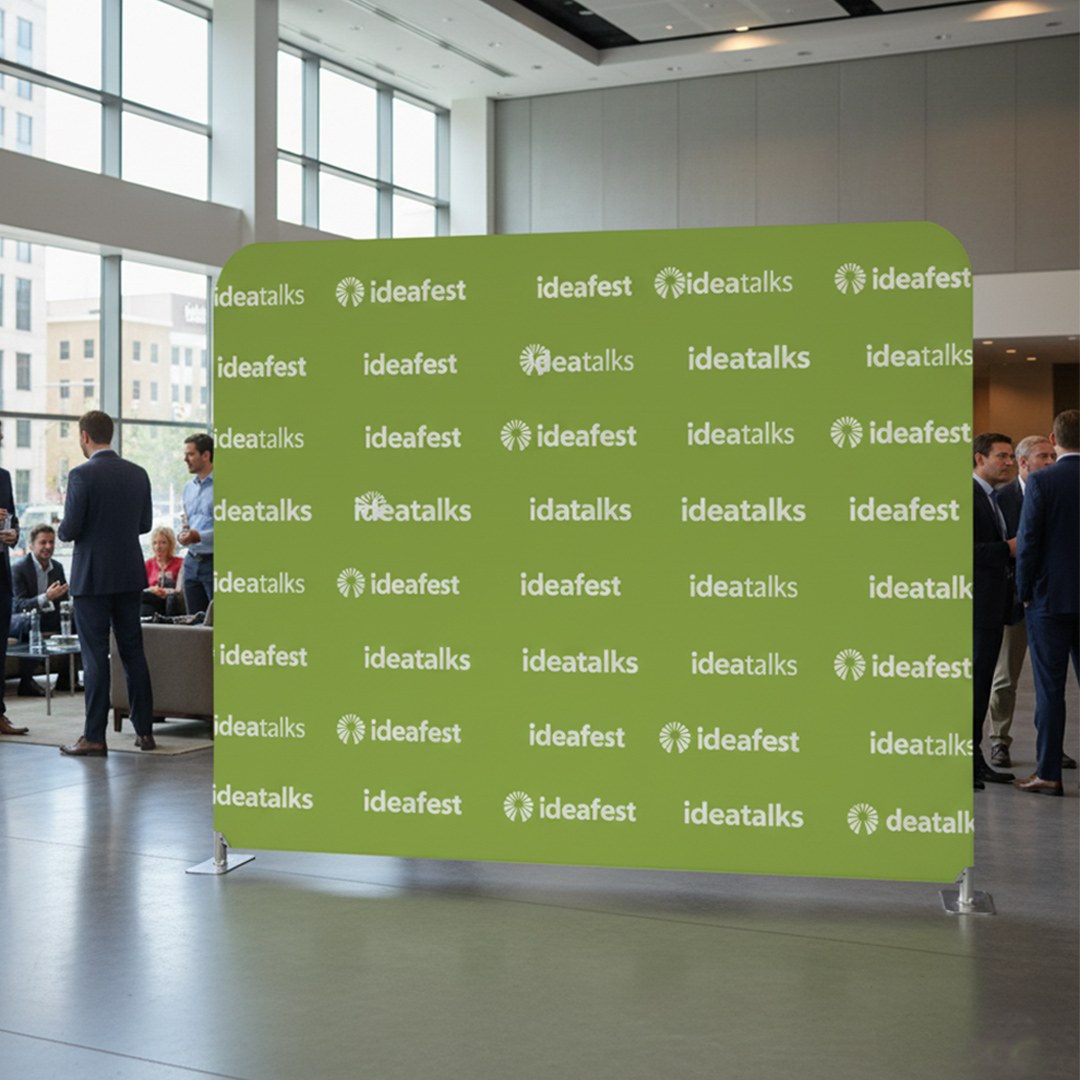
The step-and-repeat format dominates whenever camera coverage is the primary objective:
- Product launches: Multiple brand and sponsor logos repeat so every media outlet’s crop contains the full brand attribution.
- Charity galas and award nights: A staggered logo grid lets three to five sponsors share equal visual weight without negotiating logo size hierarchy.
- Influencer press days: Creators typically shoot wide then crop tight; a dense grid guarantees the brand is readable in a vertical Story format and a wide carousel slide simultaneously.
- Red-carpet photo calls: Photographers move laterally along the carpet; consistent logo density means every frame from any angle is usable editorial content.
- Corporate conferences and trade shows: An 8-foot step-and-repeat at the entrance creates instant brand authority in a crowded hall.
Need ideas for the design itself? The 15 media wall design ideas guide covers branded layouts, monograms, and full-print concepts from real events.
For a lighter, hand-held option at photo stations, selfie frames give guests a branded prop they can pose with anywhere at the event.
Full-Print Media Walls: Weddings, Themed Events, and Single-Image Designs
When there is only one brand, one couple, or one creative concept behind the event, a single full-bleed graphic outperforms a logo grid. Common applications include:
- Wedding photo backdrops: A monogram, floral pattern, or location art printed edge to edge becomes a reception centerpiece that guests photograph for hours.
- Themed birthday and corporate parties: A single dramatic image sets the scene faster than any prop arrangement and packs flat for venue load-in.
- Photobooth backdrops: A full-print design tailored to the event’s color palette photographs more cleanly than a multi-logo grid when subjects are centered.
- Brand activations with one sponsor: When a single company owns the event space, a full-bleed hero image reinforces the brand story better than a repeated tile.
Material Comparison: Stretch Fabric vs. Vinyl for Each Format
| Factor | Stretch Fabric | Vinyl Banner |
|---|---|---|
| Wrinkles on arrival | None – stretches taut on frame | Creases need heat or time to relax |
| Logo clarity on camera | Excellent; matte finish kills glare | Gloss vinyl creates hotspots under flash |
| Setup time | Under 10 minutes | 15-30 minutes (poles and grommets) |
| Transport | Folds into a carry bag | Requires a roll tube |
| Reuse events | Wash and reuse; lasts for years | Scratches and creases limit reuse |
| Best for | Both step-and-repeat and full-print | One-off outdoor signage |
For a deeper breakdown on this topic, see the stretch fabric vs. vinyl media walls comparison guide.
Logo Grid Math: How Many Repeats Per 30 cm Square
Getting logo density right is the most technically specific decision in step-and-repeat design. Too sparse and a tight crop misses your brand; too dense and logos become illegible as thumbnails.
Standard industry formula:
- Press-call standard: 3-4 logo impressions per 30 cm square. For the Small 2400 x 2200 mm wall that means roughly 176-235 total logo instances.
- Single-logo repeat: Each tile is typically 50 to 60 cm wide, repeated in a diagonal offset so vertical seams never align.
- Multi-sponsor grid: Group each sponsor’s logo into a repeated “cell” of the full sponsor set. A 3-sponsor event with 3-4 repeats per 30 cm square means each brand appears roughly 59-78 times on a Small 2400 x 2200 mm wall.
- Minimum readable logo height: 13 cm. At smaller sizes, logos read as texture rather than brand.
- Offset (brick) pattern vs. straight grid: The offset pattern is standard for PR because it eliminates visual columns that break the backdrop into panels in wide-angle shots.
Check the media wall sizes guide for exact pixel dimensions and safe-zone templates at common event wall sizes.
Sponsor Logo Placement Etiquette
Multi-sponsor media walls follow unwritten rules that experienced event managers enforce before artwork is approved:
- Title sponsor first: In a staggered multi-logo repeat, the title sponsor’s logo occupies the first position in every tile, ensuring it appears at the optical center of the most common crop.
- Equal visual weight: Size logos so each one occupies roughly the same area in the tile, not the same width. A wide horizontal logo and a square logo at the same width create unequal perceived importance.
- No competitor adjacency: In an industry where two logos must share the same tile, separate them by at least one other logo to avoid unintended visual association.
- Color contrast: Use a solid white background. For white logos, request a version with a contrasting outline or dark fill.
- Logo files: Vector EPS or SVG at print size. Low-res PNGs that look fine on screen pixelate at 1.8 m.
Paperlust Print Shop prints both step-and-repeat logo grids and full-print media walls on wrinkle-free stretch fabric. Same-week turnaround available.
About this guide: Written by the Paperlust Print Shop team based on hundreds of branded event backdrops produced for PR agencies, marketers, and event planners. Dimensions reflect 2026 specifications. Contact us for custom sizing.
Frequently Asked Questions
Is a step-and-repeat the same as a media wall?
In most event contexts, yes. Both terms describe a large fabric or vinyl backdrop used as a photo background. Technically, a step-and-repeat refers specifically to a tiled logo-grid layout, while a media wall can carry any artwork including full-bleed graphics, monograms, or single-image designs. The frame and material are identical; only the print file differs.
What size should a step-and-repeat banner be?
The most common size for a standing PR photo call is the Small 2400 x 2200 mm. For red-carpet events where subjects walk in pairs, the Large 3000 x 2200 mm gives enough width for two people plus a visible logo margin on both sides. Full details and pixel templates are in the media wall sizes guide.
How many logo repeats do I need on a step-and-repeat?
Standard press-call density is 3-4 logo impressions per 30 cm square. On a Small 2400 x 2200 mm wall that is roughly 176-235 total instances. Each individual logo tile should be at least 13 cm tall to remain legible in a telephoto crop. Use an offset (brick) pattern rather than a straight grid to avoid visual columns in wide-angle shots.
Does stretch fabric work for outdoor step-and-repeat walls?
Stretch fabric is primarily designed for indoor or covered-outdoor use. In light wind it performs well on a weighted frame. In sustained outdoor wind, a heavier vinyl banner with weighted base poles offers better stability. For hybrid events with an indoor photo call and outdoor overflow, stretch fabric is still the preferred choice for the primary backdrop.
How do I handle multiple sponsors with different logo sizes?
Size each logo so it occupies equal visual area, not equal width. A wide horizontal logo and a compact square logo should be scaled so they take up roughly the same amount of tile space. This gives each sponsor equal perceived prominence. Place the title sponsor in the first position of every tile so it always appears near the optical center of a standard portrait crop.
Can I use the same stretch fabric wall for both step-and-repeat and full-print events?
Yes, with separate fabric skins. The aluminium tube frame and feet are reusable across every event. Print a step-and-repeat skin for your PR events and a full-print skin for weddings or themed parties, then swap them on the same frame. This is the most cost-effective approach for event companies and venues that run mixed event types. See the complete media wall guide for frame options and reorder workflow.
Related reading: What Is a Media Wall | Fabric vs. Vinyl | Sizes Guide | Design Ideas