Some stickers get peeled off and thrown away. Foil stickers get kept. Put on a shelf. Shown to someone.
There’s a physicality to a foil sticker that’s hard to replicate digitally – the way it catches the light, shifts as you tilt it, feels slightly heavier than a standard sticker. It signals care and investment before anyone reads a word of the design.
But foil is a tool, not a magic trick. Used wrong, it looks garish. Used right, it elevates everything it touches.
See our full range of foil packaging and branding products.
At a Glance
Foil stickers signal premium before anyone reads the design.
Metallic film catches light in a way printed ink can’t. The trick is matching the right foil to the right brand context — and using it selectively, not everywhere.
- Most versatile finish: gold foil — works on dark and white backgrounds across most categories
- Best for tech/contemporary brands: silver or holographic foil
- Best for beauty/lifestyle: rose gold or copper foil
- Avoid: full-coverage foil on busy designs — selective accents look more premium
What Foil Printing Actually Is
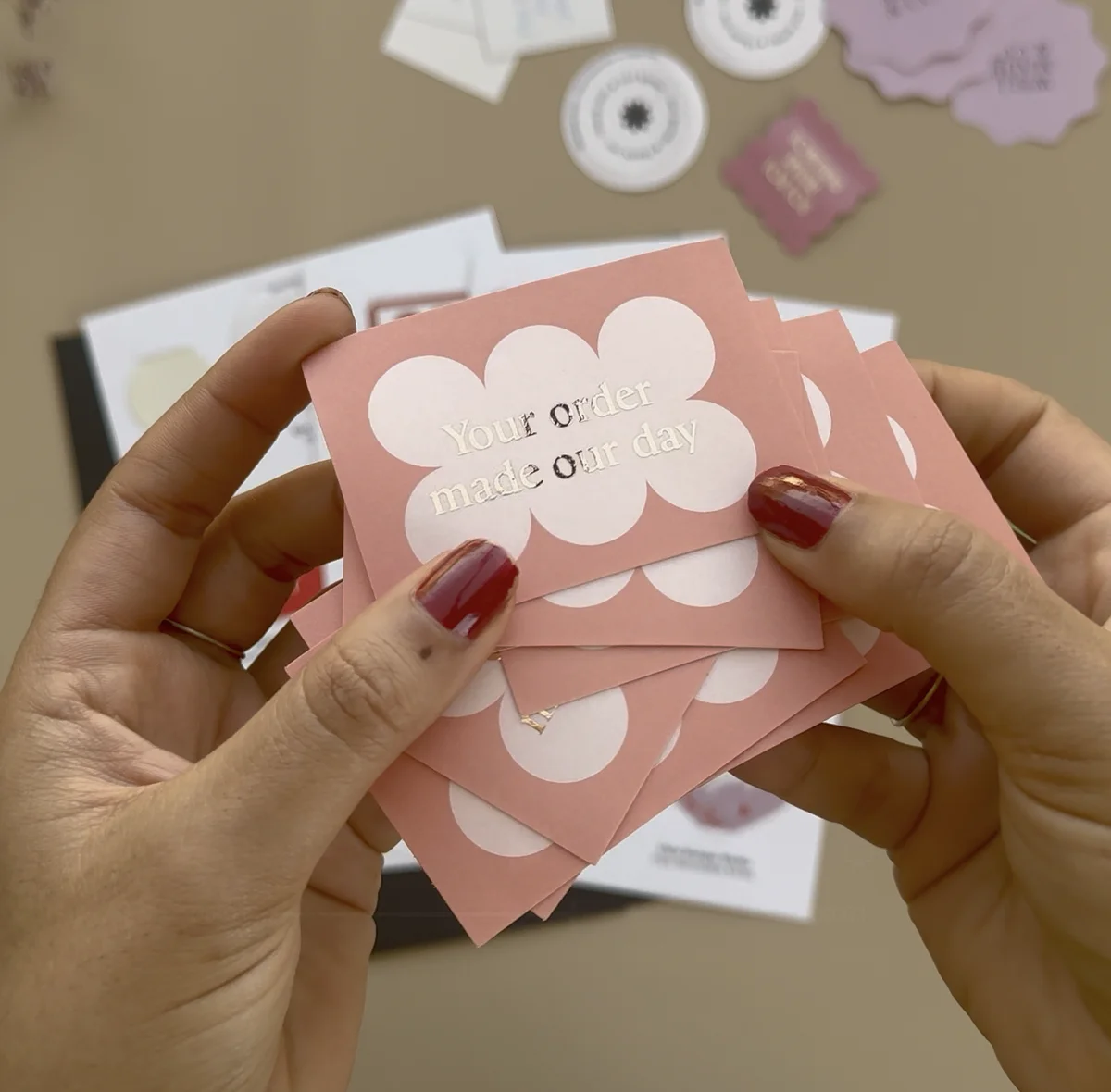
Foil printing uses heat and pressure to transfer a metallic film onto the surface of a sticker. It’s not metallic ink (which tends to look flat and muddy). It’s a true metallic film, bonded by heat, which is why it has that unmistakable mirror-like quality.
The result: a surface that reflects light in the way a metallic object would, not the way printed ink does.
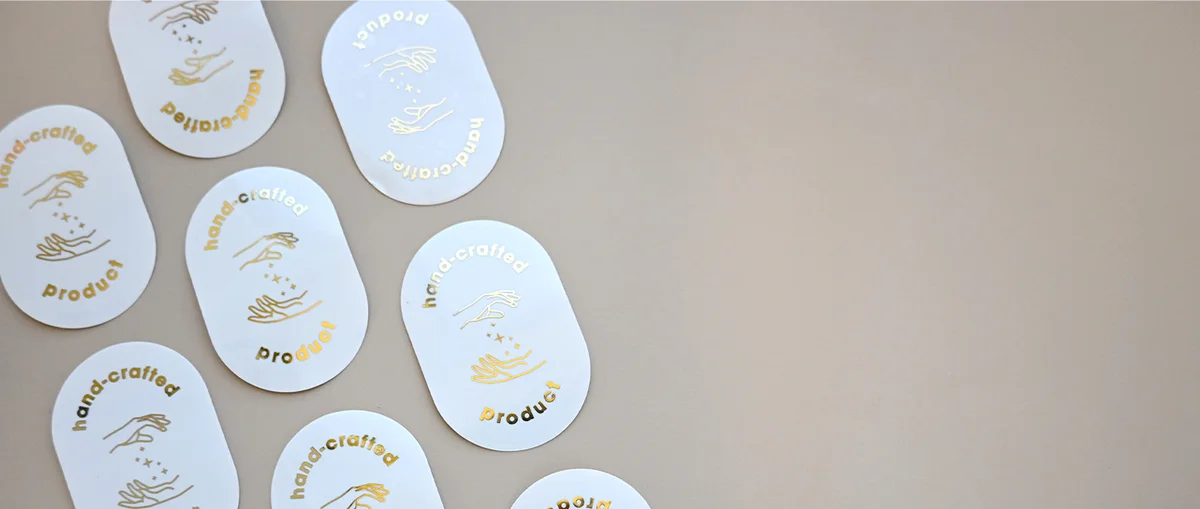
Foil can be applied to the entire sticker surface (full foil) or to specific elements of a design – a border, a logo outline, a single word. The selective approach is often more sophisticated: a matte white sticker with just the logo lettering in gold foil hits differently than a sticker that’s all-over metallic.
Our Foil Stickers use real metallic foil on White Gloss Sticker, White Matte Sticker or Clear Sticker stock, as Foil Only or as Foil plus Digital Print. For designs that combine foil with full-colour printing, foil vinyl stickers add the flexibility of CMYK colour plus metallic accents in one product.
Ready to add foil to your stickers?
Real metallic foil appears as gold, silver, rose gold, copper or holographic on clear, white gloss or white matte stock for a small accent or the full sticker.
Types of Foil: Choosing Your Metal
Gold foil – The classic. Warm, rich, and universally associated with luxury, quality, and occasion. Works with deep colours (navy, black, forest green, burgundy) and with white. Doesn’t work well with busy, colourful designs – the gold gets lost.
Silver foil – Cooler and more modern than gold. Excellent for tech-adjacent brands, contemporary fashion, and anything where gold would read as too traditional. Pairs beautifully with charcoal, slate, and monochrome palettes.
Rose gold foil – The pink-gold that had its moment in 2017 and stayed relevant because it genuinely works. Popular in beauty, wellness, and lifestyle brands. Pairs naturally with blush, cream, white, and dusty pastels. Communicates femininity and softness without being obvious about it.
Holographic foil – A prismatic foil that shifts through the rainbow as you tilt it. This is different from a holographic background film – it’s foil with the rainbow diffraction baked in. Used selectively on a design element (say, a border or logo), it’s striking. Used as a full cover, it’s busy.
Copper foil – Warm, earthy, slightly rustic. Popular in artisan food, craft beverage, and organic product categories. Pairs with kraft paper tones, terracotta, and warm neutrals.
How to Choose the Right Foil for Your Brand
Selecting the wrong foil colour is the most common mistake we see. The decision comes down to three questions: what does your brand stand for, what colour palette will the foil sit against, and is the foil supporting the design or competing with it?
Match foil to brand temperature. Warm brands (food, hospitality, traditional luxury) suit gold and copper. Cool brands (tech, modern fashion, minimalist) suit silver and holographic. Mixed-temperature brands (beauty, lifestyle) often work with rose gold as a bridge.
Match foil to background. Dark stocks (navy, black, forest, burgundy) reflect foil best — gold and copper especially. White and cream stocks suit any foil but show less contrast. Avoid foil on busy multi-colour backgrounds; the metallic effect gets lost in visual noise.
Decide selective vs full coverage. Selective foil (logo only, border only, single word) reads as deliberate and expensive. Full-coverage foil reads as novelty. For brands that want to communicate restraint and quality, selective always wins.
Design Rules for Foil Stickers
Foil printing has constraints that regular printing doesn’t. Work with them, not against them.
Simplicity wins
Fine lines, thin serifs, and small text are foil’s enemies. The foil process requires enough surface area to transfer cleanly. A hairline stroke may not pick up foil at all, or pick it up inconsistently. Minimum stroke weight: 1pt. Minimum text size for foiled text: 8pt, and ideally in a bold weight.
Bold block letters, clean outlines, and simple geometric shapes translate to foil beautifully. Complex illustrations with many small elements tend to lose definition.
Contrast is everything
Gold foil on cream paper is subtle and elegant. Gold foil on white paper can look weak. Gold foil on black is high-impact. The foil needs a background that lets it be seen – either through high contrast (dark background) or through the quiet elegance of a tonal palette.
Matte backgrounds work exceptionally well with foil because there’s no competing shine. Gloss backgrounds make the foil less distinctive.
Negative space matters more
Because foil draws the eye, every element you put in foil gets emphasis. Use that deliberately. The logo gets foil. The tagline doesn’t – because if everything is special, nothing is. Choose one or two elements to foil and let the rest of the design support them.
| Foil type | Best for | Pairs with | Avoid |
|---|---|---|---|
| Gold | Luxury, hospitality, traditional brands | Navy, black, forest, burgundy, white | Pastels, busy multi-colour |
| Silver | Tech, modern fashion, monochrome brands | Charcoal, slate, white, neon accents | Warm earthy palettes |
| Rose gold | Beauty, wellness, lifestyle, weddings | Blush, ivory, sage, terracotta | Heavy industrial brands |
| Copper | Craft, artisan, food & beverage | Cream, terracotta, deep teal, charcoal | High-tech, ultra-modern |
| Holographic | Youth, beauty, novelty, gaming | Black, white, bold colour blocks | Conservative B2B |
| Black foil | Editorial, premium fashion, agencies | White, kraft, soft pastels | Already-dark brand palettes |
When Foil Stickers Are Worth the Premium
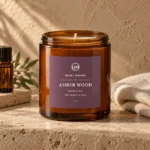
Luxury product packaging – High-end candles, premium skincare, artisan spirits, specialty food. A gold foil seal on a glass jar communicates craftsmanship. Customers keep the jar. They remember the brand.
Cosmetics and beauty – The beauty industry runs on foil. Gold, rose gold, and holographic foil communicate prestige and aspiration. In a crowded retail environment, the sticker is doing merchandising work.
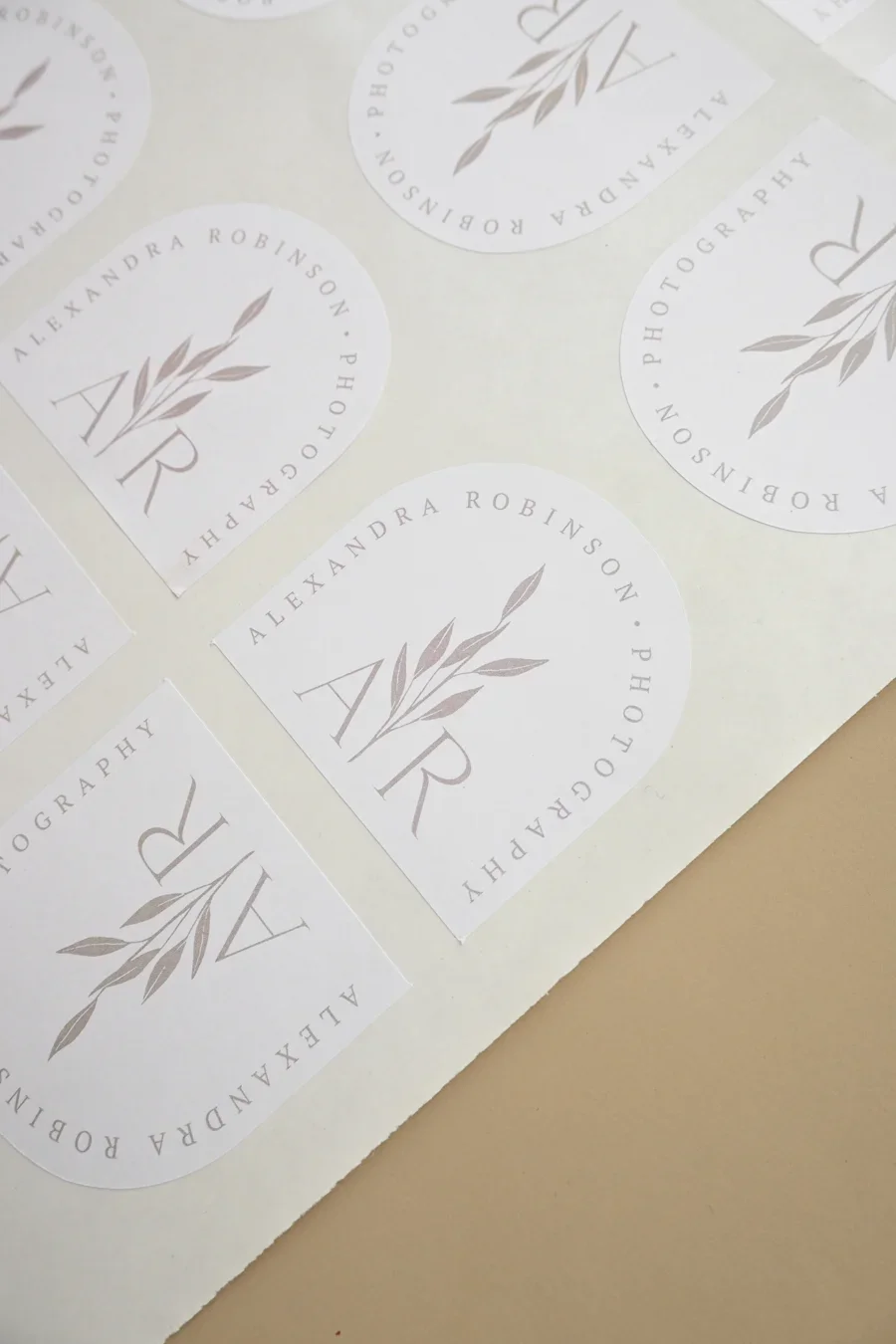
Event stationery and invitations – Wedding favours, event seals, invitation closures. For the 30 x 30 mm size, a gold foil monogram seal for an ivory envelope costs $0.20 per sticker at 5,000 and lifts the whole stationery set.
Premium business gifts and merchandise – If you’re sending thank-you packages to clients, or building a merchandise line for a brand with a dedicated following, foil stickers create a collectible quality. People keep them.
Limited edition packaging – Signal rarity with foil. A “Limited Run” badge in gold foil on your seasonal product tells the customer this is different – and worth paying attention to.
When Regular Vinyl Is the Smarter Choice
Foil isn’t right for every sticker. Save your budget where it matters; use standard vinyl where foil would be wasted.
Outdoor applications – Foil isn’t rated for sustained outdoor UV exposure the way cast vinyl is. If the sticker is going on a bumper, a sign, or outdoor equipment, use quality vinyl instead. The foil will degrade.
Budget product lines – If you’re selling a $12 product at a market, a foil seal is out of proportion with the product tier. Premium packaging signals premium price expectations. Mis-match creates confusion.
High-quantity operational stickers – Warehouse labels, logistics stickers, shipping labels. The aesthetic investment of foil is wasted on functional, internal stickers. White vinyl, clear text.
When the design is complex or colourful – Foil printing doesn’t reproduce photography or gradients. If your label is a detailed illustration with lots of colour, go full-colour CMYK vinyl.
The Hybrid Option: Foil Vinyl Stickers
Can’t choose between full-colour printing and metallic foil? Our foil vinyl stickers combine CMYK colour printing with foil accents on a single sticker. You get photographic colour accuracy plus targeted metallic highlights – the logo in gold foil, the product illustration in full CMYK, all on one sticker.
This is the approach many premium cosmetic and food brands use for complex labels that need both colour accuracy and a luxury metallic touch.
Related reading:
Need foil + full-colour print together?
Foil vinyl stickers combine CMYK printing with metallic foil accents in one product — perfect for designs that need colour plus a premium metallic finish.
When to Add Foil to Your Sticker Design
Foil should support a brand decision, not just decorate. Use these triggers to decide whether the moment is right.
- Premium product launch — first impressions on packaging where foil signals price-point fit
- Limited edition or seasonal release — foil differentiates the special run from standard stock
- Brand refresh on existing packaging — adding foil to one element refreshes without full rework
- Award certificate or achievement marker — foil reinforces the "won" signal
- Wedding or event invitation suite — foil adds tactile occasion to the unboxing
- Loyalty rewards or VIP recognition — foil seals on rewards packaging communicate exclusivity
Frequently Asked Questions About Foil Stickers
What is the difference between foil printing and metallic ink?
Foil printing uses heat and pressure to bond a true metallic film to the sticker surface. Metallic ink is a printed pigment with reflective particles. The visual difference is dramatic – foil has a mirror-like sheen that catches light from any angle, while metallic ink reads as a flat printed colour with a slight shimmer at best. Foil is significantly more premium and durable, and it is the standard for any application where the metallic effect matters.
Do foil stickers cost more than standard stickers?
Yes. Foil costs more at every order size, and the dollar gap gets wider as the run increases instead of narrowing. With the 30 x 30 mm size, one design and no laminate, a run of 50 foil stickers is $49 compared with $32 for standard print. At 5,000 stickers the foil run is $1,037 against $396 for standard. If you are buying packaging or a limited release where foil is doing useful work for the brand, the way customers read the product usually makes that extra spend worthwhile.
Can foil stickers be used outdoors?
Yes, with caveats. Foil stickers are durable and water-resistant, but extended UV exposure can dull the metallic sheen over time. They are well suited to indoor use, packaging, and short-term outdoor applications like event signage. For permanent outdoor signage exposed to sustained sun and weather, a UV-resistant vinyl sticker is the better choice.
What designs work best with foil?
Designs with strong contrast and selective application work best. A logo, monogram, single word, decorative border, or icon set in foil against a clean printed background reads as sophisticated. Avoid using foil on small fine-line elements (the foil layer can blur fine detail) or on text smaller than 8pt. Designs that try to use foil for everything tend to look novelty rather than premium.
How long does the foil application take to produce?
Production begins only after you approve the design proof we email you. Foil Stickers need 3 to 5 working days after that approval. Digital print stickers without foil get 24-hour production when the proof is approved by 10am Melbourne time. There is no rush service, so leave room for production and delivery when you set a launch or event date.
The Final Word
Foil is an investment in perception. Customers make quality judgements in milliseconds, and a foil sticker tilts that judgement toward premium before they’ve read a single word.
The question isn’t whether foil looks good. It does. The question is whether your product, price point, and brand position are aligned with what foil communicates.
If they are – even one foil element can transform a sticker from a label to an experience.
Explore foil sticker options or check our foil vinyl combination stickers for designs that need both colour and metallic accents. From $0.20 per sticker, with flat-rate $10 shipping Australia-wide.
Your packaging deserves to make people stop and look. A foil sticker is often the lowest-cost way to make that happen.
Shop foil stickers: Browse foil stickers at Paperlust Print Shop. See also: clear stickers and custom labels for packaging.