You ordered permanent adhesive stickers for your shop window display. Three months later, you’re a business using a heat gun and a razor blade to remove them, and the window frame has some very unfortunate residue.
Or: you ordered removable adhesive for your product labels, and they’re sliding off the bottles before the product reaches the shelf.
Wrong adhesive for the job. It happens constantly, and it’s entirely avoidable. Here’s how to choose the right one.
At a Glance
The wrong adhesive doesn’t fail loudly — it fails three months in.
Removable adhesive is engineered to release cleanly for up to 12 months. Permanent adhesive is engineered to bond and stay. Picking the wrong one ruins surfaces or wastes investment. Match adhesive to deployment, not to the design.
- Default for retail/event use: Removable — clean release for up to 12 months
- Default for product/packaging: Permanent — tamper-evident, full bond
- Glass / windows: Removable always — permanent leaves residue under UV
- Outdoor + temperature swings: Permanent vinyl with UV-stable adhesive
- Test before mass-applying: Order 5–10 of each adhesive type and field-test for 7 days
The Chemistry (in Plain English)
Adhesive strength comes down to how aggressively the glue bonds to a surface at the molecular level.
Permanent adhesives are formulated to maximise surface contact and resist removal. The bond strengthens over time – the longer the sticker sits, the harder it is to remove. The adhesive fills microscopic pores in the surface, creating a grip that resists shear force (pulling sideways), peel force (pulling upward), and tack decay (bonding weakening in heat, UV, or moisture).
Removable adhesives use a lower-tack formula – the molecules bond to the surface but not aggressively. The bond is strong enough to hold the sticker in place under normal conditions, but the adhesive doesn’t penetrate deeply into surface pores. When you peel, the adhesive releases cleanly rather than tearing away from itself and leaving residue.
The trade-off is clear: removable adhesive sacrifices grip for cleanness. Permanent adhesive sacrifices cleanness for grip.
Neither is universally better. The surface and the use case determine which you need.
When to Use Removable Adhesive
Removable adhesive is right when the sticker has a defined lifespan, or when the surface has to be protected from damage on removal.
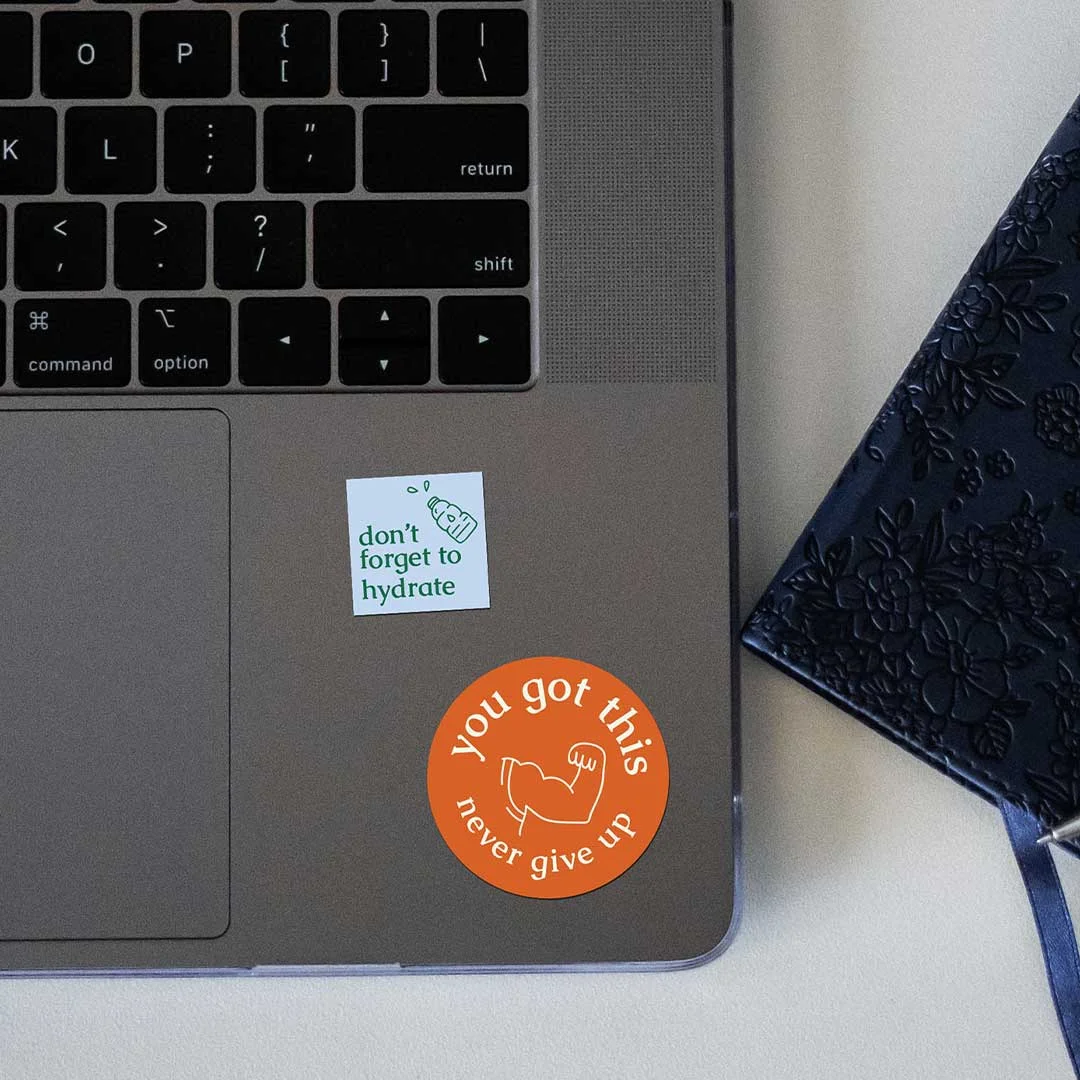
Rental and shared equipment – Stickers on gear you don’t own, or gear you’ll sell or hand back. Property managers, hire companies, tool libraries. You need the sticker to identify the item, not permanently alter it.
Seasonal promotions – “Summer Sale” window stickers, Christmas packaging seals, event-specific labels. These have a hard expiry date. When the promotion ends, the sticker should come off cleanly and be replaced with the next campaign.
Product samples and prototypes – Labels on product samples that will be updated before final production. Removable adhesive lets you re-label as the product evolves.
Rental property staging and pop-up retail – Temporary shop setups, event spaces, and staging where the landlord will expect the space returned in original condition. Window and wall stickers with removable adhesive come off without paint damage (on most surfaces – see the caveat below about painted walls).
Product windows and interactive displays – Stickers on display windows of products (the protective film on electronics, stickers over product viewing windows on packaging) that customers are meant to peel themselves.
Children’s stickers and wall art – Kids’ room decals, removable stickers for teaching aids. The ability to reposition or remove without damage is essential.
When to Use Permanent Adhesive
Need stickers that come off cleanly?
Bumper Stickers are printed on White Gloss Removable or Clear Removable stock using a removable adhesive. These suit windows, vehicles and short campaigns, and if taken off within a year they should peel away cleanly.
Permanent adhesive is right when the sticker is meant to stay – full stop.
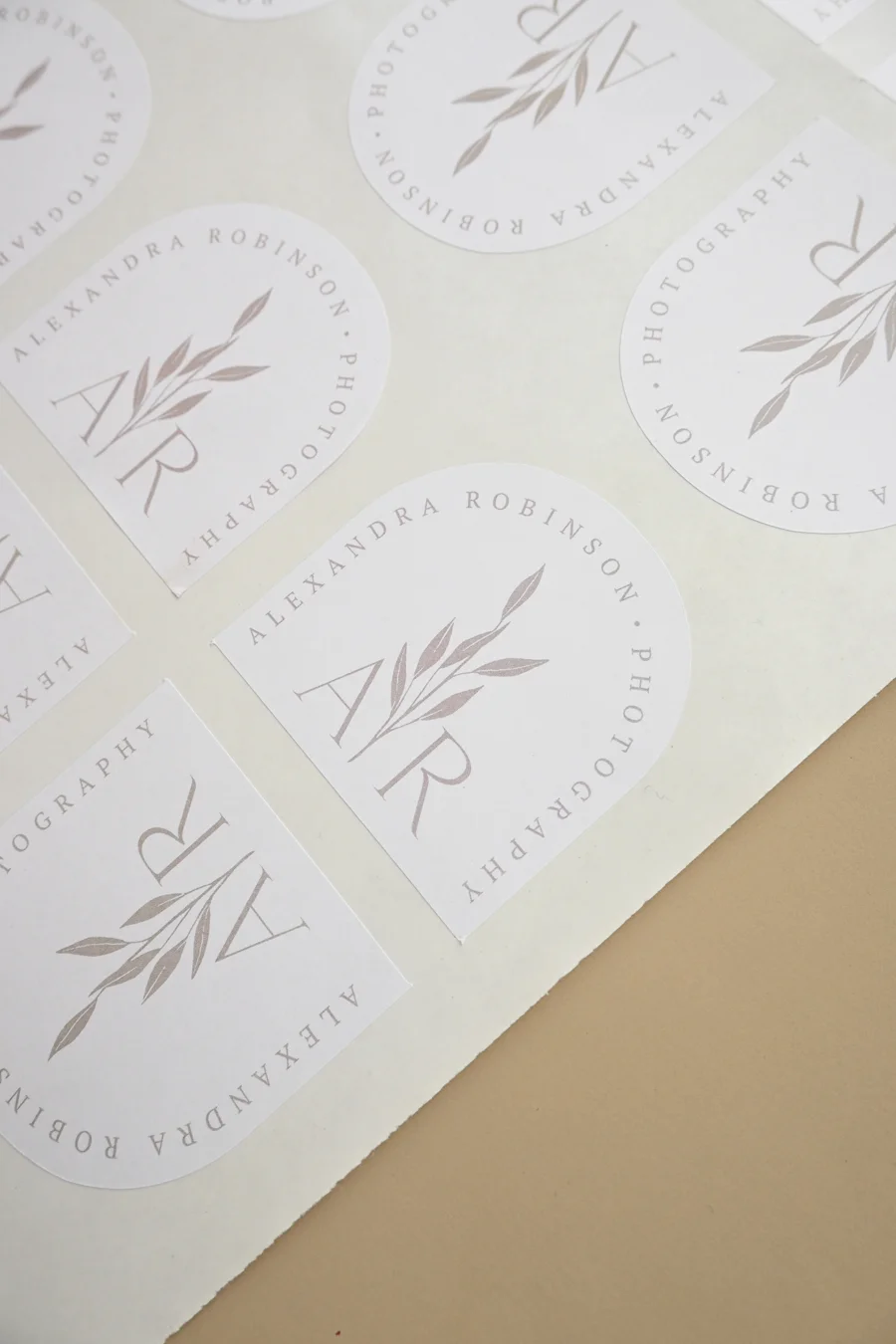
Product labels – Your candle label, your hot sauce, your skincare. This sticker needs to survive handling, shipping, moisture, and being in someone’s home for months. Removable adhesive will start shifting and lifting. Permanent adhesive stays put. When you need a batch of the same label, custom sticker sheets print multiple copies on one peel-off backing.
Outdoor vehicle stickers and bumper stickers – Rain, car washes, UV, temperature swings. Removable adhesive isn’t rated for this punishment. It’ll peel at the corners and eventually fall off. Outdoor vinyl with permanent adhesive is the only option.
Long-term equipment branding – Your business name and number on tools, trailers, generators, and fleet vehicles. These are semi-permanent brand assets. Permanent adhesive bonds to painted metal and plastic and stays bonded for years.
Safety and compliance labels – Warning stickers, serial numbers, certification labels on products. These must not be removable – that’s often a compliance requirement as well as a practical one.
Asset tags and inventory labels – Items you’re tracking across a warehouse or supply chain. The label needs to stay on the item for the life of the asset.
Surfaces Where Removable Adhesive Struggles
“Removable” doesn’t mean “remove from anywhere without consequence.” A few surfaces cause problems even with low-tack adhesive.
Freshly painted or painted walls – This is the big one. Newly painted surfaces (under 30 days) are especially vulnerable. Latex paints in particular don’t fully cure for weeks – and even on a cured latex surface, “removable” adhesive can pull paint with it, especially if the bond has had time to strengthen. Always test a small area first. Leave the test sticker for 24 hours and check the removal.
Wallpaper – Most removable adhesives will damage wallpaper on removal. The paper fibres bond to the adhesive. Use fabric or static-cling alternatives for wallpaper surfaces.
Textured surfaces – Brick, rough concrete, embossed packaging, textured plastic. Removable adhesives only bond to the high points of textured surfaces, so the contact area and bond strength drop. A high tack permanent adhesive is formulated for those same surfaces, but it is permanent and the deepest crevices must be under 3 mm.
Porous surfaces without coating – Uncoated kraft, raw wood, unsealed concrete. The adhesive penetrates the pores and the “removable” quality disappears. The sticker either doesn’t hold or won’t release cleanly.
Skin – Neither removable nor permanent adhesive vinyl is designed for skin contact. Body stickers need cosmetic-grade adhesive. This is a completely different product category.
How to Test Before You Commit
| Scenario | Removable | Permanent | Why |
|---|---|---|---|
| Retail window display, seasonal | ✅ Default | ❌ | Clean release every 6–12 weeks |
| Product packaging seal | ❌ | ✅ Default | Tamper-evidence + full bond |
| Conference badges / lanyards | ✅ Default | ❌ | Removed at end of day |
| Vehicle / fleet branding | ❌ | ✅ Default | Multi-year UV + temperature exposure |
| Laptop / device branding | Either — user choice | Either | Owner controls removal date |
| Trade show booth graphics | ✅ Default | ❌ | Booth strikes/repacks — no residue |
| Outdoor signage on metal | ❌ | ✅ Default | Rain + wind shear; needs full bond |
If you’re ordering stickers for a surface or use case you haven’t tested before, run a test print before your full order.
The 24-hour test:
- Apply one sticker to the actual surface in actual conditions (including temperature and moisture)
- Leave it for 24 hours – this simulates real bonding time
- Peel at 45 degrees, slowly and evenly
- Check: Does the sticker release cleanly? Is there adhesive residue? Did the surface come with it?
The 30-day test (for anything permanent or long-term):
- Apply to the surface
- Check at 30 days
- Can it still be removed if needed? Is the bond still clean?
The environment test:
If your stickers are going into a fridge, near a fryer, in direct sunlight, or in a high-humidity environment – test in those conditions specifically. Adhesive behaviour changes with temperature and moisture.
A Quick Reference
| Use Case | Adhesive Type |
|---|---|
| Product label on bottle | Permanent |
| Seasonal window display | Removable |
| Outdoor bumper sticker | Permanent |
| Rental equipment label | Removable |
| Packaging seal | Permanent |
| Children’s wall decals | Removable |
| Trade tools and fleet | Permanent |
| Pop-up retail window | Removable |
| Safety/compliance label | Permanent |
Related reading:
How to Decide: Removable or Permanent
The fastest decision rule is to ask what happens to the sticker in 6 months. If it needs to come off (window display rotated, event over, packaging discarded), removable wins by default. If it needs to stay through wash cycles, weather, or sustained handling, permanent wins.
Before you commit to an adhesive type
- Surface type — Painted walls, glass, untreated wood = removable. Plastic, metal, sealed surfaces = either
- Removal date known? — Yes → removable. No / never → permanent
- Outdoor exposure — UV + rain = permanent vinyl with rated adhesive
- Temperature swings — Cold storage / fridges = ask for low-tack permanent specifically
- Tamper-evidence needed? — Yes → permanent on packaging seals
- Test order — Always — 5 of each on the actual surface for 7 days before scaling
Permanent vinyl for product, packaging, outdoor
Vinyl stickers with bonded adhesive — UV-stable, water-resistant, designed for long-term application.
Frequently Asked Questions
How long does removable sticker adhesive actually last?
Quality removable adhesive is engineered for clean release for up to 12 months on most surfaces. After 12–18 months UV exposure can cure the adhesive harder, making removal less clean. For surfaces that need pristine release after long deployment, plan to swap stickers annually.
Will removable stickers fall off in rain or humidity?
Premium removable adhesive on vinyl substrate handles brief rain and humidity without lifting. What it does not tolerate is sustained outdoor exposure with thermal cycling — freeze/thaw plus rain will eventually break the bond. For outdoor placement, default to permanent vinyl with UV-rated adhesive.
Does permanent adhesive damage paint when removed?
Yes, often. Permanent adhesive on painted drywall or fresh paint will pull the paint when removed. On sealed/cured paint or hard surfaces (metal, glass, plastic), permanent adhesive can leave residue but rarely damages the surface itself. If removal is even a possibility, use removable from the start.
Can I use removable stickers on my car?
Not recommended. Vehicle exteriors get UV, temperature swings, road grit, and high-pressure washes. Removable adhesive is designed for indoor or short-term outdoor use. Use permanent vinyl with rated outdoor adhesive for vehicle branding — expect 3–5 years of life.
How do I tell which adhesive a sticker has?
Ask the supplier. Reputable sticker printers list adhesive type on the product spec or in the order confirmation. If the supplier can’t tell you, assume permanent — it’s the cheaper default. For clean removal you need to specify removable adhesive at order time.
Getting the Right Product
If you need a removable option, choose Bumper Stickers, which are printed with a removable adhesive on White Gloss Removable or Clear Removable stock. Die Cut, Circle, Square and Kiss Cut options use White Gloss Sticker or White Matte Sticker, and you cannot choose an adhesive on the order form. Vinyl Stickers have a permanent low tack acrylic adhesive made to stay.
Browse the full range at custom stickers, or if you know you need a specific shape, check die-cut stickers for custom shapes.
From $0.07 per sticker. $10 flat-rate shipping Australia-wide.
Ordering stickers should not result in a renovation. Get the adhesive right the first time – test, then commit to the full run.
Browse by adhesive type: Custom stickers and custom labels at Paperlust Print Shop – from $0.05 each.