The daycare bag is packed, the bottles are drying on the rack, and you are standing at the kitchen bench with a marker pen in one hand and a sippy cup in the other. Working out what to label for daycare looks like a five minute job until you notice the cup has three parts, the shoes come in pairs, and nothing written in ink survives a wash.
Below is the list worth working through: which items need a name, how to sticker bottles so the name lasts through daily washing, why a second line earns its space, where an allergy sticker fits, and what to ask your centre before the first morning. Fabric is the one gap, and we say so plainly.
The short version
- Ask your centre which items it wants named, and what it allows from home, before you order anything.
- Long labels at 70 x 25 mm cover drink bottles and lunch boxes, standard ones at 50 x 25 mm take containers, and 30 mm circles suit shoes and small things.
- The vinyl stock wipes clean and shrugs off splashes. The labelled bottle goes on the top rack of the dishwasher, because 3M rates the film from -40 to 107 °C, and a home dishwasher washes at about 45 to 65 °C, or 70 to 75 °C on an intensive or hygiene cycle. Wait 24 hours after sticking before the first wash.
- A second line, set smaller, holds your child’s room or a number to ring.
- An allergy sticker reminds carers. It is not a medical device, so tell the centre as well.
- Hats, socks and comforters need iron-on or sew-in labels, and that is work we don’t do.
What to label for daycare: the daily list
Start with everything that leaves the house in the morning and is meant to return.
- Bottles and sippy cups, including the lids and valves that come off in the wash.
- Food containers and their lids, which rarely travel home as a pair.
- Shoes, both of them.
- Anything else sent in daily with a smooth, hard surface: a spoon, a spare cup, the plastic tag on a sleep sheet.
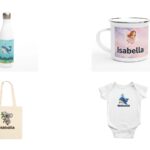
Clothing, hats and comforters sit outside that list. Fabric needs a sew-in label or an iron-on one, and we print neither. For the spare clothes a baby keeps at daycare, the Baby Name Onesie comes with the name printed on the front.
Your centre keeps its own version of this list, so ask for a copy along with its rules on what a child may bring from home. The office version beats a guess at the bench.
Bottles, lids and valves: where the name should sit
Daycare bottles take more punishment than anything else in the bag: washed daily, dropped on concrete, handed back with somebody else’s lid.
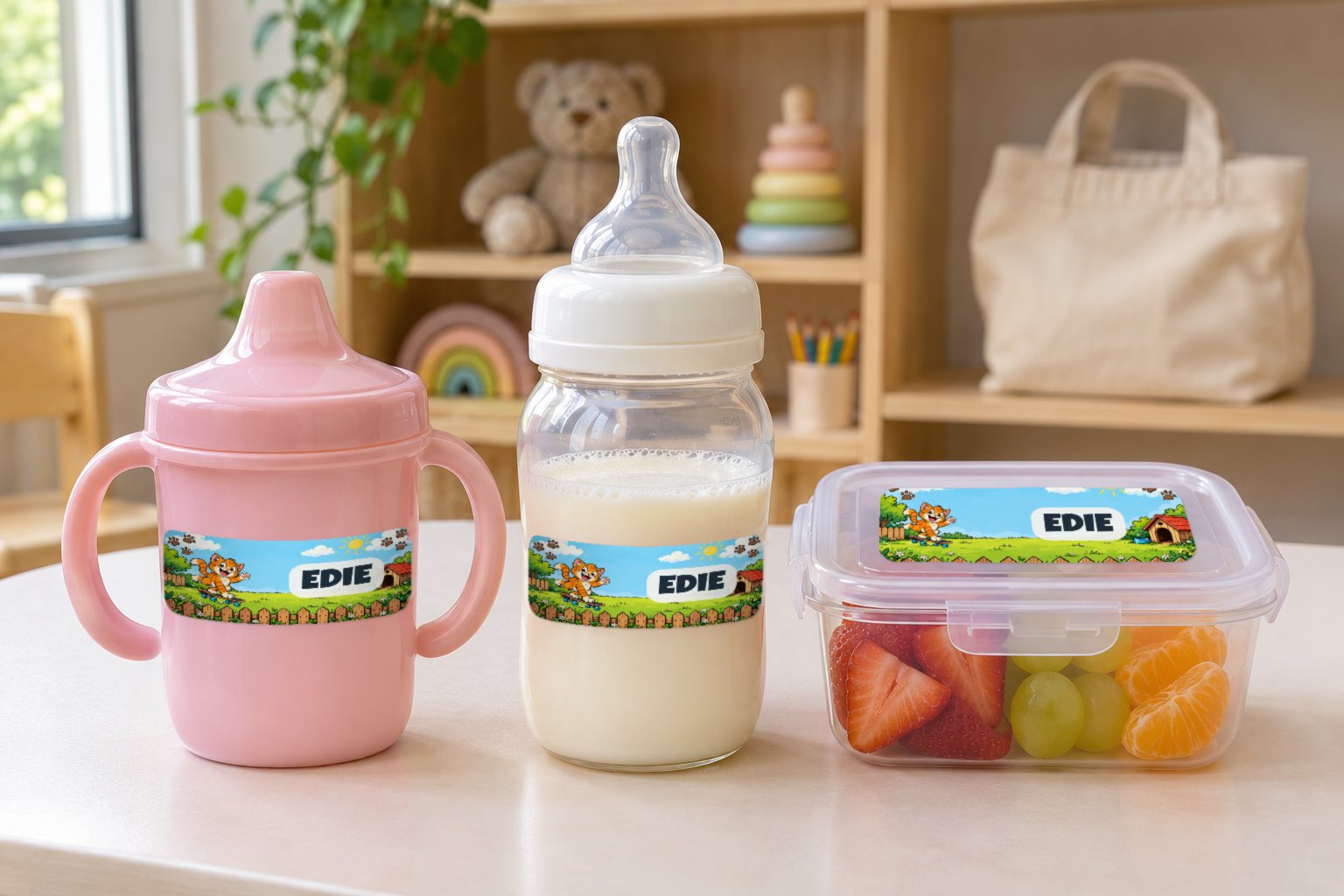
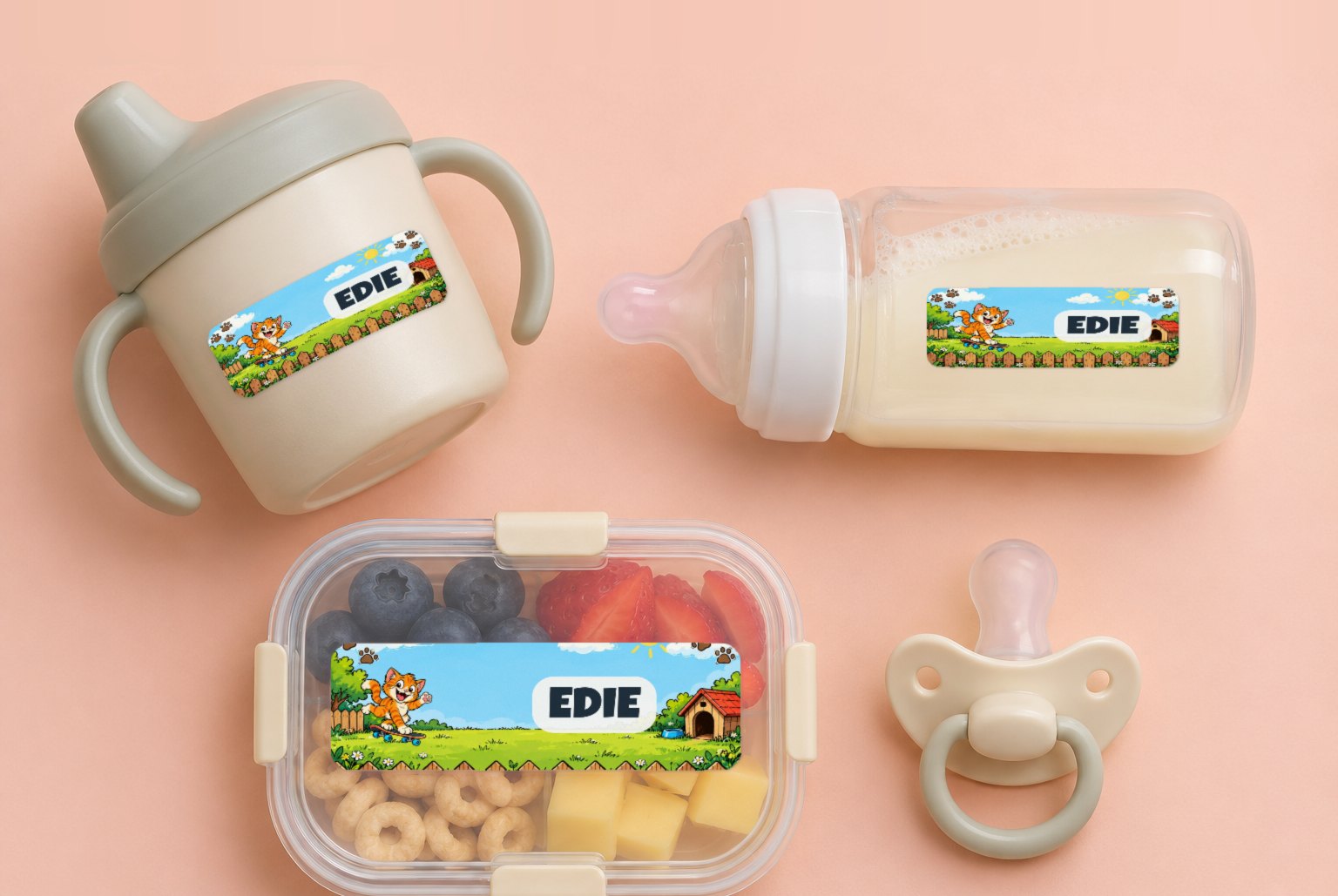
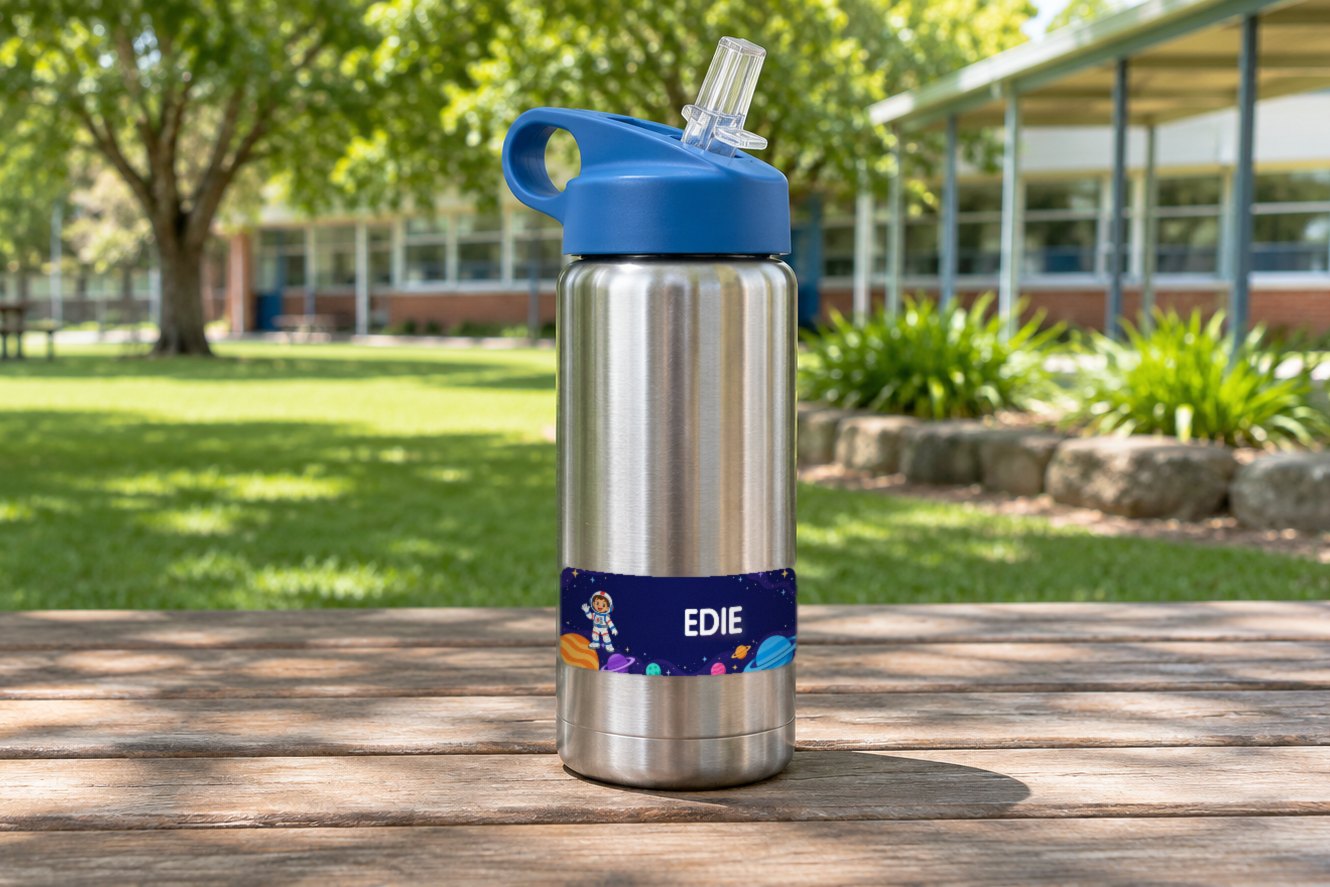
The bottle body is the surface that copes. A long label at 70 x 25 mm leaves room for a first name and a second line without wrapping around a handle.
Lids, collars and valves separate in the sink, so each of those takes a standard 50 x 25 mm sticker. The teat is the one part not to label, because a sticker sitting there ends up in a child’s mouth rather than on a bottle.
Splashes and a wipe-down do no harm, since the stock is water resistant. The dishwasher answer is the top rack: 3M rates the film from -40 to 107 °C, and a home dishwasher washes at about 45 to 65 °C, 70 to 75 °C on an intensive or hygiene cycle, so a bottle up there stays inside that range. Keep labelled items out of sterilisers, boiling water and soaking water: 3M gives the film an excellent water resistance rating, but that rating does not cover soaking. The freezer is fine, since the film is rated down to -40 °C and a home freezer runs at about -18 °C.
The daycare labels range prints on vinyl stock, so a bottle, its lid and the spare cup can all carry one name in one design.
Containers, lids and the small things that go missing
Small items vanish faster than big ones, so match the sticker to the surface rather than squeezing a long one onto a lid.
The 30 mm circles suit a narrow or curved face: the base of a small cup or the handle of a lunch box. That size also goes inside a shoe, covered further down.
The standard 50 x 25 mm label takes the middle ground, meaning food containers and their lids, and a second bottle. Naming a container and its lid separately is worth the extra sticker, because they rarely travel home together. For a lunch box and bottle on their own, our Lunch Box & Drink Bottle Labels come in the long 70 x 25 mm and standard 50 x 25 mm sizes.
Packs follow that mix. Value holds 6 long labels, 12 standard and 10 circles, with Starter and Mega scaling from there.
The second line: a room name, or a number to ring
A first name identifies your child inside their own room. It does less work in a shared kitchen, where a bottle with nothing else on it can sit in the wrong fridge until Friday.
That is what the second line answers. It prints smaller than the name, so your child still reads first and the detail second, and it can hold the room your child spends the day in or a mobile number.
A room printed on a bottle lets a carer from another room work out where it belongs. A number does the opposite job, reaching you when something turns up at the end of the day. Both are written for the adult holding the item. For a child who cannot read their own name yet, photo name labels put their photo above the name and carry no second line.
Allergy stickers on lunch boxes and bottles
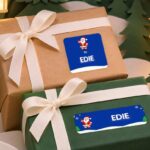
An allergy label puts a child’s name and the allergy on one sticker, clear enough for a teacher or carer to read at a glance. The second line carries the allergy itself, in words such as “No nuts please”, “Dairy free” or “Egg free”, and on this product that line is required.
Treat it as a reminder rather than a piece of safety equipment. It cannot replace telling the centre, so follow the allergy policy, speak to staff directly, and let the sticker sit underneath that as a backstop for the relief teacher who has never seen the enrolment form.
For lunch boxes, containers and drink bottles, our allergy labels print on vinyl stock in the standard 50 x 25 mm size. An allergy filter also appears in the Daycare and Lunch Box galleries if you want those designs beside the rest of the range.
Shoes, siblings and the move to school
Shoes come off at the door, get swapped at the cubby, and turn up in the sandpit. Inside each shoe, our shoe labels stick a 30 mm circle on the insole, one marked L and one marked R, with the same name and picture on both. Put the L in the left shoe and a three year old starts learning the habit.
Two children means two cart lines. Every pack carries one child’s name, so adding another child gives them their own name, design, colourway, font and picture, and puts them in the cart as a separate line with the same pack by default. A shared sheet is how a bottle ends up wearing the wrong name.
Once school starts, the school labels range covers what a child carries in. Large labels at 60 x 22 mm take the lunch box, drink bottle and book covers, medium ones at 40 x 16 mm take containers and the pencil case, and thin pencil labels at 38 x 9 mm fit textas and glue sticks. A second line can hold a surname, class or room.
Term 1 in 2027 begins in late January for families in Victoria and Queensland, and in early February for those in New South Wales, Western Australia and Tasmania. December and early January are the calmest months to order, with the widest buffer before term starts. Each product page shows an estimated arrival window for an order placed that day.
The date arrives whether the labels are in the bag or not.
Helping the labels stay put through daycare days
Choose a clean, dry, rigid surface and let it sit at room temperature, 16 to 32 °C. Press the label down firmly from the centre out, then give the adhesive 24 hours to reach full strength before the first wash. It is permanent, made to stay on, so a little care at the start pays off.
Once that wait is done, wash on the top rack. 3M rates the film from -40 to 107 °C, while a home dishwasher runs at about 45 to 65 °C, or 70 to 75 °C on an intensive or hygiene cycle, so the heat stays inside the rated range. The film is water resistant, but 3M’s excellent rating does not cover soaking, so do not soak labelled items, and keep them away from sterilisers and boiling water. Silicone, soft squeeze bottles and fabric are not a match.
Frequently asked questions
What should I label for daycare?
Name bottles and sippy cups, food containers and their lids, and shoes, plus anything else that travels in daily. Ask your centre for its own checklist, since the requirement comes from the centre rather than from us. Clothing, hats and comforters need labels sewn in or ironed on, and that side of the bag is outside our range.
How should I label bottles for daycare?
Put the long 70 x 25 mm label on the side of the bottle, where it sits flat and is readable from a step away. Then work through every part that comes apart in the wash. The teat is the one part not to label. Lids, collars and valves each take a standard 50 x 25 mm sticker.
Are daycare labels waterproof?
No. The vinyl stock is water resistant, which covers splashes, a wipe clean and a wet walk to the car. 3M rates that water resistance as excellent, though not for soaking, so labelled items stay out of soaking water, sterilisers and boiling water. A labelled bottle goes on the top rack of the dishwasher, since 3M rates the film from -40 to 107 °C and a home dishwasher washes at about 45 to 65 °C, or 70 to 75 °C on an intensive or hygiene cycle, once the label has had 24 hours to set. Our stickers are made for smooth, hard things such as bottles, lunch boxes and containers.
Can I add a room or a number under the name?
Yes. The second line prints smaller than the name, and it can hold the room your child is in or a number to reach you on. A room tells a carer who works elsewhere in the building where a stray bottle belongs, and a number reaches you if something is found. Shoe labels carry no second line.
Should I use an allergy label?
An allergy label puts a child’s name and the allergy on one sticker, readable at a glance, and works as a reminder on lunch boxes, containers and drink bottles. It is not a medical device. Tell the centre about the allergy directly and follow its policy, because the sticker backs up that conversation rather than replacing it.
How do I label clothes for daycare?
Clothes need a fabric label, either stitched in or pressed on with an iron, and we cannot supply those. Our stickers are made for smooth, hard things such as drink bottles, lunch boxes, containers and shoes. Ask the centre what it requires on hats, socks and comforters, then choose a method that suits the fabric.