
When you are ordering 500, 5,000 or 25,000 stickers in a single run, every cent per unit matters – and the decisions you lock in at the brief stage (format, substrate, finish, version splits) determine your cost structure before the press ever starts. Bulk sticker printing in Australia has matured considerably: digital gang-run presses have brought the cost-per-unit crossover point down significantly, domestic turnarounds are tighter than they were three years ago, and offshore alternatives increasingly carry hidden freight, duty and quality-inspection costs that rarely appear in a headline quote.
This guide is written for two buyer types. B2B large-order buyers – marketing managers, event organisers and franchise ops leads ordering for a launch or fleet rollout – and resellers: Etsy, Shopify and DTC sellers who need a reliable bulk print partner for consistent repeat-order stock. Whichever camp you fall into, the principles are the same: understand your volume tier, choose the format that delivers the best cost-per-unit for your order size, and get your files production-ready before you start comparing quotes.
For a full breakdown of sticker printing costs in Australia across all formats and sizes, see our dedicated sticker printing costs Australia guide.
Bulk Sticker Printing: Quick Reference
| Format | Min. Order | ~AUD/unit at 500 | ~AUD/unit at 5,000 | Std. Lead Time | Outdoor-Rated |
|---|---|---|---|---|---|
| Sticker Sheets | 50 sheets | $0.45-$0.85/sheet | $0.15-$0.28/sheet | 5 BD | Vinyl option: yes |
| Die-Cut Stickers | 100 units | $0.55-$0.90 | $0.20-$0.35 | 5-7 BD | Yes (vinyl base) |
| Bumper Stickers | 25 units | $0.50-$0.85 | $0.20-$0.32 | 5 BD | Yes |
| Circle Stickers | 50 units | $0.40-$0.70 | $0.14-$0.24 | 5 BD | Yes (vinyl) |
| Rectangle Stickers | 50 units | $0.38-$0.65 | $0.13-$0.22 | 5 BD | Yes (vinyl) |
| Vinyl Stickers | 50 units | $0.50-$0.80 | $0.18-$0.30 | 5 BD | Yes (3+ years UV) |
| Foil Stickers | 100 units | $1.00-$1.60 | $0.45-$0.80 | 7 BD | Indoor only |
| Clear Stickers | 50 units | $0.45-$0.80 | $0.18-$0.30 | 5 BD | Yes (vinyl base) |
All prices indicative inc. GST; actual cost depends on sticker size, finish and current online configurator pricing. Lead times are production only and exclude overnight Startrack dispatch across Australia.
Volume Tier Benchmarks: What 1,000 Stickers Actually Costs vs 10,000
The per-unit cost of sticker printing in Australia drops sharply between 100 and 1,000 units, then continues to fall – more gradually – at higher volumes. The biggest cost breaks occur at the 500, 1,000 and 5,000 unit marks, where press economies start to dominate over setup costs.
| Volume | Sticker Sheets (per sheet, AUD) | Die-Cut Stickers (per unit, AUD) | Circle / Rectangle (per unit, AUD) |
|---|---|---|---|
| 100 | $0.90-$1.50 | $1.20-$1.80 | $0.75-$1.20 |
| 500 | $0.45-$0.85 | $0.55-$0.90 | $0.38-$0.70 |
| 1,000 | $0.28-$0.50 | $0.35-$0.60 | $0.22-$0.42 |
| 5,000 | $0.15-$0.28 | $0.20-$0.35 | $0.13-$0.24 |
| 10,000 | $0.10-$0.18 | $0.13-$0.22 | $0.08-$0.16 |
| 25,000 | $0.06-$0.12 | $0.09-$0.16 | $0.06-$0.12 |
Indicative AUD pricing inc. GST for standard sizes (approx. 90x50mm for individual stickers, A5 for sheets) with gloss laminate. Use the online configurator for exact pricing on your specification.
Gang-run printing is the underlying economics driver here. Multiple jobs share a single press run, so the fixed setup cost (plate preparation, press calibration, waste at the start of a run) is spread across every unit in the combined batch. At 100 units, setup represents a significant fraction of your total cost. At 5,000 units, setup is negligible – you are paying almost entirely for materials and press time.
Die-tooling cost is the other key variable for custom die-cut stickers. A custom cutting die for a unique sticker shape typically costs AUD $50-150 on the first order. At 100 units, that adds $0.50-1.50 per sticker. At 10,000 units, it is under $0.02 per sticker – essentially a rounding error. On every repeat order, the stored die is reused at no additional charge, which fundamentally changes the economics of high-frequency bulk reorders.
Consider a real-world example: a Sydney café chain ordering 5,000 takeout-seal stickers across four locations. By consolidating into a single 5,000-unit order rather than four separate 1,250-unit orders, they jump two volume tiers and reduce per-unit cost by approximately 28-35%. The saving on a single consolidated order can cover the freight cost to distribute stock across all four venues many times over.
For most bulk buyers, the 1,000-unit mark is the sweet spot where quality, price and lead time align well. At 10,000+ units, some order categories benefit from offset printing instead of digital gang-run – but digital is competitive for most AU sticker formats up to approximately 25,000 units per design, and it offers shorter lead times and lower minimum quantities than offset.
Format × Volume Fit: Which Sticker Type Scales Most Economically
Sticker sheets offer the lowest cost-per-sticker at high volumes because multiple stickers share a single sheet cut – fewer individual die passes, more efficient press coverage. Die-cut stickers deliver maximum design freedom for custom shapes at 1,000+ units. Choosing the wrong format for your volume can add 30-50% to your unit cost unnecessarily.
| Format | Best Volume Range | Key Advantage | Best Use Case |
|---|---|---|---|
| Sticker Sheets | 500-50,000 sheets | Lowest individual sticker cost; multiple per sheet | Label sets, product packs, packaging seals, retail sticker assortments |
| Die-Cut Stickers | 500-25,000+ | Any custom shape; die reused free on repeats | Brand logo stickers, product packaging, resale designs, custom-shape promo |
| Bumper Stickers | 25-10,000+ | Large-format outdoor; low MOQ; vehicle-rated | Vehicle fleet, outdoor campaigns, events, giveaways |
| Circle / Rectangle | 50-50,000+ | No die cost; most economical standard shapes | Product labelling, jar lids, bottle necks, event badges |
| Foil Stickers | 100-5,000 | Premium mirror finish; high perceived value | Product launches, premium gifting, corporate events, awards |
| Clear Stickers | 50-10,000+ | Transparent; appears to float on surface | Window decals, product packaging labels, premium packaging seals |
Sticker sheets are the workhorse format for bulk procurement. An A5 or A4 sheet typically carries 6-20 individual stickers depending on their size and layout. One press run, one laminate pass, one sheet-cut. Because the cost is priced per sheet – and each sheet contains multiple individual stickers – the effective per-sticker rate at 5,000+ sheets can be as low as $0.015-0.04, significantly below any individually cut sticker format. Sticker sheets are best for packaging seal sets, product label assortments, retail sticker packs and event packs where multiple stickers ship together.
Die-cut stickers are the right call when your design has a custom shape – a cloud, a logo silhouette, a product outline. The die is cut once on the first order and then stored and reused free on all repeat orders. At 1,000+ units, the die-setup cost is fully amortised and the format becomes very cost-competitive with standard shapes. Visit the die-cut sticker product page to configure your shape and quantity.
Circle and rectangle stickers require no custom die – the cutting tooling is standard – making them the most cost-efficient formats per sticker at any volume. Circle stickers are particularly popular for product labelling on jars, bottles and packaging, while rectangle stickers suit asset tags, address labels and promo stickers.
For finish guidance that feeds into your bulk specification decision – whether to go gloss, matte or soft-touch – see the gloss vs matte sticker finish guide.
Order Sticker Sheets in Bulk
Sticker sheets are the most cost-efficient format for high-volume orders – multiple stickers per sheet, one production run, lowest effective cost-per-sticker at 500+ sheets. Configure your sheet size, layout and quantity online and get an instant price.
Lead Times by Order Size: What to Expect at Each Volume
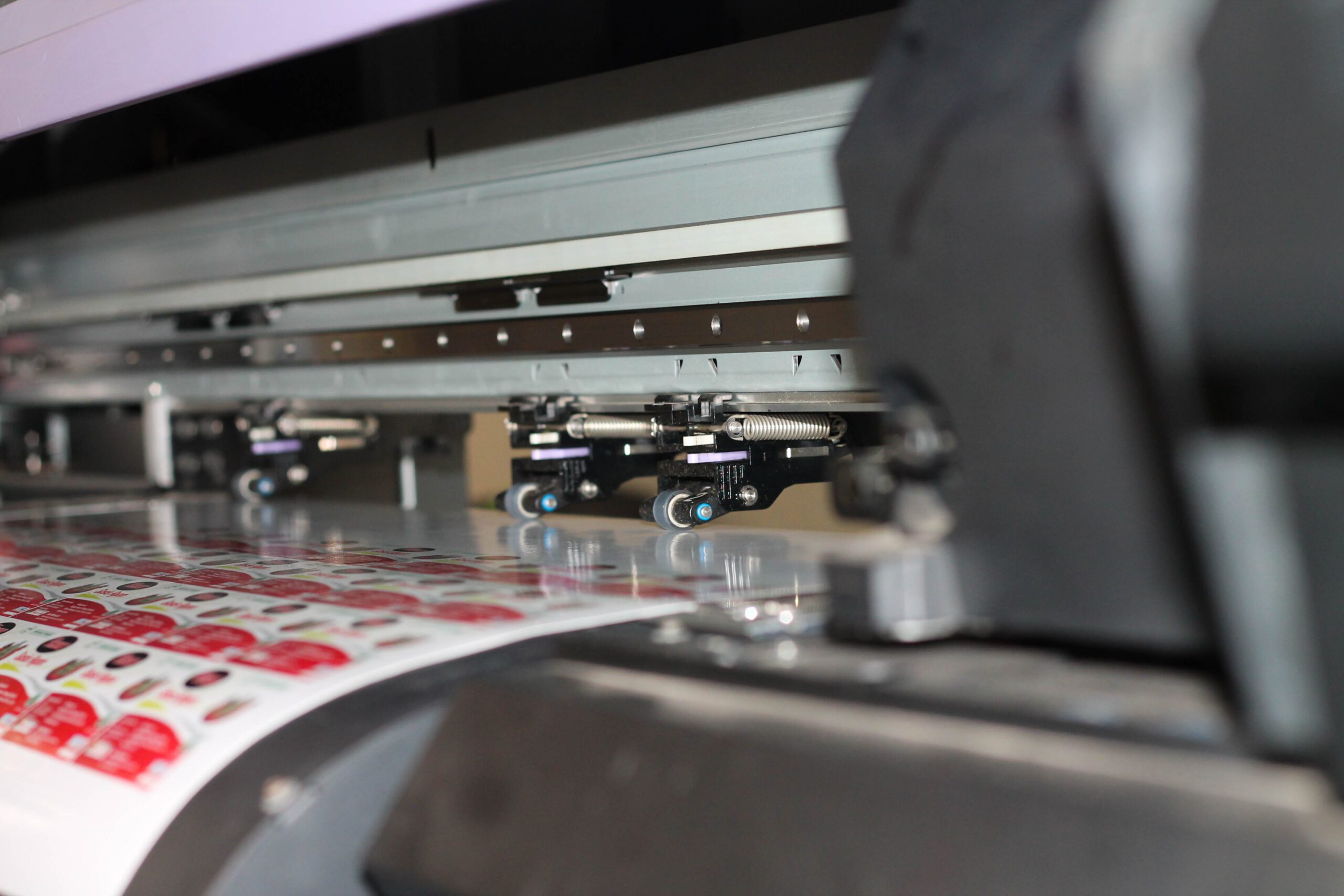
Standard sticker orders at Paperlust Print Shop go to print within 1-2 business days of proof approval, with most orders dispatched within 5 business days. At 10,000+ units, allow 7-10 business days for production. All orders ship free via overnight Startrack across Australia after dispatch.
| Order Volume | Proof Delivery | Production Time | Total (proof to dispatch) |
|---|---|---|---|
| Under 1,000 units | 1-2 BD | 5 BD after approval | 6-7 BD |
| 1,000-5,000 units | 1-2 BD | 5 BD after approval | 6-7 BD |
| 5,000-10,000 units | 1-2 BD | 5-7 BD after approval | 6-9 BD |
| 10,000-25,000 units | 1-2 BD | 7-10 BD after approval | 8-12 BD |
| 25,000+ units | 1-2 BD | 10-14 BD (confirm at quote) | 11-16 BD |
These timelines cover production only. After dispatch, overnight Startrack delivers to capital cities the following business day, with regional deliveries typically 2-3 business days. All AU deliveries are included at no additional cost.
Rush print is available at additional cost for qualifying order sizes – check the online configurator or contact the team if you have a critical deadline. For orders submitted over the weekend, proofing and production begin on the next business day.
For events and product launches: budget at least three full weeks from brief to in-hand for orders of 10,000+ units. That buffer comfortably covers proof revisions (usually 1-2 rounds), production and overnight delivery. A Melbourne event organiser ordering 10,000 wristband stickers for a music festival, with a confirmed brief and file on Monday morning, can typically expect dispatch by the following Friday and delivery on the Monday before the event – assuming proof approval happens within 24 hours of the proof being issued.
File Preparation for Bulk Sticker Runs
For bulk sticker runs, vector source files are strongly preferred – AI, EPS or PDF with all fonts outlined and images embedded. Raster files are accepted at 300 DPI minimum in CMYK mode. Getting file prep right on the first submission avoids proof-revision cycles that add 1-2 business days to your timeline on every round.
Vector vs Raster for Bulk Submissions
Vector files (Adobe Illustrator AI, EPS, PDF): the preferred format for any design containing logos, typography or hard-edged shapes. Vector artwork scales to any output size without quality loss. All text must be converted to outlines (or fonts embedded) before submission to avoid font-substitution errors at the prepress stage.
Raster files (PNG, TIFF, JPEG): accepted at 300 DPI minimum, in CMYK colour mode, at the final output size. A common mistake is submitting a 72 DPI web graphic and assuming it will print at full quality – it will not. If you are working from a raster source, check the DPI at your final sticker size before submitting. Files submitted in RGB will be converted to CMYK in prepress; colour shifts are common in blues, purples and vibrant greens. Convert to CMYK in your editing software first for more predictable results.
For die-cut sticker shapes: include a separate cut-line layer using a spot colour named “CutContour” or “Die Line”, set to overprint. If you are ordering standard shapes (circle, rectangle, bumper), the cut is preset and no separate die line is needed in your artwork file.
Bleed, Safe Zone and Ink Coverage
Bleed: add 3mm of bleed on all edges for any design element that prints to the edge of the sticker. Without bleed, a slight shift in cutting position will produce a white border on one side.
Safe zone: keep all critical elements – logo, brand name, essential text – at least 3mm inside the final cut line. This accounts for standard +/-0.5mm production cut tolerance, with a comfortable margin.
Maximum ink coverage: avoid CMYK compositions with total area coverage (TAC) above 280-300%. Very heavy ink loads slow dry times and can affect adhesive performance on high-volume runs, particularly in humid conditions. If your design includes large areas of very dark or saturated colour, check the TAC in your design software’s separations preview.
Colour Matching on Bulk Runs
Pantone-to-CMYK conversion is available on request. Note that CMYK digital printing cannot exactly replicate all Pantone colours – particularly fluorescents and highly saturated spot colours. Discuss critical brand colour requirements with the team before ordering. For brand-critical colour matching on a high-volume order, a physical test print before the full bulk run adds 2-3 business days but eliminates colour-matching risk across the whole run.
For a full breakdown of how sticker sizing affects your artwork canvas setup, see the sticker size guide.
Running Multiple Designs in a Single Bulk Order
You can split a bulk order across multiple designs in a single production run. Each distinct design requires a separate file submission, and a per-design proofing step. For die-cut formats, the die is shared if all variants use the same shape – meaning you pay one die setup cost regardless of how many design variants are in the order.
The key rules for design splits:
- Sticker sheets: multiple designs can be placed on the same sheet (mixed-design sheet) or each sheet can carry one design (mixed-sheet order). Minimum per design variant is typically one sheet. Contact the team if you need a bespoke mixed-design layout.
- Die-cut stickers with the same shape: one die covers all design variants. Die setup cost is charged once for the shared shape, regardless of how many colour or artwork variations you run.
- Die-cut stickers with different shapes: each unique shape requires its own die. Each unique die incurs a separate setup cost.
- Circle and rectangle stickers: no die fee for any number of design variants. Submit separate files for each design and they are all processed on standard tooling.
Proofing on multi-design orders: each design is proofed individually. When running five or more design variants simultaneously, allow an extra 1-2 business days for the full proof round to complete – proofing is sequential per design, not instantaneous across a batch.
Minimum quantities per design: for die-cut formats, a minimum of 50-100 units per design variant is typical. The total order quantity determines your pricing tier – for example, 1,000 units total split as 200 units across five designs qualifies for the 1,000-unit pricing tier on the overall order, even though each individual design only runs at 200 units.
Colour consistency across design versions: gang-run production groups similar designs on the same press sheet for press-calibration consistency. If cross-version colour matching is critical – for example, you need the gold in your logo sticker to match the gold in your bumper sticker exactly – flag this at the quote stage so designs are grouped on the same press sheet where possible.
Variable data (unique QR codes, sequential numbering, personalised names per sticker): this is a specialist digital print service and is priced and produced differently from standard bulk runs. Contact the Print Shop team directly for a variable-data quote, with your total quantity and the number of unique variants needed.
Real-world example: a Brisbane Etsy seller ordering 2,000 custom die-cut stickers monthly runs 10 designs at 200 units each, all sharing the same custom cloud shape. The die was cut on their first order and has been reused on every repeat order since at no charge. Their effective cost-per-unit on repeat orders is lower than their first order by the full die-setup amortisation – typically $0.05-0.15 per sticker lower, depending on the die complexity.
Resale Buyer Guide: Etsy, Shopify and DTC Sticker Sellers
Etsy and Shopify sticker sellers need a print partner who delivers consistent batch quality at 200-2,000+ units per design, ships within a reliable window, and does not put competing branding on your product. The bulk sticker economics at Paperlust Print Shop are well-suited to the resale model, particularly once a custom die is in place for repeat orders.
White-Label and Packaging
Orders are dispatched in standard Paperlust Print Shop packaging. If your resale business requires unbranded or custom outer packaging – for example, you are shipping direct to your end customer as a dropship arrangement – contact the team before placing your order to discuss available options. This is particularly relevant for Shopify DTC stores fulfilling customer orders directly from your print supplier.
Repeat Orders and Stored Die Economics
Once a custom die is cut for your design, it is stored and reused on every future order at no additional charge. This fundamentally changes the economics of sticker reselling from your second order onward – you are only paying for print, not tooling. A reseller running a popular die-cut sticker design across 12 monthly orders in a year effectively amortises the die cost to near zero by order three, while competitors who change designs or suppliers frequently pay die setup every cycle.
For resellers with a catalogue of 5-20 active designs, storing all dies at a single print partner also simplifies your procurement: one supplier relationship, consistent colour calibration across your range, and a single point of contact for quality issues.
Batch Consistency for Repeat Stock
If you are restocking the same SKU month after month, batch-to-batch colour consistency is critical for your product reviews and brand reputation. CMYK digital print runs are calibrated within standard industry tolerance. If you notice a colour shift on a critical brand colour between two separate reorders placed weeks or months apart, contact the team – the 100% happiness guarantee applies to quality issues regardless of order size.
GST and Input Tax Credits
As an Australian-registered business, the GST you pay on print orders (10%) is claimable as an input tax credit (ITC) on your Business Activity Statement, reducing your effective cost of goods by 9.09%. This is a meaningful advantage over offshore suppliers where import duty may apply instead. Consult your accountant for the specifics of your business structure and BAS obligations.
Resale Margin Benchmarks
At 2,000 units of a custom die-cut sticker on a repeat order (die already stored), indicative cost is approximately $0.28-0.35 per unit AUD inc. GST. At a typical Etsy sale price of $3.00-4.50 AUD per individual sticker, or $8.00-14.00 per sticker sheet, the cost-of-goods margin leaves substantial headroom for Etsy platform fees (6.5% transaction fee plus listing costs), packaging materials and postage. The unit-economics work – the constraint is usually volume and design velocity, not margin.
For DTC Shopify stores building a sticker subscription or seasonal sticker collection, consider a forward-stock model: order 3-6 months of inventory in a single large run to reach the optimal volume tier, then fulfil from stock. For slow-moving SKUs with many design variants, smaller and more frequent orders reduce write-off risk on designs that do not sell through.
For guidance on which substrate makes the most sense for the stickers you plan to resell – particularly the durability trade-off between vinyl and paper for different customer use cases – see the vinyl vs paper stickers comparison.
Custom Die-Cut Stickers for Bulk Orders
Any shape, any design. Order your custom die-cut stickers in bulk and pay the die setup cost once – every repeat order uses the same stored die at no extra charge. Configure your shape, size and finish online for an instant price.
B2B Large-Order Workflow: Quoting, Proofing and Production
B2B orders above 10,000 units benefit from a direct quote workflow rather than the online configurator. The full workflow from quote request to dispatch typically runs 12-16 business days for a 10,000-unit order, depending on complexity and how quickly proof approval is turned around.
Step 1: Brief and Quote Request
For orders under 10,000 units, use the online configurator for an instant price at printshop.paperlust.co/categories/custom-stickers. For 10,000+ units, or for complex multi-design or multi-format runs, submit a quote request through the website or contact the Print Shop team directly.
What to include in your quote request:
- Total quantity and number of distinct design variants
- Format (die-cut, sticker sheet, bumper, circle, rectangle, vinyl, foil, clear)
- Finished sticker dimensions
- Substrate (vinyl, paper, clear) and surface finish (gloss laminate, matte laminate, no laminate)
- Required dispatch date and delivery location (metro, regional, multiple sites)
- Any variable data requirements (sequential barcodes, unique QR codes per sticker)
- Whether this is a repeat order (if so, provide your previous order reference so the stored die can be confirmed)
Step 2: Sample Pack Before Committing
For first-time large orders of 5,000+ units, request a sample pack before locking in the full production run. The sample demonstrates substrate quality, print fidelity, laminate finish and adhesive strength in hand – far more informative than a screen-based colour proof. Sample review adds approximately 3-5 business days to the overall timeline and is strongly recommended for new B2B accounts or orders where brand colour accuracy is critical.
Step 3: Proof Approval
A digital proof is provided within 1-2 business days of file submission. No press run begins without written proof approval – for B2B orders, email approval from an authorised representative in your organisation is standard procedure. Save the proof-approval email: it is your record of what was signed off, and it matters if a dispute arises post-delivery.
Two rounds of revisions are included at no additional charge. If your design requires further changes after two rounds, a small additional fee may apply and additional lead time will be added. Aim to provide complete, reviewed artwork at initial submission to avoid unnecessary revision cycles.
For high-value orders (foil stickers, premium finishes, 50,000+ units), a physical press proof may be available. Discuss this with your account contact at the quote stage – it adds 2-3 business days but provides a hard-copy colour reference before the full run.
Step 4: Production, Quality Check and Dispatch
Production timelines by order size:
- 1,000-5,000 units: 5 business days after proof approval
- 5,000-10,000 units: 5-7 business days
- 10,000-25,000 units: 7-10 business days
- 25,000+ units: confirm at quote stage; 10-14 business days typical
Every order goes through an in-house quality-control check at the Melbourne facility before packing and dispatch. Colour consistency, cut precision and quantity are verified. Free overnight Startrack delivery is included across Australia on all orders. For very large orders (100,000+ units), freight may be palletised – discuss logistics requirements at the quote stage.
Payment terms: standard payment at checkout for online orders. For invoiced B2B accounts or large-volume orders requiring purchase-order workflows, contact the Print Shop team to discuss account terms before placing your order.
For a broader look at how custom sticker printing fits into a B2B branding strategy, see the business sticker branding guide.
Domestic AU Printing vs Offshore: The Real Cost Comparison
Offshore sticker printing – primarily from China and South-East Asia – often looks cheaper at the headline unit cost. But landed cost, including international freight, import duties, quality-inspection contingency and the time cost of longer lead times, regularly closes the gap and frequently reverses it for orders under 25,000 units.
| Factor | Domestic AU (Paperlust Print Shop) | Offshore |
|---|---|---|
| Unit cost at 5,000 (vinyl die-cut) | $0.20-$0.35 AUD | $0.10-$0.20 AUD (headline) |
| International freight to AU | Included (overnight Startrack) | $150-$600+ AUD (DHL/FedEx) |
| Door-to-door lead time | 6-12 BD total | 3-6 weeks |
| Quality guarantee | 100% happiness guarantee (free reprint or refund) | Supplier-dependent; no AU Consumer Law cover |
| GST / import costs | GST claimable as ITC on your BAS | Import duty may apply; no ITC |
| Reprint if defective | Same-week reprint, free | Re-order and re-ship: 4-6 additional weeks |
Freight is the key hidden cost for offshore orders. At 5,000 units, the headline per-unit saving over domestic printing might be $0.10-0.15. If international freight runs AUD $250-600 for a DHL or FedEx shipment from China at that weight, that adds $0.05-0.12 per sticker back to your landed cost – substantially narrowing or eliminating the apparent advantage before you factor in any other costs.
Import duty and customs: self-adhesive labels and printed stickers (classified under HS code headings 49.08 and 49.11) may attract import tariffs under Australian customs schedules, with rates varying by country of origin and product classification. Additional customs broker fees typically add $150-350 per shipment. These costs are rarely itemised in an offshore supplier quote – they appear on your customs entry when the shipment arrives.
Lead time risk is where offshore printing most frequently fails event-driven buyers. Offshore door-to-door lead times of 3-6 weeks leave zero buffer for event-specific orders. A delayed shipment on a 10,000-unit festival wristband sticker order can mean the product arrives after the event – a complete write-off of both the print cost and the freight cost. Domestic production with a 7-10 BD turnaround and overnight Startrack delivery leaves a manageable buffer for most event timelines.
Quality rejection costs are rarely modelled in offshore comparisons. If a 10,000-unit run arrives with colour shifts, misregistered cuts or adhesive failures, your remedies are to dispute with a supplier in another jurisdiction (slow, uncertain), absorb the loss, or re-order and wait another 4-6 weeks. With domestic printing and the 100% happiness guarantee, a quality issue is resolved with a same-week reprint – at no cost and with no weeks of waiting.
The offshore break-even threshold: for most AU buyers, offshore sticker printing delivers a genuine net cost advantage only at 50,000+ units per run, where the unit-cost saving outweighs the combined cost of freight, duty, longer lead time and quality-failure contingency. Below that threshold, domestic AU printing is typically the better commercial decision when all costs are fully modelled.
Materials Guide for Bulk Sticker Printing
The choice between vinyl and paper, gloss and matte, and laminated vs unlaminated is the single biggest lever on both unit cost and product durability in a bulk sticker run. Choose on the basis of the final application – where the sticker will live, for how long, and under what conditions – not aesthetics alone.
Vinyl vs Paper for High-Volume Orders
| Material | Best Application | Cost vs Vinyl Baseline | Outdoor-Rated | Waterproof |
|---|---|---|---|---|
| BOPP Vinyl | Outdoor, vehicle, product labels, dishwasher-rated | Baseline | Yes (3-5 years UV) | Yes |
| Paper (white) | Indoor, packaging seals, short-life event stickers | -15 to -25% | No | No |
| Clear (transparent vinyl) | Window, glass, see-through product labels | +10 to +20% | Yes | Yes |
| Kraft paper | Artisan / eco product packaging labels | Comparable | No | No |
BOPP vinyl is the default substrate for any bulk sticker order with any outdoor exposure. UV-stabilised, waterproof and rated for 3-5 years outdoors depending on climate and sun exposure. Dishwasher-safe when applied correctly, making it the right choice for product labels on jars, reusable cups and bottles. Visit the vinyl sticker product page to configure your bulk order.
Paper is the lower-cost option: typically 15-25% cheaper than vinyl at comparable volumes. Suited to indoor applications and stickers with a planned short lifespan – packaging seals, single-day event stickers, promotional giveaways that will be used within days of receipt. Not waterproof; avoid for any application where moisture exposure is possible.
Clear stickers use a vinyl base with a transparent facestock – the design appears to float on the applied surface with no visible backing. Popular for glass bottles, product packaging where you want to show the product through the label, and premium gifting seals. A slight cost premium over opaque vinyl (typically 10-20%). See the clear sticker page for configuration options.
Laminate Options for Bulk Runs
Gloss laminate: vibrant finish, high contrast, strong moisture and scuff resistance. The most popular choice for brand stickers, product labels and promotional stickers. At most volume tiers, gloss laminate represents less than 15% of the per-unit cost – it is almost always worth including for the durability benefit.
Matte laminate: premium, low-glare finish with slightly softer colour rendering. Popular for cosmetic and skincare brands, premium retail product labels and lifestyle packaging. The matte surface is also writeable, which matters for stickers used as custom address or instruction labels.
No laminate: lowest unit cost, least durable. Suitable for very short-life or indoor-only applications where cost reduction is the primary consideration and the sticker will be removed or disposed of within days.
At 10,000 units, adding a gloss laminate typically represents less than 12-15% of the total per-unit cost. At 25,000+ units, the laminate cost as a percentage of unit cost drops further. For almost all bulk applications, the durability and presentation benefit of lamination more than justifies the cost at volume.
Storage Notes for Forward-Stock Bulk Orders
If you are ordering 10,000+ stickers as forward stock to be fulfilled over 3-6 months, storage environment matters. Keep rolls and flat sheets in a cool, dry space: 15-25 degrees Celsius and below 60% relative humidity. Avoid direct sunlight, particularly for paper-based stickers where UV exposure degrades both the print and the adhesive over time.
Vinyl stickers are significantly more tolerant of temperature variation than paper. If you are building a forward-stock model and plan to fulfil over more than 90 days, vinyl is the safer substrate choice – it is more forgiving of minor storage condition variations.
Print-on-demand vs forward-stock: for slow-moving SKUs with many design variants, smaller and more frequent orders reduce write-off risk on designs that underperform. For fast-moving core SKUs – your top one to three bestselling designs – a large forward-stock run of 5,000-10,000 units gives the best unit economics. Many successful Etsy sticker resellers run a hybrid model: forward stock the top three to five designs, print-on-demand for the tail.
Quality Control Standards on High-Volume Runs
Every bulk sticker order from Paperlust Print Shop goes through an in-house quality-control check at the Melbourne production facility before dispatch. Colour consistency, cut precision and quantity are verified on every run, regardless of order size or format.
Colour consistency across a single print run is maintained within standard CMYK tolerance on digital presses. For resellers and B2B buyers restocking the same design month after month, batch-to-batch colour consistency on reorders is also maintained within the same tolerance – which is critical for Etsy sellers whose customers expect identical stickers across separate orders placed months apart.
Cut precision for die-cut stickers is produced to a tolerance of +/-0.5mm on the cut line. For designs with very intricate custom shapes – tight inside corners, fine protrusions under 3mm – standard production cut tolerance is slightly wider in those areas. The 3mm artwork safe-zone guideline (keeping critical elements inside the cut line) accounts for this. Designs are reviewed at the proof stage for any shapes that may present cut-precision issues at scale.
Quantity accuracy: orders are counted and verified before packing. Standard industry fulfilment tolerance on large runs is +/-2%. Paperlust Print Shop targets exact or slight-overage fulfilment. If your order is counted short on delivery, contact the team with your order reference and a delivery-receipt photo.
Batch variance between separate reorders: colour drift between orders placed months apart can occur due to natural variation between ink lots and substrate batches from the manufacturer. This is a normal characteristic of CMYK printing across the industry. If exact colour matching between a new batch and a previous order is critical for your product (common for cosmetic label resellers where packaging colour consistency is a brand standard), flag this at the time of placing the reorder. The team can pull the colour profile from your previous order as a reference calibration point.
What the 100% happiness guarantee covers: if your stickers arrive with a print defect, cut error, adhesive failure or quantity shortfall that was not present in the approved proof, contact the team with photos within five business days of receipt. The resolution is a free reprint or a full refund. No requirement to return defective stock.
Get an Instant Price on Your Bulk Sticker Order
The full breakdown of sticker printing costs in Australia – across every format, size and volume tier – is in our dedicated pricing guide. Use it alongside the online configurator to model your exact cost-per-unit before committing to a run.
Frequently Asked Questions
What is the cheapest sticker format for a 10,000-unit order?
For 10,000 units, sticker sheets deliver the lowest individual sticker cost because multiple stickers are printed and cut on a single sheet in one production pass. At this volume, sticker sheets can reach an effective per-sticker cost of $0.015-0.04 AUD (inc. GST), significantly below any individually cut format. If your design requires a custom shape, die-cut stickers are the next most economical option – the die-setup cost is fully amortised across 10,000 units and adds under $0.02 per sticker.
Can I order 5,000 stickers split across 5 designs?
Yes. A total order of 5,000 units split across five designs (1,000 units per design) qualifies for the 5,000-unit pricing tier on the overall order. For die-cut formats, each design variant that shares the same custom shape uses one die. If each design has a different shape, five separate dies are required. For standard shapes (circle, rectangle), no die is needed for any variant – just submit five separate artwork files.
Do you offer trade pricing for resellers?
Paperlust Print Shop’s online pricing is volume-based and applies to all buyers equally – the more you order, the lower your per-unit cost. Etsy and Shopify resellers benefit from the same volume tier pricing as B2B corporate buyers. For very high-volume repeat accounts (25,000+ units per order, monthly frequency), contact the Print Shop team directly to discuss your account requirements.
What is the lead time on a 25,000-unit sticker run?
A 25,000-unit sticker run typically requires 10-14 business days in production after proof approval, depending on format and finish. Add 1-2 business days for proof delivery and overnight Startrack for dispatch. Total door-to-door time from order placement is approximately 12-17 business days under normal conditions. For time-critical orders at this volume, confirm the exact timeline at the quote stage and discuss whether rush-print options are available for your specification.
How do I get a quote for over 50,000 stickers?
Contact the Paperlust Print Shop team directly through the website’s contact or quote-request form. Include your total quantity, format, sticker dimensions, substrate, finish, number of design variants, and required dispatch date. Orders at this scale are quoted individually and may involve different production workflows (including offset print consideration) to optimise unit economics. The team will come back with a tailored quote and timeline.
Are there setup fees for die-cut sticker shapes?
Yes – a one-time die-setup fee applies for each unique custom shape on your first order. This fee is typically AUD $50-150 depending on the complexity of the shape. On all subsequent repeat orders using the same shape, the stored die is reused at no additional charge. If you are ordering two or more design variants that all use the same shape, only one die is required regardless of the number of artwork variants.
Can I provide my own design files for a bulk run?
Yes. Paperlust Print Shop accepts customer-supplied artwork in AI, EPS, PDF (vector preferred) or high-resolution PNG/TIFF/JPEG at 300 DPI in CMYK mode at final print size. Include a separate cut-line layer for custom die-cut shapes. The team reviews all files at the proof stage and will flag any issues (low resolution, RGB colour mode, missing bleed, font problems) before production begins.
What file format do I need for a bulk sticker order?
Vector files are strongly preferred: Adobe Illustrator (AI), EPS, or PDF with outlined fonts and embedded images. These give the best result for logos, typography and hard-edged shapes at any size. High-resolution raster files (PNG, TIFF) are accepted at 300 DPI minimum in CMYK mode at the final output dimensions. Avoid submitting web-resolution graphics (72 DPI) – they will print blurry.
Is there a minimum order quantity for bulk sticker sheets?
Sticker sheets can be ordered from 50 sheets upward. The online configurator shows exact MOQ and pricing for your chosen sheet size and specification. There is no upper limit on order quantity – very large orders (10,000+ sheets) are handled through the quote workflow to confirm production scheduling and lead time.
What is the difference between vinyl stickers and paper stickers for a bulk order?
Vinyl (BOPP) stickers are waterproof, UV-resistant and rated for 3-5 years outdoors. They cost approximately 15-25% more per unit than paper stickers. Paper stickers are lower cost but not waterproof and are best for indoor use or short-life applications. For product labels, vehicle stickers, outdoor events or anything that will encounter moisture, vinyl is the correct choice. For indoor packaging seals, event badges or promotional stickers with a short planned life, paper is a cost-effective option.
Can I get a physical sample before committing to a 10,000-unit print run?
Yes. For first-time large orders of 5,000+ units, you can request a physical sample print before committing to the full run. The sample demonstrates your design at actual size, on the chosen substrate and with the chosen laminate, in-hand. This adds approximately 3-5 business days to the overall timeline and is strongly recommended for new bulk accounts or any order where brand colour accuracy is critical. Contact the team at the quote stage to include a sample round in your project timeline.
Do bulk sticker orders qualify for GST input tax credits?
Yes – if you are registered for GST as an Australian business, the GST component of your print order (10%) is claimable as an input tax credit on your Business Activity Statement, reducing your effective cost of goods by 9.09%. This is a meaningful cost advantage over offshore purchases, where import duty may apply instead. Speak with your accountant about the specifics of your business structure and BAS obligations.