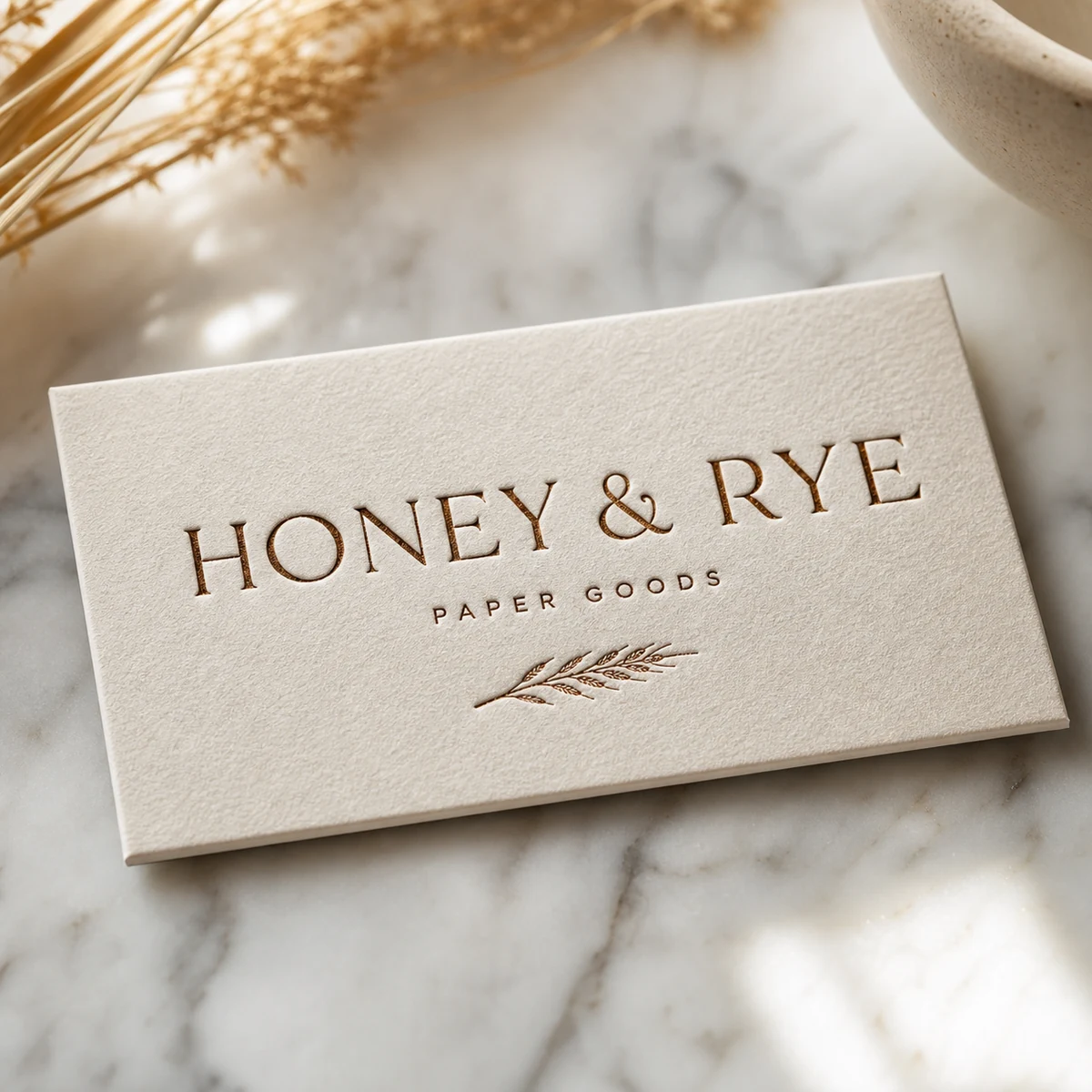
Letterpress business cards are the only format where people physically stop to ask about your card. The debossed impression, the weight in the hand, the way the design sinks into the fibres of the stock: it registers as something made rather than manufactured. If that is the result you are after, this guide will help you understand exactly what letterpress is, which stocks carry the impression best, how it compares to foil and embossing, and what your artwork needs to do to survive the press.
- Letterpress creates a recessed (debossed) impression pressed DOWN into the stock. The design is sunken, not raised.
- Soft, compressible cotton board takes and holds a deep impression. Thin or coated stocks tend to crush under pressure rather than hold the recessed form.
- Letterpress differs from: embossing (design pushed UP, raised), flat foil (metallic flush to surface, no texture), and raised foil (metallic and raised, completely separate process).
- Blind deboss uses no ink; the impression alone carries the design in light and shadow. Coloured ink on the impression adds contrast.
- Design minimum line weight: 0.5pt or above. Fine serifs and reversed-out text below 8pt will not hold a clean impression.
- Paperlust sells letterpress business cards pressed into white, uncoated 300gsm Wild Cotton board, with one PMS colour on the front and runs from 100 to 250 cards.
What letterpress actually is (and what it is not)
The term “letterpress” describes a printing process, not a finish. A plate or type is set, inked, and pressed under high mechanical pressure directly into the paper surface. The result is a debossed impression: the design sits below the level of the surrounding card. It is recessed. It catches shadow. Run a fingernail across it and you feel the valley in the stock.
This is the defining characteristic. The design goes DOWN.
That single fact separates letterpress from every other premium finish:
- Embossing pushes the design UP from below. The result is raised and proud of the surface. Embossed cards have a bumpy, tactile foreground. The opposite of letterpress.
- Flat foil applies a metallic film flush to the surface. No texture change, no impression. The card reads as smooth with a mirror-bright element.
- Raised foil is both metallic and elevated above the surface. It is a hybrid of foil application and a relief build-up process. Raised, shiny, and dimensionally proud.
When someone in Australia searches for “letterpress business cards,” they are almost always looking for that deep, pressed-down impression on thick stock. The confusion arises because embossed cards and raised-foil cards are often marketed under the same “tactile premium” umbrella. They are genuinely different products with different plate requirements, different stocks, and a completely different feel in the hand.
Blind deboss vs. coloured ink letterpress
Within letterpress itself, there are two main approaches:
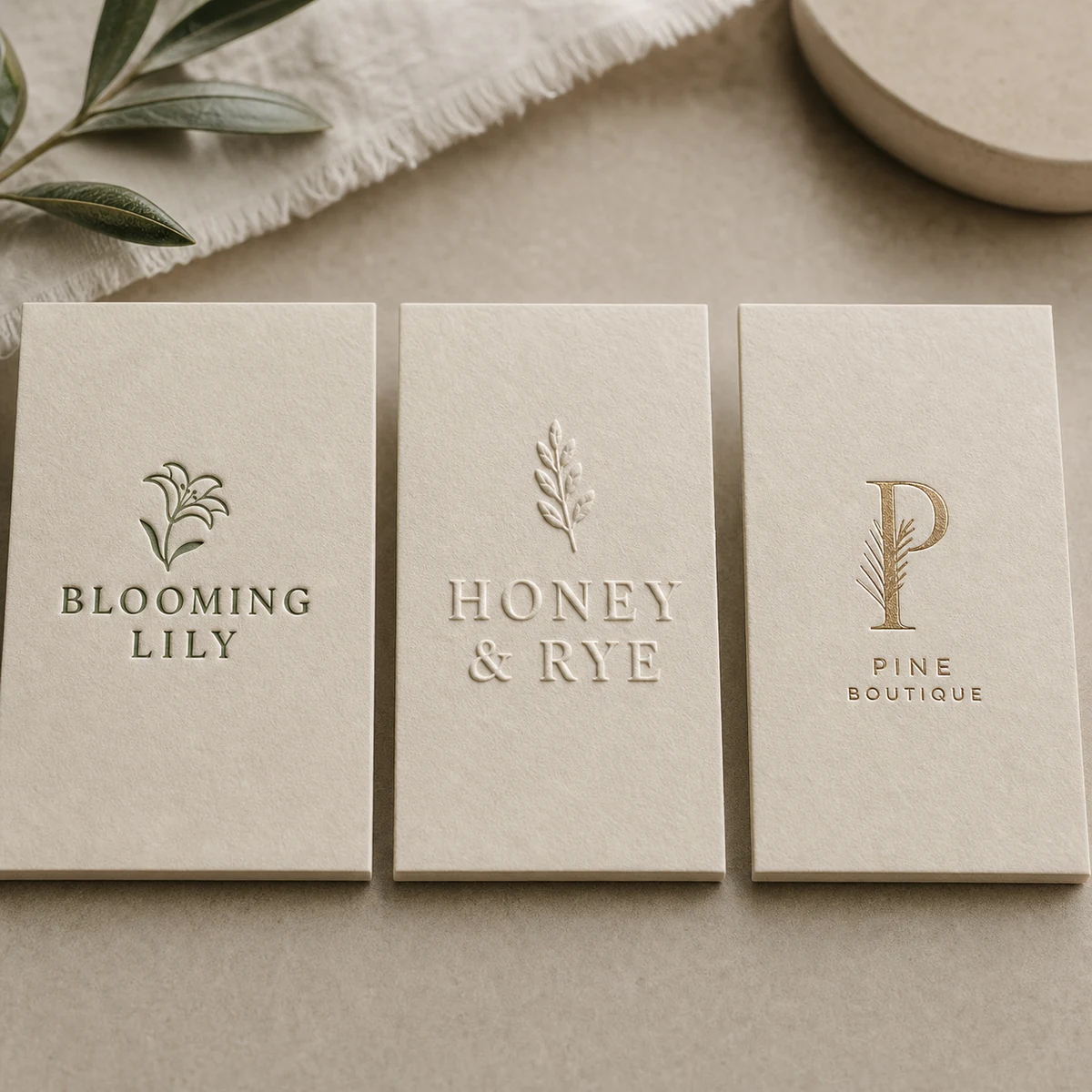
Blind deboss uses no ink at all. The plate presses into the cotton and leaves only an impression. The design exists as shadow and depth. On pale or natural cotton stock, the effect is extremely refined. It reads as deliberate restraint. Blind deboss works best when the design is simple, the impression is deep, and the stock is natural-toned rather than bright white.
Inked letterpress adds a hand-mixed ink into the impression. The colour fills the debossed area, giving contrast alongside texture. This is the more commonly recognised version: a navy or forest-green monogram pressed into heavy cotton, the ink sitting slightly lower than the surrounding surface. The ink tonal range is broad, from muted earth tones to dense, opaque darks.
A card can carry both. A monogram in blind deboss on the front with a business address in a single inked colour on the reverse is a common combination.
The stock question: why cotton and duplex card
Letterpress requires thick, fibrous, compressible stock. The impression is made by force, and the paper needs enough body to deform under the plate and stay deformed. Thin or coated card gives you two problems:
- The impression is shallow or indistinct, because the stock has nowhere to compress into.
- The card can warp or crack at the impression point under sustained pressure.
Cotton paper is the classic answer. Made from cotton fibre rather than wood pulp, it is significantly softer, more porous, and more compressible than conventional coated card. It accepts deep impressions cleanly and holds them. Over time it does not yellow or become brittle in the way wood-pulp stock does. The natural warmth of cotton fibre (usually a slightly creamy, off-white tone) suits the handcrafted quality of the letterpress process.
At Paperlust, letterpress cards are pressed into a white, uncoated 300gsm Wild Cotton board. On this stock the ink is pressed down into the cotton fibres rather than left sitting on top. Heavier cotton boards do exist in the wider market, but this is the board Paperlust offers for its letterpress product.
Duplex card is a different construction in the wider market: two separate paper stocks bonded together back to back into a single substantial card. The cut edge can show a fine seam where the plies meet, and the card is chosen for extra weight and thickness. At Paperlust, duplex business cards come from the digital print range and are selected for that extra weight. They are not a base for letterpress, foil stamping or embossing.
Letterpress vs. foil vs. emboss: a decision guide
| Finish | Effect | Direction | Best for |
|---|---|---|---|
| Letterpress (deboss) | Tactile impression; shadow and depth | DOWN (recessed) | Heritage brands, minimalist identities, premium solo-colour designs |
| Embossing | Raised relief; foreground texture | UP (raised) | Logos that need visual prominence, crest and seal motifs |
| Flat foil | Metallic mirror finish, flush to surface | Flat (no texture change) | Gold or silver brand elements; shine without texture |
| Raised foil | Metallic and proud of the surface | UP + metallic | High-impact luxury; maximum visual drama; Paperlust duplex cards |
| Spot UV | Clear gloss sheen over selected areas, flush | Flat (sheen-only differential) | Contrast between matte and gloss on same card face |
| Scodix | Digital clear or colour polymer raised finish | UP (polymer relief) | Fine-detail 3D texture on short-run premium cards |
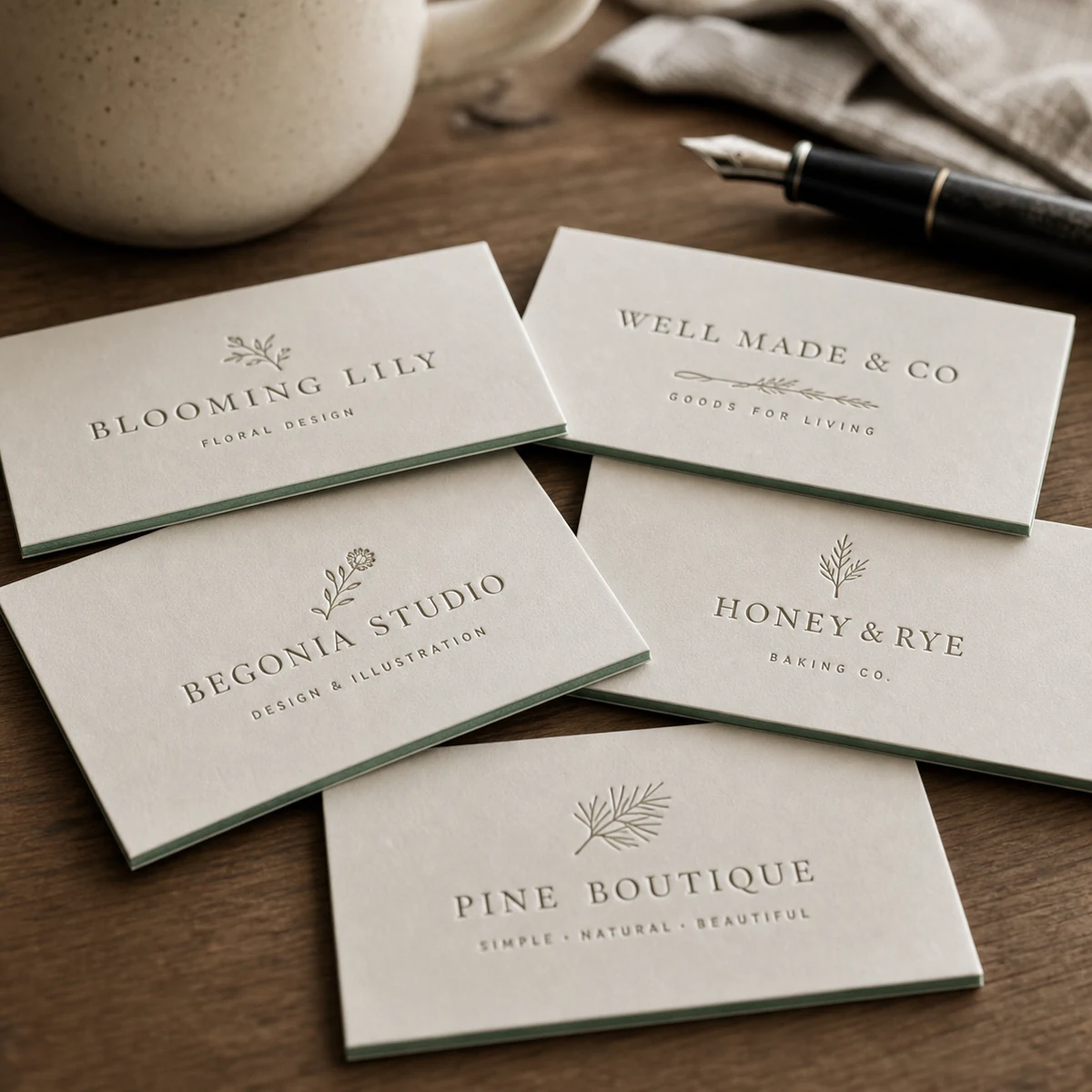
The choice is simpler when you work backwards from the brand. For brands that value understatement, care and longevity, such as law firms, architects, bespoke consultants, independent designers and studios, letterpress is the right tool. Brands where metallic colour is central suit foil stamped business cards, and a logo or crest that needs to sit raised and metallic suits embossed foil business cards. Since all three sit on the same white cotton board at Paperlust, the choice comes down to the effect rather than the stock.
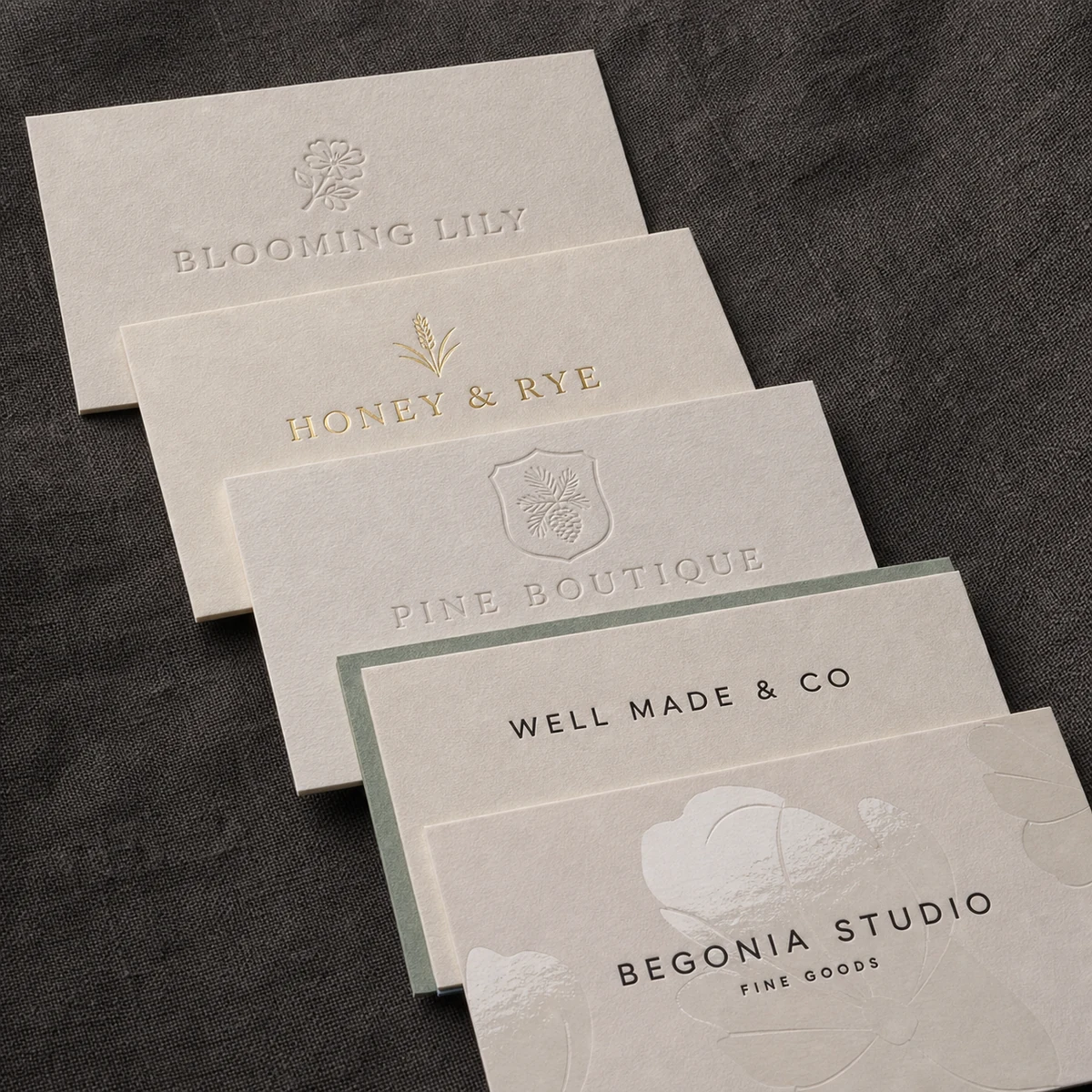
Design tips for a clean letterpress impression
Letterpress is unforgiving of poorly prepared artwork. The plate presses with uniform force, so every element in your design will be pressed simultaneously. Fine details that would print cleanly with digital ink can fail completely under the press.
Line weights and type
- Minimum line weight: 0.5pt. Anything thinner risks dropping out entirely or printing as an uneven smear. For safety, build key elements at 1pt or above.
- Serif fonts: letterpress excels with serifs, but only at sufficient size. A well-cut serif at 10pt or above will show the fine strokes clearly. Below 8pt, the thin strokes in the serif will fill in or disappear.
- Sans-serif fonts: more forgiving at smaller sizes because the strokes are more uniform in width. A clean sans-serif at 7-8pt will survive the press better than a fine-stroke serif at the same size.
- Reversed-out text (white on dark): the ink must not fill in the counters of the letters. Keep reversed-out type at 9pt minimum, using a rounded or open-counter typeface.
Layout and whitespace
Letterpress rewards simplicity. A design that works as a digital card with eight elements and three font sizes will be chaos as a letterpress card. The impression demands space around it to register.
The strongest letterpress cards carry one primary element (a monogram, a logo, a single word) with supporting text in a secondary position. The impression needs room to breathe. Generous margins, a single type family, a maximum of two text weights.
Avoid fine-detail illustration in vector form unless it has been tested at the actual scale. A detailed crest that looks sharp as a digital print will lose its fine-line detail under the press.
Colour
Letterpress is not a CMYK process. Ink for letterpress is mixed by hand from Pantone references, and while the wider trade can register two colours with care, four-colour process is not a letterpress application. Paperlust letterpress cards carry one PMS colour on the front, so the artwork should be planned around that single colour.
For blind deboss, colour is irrelevant. The impression is the design.
When letterpress is and is not the right call
Letterpress business cards are the right call when:
- The brand identity is built around craft, precision, or heritage. Architects, law practices, bespoke tailors, fine jewellers, independent studios.
- The card is meant to be kept, not collected and filed. Letterpress cards end up on desks, pinned to boards, and kept in wallets longer than standard cards.
- The design is genuinely minimal. If the artwork cannot hold up at one or two elements, letterpress will not save it.
- Budget allows for it. Pressed cards carry a higher per-unit cost than digital print. At Paperlust, an order of 100 cards costs $541.54 and an order of 250 cards costs $609.23, both including GST.
Letterpress is not the right call when:
- The design requires full-colour photography or gradient fills.
- The brief calls for a card that looks modern and digital-native. Letterpress reads as analogue. That is its strength and its limitation.
- The quantity required is very low. Plate setup for letterpress means that very small quantities are expensive per unit relative to digital print.
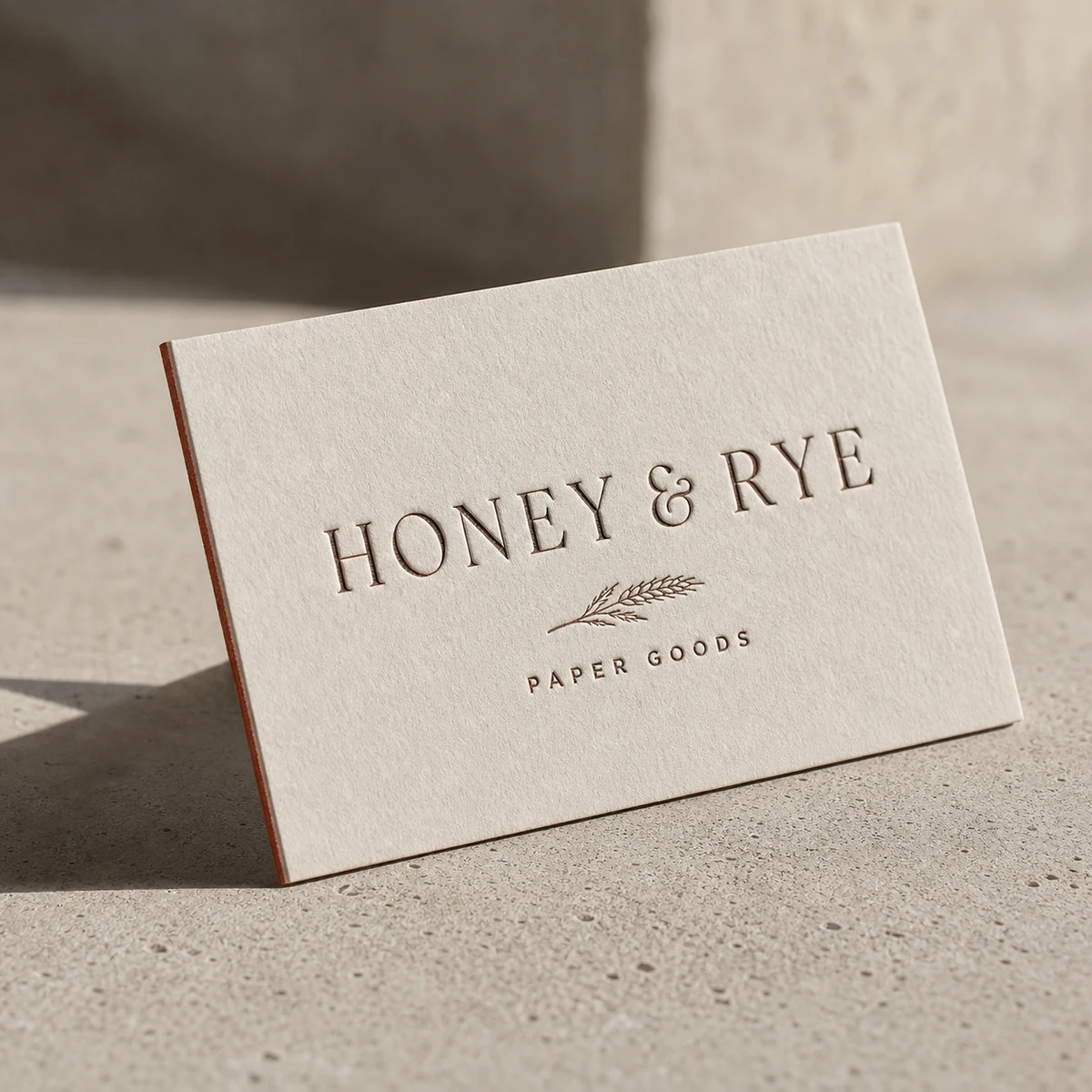
Letterpress business cards at Paperlust Print Shop
Our letterpress business cards are made to order, with the following specification.
- Stock: white 300gsm Wild Cotton premium cotton board, uncoated
- Size: 90 x 55 mm; landscape comes standard and portrait carries no extra fee
- Printing: front only in one PMS colour; the back is left unprinted, with a plain digitally printed back available by custom quote
- Quantities: order 100 to 250 cards in increments of ten, with larger runs available by quote. 100 cards cost $541.54 including GST; 250 cards cost $609.23 including GST.
- Lead time: 18 to 23 working days from design approval, including delivery to an Australian address. Your order only enters this production window after design approval, rather than at checkout.
- Proofs: unlimited proof rounds before anything is pressed; the order goes to production only after you approve the design.
Across the range, the foil stamped and embossed foil versions share this board, size, quantity steps, lead time and pricing.
Letterpress leaves a tactile impression that photographs badly but feels unmistakable in the hand, and twelve luxury business cards show how it compares with other premium finishes in finished form.
FAQ
Are letterpress business cards actually debossed?
Yes. The letterpress process presses a plate into the paper surface under high pressure, creating a recessed impression. The design sinks into the stock; it is not raised. The technical term for this is debossing. Embossing is the opposite, where the design is pushed upward to create a raised surface. When people refer to “letterpress business cards,” they are describing a debossed, tactile impression on thick cotton or bonded card stock.
What is the best paper stock for letterpress business cards in Australia?
Cotton board is the best choice for letterpress business cards in Australia. A cotton stock is soft enough to compress under the plate and hold a deep, crisp impression, while thin or coated cards cannot take the same recess properly. Paperlust prints its letterpress range on white 300gsm Wild Cotton, a premium uncoated cotton board that suits the letterpress finish.
What is the difference between letterpress and embossing?
Letterpress creates a recessed impression: the design goes DOWN into the paper surface. Embossing creates a raised relief: the design is pushed UP from below and sits proud of the surface. Both are tactile finishes, but the effect and the tooling are completely different. Letterpress is often used with ink in the impression; embossing is typically used without ink, relying on the raised shape for visual impact.
What is the difference between letterpress and foil stamping?
Foil stamping applies a metallic film to the paper surface. Flat foil sits flush to the card and reads as a mirror-bright metallic element with no texture change. Raised foil sits above the surface, combining a metallic sheen with a dimensional build-up. Neither is letterpress. Letterpress uses no foil and creates a debossed impression rather than a surface application. A letterpress card and a foil card look and feel completely different: one is about depth and shadow, the other is about metallic light.
What design file do I need for letterpress business cards?
Prepare your artwork as a vector file (AI or PDF) with all text converted to outlines. Ensure no element falls below 0.5pt in line weight, as finer strokes will not hold under the press. Use Pantone references for inked letterpress colours rather than CMYK values. For blind deboss, the artwork should be a single-colour black plate showing the impression area only. Keep the design simple: a maximum of two type weights and generous whitespace around the primary element.
How long does it take to produce letterpress business cards in Australia?
Paperlust letterpress business cards are made to order and take 18 to 23 working days from design approval, including delivery to an Australian address. Production time begins only once the design is approved, not when the order is placed, so your own review time sits outside that window. There is no cap on proof rounds, and nothing goes to press until you approve the design.