Every ecommerce shipment needs to go into something before it goes to a carrier. The wrong container for the job is not always obvious at the outset. A seller who defaults to boxes for everything pays more in freight than they need to. A seller who defaults to bags ships some products that arrive dented, bent, or squashed, and then discovers what returns cost.
This article covers three formats that Australian online sellers use: the poly mailer, the padded satchel, and the corrugated mailer box. Each format suits a different type of product and a different set of priorities. We make mailer boxes. We do not sell poly mailers or satchels, which means we have no stake in steering you toward a box when a flat bag is the better answer for your product.
The goal here is a clear decision framework: what are the differences, where does each format genuinely win, and how do you work out which one to use?
The short version
- Poly mailers and padded satchels cost less per unit, pack faster, and add almost no cubic weight, making them the efficient choice for soft goods that cannot be damaged by the bag flexing around them.
- Corrugated mailer boxes use B-flute board, which resists crushing and puncture far better than any flat bag. Use a box for rigid, fragile, or presentation-sensitive items.
- The unboxing moment is a clear separator: a bag tears open and goes in the bin; a box opens to a defined interior space that can be branded, layered, and repurposed.
- Australian carriers charge on cubic weight, calculated from the external dimensions of the parcel. A mailer box adds more cubic volume than a flat satchel. Right-sizing your box matters.
- The roll end tuck front (RETF) design opens and recloses without tape, which is practical for gifting and clean for returns.
- Corrugated board is kerbside recyclable in Australia. Check your local council guidelines for plastic bag formats before making sustainability comparisons.
What each format is
Poly mailer
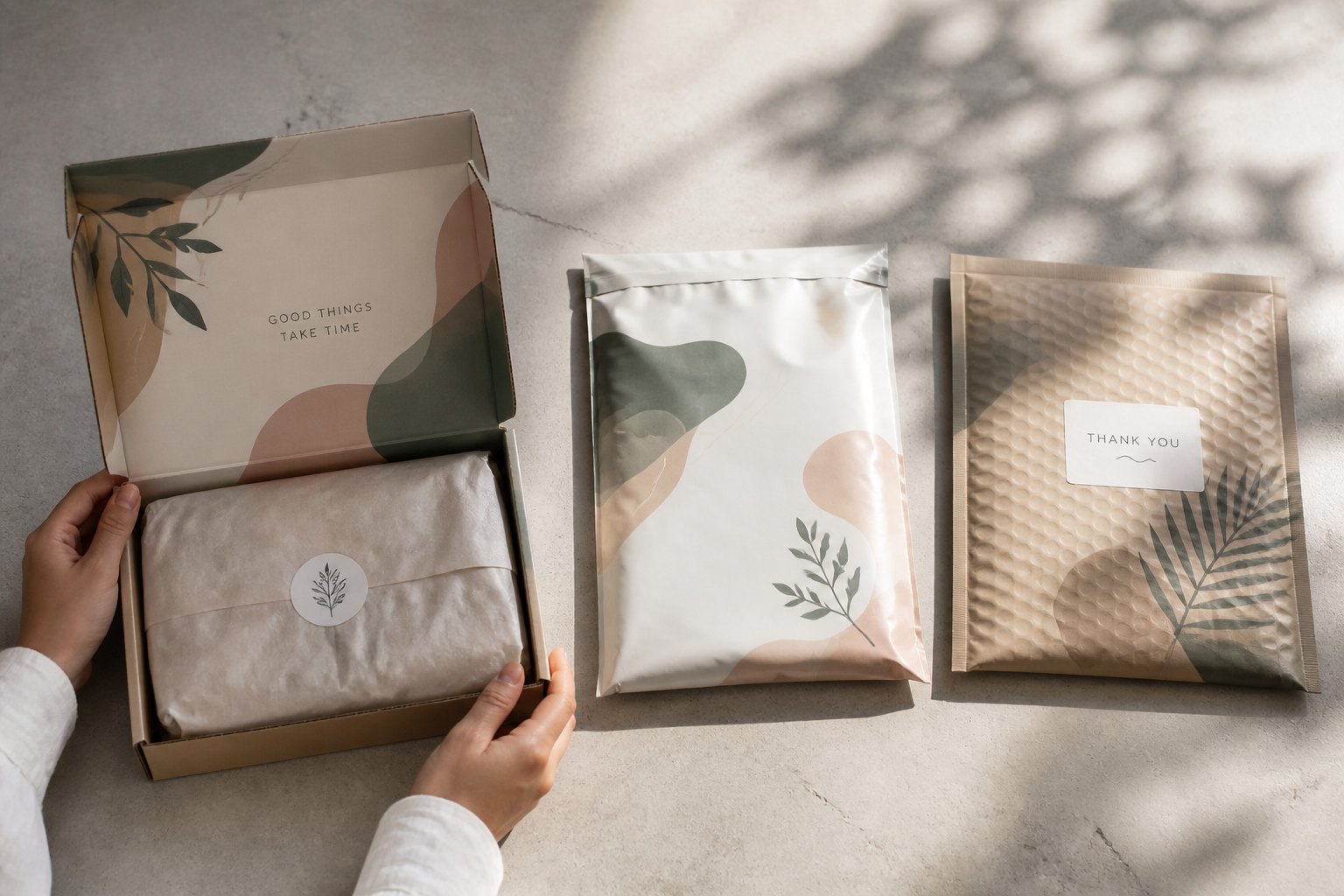
A poly mailer is a thin polyethylene bag with a self-seal strip. It is lightweight, waterproof, and resistant to puncture from a sharp object poking outward. The key quality it lacks is rigidity: it takes the shape of whatever is inside it, and when force is applied from the outside, that force transfers directly to the contents.
In Australia, the terms poly mailer, courier bag, and plastic satchel are used for the same format. Some suppliers offer a thinner version for lighter goods and a heavier gauge for parcels that will be handled more roughly in transit. Neither version provides structural protection against compression.
Padded satchel
A padded satchel uses the same poly outer shell as a standard mailer but adds a bubble-wrap lining bonded to the inside. This provides light cushioning against minor impacts and protects against surface scratches. It is appropriate for flat items that are not rigid: a book, a print, a folded silk piece, a phone case. It does not prevent compression or denting of anything three-dimensional.
Mailer box
A mailer box is made from corrugated board: a layer of fluted material sandwiched between two flat liners. The fluted layer gives the board its strength. B-flute board provides meaningful resistance to both crushing (force applied to the flat face) and puncture (a sharp object applied to the outer wall).
Mailer boxes ship and store completely flat. They fold up in a few seconds with no tape or glue required. The roll end tuck front design means the base locks when you close the front flap, so there is no separate lid. For carrier shipments, a strip of tape across the flap closure is recommended to keep the box secure in transit.
When a flat mailer or satchel is the right call
A plain cotton tee going to a price-sensitive customer in a poly mailer is often genuinely the right call. Being direct about this is the point of this section.
Flat mailers and padded satchels have four genuine advantages over a box. The per-unit cost is lower. They are completely flat until used, so storage is almost nothing. Packing is faster: drop the item in, peel the strip, done. And the freight cost is lower, because a flat bag adds almost nothing to the cubic dimensions of your shipment.
Australian carriers calculate freight on actual weight or cubic weight, whichever is higher. Cubic weight is derived from the parcel’s external dimensions. A flat satchel with a folded garment inside has a cubic weight close to zero. A mailer box adds the full external dimensions of the box itself to the calculation, even if the contents are light.
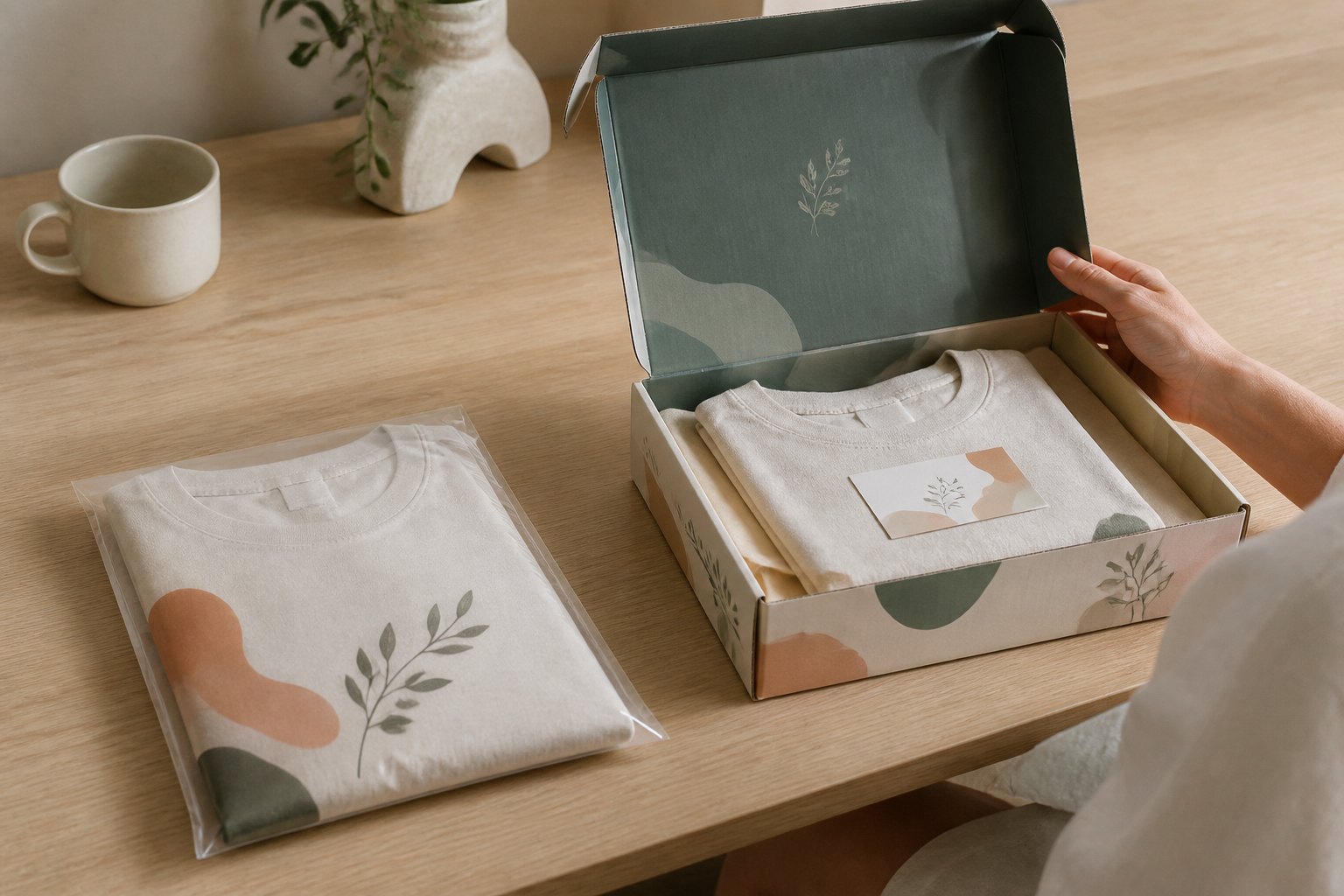
The products where a flat mailer or satchel is the sensible default:
- Clothing, fabric accessories, and soft textiles: anything that compresses without damage
- Items where presentation is functional rather than experiential: consumables, replacement parts, commodity reorders
- High-volume, single-item shipments where pack speed matters and the unboxing experience adds no commercial value
- Situations where freight cost is the dominant variable and every gram and cubic centimetre counts
If you are shipping 500 tees a week and your customer expects a bag in the letterbox, switching those to boxes adds freight cost and packaging cost without adding corresponding value. That is a bad trade.
What corrugated board protects against
The core argument for a mailer box is structural: B-flute corrugated board does things that no flat bag can do.
Crushing
A stack of parcels in a carrier’s sorting facility, or another parcel placed on top of yours in a delivery vehicle, applies compression from above. A poly mailer transfers that force directly to whatever is inside. A corrugated wall distributes the force across its structure and resists collapse. A candle, a skincare bottle, or a product in its own retail box can survive a stack that would flatten it in a satchel.
Puncture
Carrier cages, conveyor systems, and co-mingled parcel piles contain sharp edges. A corner of another parcel, a bracket, or a rough surface will penetrate poly relatively easily. B-flute board absorbs those impacts and rarely punches through on a single contact.
Corner and edge damage
A product in its own packaging (a skincare set in a carton, a candle in a tin with a paper sleeve, a bottle with a label that shows) can arrive with dented corners or crumpled edges inside a poly bag, because the bag offers no clearance between the product and the outer wall. A correctly sized mailer box, with 15 to 25mm of clearance on each side, keeps the product away from the outer surface entirely.
Use a mailer box when your product is any of these:
- Rigid, fragile, or breakable: ceramics, glassware, candles, bottles, electronics accessories
- Already in its own retail packaging that needs to arrive unmarked
- Multiple items that need to be held flat and separate
- High perceived value where a damaged arrival creates a return and a loss of trust
Returns are more expensive than packaging. If a corrugated box prevents even a small number of damage returns per hundred shipments, the per-unit cost of the box pays for itself in avoided replacement and freight costs.
Presentation and the unboxing moment
This is where a box is not competing with a satchel on cost at all. They are doing different things.
A poly mailer opens with a tear. The product appears, the bag goes in the bin, the experience is transactional. There is no sequence, no reveal, no moment of anticipation.
A mailer box opens by lifting the front tuck flap. The interior is a defined space. If you have printed the inside, it is branded. If you have added branded tissue paper or a card, those things land in the right order. The box can be kept, reused for gifting, or flattened and recycled kerbside.
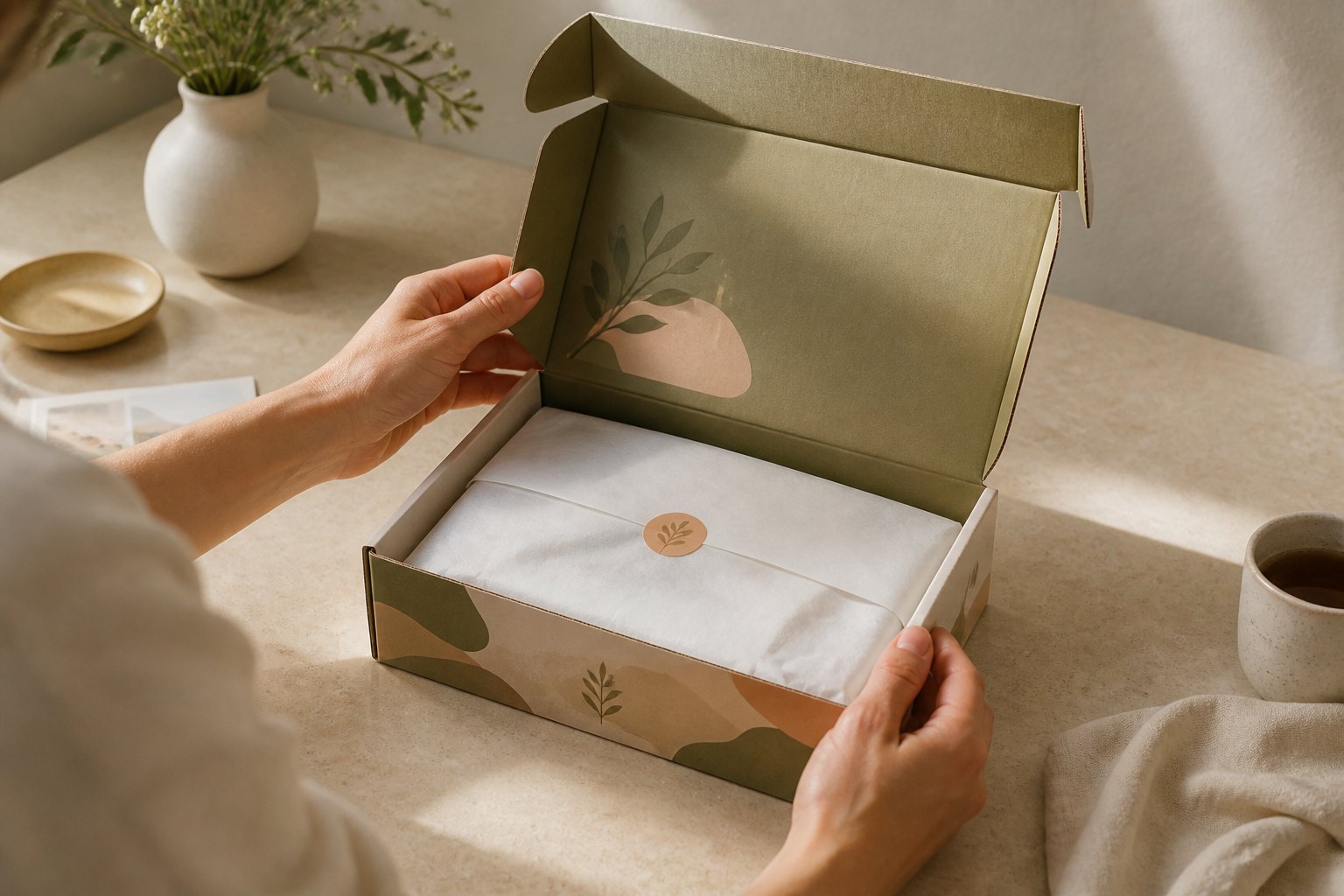
For subscription boxes, beauty products, candles, jewellery, and corporate gifts, the packaging is part of the product experience. Customers photograph it, mention it in reviews, and share it in social posts. A poly mailer does not generate that response, regardless of what is inside it.
The RETF design also has a practical benefit for returns. The tuck flap opens and recloses cleanly without tape, so your customer can repack the item for a return shipment without sourcing new packaging. This reduces friction in the return process and removes the need for you to enclose a separate return bag.
Freight cost and cubic weight in Australia
Freight is the variable most sellers underestimate until they see their carrier invoice in detail.
Australian carriers, including Australia Post and the major courier networks, calculate freight on actual weight or cubic weight, whichever is higher. The standard cubic weight calculation for domestic parcels is length x width x height (in centimetres) divided by a divisor that varies by carrier and service, commonly 5,000 for Australia Post Parcel Post and lower for some courier accounts. This means the external size of your box directly affects what you pay per shipment.
An oversized box on a light product almost always hits the cubic weight threshold rather than the actual weight threshold. A box that is 15mm too wide in every dimension does not add a small amount to your cost. It changes your cubic weight, which can move you into a different freight band entirely.
The correct approach is to measure your product as it will be packed, including any tissue or padding, then add 15 to 25mm of clearance on each side and choose the smallest standard size that fits without forcing. For a detailed look at matching box dimensions to Australian carrier bands, see right-sizing your box.
If freight cost is the primary constraint, a poly mailer will always beat a box on that metric for the same product, because the bag adds almost nothing to the cubic calculation. The box earns its freight cost through protection, presentation, or both. If neither of those applies to your product, a box is the wrong format.
Making the decision
The table below covers common product categories Australian online sellers ship. Use it as a starting point, then check whether the reasoning applies to your specific product.
| Product type | Recommended format | Why |
|---|---|---|
| Cotton tee or hoodie | Poly mailer or satchel | Soft, compresses without damage, lightest freight, no crush risk |
| Candle or home fragrance | Mailer box | Fragile vessel, often in its own packaging that needs protection in transit |
| Skincare set or cosmetics kit | Mailer box | Multiple units, presentation relevant, individual items can dent or crack |
| Book or flat art print | Padded satchel or rigid board mailer | Flat, needs protection from bending rather than compression |
| Subscription box with multiple items | Mailer box | Mixed contents, reseal useful for gifting, unboxing is part of the offer |
| Jewellery or fine accessories | Mailer box (small) | High perceived value, unboxing expected, small cubic dimensions |
| Corporate gift or hamper | Mailer box (medium or large) | Presentation is the purpose, multiple items, often reused by recipient |
| Shoes | Mailer box (large) | Shoebox itself needs protection, semi-rigid contents |
| Fabric swatches or flat samples | Poly mailer | Flat, soft, light, no presentation requirement at sample stage |
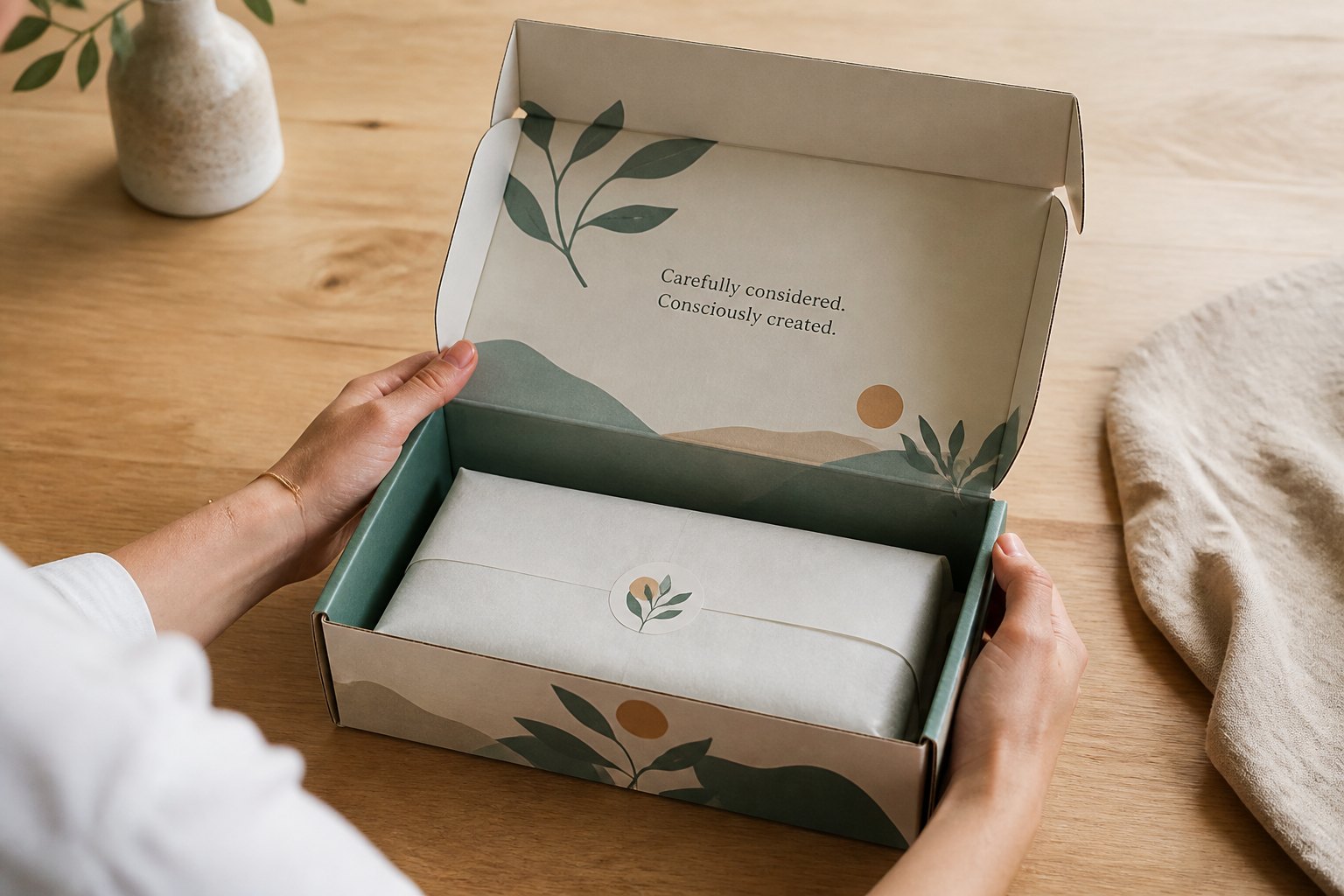
Use a mailer box when
- Your product is rigid, fragile, or in its own retail packaging
- The unboxing moment is part of what your customer expects or paid for
- You are shipping multiple items together that need to be held in place
- Returns need a box the customer can reclose and hand back to a carrier
- The perceived value of your product calls for packaging that matches it
Use a poly mailer or padded satchel when
- Your product is soft and cannot be damaged by the bag flexing around it
- The customer expects functional packaging rather than an experience
- Per-unit and freight cost are the dominant constraints
- You are shipping high volumes at speed and pack time matters
- Storage space is constrained and flat bags are more practical than flat-packed boxes
Choosing your mailer box
If a box is the right format for your product, the next question is which print type suits your brand.
Full-colour corrugated mailer boxes print edge to edge in CMYK on all exterior panels, on a smooth white liner that reproduces logos, photography, and detailed artwork sharply. This is the format for full brand expression across the box surface. Kraft mailer boxes print one or two spot colours directly on natural brown board using flexographic printing. The kraft tone becomes part of the design, and logos, wordmarks, and simple patterns sit well on it. Per-box cost is lower than full colour at the same quantity because the process uses less ink and no white-liner coating.
For a practical comparison of when branding a box earns its cost versus simpler alternatives, see a printed box against a plain box and a sticker.
The full range of custom mailer boxes covers both formats in three standard sizes, from small-batch digital quantities starting at 10 boxes through to volume offset runs. Both product pages carry a live price calculator, so pick a size and a quantity and the per-box price updates as you go. If you are thinking through your broader packaging investment, the packaging on a budget guide covers how to stage your spend across formats and quantities as your order volume grows.
Frequently asked questions
Are poly mailers and satchels the same thing in Australia?
The terms are used interchangeably for most purposes. Both refer to a polyethylene bag with a self-seal closure. “Courier satchel”, “plastic satchel”, and “poly mailer” all describe the same format. A padded satchel is a variation with a bubble-wrap lining bonded to the inside, which provides modest cushioning against minor impacts but no structural rigidity. In everyday conversation, “satchel” can refer to either the plain poly version or the padded version depending on context.
Can you ship clothing in a mailer box?
You can, but it is often not the most cost-efficient format for a single soft garment. Clothing like tees, hoodies, and scarves compresses without damage and adds almost no cubic volume in a poly mailer, keeping freight costs low. A box makes more sense for clothing when it is part of a gift set, when the garment is in its own branded retail packaging, or when the unboxing experience is part of what the customer expects from your brand.
Does box size affect what I pay for freight?
Yes, directly. Australian carriers charge on actual weight or cubic weight, whichever is higher. Cubic weight is calculated from the external dimensions of the parcel. Choosing a box that is larger than your product needs adds cubic weight to every shipment. Correct sizing, with 15 to 25mm of clearance on each side rather than excess space, is one of the clearest ways to reduce freight cost on a per-shipment basis.
What does RETF mean on a mailer box?
RETF stands for roll end tuck front. It describes the construction: the box base and sides form from a single sheet that rolls up and locks, and a front tuck flap closes and holds the box shut without glue or tape. The flap opens and recloses cleanly, which makes the box practical for gifting (the recipient can reseal and re-gift the contents) and for returns (the customer can repack without sourcing new packaging). For carrier shipments, a strip of tape across the tuck flap is recommended to secure it during transit.
Can a mailer box be printed on the inside?
Interior printing is available on request for the full-colour range and adds 50 per cent to the box price. The outside is printed edge to edge on all exterior panels as standard. Most brands use the exterior print for their primary brand expression and add a tissue layer or a printed insert card for the interior rather than printing the board itself, which keeps cost down while still creating a considered interior experience.
Are corrugated mailer boxes recyclable in Australia?
Yes. Corrugated board is accepted through kerbside recycling in Australia. After use, the box can go in the recycling bin clean and flattened. Small amounts of tape do not need to be removed in most councils. Uncoated kraft board in particular is straightforward to process through standard kerbside collection. Check your local council guidelines to confirm the specifications for your area.