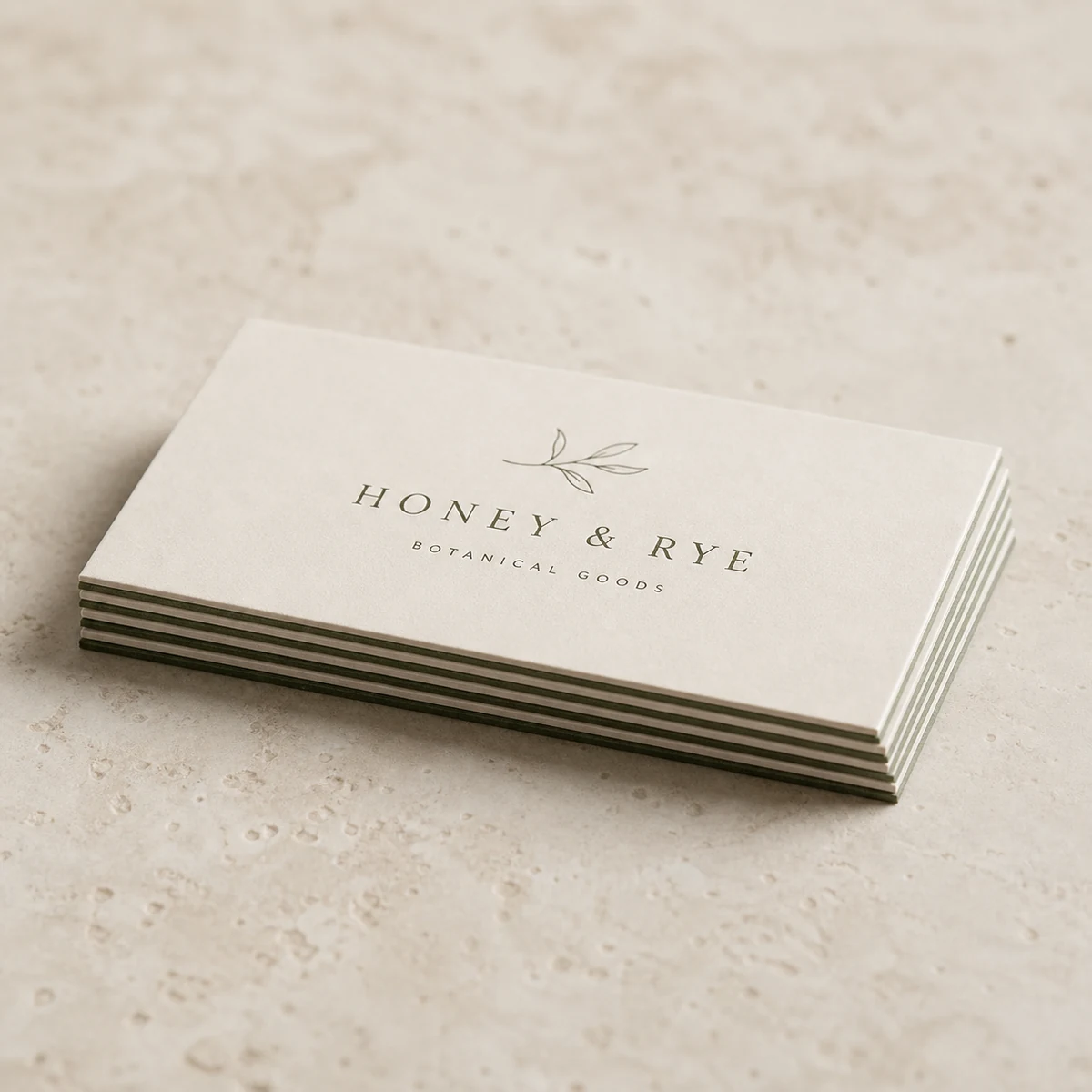
Duplex business cards look like nothing else in a wallet. That visible coloured seam running through the edge is the tell: two layers of premium cardstock bonded together, creating a card so dense it practically announces itself before anyone reads a single word.
If you already know you want something heavier, this guide covers everything that matters: how the construction works, how to choose between duplex and triplex, your colour-core options, what thickness actually feels like in the hand, and how to order with confidence.
- Duplex = two layers of cardstock bonded together; triplex = three layers. Neither is a printing technique.
- Result is a card typically 600-700gsm, roughly twice the weight of a standard single-ply card.
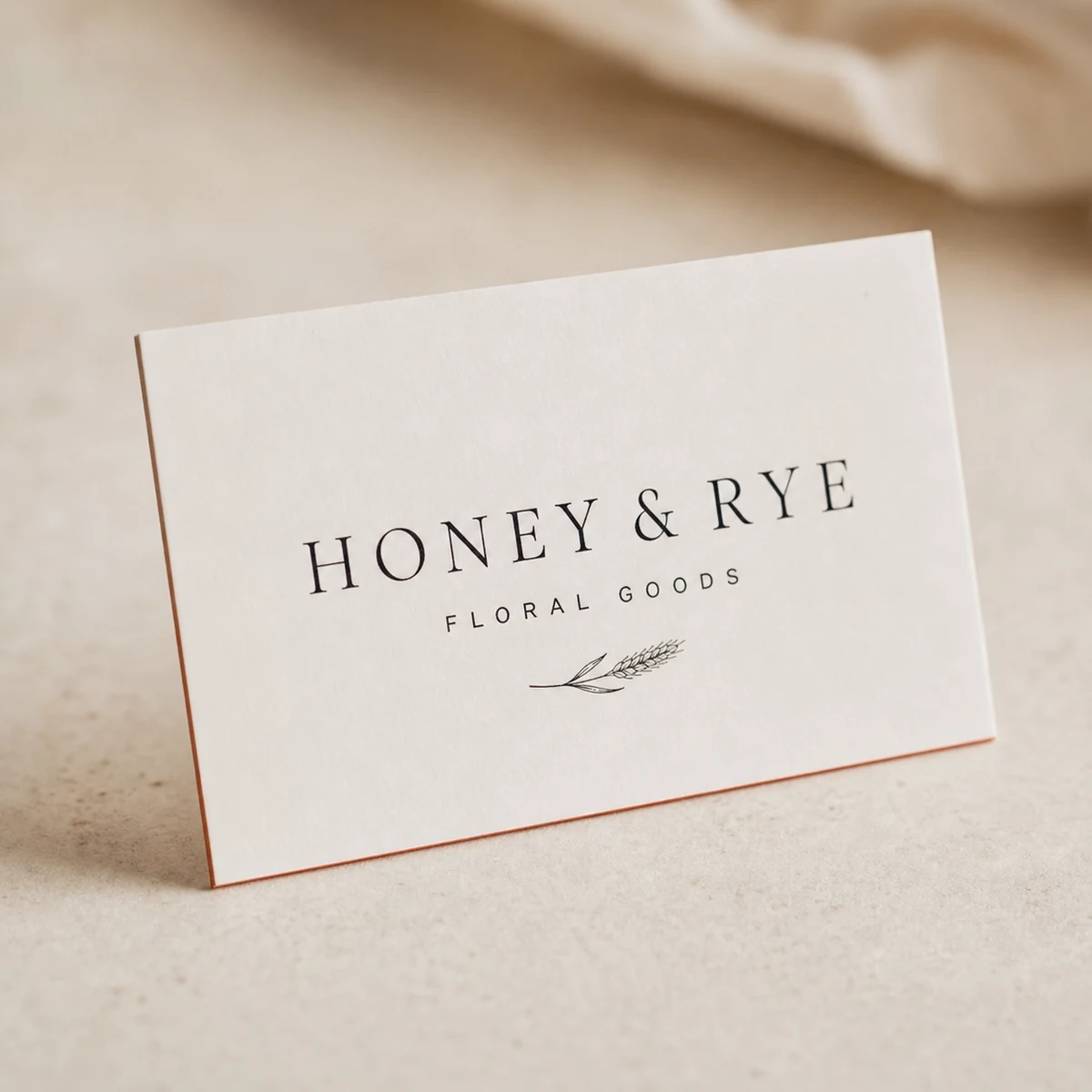
- The bond line between layers creates a visible coloured core seam at the card edge, a major design feature in itself.
- The seam colour comes from your stock choice per layer, not a separate process. Edge painting and foiled edges are a specialist finish Paperlust does not currently offer.
- Duplex cards at Paperlust Print Shop start from $2.27 per card (inc. GST), minimum 100 cards.
- Production time: 3-5 working days for standard rectangle shapes after proof approval; 7-10 working days for die-cut shapes.
How Duplex Construction Works (and What It Is Not)
The term “duplex” confuses a lot of buyers because it sounds like it might mean “printed on both sides.” It does not. You can print a duplex card on one side only if you want.
Duplex refers to construction, not printing. Two separate sheets of cardstock are adhered back-to-back using a permanent bonding process. The two outer faces are then printed independently before lamination, which is why each side can carry a completely different design, a different paper stock, or even a contrasting colour.
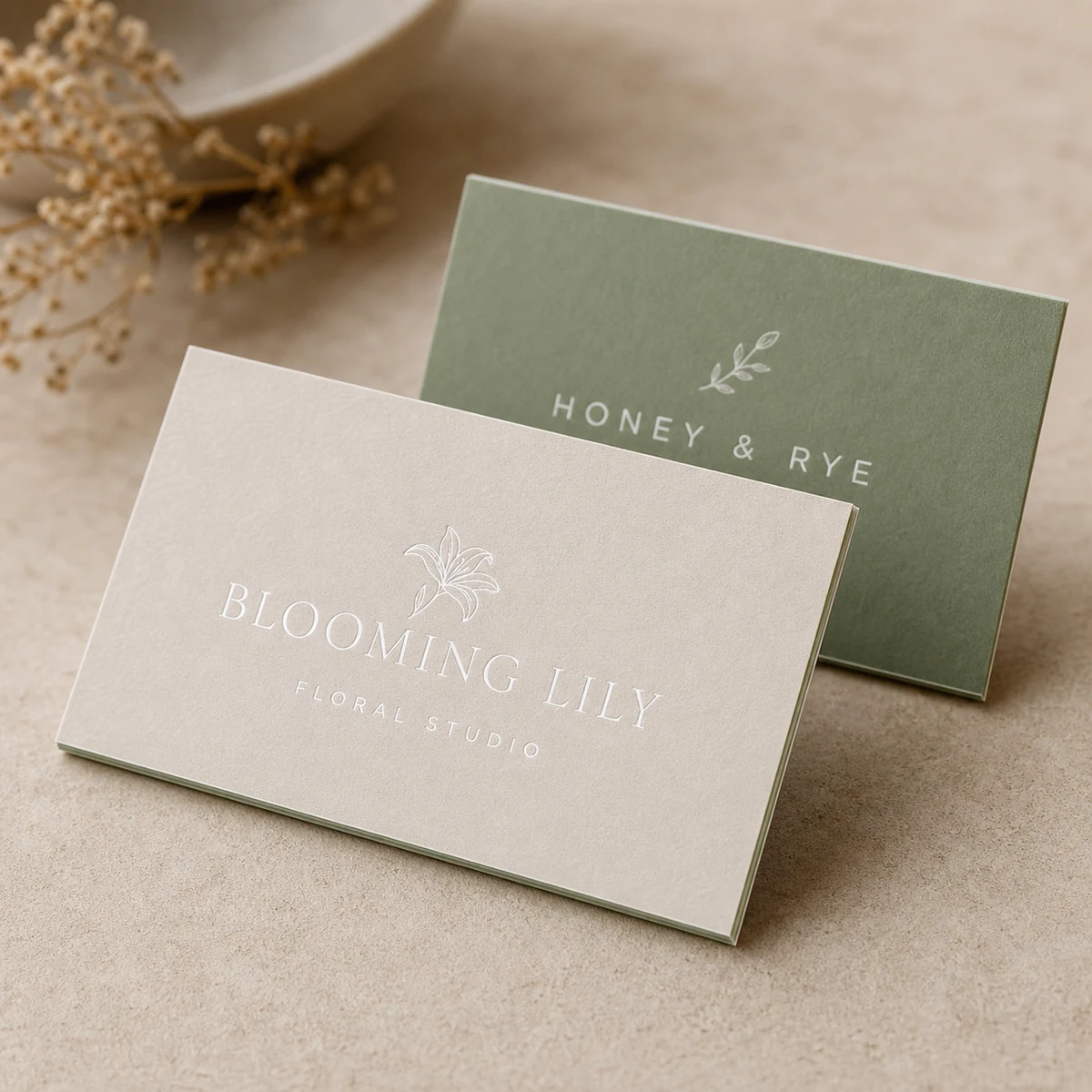
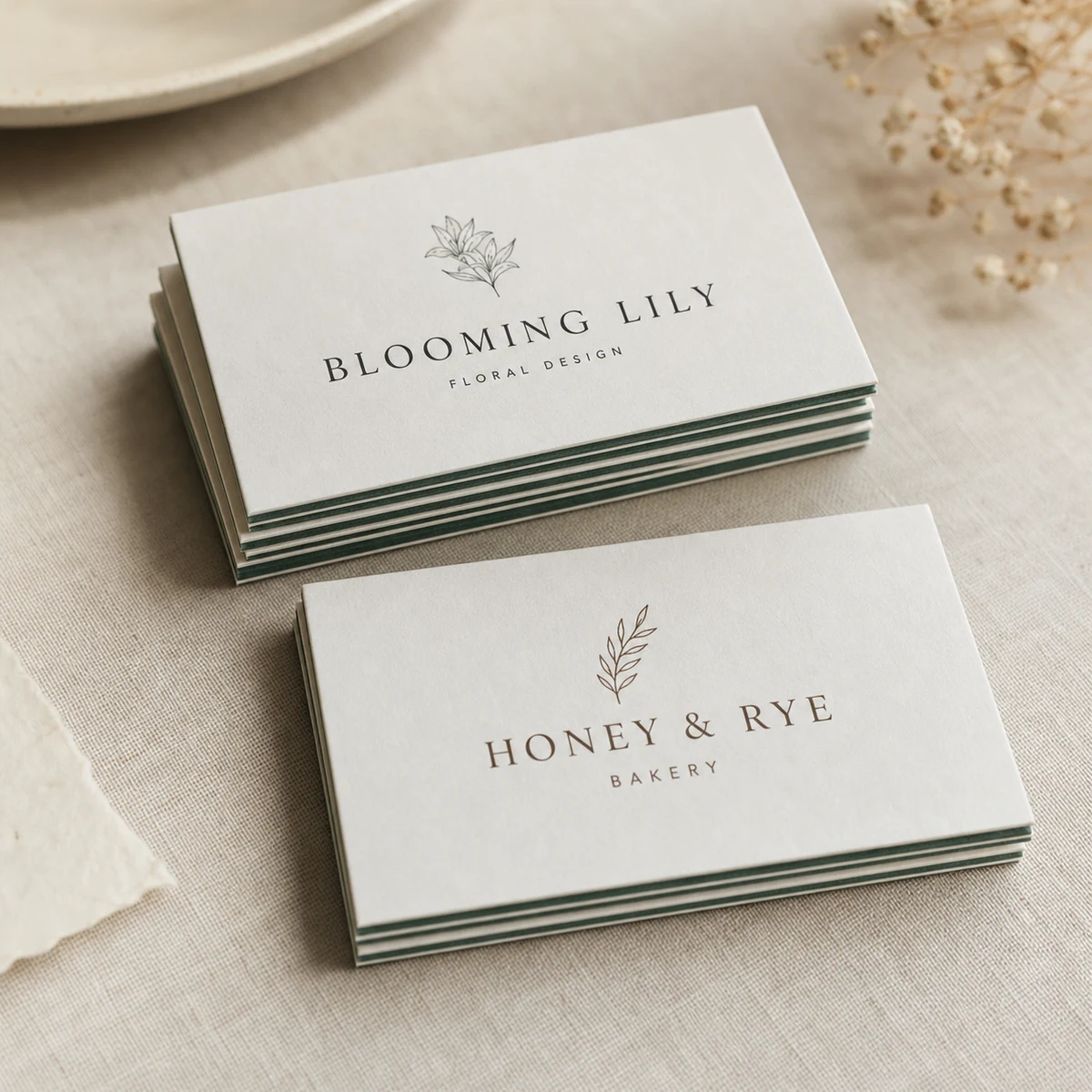
The seam that forms where the two layers meet is the signature detail. When the card is held edge-on, you see a thin line of the inner material running through the cross-section. On a plain white duplex card, that seam might be subtle. On a card with a bright green or deep navy core, it becomes the focal point.
Triplex: One More Layer
Triplex follows the same principle but with three layers bonded together. The result is a card that sits somewhere between 900gsm and 1,000gsm depending on the stocks used. Triplex cards are noticeably stiffer and heavier than duplex; they have two bond lines visible at the edge instead of one.
Triplex is a less common order because the weight pushes some recipients toward “novelty” rather than “premium,” and the additional bonding layer adds production time and cost. The sweet spot for most brands is duplex, where the card feels extraordinary without crossing into unwieldy territory.
Thickness: What 600-700gsm Actually Feels Like
A standard single-ply digital business card typically prints on 350-400gsm stock. Duplex construction doubles that, landing in the 600-700gsm range for most configurations at Paperlust Print Shop.
To put it in concrete terms: a single duplex card feels about as thick as a stiff loyalty card or a hotel key card. It does not flex when you pinch a corner. It sits flat on a table without curling. When someone places it in their wallet, it takes up space in a way that makes it harder to lose.
That physical presence is the point. A card at 600-700gsm communicates material investment before anyone reads your name. It is the difference between a card that gets filed and a card that gets kept on the desk.
| Card type | Typical weight | Feel |
|---|---|---|
| Standard single-ply | 350-400gsm | Stiff but flexible |
| Duplex (2 layers bonded) | 600-700gsm | Dense, does not flex |
| Triplex (3 layers bonded) | 900-1,000gsm | Tile-like rigidity |
Colour Core Options: The Design Inside the Card
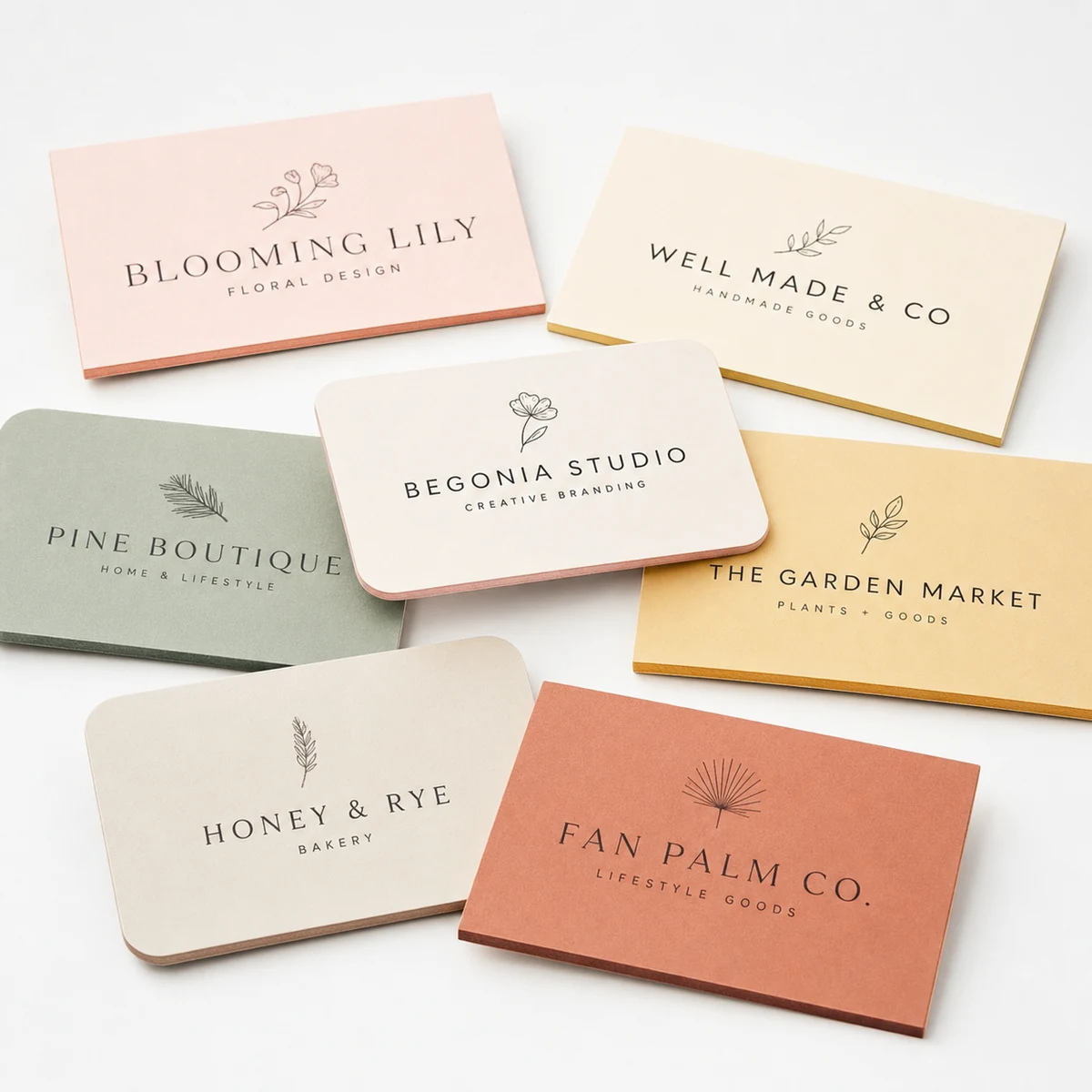
The colour core is not a finishing technique applied after printing. It is a function of which stock you choose for each bonded layer. If one layer is a rich forest green and the other is matte white, the edge of the finished card will show a green stripe on one side of the seam and white on the other.
This means you can design the edge of your card without ever touching the front or back face. Common approaches:
Single-colour core
Both layers are printed on the same coloured stock, so the seam reads as a clean, consistent line all the way around. This works well when the core colour matches one element of your brand.
Contrasting core
The front layer is white or light; the back layer is a saturated colour. The edge then shows a half-and-half cross-section, and the seam is the moment where they meet. Designers often choose a colour from the brand palette for the back layer specifically to make the edge read as intentional.
Matching front and back
Both layers carry the same design or colour, so the front, back, and core all feel unified. This is less common because it removes the contrast that makes the edge interesting.
The key design principle: the core is visible primarily when the card is held edge-on. In a stack, only the person leafing through can see it. Use it as a tactile surprise for the recipient, not as the primary branding element.
Edge Painting and Foiled Edges: What to Know
You may have seen duplex cards elsewhere with a solid band of colour or metallic foil applied directly to the cut edge. This is called edge painting (also edge colouring) or, when metallic film is used, a foiled edge. It is a specialist post-construction finish that applies ink or foil to the card’s cut edges after the layers are bonded, converting an exposed paper seam into a continuous band of colour.
Paperlust Print Shop does not currently offer edge painting or foiled edges. On our duplex cards, the colour you see at the edge comes from the colour-core seam itself, set by the stock you choose for each bonded layer, not from a separate edge-finishing pass. For most briefs this achieves the same intent: a deliberate band of colour at the card edge, determined by your stock selection rather than a painted or foiled overlay.
If a fully painted or foiled edge is essential to your project, it is worth knowing the distinction so you can brief a specialist edge-finisher directly. For everything achievable through stock choice, the colour-core seam covered above is the route, and it comes built into the standard duplex card at no extra finishing charge.
When to Choose Duplex vs Standard Business Cards
Not every situation calls for a duplex card. The weight premium comes with a cost premium and a production time premium, so it is worth being clear about when it earns its place.
Duplex is the right choice when:
– Your brand positioning is explicitly premium and the card needs to signal that before it is read.
– You are in a field where people exchange multiple cards with you at a time (finance, law, luxury retail, hospitality management) and the card needs to survive repeated handling.
– You want the colour-core seam to function as a conversation starter or a brand identifier.
– You are pairing the card with other premium print collateral and want material consistency across the suite.
Standard cards are the better choice when:
– You order in high volume (5,000+) and cost per card matters more than premium feel.
– You attend casual networking events where the card is primarily functional, not a brand piece.
– Your business context makes very thick cards feel out of place (tradespeople, market stall vendors, grassroots community organisations).
For a detailed comparison of standard single-ply options, the standard business cards range covers weights, finishes, and pricing from $0.08 per card.
Size and Shape Options for Duplex Cards
Duplex cards at Paperlust Print Shop are available in the following formats:
- Rectangle (standard): 90mm x 55mm – the universally wallet-compatible size
- Rounded corners: 90mm x 55mm – same footprint, softer corners
- Circle: 60mm x 60mm
- Oval: 90mm x 50mm
- Custom shapes: 90mm x 55mm equivalent
Die-cut shapes (circle, oval, custom) require additional production time: 7-10 working days versus 3-5 working days for rectangle formats. The extra time is for the cutting and finishing stage, not the printing stage.
Minimum order for duplex cards is 50 units.
Paper Stock Options
Duplex cards at the Print Shop use a range of outer stocks including matte, linen, metallic, kraft, and colourstock. The combination of front and back stock determines both the look of each face and the colour of the core seam visible at the edge.
Matte and linen stocks give a softer, more tactile outer surface. Metallic stock adds a shimmer to the printed face for a premium finish. Colourstock lets you choose a saturated hue for one or both layers, which directly determines the core colour without any extra processing.
Pricing and Production at Paperlust Print Shop
Duplex business cards at Paperlust Print Shop start from $2.27 per card (inc. GST). That per-card rate applies across the range at production quantities; exact pricing scales with quantity and format selection.
Production timelines:
– Rectangle duplex: 3-5 working days after proof approval
– Die-cut shapes: 7-10 working days after proof approval
Production does not include shipping transit time. Paperlust Print Shop offers flat-rate shipping Australia-wide, so the delivered cost is predictable regardless of your location.
You can browse the full duplex range and configure your order at the duplex business cards product page.
What to Brief Your Designer
If you are using the Paperlust design proof process, the designer assigned to your order will need to know a few things specific to duplex cards that do not apply to standard printing:
Core colour intent. Tell the designer whether the core seam is incidental (you just want a thick card and do not mind what the edge looks like) or intentional (the edge is a brand element and needs to match something specific). If intentional, provide the Pantone code or hex value.
Both-sides design. Because the two layers are printed independently before bonding, the back face can be a completely different design, colour, or even a different paper stock from the front. If both sides are intentional brand elements, provide a brief for each side separately.
Proof sign-off. Designer proofs are delivered within 1-2 business days of placing the order. Production begins after you approve the proof. Two rounds of revisions are included at no extra charge.
Frequently Asked Questions
Are duplex business cards the same as double-sided printing?
No. Duplex refers to construction: two separate layers of cardstock physically bonded together to create extra thickness. Double-sided printing means printing on both faces of a single sheet. A duplex card can be printed on one side or both sides. The defining feature of a duplex card is its thickness (typically 600-700gsm) and the visible colour seam at the edge where the two layers meet.
What is the difference between duplex and triplex business cards?
Duplex bonds two layers of cardstock together; triplex bonds three layers. Triplex cards are significantly heavier, typically reaching 900-1,000gsm, with two bond lines visible at the edge rather than one. Triplex is less common because the weight can feel unwieldy and the additional layer adds cost and production time. For most premium branding applications, duplex provides the right balance of thickness and practicality.
What colours are available for the core seam?
The core colour is determined by the inner face of each bonded layer, not by a separate process. If one layer uses a rich coloured stock (navy, black, forest green, terracotta), the seam at the edge will show that colour. You choose the paper stock for each layer at the time of ordering, and the combination of those two stocks sets the core appearance. For precise colour matching, specify the Pantone PMS code you need and the team will advise on the closest available stock option.
Does Paperlust offer painted or foiled edges on duplex cards?
Not at this stage. Paperlust Print Shop does not currently offer edge painting or foiled edges as a finishing option. The coloured edge on our duplex cards comes from the colour-core seam, which is set by the stock you choose for each bonded layer rather than by a separate edge-finishing pass. If a painted or foiled edge is essential to your project, you would need to arrange it with a specialist edge-finisher; for most briefs, selecting coloured stock for one or both layers achieves a deliberate band of colour at the edge.
What is the minimum order for duplex business cards?
The minimum order is 50 cards. Pricing starts at $115.20 inc. GST for 50 cards ($2.30 per card), and 100 cards cost $179 inc. GST ($1.79 per card). Production time is 3 to 5 working days for standard rectangle formats and 7 to 10 working days for die-cut shapes, both measured from proof approval.
Do duplex cards fit in standard cardholders and wallets?
Standard rectangle duplex cards (90mm x 55mm) fit in any standard card wallet, cardholder, or Rolodex slot. The additional thickness means a duplex card takes up roughly twice the space of a standard card in a card holder, so a 20-card holder will hold around 10-12 duplex cards. Die-cut shapes (circle, oval) do not fit in standard wallets by design; they are typically stored loose or in a presentation box.