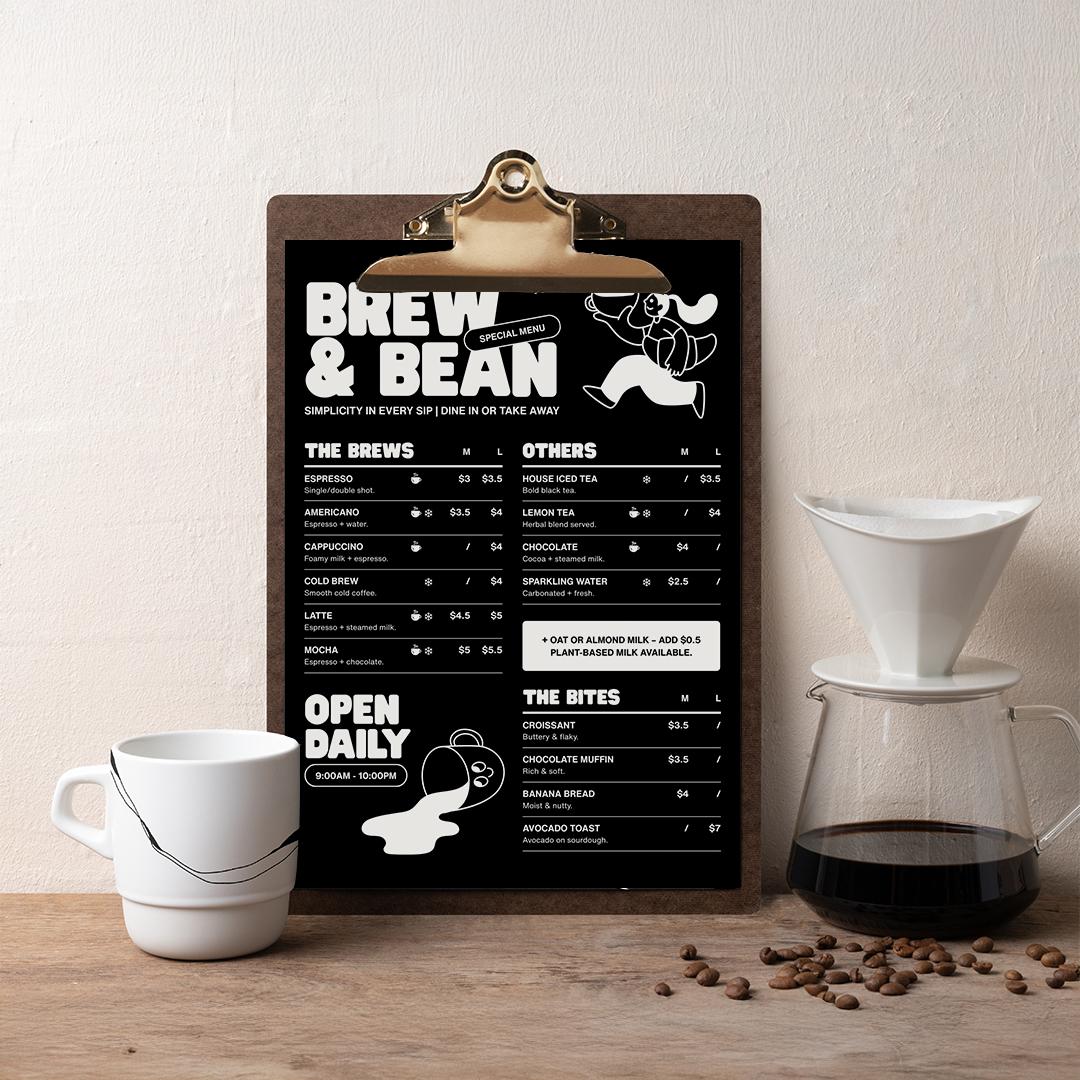
Restaurants & Cafe
Our commitments
Why Paperlust Print Shop Stands Apart
Quick Turnaround
We take pride in our lightning-fast turnaround times. We understand the importance of deadlines, ensuring your orders are delivered promptly and efficiently.
Dedicated Customer Service
With us, you’re more than just a client; you’re a valued partner. Our dedicated team is here to assist you every step of the way, ensuring your complete satisfaction. Simply reach out via, and we’ll get back to you as quickly as possible
Low Minimum, Wholesale Price
We ensure that you can access high-quality printing services without the burden of large orders, making us the ideal choice for businesses of all sizes.
How do I choose between a flat menu and a folded menu?
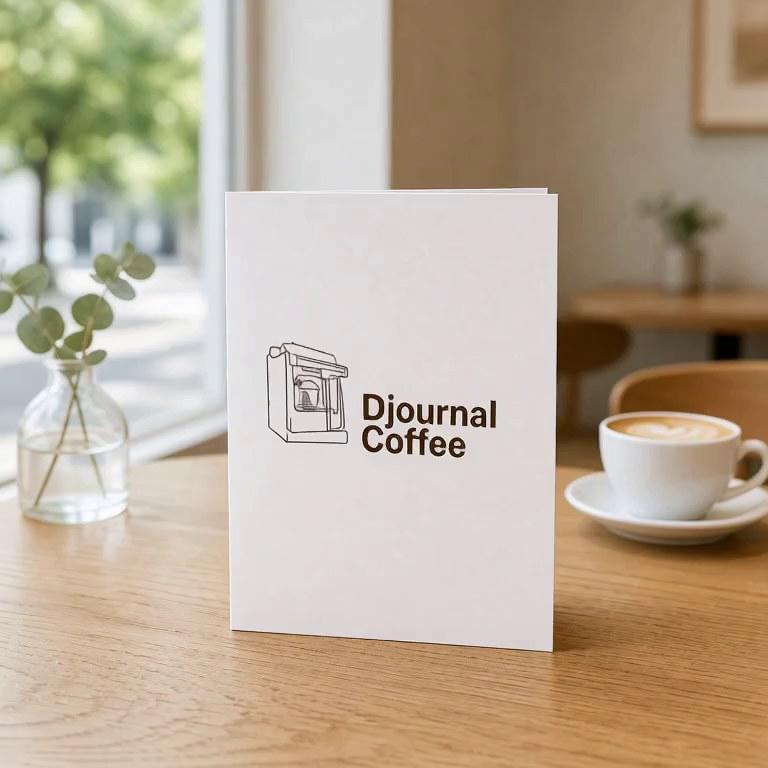
Start with how the menu sits and how many sections you need. Flat menus run in DL, A5, A4 or A3 and keep the whole selection open. Folded formats such as an A5 bifold, a DL Z fold, an A4 gatefold from A3 or a DL C fold give more panels for sections and specials. A compact DL or A5 suits a tight table.
Which stock should I choose for a high-turnover cafe menu?
Custom menus are available on a 300 gsm matte board or a 170 gsm silk stock, each with no laminate, matte laminate or gloss laminate. For table service where wiping is routine, a laminated menu resists wipe-down cleaning and light spills effectively, which makes it suitable for regular table service use. Choose the surface you want in hand before committing, and ask for a physical material sample on a first-time or large-volume run.
What should a first-time hospitality business decide first?
Confirm the format, stock and finish before artwork is finalised. Decide whether the menu is flat or folded, whether it needs a laminate, and whether a foil or colored stock suits the venue. Every order receives a digital proof before printing, and you sign off on color, sizing, layout, fold lines, die-cut paths and foil zone placement before production starts.
How do Standard Menus and White Ink Menus differ?
Standard Menus are available on a 300 gsm matte board or a 170 gsm silk stock, each with no laminate, matte laminate or gloss laminate, and run flat or folded. White Ink Menus print on 270 gsm black, 270 gsm navy, 300 gsm forest green, 300 gsm seedling or 300 gsm burgundy stock.
Which laminate should I choose and why?
A gloss laminate on 400 gsm board is the most wipeable surface in the range, while a matte laminate on 350 gsm board is more tactile but shows fingerprints more readily under certain lighting. Neither finish is designed for submersion or sustained liquid exposure. For repeated exposure to spills and cleaning products, PVC menu covers supplied separately by the venue are an alternative.
What do I check on the digital proof before printing?
Check color, sizing, layout, fold lines, die-cut paths and foil zone placement before the job is printed. The production team confirms the cut path on the digital proof before any stock is pressed. No production starts until you confirm the proof, and for most formats the proof is returned within one business day of file-check completion.
Which format suits a countertop specials display?
Counter cards, A frames and POS standees are the formats in this range for counter and entry displays. A compact DL or A5 flat menu also fits a countertop space. Choose a laminated surface if the card will be wiped down during service, and confirm the size in millimeters before the proof is prepared.
Frequently Asked Questions
How do I choose between a flat menu and a folded menu?
Start with how the menu sits and how many sections you need. Flat menus run in DL, A5, A4 or A3 and keep the whole selection open. Folded formats such as an A5 bifold, a DL Z fold, an A4 gatefold from A3 or a DL C fold give more panels for sections and specials. A compact DL or A5 suits a tight table.
Which stock should I choose for a high-turnover cafe menu?
Custom menus are available on a 300 gsm matte board or a 170 gsm silk stock, each with no laminate, matte laminate or gloss laminate. For table service where wiping is routine, a laminated menu resists wipe-down cleaning and light spills effectively, which makes it suitable for regular table service use. Choose the surface you want in hand before committing, and ask for a physical material sample on a first-time or large-volume run.
What should a first-time hospitality business decide first?
Confirm the format, stock and finish before artwork is finalised. Decide whether the menu is flat or folded, whether it needs a laminate, and whether a foil or colored stock suits the venue. Every order receives a digital proof before printing, and you sign off on color, sizing, layout, fold lines, die-cut paths and foil zone placement before production starts.
How do Standard Menus and White Ink Menus differ?
Standard Menus are available on a 300 gsm matte board or a 170 gsm silk stock, each with no laminate, matte laminate or gloss laminate, and run flat or folded. White Ink Menus print on 270 gsm black, 270 gsm navy, 300 gsm forest green, 300 gsm seedling or 300 gsm burgundy stock.
Which laminate should I choose and why?
A gloss laminate on 400 gsm board is the most wipeable surface in the range, while a matte laminate on 350 gsm board is more tactile but shows fingerprints more readily under certain lighting. Neither finish is designed for submersion or sustained liquid exposure. For repeated exposure to spills and cleaning products, PVC menu covers supplied separately by the venue are an alternative.
What do I check on the digital proof before printing?
Check color, sizing, layout, fold lines, die-cut paths and foil zone placement before the job is printed. The production team confirms the cut path on the digital proof before any stock is pressed. No production starts until you confirm the proof, and for most formats the proof is returned within one business day of file-check completion.
Which format suits a countertop specials display?
Counter cards, A frames and POS standees are the formats in this range for counter and entry displays. A compact DL or A5 flat menu also fits a countertop space. Choose a laminated surface if the card will be wiped down during service, and confirm the size in millimeters before the proof is prepared.
Learn More
Five Products for Service and Bar
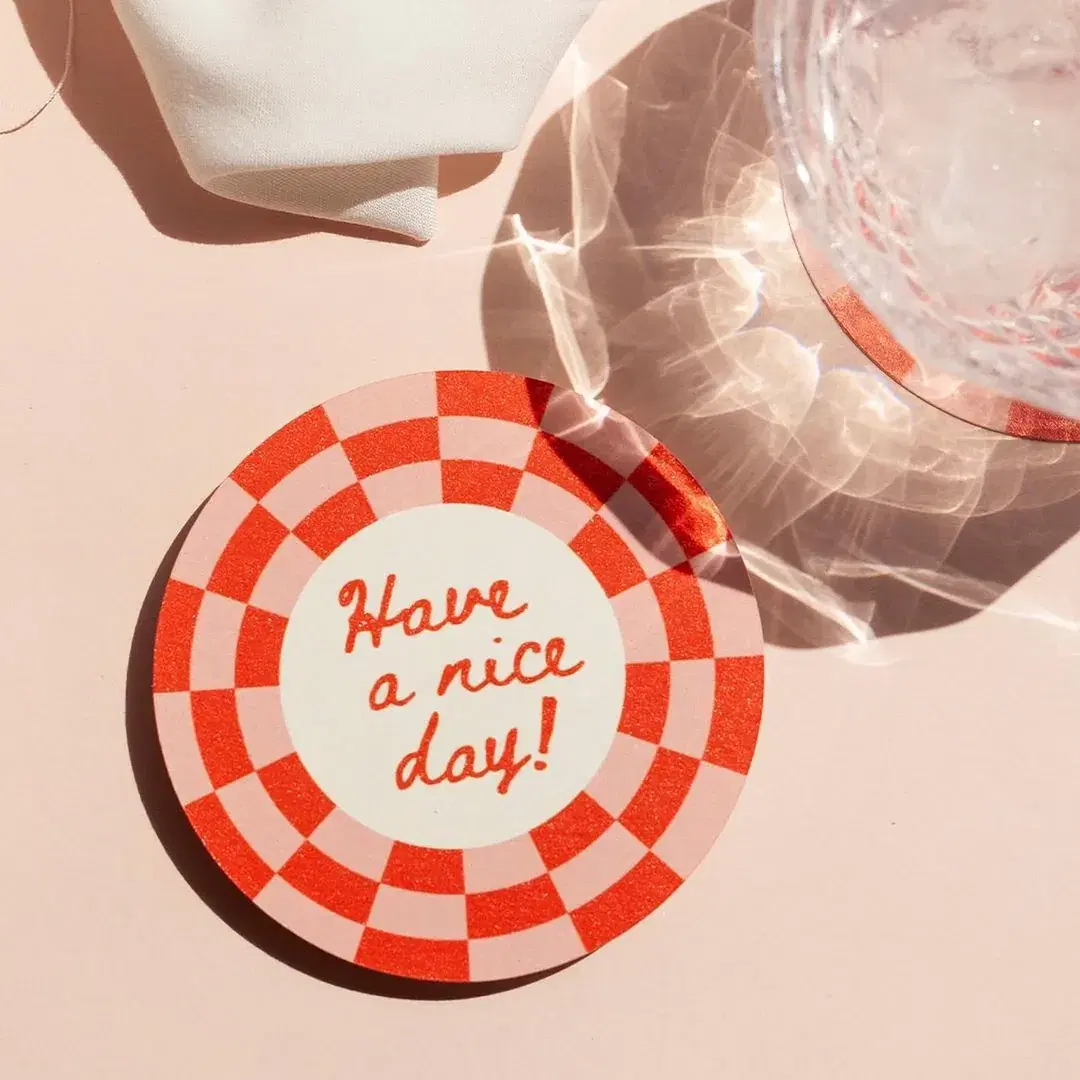
At the counter and the table, custom coasters and menu printing cover the two touchpoints that carry a venue name most often: the glass and the menu. Coasters use 355 gsm beermat board, print on the front only, and take a 95 mm circle, square or rounded square in full color. The same piece works as custom bar coasters under a rocks glass or as custom beverage coasters in a cafe, so the board weight and shape stay consistent while the artwork carries the room. Standard Menus print flat in DL, A5, A4 or A3 and fold as a DL Z fold or C fold, an A5 bifold, or an A4 gatefold, A4 bifold or double gatefold from A3; the double gatefold lands at 105 mm x 297 mm.
Products for Shape and Contrast
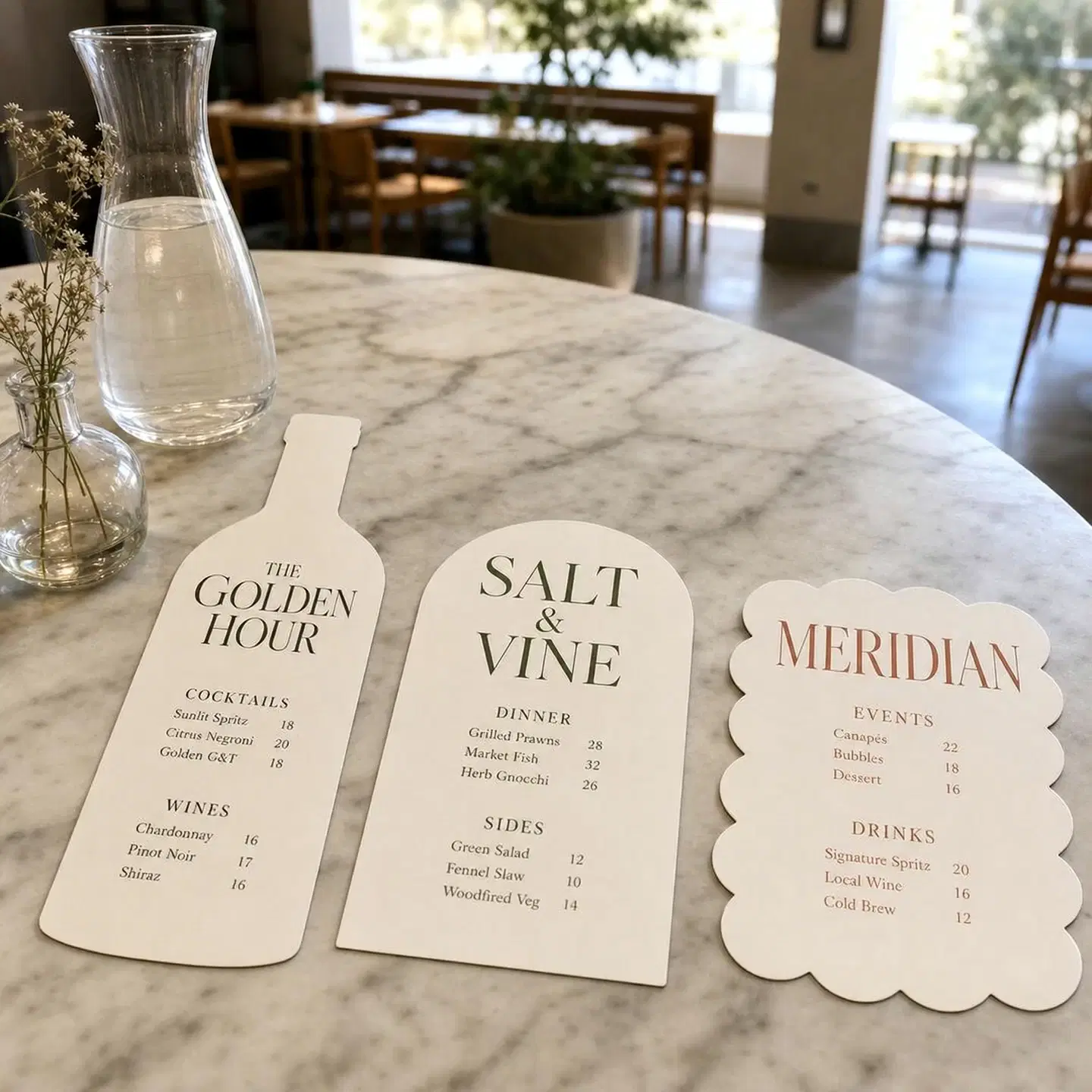
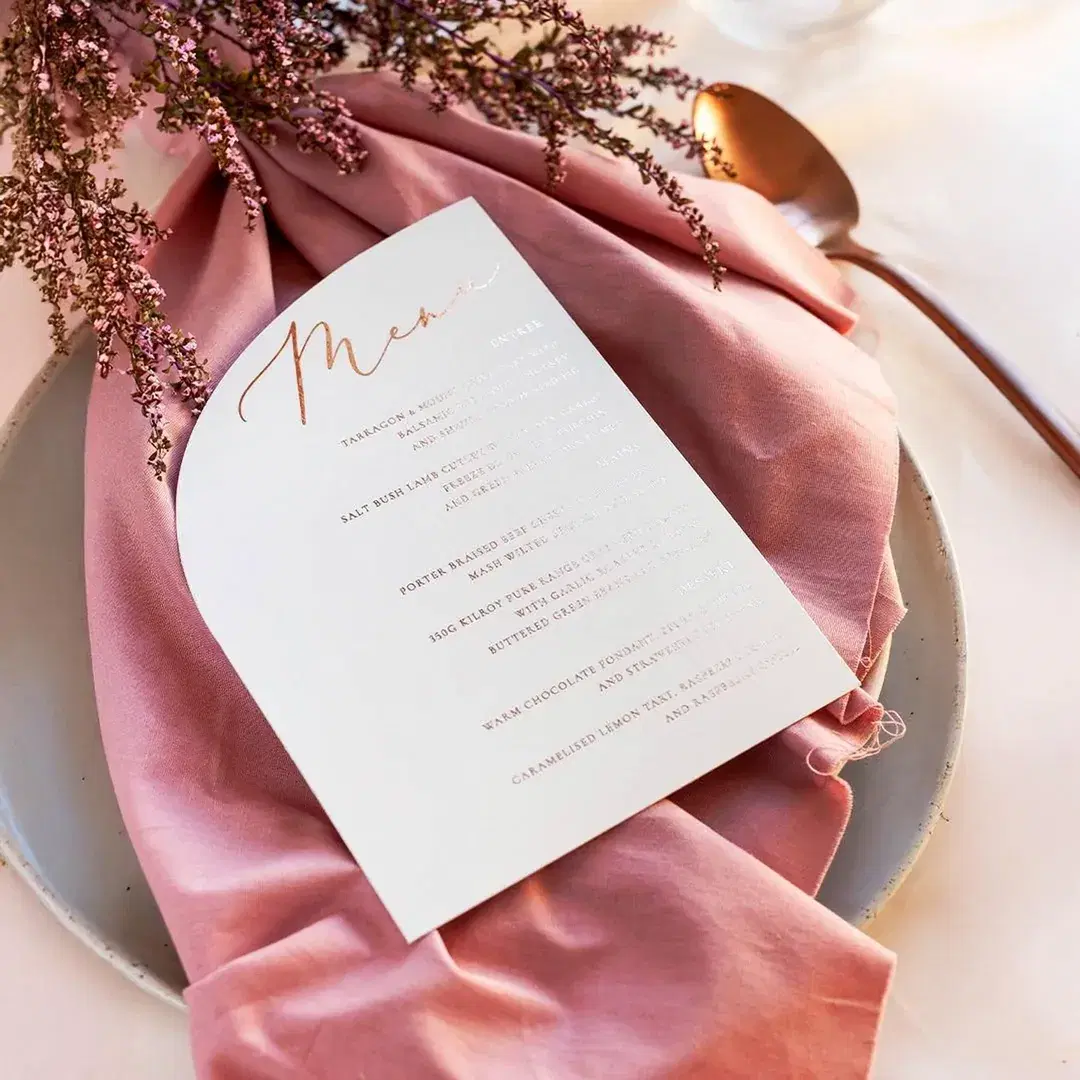
When a straight-edged sheet is not enough, custom menus split into three directions. Diecut Menus replace the straight edge with a shape beyond the standard flat sheet, and the production team confirms the cut path on the digital proof before any stock is pressed. Foil Menus bring copper, gold, holographic, rose gold or silver foil to the front only or to both sides, which suits a set menu or celebration where a metallic accent carries the room. White Ink Menus take light ink onto 270 gsm black or navy stock, or onto 300 gsm forest green, seedling or burgundy stock, giving dark pages a light text pass instead of standard ink on white.
Material, Laminate, and Finish Paths
The menu stock path runs from 300 gsm matte board to 170 gsm silk, with no laminate, matte laminate or gloss laminate as the finish choices. For table service where wiping is routine, laminated menus resist wipe-down cleaning and light spills effectively, which makes them suitable for regular use. The gloss option on 400 gsm board gives the most wipeable surface in the range, while matte on 350 gsm board feels more tactile and shows fingerprints more readily in certain light. Neither surface is built for submersion or long liquid contact. For repeated exposure to spills and cleaning products, venues can supply separate PVC menu covers and use insert pages as an alternative.
Sizes and Preset Formats
For bar and cafe service, custom drink coasters and custom paper coasters share the same 95 mm canvas, with print on the front only. Flat menus then step up through DL, A5, A4 and A3, and the preset dimensions across the range are:
- Coaster: 95 mm
- Menu, flat DL: 99 mm x 210 mm
- Menu, flat A5: 148 mm x 210 mm
- Menu, flat A4: 210 mm x 297 mm
- Menu, flat A3: 297 mm x 420 mm
These presets cover a compact counter format and a larger table format within the same range. For folded jobs, the size path starts from the flat sheet before the fold, so a gatefold or bifold carries the same base dimensions as its flat equivalent.
Proofs and File Setup
Before a job goes to press, a digital proof arrives for approval; you confirm color, sizing, layout, fold lines, die-cut paths and foil zone placement on it. The press does not move until that proof is confirmed. Most formats return a proof within one business day after the file check is complete, which keeps the artwork check and the press schedule close together.
Samples and Finish Decisions
Before a first-time or large-volume run, you can request physical material samples of the laminated board stocks, in gloss and matte at 350 gsm and 400 gsm, so the surface feel and finish are confirmed in hand before committing. This is particularly useful for a fine-dining menu where the tactile quality of the stock is part of the decision, and the venue needs to settle gloss or matte before the full run starts.
Where Restaurants, Cafes and Bars Use It
Restaurants use folded menus and laminated finishes at table service, while cafes use compact DL or A5 flat menus at the counter or on a tight table. Bars put the same coaster under drinks and use menu printing at the back bar. Counter cards, A frames and POS standees carry the same identity to the entry or counter, and studios that manage a venue identity use the preset sizes to keep a menu, coaster and counter card in line. Event teams and venues that host set menus often move to the darker-page or metallic options when the room calls for a darker page or a metallic accent. The choice between these products comes down to where the printed piece sits in service and how often it is handled, wiped or replaced.