Acrylic signs give businesses a clean, professional presence that glass cannot match for weight or installation flexibility. Whether you are dressing a corporate reception desk, fitting out a new office, or adding wayfinding panels across a multi-level building, custom perspex signage delivers the polished look clients notice the moment they walk through the door. This guide covers everything you need to know before ordering, from material thickness and finish choices to mounting hardware and artwork supply.
Quick reference
Acrylic Signs: At a Glance
Everything you need to know before ordering custom acrylic or perspex signage in Australia.
- Material: Cast or extruded acrylic (perspex), typically 3mm to 6mm thick for most commercial applications
- Common uses: Reception panels, office door signs, feature walls, wayfinding, raised lettering, point-of-sale displays
- Finishes: Clear, frosted, white, black, mirror, matte, coloured substrate
- Mounting: Standoff fixings for a floating effect, screw-direct, double-sided tape for lighter panels, hanging or ceiling suspension
- Indoor vs outdoor: Best suited for indoor use; outdoor installation is possible but prolonged UV exposure can cause yellowing or expansion over time
- Artwork: Supply print-ready files at 100% size, 300 dpi minimum, with bleed and fonts converted to outlines or embedded
What Are Acrylic Signs?
Acrylic, often sold under the trade name Perspex, is a lightweight thermoplastic that shares the optical clarity of glass at roughly half the weight. In commercial signage, it is used as a substrate for printed graphics, cut lettering, and panel displays. Sheets are cut to shape with a router or laser; print is applied to the face or reverse side, depending on the finish required.
The material comes in two primary forms. Cast acrylic is manufactured in a mould, which makes it harder, more resistant to scratching, and better suited to larger installations or pieces that will be handled regularly. Extruded acrylic is produced by pushing molten material through a die, giving it more consistent thickness and a smooth surface that takes print evenly. For most reception and office applications, cast acrylic in 3mm thickness is the practical standard.
Where Acrylic Signs Work Best
Reception and Lobby Signage
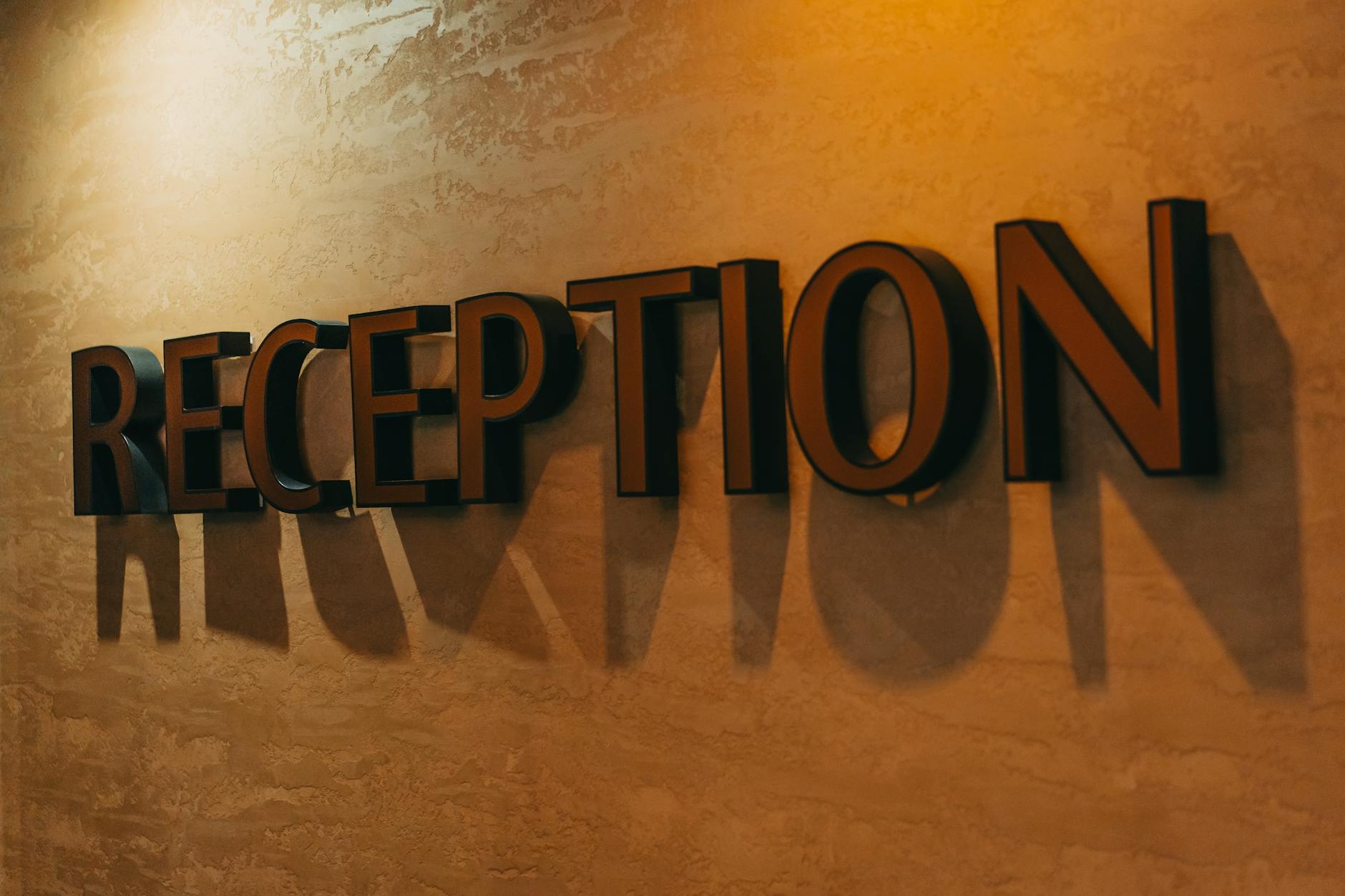
The front desk or reception area is where a visitor forms their first impression of a business. A printed acrylic panel displaying the company logo, name, and brand colours communicates professionalism instantly. Most reception installs use either a backlit or direct-print panel mounted at eye level behind the desk, often with standoff fixings that create a 20 to 30mm gap between the panel and the wall surface.
Office Door and Room Identification
Door plaques, room number signs, and name plates are standard applications for thinner acrylic sheets. A 3mm frosted panel with printed text and a screw-cap fixing works well for office doors, meeting rooms, and bathroom identifiers. The frosted substrate diffuses light softly and reads cleanly against both painted and tiled surfaces.
Feature Walls and Brand Installations
Larger format acrylic panels, sometimes spanning a full wall behind a reception counter, carry photography, brand messaging, or abstract graphic treatments. These are common in hospitality, financial services, and co-working spaces where the interior needs to do brand work. Panels can be printed or vinyl-foiled, and multiple sheets can be butted together for installations wider than a standard acrylic sheet.
Wayfinding and Directional Signage
Multi-level offices, hospitals, shopping centres, and education facilities use acrylic panels for floor directories and directional arrows. Clear or white acrylic with a dark print reads well in ambient lighting. Standoff-mounted panels at corridor intersections are a cost-effective alternative to full-length LED directories.
Raised Acrylic Lettering
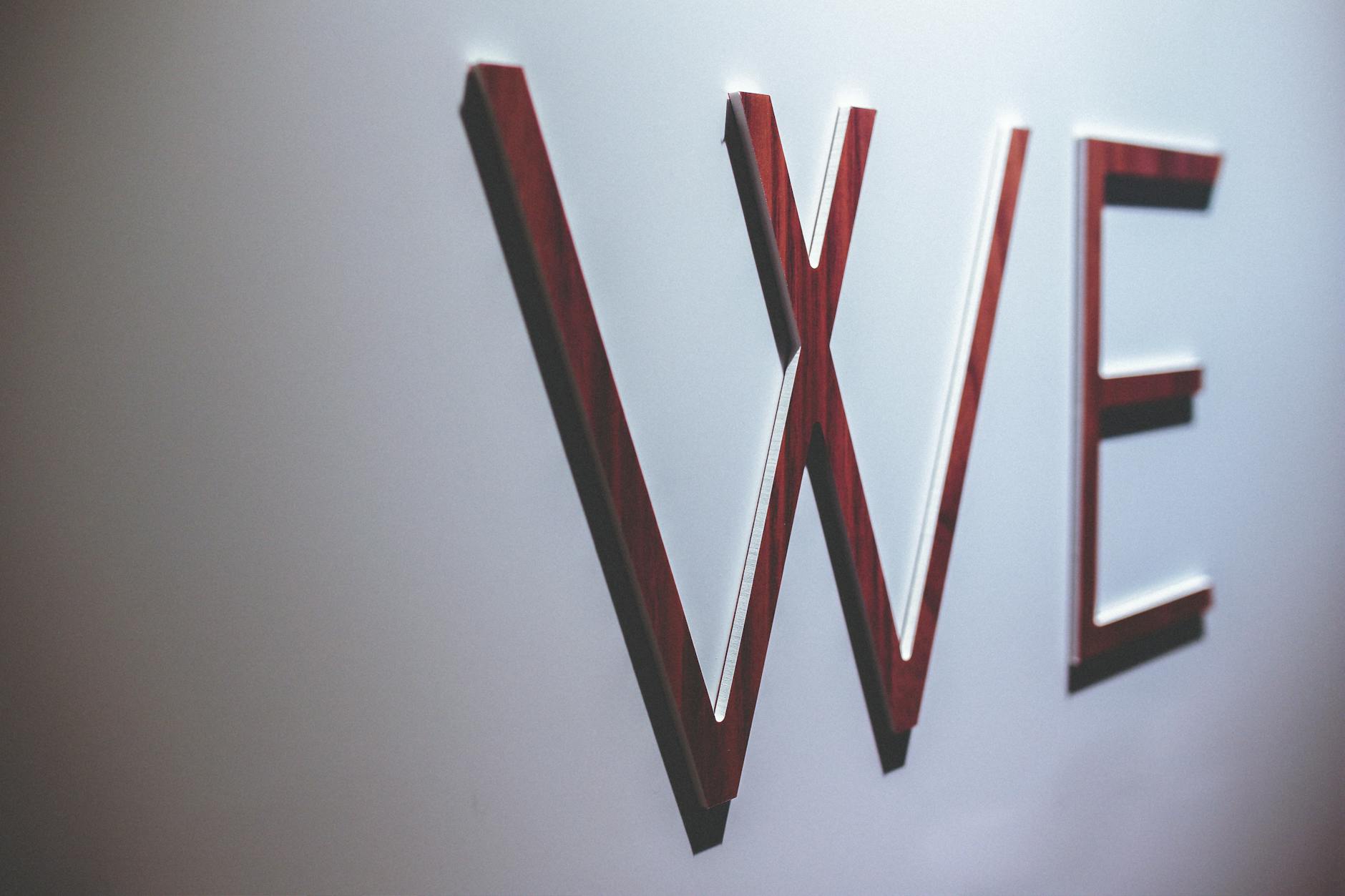
Cut-out acrylic letters bonded directly to a wall or secondary panel give a three-dimensional quality that flat-print panels cannot replicate. Each letter is individually cut from coloured or clear acrylic, then adhered with concealed VHB tape or bonded with clear acrylic adhesive. The result is a shadow line at the base of each character that shifts with the light, adding depth to a logo wall or company name installation.
Acrylic Thickness and Finish Options
Thickness choice affects rigidity, durability, and mounting method. Here is a practical guide:
| Thickness | Best For | Notes |
|---|---|---|
| 3mm | Reception panels, door signs, A-size display panels | Industry standard for interior commercial signage |
| 4.5-5mm | Larger feature wall panels, high-traffic areas | More rigid; reduces flex on wide spans |
| 6mm | External signs, heavy-use installations, raised lettering | Maximum durability; heavier mounting hardware required |
Finish choices extend the design range considerably:
- Clear acrylic: Print is applied to the reverse face with a white backing layer. The result is a high-gloss, glass-like finish with sharp colour reproduction.
- Frosted acrylic: A frost laminate or substrate gives a soft, translucent look. Often used for privacy-sensitive signage (meeting room glazing, bathroom panels) and minimalist brand identities.
- White acrylic: Provides a crisp, opaque background. Works well for logo panels where you want full colour saturation without a backing layer on a clear sheet.
- Black acrylic: Dramatic choice for high-contrast reverse-printed text or gold/silver vinyl lettering.
- Mirror acrylic: Reflects light and adds depth to retail or hospitality settings. Usually used as a decorative layer rather than a primary print surface.
- Coloured substrate: Some acrylic manufacturers supply pre-coloured sheets in brand-matched tones. Print or cut lettering applied to a coloured sheet reduces the number of production layers needed.
Mounting Methods Explained
Mounting hardware is as important as the panel itself. The wrong fixing looks cheap; the right one completes the installation.
Standoff Fixings
Standoff fixings (also called barrel fixings or wall spacers) consist of a cylindrical post anchored to the wall, with a visible cap that clamps the acrylic panel 10 to 30mm from the wall surface. The floating gap creates a shadow line that adds dimension. Standoffs are available in satin stainless steel, chrome, brass, and matte black to suit different interior palettes. They are the most common choice for reception panels and feature wall installations.
Screw-Through and Screw Cap Fixings
For panels where a flush finish is acceptable, screws are passed through pre-drilled holes in the acrylic and into the wall. Screw cap covers (small dome-shaped caps in matching or contrasting finishes) neaten the visible fastener points. This method suits lighter panels and applications where standoff hardware would look over-engineered.
Double-Sided Tape and VHB Tape
Smaller panels up to approximately A4 or A3 size can be mounted with high-strength double-sided or VHB (Very High Bond) tape against smooth, paint-sealed walls. There is no visible hardware, which produces the cleanest look. The trade-off is that repositioning requires careful removal to avoid damaging the wall surface.
Hanging and Suspension
A-size or custom-format acrylic panels can be suspended from ceiling tracks or steel cables, which suits retail environments, trade show displays, and suspended wayfinding installations. Two pre-drilled holes near the top edge accommodate wire or rod suspension.
Indoor vs Outdoor Suitability
Acrylic is primarily an indoor signage material. For interior applications, it performs indefinitely with no degradation. The optical clarity, colour reproduction, and surface finish remain stable in climate-controlled environments for many years.
Outdoor installation is possible, but with important caveats. Acrylic expands and contracts with temperature shifts, which can stress mounting fixings over time. Prolonged direct UV exposure causes gradual yellowing, particularly in clear substrates. If you need outdoor panel signage, UV-stabilised grades are available, though coated aluminium composite or dibond are generally better long-term choices for fully exposed applications.
For covered outdoor areas, under-awning installations, or shaded external walls, acrylic performs well and is a common choice for hospitality venues, retail entries, and covered car park signage.
Sizes and Custom Dimensions
Standard sheet sizes follow the ISO A-series, with A1 (594 x 841mm) and A2 (420 x 594mm) being the most commonly ordered for reception applications. Most suppliers can cut to custom dimensions on request, with maximum sheet widths typically around 1200mm and lengths to 2400mm. Wider installations use multiple panels butted together or spaced with a deliberate reveal gap.
For raised lettering, there is no standard size constraint beyond the sheet dimensions, since each letter is individually cut. Height and weight considerations increase with larger characters, particularly if letters will be wall-bonded rather than mounted on a backing panel.
When sizing a reception panel, consider the wall space available on both sides of the desk and the viewing distance from the entry door. Panels that are too small lose impact from distance; oversized panels can feel imposing in a smaller reception. A good general rule is to size the panel so the logo fills 50 to 60 percent of the panel width, leaving clear margins on all sides.
How to Supply Artwork
Artwork quality directly affects print quality. Most acrylic sign suppliers accept the following:
- Format: Print-ready PDF, AI (Adobe Illustrator), or EPS. High-resolution JPEG or PNG is acceptable for photographic elements.
- Resolution: 300 dpi at 100% of the final printed size. Files submitted at screen resolution (72-96 dpi) will print soft.
- Colour mode: CMYK for any print application. RGB files will be converted, which can shift colour values, particularly in blues and purples.
- Fonts: Convert all text to outlines (curves) before submitting, or embed fonts in the PDF. This prevents font substitution when the file is opened in a different system.
- Bleed: Include at minimum 3mm bleed on all edges for any print that runs to the panel edge.
- Cut lines: Indicate custom panel shapes with a clearly labelled cut line or die line on a separate layer.
If you do not have print-ready artwork, most suppliers offer a design service or can work from a logo file and brand guidelines to produce the layout. Paperlust Print Shop provides a proof review before production so you can confirm colour, layout, and proportions before the panel is cut and printed.
Ordering Custom Acrylic Signs in Australia
For reception panels and corporate office signage in Australia, Paperlust Print Shop offers custom-printed acrylic reception panel signs in A1 and A2 sizes, with clear, frosted, white, black, matte, and mirror finishes, using digital print and vinyl foil methods. Starting from $225.00 inc. GST, panels are produced on 3mm cast acrylic with a 5 to 7 working day production turnaround.
To order, visit the acrylic reception panel signs product page, choose your size and finish, upload your artwork or request a design proof, and proceed to checkout. A design proof is provided before printing so you can review layout, colour, and proportions. If acrylic is not the right substrate for the job, the panel signs range covers corflute, PVC, and screenboard alternatives.
For outdoor or carpark environments where a three-sided bollard wrap may suit better than a flat wall panel, the bollard signs range offers weatherproof 3mm TEKflute panels in 270 x 1000mm format, starting from $83.55 inc. GST.
Frequently Asked Questions
What is the difference between acrylic and perspex?
There is no material difference. Perspex is a brand name (trade mark) for cast acrylic manufactured by Lucite International. In Australia, “perspex” and “acrylic” are used interchangeably in signage contexts. Both refer to polymethyl methacrylate (PMMA) sheet material. Other equivalent trade names include Plexiglas, Acrylite, and Chemcast.
Are acrylic signs suitable for outdoor use in Australia?
Acrylic can be used outdoors, but standard grades will expand and contract with temperature changes and may yellow over time with direct UV exposure. For fully exposed outdoor applications, UV-stabilised acrylic or aluminium composite panels are a better long-term choice. Covered outdoor areas, such as under an awning or inside a sheltered entry, are generally fine for standard acrylic.
What thickness of acrylic is best for a reception sign?
3mm cast acrylic is the industry standard for interior reception panel signage in A1 and A2 sizes. It is rigid enough for wall mounting with standoff fixings, lightweight enough for easy installation, and provides a clean, flat surface for print. Larger panels (above A0) or panels in high-traffic areas may benefit from 5 to 6mm thickness.
How do standoff fixings work on acrylic signs?
Standoff fixings (also called barrel fixings) consist of a wall-mounted cylindrical post and a threaded cap that clamps through a pre-drilled hole in the acrylic panel. The panel is held 10 to 30mm from the wall, creating a floating effect with a visible shadow line behind the sign. Standoffs are available in satin stainless steel, chrome, matte black, and brass finishes to suit different interior styles.
What file format should I supply for an acrylic sign?
Supply a print-ready PDF or AI file at 100% size, CMYK colour mode, 300 dpi minimum, with 3mm bleed on all edges and all fonts converted to outlines. If you only have a logo file and brand guidelines, most suppliers including Paperlust Print Shop can prepare the layout for you and provide a proof for approval before production.
Can acrylic reception signs be made to custom sizes?
Yes. Most suppliers can cut acrylic panels to custom dimensions on request. Standard A-series sizes (A1, A2, A3) are the most common for reception applications, but bespoke widths and heights are available. Maximum sheet size is typically 1200 x 2400mm; wider installations use multiple panels with a butted or spaced join.