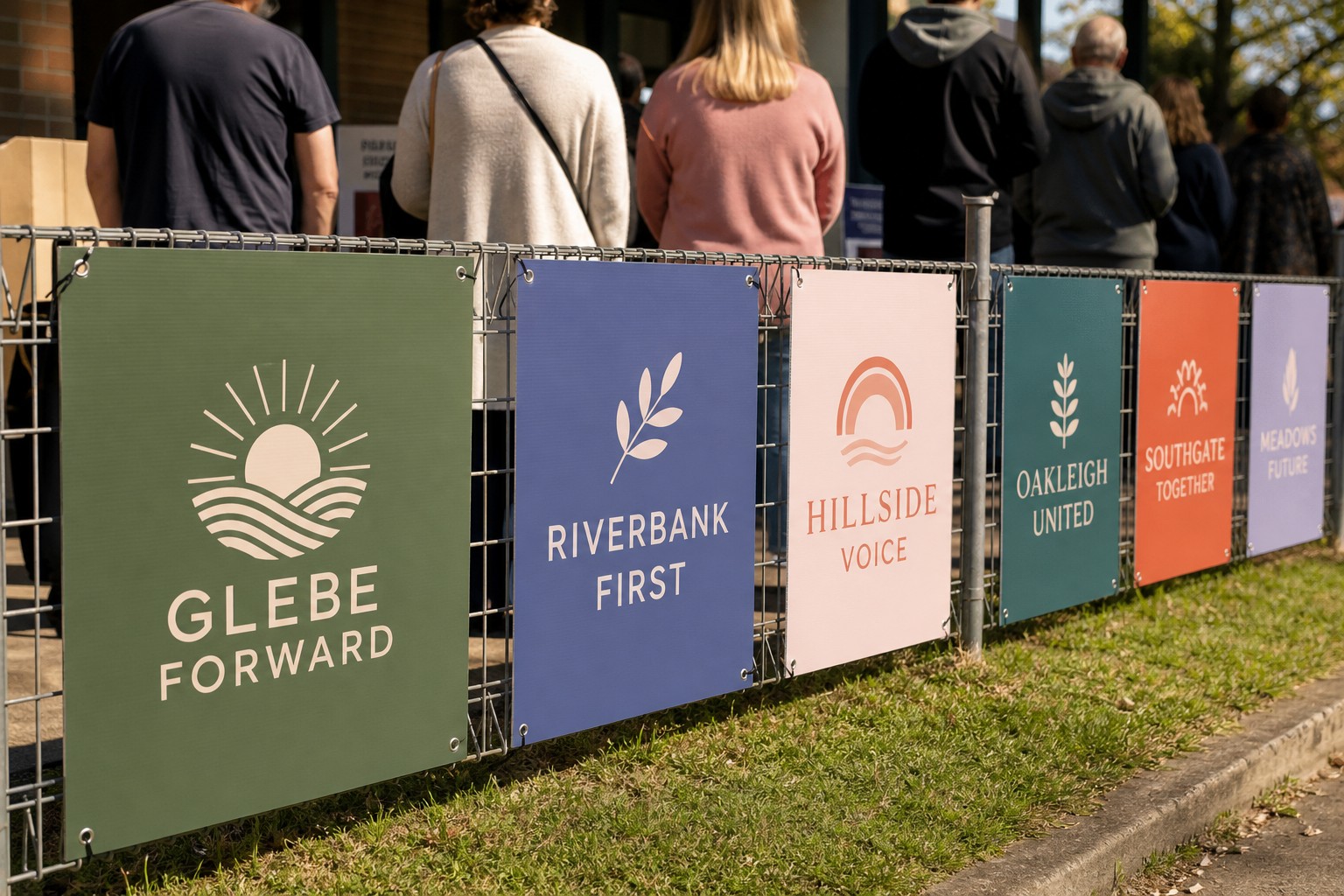
Planning corflute signs for a campaign is one of those tasks where you realise there is no universal answer – just variables you can actually control. Order too few and you are scrambling for emergency stock the week before polling day; order too many and you are disposing of 200 unused panels after the count. This guide works through a four-part formula for calculating the right quantity, plus budget estimates by campaign tier using real pricing from our corflute sign range.
– Polling booths: allow 2-3 fence signs and 2-4 A-frame panels per booth
– High-visibility roads: 1 sign per major intersection or arterial site you want covered
– Volunteer and supporter yards: 1 sign per confirmed supporter
– Spares buffer: 10% for short campaigns, 15-20% for longer ones
– Typical local council ward: 55-90 corflute panels in total
– State lower-house seat: 190-350 panels depending on booth count
– At 20 signs the per-unit cost is $14.00 inc. GST, and at 100 it is $9.50 inc. GST for a 600 x 900mm 3mm one-sided corflute sign
Why Quantity Planning Deserves Its Own Calculation
Corflute campaigns do not follow a single formula because Australian electorates vary so much in size, density, and geography. A metropolitan council ward with 8 booths inside 10 square kilometres requires a completely different order to a regional state seat covering 5,000 square kilometres and 60 polling places.
The four-step approach below treats each placement category separately, then combines them into a single print run. One combined order is almost always more cost-efficient than a base run followed by a top-up reorder.
How to Calculate Your Campaign Corflute Quantity
Step 1: Polling Booth Signs
Polling places are the highest-priority locations in any Australian election campaign. Visibility here matters most, even if signs are only up for a single day.
To plan this allocation:
1. Download the official polling place list from your relevant electoral commission (AEC for federal, VEC for Victoria, NSWEC for New South Wales, and so on). 2. Note whether each booth has single or multiple entry and exit points. 3. Allow 2-3 fence signs per booth for perimeter and road-facing coverage. 4. Allow 2-4 corflute A-frame panels per booth for the immediate walking paths outside.
Reference numbers by election type:
- Local council ward (6-12 booths): 24-72 fence signs and A-frame panels
- State lower-house seat (30-80 booths): 120-400 panels across both categories
- Federal division (60-120 booths): 240-600+ panels at booths alone
These figures are planning inputs, not final orders. If specific booths are more marginal or contested, you may choose to weight those more heavily.
Step 2: High-Visibility Road Sites
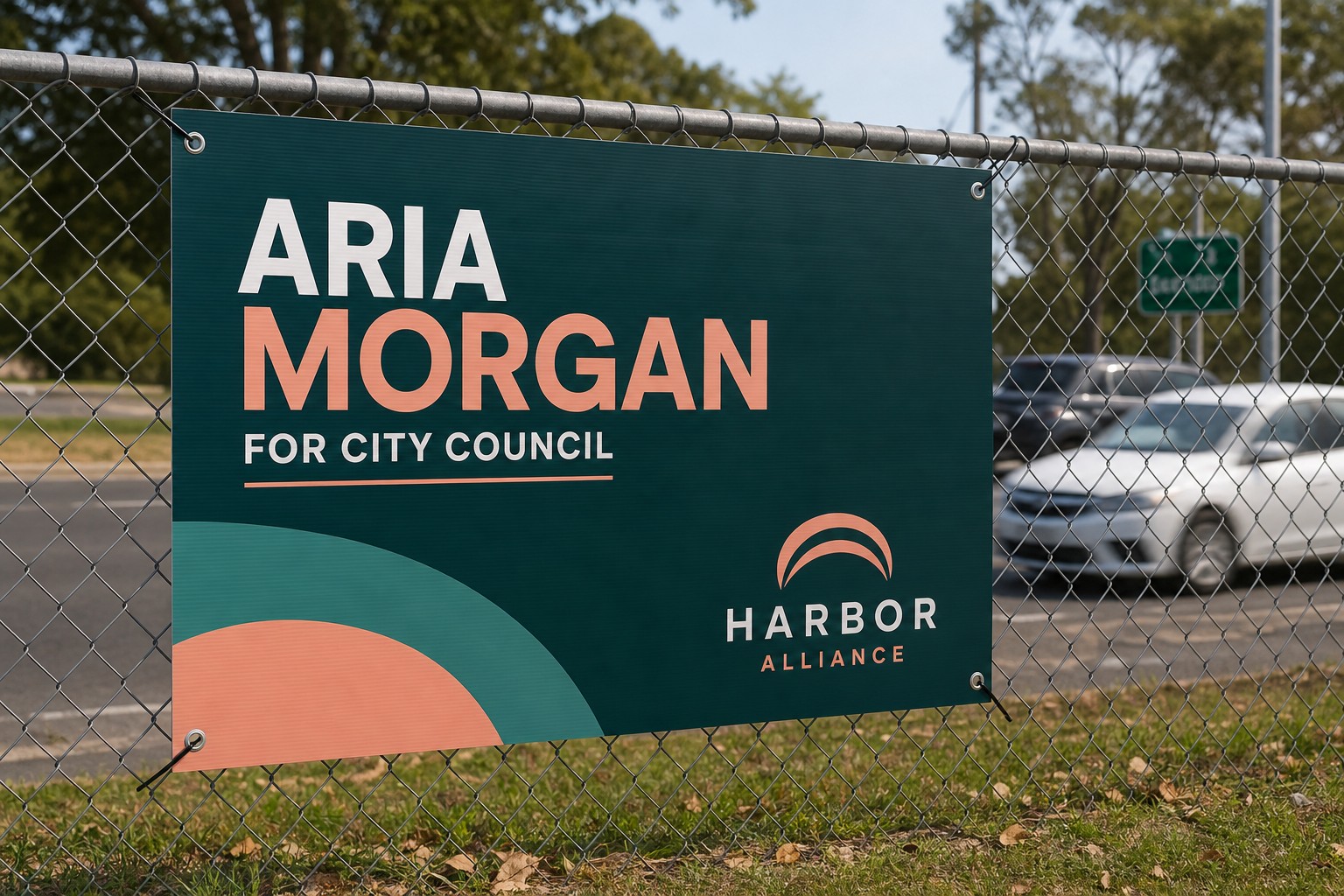
Signs at busy intersections, highway frontages, and arterial roads give passive reach in the weeks before polling day. These locations put in more hours than booth signs, so durability matters more.
Practical approach:
- Conduct a 30-60 minute drive audit of your electorate to identify the highest-traffic fence lines and road junctions.
- Plan for 1 sign per site on a lean budget; 2-3 signs per major intersection where you want saturation on multiple approach angles.
- A council ward with concentrated suburban streets might need 5-15 road sites; a sprawling state seat might need 30-80.
The 600 x 900mm corflute plastic sign is the most popular format for Australian campaign fence lines. It is legible from a passing car, fits standard chain-link fencing without modification, and ships efficiently in bulk.
Step 3: Volunteer and Supporter Yard Placements
A sign in a neighbour’s front yard or on a community volunteer’s fence is one of the most credible forms of campaign signage. Before finalising your order:
- Compile a confirmed list of supporters who have agreed to display a sign.
- Add extras for supporters with long fence runs who want two or three panels.
- Budget for an additional 5-10% conversion from door-knock and canvassing contacts in the final three weeks.
A typical council ward might secure 20-50 yard placements; a well-organised state seat campaign regularly manages 100-250.
Step 4: Spares and Attrition Buffer
Wind, vandalism, rain saturation, and unauthorised removal will take signs throughout a campaign. A spares buffer is not optional:
- Campaign of 3-4 weeks: add 10% to your total.
- Campaign of 5-8 weeks: add 15%.
- Campaign longer than 8 weeks: add 20%.
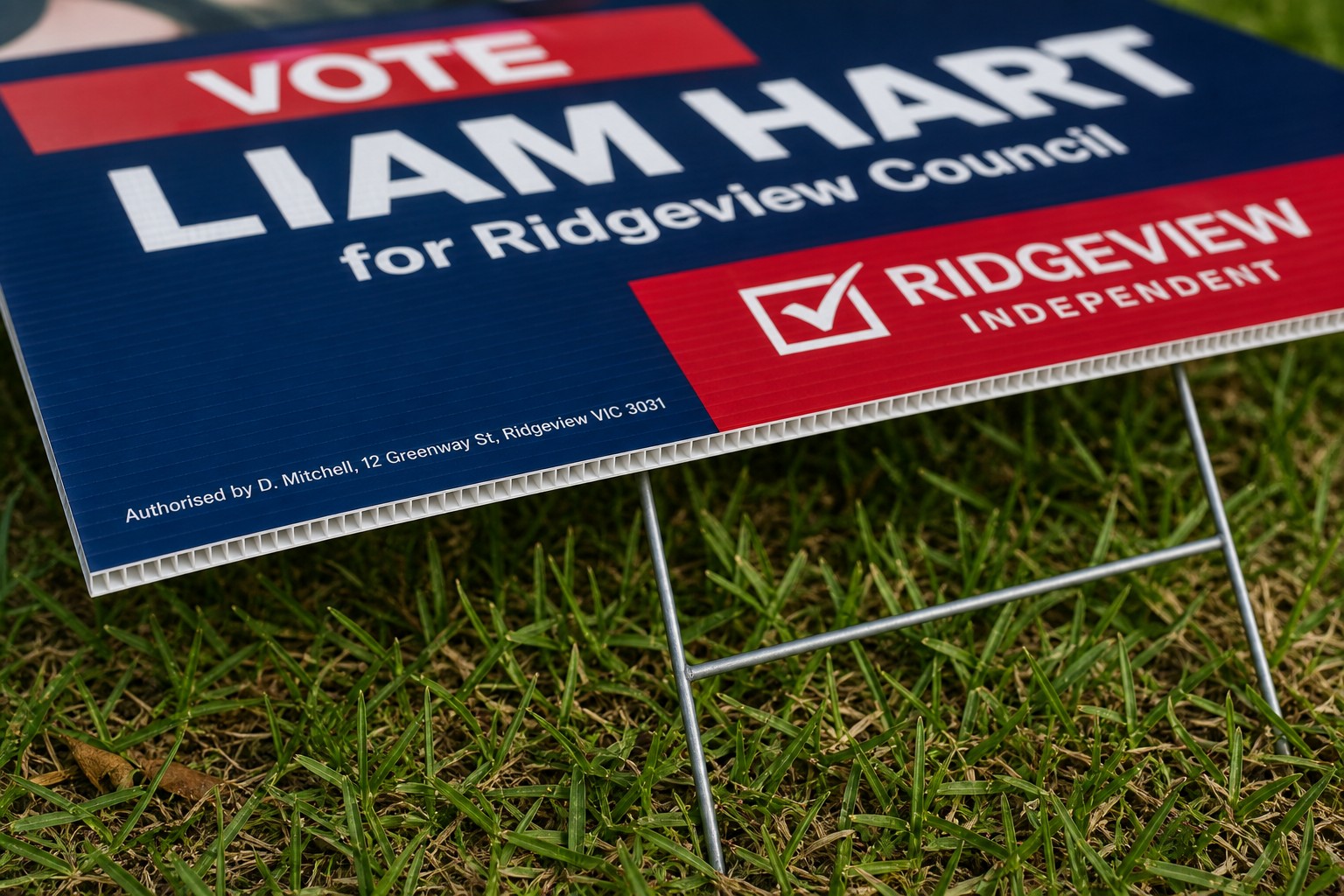
The corflute plastic signs are available in 3mm or 5mm corflute (fluted polypropylene). For signs going up more than four weeks before polling day, the 5mm option is available.
Getting the Right Size Mix
Most campaign orders combine two or three sizes rather than ordering all panels in one format. A practical mix for Australian elections:
- 600 x 900mm: fence lines, wire mesh, timber post mounting. The most popular size for Australian campaign signage. A1 buyers should choose this size (slightly larger than A1, and the standard real estate and election board).
- 600 x 450mm: compact yards, booths with limited fence space, or councils that restrict signage dimensions. A2 buyers should choose this size (similar in area, runs landscape or portrait).
- 900 x 1200mm: major arterial roads and highway frontages where maximum legibility at distance is the priority.
For a full size guide with viewing-distance recommendations, see our Corflute Sign Sizes Australia guide.
Budget Planning by Campaign Tier
The table below combines the four placement categories into total quantity estimates for three common campaign scales. Pricing is based on current rates on our corflute plastic signs product page: single 600 x 900mm 3mm one-sided sign from $39.00 inc. GST; at 20 signs $14.00 per sign, and $9.50 per sign at 100, all inc. GST. Quantities are ordered in set steps rather than freely, so a run lands on the next rung up.
| Campaign tier | Polling booths | Road sites | Volunteer yards | Buffer | Total (approx.) |
|---|---|---|---|---|---|
| Local council ward | 6-12 booths | 5-15 sites | 20-40 yards | 10% | 55-90 signs |
| State lower house | 30-80 booths | 20-50 sites | 80-150 yards | 15% | 190-350 signs |
| Federal division | 60-120 booths | 40-80 sites | 150-300 yards | 20% | 390-720 signs |
Flat-rate shipping Australia-wide applies to all orders – no freight surprises based on distance or order size.
Worked Example: Local Council Ward
A candidate in a typical inner-metropolitan council ward maps out the following:
- 9 polling booths x 3 fence signs = 27 fence signs
- 9 polling booths x 2 A-frame panels = 18 panels (ordered via the corflute A-frames product separately, as the A-frame stands are reusable)
- 10 main-road sites x 1 sign = 10 fence signs
- 28 confirmed supporter yards = 28 signs
- Subtotal: 65 corflute fence signs
- 10% spares buffer: +7 signs
Final corflute order: 72 fence signs + 18 A-frame panels
Quantities step rather than run continuously, so 72 fence panels is bought as the 80 rung at $10.00 per sign inc. GST for the 600 x 900mm 3mm one-sided board, putting the print spend at $800.00 inc. GST for 80 panels, with flat-rate shipping added. The A-frames are reusable across future campaigns; only the panels need replacing each election cycle.
When to Order Beyond the Formula
A few situations push the final quantity above the baseline calculation:
- Competitive seats: where multiple well-funded candidates are competing for the same fence lines, higher saturation protects your visibility.
- Large geographic electorates: rural and regional seats have extended road frontages where more panels are needed to maintain meaningful coverage.
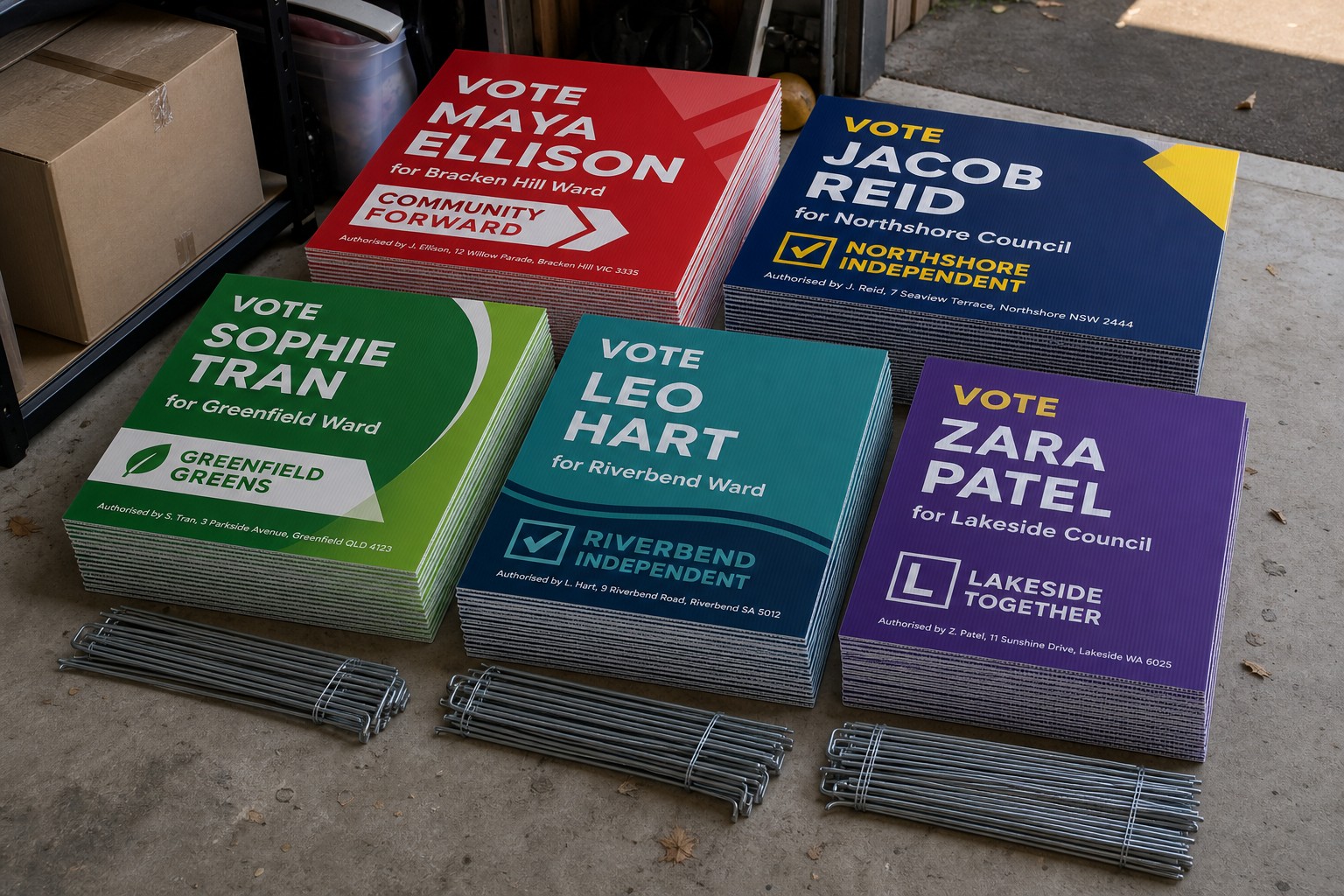
- Multi-candidate team campaigns: a single consolidated order across a slate of candidates is almost always cheaper per unit than separate orders placed individually.
- Early campaign starts: if signs go up 10 or more weeks before polling day, the 20% attrition buffer is a floor, not a ceiling.
For custom sizing options up to 2400 x 1200mm and higher-volume pricing, see our election signs product page.
Related Reading
- Corflute Sign Sizes Australia: which size suits each placement type and viewing distance
- Election Signs Australia: material choices, mounting methods, compliance requirements, and design principles
- How Many Flyers Should You Print?: the same quantity-planning logic applied to flyer campaigns
Frequently Asked Questions
How many corflute signs does a local council campaign typically need?
Most council ward campaigns in Australia use between 55 and 90 corflute signs in total, covering polling booths, arterial roads, and supporter yards. The exact figure depends on the number of polling places in the ward, the geographic spread of the electorate, and the number of confirmed volunteer yard placements.
How many signs should I allow per polling booth?
Allow 2-3 fence signs per polling place for perimeter and road-facing coverage, plus 2-4 A-frame panels for the walking paths directly outside each booth. A council ward with 10 polling places typically needs 50-70 signs and panels for booth coverage before roadside and yard placements are added.
Should I order more corflute signs than my estimate says?
Yes. A 10-20% buffer above your calculated quantity is standard practice. Signs are lost during a campaign to wind, weather, and removal, and a rush reorder close to polling day is both stressful and expensive. Ordering extra upfront costs a fraction of what a late top-up would, and unused panels can be stored for the next election cycle.
What corflute sign size is best for fence lines and main roads?
The 600 x 900mm size is the most popular format for Australian campaign fence lines. It is readable from a vehicle travelling at normal road speeds, fits standard wire and chain-link fencing without modification, and handles well in bulk for large campaign orders. A1 buyers should choose 600 x 900mm, which is slightly larger than A1 and is the standard real estate and election board.
What is the pricing for bulk corflute sign orders?
A single 600 x 900mm 3mm one-sided corflute sign starts from $39.00 inc. GST. At 20 signs the per-unit price is $14.00 inc. GST, and at 100 it is $9.50 inc. GST. Larger runs attract further volume pricing; use the product page to build an instant quote for your specific quantity and size combination.
How far in advance should campaign corflute signs be ordered?
Allow at least 5-7 working days from order placement to delivery in hand. Production takes 24 hours on every size and thickness, after design proof approval, with flat-rate delivery on top. For large orders or remote electorates, allow additional lead time. Ordering 2-3 weeks out gives a comfortable buffer for a proof revision and any delivery variation.