
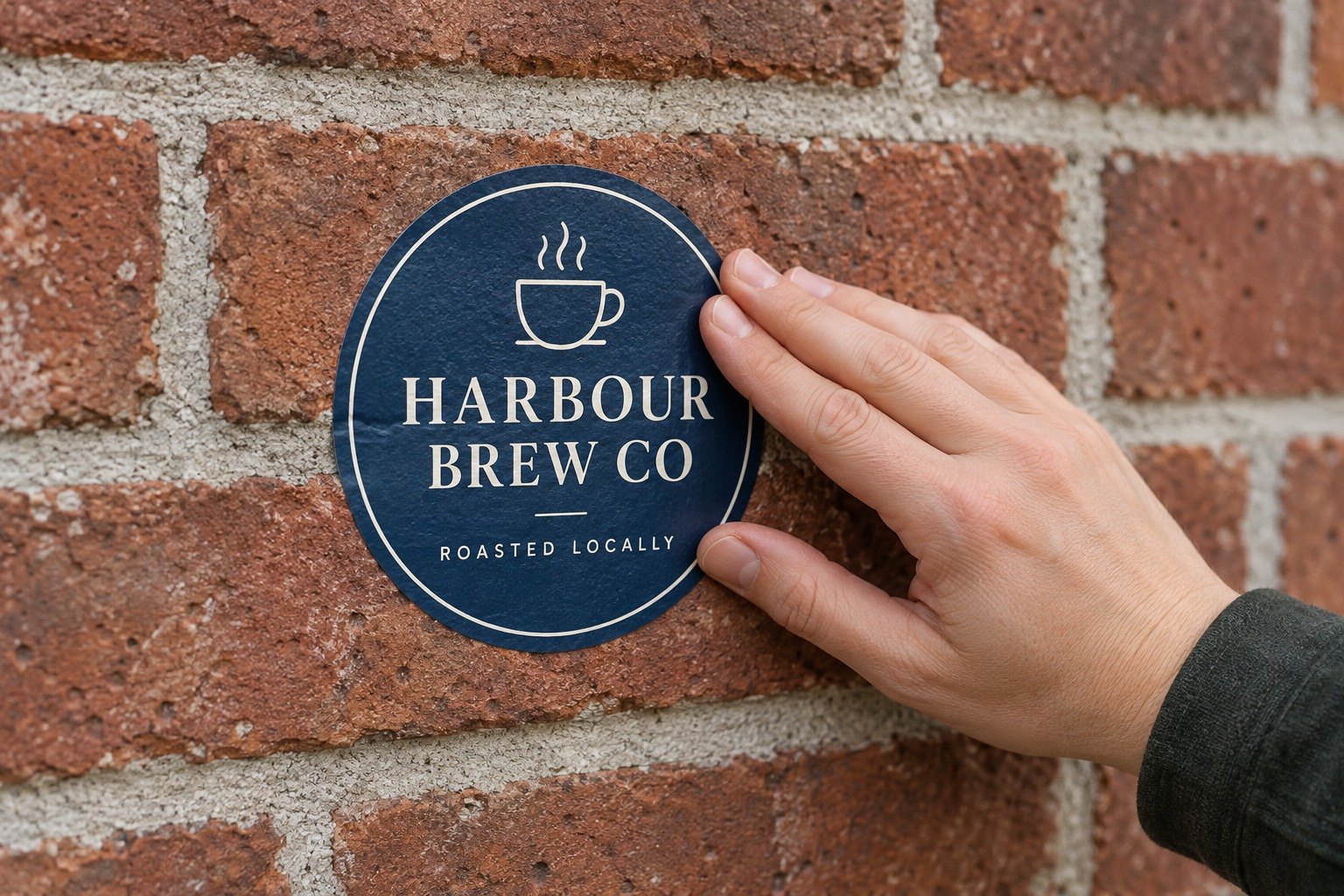
A batch of wayfinding stickers goes onto a brick entry wall late on a Friday. They look secure at knock off. By Monday morning the corners have lifted. Ordinary stickers for brick fail exactly this way.
The artwork is rarely the problem. The surface is. An aggressive adhesive is what sets high tack stickers apart for exactly this job, but the brick, concrete or tile still decides how long that grip lasts. A smooth glass panel and a rough concrete column are not the same brief.
This guide covers what makes a sticker high tack, surface by surface expectations, preparation and application, laminate choices, permanence and removal, and the cases where a different product fits better.
The short version
- The adhesive is the difference between a standard vinyl sticker and a high tack sticker on rough surfaces.
- Check the surface texture first. On rough surfaces the deepest crevices must be under 3mm.
- Apply when the temperature is above 10 degrees. The optimum range is 18 to 25 degrees.
- Rough unpainted concrete delivers months of hold, not years.
- The adhesive is permanent, so place the sticker once.
What makes a sticker high tack
High tack stickers are printed in full colour on an 80 micron matt white PVC vinyl film. Add the adhesive layer and the total thickness is 130 micron. The adhesive itself is a grey solvent based acrylic. It is an aggressive pressure sensitive type, and that aggression is what separates this product from a standard vinyl sticker on a rough wall.
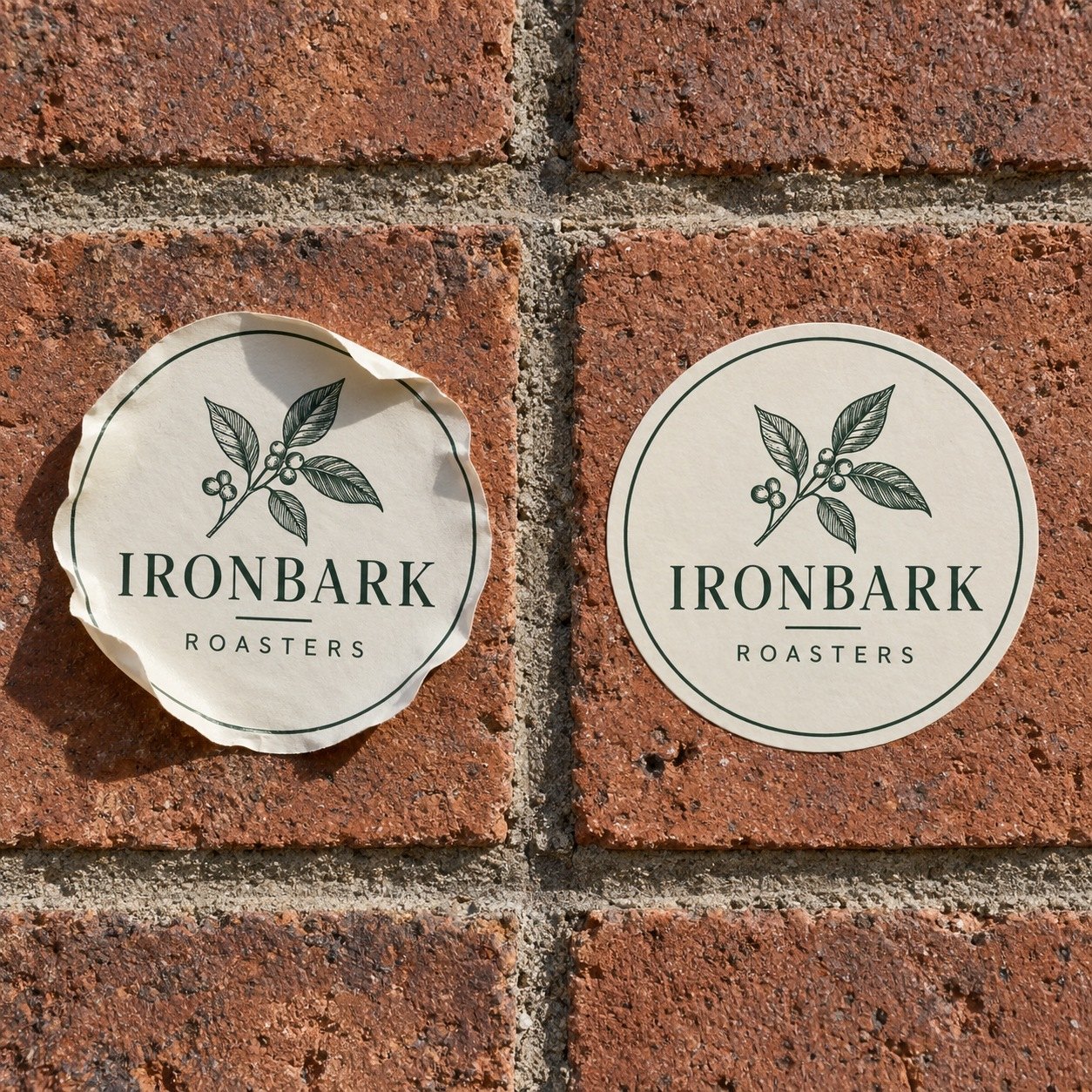
These are strong adhesive stickers. The film is engineered for smooth to rough wall surfaces, including smooth concrete, brick and patterned tile. It also holds on steel, glass, painted surfaces and metal. The film has excellent weather resistance, but the surface profile still sets the limits.
Think of the adhesive as the part that does the work. A standard vinyl sticker has holding power on a flat surface. High tack adhesive is there for the surfaces that make standard stickers peel.

Expected durability surface by surface
No single lifespan covers every wall. The figures below are the supplier guide for the unprinted film in vertical exposure. They are not a guarantee for your installation, and they assume the sticker is applied within the temperature window and pressed down firmly.
| Surface | Supplier guide durability (unprinted film) |
|---|---|
| Steel and glass | Up to 5 years |
| Smooth unpainted concrete, smooth cement, smooth tile, smooth painted surfaces and smooth metal | 1 year |
| Patterned tile and rough painted surfaces | 6 months |
| Rough unpainted concrete or cement | 3 to 6 months |
Print durability is separate. Without laminate, the printed face has a durability of up to 2 years. On rough unpainted concrete the film guide is 3 to 6 months, so the print often has more potential life than the grip on that surface. Stickers for concrete columns fail on texture, not print fade.
Vertical exposure means the sticker sits on a wall or sign face, not walked on. The figures are a comparison tool for surface types, not a promise of a date on your wall. Use the table as a ranking, not a countdown. Steel and glass sit at the top. Rough unpainted concrete sits at the bottom. When the surface has a heavy profile, plan around the lower figure.
Preparing the surface and how to apply
Start with the surface, not the sticker. High tack stickers are for flat surfaces. If the wall has a heavy profile, check the deepest crevices before you order. On rough surfaces those crevices must be under 3mm deep. A straight edge held across a brick face will quickly show whether the joints are workable or too deep.
Temperature matters on application day. Apply only when the temperature is above 10 degrees Celsius. The optimum range is 18 to 25 degrees. Cold morning installs are where many avoidable problems begin. Once the sticker is in position, press the film firmly and carefully across its whole area.
If you cannot meet the temperature window, wait. The adhesive has a specified range for a reason. Keep high tack stickers to flat wall and sign surfaces. They are not for floors, vehicles or anything walked or driven on.
Laminate or no laminate
No laminate is the default finish. You can choose Matte Laminate or Gloss Laminate instead. When laminate is selected, a clear protective film sits over the printed face. The choice affects the look and the protection of the print, not the adhesive underneath.
The printed face has a durability of up to 2 years without laminate. A laminate adds a shield for the printed face where the sticker will be touched, brushed past or exposed to the elements.
On a rough concrete column the bigger risk is usually the texture. If the surface cannot hold the film, no laminate will change that.
Permanent adhesive: what removal really means
The adhesive is permanent. High tack stickers are not made to be lifted and reapplied. Once the film is down and pressed, placement is final.
That changes how to plan the job. Use this product where the sticker is meant to stay: a fixed wayfinding marker, a bin identification panel, a long term compliance sign. If the wall gets repainted every six months, or the message changes each season, this is not the right product.
Plan the placement before you expose the adhesive. If you are comparing temporary signage against a permanent installation, the removable and permanent stickers guide explains the difference between the two adhesive types.
Sizes, artwork and when a different product fits better
Every high tack sticker is individually cut and supplied loose, not on a roll. Square and rectangle stickers are trimmed to size. Circle, oval, rounded corner and custom shapes are kiss cut, each on its own backing.
Nine preset sizes run from 30 x 30 mm to 120 x 120 mm. For 200 x 200 mm and larger on the same high tack film, large format stickers are the product to use. Orders run from 50 to 5,000 stickers.
Artwork needs to respect the print method. Wide format printing is not recommended for text under 6pt, small barcodes or QR codes. Keep small type and codes larger than you think you need, especially when the sticker will be read from a distance.
The high tack adhesive is not the only option. For everyday smooth surfaces such as packaging, bottles and laptops, a standard permanent adhesive is enough, and vinyl stickers for smooth surfaces are the right fit. For labels on rolls for machine or high volume hand application, custom labels are the better option.
Readers in the United States should use high tack stickers for US orders.
Frequently asked questions
Will high tack stickers hold on brick or concrete?
Yes, when the surface conditions are right. The film is engineered for smooth to rough wall surfaces including smooth concrete, brick and patterned tile. The surface has to be flat, the deepest crevices on rough surfaces must be under 3mm deep, and the temperature must be above 10 degrees Celsius. The film must be pressed down well.
How long do high tack stickers last outdoors?
The supplier guide for the unprinted film in vertical exposure says up to 5 years on steel and glass, 1 year on smooth unpainted concrete and similar smooth surfaces, 6 months on patterned tile and rough painted surfaces, and 3 to 6 months on rough unpainted concrete or cement. Print durability is up to 2 years without laminate.
Is the adhesive on high tack stickers removable?
No. The adhesive is permanent. High tack stickers are not made to be lifted and reapplied. Once the film is pressed down, the placement is final.
Is laminate necessary for high tack stickers?
No. No laminate is the default finish. Matte Laminate or Gloss Laminate is optional. When laminate is selected, a clear protective film sits over the printed face. The printed face has a durability of up to 2 years without laminate.
What is the coldest temperature to apply high tack stickers?
Apply only when the temperature is above 10 degrees Celsius. The optimum range is 18 to 25 degrees. Colder than 10 degrees is outside the specified application window for the adhesive.
Are high tack stickers supplied on a roll?
No. Every sticker is individually cut and supplied loose. Square and rectangle stickers are trimmed to size. Circle, oval, rounded corners and custom shapes are kiss cut, each on its own backing. If you need labels on a roll for machine or high volume hand application, custom labels are the better fit.