A business card still does what no digital contact ever quite manages: it puts something physical in someone’s hand, and that something speaks for your brand before you say another word. When that card carries a mirror-bright foil logo, a velvet-soft raised texture, or the satisfying heft of a duplex stock, the impression compounds. The right luxury business card does not just convey contact details, it demonstrates taste, signals investment, and gives the recipient a reason to hold onto it.
These twelve designs show what premium print finishes can achieve across different brand personalities and industries. Each one is achievable through production-grade printing, and each one justifies the cost differential over a standard card in a different way.
What Separates a Luxury Business Card from the Rest
The difference between a standard card and a luxury one is not purely about price. It is about the deliberate combination of technique, material, and editorial restraint.
The print technique
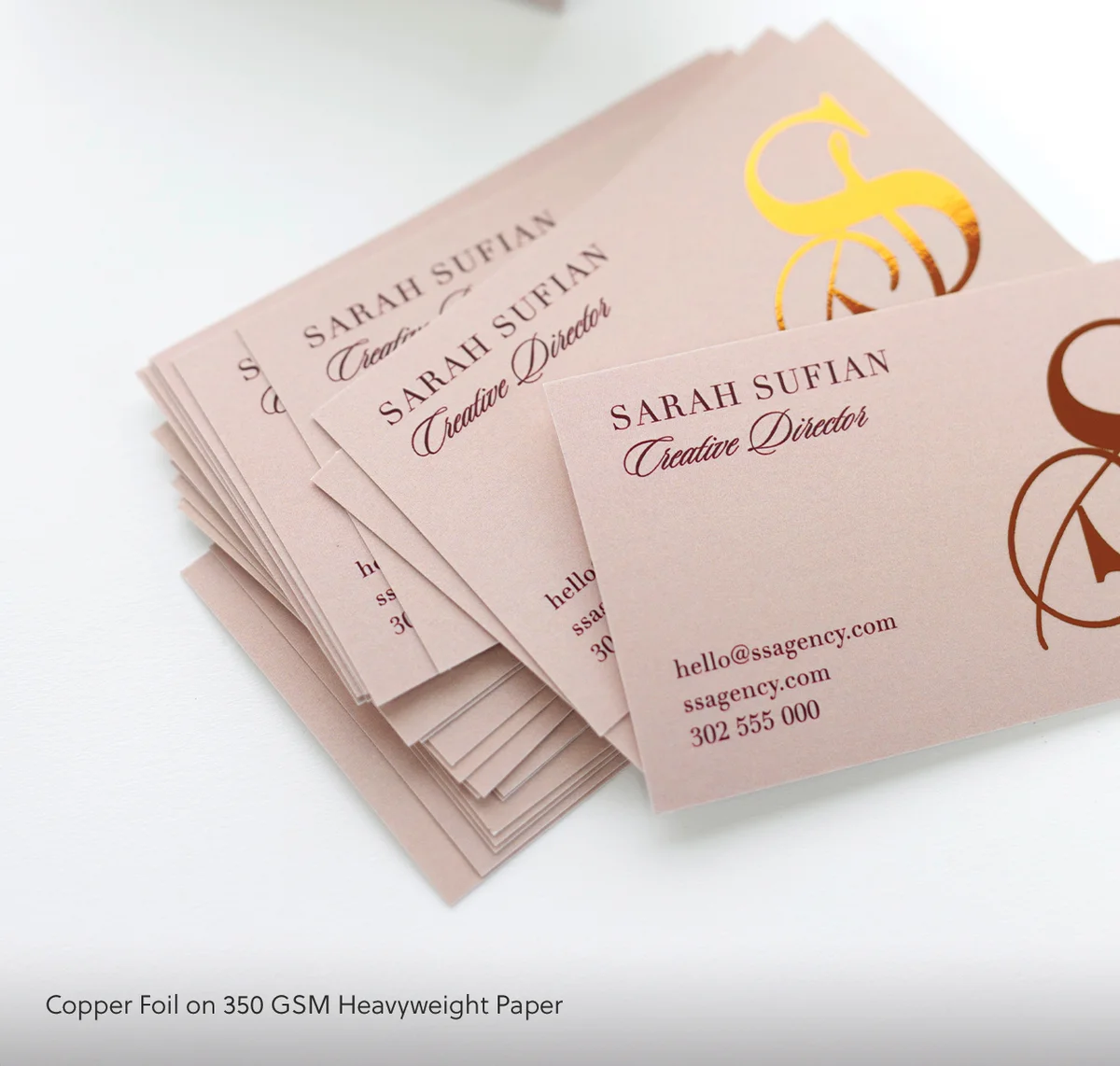
The finishing method applied to your card carries the most visual and tactile weight. Flat foil business cards bring mirror-bright metallic to a logo or border with no die required. Raised foil builds height above the card surface so the design element catches light and casts a faint shadow. Spot UV creates a gloss-on-matte interplay that invites touch. Duplex bonding laminates two sheets into one structure with a coloured core visible at the edge. Scodix applies a clear digital varnish that raises selected design elements with precision, sitting between spot UV and a full emboss in texture intensity. On the pressed side of the range, letterpress presses one PMS colour into uncoated white 300gsm Wild Cotton board, foil stamped uses a metal die to press metallic foil into the cotton surface for a recessed finish, and embossed foil combines foil and emboss in one hit so the raised foil sits in exact register. Each method signals craft and intentionality in ways that flat digital print cannot replicate.
Paper weight and stock
Luxury begins the moment a card is picked up. That feeling comes from weight and texture. A standard 350 gsm card is solid. A 600 gsm duplex card is another conversation entirely. Stock choice also carries its own visual codes: cotton paper signals artisan craft, uncoated coloured card reads as contemporary and design-led, and a laminated premium stock delivers corporate authority. Getting the substrate right is as important as the finish applied to it.
Restraint in design
The most expensive-feeling cards are rarely the busiest. Luxury design editing is rigorous: one statement foil element, a single typeface family, generous margins, minimal copy on the hero face. When the print technique is the hero, typography and layout exist to frame it, not to compete with it.
12 Luxury Business Card Designs Worth Every Cent
These twelve directions span different techniques and brand personalities. Each one has a clear reason for the cost investment and a specific type of brand it suits best.
Flat foil: gold, rose gold, and holographic
1. The minimal logo in gold foil
A bone-white or cream matte card with a foil-stamped monogram or wordmark centred on the front. No tagline, no contact information on the hero face. The flat foil colour, whether gold, pale gold, or rose gold, is the sole visual element. This design suits architects, photographers, consultants, and anyone whose brand is inseparable from their name. The restraint is the point.
2. Rose gold botanical frame
A fine botanical illustration borders the card in rose gold flat foil, with plain black or dark grey type inside the frame. The foil traces every petal and stem in mirror-bright detail, turning the card into something people keep rather than pocket and forget. Works for florists, interior designers, and skincare and wellness brands where warmth and beauty are core to the product.
3. Holographic foil logo mark
A single logo mark printed in holographic foil shifts from gold to green to violet as the card tilts in light. The rest of the card is uncoated white or off-white, maximising contrast between the iridescent element and the quiet background. The visual surprise creates instant recall, which makes it particularly well-suited to creative agencies, event companies, and anyone who needs to stand out at industry events.
Raised foil and Scodix: height and dimension
4. Raised gold foil wordmark
Raised gold foil business cards build height on top of the card surface, so the brand name catches light from an angle and casts a faint shadow. Combined with 350 gsm uncoated stock, this reads as print-house luxury without the extended lead times of some specialist techniques. Run a finger across the card and you can feel the lettering. That tactile legibility communicates quality before the brain processes the words.
5. Scodix logo spot with flat matte background
A Scodix digital varnish raises a logo or graphic element with high precision while the card face remains flat and matte. The contrast is subtle but unmistakable: one element says “touch me” and the rest of the surface recedes. This finish works particularly well for finance, legal services, and premium retail brands where the luxury signal needs to be confident rather than showy.
6. Dark card with raised silver foil
A deep navy, charcoal, or black uncoated stock with a raised silver foil monogram or wordmark creates maximum contrast. The dark background absorbs light while the metallic foil reflects it. The visual tension is striking and the tactile experience reinforces it. This direction translates well for technology companies, nightlife and hospitality brands, and luxury service providers operating in competitive markets.
Spot UV: the gloss-on-matte reveal
7. Full bleed dark with gloss logo
A matte black or deep navy background with the logo rendered in clear spot UV gloss. In soft ambient light, the logo almost disappears into the background. In direct or angled light, it reveals itself in sharp relief. This near-hidden reveal is one of the most discussed design moves whenever it appears at networking events, and it is genuinely difficult to replicate through any digital medium.
8. Spot UV texture overlay across the card face
Rather than applying gloss only to a logo or wordmark, a fine geometric pattern or crosshatch texture is applied in spot UV across the entire card face. The pattern is tactile and catches light across its full area, turning negative space into surface detail. Well executed for fashion labels, architects, and premium hospitality brands where texture and detail are intrinsic to the brand identity.
9. Soft-touch lamination with spot UV gloss accents
Soft-touch lamination gives the card a velvet-like feel while muting colours slightly for a refined, matte look. Spot UV gloss accents are then applied over the logo and brand name, creating stark contrast between the suede-feeling background and glossy foreground elements. This combination is arguably the most admired finish in the premium card category across Australian and international print markets alike.
Duplex and coloured edge: weight as a statement
10. White core duplex with coloured edge
Two 300 gsm sheets are bonded with a coloured core material, so the card edge reveals a stripe of colour between two white or light faces. Red, navy, forest green, and black core options are all available. When a stack of cards is fanned out, the coloured edge becomes a repeating design element across the entire set. This is one of the most photographed luxury card formats and immediately legible as premium to anyone who handles print regularly.
11. Dark duplex with flat foil front
A deep charcoal or forest green duplex card finished with a flat foil logo on the front and minimal reversed-out type on the back. The card weight at 600 gsm or above is felt before it is seen. The combination of substrate weight, coloured stock, and foil is the most complete single-format luxury card statement available in standard production runs. Nothing about this card reads as budget.
12. Coloured paper stock with spot UV
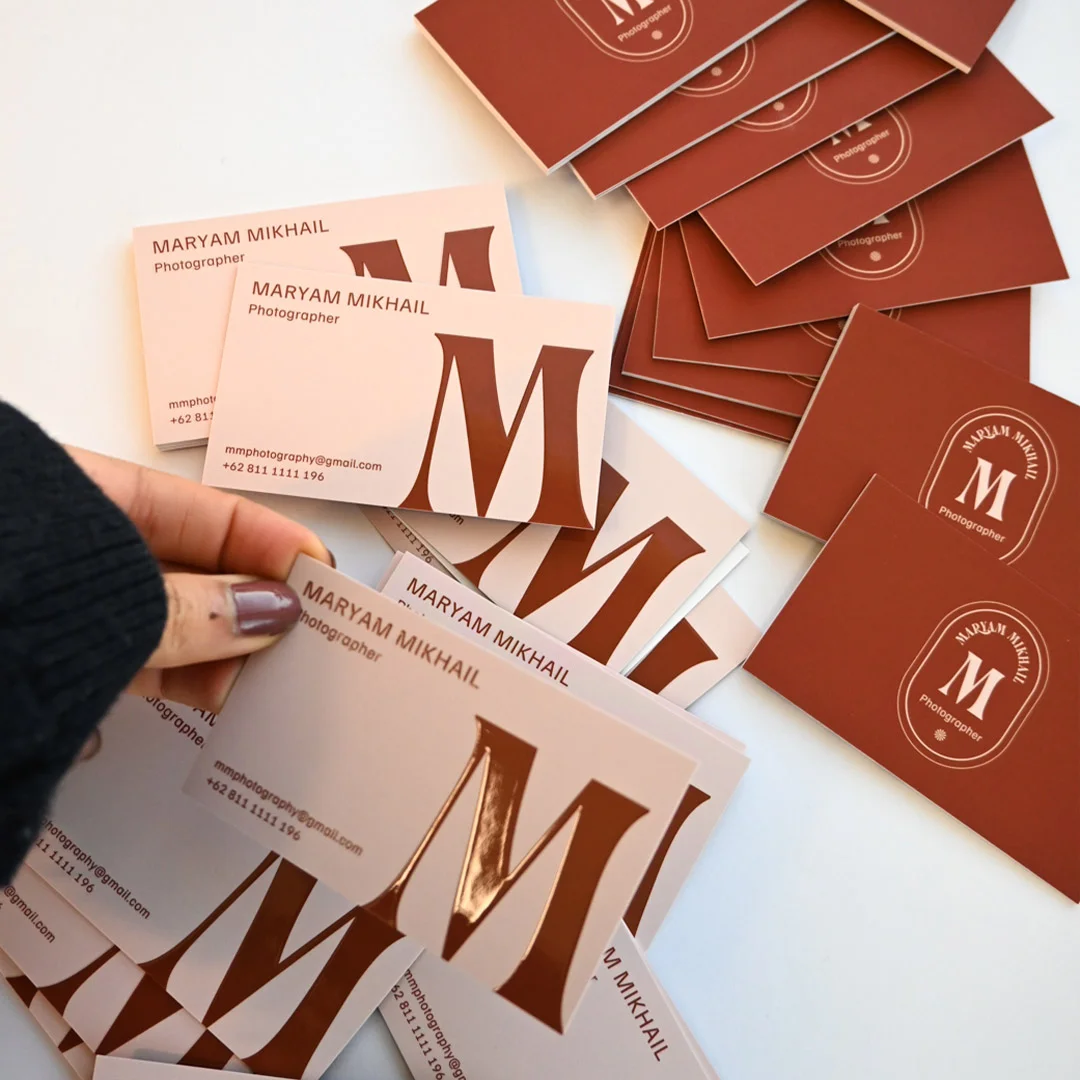
European coloured card stock in dusty terracotta, sage, slate, or blush, finished with a clear spot UV logo or pattern on the front. The uncoated colour stock is warm to the touch and distinctly different from the laminated feel of most commercial cards. For brands seeking artisan-adjacent luxury without extended production lead times, this format delivers a premium feel at a more accessible price point than duplex or raised foil options.
Matching the Finish to Your Industry
Not every luxury finish suits every professional context. These broad guidelines help narrow the choice before you brief your designer.
Finance, legal, and consulting
Flat foil in gold or silver on white or cream heavy stock. Spot UV used as an accent rather than a full overlay. White duplex with a black or navy edge. The message should be precision, stability, and confidence. Holographic finishes and heavily textured effects can undercut credibility in these sectors unless the brand has a clearly established premium creative identity.
Creative industries
Holographic foil, coloured stock, Scodix raised elements, and unconventional stock colour choices signal aesthetic confidence for designers, agencies, photographers, and artists. The card itself is a portfolio piece in these industries, and clients expect the finish to demonstrate what you know about premium print. An agency that hands out a plain digital card is making a statement about itself that may not be the intended one.
Hospitality, retail, and beauty
Soft-touch lamination with spot UV gloss details is the industry standard at the premium end of hospitality and beauty. Rose gold foil on blush or cream stock translates well to brand photography when placed alongside product. Coloured edge duplex works for high-end retail brands where the physical object needs to carry the same weight as the product packaging. In all three sectors, the card will often be photographed alongside the product or setting, so its visual relationship to the broader brand environment matters.
What Luxury Business Cards Actually Cost in Australia
Premium printing is more accessible than most people expect when the price is broken down per card. Paperlust Print Shop pricing starts from (all prices include GST):
| Finish | From price per card (inc GST) | Production speed |
|---|---|---|
| Spot UV | $0.14 | Standard |
| Scodix | $0.20 | Standard+ |
| Raised Foil | $0.24 | Standard+ |
| Standard digital | $0.08 | 24hr available |
| Flat Foil | $0.18 | Standard+ |
| Duplex | $2.27 | Standard+ |
| Letterpress | $2.43 | 18 to 23 working days |
| Foil Stamped | $2.43 | 18 to 23 working days |
| Embossed Foil | $2.43 | 18 to 23 working days |
At 250 duplex cards, an order runs around $567, which is less than most brand photography sessions and far less than a single paid acquisition campaign. The cost per impression over the life of those 250 cards is negligible when viewed against the revenue value of the relationships the cards initiate.
Standard and spot UV cards are available with 24-hour production. Flat foil, raised foil, Scodix, and duplex require slightly longer production runs due to the complexity of the finishing process. Letterpress, foil stamped, and embossed foil business cards are made to order and take 18 to 23 working days from design approval, including delivery to an Australian address, which means they are best reserved for orders with a longer horizon. If your timeline is tight, spot UV and Scodix will be your fastest luxury options.
Five Design Rules That Protect a Luxury Finish
An expensive print method applied to a poor layout will undercut itself. These rules keep the finish working as intended.
- Limit foil or Scodix to one focal element. Applying a premium finish to the logo mark, a monogram, or a single headline focuses the eye. Applying it to everything on the front face returns the card to visual noise and diminishes the impact of the technique.
- Match typeface weight to the finish. Hairline serifs and raised foil are a difficult pairing at small sizes because fine strokes can lose foil coverage. Use a medium or bold weight for any type that will be foiled or Scodix-treated.
- Keep clear of the edge. Foil and spot UV applied within 3 mm of the card edge create bleed and trim risk. Generous margins reinforce the luxury signal and provide visual breathing room.
- Consider the reverse side. Luxury cards are turned over. A plain white reverse on a beautifully finished front wastes half the available surface. Even a single considered design element, a thin rule, a secondary wordmark, or a clean typographic layout, completes the experience.
- Brief for production tolerances before layout begins. Foil stamping, duplex bonding, and Scodix all involve physical processes with standard tolerance ranges. Brief your designer on the finish before layout begins, not after. Elements too fine or too close to the edge often need to be adjusted, and it is cheaper to solve this at brief stage than at proof stage.
Frequently Asked Questions
Are luxury business cards worth the extra cost?
For most professionals, yes. The per-card premium is small relative to the lifetime value of a client relationship. A card that someone keeps and references later is worth considerably more than one that is pocketed and forgotten. Premium finishes like raised foil, duplex, and soft-touch spot UV materially increase the probability that the card is retained.
What is the best luxury finish for business cards in Australia?
It depends on the brand context and budget. Spot UV on a matte or dark card delivers high visual impact at an accessible entry point. Flat foil suits brands that rely on metallic accents as part of their identity. Duplex cards with a coloured edge are the most tactilely impressive format available in standard production runs and are particularly strong for finance and legal professionals.
How long do luxury business cards take to print?
Standard and spot UV cards can be produced in 24 hours by our business card printers at Paperlust Print Shop. Raised foil, Scodix, flat foil, and duplex cards require slightly longer production runs due to the complexity of the finishing process. Contact the team for current production lead times on specific finishes if your timeline is tight.
What paper weight should luxury business cards be?
A minimum of 350 gsm is the standard starting point for a card that feels premium in the hand. Duplex bonding produces cards of 600 gsm or higher, the weightiest option in standard production. Uncoated cotton and heavy textured stocks also contribute significantly to the tactile impression even at similar gsm values to coated stocks.
Can I order a sample of a luxury finish before committing to a full run?
Yes. Paperlust Print Shop offers sample packs so you can assess the feel and appearance of different finishes before placing a full order. This is particularly useful when choosing between raised foil, Scodix, and spot UV, as the tactile differences are difficult to communicate through photography alone.
What is the minimum order quantity for luxury business cards?
Minimum order quantities vary by finish. Flat foil cards start from as few as 10 cards, making it practical to trial a luxury finish for a small team or individual practitioner. Duplex and raised foil typically require higher minimum quantities. Check the individual product pages for current minimums before briefing your designer.
About Paperlust Print Shop
Paperlust Print Shop is the commercial printing arm of Paperlust, Australia’s leading premium stationery studio. Based in Melbourne and founded in 2014, Paperlust Print Shop offers the full range of luxury business card finishes including flat foil, raised foil, Scodix, spot UV, duplex, and coloured paper stock options. All orders come with a 100% print guarantee: if it is not right, the team will make it right. Production across most products runs within 24 to 48 hours, with flat-rate shipping to addresses across Australia and worldwide.