Business Cards from an Australian Business Card Printer
Make a sharp first impression with a business card that feels as good as it looks, from standard stock to foil and spot UV.


Our commitments
Why Paperlust Print Shop Stands Apart
Quick Turnaround
We take pride in our lightning-fast turnaround times. We understand the importance of deadlines, ensuring your orders are delivered promptly and efficiently.
Dedicated Customer Service
With us, you’re more than just a client; you’re a valued partner. Our dedicated team is here to assist you every step of the way, ensuring your complete satisfaction. Simply reach out via, and we’ll get back to you as quickly as possible
Low Minimum, Wholesale Price
We ensure that you can access high-quality printing services without the burden of large orders, making us the ideal choice for businesses of all sizes.
What is the visual difference between standard, spot UV, and foil business cards?
Standard business cards on the 300 GSM Matte, Linen, Cotton and Metallic stocks are ordered with no laminate, so the printed surface keeps its natural paper feel. Within the standard range, velvet laminate on the 450 GSM Artboard with Velvet Laminate stock is the only laminated option.
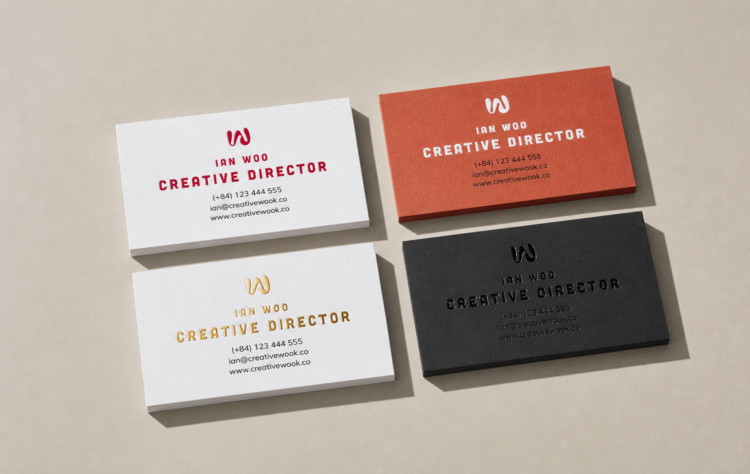
Spot UV is a flat high gloss coating applied only to selected areas of an otherwise matte card, locked to 450 GSM Artboard with Velvet Laminate. Flat foil is a metallic layer that sits flush with the paper in gold, silver, rose gold, copper or holographic. Raised foil lifts the metal off the surface and comes in gold, silver and rose gold on 450 GSM Artboard with Velvet Laminate, rectangle only.
What weight stock should I choose for business cards?
For standard business cards, the paper stocks are 300 GSM Matte, 300 GSM Linen, 300 GSM Cotton, 300 GSM Metallic and 450 GSM Artboard with Velvet Laminate. There is no 400 GSM stock anywhere in the range. Duplex cards bond two stocks, each 270 to 300 GSM, so the finished card is 540 to 600 GSM, and there is no coloured edge option. Flat Foil cards add 360 GSM Premium and 350 GSM Heavyweight papers, while Coloured Paper sits at 270 to 300 GSM. For most standard business cards, 300 GSM Matte is a sensible default.
What sizes do you offer?
We offer three business card sizes: 90mm W x 55mm H, 90mm W x 50mm H and 60mm W x 60mm H. The 90mm x 55mm size is the standard Australian business card size and our default for most orders. We do not offer 55mm x 55mm squares, 85mm x 30mm minis or 90mm x 40mm slim cards. In terms of shape, you can choose Rectangle, Rounded Corners, Circle, Oval or Custom Shapes.
Can I print on both sides? Different content on each side?
Yes, two-sided print is supported across the full catalogue at no different turnaround penalty. Each side accepts independent artwork, finishes, and design treatments; many briefs use a logo-led front and an information-led back (services, hours, contact panel, appointment grid). Two-sided is included as standard, not as a paid upgrade.
What is the minimum order quantity for custom business cards?
Minimum quantities depend on the product. Standard, Flat Foil, Coloured Paper and Duplex business cards start at 50 cards. Scodix, Raised Foil and Spot UV business cards start at 250 cards. Every business card product in the range runs through the same ten quantity rungs up to 5,000 cards. There is no 50 card quantity anywhere in the range.
How long does production take?
24 hour production applies to business cards on matte paper only. Every other stock and finish in the range runs on 3 to 5 business days. The clock starts after you approve your digital proof, which is sent within 1 to 2 business days.
Your exact dispatch date is confirmed at quote stage, so you can plan around a real date rather than a general window. All orders leave production on tracked Startrack courier.
What artwork file format do you accept?
Vector formats are preferred: AI, EPS, PDF, or SVG, with all fonts outlined and at 100% scale with 3 mm bleed on all sides. We also accept high-resolution PNG and TIFF files at 300 dpi minimum at print size.
Supply CMYK colour space where possible, RGB files are converted at press and we flag any colour-shift risk on the digital proof.
How much do custom business cards cost?
Pricing scales by finish, paper stock, size, quantity, and whether you print one or two sides. Custom business cards start from $0.14 per card inc GST, and standard digital from low quantities stays well below a dollar per card and drops sharply at the 250, 500, and 1,000 quantity breaks. Spot UV adds a moderate per-unit premium; foil and Scodix sit at the premium tier with the smallest per-unit gap closing at 1,000-plus volumes.
The most accurate quote is the live calculator on each product page, which shows the full per-quantity tier breakdown for the specific finish you choose.
Do you offer eco-friendly or recycled stock options?
Yes, the recycled business cards are printed on 350 GSM ecoStar+ 100% recycled uncoated board, a bright white stock with a smooth matte finish. The paper maker's specification sheet lists 100% post consumer waste content, FSC Recycled certification and the EU Ecolabel. The cards are 90 x 55mm with square corners and print front only or front and back, uncoated with no laminate, foil or spot gloss. Minimum order is 250 cards.
A kraft or uncoated look without recycled content is available on 290 GSM Kraft on the Coloured Paper and Duplex cards, and 300 GSM Cotton or 300 GSM Linen on the standard cards. These are texture and finish choices only, not environmental claims. The digital proof names the stock before you approve the print.
Will the foil flake or chip with handling?
Modern foil stamping uses heat-cured films that bond directly to the paper surface; under normal carrying, handling, and exchange the foil layer is durable for the life of the card. Aggressive bending, sharp creasing, or repeated abrasion can lift foil at the affected edges, which is why we recommend carrying foil cards in a hard cardholder rather than a folded wallet.
Raised foil sits on a polymer dome and is similarly durable; the dome is firm enough to resist normal pocket pressure without flattening.
Can I see a sample or get a digital proof first?
You can order a physical sample before you commit to a full run. The Business Cards Sample Pack is a paid product at $5.00 per pack, not a free sample. You can buy 1 to 10 packs at a time. A sample pack lets you check the real stock and finish in your own hands before you place a larger order.
Do you offer design help?
Yes, if you have a logo or a rough concept, our design team can build print-ready artwork for a small additional fee. We also provide blank templates pre-set with bleed and safe zones for the common card sizes; download from the relevant product page.
For self-design briefs, our pre-press team also flags layout issues at file-check stage and sends back specific notes if anything would print poorly, that catch-and-fix step is included free with every order.
Are rounded corners and Pantone colour matching available?
Rounded Corners is available on Standard, Flat Foil, Coloured Paper, Duplex and Spot UV business cards. It is not available on Scodix or Raised Foil, which are rectangle only. Rounded Corners is a single shape option, so there is no separate corner radius choice such as 3mm or 5mm. For Pantone colour matching, send your Pantone brief through for a quote.
Do you deliver business cards to Sydney, Brisbane, Perth and other Australian cities?
Every order is printed at our Melbourne studio and dispatched Australia wide by tracked Startrack courier. Delivery covers Sydney, Melbourne, Brisbane, Perth, Adelaide, Canberra, Hobart and every metro and regional address. Production time depends on stock: 24 hour production applies to matte paper only, and all other stocks and finishes run on 3 to 5 business days. Courier transit sits on top of production time, so your dispatch date and delivery estimate are confirmed at quote stage.
What should I look for when comparing business card printers?
Check where the finishing happens, when you see a proof, and how the quantity breaks fall. Printers for business cards that run spot UV, foil, Scodix, and duplex in-house can hold a 3-to-5 day standard turnaround across the finish ladder rather than stretching for premium options. Confirm that a free pre-press file check and a digital proof are included before press, and compare per-card pricing at the quantity you will actually order, since the lowest rates apply at the 250, 500, 1,000, and 2,500 breaks.
Frequently Asked Questions
What is the visual difference between standard, spot UV, and foil business cards?
Standard business cards on the 300 GSM Matte, Linen, Cotton and Metallic stocks are ordered with no laminate, so the printed surface keeps its natural paper feel. Within the standard range, velvet laminate on the 450 GSM Artboard with Velvet Laminate stock is the only laminated option.
Spot UV is a flat high gloss coating applied only to selected areas of an otherwise matte card, locked to 450 GSM Artboard with Velvet Laminate. Flat foil is a metallic layer that sits flush with the paper in gold, silver, rose gold, copper or holographic. Raised foil lifts the metal off the surface and comes in gold, silver and rose gold on 450 GSM Artboard with Velvet Laminate, rectangle only.
What weight stock should I choose for business cards?
For standard business cards, the paper stocks are 300 GSM Matte, 300 GSM Linen, 300 GSM Cotton, 300 GSM Metallic and 450 GSM Artboard with Velvet Laminate. There is no 400 GSM stock anywhere in the range. Duplex cards bond two stocks, each 270 to 300 GSM, so the finished card is 540 to 600 GSM, and there is no coloured edge option. Flat Foil cards add 360 GSM Premium and 350 GSM Heavyweight papers, while Coloured Paper sits at 270 to 300 GSM. For most standard business cards, 300 GSM Matte is a sensible default.
What sizes do you offer?
We offer three business card sizes: 90mm W x 55mm H, 90mm W x 50mm H and 60mm W x 60mm H. The 90mm x 55mm size is the standard Australian business card size and our default for most orders. We do not offer 55mm x 55mm squares, 85mm x 30mm minis or 90mm x 40mm slim cards. In terms of shape, you can choose Rectangle, Rounded Corners, Circle, Oval or Custom Shapes.
Can I print on both sides? Different content on each side?
Yes, two-sided print is supported across the full catalogue at no different turnaround penalty. Each side accepts independent artwork, finishes, and design treatments; many briefs use a logo-led front and an information-led back (services, hours, contact panel, appointment grid). Two-sided is included as standard, not as a paid upgrade.
What is the minimum order quantity for custom business cards?
Minimum quantities depend on the product. Standard, Flat Foil, Coloured Paper and Duplex business cards start at 50 cards. Scodix, Raised Foil and Spot UV business cards start at 250 cards. Every business card product in the range runs through the same ten quantity rungs up to 5,000 cards. There is no 50 card quantity anywhere in the range.
How long does production take?
24 hour production applies to business cards on matte paper only. Every other stock and finish in the range runs on 3 to 5 business days. The clock starts after you approve your digital proof, which is sent within 1 to 2 business days.
Your exact dispatch date is confirmed at quote stage, so you can plan around a real date rather than a general window. All orders leave production on tracked Startrack courier.
What artwork file format do you accept?
Vector formats are preferred: AI, EPS, PDF, or SVG, with all fonts outlined and at 100% scale with 3 mm bleed on all sides. We also accept high-resolution PNG and TIFF files at 300 dpi minimum at print size.
Supply CMYK colour space where possible, RGB files are converted at press and we flag any colour-shift risk on the digital proof.
How much do custom business cards cost?
Pricing scales by finish, paper stock, size, quantity, and whether you print one or two sides. Custom business cards start from $0.14 per card inc GST, and standard digital from low quantities stays well below a dollar per card and drops sharply at the 250, 500, and 1,000 quantity breaks. Spot UV adds a moderate per-unit premium; foil and Scodix sit at the premium tier with the smallest per-unit gap closing at 1,000-plus volumes.
The most accurate quote is the live calculator on each product page, which shows the full per-quantity tier breakdown for the specific finish you choose.
Do you offer eco-friendly or recycled stock options?
Yes, the recycled business cards are printed on 350 GSM ecoStar+ 100% recycled uncoated board, a bright white stock with a smooth matte finish. The paper maker's specification sheet lists 100% post consumer waste content, FSC Recycled certification and the EU Ecolabel. The cards are 90 x 55mm with square corners and print front only or front and back, uncoated with no laminate, foil or spot gloss. Minimum order is 250 cards.
A kraft or uncoated look without recycled content is available on 290 GSM Kraft on the Coloured Paper and Duplex cards, and 300 GSM Cotton or 300 GSM Linen on the standard cards. These are texture and finish choices only, not environmental claims. The digital proof names the stock before you approve the print.
Will the foil flake or chip with handling?
Modern foil stamping uses heat-cured films that bond directly to the paper surface; under normal carrying, handling, and exchange the foil layer is durable for the life of the card. Aggressive bending, sharp creasing, or repeated abrasion can lift foil at the affected edges, which is why we recommend carrying foil cards in a hard cardholder rather than a folded wallet.
Raised foil sits on a polymer dome and is similarly durable; the dome is firm enough to resist normal pocket pressure without flattening.
Can I see a sample or get a digital proof first?
You can order a physical sample before you commit to a full run. The Business Cards Sample Pack is a paid product at $5.00 per pack, not a free sample. You can buy 1 to 10 packs at a time. A sample pack lets you check the real stock and finish in your own hands before you place a larger order.
Do you offer design help?
Yes, if you have a logo or a rough concept, our design team can build print-ready artwork for a small additional fee. We also provide blank templates pre-set with bleed and safe zones for the common card sizes; download from the relevant product page.
For self-design briefs, our pre-press team also flags layout issues at file-check stage and sends back specific notes if anything would print poorly, that catch-and-fix step is included free with every order.
Are rounded corners and Pantone colour matching available?
Rounded Corners is available on Standard, Flat Foil, Coloured Paper, Duplex and Spot UV business cards. It is not available on Scodix or Raised Foil, which are rectangle only. Rounded Corners is a single shape option, so there is no separate corner radius choice such as 3mm or 5mm. For Pantone colour matching, send your Pantone brief through for a quote.
Do you deliver business cards to Sydney, Brisbane, Perth and other Australian cities?
Every order is printed at our Melbourne studio and dispatched Australia wide by tracked Startrack courier. Delivery covers Sydney, Melbourne, Brisbane, Perth, Adelaide, Canberra, Hobart and every metro and regional address. Production time depends on stock: 24 hour production applies to matte paper only, and all other stocks and finishes run on 3 to 5 business days. Courier transit sits on top of production time, so your dispatch date and delivery estimate are confirmed at quote stage.
What should I look for when comparing business card printers?
Check where the finishing happens, when you see a proof, and how the quantity breaks fall. Printers for business cards that run spot UV, foil, Scodix, and duplex in-house can hold a 3-to-5 day standard turnaround across the finish ladder rather than stretching for premium options. Confirm that a free pre-press file check and a digital proof are included before press, and compare per-card pricing at the quantity you will actually order, since the lowest rates apply at the 250, 500, 1,000, and 2,500 breaks.
Learn More
Custom Business Card Printing in Australia
Paperlust prints custom business cards in Australia from our Melbourne studio, with a finish library that runs from clean digital standards through spot UV, flat and raised foil, Scodix raised polymer, duplex sandwich stocks, and on-trend coloured papers. Order online in minutes: upload your own print-ready artwork, or have our in-house design team build it for you. Every card is print-ready checked, digitally proofed, and produced on calibrated digital presses for sharp text and accurate colour across reorders.
The range covers seven core products spanning every common brief: corporate networking at standard quality, designer-grade spot UV callouts, premium foil for luxury and creative brands, dimensional Scodix for high-end tactile finishes, and duplex or coloured-paper stocks for differentiated edge profiles. The complete business card design guide walks through how to brief a printer end to end; how to choose the right business card compares the finish ladder against budget and audience.
The four levers shaping a business-card order are finish, paper stock, size, and one-or-two-sided print. Pick the finish first, it sets the perceived quality bar and constrains stock and turnaround. Pricing, production speed, and delivery are covered next, then the sections below walk each lever in detail.
Card Shapes and Types
Each shape, size and use now has its own page, so you can go straight to the card you have in mind. The standard rectangle page still sells rounded corners, a circle, an oval and custom shapes. Square cards have no shape charge and slimline cards carry no charge for the size. Rounded corner cards are priced above a square cornered card, while round and die cut orders add one flat shape charge and the die cutting pass adds 1 to 2 business days. A recycled board card has its own page too, with a bright white 100% recycled uncoated stock. Browse the Card Shapes and Types category to compare the formats side by side.
 Standard Rectangle90mm x 55mmThe standard 90 x 55mm rectangle, also available with rounded corners, circle, oval and custom shapes
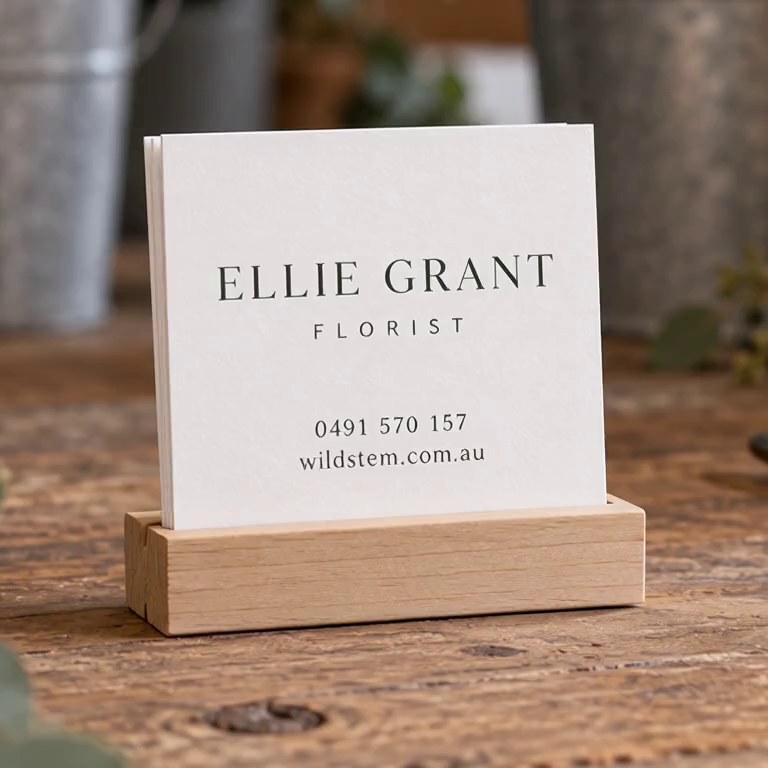 Square60mm x 60mmA true 60 x 60mm square with square corners and no shape charge
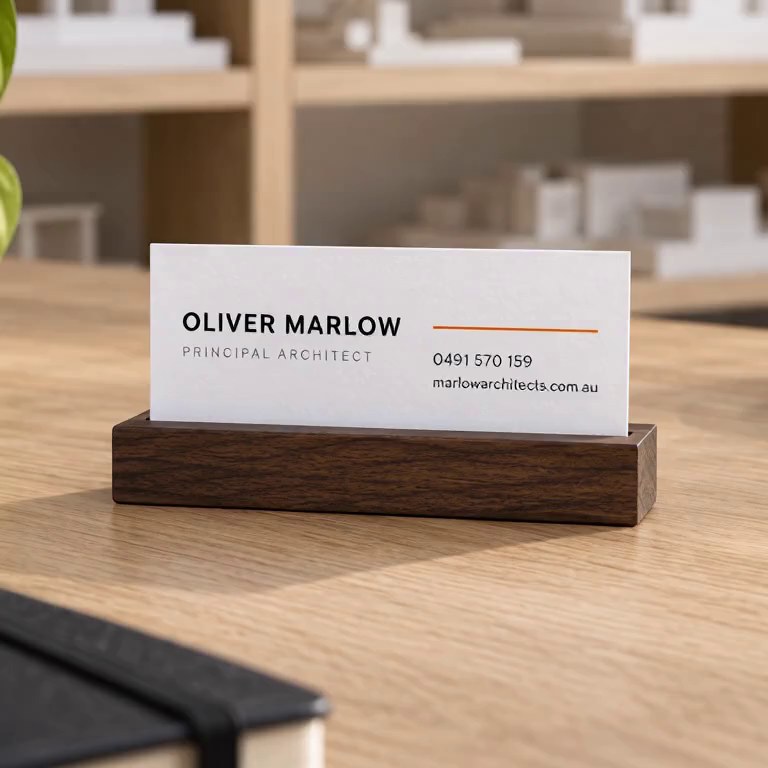 Slimline90mm x 45mm or 86mm x 54mmTwo slim sizes, 90 x 45mm or 86 x 54mm, with square corners
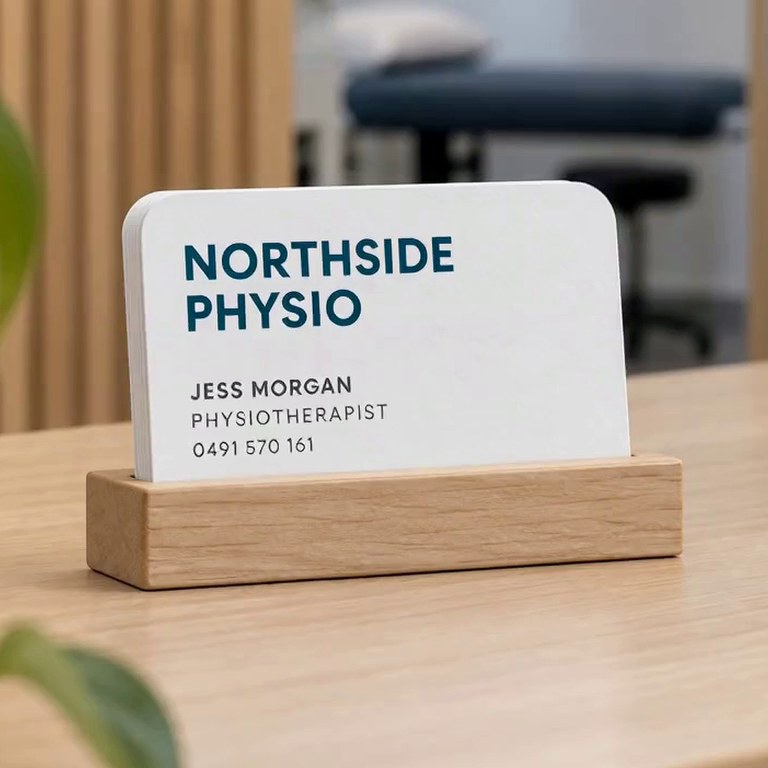 Rounded Corner90mm x 55mmThe standard 90 x 55mm card with rounded corners, made for cards handled often
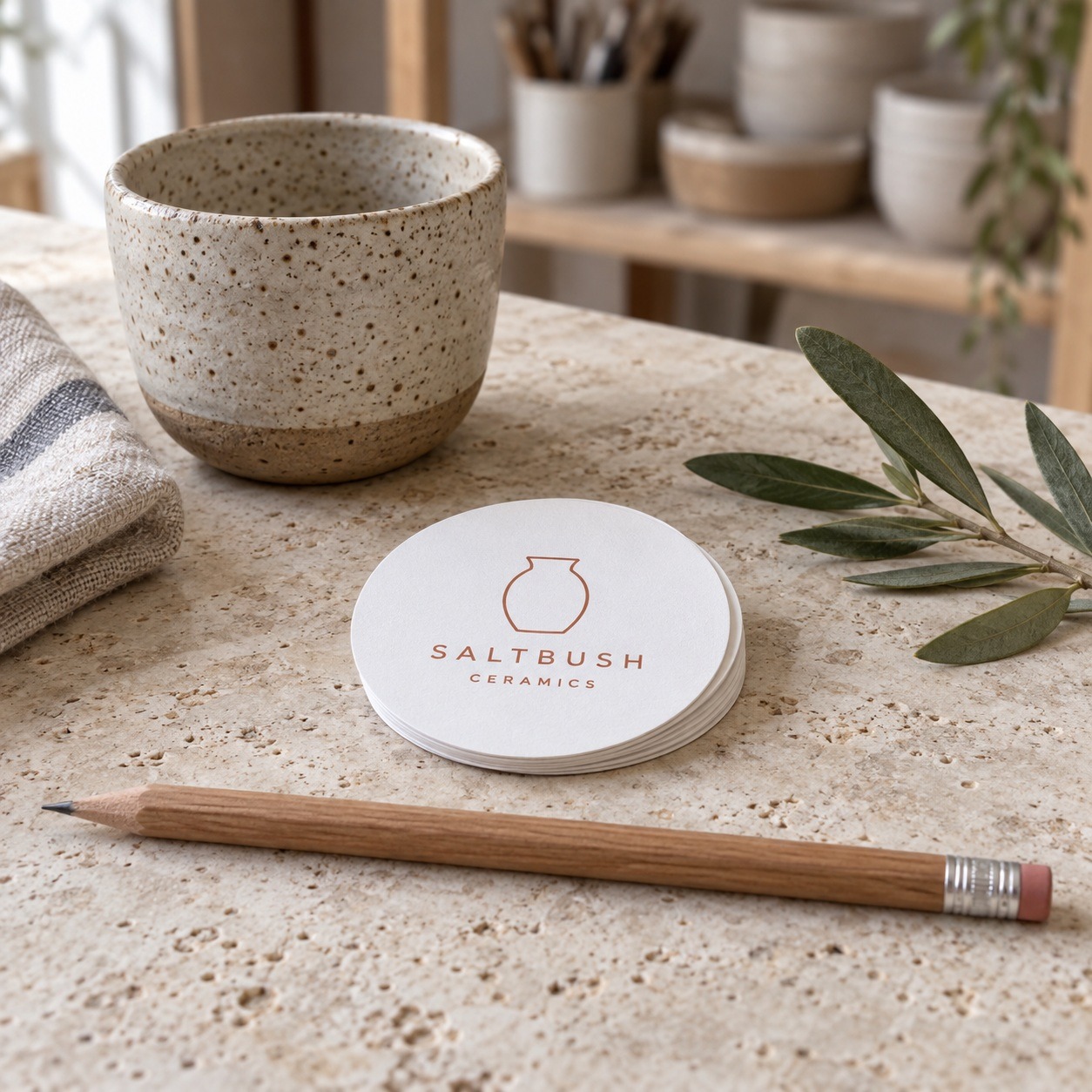 Round60mm circleA 60mm circle, die cut after printing with one flat shape charge
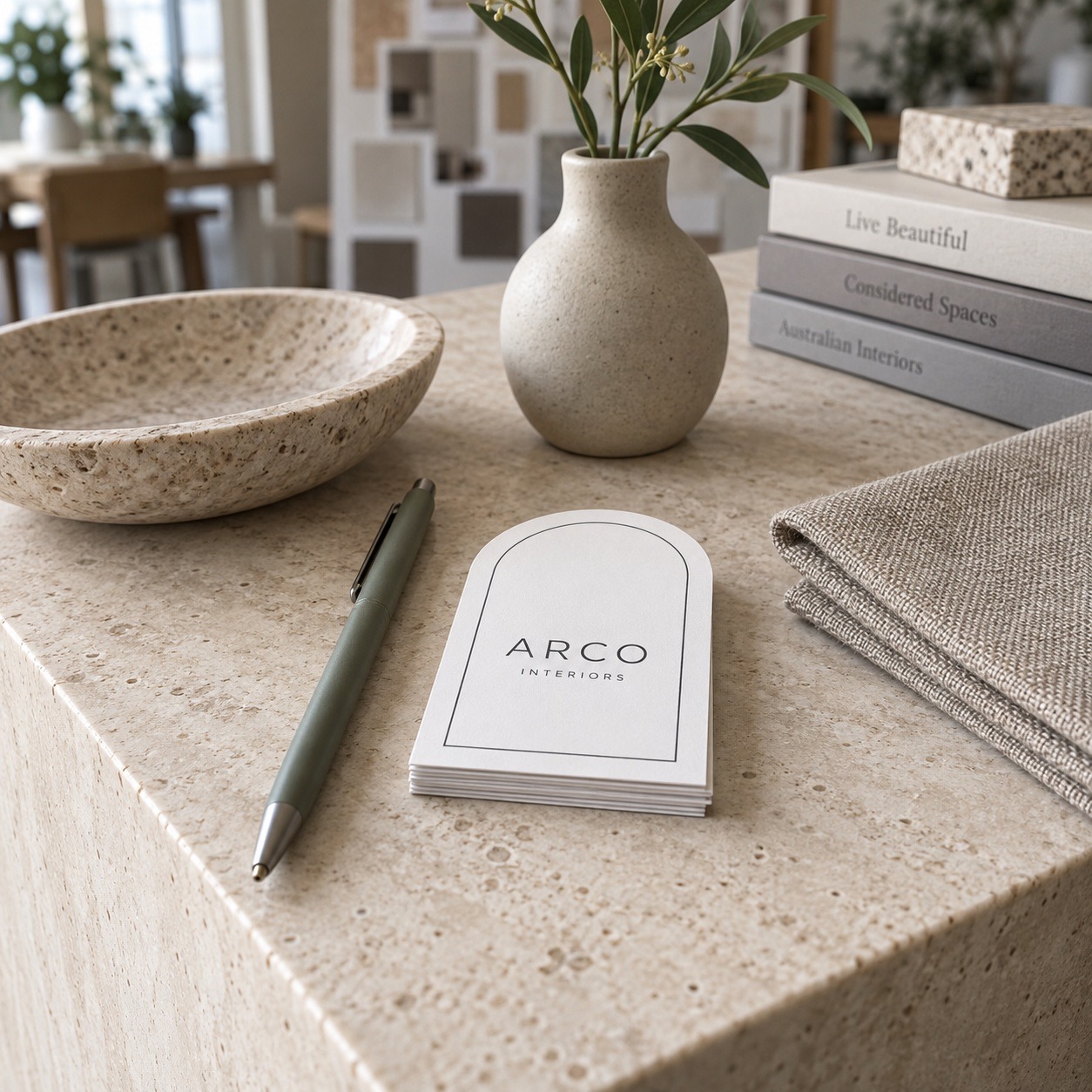 Die CutWithin 90mm x 55mmYour own outline within 90 x 55mm, or a 90 x 50mm oval
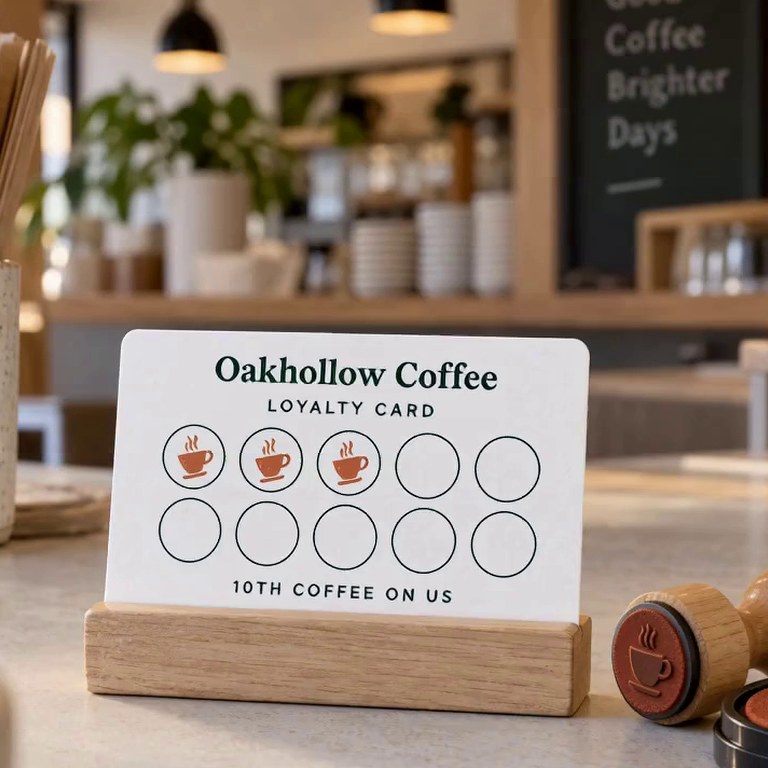 Loyalty Cards90mm x 55mm90 x 55mm uncoated card for stamping visits at the counter
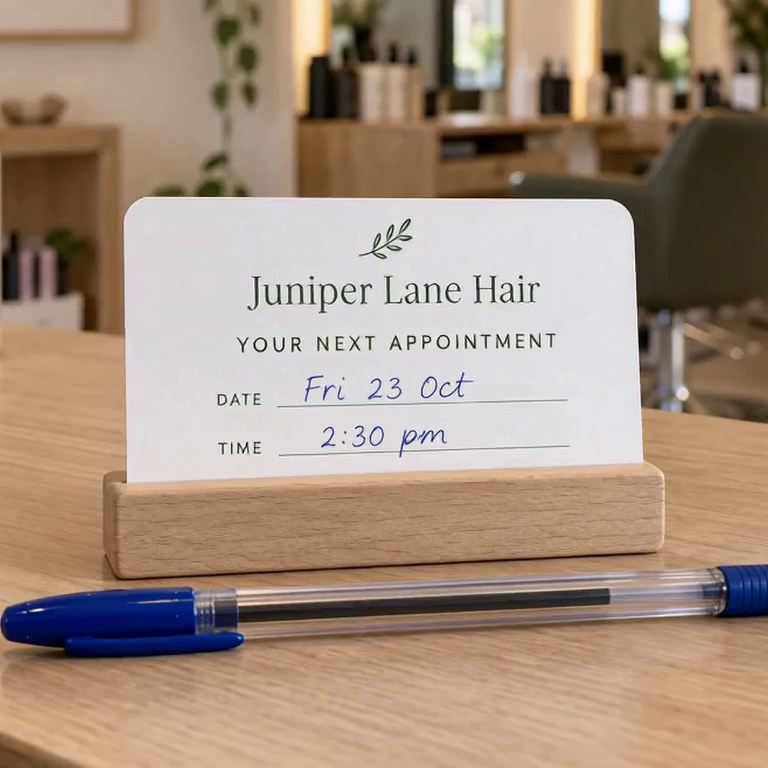 Appointment Cards90mm x 55mm90 x 55mm uncoated card with space to write the next appointment
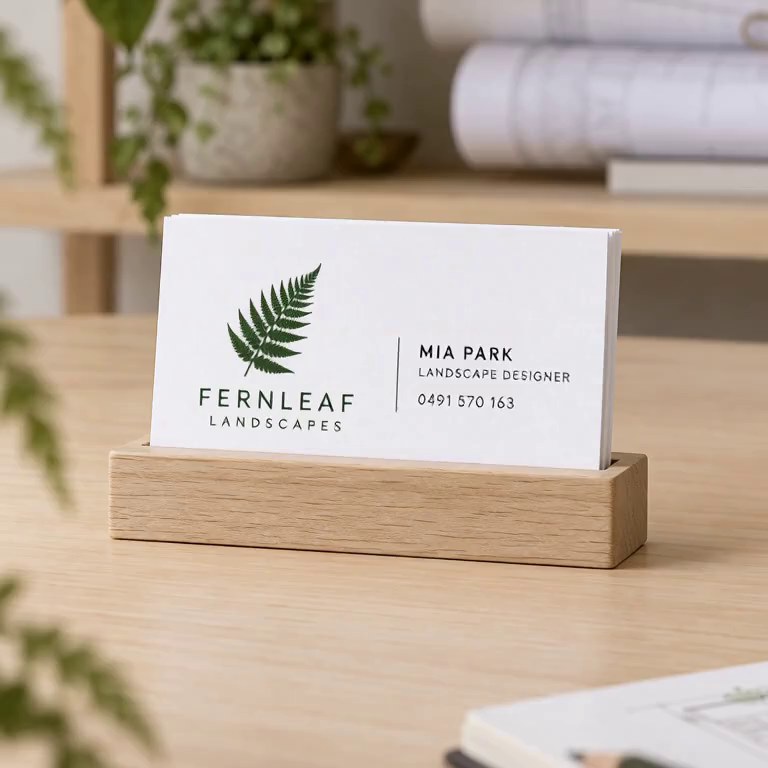 Recycled90mm x 55mmBright white 100% recycled uncoated board with a smooth matte face
Business Card Printing Prices in Australia
Custom business card printing starts from $0.14 per card, with the per-card price set by finish, paper stock, size, quantity, and one or two-sided print. All prices include GST. The lowest per-card rates apply at the 250, 500, 1,000, and 2,500 quantity breaks, so larger runs bring the unit cost down sharply.
Indicative starting prices per card by finish:
- Spot UV business cards, from $0.14 per card
- Scodix business cards, from $0.20 per card
- Raised foil business cards, from $0.24 per card
- Standard business cards, from $0.08 per card
- Coloured paper business cards, from $0.43 per card
- Flat foil business cards, from $0.18 per card
- Duplex business cards, from $2.27 per card
Production and delivery
Business cards on matte paper are the only ones that qualify for 24 hour production. Every other stock and finish in the range runs on 3 to 5 business days. Your order always includes a free pre-press file check and a digital proof within 1 to 2 business days, so colour and layout are confirmed before press.
Production timing follows the paper, not the finish. Matte paper is the only stock that qualifies for 24 hour production. Every other stock and finish in the range runs on 3 to 5 business days after proof approval. Once produced, orders are dispatched by tracked Startrack courier and delivered Australia wide, reaching Sydney, Melbourne, Brisbane, Perth, Adelaide, Canberra, and Hobart, plus every metro and regional address.
Shop Custom Business Cards by Finish
Finish is the lever buyers notice first. It carries most of the perceived-quality signal and adds between zero and three production days depending on which family you choose. Six finish families cover every brief in our catalogue.
Standard digital: the volume default
Full-colour digital print across the standard range starts on 300 GSM Matte, Linen, Cotton and Metallic stocks, all with no laminate. Within the standard range, velvet laminate on the 450 GSM Artboard with Velvet Laminate stock is the only laminated option. The default order is 300 GSM Matte, front only, no laminate, rectangle, at $44.00 for 100 cards, or $0.44 per card. Sharp typography, consistent colour across reorders, and the lowest unit cost in the range make this the workhorse for corporate networking, trades and conference handouts. Matte paper qualifies for 24 hour production. Heavier standard stocks run on 1 to 2 business days.
Spot UV: gloss callouts on a matte field
Spot UV applies a high gloss UV cured coating to selected design elements while the rest of the card stays matte. The effect is a subtle reflective lift on logos, headlines or graphic accents that catches the light at an angle and disappears flat-on. It is a restrained way to move beyond a standard card without paying foil prices. Spot UV runs only on 450 GSM Artboard with Velvet Laminate, with a 250 card minimum.
Foil: flat and raised metallic finishes
Foil business cards stamp metallic gold, silver, rose gold, copper, or holographic film onto the card surface using heat and pressure. Flat foil sits flush with the paper; raised foil presses a thin polymer dome under the foil that lifts the metal off the surface for a tactile finish. Both options carry the highest perceived-quality signal in the range, which is why luxury, creative-agency, and premium-service brands lead with foil. Adds 2 to 3 production days. Our foil business cards explained guide covers flat vs raised foil and where each sits on the cost ladder.
Scodix: dimensional raised polymer print
Scodix is a digital raised-print technology that lays clear or coloured polymer onto the card in a tactile layer up to roughly 80 microns high. Effects include raised gloss spot fields, sensory textures, and dimensional metallic finishes not achievable with conventional UV or foil. Common pick for design studios and brand-identity work where the card itself is a work sample. Adds 2 to 3 production days.
Duplex: two paper stocks bonded into one card
Duplex cards bond two sheets into one thicker card. Each layer is chosen separately from the 270 to 300 GSM stock list, so the finished weight is 540 to 600 GSM and the two faces can be different stocks. There is no coloured edge or edge painting option. The result is a quietly premium choice for architects and creative directors who want substance in the hand without moving to foil or Scodix.
Coloured paper: tone-on-tone print
Coloured-paper cards print on through-dyed stock so the card colour runs all the way through the substrate, including the edge. Available in black, kraft, cream, charcoal, navy, and other tones. A kraft card pairs naturally with kraft mailer boxes, letting a brand send a card inside the parcel and keep that natural brown look across both. Print options include reverse-out white ink, foil, and spot UV for high-contrast designs. Reads confident and editorial; works for hospitality, fashion, and design brands. The 2026 business card design trends breakdown covers where coloured paper is moving in current creative briefs.
Finish Comparison at a Glance
Side-by-side spec table for the six core finish families. Use this as a quick filter before drilling into the section above.
| Spec | Standard | Spot UV | Foil | Scodix | Duplex / Coloured |
|---|---|---|---|---|---|
| Production add-on | 24 hour matte, else 1 to 2 days | +1 to 2 days | +2 to 3 days | +2 to 3 days | None to +1 day |
| Visual effect | Clean, full-colour digital | Gloss-on-matte callouts | Reflective metallic accents | Raised tactile dimensional | Through-dyed colour or two stock bond |
| Tactile feel | Smooth flat | Subtle relief on UV areas | Flat foil flush; raised foil tactile | Highest tactile in range | Heavy substantial card body |
| Stock weight | 300 to 450 GSM | 450 GSM Velvet Laminate | Flat 270 to 360 GSM, raised 450 GSM | 450 GSM Velvet Laminate | Duplex 540 to 600 GSM, colour 270 to 300 GSM |
| Best fit | Corporate, networking, volume runs | Designer-led brands on a budget | Luxury, agency, premium service | Design studios, brand identity work | Architects, creative directors, hospitality |
| Cost tier | Lowest | Moderate add | Premium | Premium | Moderate to premium |
Shop Custom Business Cards by Use Case
Real Estate Business Cards
For sales agents, property managers and mortgage brokers, we recommend real estate business cards printed on 300 GSM Matte front and back, with the reverse used for licence details and open home times. 250 cards cost $89 ($0.36 a card), and 1,000 cards cost $159 ($0.16 a card). The matte face stays readable under downlights and takes a pen for a note, and 24 Hour Production keeps replacements close.
Tradie Business Cards
For plumbers, electricians, builders and landscapers whose card lives in a glove box, wallet or toolbox for months, we recommend tradie business cards printed front and back on the 450 GSM Artboard with Velvet Laminate stock. The velvet laminate is wipe-clean and crease-resistant, and 250 cards cost $116.67 ($0.47 a card), with 1,000 cards at $155.02 ($0.16 a card) on a 1 to 2 business day production time. If you need them sooner, 300 GSM Matte front and back runs on 24 Hour Production at $89 for 250 cards. Use the reverse for the services list, hours and call-out details.
Salon and Hairdresser Business Cards
The appointment reminder or visit tracker your client takes home can live on the back of your card, and a 300 GSM Blush coloured stock gives hairdressers, beauty and nail salons, barbers and brow studios an editorial feel with no laminate needed. For 250 cards, the total is $147.50, which works out to $0.59 a card. For 1,000 cards, the total is $590.00, also $0.59 a card. 24 Hour Production keeps the front desk stocked when a popular stylist is booked out. These salon business cards are printed front and back, and the same product runs in Lilac, Almond and Navy if Blush is not your palette.
Photographer Business Cards
Your card is often the first physical sample a client holds, so it should match the standard of the work you produce. Choose 450 GSM Artboard with Velvet Laminate, printed front and back, for a soft, deep-black touch that an uncoated card cannot give and a weight that reads as a portfolio piece rather than a handout. A run of 250 cards costs $116.67, or $0.46 a card, while 1,000 cards cost $155.02, or $0.15 a card, with 24 Hour Production. Spot UV on the same stock adds a raised gloss layer over a logo or mark from 250 cards at $158.85. Our photographer business cards guide covers that stock.
Corporate and Networking
Sales teams, account managers and enterprise functions order in volume, where consistency across hundreds of cards matters more than a hero finish. A 300 GSM Matte card printed front and back with no laminate stays legible in a stack and is simple to reprint because there is no finish to match. You can order 250 cards for $89.00, or $0.35 a card, or 1,000 cards for $159.00, or $0.15 a card, with 24 Hour Production.
Event and Conference
Speakers, panellists, delegates and stallholders often have one handshake to make a card stick, so a small run needs a finish that reads across a room. Flat foil on 300 GSM Matte in gold, silver, rose gold, copper or holographic catches the light while the matte body keeps details legible. A run of 100 cards costs $159.00, which is $1.59 a card, with 48 Hour Production. Flat foil starts at 50 cards, while raised foil and Scodix sit on 450 GSM Artboard with Velvet Laminate and start at 250 cards.
How to Choose: A Quick-Pick Guide
If you are unsure which combination fits the brief, the quick-pick below maps common applications to a recommended starting spec. These are defaults, not absolutes, we tighten the spec at proof stage.
If your brief is...
High volume corporate sales team: standard digital, 300 GSM Matte, no laminate, front and back.
Trades or mobile services card: standard digital, 300 GSM Matte, no laminate, front and back.
Designer-led brand on a moderate budget: spot UV on 450 GSM Artboard with Velvet Laminate, logo callout only.
Luxury or premium-service brand: flat foil on 270 to 360 GSM, or raised foil on 450 GSM Velvet Laminate.
...the recommended spec is
Design studio or agency self-card: Scodix dimensional on 450 GSM Artboard with Velvet Laminate.
Architect or creative director: duplex up to 600 GSM with contrasting faces, spot UV or foil logo.
Hospitality or retail loyalty card: coloured paper, reverse-out white ink, two-sided print with grid on reverse.
Event speaker small run: flat foil on 270 to 360 GSM stock, where low quantity keeps the unit premium manageable.
Paper Stocks and GSM Weight Options
Stock weight is the second biggest perceived quality signal after finish. A premium foil on a light stock undersells the finish. A clean standard print on 300 GSM Matte often outperforms a more expensive treatment on thinner paper. The catalogue spans 270 GSM up to 450 GSM Artboard with Velvet Laminate for a single stock, and up to 600 GSM in a bonded duplex.
- 300 GSM Matte, the catalogue baseline. Substantial enough to feel professional, fastest turnaround, lowest unit cost. Standard for high-volume corporate and trades briefs.
- 450 GSM Artboard with Velvet Laminate, the heavy single-stock tier for spot UV, raised foil and Scodix. Its weight handles the press without flexing, and it is the recommended default for premium finishes.
- 540 to 600 GSM duplex, a bonded card built from two sheets. The two faces can be different stocks, and there is no coloured edge option. It reads as a deliberately substantial artefact in the hand.
Texture options include smooth coated (best for photographic reproduction), matte uncoated (premium hand feel, best for typography-led design), and felt or linen-textured stocks for editorial briefs. Coated stocks accept laminate directly; uncoated can be laminated, but texture flattens slightly under the film, skip the laminate to keep the uncoated effect.
Design Considerations: Bleed, Safe Zone, and Typography
Print-ready artwork prevents reprints and colour shifts. Three technical specs apply to every business card we print, regardless of finish.
Bleed and trim
Extend background colour and imagery 3 mm beyond the trim line on all four sides. The guillotine cuts with a tolerance of about 0.5 mm; without bleed, a small movement at cut produces a thin white edge. Standard size is 90 mm by 55 mm, so supply artwork at 96 mm by 61 mm including bleed.
Safe zone for content
Keep all critical content, text, logos, contact details, at least 4 mm inside the trim line. This protects against cut tolerance so nothing important sits where a small trim variation would clip it.
Typography minimums
Set body text no smaller than 7 pt for legibility; 8 to 9 pt is safer for older audiences. Outline all fonts in the supplied artwork to prevent font-substitution errors. CMYK at 300 dpi minimum on raster elements; vectors are preferred for logos. Common pitfalls are covered in the common business card mistakes guide.
How a Custom Business Card Order Moves Through the Press
From order to dispatch, every business card passes through a five-step production pipeline. Knowing what happens at each stage helps you plan timelines and spot the right moments to review.
1. File check
Within one business day of order placement, our pre-press team opens your artwork and checks resolution, bleed, font outlining, colour profile, and any special-finish layer masks. Flagged issues come back with specific notes; clean files move straight to proof.
2. Digital proof
You receive a digital proof showing the print output at exact sizing with any special-finish areas overlaid. Sign off on colour, layout, content, and finish placement before production starts.
3. Press
Approved files run on calibrated production digital presses for the full-colour base. Most jobs run digitally for sharp text, accurate colour, and consistent reorder matching. Typically 1 to 2 business days at this stage.
4. Finishing: UV, foil, Scodix, duplex
Cards needing premium finish move to dedicated equipment. Spot UV passes through a UV coating press; foil cards are stamped on heated foil-press equipment; Scodix runs through digital raised-polymer presses; duplex is laminated and edge-trimmed. Adds 1 to 3 days.
5. Cut, pack, dispatch
Cards are guillotine-cut to final size, optionally rounded-corner trimmed, quality-checked, banded in 50s or 100s, and packed in protective boxes. Dispatch is by tracked Australia Post or courier with tracking link by email.
Handling and Card Lifespan
Business cards do not have a rated lifespan the way an outdoor decal does, but how you store and carry them affects how well they age. Premium finishes hold up better in pockets than uncoated stocks because the laminate or UV layer resists skin oil and edge scuff.
- Carry working cards in a metal or hard plastic cardholder rather than a wallet, pocket pressure is the biggest cause of bent corners and worn edges.
- Avoid humid pockets and damp environments. Uncoated stocks absorb moisture and can cockle; coated and laminated stocks resist this far better.
- Store the bulk run flat in the original packaging at room temperature, away from direct sunlight. Cards can sit 12 to 24 months with no measurable degradation.
- For trade-show runs, count out the event cards into a separate carrier and keep the bulk run sealed; it preserves card edges and avoids handling fatigue on the bulk stock.
How to Compare Business Card Printers in Australia
Comparing business card printers is mostly a question of what happens around the print run: whether the finish is produced in-house, whether you approve a proof before the press runs, and whether the quoted turnaround still holds once a premium finish is added. Six things are worth checking on any shortlist.
- Finishing handled in-house. Spot UV, flat and raised foil, Scodix, and duplex are finished under one roof here, which is why the 3-to-5 day standard turnaround holds across the finish ladder rather than stretching for premium options.
- A free pre-press file check. Every order is checked for resolution, bleed, font outlining, colour profile, and finish-layer masks, with specific notes back before anything is printed.
- A proof you sign off. A digital proof showing exact print output and finish placement arrives within 1 to 2 business days, and nothing goes to press until you approve it.
- Quantity breaks you can plan around. The lowest per-card rates apply at the 250, 500, 1,000, and 2,500 breaks, so compare quotes at the run size you will actually order rather than at the headline minimum.
- Reorder consistency. Calibrated digital presses matter more than the first quote when a card is reordered every year and the second run has to match the first.
- Delivery coverage. Orders are dispatched by tracked Startrack courier to Sydney, Melbourne, Brisbane, Perth, Adelaide, Canberra, and Hobart, plus metro and regional addresses nationwide.
Paperlust works as business card printers Australia wide from a Melbourne studio, so the spec, the proof process, and the 3-to-5 day standard turnaround are the same wherever the cards are delivered. If you are weighing printers for business cards on price alone, price the run at 250 or 500 rather than at the minimum, because that is where the real difference between quotes appears.
Why Print With Paperlust
Australian-printed with calibrated digital presses, locally-stocked premium paper, and in-house spot UV, foil, Scodix, and duplex finishing. The full pipeline runs under one roof, which is why our 3-to-5 day standard turnaround holds up across the finish ladder rather than stretching out for premium options.
Free pre-press file checks on every order, with specific notes back to you on any low-resolution artwork, missing bleed, or finish-layer mask issues before printing. Every order receives a digital proof showing exact print output and finish placement, signed off before press, so colour and layout are confirmed before production cost is committed. For a worked illustration of how unit cost scales with volume across our print catalogue see the Australian print pricing guide, the same volume-tier model applies to business cards, with substantial breaks at the 250, 500, and 1,000 points.
Trusted by 800+ Australian Customers
★★★★★ 4.9 / 5
600+ five-star reviews on Google · 4.9/5 on Trustpilot from 177 reviews · 4.9/5 on ResellerRatings from 63 reviews
Popular Products in this Range
- Standard Business Cards
- Spot UV Business Cards
- Raised Foil Business Cards
- Flat Foil Business Cards
- Scodix Business Cards
- Duplex Business Cards
- Coloured Paper Business Cards
Premium Business Cards: Letterpress, Foil Stamping and Embossed Foil
The three products below are the premium end of the custom business card range. They are pressed into 300gsm Wild Cotton, not printed with digital finishes on coated stock like the cards covered above. Each one is made to order, printed front only on a single flat card, and comes in the standard 90 x 55 mm rectangle.
Letterpress Business Cards
Letterpress Business Cards use a single PMS ink pressed into uncoated 300gsm Wild Cotton. The printed areas sit recessed into the card rather than sitting on the surface as a coating. The card is printed front only, with a 90 x 55 mm rectangle and landscape orientation as standard. Portrait is available at no extra charge.
Foil Stamped Business Cards
Foil Stamped Business Cards are made with a hot foil die that presses a metallic foil into the cotton board under heat and pressure. The result is a real metallic surface sitting in a recessed impression. Choose one foil colour across the front per job: gold, silver, rose gold or copper. Other colours are available on request.
Embossed Foil Business Cards
Embossed Foil Business Cards combine foil and emboss in a single hit from one die. The foiled artwork sits raised above the card surface, and the foil and raised shape land in exact register. Foil colours are gold, silver, rose gold and copper, with others on request. The impression is made front only on the same 300gsm Wild Cotton board.
All three products are made to order and carry an 18 to 23 working day production window from design approval, including delivery to an Australian address. If that window does not suit your timeline, the digital range described above is the better fit.