
Walking into a networking event with a stack of business cards and no clear plan is a bit like showing up to a dinner party and launching into a sales pitch the moment you step through the door. The card exchange is a ritual, and how you manage it says something real about how you operate professionally. Done well, it opens doors. Rushed or misjudged, it gets your card binned before you leave the car park.
- How many to bring: 25-40 cards per half-day event; 50-60 for full-day or multi-session conferences
- When to offer: After genuine mutual interest is established, not as an opening move
- How to present: Name facing the recipient, one card at a time, with a brief verbal cue
- Receiving etiquette: Read it, acknowledge it, store it respectfully
- Follow-up window: Within 24-48 hours of the event
- Finishing touch: Add a handwritten note or context on cards you receive while the conversation is fresh
Why Business Cards Still Matter at Networking Events
There is a recurring prediction that physical business cards are on their way out. That prediction has been around for over a decade, and yet a well-made card remains one of the most reliable ways to leave a professional impression at an in-person event.
The reason is straightforward: a physical card is a tangible object. It occupies space in someone’s wallet, on their desk, or pinned to a noticeboard. A digital contact saved in the heat of a conversation is frequently lost in a notification-heavy phone. A card handed over with intention creates a small, memorable moment.
In Australia, where professional culture puts a premium on being genuine rather than pushy, the way you exchange a card carries meaning. Scattering them around like promotional flyers signals desperation. Offering one thoughtfully to a person you have just had a real conversation with signals confidence.
The psychology of the physical exchange
Research into memory and sensory experience consistently shows that people retain information better when it is attached to a physical object they have handled. When someone holds your card, reads your name, and takes in your visual identity, they are forming a stronger memory trace than if they simply saved your number on a device.
Premium finishes strengthen this effect. A card with tactile spot UV coating, soft-touch laminate, or raised flat foil gives the recipient something to notice and comment on. That brief moment of “this feels great” is not superficial; it creates an anchor point that makes you easier to remember in the days after an event.
Preparing Your Cards Before the Event
Arriving unprepared is one of the most common networking mistakes. Having to dig through your bag for a bent or missing card at a critical moment undermines the professional impression you have spent the evening building.
How many cards to bring
For a typical half-day breakfast event or after-work mixer, bring 25-40 cards. Full-day industry conferences or multi-session expos warrant 50-60. It is always better to return home with cards left over than to run out mid-event.
Keep a small card holder or dedicated card case in your jacket pocket, bag, or lanyard sleeve. Separate your own cards from those you collect so you are not fumbling and handing someone else’s card by mistake.
Matching your card to the event
Not all networking events carry the same weight. A casual Friday-evening meetup calls for a clean, well-designed standard card. A senior industry dinner, a trade expo, or a formal business association event is a context where a premium finish earns its cost.
If you regularly attend both types of events, it is worth having two card variants: a premium run (foil or spot UV) for high-stakes environments, and a solid everyday card for general use. Either way, the card should be current. Crossed-out phone numbers or outdated email addresses suggest you were not prepared to be networking at all.
Storage and accessibility
Store your own cards somewhere clean and immediately accessible, ideally a dedicated card holder rather than a pocket full of receipts. Store the cards you receive somewhere separate so you are not accidentally offering a competitor’s card when someone asks for yours.
When to Hand Out Your Card
Timing is everything. Offering a card too early turns a conversation into a transaction. Offering one too late means an opportunity slips by.

Read the conversation before you reach for the case
The ideal moment to offer a card is after a genuine connection has been made. This typically happens once the conversation has moved from surface pleasantries into actual professional exchange: you have discussed a shared challenge, a mutual contact, a project you are both interested in, or a reason to stay in touch.
A useful internal check before offering a card: would this person, if asked ten minutes from now, remember who you are and why they have your card? If the answer is yes, that is the right moment.
Situations where you should hold back
- You are still in introductions and have not exchanged more than names
- The other person seems disengaged or distracted
- You are at a table dinner and cards would clutter the meal
- You are speaking with a very senior person who has not signalled reciprocal interest (wait for them to offer first, or ask whether it would be alright to send your details)
The moment that usually works well
A natural handover often follows a line like, “I would love to continue this conversation. Can I give you my card?” That framing is direct, confident, and respectful of the other person’s choice. It does not assume they want it; it invites the exchange.
How to Hand Over and Receive a Card
The mechanics matter. Even a great card loses impact if it is crumpled, handed over awkwardly, or received with indifference.
Presenting your card
Hand your card with the printed side facing the recipient so they can read it immediately without rotating it. Do this one card at a time. Distributing multiple cards at once to a group signals you are more interested in volume than in the individuals in front of you.
Hold the card by its edges, not across the face. This keeps it clean and presentable, and signals that you regard it as something of value.
A brief verbal cue helps: mention your name or what you do as you hand it over. This reinforces the connection and makes the card easier to place later.
Receiving cards with respect
When someone hands you their card, take a moment to actually read it. Glance at the name, their role, and their company. Make a brief comment or ask a question based on what you see. This is a small gesture, but it communicates genuine interest.
Do not immediately pocket a card without looking at it. In many professional environments, particularly where cross-cultural business is common, this registers as dismissive. The card represents the person. Treat it accordingly.
Taking notes while the conversation is fresh
After the conversation ends, write a brief note on the back of the card (with the person’s permission, or at least not in front of them if that feels awkward). Jot down context: where you met, what you discussed, any specific follow-up you promised. This turns a card into a useful record rather than a nameless slip of paper you will puzzle over a week later.
What to Do After the Event
The exchange of cards is not the endpoint. It is the start of a conversation that needs to be continued.

Follow up within 48 hours
The optimal follow-up window is 24 to 48 hours after an event. This is when the conversation is still recent and the person is most likely to remember the context of meeting you.
Keep follow-ups brief and specific. Reference something concrete from your conversation, mention what you said you would do next (send a link, make an introduction, schedule a call), and make it easy for them to respond. Generic “great to meet you” messages are forgettable. Specific ones stand out.
Connect on LinkedIn with a personal note
A LinkedIn connection request is a useful secondary step, but the default message does little work. Write a one or two sentence note that references where you met and what you spoke about. This signals that you are a person who pays attention.
Organise the cards you collected
Set aside 20 minutes after returning from a networking event to sort through the cards you collected. Create a simple system: a spreadsheet, a notes app, or a card scanning app. Record the person’s name, company, any context you noted, and the follow-up action you committed to.
A card that sits in a pile and gets cleared out three weeks later represents a wasted opportunity on both sides.
Choosing the Right Card for Networking Events
The card you hand over is part of your professional presentation. A limp, flimsy card that bends in the hand communicates something you almost certainly did not intend.
For networking contexts, consider finishes that create a tactile impression:
Standard cards with premium laminate work across almost every industry. A standard business card on 400gsm or heavier stock with a soft-touch matte finish feels substantial and professional without being ostentatious. It suits creatives, consultants, corporate professionals, and trades alike.
Spot UV cards add selective gloss coating over specific design elements (your logo, a graphic, or your name), leaving the rest of the card matte. The contrast is immediately noticeable when someone handles the card. Spot UV business cards in Australia work particularly well in design, architecture, photography, and real estate, where visual presentation is part of the pitch.
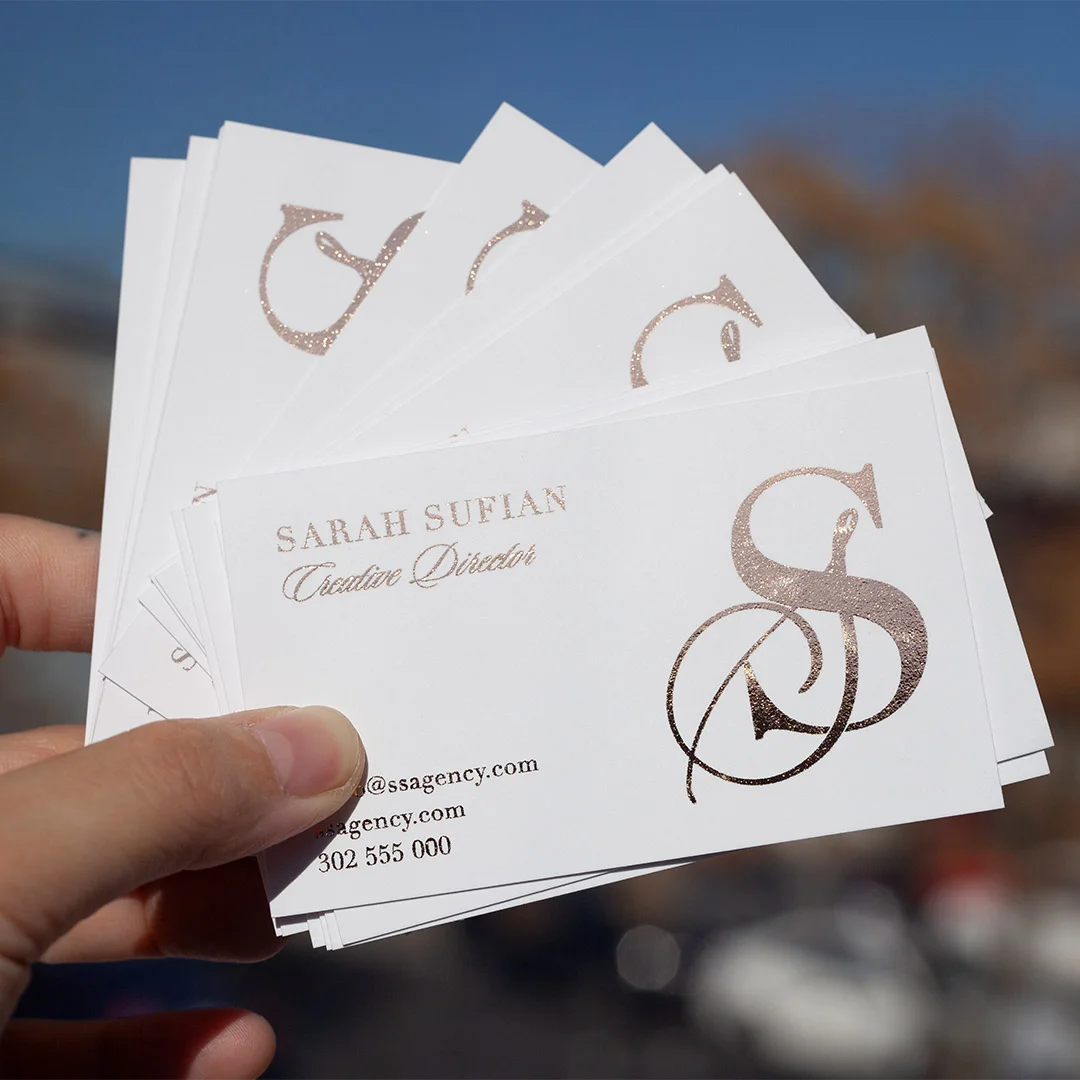
Flat foil cards use metallic foil on printed elements, giving the card a premium finish that reads well in finance, luxury retail, senior professional services, and events. A flat foil business card at an industry dinner or end-of-year function makes a distinct impression that a standard card will not.
Whichever finish you choose, make sure the information is current, the design is clean, and the card is in good condition before you head out. Bent corners, smudges, or outdated details undercut even the most premium stock.
Common Mistakes to Avoid at Networking Events
Even experienced professionals fall into patterns that reduce the effectiveness of networking cards. The following are worth checking against your own habits.
Handing out cards to everyone in the room. Volume distribution signals that you have not been selective, which paradoxically makes your card feel less worth keeping. Aim for quality exchanges over card count.
Using a card as an opener. Handing someone your card before you have established any connection turns a professional ritual into a pamphlet drop. Build the conversation first.
Neglecting follow-up. A card that leads to no contact within a week effectively never happened. Build the follow-up into your event routine, not as an afterthought.
Carrying cards in poor condition. Dog-eared, bent, or dirty cards are worse than no card at all. Keep your supply in a case and refresh them regularly.
Not asking for the other person’s card in return. The exchange should be mutual. If you have offered yours and the other person has not reciprocated, it is entirely appropriate to ask: “Do you have a card with you?” This shows you are genuinely interested in staying in touch.
Waiting too long to follow up. After 72 hours, the connection begins to fade. After a week, many people have forgotten the specifics of a 10-minute conversation at a crowded event. Move quickly.
Frequently Asked Questions
How many business cards should I bring to a networking event?
For a half-day event or evening mixer, 25-40 cards is generally sufficient. For a full-day conference or multi-session expo, bring 50-60. It is better to have cards left over than to run out at a key moment.
Is it still professional to use physical business cards in Australia?
Yes. Physical cards remain a valued part of professional networking in Australia, particularly at in-person events. They create a tangible, memorable exchange that digital contact-saving on a phone does not replicate. A well-designed physical card often signals greater care and preparation than a hurried phone swap.
When is the right time to offer your business card at a networking event?
After you have established a genuine connection and found a reason to stay in touch. The exchange works best once the conversation has moved past introductions into substantive professional territory. Offering a card in the first 60 seconds of meeting someone is rarely effective.
Should I write on business cards I receive?
Yes, adding brief context notes (where you met, what you discussed, any follow-up committed to) is a practical and respectful habit. Do this discreetly, ideally on the back, and use the notes to guide your follow-up communication.
What business card finish works best for networking events?
It depends on your industry and the formality of the event. Soft-touch matte laminate on a heavier stock suits most professional contexts. Spot UV and flat foil finishes make a stronger impression at senior or industry-specific events where visual presentation carries weight.
How soon should I follow up after a networking event?
Within 24-48 hours. This is the window when the conversation is still clear in both parties’ memories. A specific, personal message referencing your actual conversation is far more effective than a generic message sent days later.
About Paperlust Print Shop
Paperlust Print Shop is an Australian print business specialising in premium business cards, marketing materials, stationery, and large-format printing. All cards are printed and dispatched from Australia, with finish options across standard laminate, flat foil, spot UV, and specialty coatings. Orders ship via DHL Express internationally and Australia Post domestically.