Choosing where to print your stickers can feel straightforward until you factor in finish options, minimum quantities, turnaround times, and what things actually cost once you add up shipping, duties, and reprints. This guide maps out every available channel for sticker printing in Australia so you can match the right option to the job at hand.
- DIY / home printer: Good for checking a layout before you order. Not viable for a finished product at any quantity – no waterproofing, no clean die-cut, and cartridge costs stack up fast.
- Local print shop / signage store: Useful when you need something same-day or want to approve colour in person. Limited finishes and no bulk pricing.
- Online Australian printer: The strongest all-round option for 10 to 10,000 units. Full finish range, proofs in 24-48 hours, and flat-rate shipping Australia-wide.
- Overseas manufacturer: Only worth the complexity above roughly 10,000 units. Budget 3-6 weeks minimum and factor in freight, duties, and reprint risk.
The four channels compared
The table below covers the main decision variables. The sections that follow unpack each channel in detail.
| Channel | Min. order | Turnaround | Finish range | Unit cost (small run) | Main hidden cost |
|---|---|---|---|---|---|
| Home printer | 1 | Immediate | Inkjet or laser only | Appears low; cartridges add up | No waterproofing, rough-cut edges, test-sheet waste |
| Local print shop | 10-50 | Same day to 3 days | Often gloss or matte only | Higher per unit, no gang-run benefit | In-person time, design fees, limited shapes |
| Online AU printer | 10 | 2-7 business days after proof | Full range incl. foil, holographic, clear | From $0.64 per sticker inc. GST | Shipping wait (1-5 days metro or regional) |
| Overseas manufacturer | 1,000+ | 3-6+ weeks total | Full range at volume | Very low at high volume | Freight, duties, colour drift, reprint risk |
Channel 1: DIY and home printing
Home printing via an inkjet or laser printer is the lowest-barrier entry point. You can buy printable sticker sheets from most stationery suppliers and run a design off within minutes. For a quick layout check or a one-off personal project, that immediacy is hard to beat.
Where it breaks down is the finished product. Consumer-grade printers cannot produce a waterproof output without post-processing. Inkjet inks smear when wet unless you apply a separate sealing spray, which adds time and an inconsistent result across a batch. Colours also shift between screen preview and print, and without ICC profiles calibrated to your paper stock, a rich navy can print purple and a warm cream can read as yellow. Commercial waterproof sticker printing removes both problems at once: the vinyl film is waterproof before anything is printed on it, and the press is colour managed, so the last sticker in the run matches the first.
Die-cutting is the other limitation. Home printers output flat sheets. Getting a custom shape means either cutting by hand or buying a hobbyist cutting machine. Even then, vinyl adhesion and edge precision are well below what a commercial die-cutter delivers. Any irregularity in the cut is obvious on a branded sticker.
Cartridge costs compound the problem at scale. A set of replacement inkjet cartridges plus a pack of sticker sheets can cost nearly as much as a small professional run, without the durability or consistency.
When home printing makes sense
- Checking layout proportions and approximate colour before committing to a print run
- One-off personal projects where finish quality is not important
- Temporary labels that will not be exposed to moisture, sunlight, or handling
Channel 2: Local print shop or signage store
A local walk-in print shop gives you something no online service can match: same-day or next-day output with in-person colour approval. If you have a physical reference such as a Pantone swatch, a painted surface, or a packaging sample, the operator can calibrate to it on the spot. For last-minute needs or when you genuinely cannot afford to wait on shipping, a local shop earns its place.
The trade-offs are real. Most local print shops run on flatbed or wide-format equipment suited to banner stock, corflute, and basic adhesive vinyl. Full die-cut shapes, holographic finishes, and clear vinyl with white underprint are rarely available. Without gang-run scheduling across many jobs, you pay for the full sheet even if your sticker footprint is small – which pushes the per-unit cost up on short runs. If the job is a sign rather than a sticker, you can order corflute signs online with no minimum order quantity.
For a detailed breakdown of local shop printing versus overseas manufacturing, including a full landed-cost analysis, see our guide: Sticker printing in Australia: local quality vs overseas.
Channel 3: Online Australian printer
An online Australian specialist printer combines the finish range and unit economics of a commercial print house with the convenience of ordering from your desk. This is where the majority of small businesses, product sellers, and event organisers land when they weigh up all the variables.
The advantages over a local walk-in shop come down to four areas.
Finish range
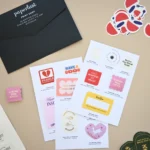
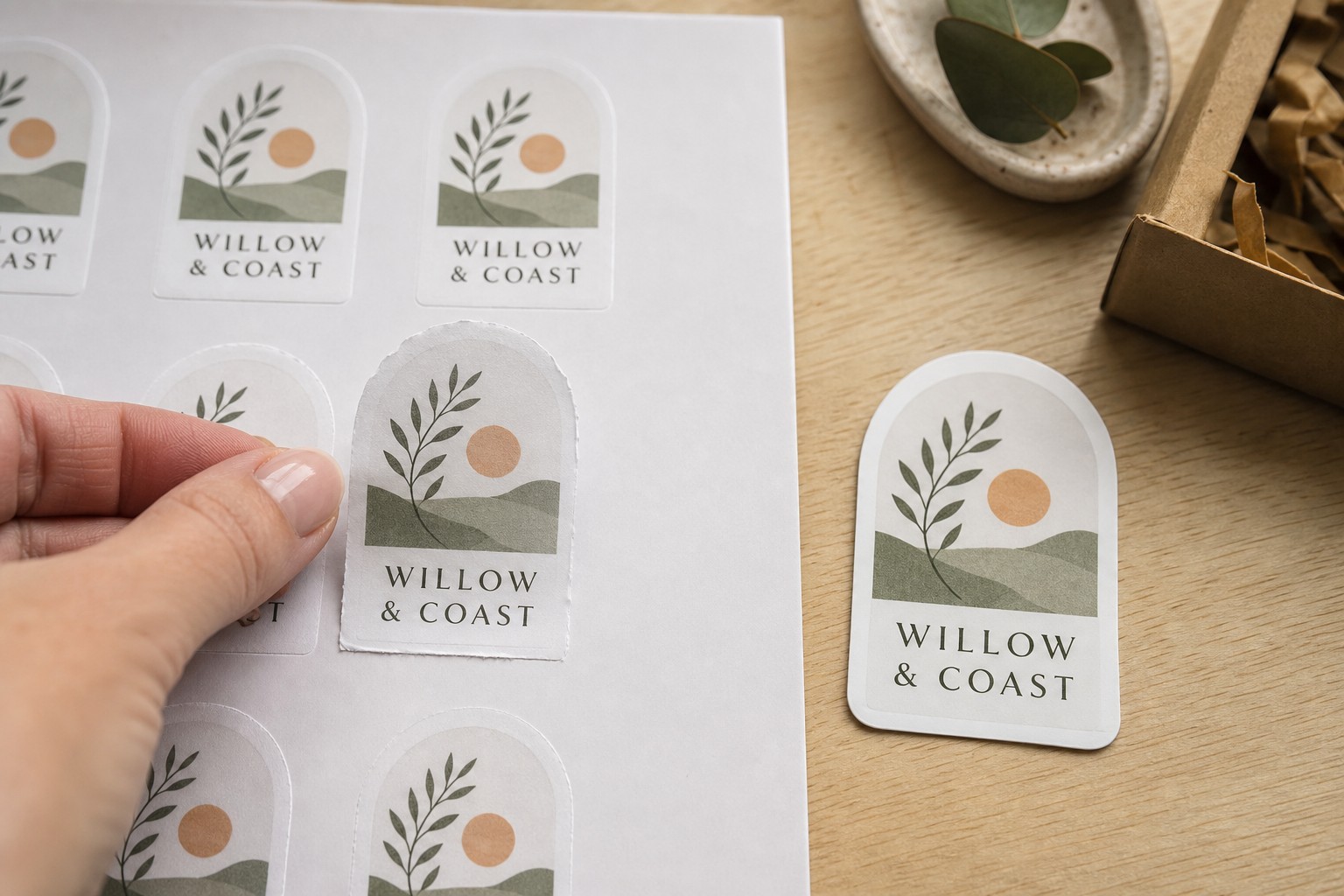
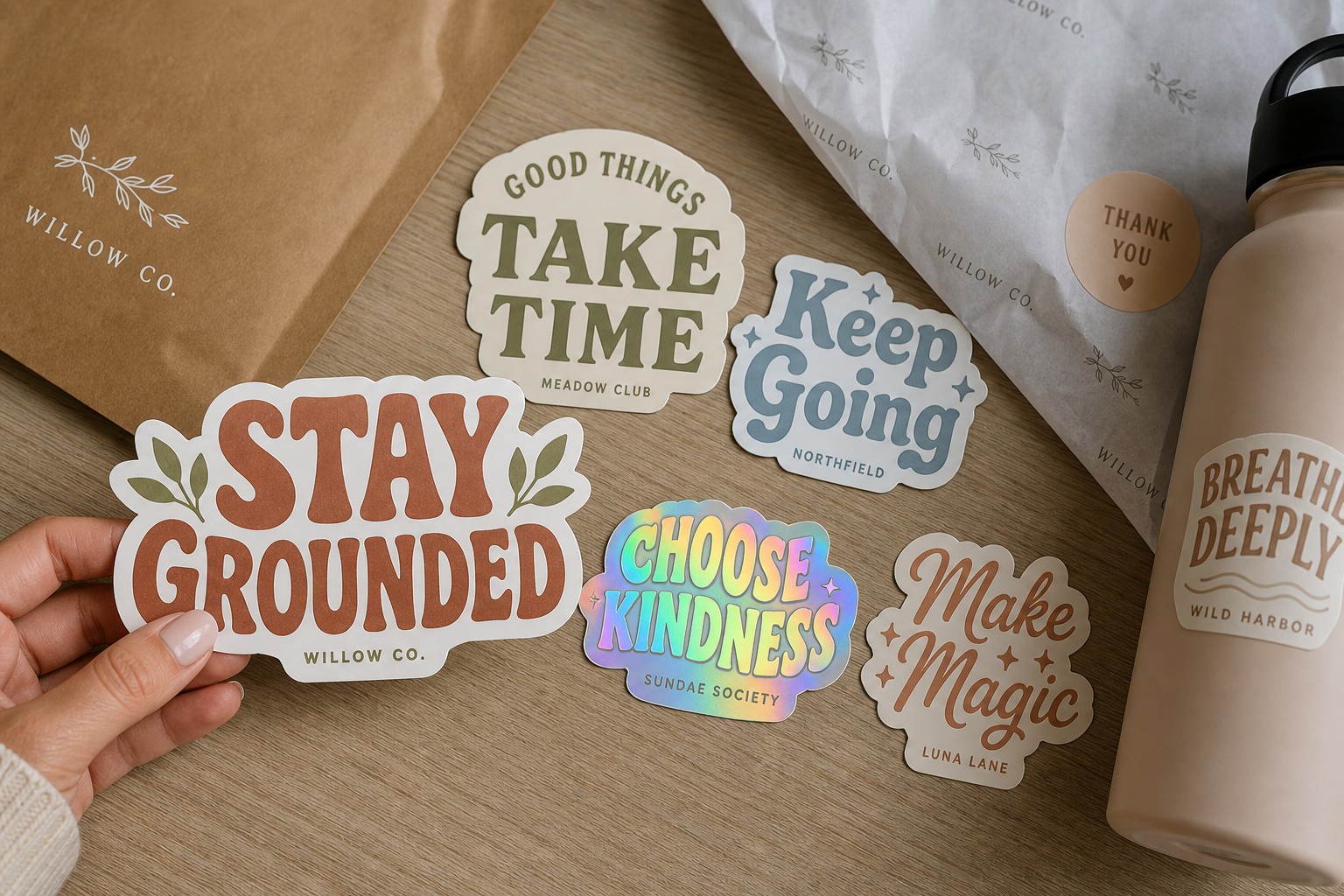
Commercial online sticker printers offer the full palette of materials: glossy and matte vinyl, holographic, clear vinyl with optional white underprint, foil, and recycled paper stock. Custom die-cut stickers can be cut to any shape from 20 x 20 mm up to 295 x 425 mm, with no tooling fee. Clear stickers printed in Australia use solvent inks on clear vinyl film, with a white underprint option that gives you precise control over how much of the background surface shows through. Sticker sheets printed in Australia put several designs, shapes and sizes on one kiss-cut backing sheet within a single order, with a minimum of 10 sheets per design.
Turnaround
After proof approval, digital die-cut shapes typically produce in 2-3 working days. Vinyl stickers with speciality finishes run 5-7 working days. That timeline fits most project schedules while still giving you a proper proof review before a single sticker is cut.
Unit economics
With a minimum of just 10 units per design, you can order exactly what you need without overstocking. Unit cost drops significantly at volume, reaching as low as $0.07 per sticker on bulk runs. Orders under 50 units are priced at the same rate as a 50-unit run, so small quantities are not penalised.
Proofing
A digital proof arrives within 24-48 hours of submitting your artwork. You review it, request any changes, and approve before production begins. This protects against colour and layout errors that are expensive to fix after a full run is complete.
Browse the full range of custom sticker types, materials, and sizing options at the Paperlust Print Shop custom stickers page.
Channel 4: Overseas manufacturing
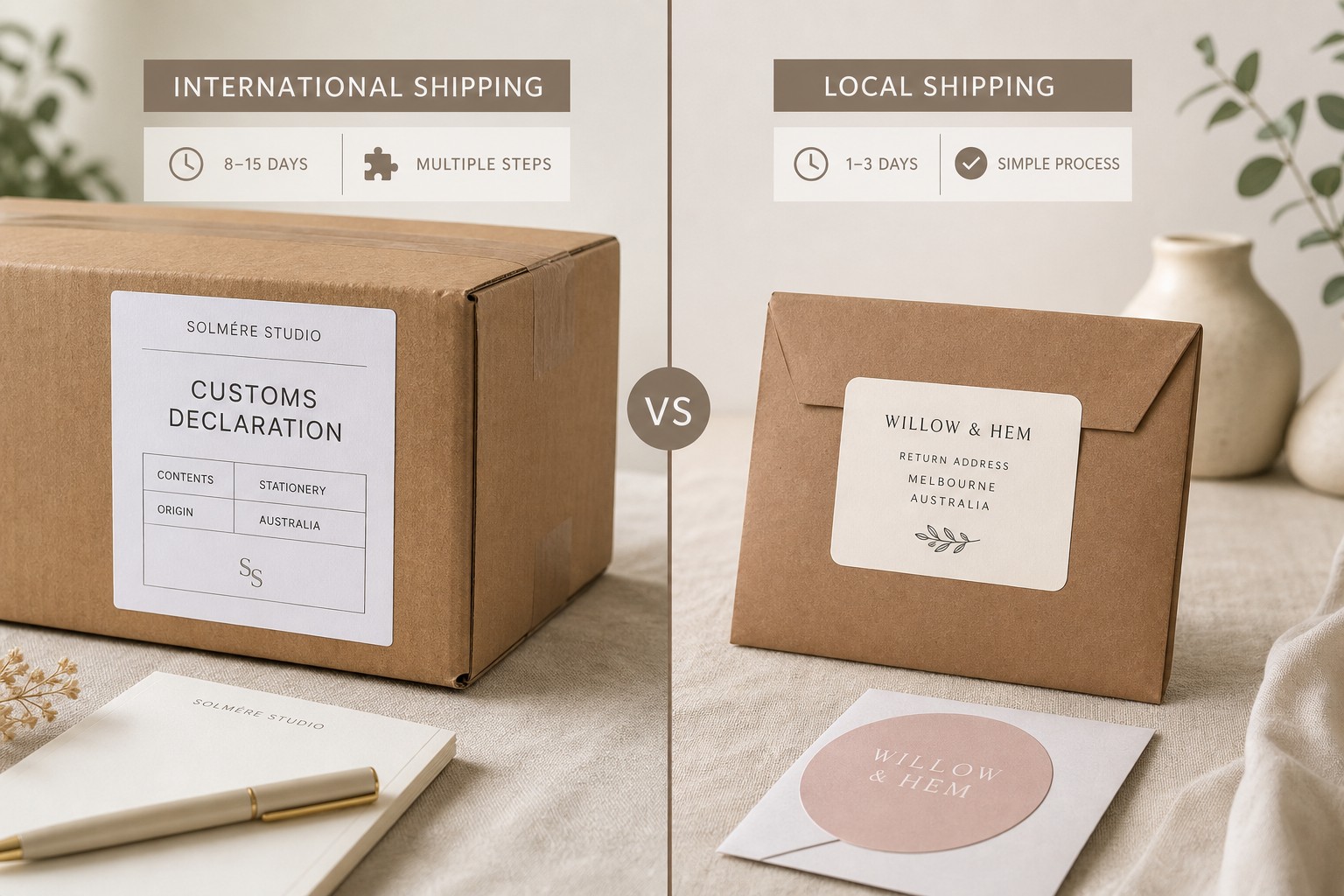
Overseas sticker manufacturing delivers the lowest per-unit cost at high volumes. The trade-off is complexity: lead times of 3-6 weeks or longer, international freight, Australian GST on imports, and the reprint risk that comes with colour accuracy outside your direct control.
The total landed cost calculation often surprises buyers who focus only on the headline unit price. Once you add international freight, import duties, and a contingency for colour corrections or reprints, the effective cost per sticker frequently sits close to domestic online pricing – particularly at volumes under 10,000 units.
For volume orders, see our bulk sticker printing volume and pricing guide for a detailed breakdown of tier pricing and multi-design consolidation strategies. For the full landed-cost comparison between local and overseas manufacturing, the local vs overseas guide works through the numbers in full.
Which channel suits your job
Match your constraints to the channel, not the other way around.
Need it by tomorrow: Local print shop is the only channel that reliably delivers. Accept the finish limitations as part of that trade-off.
Branded run of 10-500 units: Online Australian printer. Full finish range, proof before production, flat-rate shipping, and no minimum-run penalty on small quantities.
Etsy or Shopify product seller: Online AU printer at 10-50 units per design to test demand, then scale into bulk tiers as the product proves out. The per-unit price drops meaningfully between 50 and 500 units.
Event materials with a firm date: Online AU printer with at least 10 business days before the event. For anything tighter, call a local shop.
Sustained high-volume reorder at 10,000 or more units with no finish complexity: Evaluate overseas manufacturing after reading the full landed-cost analysis in our local vs overseas guide.
Proofing a new design before committing: Print one sheet at home to check layout proportions, then move to a professional run for the finished product.

Frequently asked questions
What is the cheapest way to print stickers in Australia?
At very low quantities (under 10 units), home printing on sticker sheets has the lowest upfront cash outlay. From 10 units, an online Australian printer at bulk rates is usually cheaper once you factor in the cost of cartridges, paper waste, and cutting time. Die-cut stickers at Paperlust Print Shop start from $0.64 per sticker inc. GST, dropping sharply at higher quantities.
How long does sticker printing take in Australia?
An online Australian printer typically delivers in 2-7 business days after proof approval, depending on finish type. Digital die-cut shapes produce in 2-3 working days after proof approval. Vinyl and speciality finishes run 5-7 working days. Add 1-5 days for shipping depending on your location. Local print shops can deliver same-day or next-day for standard options.
Can I print just 10 stickers?
Yes. The minimum order at Paperlust Print Shop is 10 units per design. Orders under 50 units are priced at the same rate as a 50-unit run. There is no setup fee or custom die charge on any order.
What is the best finish for product labels and branded stickers?
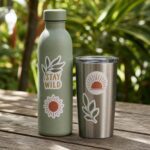
Gloss vinyl is the most popular choice for product labels: durable, water-resistant, and colour-accurate under most conditions. Matte vinyl suits a premium or understated look. Clear vinyl with a white underprint works well when you want the surface behind the sticker to show through in a controlled way. Holographic and foil options are strong for retail packaging and event materials where shelf presence and visual impact matter.
Is it worth printing stickers overseas?
For most small businesses, no. The total landed cost (unit price plus international freight, import duties, and an allowance for reprints) puts overseas printing close to local online pricing at volumes under 10,000 units. You also absorb all the lead-time and colour-accuracy risk. The local versus overseas guide works through the full calculation for those evaluating this option.
What file format do I need to supply for sticker printing?
Vector files are preferred: AI, EPS, PDF, or SVG with all fonts outlined. For clear stickers, include a dieline in 100% Magenta Spot Colour on a separate top layer. Raster files (PNG or TIFF) are accepted at 300 DPI minimum at final print size. The proof team will flag any file issues before production begins.