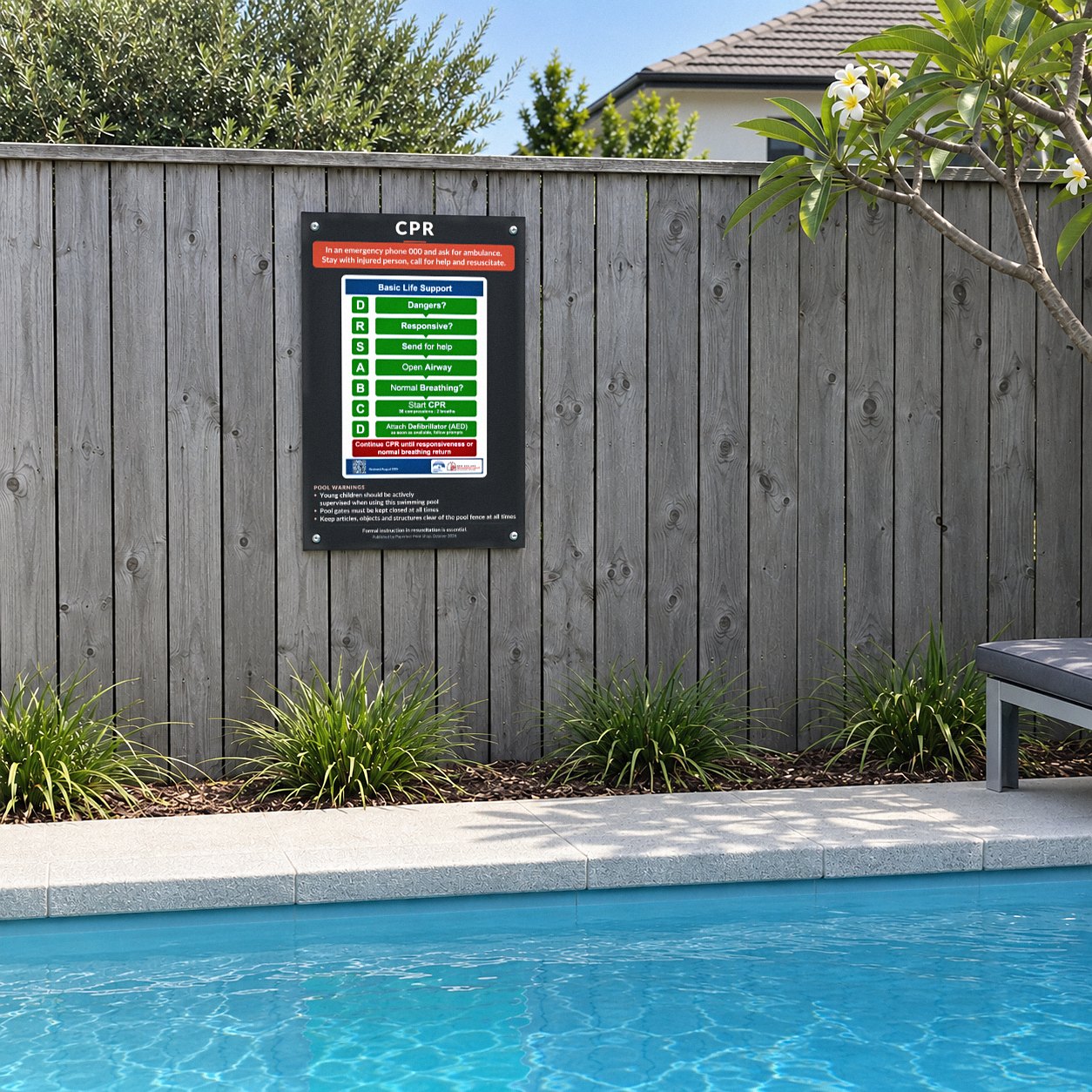
The pool cover is off, the water is balanced, and the fence and gate have done another winter of wind, rain and garden growth. Before anyone swims, walk the barrier with fresh eyes. The same check matters if a sale, lease or council inspection has put pool fence requirements back on your to-do list.
This guide is a practical pool safety checklist. Walk the fence, test the gate, clear the fence line, check the CPR sign, then check the paperwork your state asks for. The figures below are general information, not legal advice, and a council, a licensed pool safety inspector or a building certifier decides whether a pool actually meets the standard.
The short version
- Fence height: at least 1200mm from finished ground level.
- Gaps: in Queensland, no opening over 100mm in any direction, including under the fence.
- Gate: it opens away from the pool and closes and latches by itself from any open position.
- Latch: the outside release sits at least 1500mm from the ground.
- CPR sign: a CPR sign is required in New South Wales, Queensland and South Australia. We found no rule in Victoria, Western Australia, Tasmania, the ACT or the Northern Territory.
- Paperwork: registration and certificates depend on your state.
Pool fence requirements: walk the barrier first
| Check | What to look for (Queensland figures) |
|---|---|
| Fence height | At least 1200mm, measured from finished ground level to the top of the fence. |
| Gap under the fence | At most 100mm from finished ground level to the bottom of the barrier. |
| Gaps in the fence | No holes or gaps greater than 100mm in any direction. |
| Horizontal rails | At least one gap of 900mm or more between horizontal rails. |
| Gate direction | The gate must not open towards the pool. |
| Gate closing and latching | The gate must self-close and self-latch from any open position. |
| Latch height | The outside latch release sits at least 1500mm from the ground, measured to the underside of the handle. |
Measure from finished ground level, not from the top of a garden bed. Check the low points on a slope, the loose palings and any place where soil, mulch or pot plants have built up against the fence. The pool fence height minimum in the table is the Queensland and New South Wales figure: at least 1200mm. In NSW, the fence must also meet the version of the Australian Standard that applied when the pool was built, whether that is the 1986, 2007 or 2012 edition. Walls of an above-ground pool or a building can form part of the barrier if they are at least 1200mm high. The table rows come from those two states’ published figures, and every state works from the same national standard, so the detail can differ by location. A council, a pool safety inspector or a certifier makes the call on whether the barrier meets it.
Pool gate test: closing, latching and hinges
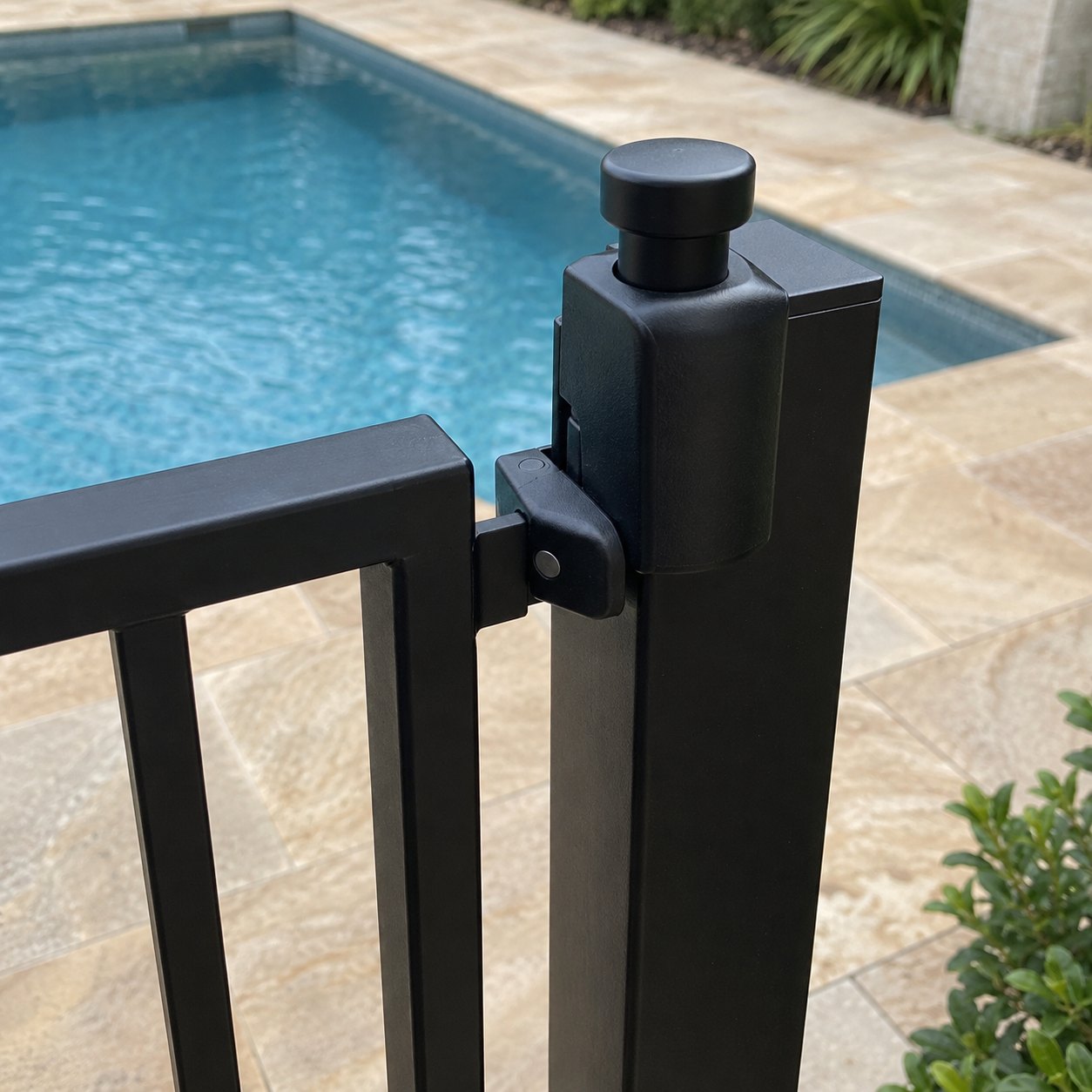
Open the gate to several positions and let go each time. It should close and latch by itself from every one of them, without help. The gate must not open towards the pool, so the opening arc points away from the water. The gate must self-latch from any open position. A gate that only catches from one angle, or only when it is pushed firmly, has a fault.
Check the outside latch release next. It sits at least 1500mm from the ground, measured to the underside of the handle. On the inside, a latch sits at least 150mm below the top of the gate and needs a shield with a 450mm radius. Hinges must be at least 900mm apart, or the lower hinge needs a 60-degree safety cap. Never prop a pool gate open, even while the kids are in the yard or the gardener is working. The test is not whether it shuts from one position. It is whether it shuts from every position.
Pool fence regulations: clear the fence line and temporary set-ups
Pool fence regulations cover the space around the barrier, not just the panels. Keep articles, objects and structures clear of the pool fence at all times. That means the outdoor chairs stacked beside the fence, the pot plants, the barbecue on wheels, the ladder left against the rail and the branch that now overhangs the top. A child climbing onto any of them changes the effective height of the barrier.
Temporary set-ups carry the same risk. In Queensland, a temporary pool fence can be used for up to 3 months, but only if a building certifier or pool safety inspector has inspected and approved it. Portable and blow-up pools are not exempt. Queensland treats any structure that can be filled to a depth of 300mm or more as a pool, including wading pools, blow-up pools and spas. NSW applies the same fencing and safety requirements to portable pools holding more than 30cm of water. Victoria counts a relocatable pool once it has been standing for 3 or more days in a row and holds water deeper than 30cm. In Western Australia, a private swimming pool is one that can hold water more than 300mm deep.
Pool safety regulations: registration and certificates by state
Pool safety regulations are not the same in every state, as the table shows.
| State | Register the pool | Certificate or inspection |
|---|---|---|
| New South Wales | Every pool and spa must be registered on the NSW Swimming Pool Register. | A compliance certificate is valid for 3 years. A non-compliance certificate cannot be used to rent. |
| Queensland | Owners must register the pool with the QBCC. | A pool safety certificate is needed for selling, buying or leasing. It is valid for 2 years for a non-shared pool or 1 year for a shared pool. |
| Victoria | Permanent pools and spas, and most relocatable ones that can hold water deeper than 30cm, must be registered with the local council. A relocatable pool counts once it is up for 3 or more days in a row. | The owner must obtain a Certificate of Barrier Compliance every 4 years and lodge it with the council. |
| Western Australia | Not stated in our sources. | Local governments inspect barriers, and the maximum period between inspections is four years. |
| South Australia | Not stated in our sources. | A pool built before 1 July 1993 must meet MBS 004 safety features before sale. The local council can confirm which rules apply. |
Queensland’s sale and lease rules make the paperwork link to the barrier itself. A pool safety certificate is needed when selling, buying or leasing a property with a pool, and a buyer who settles without one must get one within 90 days of settlement. In NSW, registering on the NSW Swimming Pool Register does not mean the pool meets the requirements. For a sale, the contract carries the pool’s registration certificate and one of three documents: a recent occupation certificate, a valid certificate of compliance, or a certificate of non-compliance. For a lease, the landlord or agent gives the tenant a copy of the certificate of compliance, or an occupation certificate, and a certificate of non-compliance cannot be used to rent the property. South Australia asks that a pool built before 1 July 1993 be brought up to the safety features in MBS 004 before the property is sold. For the physical details behind the paperwork, the QBCC page on gates, latches and hinges is a useful walk-through for the barrier itself.
CPR sign: what the states require and what we print
Three states set out a resuscitation sign rule: New South Wales, Queensland and South Australia. In NSW, the notice must be legible from at least 3 metres and kept clearly legible, and it must carry the three warning lines, a simple resuscitation flowchart in line with ANZCOR, the statement that formal instruction is essential, and the publisher and date. Queensland requires a sign at least 300mm x 300mm, durable and weatherproof, with a prominent emergency statement and ANZCOR Guideline 8 first aid procedures. South Australia calls for a first aid and CPR sign of at least 300mm by 300mm, made from a durable and weatherproof material, for pools approved from 1 May 2016.
Victoria, Western Australia, Tasmania, the ACT and the Northern Territory: we found no rule that requires a CPR sign at a home pool. Displaying one near the pool is still a sensible step. If the sign near the pool is faded, cracked or hard to read, replace it before the first swim. A sign that cannot be read is not doing its job.
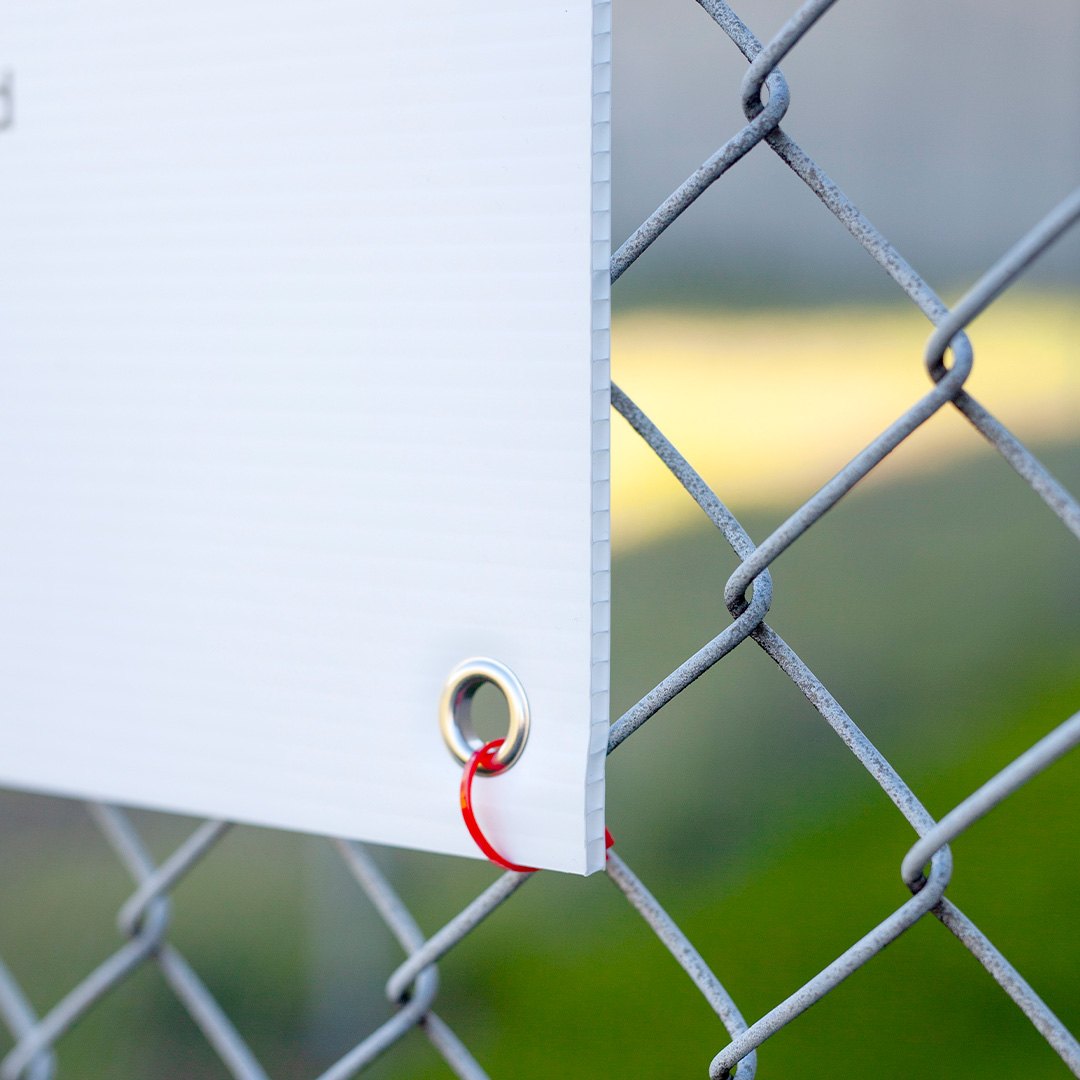
We print a range of pool safety signs in full colour on 3mm or 5mm corflute, a weather-resistant fluted polypropylene board, one sided. The range includes three CPR sign layouts, Keep gate closed, Supervise children, Pool rules and Pool under construction, or you can upload your own artwork or ask for custom design at $49.90. The three CPR layouts carry the heading, the emergency statement, the ANZCOR Basic Life Support flowchart reviewed August 2023, the three New South Wales warning lines and a publisher and date line naming Paperlust Print Shop and October 2026. If the sign is for your own fence, you still need to check the proof with your council, a pool safety inspector or a certifier.
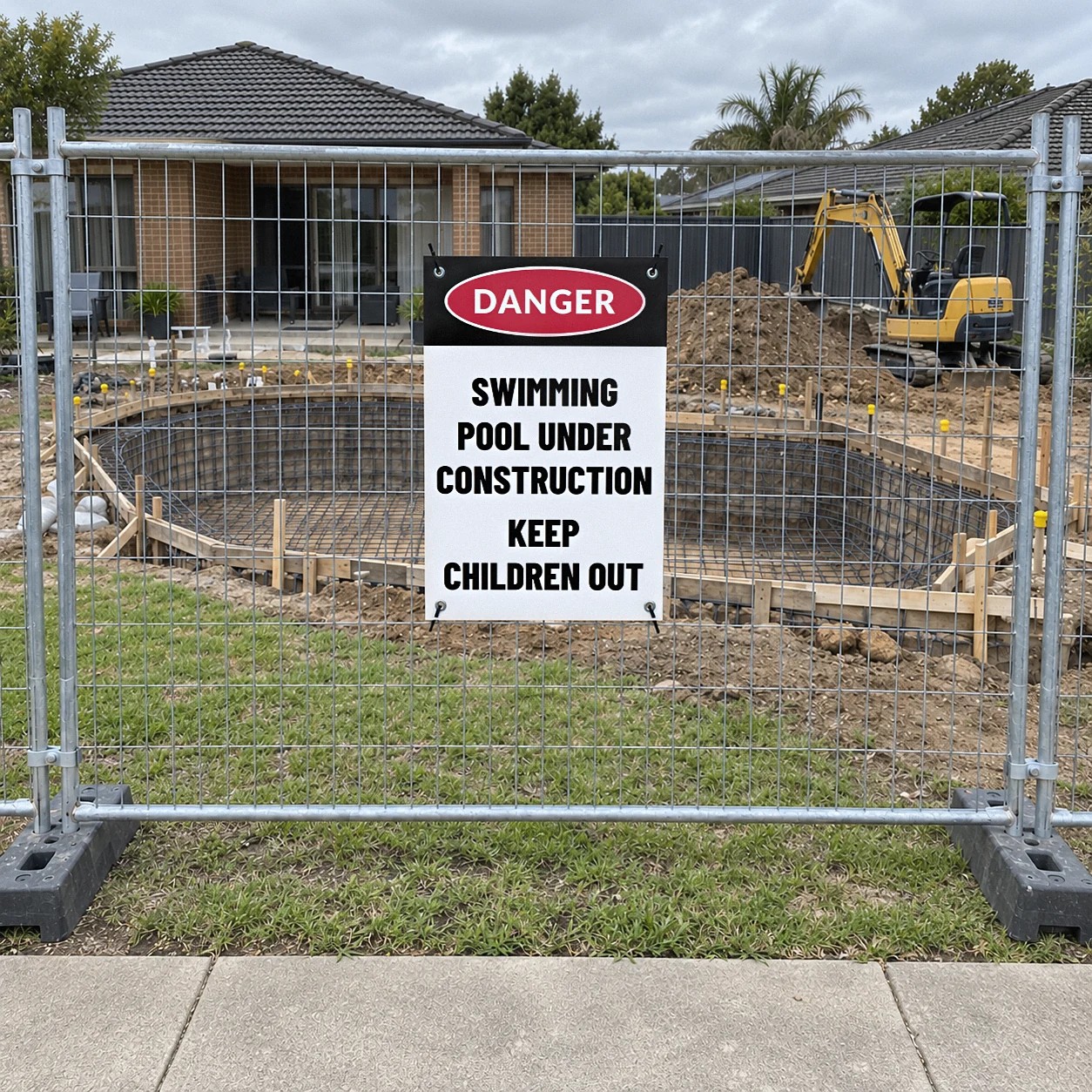
For pool builders, Queensland also has a pool under construction sign rule. The notice must sit on or within 1.5 metres of the road frontage, be visible from the road, have the bottom at least 300mm above the ground, use durable and weatherproof material and carry warning lettering at least 50mm high in a bold style. Our Pool under construction layout prints DANGER, SWIMMING POOL UNDER CONSTRUCTION and KEEP CHILDREN OUT with lettering at least 50mm high on every size. For other site boards, our construction signs cover a wider range of jobsite signage.
Pool compliance: inspections, paperwork and replacement signs
Pool compliance is not a sheet of ticks. A council, a licensed pool safety inspector or a building certifier decides whether your barrier meets the version of the Australian Standard that applies to your pool. If your state asks for a registration, a Certificate of Barrier Compliance, a pool safety certificate or a periodic inspection, book it through the right authority. Keep the certificate with the property paperwork, and calendar the expiry so it does not quietly pass. Fix any loose paling, latch, gap or sign issue the walk-around found before the first swim. The checklist helps you prepare. It does not replace the inspection.
If the CPR sign is the only item left, our team emails a PDF proof within 1 to 2 business days of the order, and nothing prints until you approve it. Because the sign lives outside, it is worth understanding how an outdoor sign handles sun and rain before you choose a material. Once you approve, 1 to 3 signs in our standard sizes can be produced within 24 hours when approval is in by 10am Melbourne time. Up to 10 standard-size signs collected from Oakleigh South can use that same 24 hour window. Delivered orders of 4 or more signs, and any order of more than 10 signs, both take 48 hours, with approval by 8am Melbourne time. Orders dispatch the business day after production finishes. Delivery is $15 standard or $60 express per order, or you can pick up from our Oakleigh South studio at no charge. Peak periods can add time, and delivery dates are not guaranteed.
Frequently asked questions
What is the pool fence height requirement?
In Queensland, a pool fence must be at least 1200mm high, measured from finished ground level to the top of the fence. On a sloping or stepped site, the fence must still be at least 1200mm high at any location. In NSW, the minimum is 1.2m from the same point, and the fence must meet the version of the Australian Standard that applied when the pool was built, whether that is the 1986, 2007 or 2012 edition.
Which way must the pool gate open and how must it close?
A pool gate must not open towards the pool. It must be self-closing and self-latch from any open position, so the test is to open it to several positions and let go each time. The outside latch release sits at least 1500mm from the ground, measured to the underside of the handle. Hinges must be at least 900mm apart, or the lower hinge needs a 60-degree safety cap. Never prop the gate open.
Does a blow-up or portable pool need a fence?
It can. Queensland treats any structure that can be filled to a depth of 300mm or more as a pool, including wading pools, blow-up pools and spas. NSW applies the same fencing and safety requirements to portable pools holding more than 30cm of water. Victoria counts a relocatable pool once it has been standing for 3 or more days in a row and holds water deeper than 30cm. Western Australia defines a private swimming pool as one that can hold water more than 300mm deep.
Do I need a pool certificate to sell or rent my home?
In Queensland, yes. A pool safety certificate is needed when selling, buying or leasing a property with a pool, and it is valid for 2 years for a non-shared pool or 1 year for a shared pool. In NSW, a sale contract carries the registration certificate plus one of three documents: a recent occupation certificate, a valid compliance certificate or a non-compliance certificate. For a lease, the landlord gives the tenant a copy of the compliance certificate or an occupation certificate, and a non-compliance certificate cannot be used to rent. Other states differ, so check with the local council.
How often must a pool barrier be certified or inspected in Victoria and Western Australia?
In Victoria, the owner must obtain a Certificate of Barrier Compliance every 4 years and lodge it with the local council. The pool must be registered with the council, and most relocatable pools that can hold water deeper than 30cm are included once they are up for 3 or more days in a row. In Western Australia, local governments inspect pool barriers, and the maximum period between inspections is four years.
Does my pool need a CPR sign?
New South Wales, Queensland and South Australia require a CPR sign at or near the pool under their state rules. In NSW, the notice must be legible from at least 3 metres and kept legible. Queensland and South Australia both require a sign at least 300mm x 300mm made of durable and weatherproof material. Victoria, Western Australia, Tasmania, the ACT and the Northern Territory: we found no rule that requires a CPR sign at a home pool, but displaying one is sensible.