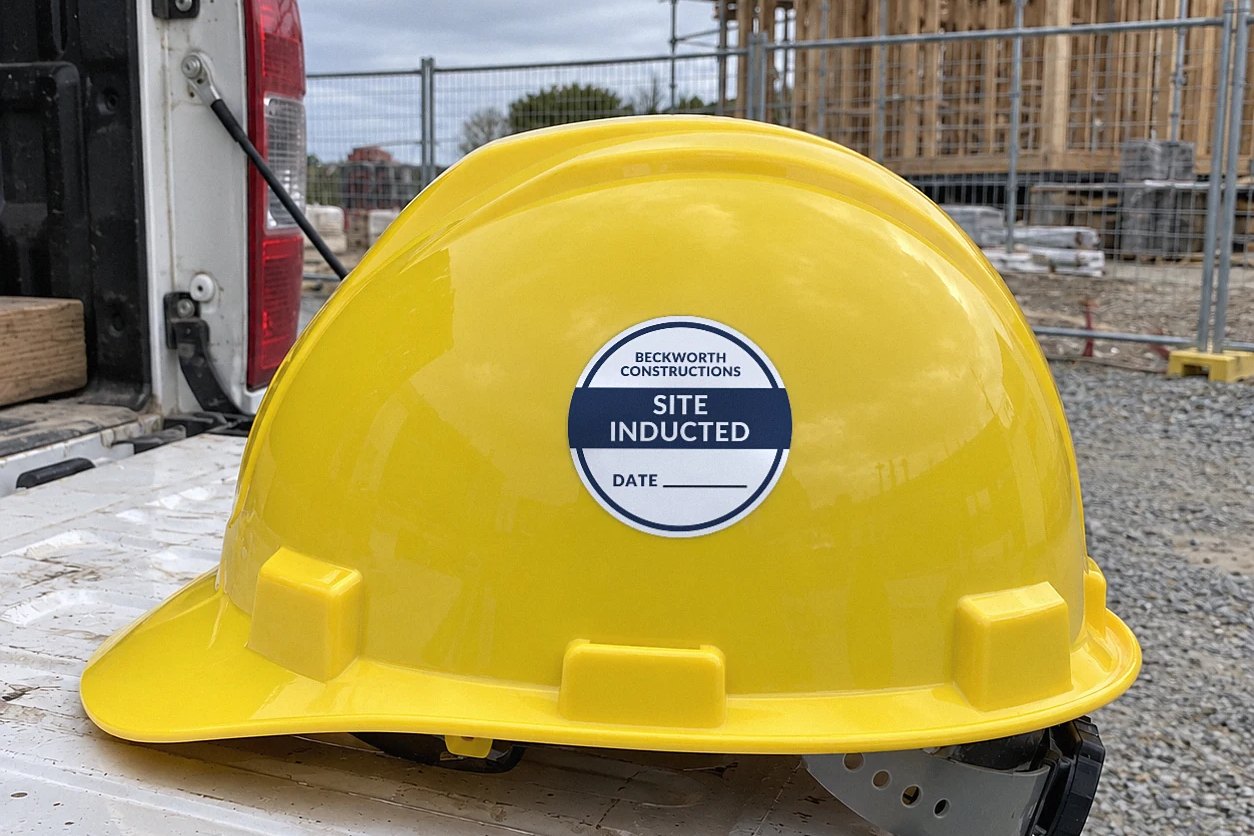
Most site managers hit the same moment during a busy week: a labourer turns up, a client walks through the gate, and suddenly every helmet looks the same. Hard hat stickers are the simplest way to sort that scene before it becomes a problem. They show who works for the company, who has completed the site induction, and who to look for when someone needs first aid or a fire warden.
This guide steps through what hard hat stickers mean on Australian sites, how colour conventions work, what the maker’s instructions and AS/NZS 1801 say about stickers on a shell, and where each size usually belongs.
The short version
- Stickers show who someone works for, that they did the site induction, and roles such as first aid, fire warden, supervisor and visitor.
- The dated sticker records the site’s own induction and is separate from the White Card.
- Hard hat colours do not follow one national code, so the site should explain its role colours at induction.
- Check the maker’s instructions for the specific helmet before you apply any sticker.
- Do not cover a crack or damaged area, and replace a helmet after a hard impact even if no damage is visible.
- Apply to a clean, dry shell above 10 degrees, with 18 to 25 degrees the optimum.
What hard hat stickers tell people on site
| Sticker | What it tells people on site | Where it usually goes |
|---|---|---|
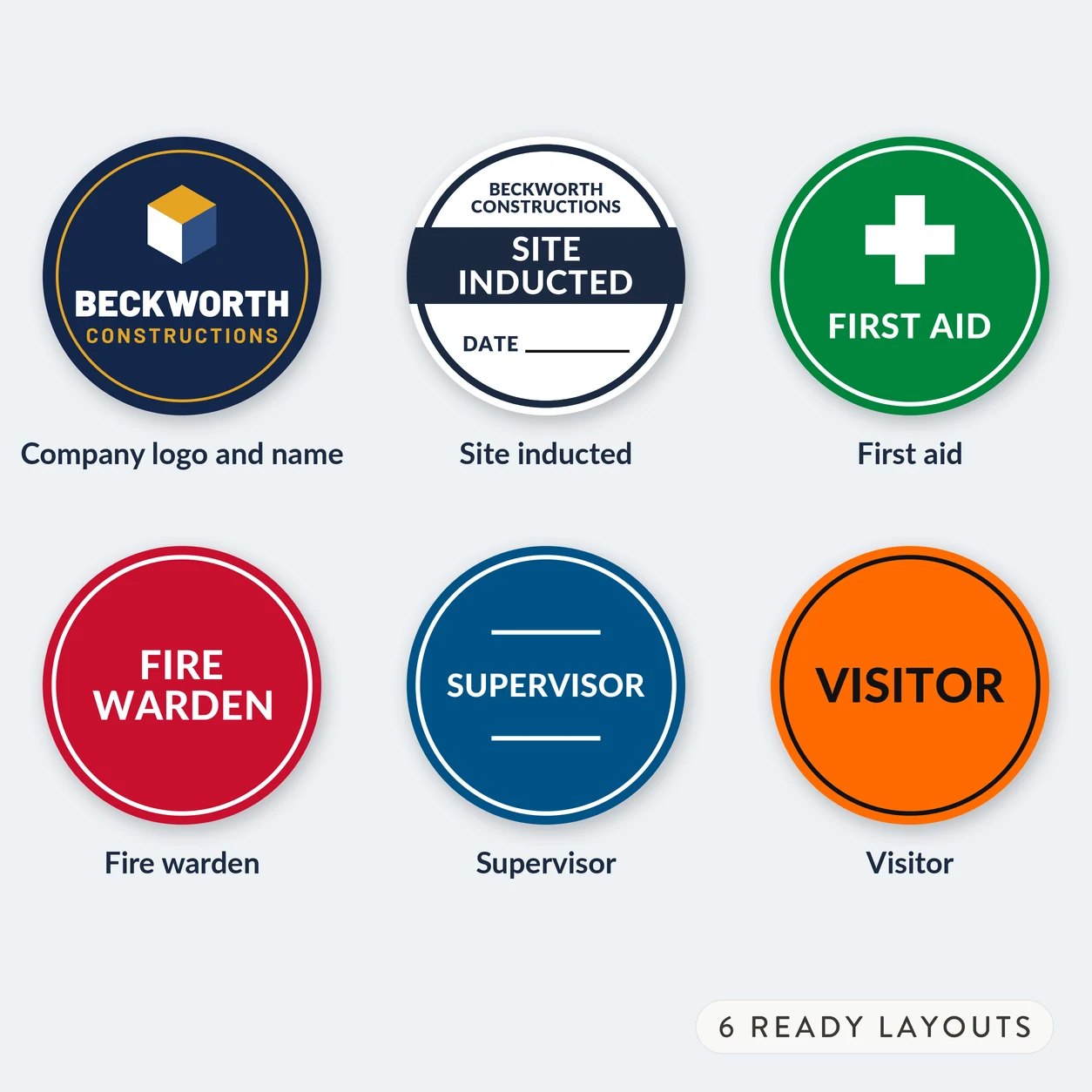
| Company logo and name | Who the wearer works for. | Front or sides |
| Site inducted | That the wearer has done this site’s induction and when. | Front or sides |
| First aid | Who the first aider is. | Front or sides |
| Fire warden | Who the fire warden is. | Front or sides |
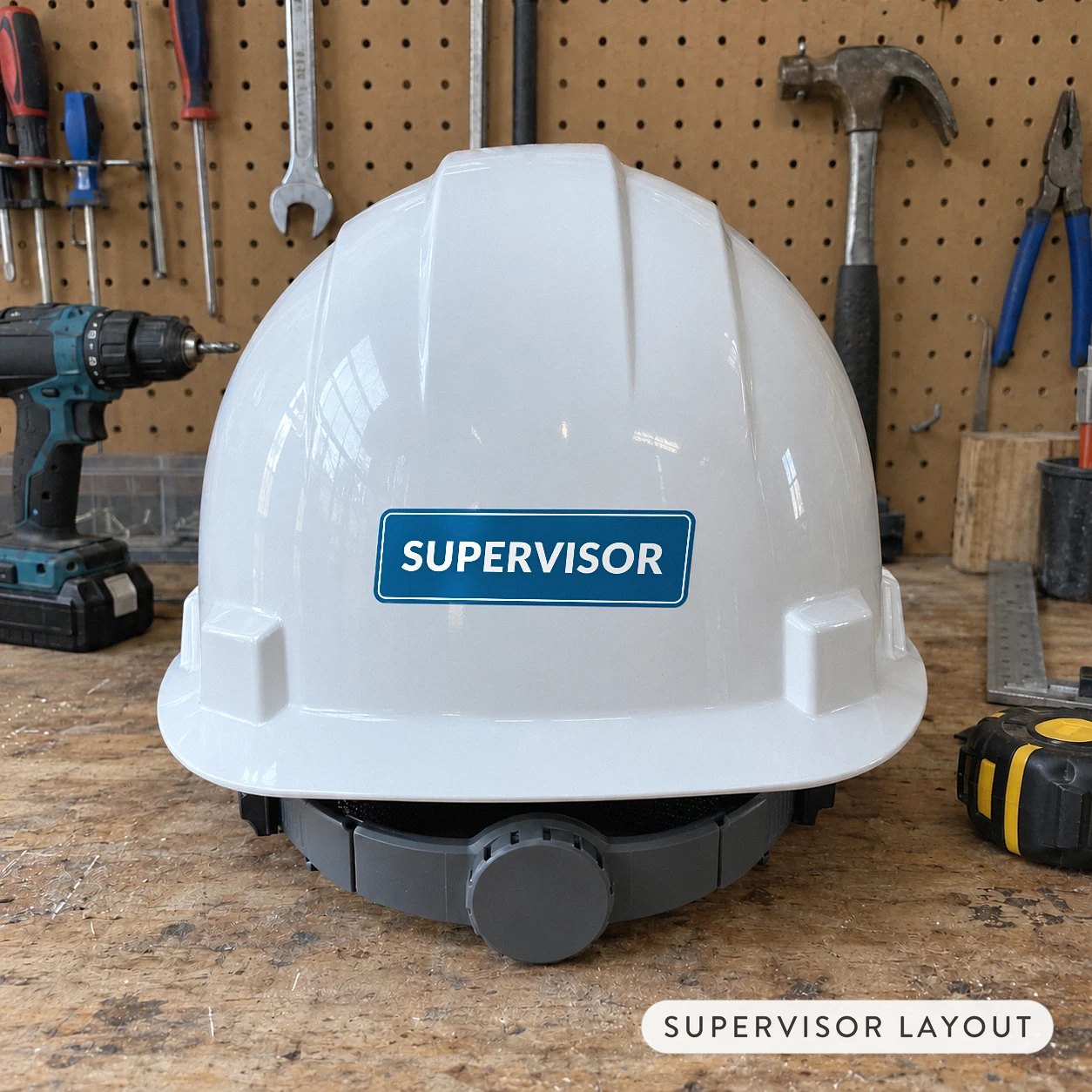
| Supervisor | Who the supervisor in charge is. | Front or sides |
| Visitor | That the wearer is a visitor. | Front or sides |
From across a work area, a role sticker does the job before a worker has to shout. In an emergency, a green first aid sticker or a red fire warden sticker saves the seconds people spend asking who is in charge.
On day one, plan the sticker set for each person so the helmet carries the right information. Everyone who works for the company gets the company logo and name sticker. A person who passes the site induction gets the dated sticker that records it. The role stickers then go only to the people who actually hold those roles: first aid on green for the first aider, fire warden on red for the fire warden, and supervisor on blue for the person in charge. Visitors get the visitor sticker at sign in, so the crew can see at a glance who is not inducted and who needs to be escorted. That way the helmet reflects the person’s situation on that day, not a role they held on a previous job.
Site inducted stickers and the site induction
The Site inducted option prints the company name at the top, a navy band reading SITE INDUCTED in white, and a blank DATE line. The date is written by hand after each induction, and that is the point to hand the sticker over. A supervisor or site officer can write the date while the person’s name goes into the site register. That way the helmet matches the record in the file.
A White Card is needed by people employed to carry out construction work or who enter operational construction zones. It comes from a construction induction training course with a registered training organisation, and it can be used in any Australian state or territory. The dated sticker is a separate site record. It does not replace the White Card, and a person can hold a White Card without having completed the specific induction for your site.
Keep the register of who was inducted on site as well as issuing the dated sticker. The sticker helps on the ground, and the register is the record you can check back through.
Hard hat colours and what role stickers add
Hard hat colours are useful on site, but there is no single national colour code that applies to every Australian site. The principal contractor, the company or the site safety plan sets the colour conventions, and the same colour can carry different meanings on different sites. The site induction is where those conventions are explained.
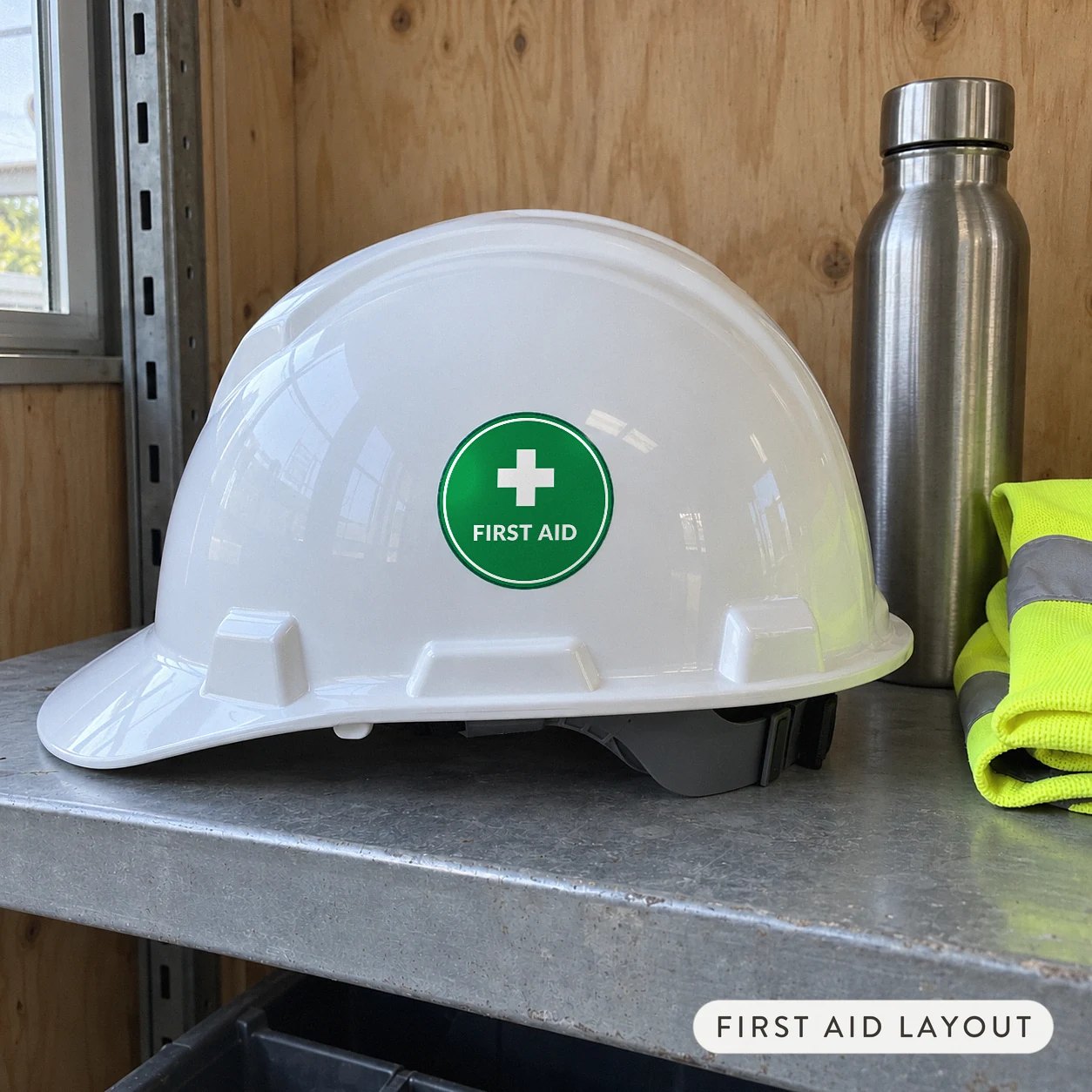
Role stickers add the missing detail. A first aid sticker on green with a white cross, a fire warden sticker on red, a supervisor sticker on blue and a visitor sticker on high visibility orange can sit on any colour helmet and still make the role clear. These are the colours used in the ready layouts. They are a practical starting point, not a rule.
AS/NZS 1801 and what the helmet maker says about the shell
AS/NZS 1801:2024 is the current standard for occupational protective helmets. It was published by Standards Australia on 20 September 2024 and superseded AS/NZS 1801:1997. It provides specifications for protective helmets to reduce the severity of head injury from hazards in the occupations it covers.
Before any sticker goes on a hard hat, check the helmet maker’s instructions for that specific helmet. A helmet maker’s AS/NZS 1801 user manual warns that paint and stickers may contain materials that, with time, can change the physical properties of the helmet. It says to check compatibility with the shell material before applying them, and not to apply adhesives, solvents, stickers or paint that do not comply with the maker’s specifications.
The same manual warns that an unauthorised change can reduce the helmet’s effectiveness and invalidate its certification. Check the helmet before each use, and after a violent impact the helmet should be replaced even if no damage is visible. Clean the helmet only with water and mild soap, never with chemical cleaning products or solvents. Never place a sticker over a crack or damaged area, because the shell has to be seen to be checked.
Where helmet stickers go and how to apply them
The right size for helmet stickers depends on the logo and the space on the shell.
| Size | Shape | Suits |
|---|---|---|
| 50 x 50mm | Circle or Rounded Corners | Front or sides on tighter helmet space |
| 60 x 60mm | Circle or Rounded Corners | Front or sides when the logo needs a little more room |
| 75 x 75mm | Circle or Rounded Corners | Front or sides where the artwork is larger |
| 100 x 30mm strip | Rounded corners | Back of the helmet |
A small logo with a short wordmark can sit on the 50 x 50mm size without crowding. Larger artwork or a longer company name is easier to read at 75 x 75mm, and the 100 x 30mm strip is made for the back of the helmet. No Laminate, Matte Laminate and Gloss Laminate are the face finish choices, and the grey high tack permanent adhesive is on the back.
The circle and rounded corner sizes work on the front or sides. Clean and dry the surface, apply above 10 degrees Celsius with 18 to 25 degrees as the optimum, and press the sticker down firmly. The stickers are printed in full colour on one side on matt white PVC vinyl, 80 micron film and 130 micron with the adhesive. Each sticker is kiss cut on its own backing and supplied loose.
Ordering helmet stickers for a crew
The six ready layouts on the hard hat stickers product page cover the common roles a site needs. The Company logo and name option takes your uploaded logo with the company name under it. The Site inducted option takes the company name typed at the top. The role options print exactly as shown: First aid on green, Fire warden on red, Supervisor on blue and Visitor on high visibility orange.
One cart line is one design, so a crew that needs several roles adds one line for each. The minimum is 50 per design, with quantities of 50, 100, 200, 300, 500 or 1000. Custom Shape cuts the sticker to the outline of your artwork or a custom design. Every order gets a PDF proof by email before printing, and nothing prints until the proof is approved.
For the fence, see the safety signs page. At the gate, the site entry signs page has the sign for the entry.
Frequently asked questions
Can you put stickers on a hard hat?
Check the helmet maker’s instructions before any sticker goes on a hard hat. A helmet maker’s AS/NZS 1801 use and care booklet warns that stickers may contain materials that can change the helmet’s physical properties over time, and that their compatibility with the shell material should be checked before applying them. The same source says an unauthorised change can reduce the helmet’s effectiveness and invalidate its certification. Never place a sticker over a crack or damaged area.
What do hard hat colours mean in Australia?
There is no single colour code that applies to every Australian site. Colour conventions are set by the principal contractor, the company or the site safety plan, and the same colour can carry different meanings on different sites. The site induction is where the crew learns what each colour means on that job. Role stickers printed in clear colours such as green for first aid and red for fire warden add a visible layer on top of the helmet colour.
What does a site inducted sticker mean?
The dated sticker records that the person has completed the site’s own induction. The printed option shows the company name at the top, a navy band reading SITE INDUCTED in white, and a blank DATE line written by hand after each induction. It is separate from the White Card and does not replace it. A White Card shows the holder has completed the general construction induction course, and it can be used in any Australian state or territory.
What is AS/NZS 1801?
AS/NZS 1801:2024 is the current Australian and New Zealand standard for occupational protective helmets. It was published by Standards Australia on 20 September 2024 and superseded AS/NZS 1801:1997. The standard provides specifications for protective helmets to reduce the severity of head injury from hazards in the occupations it covers. For what may go on a helmet, check the helmet maker’s use and care instructions.
What size sticker suits a hard hat?
The right size depends on the logo and the space on the helmet. The options are 50 x 50mm, 60 x 60mm and 75 x 75mm as a Circle or with Rounded Corners for the front or sides. A 100 x 30mm strip with rounded corners suits the back of the helmet. Check the maker’s instructions for the specific helmet before you apply anything.
How do workers spot the first aider on site?
The first aider is easiest to spot when the site uses a clear First aid sticker with a white cross and the words FIRST AID on green. The site should explain the sticker at induction so everyone knows what to look for. The same role sticker works on any colour helmet and can be seen from a distance in an emergency, saving the seconds people would otherwise spend asking who has the first aid kit.