
Every time someone applies your logo to their laptop lid, water bottle, or notebook, a quiet campaign begins. That sticker travels to offices, universities, cafes, and public transport, racking up impressions without any ongoing cost to your business. What most brand managers overlook is that this isn’t a happy accident. It’s the result of specific psychological mechanisms that make stickers one of the most cost-efficient brand awareness tools available. This article breaks down the science and the numbers, so you can use sticker marketing deliberately rather than accidentally.
Quick Reference: Stickers and Brand Awareness
- Core mechanism: Mere exposure effect – repeated visual contact builds familiarity and trust without conscious processing
- Average lifespan: Quality vinyl stickers last 2-5 years outdoors; indoor stickers can last the life of the object
- Cost per impression: Among the lowest of any branded medium, often below $0.002 per view over the sticker’s life
- Best formats for recall: Die-cut shapes (mirror brand contour), foil (premium perception), clear (seamless on glass and screens)
- Best distribution channels: Product packaging, event giveaways, influencer kits, retail point of sale, community seeding
- Design rule: One dominant colour, one clear logo, maximum two typefaces – simplicity drives recall at distance
Why the Brain Loves Stickers: The Psychology Behind Brand Recognition
Brand recognition isn’t about how clever your marketing is. It’s about repetition, visual processing, and the social signals that come from seeing a brand used by real people. Stickers sit at the intersection of all three.
The Mere Exposure Effect
Social psychologist Robert Zajonc demonstrated in the 1960s that people develop a preference for things simply because they’ve seen them before. The more times you’re exposed to a stimulus – a face, a word, a logo – the more positively you feel about it, even if you can’t consciously recall the individual exposures.
This is precisely why stickers work. A single branded sticker applied to a popular surface generates dozens to hundreds of passive impressions every day. Over weeks and months, everyone in that person’s immediate environment accumulates exposure to your brand. By the time they need what you sell, your name feels familiar, and familiar feels trustworthy.
The effect compounds with placement quality. A sticker on a laptop screen at a co-working space reaches dozens of professionals daily. A sticker on a reusable cup at a cafe appears in social media backgrounds, on meeting tables, and during commutes. None of these observers are consciously processing your brand, but the exposure is still happening and still building recognition.
Processing Fluency and Logo Recall
Processing fluency is the ease with which your brain interprets visual information. When a logo is well-designed and frequently encountered, it becomes fluent: your brain recognises it faster, with less cognitive effort. High fluency is directly associated with higher purchase preference and brand trust.
Stickers accelerate this process by presenting your logo in a physical, high-contrast format at eye level. Unlike a digital banner ad competing with page content, a sticker on a clean surface commands full visual attention, even if only for a fraction of a second. Those micro-exposures accumulate into strong recall.
Research on physical versus digital brand exposure consistently shows that physical materials generate higher aided recall and stronger emotional association. Physical objects engage multiple cognitive pathways simultaneously in a way screens cannot replicate, which is why brand recognition built through physical media tends to be both deeper and longer-lasting.
Social Identity and the Trust Multiplier
When a person chooses to apply a brand sticker to their belongings, they are doing something significant. They are signalling group membership. Social identity theory explains that people select brands that align with how they want to be perceived, and publicly endorsing a brand via a sticker is a strong signal to their social network.
Observers interpret the sticker as an implicit endorsement: “a person I know, or a person I aspire to be like, trusts this brand.” This is earned social proof operating through an object, not through a review platform. It’s third-party validation that scales every time the stickered item moves through the world.
What the Data Actually Says About Sticker Marketing
The psychology is compelling, but the economics of sticker marketing are what turn it from a nice-to-have into a serious brand strategy. The numbers are difficult to argue with for any business comparing channel ROI.
Cost Per Impression: Stickers vs Other Media
The Advertising Specialty Institute (ASI) tracks cost-per-impression (CPI) data across branded promotional products, digital advertising, and traditional media. Their research consistently places promotional products – including branded stickers – at below $0.002 (USD) per impression when measured over the lifespan of the item.
By comparison, digital display advertising typically costs $0.002 to $0.008 per impression, and those impressions are largely passive: served to audiences who may be scrolling past without meaningful engagement. A sticker, once applied, generates genuine visual contact rather than algorithmic delivery to an uninterested feed.
For Australian businesses, this is a particularly relevant comparison given the increasing cost of paid social and search advertising. A run of 500 premium die-cut stickers, distributed thoughtfully, can generate more brand exposure over 12 months than a comparable period of display advertising at a fraction of the total spend.
| Channel | Typical CPI (AUD est.) | Impression Lifespan | Audience Control |
|---|---|---|---|
| Branded sticker | Below $0.003 | 1-5 years | Location and context dependent |
| Digital display ad | $0.003-$0.012 | Seconds per served view | High (targeting settings) |
| Paid social | $0.005-$0.020 | 1-3 seconds average | High (audience targeting) |
| Out-of-home (billboard) | $0.001-$0.005 | Campaign duration only | Location-based |
Recall Rates for Physical Branded Materials
ASI’s Global Advertising Specialties Impressions Study reports that over 80% of consumers can recall the advertiser on a promotional product they received in the past two years. For items people use daily, the figure is higher still. Branded stickers placed on everyday objects function in a similar way: they travel with the recipient and become associated with daily routines, which reinforces the memory trace on each use.
This contrasts sharply with digital ad recall. Multiple studies put unaided recall for digital display ads below 20%, with viewability and attention data showing that the majority of served impressions receive under one second of viewing time. A sticker on a water bottle, by contrast, might be looked at dozens of times per day by its owner alone, generating multiple high-quality impressions from a single unit.
Sharing and Earned Impressions
A dimension of sticker marketing that rarely appears in formal ROI calculations is earned impressions through social sharing. When someone photographs their laptop setup, their cafe desk, or their parcel unboxing and shares it online, branded stickers in the frame generate secondary impressions at zero additional cost.
This is particularly relevant for Australian e-commerce and direct-to-consumer brands, where unboxing content is routinely shared across TikTok, Instagram Reels, and YouTube. A sticker included in every order doesn’t just brand the parcel; it becomes a potential content prop for customers who would otherwise create no user-generated content about the brand at all.
Where Stickers Travel and Why Placement Is Everything
The value of a sticker campaign is determined not just by how many stickers you produce, but by where they end up. Strategic distribution determines the quality of the impressions your brand accumulates over time.
The Longevity Advantage
Unlike any digital media placement, stickers don’t expire when a campaign ends. A vinyl sticker applied to a surface indoors can last for years. An outdoor-rated sticker on a bicycle, vehicle, or storefront can remain legible for three to five years with no further investment. This creates a compounding impression curve: the initial investment generates returns that grow over time rather than ceasing the moment the budget runs out.
This longevity also means that the per-impression cost of a sticker campaign keeps falling as time passes. A sticker produced for $0.80 and applied to a laptop that moves through a busy co-working space five days a week will have generated tens of thousands of impressions within a year, all from a single unit cost. No other media channel offers this kind of indefinite compounding from a one-time production spend.
High-Traffic Placement Patterns
The locations where stickers accumulate the most impressions share certain characteristics: high dwell time, social visibility, and frequent movement. Laptop lids are the canonical example because they travel to cafes, libraries, offices, university campuses, and public transport, generating diverse audience exposure in a way that a static poster cannot replicate.
Other high-value placement surfaces include reusable drink bottles, phone cases, hard-shell luggage, tool kits, instrument cases, and vehicle bumpers. For B2B brands, stickers placed on equipment, storage boxes, or workshop surfaces can create consistent professional visibility in trade environments where printed advertising rarely reaches.
The Cumulative Impression Model
Brand strategists often cite research suggesting anywhere from five to twelve meaningful brand interactions before a consumer takes action. Stickers contribute passive touchpoints that compound across many observers simultaneously. A single sticker on a visible surface is not one impression: it generates hundreds of impressions from one production unit over months or years, reaching a far wider audience than the single person who applied it.
Choosing the Right Sticker Format for Brand Building
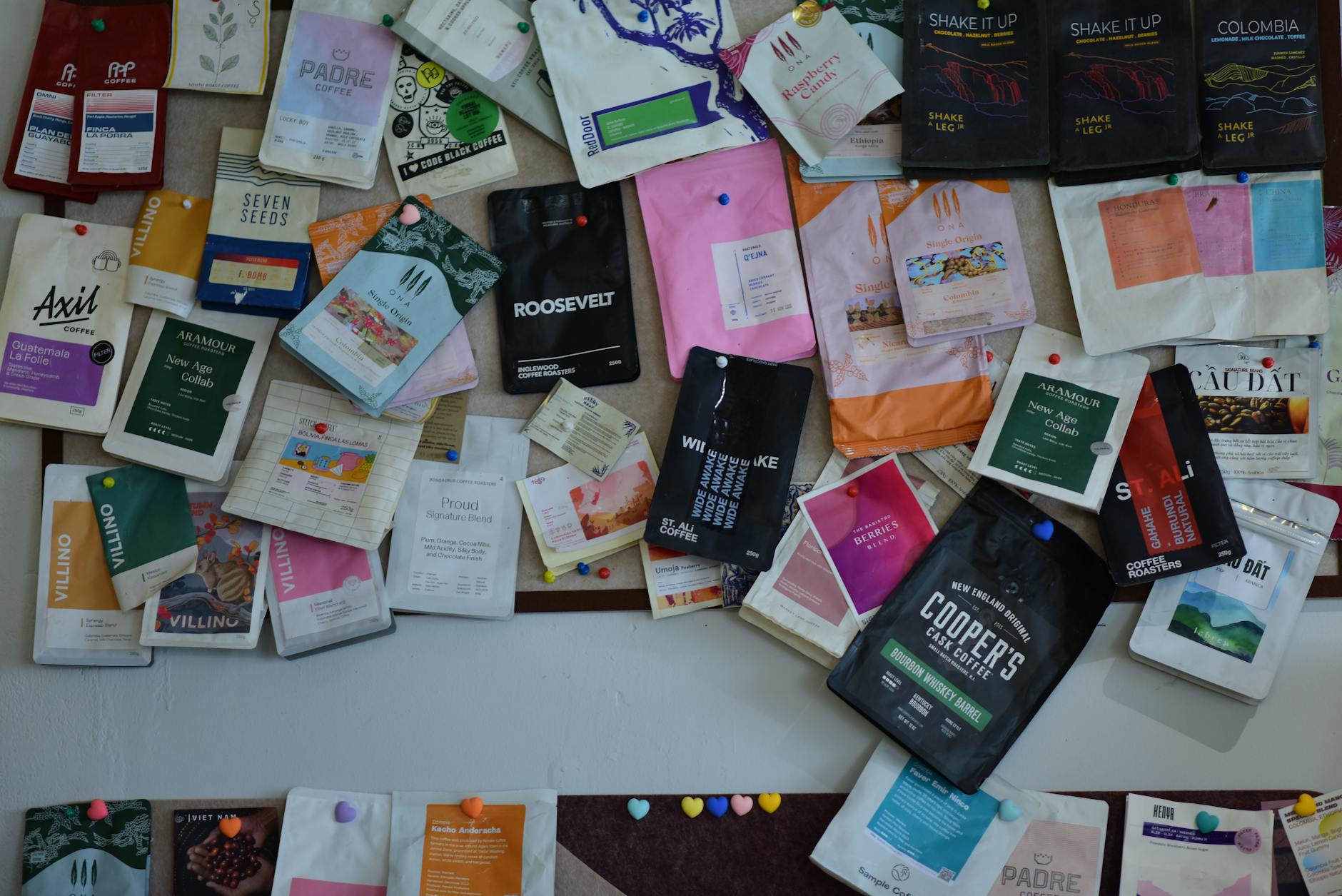
Not all stickers are equal when it comes to brand recognition. The format, finish, and material you choose signals something specific about your brand, and directly influences how seriously observers take it.
Die-Cut Stickers: Shape as Brand Signal
Die-cut stickers are cut precisely to the outline of your artwork rather than to a rectangle or oval. This means the sticker’s physical shape mirrors your logo or brand mark, creating a stronger visual association in the observer’s memory. A rectangular sticker with a logo inside is two visual elements: the shape and the logo. A die-cut sticker is one: the logo is the shape.
For brands with a distinctive mascot, wordmark, or icon, die-cut stickers are almost always the superior choice for brand recognition work. The distinctive outline becomes part of the brand’s visual vocabulary, recognisable from a distance before a single letter is readable.
Foil Stickers: Perceived Premium Value
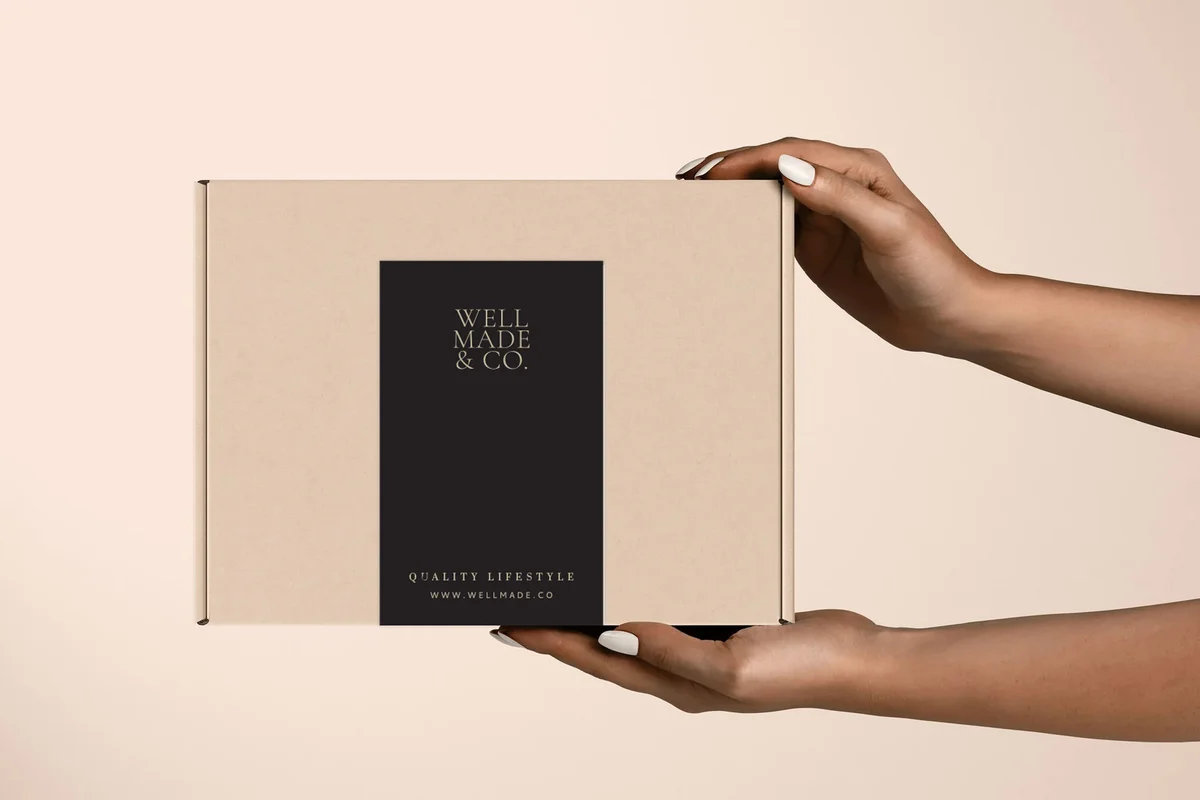
Finish matters enormously for how a brand is perceived at first contact. Gold stickers, along with silver, holographic, and coloured metallic finishes, communicate luxury, quality, and attention to detail in a way that standard matte or gloss stickers cannot. When a recipient peels a foil sticker from a package, the tactile and visual experience immediately positions the brand as premium.
This format works particularly well for beauty, fashion, food, beverage, and lifestyle brands where perceived quality is a key purchase driver. It also performs strongly in gifting contexts, where the sticker contributes to an overall premium unboxing experience rather than simply functioning as a logo carrier.
Clear Stickers: Seamless Surface Integration
Clear stickers allow your artwork to appear as if it’s been printed directly on the surface. On glass bottles, transparent packaging, or light-coloured phone cases, the absence of a visible sticker background creates a sophisticated, integrated look that reads as considered design rather than an afterthought label.
For brands targeting design-conscious audiences, clear stickers often outperform white-backed alternatives because they don’t interrupt the aesthetic of the surface they’re applied to. This increases the likelihood that recipients will actually use them rather than keeping them in a drawer, which is the most critical outcome for any brand awareness campaign.
Designing Stickers That Maximise Brand Recall
Producing stickers is only part of the equation. The design determines whether each impression actively builds recognition or simply generates visual noise. A poorly designed sticker can do more harm than good if it creates confused or negative associations with your brand.
Colour Consistency and the Recognition Multiplier
Colour is the fastest brand signal the brain processes, faster than shape and faster than text. Research cited widely in brand identity studies suggests colour can increase brand recognition by up to 80% compared to monochrome equivalents. For sticker marketing, absolute consistency with your brand colour palette is non-negotiable.
Your sticker’s dominant colour must match your brand’s primary colour precisely across all other touchpoints. If your website, packaging, and social media use a specific Pantone tone, your stickers should match it in print. Any deviation creates a fragmented visual identity that undermines the cumulative exposure effect and forces the brain to process what is essentially a different brand each time.
Simplicity Beats Complexity Every Time
Stickers are viewed briefly and at varying distances. Complex designs with fine details, multiple colours, and dense typography lose legibility fast. The most effective brand stickers reduce the logo to its most essential elements: the primary wordmark or icon, in one or two colours, with strong contrast against the surface.
If your full brand logo is complex, consider creating a simplified sticker-specific version: a monogram, an icon, or a wordmark stripped of secondary elements. Apple’s approach is instructive. The Apple logo sticker included with every device is a single-colour icon that reads from metres away and is instantly recognisable. That clarity is a deliberate design decision, not a limitation.
Size and the Visibility Hierarchy
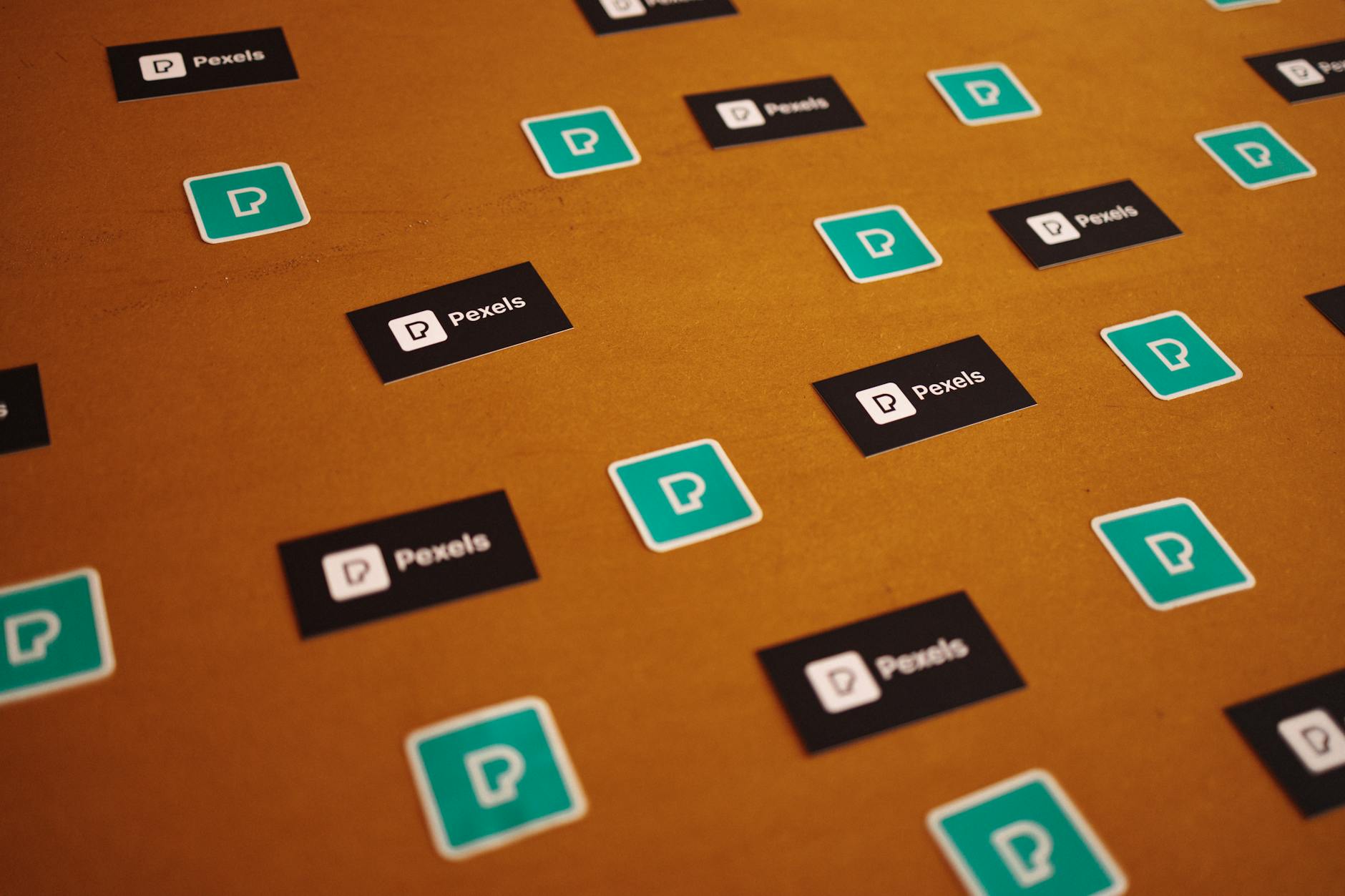
Stickers are not one-size-fits-all. A large statement sticker (100mm and above) placed on a visible surface generates more passive impressions than a small badge sticker tucked into a corner. For brand building, err toward the larger end of what your target placement surface can accommodate. A 90mm x 60mm laptop sticker is far more effective at generating distance impressions than a 40mm x 40mm version of the same design.
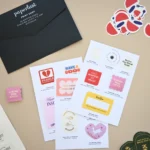
That said, offering a range of sizes in a sticker pack increases the likelihood of actual placement. Providing two or three sizes gives recipients flexibility to find a surface that fits. A used sticker placed in the right spot is infinitely more valuable than a perfectly designed one sitting in a drawer. Consider including your stickers in a sticker sheet format with multiple sizes and variants for the best mix of flexibility and perceived value.
Building a Sticker Distribution Strategy That Compounds
A sticker sitting in a storage box generates zero impressions. Distribution is where strategy makes the difference between a sticker budget that builds real brand equity and one that doesn’t.
Packaging and the Unboxing Moment
Including a sticker with every order is among the highest-return distribution decisions an e-commerce brand can make. The unboxing moment is one of the few times a customer is fully focused on your brand, making it far more likely the sticker will be kept and used. A well-designed sticker included at that moment benefits from positive brand association in a way that a sticker handed out at a trade event cannot replicate.
Format choice matters here. A premium foil sticker included in a high-value order reinforces the quality signal of the purchase. A die-cut sticker of your brand mascot included with a lifestyle product gives customers a brand asset they’re proud to display. Either way, the sticker leaves your packaging and enters the world as an ongoing ambassador for your brand.
Event and Trade Show Distribution
At events, stickers consistently outperform brochures and business cards because people actively choose to keep them. A well-designed sticker at a trade stand generates more post-event impressions than a catalogue that ends up in a recycling bin. For the trade show context, die-cut stickers with a strong visual identity work best because they need to be visually impressive enough to justify taking up space in someone’s bag.
Consider producing a limited-edition sticker specifically for event contexts. A design that references the event or includes the year creates scarcity and collector appeal, two factors that significantly increase the likelihood of the sticker being applied rather than discarded.
Community Seeding and Influencer Kits
Deliberately seeding stickers with community members, brand ambassadors, micro-influencers, loyal customers, or employees is a high-leverage strategy for consumer brands. A sticker kit sent to 20 engaged customers with a combined audience of 40,000 people has the potential to generate significant organic impressions through user-generated content, all for the cost of production and postage.
Including a short, friendly note with sticker kits removes friction. Something as direct as “for your laptop, water bottle, or wherever you want to show your crew” signals clearly that the sticker is meant to be used, not kept in an envelope. Recipients who aren’t sure whether they’re supposed to apply it will often default to doing nothing.
Measuring the Impact of Your Sticker Brand Awareness Campaign
Sticker marketing is a long-form brand play rather than a direct-response channel, which means measurement requires a different framework than you’d apply to a paid search campaign. That doesn’t mean it’s unmeasurable: it means you need the right metrics.
Impression Modelling
Calculate estimated total impressions by estimating average daily views per placed sticker multiplied by average sticker lifespan in days. A conservative estimate for a laptop sticker in a busy public environment might be 30 views per day over 365 days: 10,950 impressions per unit. Multiply by your distribution volume and divide by total production cost to arrive at your effective cost per impression.
This is a directional model rather than a precise measure, but it allows meaningful comparison with paid digital channels and helps make the case for sticker budget allocation to stakeholders who expect channel-by-channel ROI analysis.
Brand Search and Recall Correlation
One practical way to track the long-term impact of sticker campaigns is monitoring branded search volume over time. As recognition builds across your target audience, branded searches typically increase: people who have seen your logo enough times to remember it will search directly rather than via category keywords.
Pair your sticker distribution schedule with Google Search Console data tracking branded query volume. A growing distribution footprint and rising branded search over the same period is strong evidence that the campaign is building awareness. Survey-based brand recall studies, while more resource-intensive, can provide more direct attribution if your budget allows.
About Paperlust Print Shop
Paperlust Print Shop is an Australian premium printing business serving brands, agencies, and businesses of all sizes across the country. We specialise in high-quality custom stickers, business cards, signage, and marketing materials, all produced with an emphasis on finish quality and design integrity. Our sticker range includes die-cut, foil, clear, vinyl, and sticker sheets, each available in custom sizes and quantities to suit campaign budgets from small-batch to large-volume runs. Orders are produced in Australia and shipped nationally. If you’re building your brand’s physical presence, our team can help you choose the right format, finish, and quantity for your goals.
Frequently Asked Questions
- How do stickers help with brand recognition?
- Stickers build brand recognition through repeated passive exposure, a process explained by the mere exposure effect. Each time someone sees your logo on a sticker in a public setting, it registers as a brand impression. Over time, familiarity built through these repeated exposures translates into brand recall and preference, even when the observer is not consciously aware of the individual exposures.
- What type of sticker works best for brand awareness?
- Die-cut stickers are generally the most effective for brand recognition because the sticker’s physical shape mirrors your logo, creating a stronger visual memory trace. Foil stickers work well for premium brand positioning, while clear stickers suit design-conscious brands where seamless application matters. The best format depends on your brand identity and where the stickers will primarily be placed.
- How many impressions does a branded sticker generate?
- A conservative estimate for a laptop sticker in a busy public environment is around 30 views per day, generating over 10,000 impressions per year from a single sticker. Placement on high-traffic surfaces like vehicles or public-facing equipment can generate significantly more. Advertising Specialty Institute data indicates that promotional products, including stickers, typically achieve a cost per impression below $0.002 over their lifespan.
- How should I distribute brand stickers for maximum impact?
- The highest-impact distribution channels for brand stickers are: including one with every customer order (capitalises on the positive unboxing moment), distributing at events and trade shows (people actively choose to keep them), and seeding sticker kits with community members or micro-influencers. Each channel places stickers with people who have a reason to use them, which drives actual placement and impressions.
- Can sticker marketing replace other brand awareness channels?
- Stickers are best understood as a complement to other brand awareness channels rather than a replacement. Their strength is in generating long-term, low-cost passive impressions in physical environments, something digital channels cannot replicate. They work particularly well for building local and community-level recognition, and for reinforcing brand identity with existing customers through unboxing and loyalty touchpoints.
- How much do custom brand stickers cost in Australia?
- Custom sticker pricing in Australia varies by format, quantity, and finish. Vinyl stickers start from a few dollars each in small quantities, with per-unit cost falling significantly at higher volumes. Die-cut, foil, and clear stickers carry a modest premium over standard rectangular shapes but offer meaningfully higher perceived brand quality. For a brand awareness campaign, most businesses find that ordering 250 to 500 units delivers the best balance of per-unit cost and distribution flexibility.