Choosing the wrong banner type is an expensive lesson. A retractable pull-up banner at an outdoor festival ends up horizontal in the first gust. A vinyl banner rigged to a fence at a trade show looks out of place next to stretch fabric media walls. Every banner format has a specific job, and picking the right one comes down to three things: where it will be used, how it will be displayed, and how often you need to pack it up and move it.
This guide covers every major banner type available in Australia, with a comparison table for materials, an indoor-versus-outdoor breakdown, and links to the Print Shop products that fit each use case.
At a glance
- For trade shows and indoor events: premium retractable (pull-up) banners are the standard
- For outdoor events with wind: teardrop or bow banners, or vinyl banners with eyelets
- For construction sites, fences and scaffolding: mesh banners
- For large branded backdrops: stretch fabric media walls
- For long-term outdoor signage or temporary sales: custom vinyl banners
- For portability and reuse: retractable banners give the best cost-per-use
Banner Types at a Glance: Indoor vs Outdoor
The single most important question before choosing a banner format is whether it will be used indoors, outdoors, or both.
| Banner type | Best for | Indoor | Outdoor | Wind rating |
|---|---|---|---|---|
| Pull-up / retractable banner | Trade shows, conferences, POS | Yes | No | Not wind-rated |
| Premium retractable banner | Corporate events, exhibitions | Yes | Limited (calm days) | Low |
| Stretch fabric media wall | Branded backdrops, launches, photo walls | Yes | No | Indoor only |
| Vinyl banner | Storefronts, temporary outdoor signage | Yes | Yes | Medium |
| Mesh banner | Fences, scaffolding, high-wind sites | No | Yes | High |
| Teardrop banner | Events, real estate, retail entrances | Yes | Yes | Medium-high |
| Bow banner | Markets, festivals, brand activations | Yes | Yes | Medium-high |
| X-frame banner | Budget retail, startups | Yes | No | Not wind-rated |
| Polyester/fabric banner | Photo walls, corporate indoors | Yes | No | Indoor only |
| Feather flag | Events, driveways, race day | Yes | Yes | High |
The 10 Banner Types Explained
1. Premium Retractable (Pull-Up) Banners
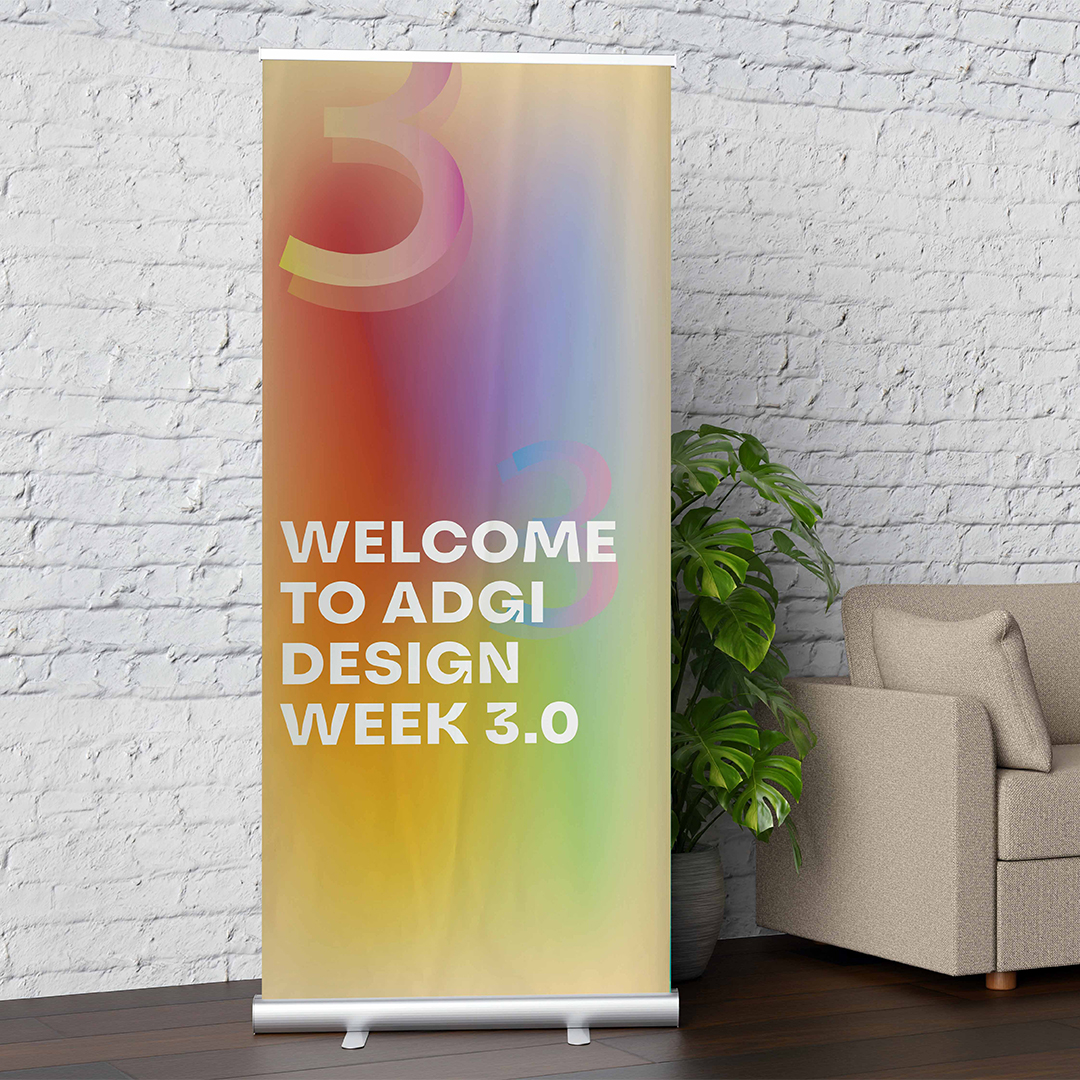
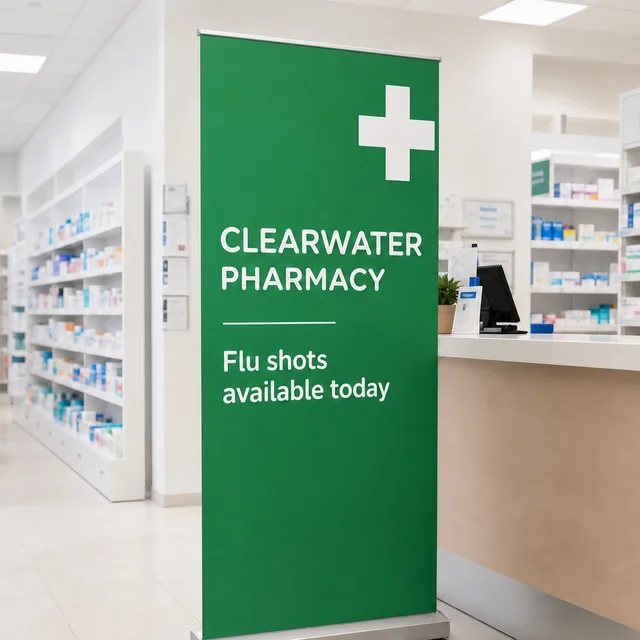
The most popular banner format for Australian small businesses. The graphic rolls down from a cassette into an aluminium base and sets up in under 60 seconds. No tools, no assembly, no separate frame.
Print Shop stocks pull-up banners in 850mm, 1000mm and 1200mm widths, each at a standard 2000mm display height. The premium version uses a heavier base with a spring-back cassette that protects the graphic between uses, so the stand holds up across many events of regular handling.
Best for: trade shows, conferences, point-of-sale, retail displays, presentations. Not suitable for: outdoor environments with wind.
See the Print Shop pull-up banner guide for full spec details and setup instructions, or shop premium pull up banners.
2. Vinyl Banners
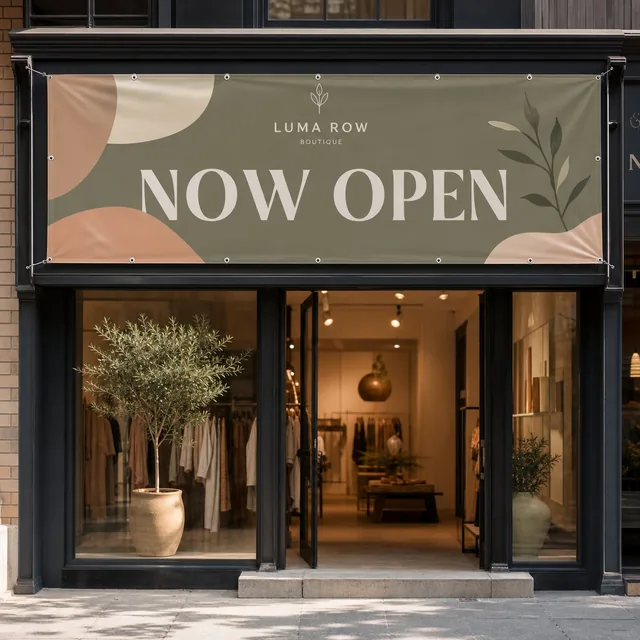
Heavy-duty PVC material, typically 510gsm for outdoor use. Vinyl banners are finished with hems and eyelets for rope or bungee attachment, or with rope-and-eyelets already included. They handle UV exposure, moisture and surface dust well, with an outdoor lifespan of two to five years depending on conditions.
Common uses: storefront signage, grand openings, seasonal sale banners, event site perimeters, outdoor markets.
Vinyl is not the most portable format. It rolls or folds for transport but does not have its own frame. For temporary outdoor use where a freestanding flag or frame is required, teardrop banners are usually a better choice.
Read more: Vinyl Banners Australia.
3. Mesh Banners
Mesh banners are printed on a perforated PVC substrate, typically 300gsm. The perforations allow wind to pass through rather than building up pressure behind the banner, which makes mesh the preferred choice for any installation on scaffolding, construction hoardings, fences, or building wraps. You can order custom mesh banners in standard and custom sizes, with hems and eyelets included.
The trade-off is colour vibrancy. Because the ink sits on perforated material, colours are not as saturated as on solid vinyl. View distance is also a factor: mesh banners read well from 10 metres or more but lose sharpness close-up.
Best for: construction sites, sports fences, large outdoor building installations, any high-exposure windy location.
Not suitable for: detail-heavy graphics, short viewing distances, indoor use.
Compare: Mesh vs Vinyl Banners: The Right Outdoor Banner for Wind.
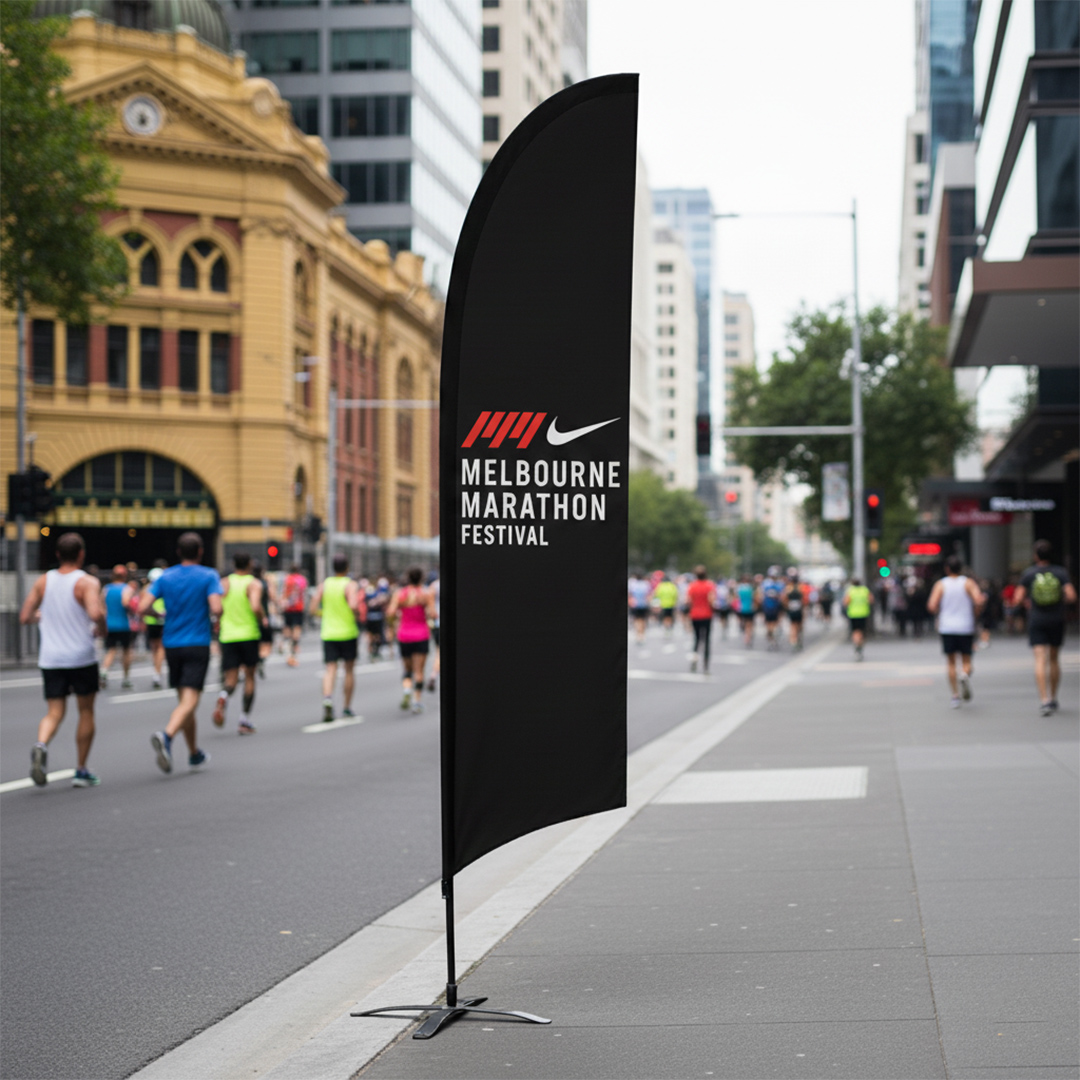
4. Teardrop Banners
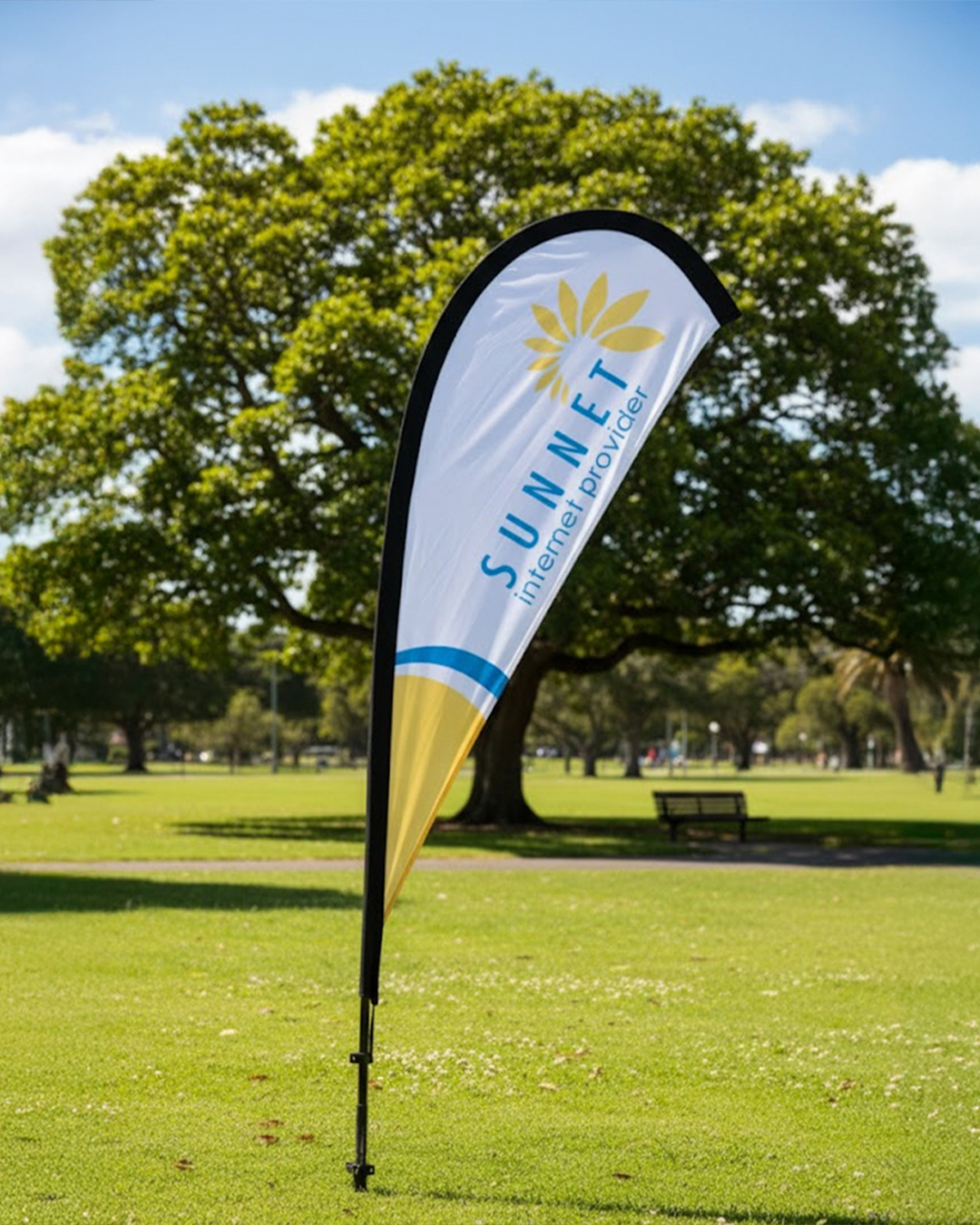
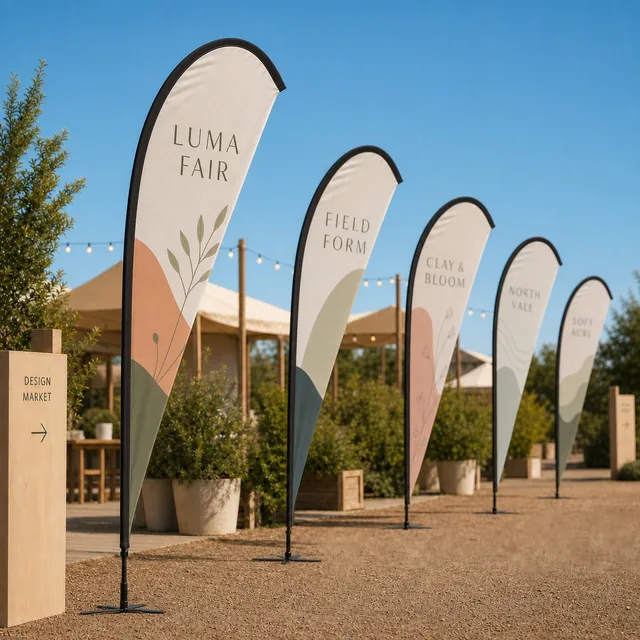
Teardrop banners (also called teardrop flags) are a freestanding outdoor flag format with a curved profile. The shape means the graphic faces forward even in light-to-medium wind, which makes teardrop flags more legible at distance than feather flags in similar conditions.
They attach to a ground spike (for turf or soil), a cross base (for hard surfaces), or a weighted water base. Bases are sold separately in most cases.
Popular uses: real estate open days, retail frontages, car yards, event entrances, farmers markets, sporting events.
Print Shop stocks teardrop banners in small, medium and large sizes. See the teardrop banner flag sizes guide for size comparison, the teardrop banner template and artwork guide for setting up your file, or shop teardrop flags directly.
For a direct comparison between teardrop and feather formats, see Teardrop vs Feather Flag: Which Is Best for Your Business?.
5. Bow Banners
Also called bow flags, these are a curved flag format where the graphic bows outward from the pole rather than wrapping back. The bowed shape creates an eye-catching silhouette with greater movement than teardrop flags. They are popular at outdoor festivals, brand activations, and large sporting events where visual energy is part of the brief.
Bow banners are printed on lightweight dye-sublimated polyester with UV-resistant inks. Like teardrop banners, they require a separate base for hard surfaces.
Ready to order? Configure custom bow banners with your choice of base and single or double-sided print.
Best for: outdoor brand activations, festivals, large community events, car dealer forecourts.
For full hardware and footprint details, the dedicated bow banner guide covers sizing and base options across different surfaces.
6. Stretch Fabric Media Walls
Stretch fabric media walls are large-format backdrops printed on dye-sublimated fabric stretched over a modular aluminium frame. The seamless surface and vibrant colour quality make them the go-to format for branded photography backdrops, product launches, award ceremonies, and exhibition booths. A matching set of printed selfie frames can be used alongside the media wall when guests want a handheld or freestanding prop for their photos.
For an award or donation photograph taken against the wall, novelty cheque printing produces a presentation prop with 48 hour production, separate from the banner formats above.
Media walls are an indoor format. The aluminium frame slots together without tools and the fabric sleeve stretches over it, which means setup takes 10 to 15 minutes without needing any special equipment.
Common sizes include 2400 x 2200 mm, 3000 x 2200 mm and custom widths for corner or curved configurations.
Best for: photo walls, trade show backdrops, corporate events, award ceremonies, media interviews, product launches.
Shop stretch fabric media walls.
7. Double-Sided Retractable Banners
A variation on the standard pull-up, double-sided banners use a two-graphic cassette so both sides of the banner display printed content. This doubles the visible messaging for the same floor footprint, which is a cost-effective choice in exhibition halls where visitors approach from multiple directions.
Most double-sided systems use a slightly wider base to keep the unit stable with the additional weight of two graphics.
8. X-Frame Banners
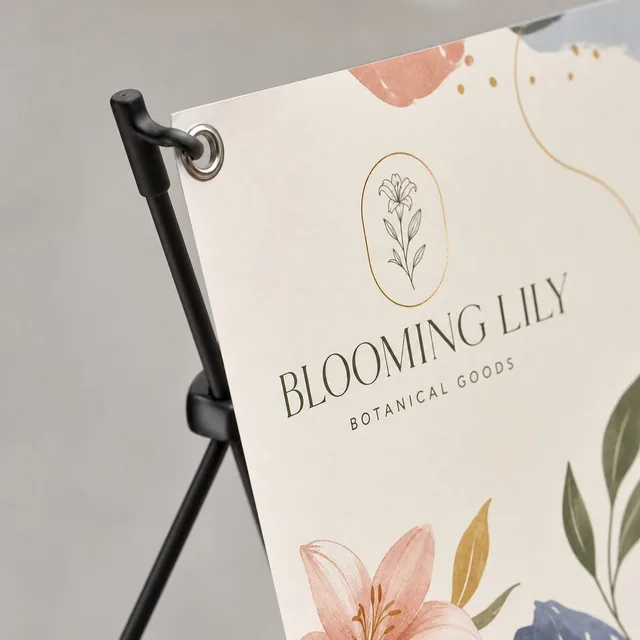
X-frame banners are the lowest-cost freestanding banner option. A lightweight X-shaped plastic or aluminium frame holds a printed polyester graphic at its four corners. Graphics are interchangeable, which makes them useful for brands that need to rotate messaging without buying new frames.
The limitation is stability. X-frame banners are not suitable for outdoor use and are prone to tipping indoors if in a high-traffic area. They work well as a static point-of-sale display in low-foot-traffic settings.
9. Rectangle Flags
Rectangle flags combine a structured profile with a straight-edge graphic, giving a cleaner, more corporate look than teardrop or bow formats. They are common at brand launches, storefronts, and event staging where a symmetrical appearance is part of the brief.
Rectangle flags typically require a flag pole with a cross base or ground spike. The graphic attaches along one or two edges depending on the mount style.
10. Polyester and Fabric Banners
Fabric banners cover a broad category that includes dye-sublimated polyester prints used for hanging display panels, conference backdrops and exhibition dividers. The printing method produces high colour saturation and fine-detail reproduction, making fabric suitable for large-format brand imagery that needs to be viewed close up.
Fabric is lighter than vinyl of equivalent size, which makes it practical for ceiling hanging, pipe-and-drape systems and travel bags.
Not suitable for outdoor use.
Pull up banners and X banners →
Pull Up BannersBanners & Standees
X BannersBanners & Standees
Teardrop BannersBanners & Standees
Vinyl BannersBanners & Standees
Materials Comparison: What to Specify When You Order
| Material | Typical weight | Key property | Lifespan (outdoor) | Lifespan (indoor) | Best use |
|---|---|---|---|---|---|
| PVC vinyl (solid) | 510-650gsm | UV + water resistant | 2-5 years | Indefinite | Outdoor signage, events |
| PVC mesh | 300gsm | Wind-permeable, perforated | 1-3 years | N/A | Fences, scaffolding |
| Dye-sub polyester (fabric) | 100-200gsm | Soft, vivid colour | Not rated outdoors | Indefinite | Indoor backdrops |
| Stretch fabric (media wall) | 120-150gsm | Seamless, frame-tensioned | Indoor only | Indefinite | Photo walls, exhibitions |
| Feather/teardrop polyester | 110-130gsm | Lightweight flag | 1-2 years (UV fades) | Indefinite | Outdoor events |
How to Choose: A Simple Decision Framework
Step 1: Indoor or outdoor?
If outdoor, the banner must handle wind, UV and moisture. Solid vinyl, mesh, teardrop and bow formats are designed for outdoor conditions. Pull-up retractables, fabric, and media walls are not.
Step 2: Permanent or portable?
Vinyl banners and mesh are installed in a fixed location for weeks or months. Retractable pull-ups, teardrop banners and media walls are designed to be packed up and moved between events.
Step 3: How windy is the site?
If the location is exposed (scaffolding, outdoor fence, coastal site), use mesh. If the site has moderate wind (park, market, event site), teardrop or bow banners are the right flag format. If the site is sheltered, any format works.
Step 4: What is the primary goal?
- Branded backdrop for photography or media: stretch fabric media wall
- Event entry and street presence: teardrop or bow banner
- Trade show display: premium retractable pull-up
- Temporary outdoor campaign: vinyl banner with eyelets
- High-wind or construction site: mesh banner
Where to Order Banner Printing in Australia
Print Shop ships to all Australian states from our Melbourne studio. All banners are printed on commercial-grade equipment with UV-resistant inks. Turnaround and pricing vary by format; see the individual product pages for current specs.
That list is a shortlist, and the full custom banners range adds bow banners, X banners and replacement flags alongside the types already named.
For detailed setup and artwork guides by format, see the related posts below.
Frequently Asked Questions
What is the most popular type of banner for small businesses in Australia?
Premium retractable (pull-up) banners are the most commonly ordered format for Australian small businesses. They are portable, professional-looking, quick to set up, and work well in almost any indoor trade or event setting. Standard sizes are 850mm, 1000mm and 1200mm wide, each 2000mm tall.
Can you use pull-up banners outdoors?
Standard retractable banners are not designed for outdoor use. Wind can topple them and UV exposure degrades the graphic over time. For outdoor events, teardrop banners, bow banners or vinyl banners with a frame or eyelet system are a better choice.
What is the difference between a mesh banner and a vinyl banner?
Vinyl banners are printed on solid PVC and block wind like a sail, which can cause them to tear or pull fixings loose in strong conditions. Mesh banners are printed on perforated PVC, which allows wind to pass through and reduces the pull on fixings by up to 50%. Mesh is the right choice for fences, scaffolding and any exposed outdoor site. The trade-off is slightly lower colour saturation on mesh.
How long do outdoor banners last in Australia?
Solid vinyl banners last two to five years outdoors with good UV-resistant inks and proper storage when not in use. Mesh banners last one to three years. Teardrop and feather flags printed on polyester fabric typically last one to two years before UV fading becomes visible, particularly in full-sun Queensland or WA conditions.
What size should a banner be for an outdoor event?
For a standard market stall or event entry, a medium teardrop banner (approximately 2.7m tall) or a vinyl banner at 1.8m x 0.6m to 2.4m x 1.2m covers most situations. For a branded backdrop or stage, a stretch fabric media wall at 2400 x 2200 mm or 3000 x 2200 mm is more appropriate.
What material is used for stretch fabric media walls?
Stretch fabric media walls use a dye-sublimated polyester fabric sleeve tensioned over a modular aluminium frame. The fabric is lightweight, packs into a carry bag, and produces seamless full-colour graphics with high image quality. They are an indoor-only format.
Are vinyl or fabric banners better for a trade show?
For a trade show, it depends on what the banner is for. If you need a freestanding display next to your table, a premium retractable pull-up is the standard choice. If you need a large branded backdrop across the back of your booth, a stretch fabric media wall gives the most professional result. Vinyl banners are better suited to outdoor or semi-permanent signage than a trade show context.