
When a standard A4 or A3 print simply will not cut it, large format comes into its own. Whether you need an A1 event poster for a Saturday market, an A0 display for a trade stand, or an oversized artwork print for a fit-out, getting the format, stock, and artwork setup right from the start saves reprints, delays, and disappointment.
This guide covers everything Australian businesses, event organisers, and designers need to know: the full A-series size range, stock and finish options, indoor vs. outdoor durability, mounting and display, artwork setup at large sizes, and how to order in Australia.
At a glance
- Most popular large format: A1 (594 x 841 mm) for events, retail, and exhibitions
- Maximum impact: A0 (841 x 1189 mm) for trade displays, movie-style promotion, and conference signage
- Stock: 200gsm synthetic for durable, moisture-resistant indoor and outdoor-adjacent display
- Resolution: 150 dpi minimum at print size; 100 dpi acceptable for A0 and above when viewing distance is 2+ metres
- Bleed: 3 mm on all four sides; save all files as print-ready PDF (CMYK, embedded fonts)
- Turnaround: fast Australian production; see the posters product page for live timing and pricing
A-Series Poster Sizes: A4 to A0 and Beyond
The ISO A-series is a geometric progression: each size is exactly half the area of the one above it. That makes planning straightforward, but for large format printing the jumps in physical size are dramatic.
| Size | Dimensions (mm) | Dimensions (inches) | Typical use |
|---|---|---|---|
| A4 | 210 x 297 | 8.3 x 11.7 | Flyers, desk notices, photocopier standard |
| A3 | 297 x 420 | 11.7 x 16.5 | Small posters, retail shelf talkers, menus |
| A2 | 420 x 594 | 16.5 x 23.4 | Event posters, real estate listings, safety signage |
| A1 | 594 x 841 | 23.4 x 33.1 | Gig posters, exhibition panels, retail window, foyer display |
| A0 | 841 x 1189 | 33.1 x 46.8 | Trade stands, conference keynote, architectural drawings, major retail |
| 2A0 | 1189 x 1682 | 46.8 x 66.2 | Feature walls, lobby installations, cinema-scale promotion |
A rule of thumb for choosing format: stand at the distance your viewer will stand and check whether your headline is readable. A1 is comfortable from 1.5 to 2 metres. A0 reads well from 2 to 3 metres. For anything displayed at 4+ metres or filling a wall, consider oversized or multiple tiled panels.
Stock and Finish Options
Large format posters are typically printed on one of two broad substrate categories: coated paper stocks and synthetic stocks. The right choice depends on how long the poster needs to look good and where it will be displayed.
| Stock type | Weight | Surface | Best for | Durability |
|---|---|---|---|---|
| 200gsm Synthetic | 200gsm | Semi-matte | Indoor and outdoor-adjacent display, hospitality, retail | High: moisture-resistant, tear-resistant |
| Gloss art paper | 115-200gsm | High gloss | Short-run indoor promotion, product launches | Moderate: fingerprints visible, not waterproof |
| Satin art paper | 170-200gsm | Low sheen | Exhibitions, photography prints, point-of-sale | Moderate: less glare than gloss, not weatherproof |
| Uncoated bond | 100gsm | Matte | Draft plans, architectural drawings, internal comms | Low: tears easily, absorbs moisture |
Paperlust Print Shop’s poster range uses 200gsm synthetic stock: a durable, moisture-resistant substrate that holds colour vibrantly and outlasts standard coated paper in high-traffic and outdoor-adjacent settings. It is well-suited to hospitality, retail, gym, and events applications where posters see daily handling or are displayed near windows and doors.
GSM and why it matters at large format
A lightweight 80gsm sheet that looks fine at A4 becomes flimsy and prone to creasing at A1. For large format display work, 170gsm and above is the practical minimum. 200gsm synthetic handles snapping into a snap frame without buckling and survives the handling involved in flat-packed delivery, transport, and installation.
Indoor vs. Outdoor Durability
Most large format posters printed on paper-based substrates are designed for indoor or sheltered display. Understanding the exposure risk before you order prevents a costly reprint.
Indoor display: Any quality coated or synthetic stock works well. Standard satin or gloss art paper is fine for short-term promotions (up to 3 months). For permanent or semi-permanent signage (reception areas, waiting rooms, retail walls), 200gsm synthetic holds up better: it will not warp from ambient humidity and resists light scuffing.
Outdoor-adjacent (under awning, behind glass, sheltered window): 200gsm synthetic is the minimum. The moisture-resistance of synthetic stock keeps the poster from absorbing condensation on a cold window pane and prevents the delamination that can occur with paper-based stocks near glass.
Full outdoor exposure: Printed posters are generally not designed for direct outdoor exposure to rain and UV. For outdoor-rated signage, printed corflute signs or window film are the better choices. If you need a large outdoor poster for a short-duration event (one weekend), a synthetic print inside a weatherproof snap frame offers reasonable short-term protection.

Mounting and Display
Large format posters rarely look their best rolled up and stuck to a wall with tape. Choosing the right mounting method protects the print and projects a polished, professional result.
Snap frames
The most common solution for retail, gym, and hospitality environments. Aluminium snap frames open on all four sides to swap posters without tools. Available at A1 and A0 from hardware and display suppliers. A 25mm profile frame suits most poster weights; 32mm profiles provide extra rigidity for A0 prints.
Foam board mounting
Foam board (also called foam core) is a lightweight rigid board available in 5mm or 10mm. Posters can be dry-mounted or spray-adhered onto it for a rigid, lightweight panel that can sit on an easel, attach to a wall, or work as a freestanding tabletop display. You can also order foam board printing direct, in full colour on the board itself, in standard sizes from A4 to A0 plus 600 x 900mm. Foam board is for indoor use only.
Poster stands and easels
For events where drilling is not permitted, a poster stand or easel holds an A1 or A0 print at eye level without any wall fixings. Standard adjustable poster stands handle frames from A3 to A0.
Flush wall mounting
For permanent installations, lightweight foam board-mounted prints can be affixed directly to walls using double-sided foam tape or picture hooks. Heavier substrates may need framing hardware. For a truly finished look in a reception or boardroom, consider pairing large format prints with acrylic panel signs, which give a floating, architectural quality. Where the piece is decorative rather than promotional, canvas prints skip the mounting step altogether: they arrive stretched and assembled on solid timber, up to 60x90cm.
Setting Up Large Format Artwork
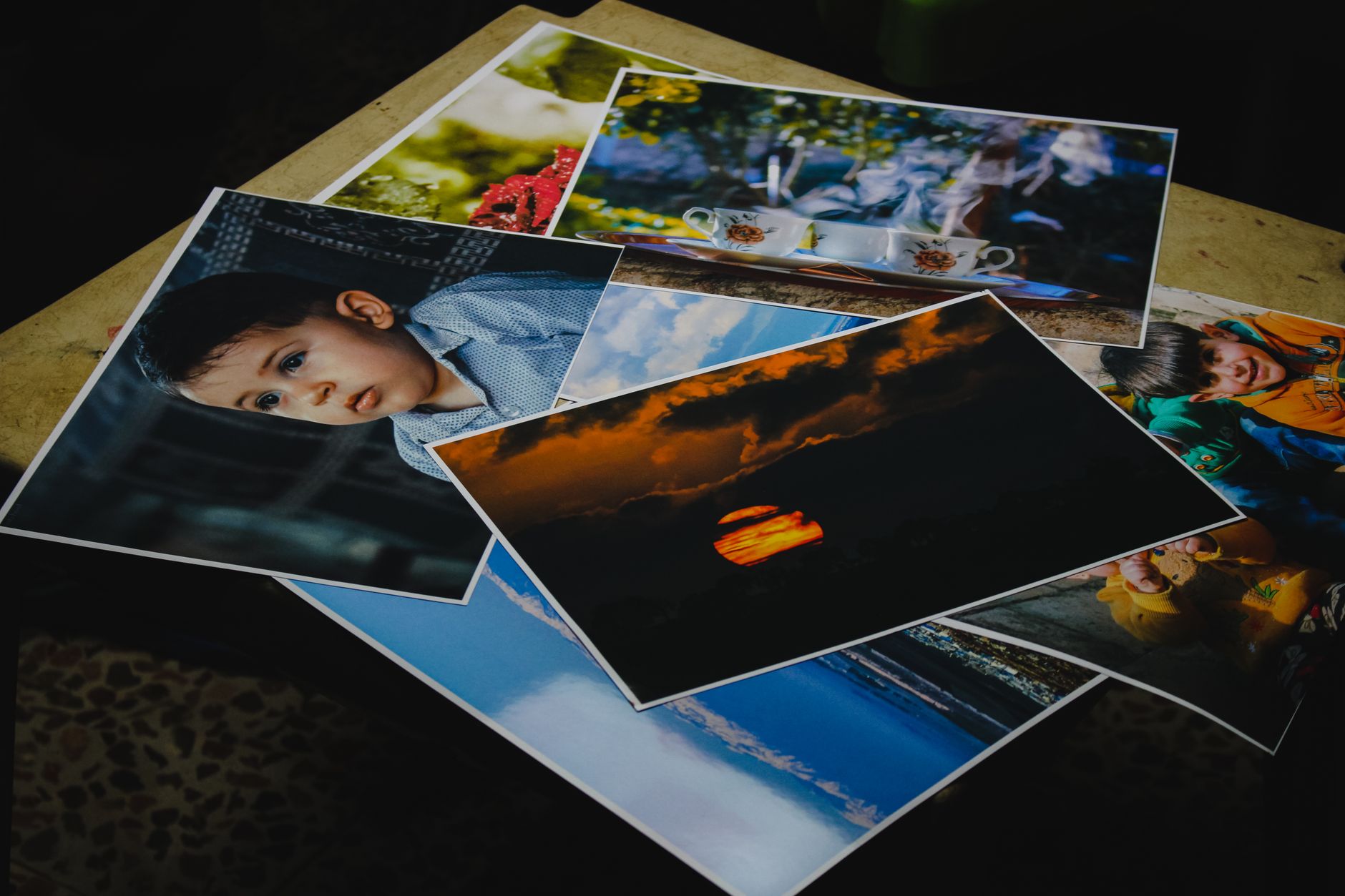
Artwork setup is where most large format print problems start. Scaling up a file that was designed for A4 produces blurry or pixelated results at A1. Getting this right before sending to print saves a reprint turnaround.
Resolution at print size
Resolution requirements decrease as viewing distance increases because the eye cannot resolve fine detail from a distance. Use this as a starting guide:
| Print size | Minimum resolution | Notes |
|---|---|---|
| A2 | 200 dpi at print size | Viewed from ~1 m |
| A1 | 150 dpi at print size | Viewed from 1.5-2 m |
| A0 | 100-150 dpi at print size | Viewed from 2-3 m |
| 2A0 and above | 72-100 dpi at print size | Viewed from 3+ m |
The key phrase is at print size: a 72 dpi image that is 594 x 841 px will print at roughly 10 x 14 mm at 150 dpi, not at A1. Always check that your raster images have sufficient pixels at the actual output dimension. The same principles apply when preparing artwork for an A1 poster, and our A1 poster size guide outlines the typical uses and print specifications to work to.
For more detail on resolution, bleed, and file formats, see the Paperlust guide to poster design.
Vector vs. raster
Vector artwork (created in Adobe Illustrator or similar, saved as PDF or EPS) scales to any size without quality loss because it is defined by mathematical paths rather than pixels. If your design is type-heavy or logo-based, vector source files are the safest choice for large format.
Raster images (photographs, Photoshop files, JPEGs) are pixel-based and must have sufficient resolution at the output size. A high-quality photograph shot on a modern smartphone or mirrorless camera typically has enough pixels for A1 at 150 dpi; check the pixel dimensions before assuming. A practical guide to poster size in pixels and DPI explains the resolution and DPI artwork actually needs, so you can check whether your photograph will hold up.
Bleed
Add 3 mm bleed on all four sides beyond your trim size. For A1 (594 x 841 mm), your document should be set up at 600 x 847 mm. Keep all critical content (text, logos, important design elements) at least 5 mm inside the trim edge as a safe zone. Content that runs off the edge of the trim, such as a background colour or full-bleed photograph, must extend to the bleed edge.
Colour mode: CMYK
Set your document to CMYK colour mode before exporting. Files supplied in RGB will be converted to CMYK on press, and the conversion can shift colours, particularly saturated blues, oranges, and greens. If your brand colours have specific CMYK values, confirm those values are set correctly in your source file rather than relying on RGB approximations.
File format
Export as a print-ready PDF with bleed marks, crop marks, and embedded fonts. Flatten any transparency. Avoid supplying JPEG or PNG for final print files: the compression artefacts that are invisible on screen can become visible at A1 and above.
For a full walkthrough of poster artwork setup, the A-series poster sizes guide covers dimensions, margin conventions, and common file mistakes at each size.
How to Order Large Format Posters in Australia
Paperlust Print Shop prints A1, A2, and A3 posters on 200gsm synthetic stock with flat-rate $15 shipping Australia-wide and fast production times.
The ordering process:
- Visit the posters product page and select your size.
- Upload your print-ready PDF. If you need design help, the team can assist.
- Receive a proof for approval. Review it carefully at 100% zoom on screen for any resolution, bleed, or colour issues.
- Approve the proof and your order goes to print.
Pricing starts from $6.53 AUD inc. GST. See the product page for live pricing by size and quantity, as well as current production and dispatch timelines.

Frequently Asked Questions
What is the difference between A1 and A0 poster sizes?
A1 measures 594 x 841 mm and A0 measures 841 x 1189 mm. A0 is exactly twice the area of A1. A1 is the most practical large format size for most businesses: it fits standard snap frames, is easy to handle, and reads comfortably from 1.5 to 2 metres. A0 is chosen when maximum visual impact is needed, such as at trade stands, conference events, or large retail windows. Our guide to A0 poster size explains the display jobs this largest standard sheet suits.
What resolution do I need for an A1 poster?
A minimum of 150 dpi at the actual print dimensions (594 x 841 mm). For photographic images, aim for 200 dpi or higher at print size to ensure fine detail reproduces sharply. Never upscale a low-resolution image in Photoshop to hit the resolution target; upscaling adds pixels but not real detail, and the result will still appear soft on print.
Can I print an oversized poster larger than A0?
Yes. 2A0 (1189 x 1682 mm) and custom widths are available for feature walls and large-scale installations. Contact the Paperlust Print Shop team for a custom quote on oversized dimensions.
What paper stock is used for large format posters?
Paperlust Print Shop uses 200gsm synthetic paper for large format poster printing. Synthetic stock is moisture-resistant and more durable than standard coated paper, making it well-suited for retail, hospitality, gyms, and any display environment where posters may encounter humidity or handling.
Are large format posters suitable for outdoor use?
Synthetic stock provides good resistance to moisture and is suitable for outdoor-adjacent and sheltered outdoor settings. For prolonged direct outdoor exposure to rain and UV, a printed corflute sign or weather-rated substrate is a more durable choice.
How do I mount an A1 or A0 poster?
The most popular options are the snap frame (an aluminium profile that opens to swap prints without tools), foam board mounting (for a rigid panel that can sit on an easel or attach to a wall), and the poster stand for events where wall fixing is not possible. Printed foam board in A1 and A0 can be ordered from Paperlust. Snap frames and poster stands are available from display equipment suppliers.
How long does large format poster printing take in Australia?
Paperlust Print Shop offers fast Australian production. Check the posters product page for current turnaround times and dispatch estimates, as these can vary by order volume and time of year.
What is the difference between gloss, satin, and matte finishes?
Gloss finish has a high shine and makes colours appear vivid and saturated; it is prone to fingerprints and glare under direct light. Satin (or silk) is a low-sheen finish that reduces glare while maintaining colour depth; it is popular for exhibition and photography prints. Matte is a flat, non-reflective surface that suits text-heavy designs and technical drawings where readability matters more than colour pop.
Order Your Large Format Posters
Ready to print? Visit the Paperlust Print Shop poster page to configure your A1, A2, or A3 poster, upload your artwork, and get a proof in fast Australian production time.
For a full breakdown of every A-series size from A4 to A0, see the poster sizes guide.