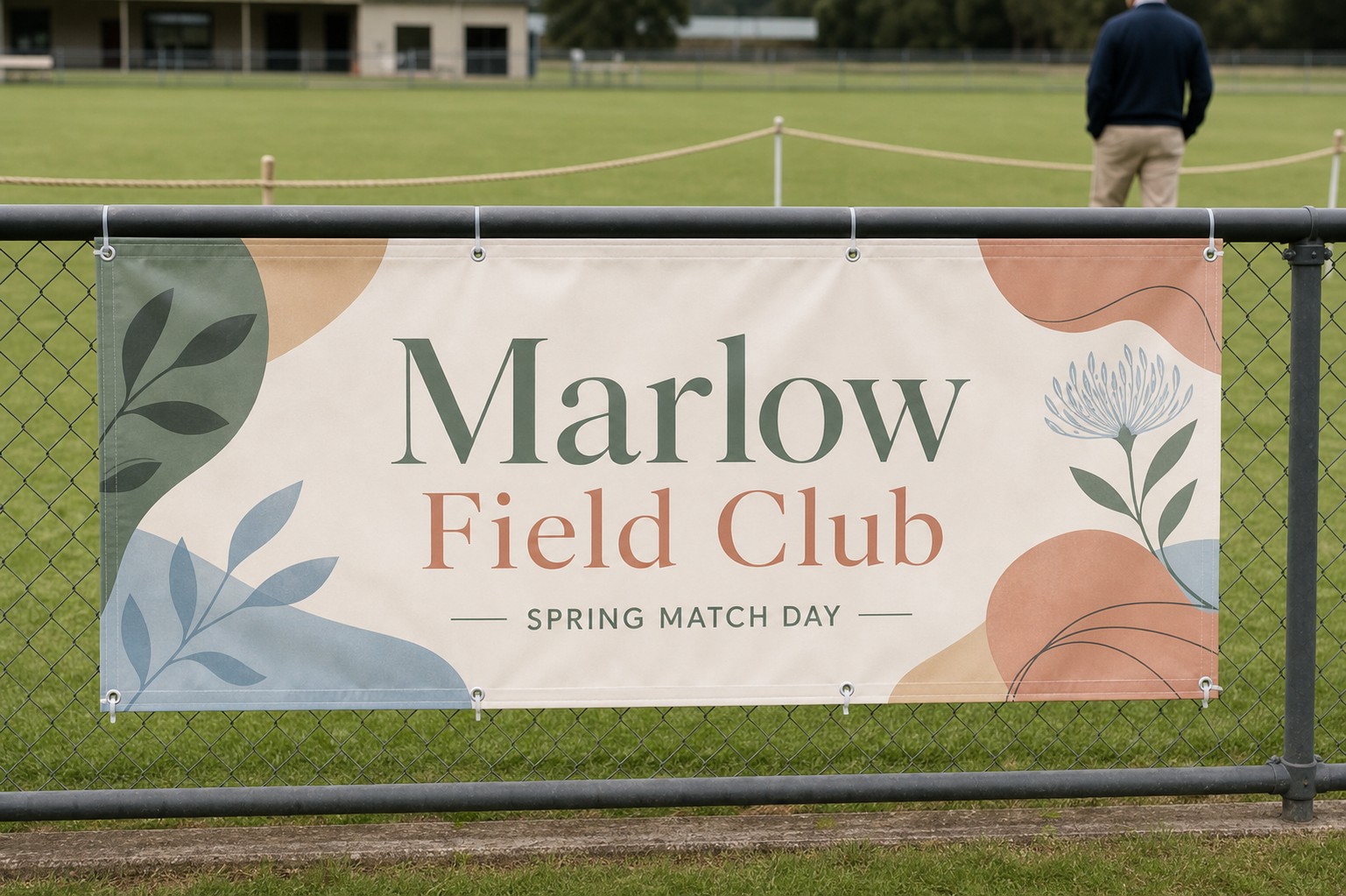
Rectangle banners are the workhorse of outdoor signage in Australia. From construction hoardings on scaffolding to branded displays at festivals, markets, and corporate activations, a well-produced rectangle banner delivers high-impact visibility at a practical cost.
The challenge is that “rectangle banner” covers a wide range of products. The substrate, finish, and mounting system you choose determines how the banner performs outdoors, how long it lasts, and what it costs to produce and transport. Getting the specification wrong can mean a banner that fades after one Australian summer or arrives without the right hardware for your venue.
This guide covers everything you need to make the right call: a materials comparison, finishing options, mounting guide, size reference, and design tips for Australian buyers.
Cheat sheet
- Standard materials: 440-510gsm PVC for long-term outdoor signage; 125-145gsm dye-sublimated fabric for events and brand activations
- Common sizes: 2000x1000mm and 3000x1000mm for flat outdoor banners; 1.5m to 4.6m heights for free-standing fabric flag displays
- Finishing choices: hemmed edges, eyelets, pre-threaded rope, pole pockets
- Outdoor lifespan: PVC/vinyl typically rated 3-5 years in Australian conditions; fabric rated 6-18 months
- Single-sided suits one-directional viewing; double-sided gives clean artwork visible from both faces
- Best use cases: events, shopfronts, construction hoardings, sports venues, real estate, festivals, trade shows
PVC, Vinyl and Fabric: Understanding Your Material Options
“Rectangle banner” is a shape description, not a material specification. The same rectangular format is available in several substrates, each suited to different applications.
PVC Banners
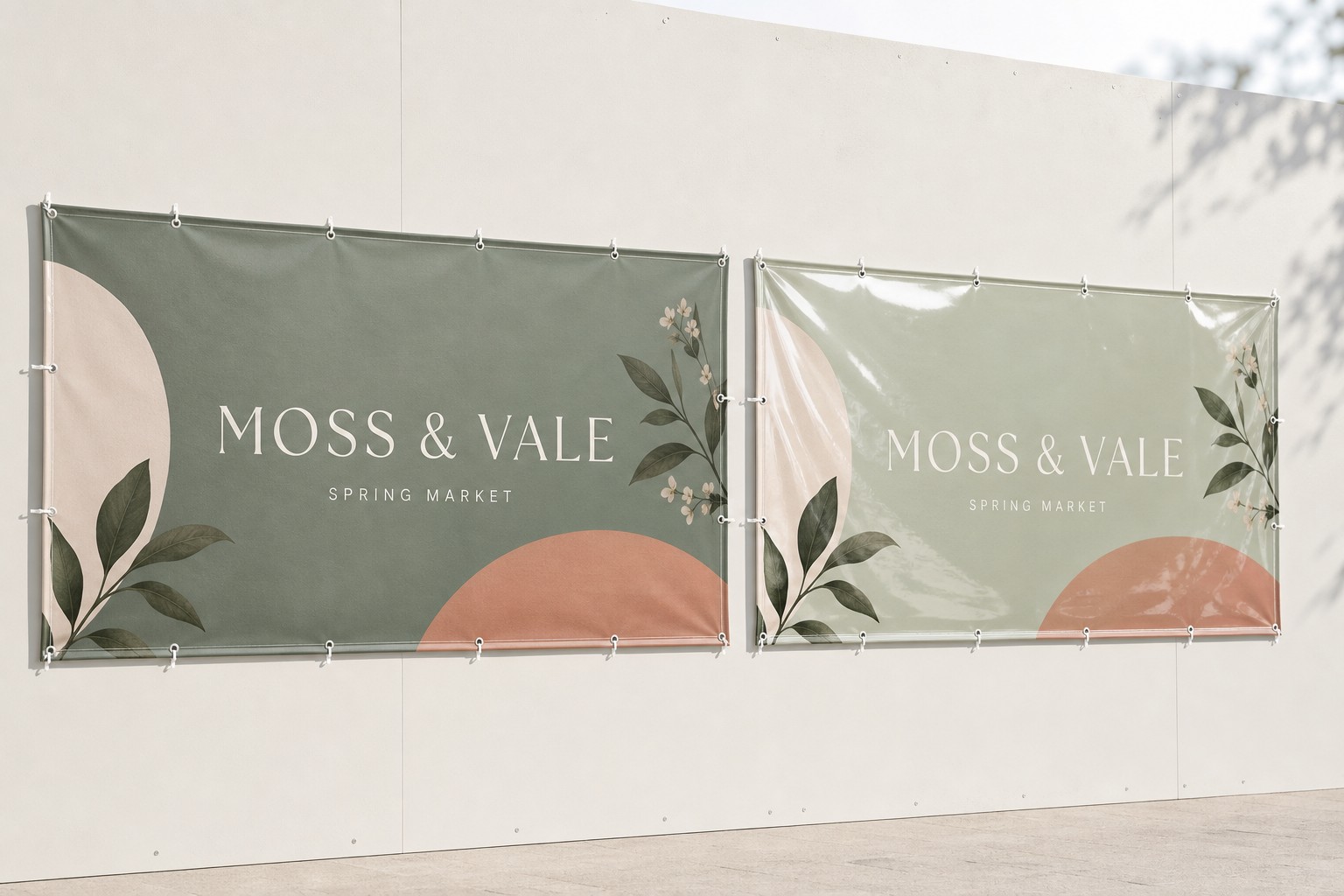
PVC banners are the established choice for heavy-duty outdoor signage. Printed on 440-510gsm PVC (polyvinyl chloride) stock with UV-resistant solvent inks, the result is a waterproof, tear-resistant display rated for three to five years in typical Australian conditions.
PVC suits applications where the banner attaches to an existing structure and stays in place: construction site hoardings, shopfront facade signage, real estate development displays, and outdoor advertising fixed to fencing or walls. The trade-off is weight and bulk. A large PVC banner rolls into a heavy cylinder that is difficult to transport without a vehicle.
Vinyl Mesh Banners
Vinyl mesh (perforated PVC) uses a grid of small holes that allows airflow through the banner, significantly reducing wind loading. This makes it the preferred choice for high-exposure locations such as scaffolding on tall or coastal buildings, where a solid banner would act as a wind sail under storm conditions. Paperlust prints vinyl mesh banners to size, with hems and eyelets included.
Print quality on mesh is marginally lower than solid PVC due to the perforations interrupting the image. At normal site viewing distances, the difference is minor and the wind performance benefit outweighs it.
Dye-Sublimated Fabric Banners
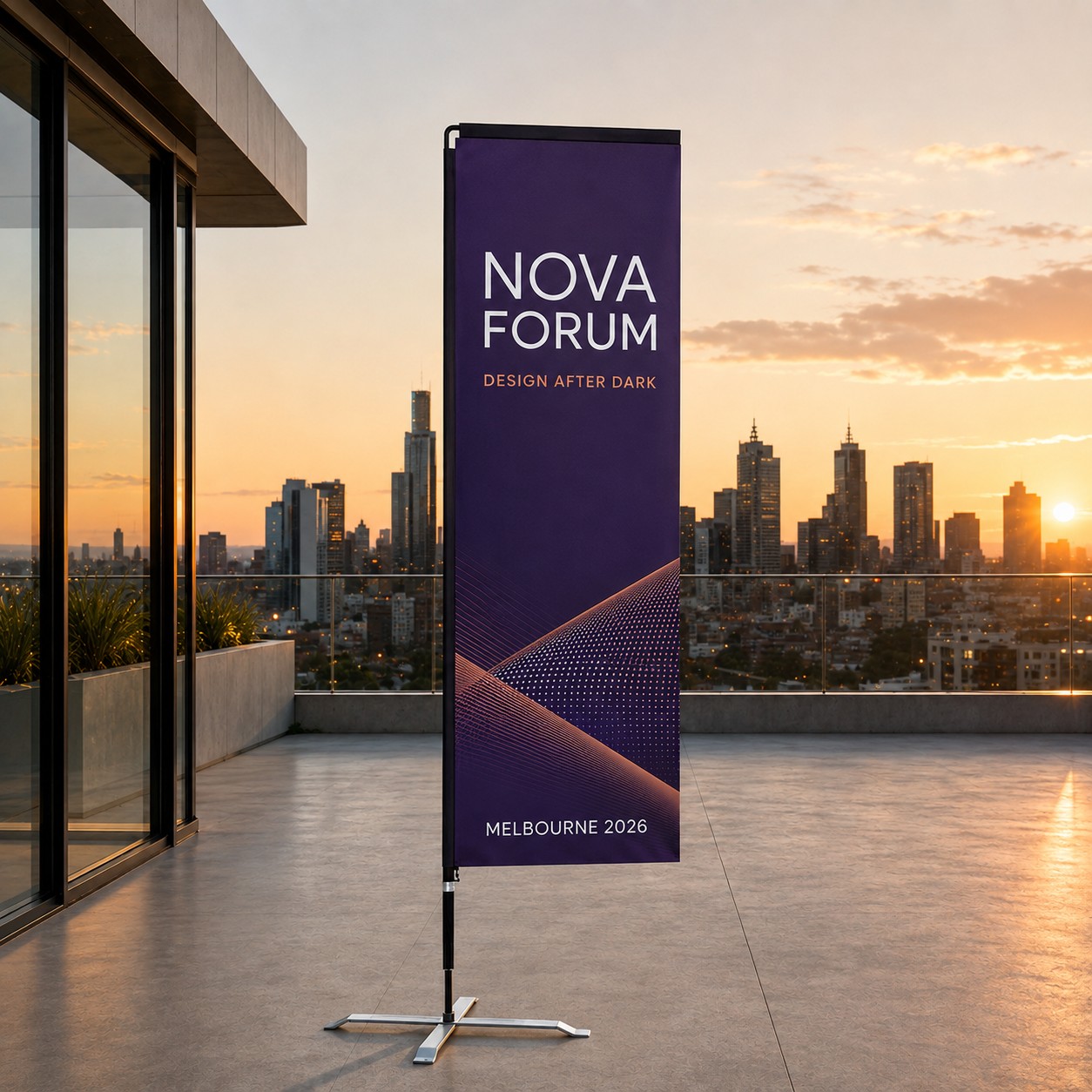
Fabric rectangle banners use dye-sublimation to transfer heat-activated dyes permanently into polyester fibres, producing a vivid, lightweight display that resists fading and folds flat for transport.
Paperlust’s rectangle banners use dye-sublimated polyester in two weights:
- Single-sided: 125gsm trilobal fabric, lightweight and cost-effective for one-direction viewing
- Double-sided: 145gsm blockout fabric with a sewn centre layer for clear artwork on both faces without bleed-through
These banners come as complete display kits with fibreglass poles, a carry bag, and a choice of base hardware, making them self-contained systems for events, pop-ups, and brand activations where the banner needs to stand freely rather than hang from a fixed structure.
Material Comparison at a Glance
| Feature | PVC (440-510gsm) | Vinyl Mesh | Dye-Sub Fabric |
|---|---|---|---|
| Outdoor lifespan | 3-5 years | 3-5 years | 6-18 months |
| Wind resistance | Low | High | Medium (with pole kit) |
| Print quality | Excellent | Good | Excellent |
| Weight | Heavy | Medium | Lightweight |
| Transport | Rolled | Rolled | Folded and carry bag |
| Mounting | Eyelets, rope, hem, pole pocket | Eyelets, rope | Pole and base system |
| Best for | Construction, facades, signage walls | High-wind sites | Events, exhibitions, activations |
Finishing Options for PVC and Vinyl Banners
For flat PVC and vinyl rectangle banners, finishing determines how the banner attaches to its mounting surface.
Hemmed Edges
A welded hem along all four edges adds structural strength and prevents fraying. Most suppliers include hemmed edges as standard. For banners mounted in aluminium snap-frame systems or tension hardware, hemmed edges alone are usually sufficient.
Eyelets
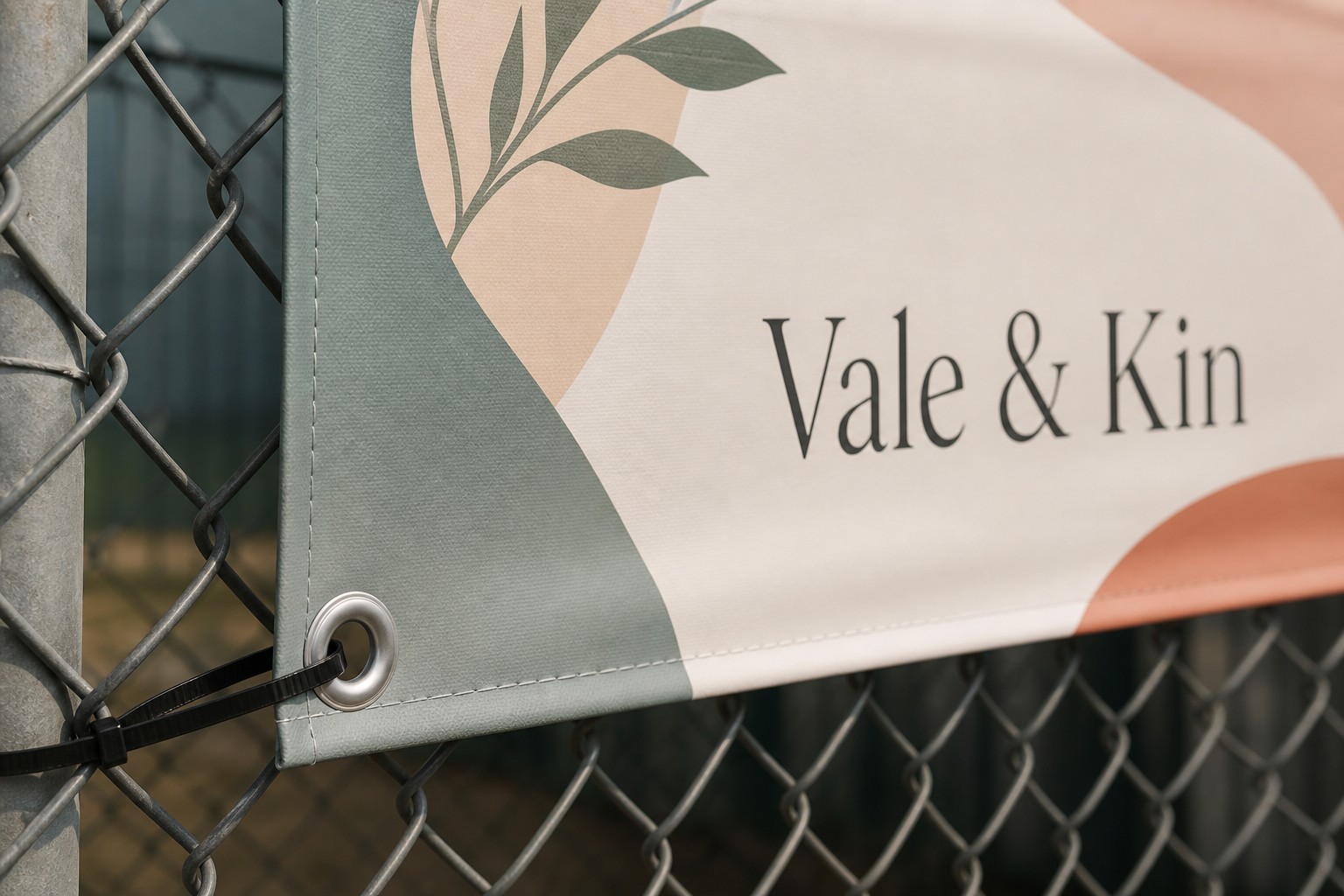
Metal eyelets (typically aluminium or stainless steel, 20-25mm diameter) are pressed through the banner at regular intervals, usually every 500-600mm, with eyelets at all four corners. Eyelets let the banner be tied, cable-tied, or bungee-corded to scaffolding, fencing, and signage structures.
For outdoor installations in Australia, rust-proof eyelets are essential, particularly near the coast where standard steel eyelets corrode quickly and stain the print surface.
Rope Loops
Pre-threaded rope through the eyelets speeds up on-site installation. This is commonly specified for construction hoardings and temporary event banners where the installation crew may not carry additional fixings on the day.
Pole Pockets
A pole pocket is a sewn sleeve running along the top (and sometimes bottom) edge of the banner. A horizontal bar or rod feeds through the pocket, allowing the banner to hang flat without visible fixings. This finish suits banners hanging from ceiling tracks, display rail systems, or outdoor pipe-and-drape rigs at events and trade shows.
Single-Sided vs Double-Sided Rectangle Banners
Single-sided banners print artwork on one face. On PVC, the reverse is plain white. On thin fabric, the design may ghost through faintly to the back.
Double-sided banners are constructed differently:
- PVC: Two single-sided panels heat-welded back to back, producing a fully opaque display visible from either direction
- Fabric: A blockout layer sewn between two printed panels eliminates light bleed-through between faces. Paperlust’s double-sided rectangle banners use 145gsm blockout fabric for a clean print on both sides.
Double-sided display is worth the additional cost for any banner viewable from two directions: a central event display, a gate-mounted venue banner, or a freestanding exhibition stand. For banners fixed flush against a wall or fence, single-sided is the practical choice.
Mounting Methods and Base Options
Flat PVC and Vinyl Banners: Fixed Mounting
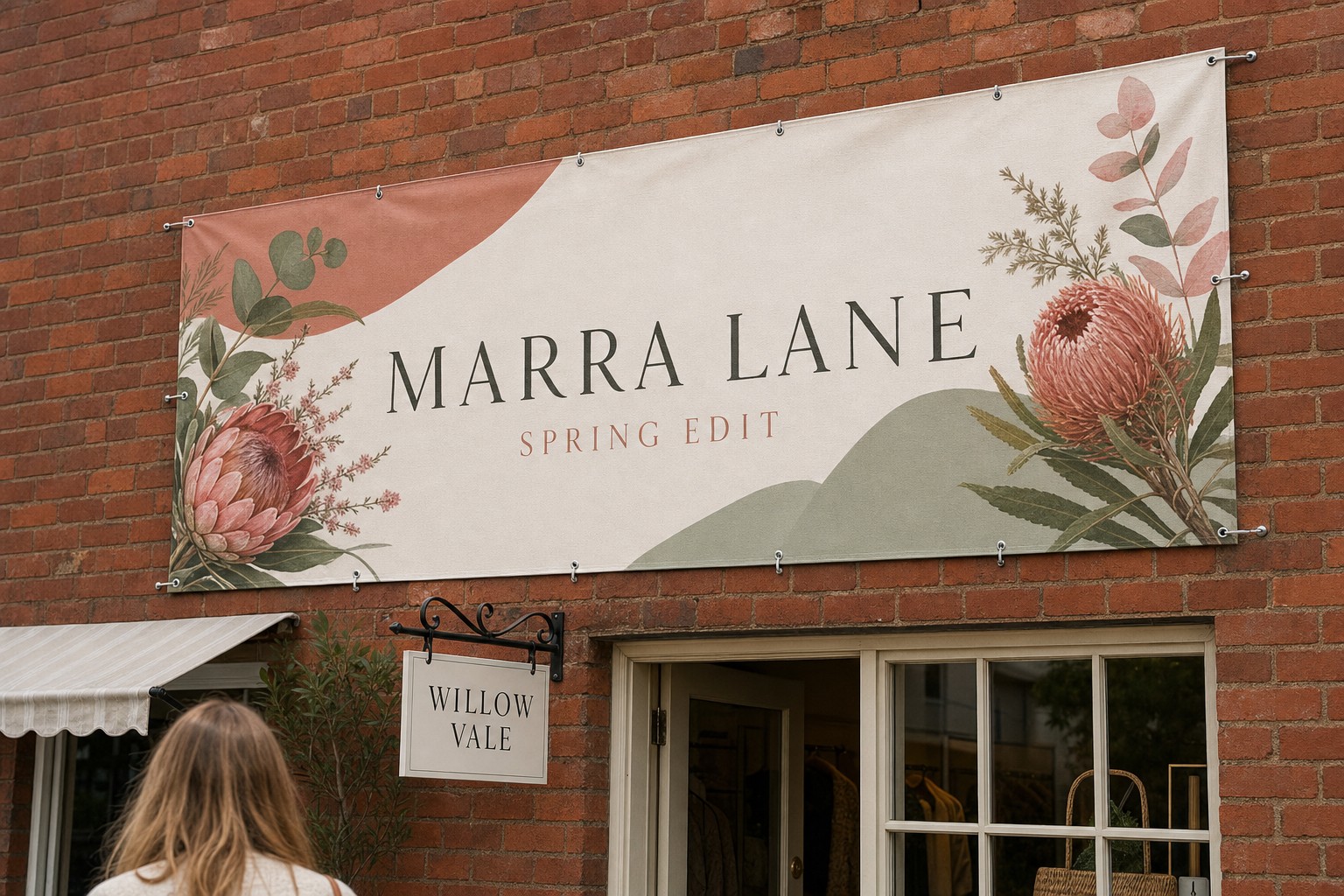
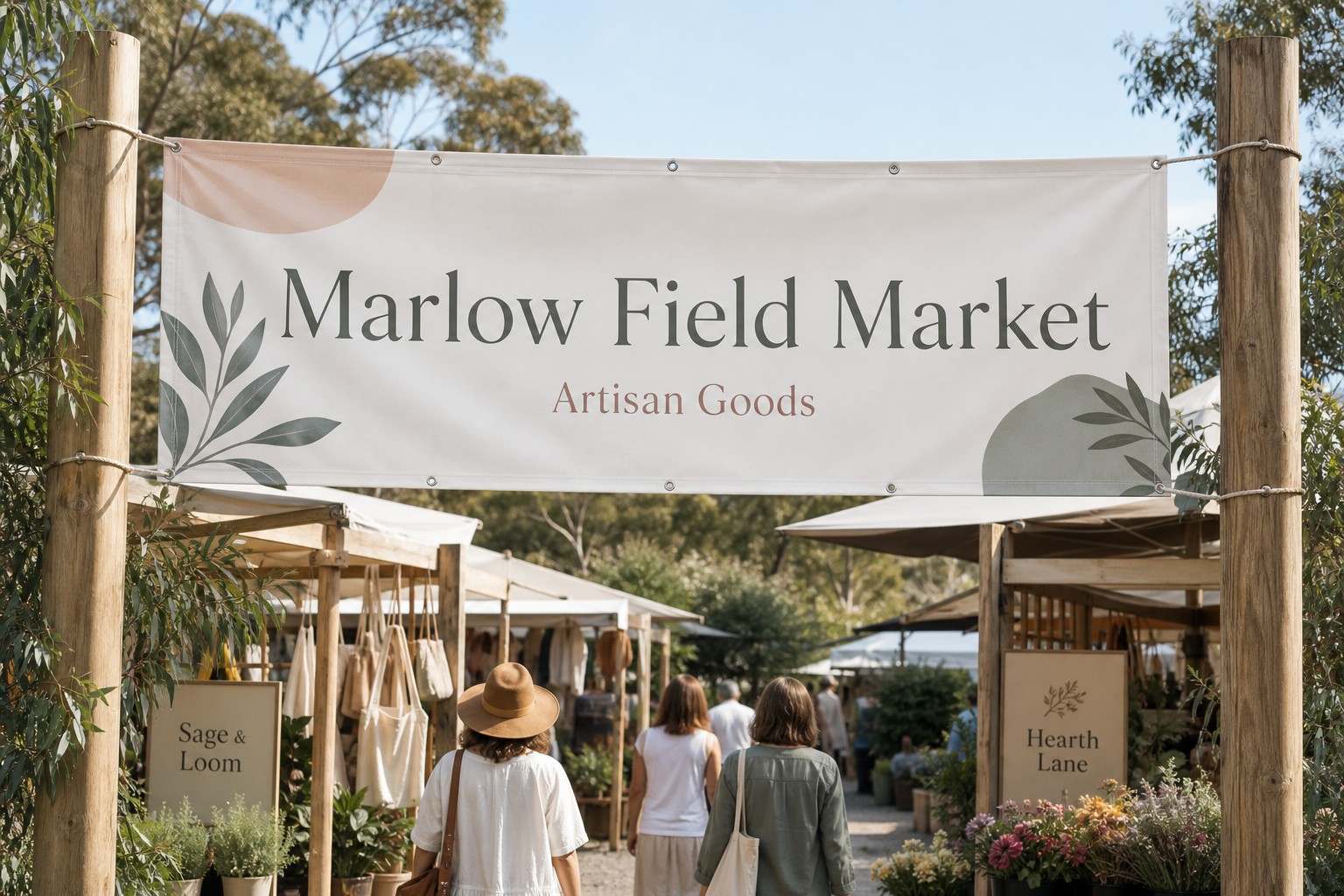
PVC and vinyl rectangle banners attach to existing structures via the eyelets using cable ties (construction and event perimeter fencing), bungee cords (temporary event fencing), S-hooks (scaffolding tubes), or stainless-steel screws through grommets (solid wall mounting).
For temporary outdoor events without existing structures, pipe-and-drape systems provide a freestanding alternative without permanent fixings.
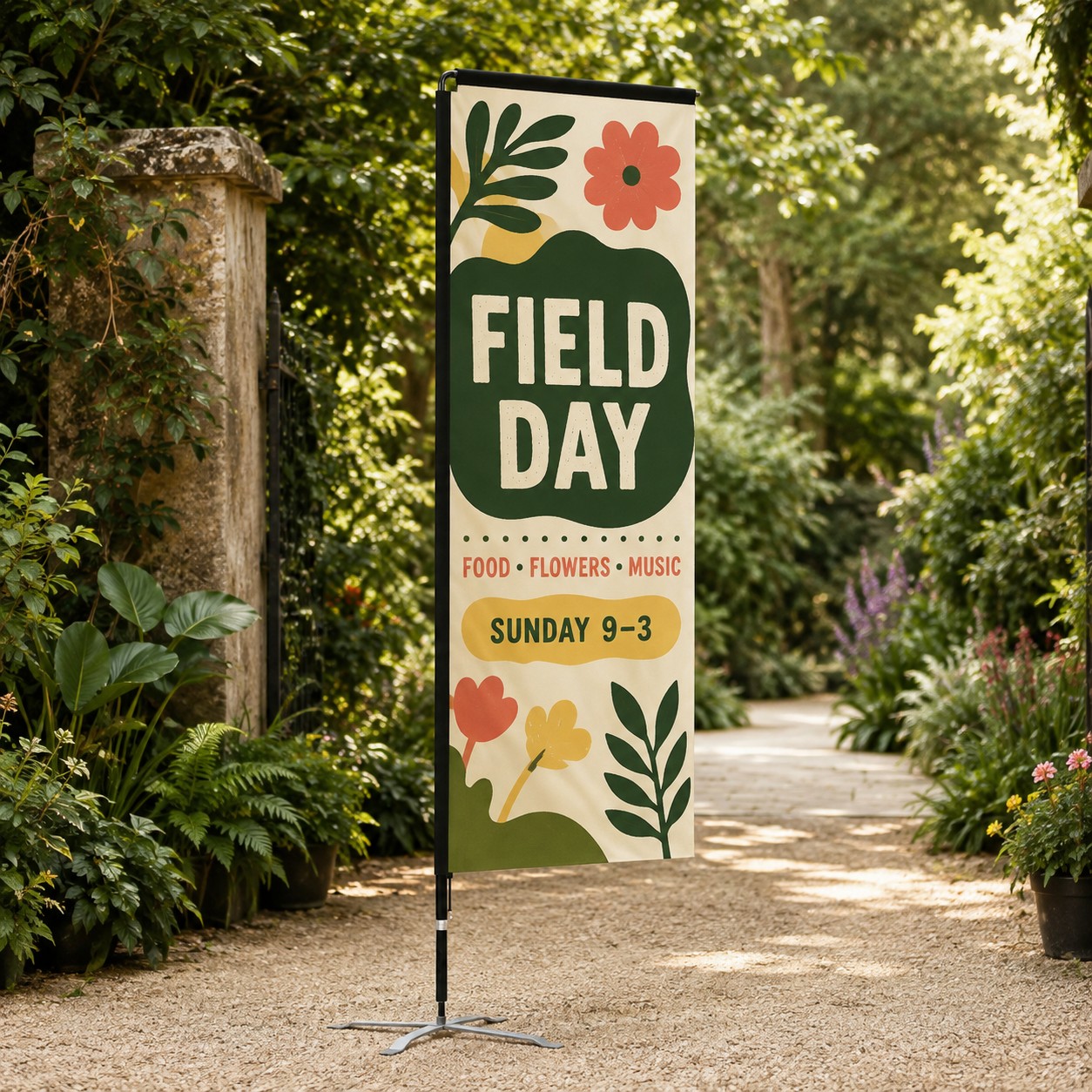
Fabric Rectangle Banners: Portable Display Kits
Paperlust’s fabric rectangle banner kits include three base hardware options:
- Pole, Spike, Bag: for grass and soft ground, included as standard
- Cross Base + Water Bag: for concrete, paving, and indoor venues
- Square Base Plate (10kg): for high-traffic or wind-exposed outdoor locations
The pole-and-base system is genuinely portable: pack into the carry bag, spike into the ground, and you have a professional branded display in minutes.
For flat event-backdrop applications such as photo walls and exhibition backdrops, polyester banners are a complementary format, offering landscape-format fabric panels that hang against walls or display frames.
When Rigid Signage Works Better
For applications requiring rigid outdoor signage with no movement, corflute plastic signs are a practical complement. Printed on 5mm fluted polypropylene, corflute signs install on H-stakes, A-frames, or walls and hold their position in wind. They suit real estate signs, site directional signage, event wayfinding, and safety messaging.
Common Rectangle Banner Sizes in Australia
Flat PVC and Vinyl Banners
| Size | Typical application |
|---|---|
| 1220 x 760mm | Shopfront windows, small event banners |
| 2000 x 1000mm | Standard event, retail, and construction banners |
| 3000 x 1000mm | Construction hoardings, sports venues, festival perimeters |
| 4000 x 1000mm | Large building wraps and major outdoor activations |
Custom sizing is available, with the short-axis maximum typically limited by the printer’s output width (1600-2400mm depending on the machine).
Fabric Flag-Style Rectangle Banners
| Height range | Best for |
|---|---|
| 1.5-2.1m | Indoor events, retail pop-ups, space-constrained venues |
| 2.1-3.2m | Outdoor events, sports venues, market and expo displays |
| 3.1-4.6m | High-visibility outdoor activations and venue entry points |
Custom heights are available on request.
Outdoor Durability and Wind Performance
Australian conditions are demanding on outdoor signage. High UV levels, coastal salt exposure, and storm-force gusts shorten banner life faster than northern-hemisphere ratings suggest.
For PVC banners in permanent or semi-permanent installations:
- Choose 510gsm stock over lighter grades for improved tear resistance
- Specify UV-stable solvent inks; water-based inks fade significantly faster in the Australian sun
- Use stainless steel or anodised aluminium eyelets in coastal locations
- For high-wind exposures, reduce eyelet spacing or specify vinyl mesh
For fabric banners in outdoor event use:
- Ground spikes hold well in soft grass; use the square base plate option on concrete or paving
- Double-sided 145gsm blockout fabric is marginally heavier and more stable in moderate wind
- Fabric banners are designed for event use and regular takedown, not long-term unattended outdoor installation
Design Tips for Rectangle Banners
Font Size for Readability
Outdoor font legibility depends on viewing distance. As a practical guide:
- 25mm font height: readable at approximately 5 metres
- 50mm font height: readable at approximately 10 metres
- 75mm font height: readable at approximately 15 metres
Most outdoor banners benefit from a minimum 50mm height on the primary message.
Bleed and Safe Margins
Supply artwork with 5mm bleed on all edges and a 20mm safe margin inside the trim line. Keep all text and logos within the safe boundary to avoid content being lost to the hem or eyelets. For eyeleted banners, account for eyelet positions near the corners and edges.
Colour and Contrast
Dye-sublimated fabric delivers saturated, vibrant colour. PVC solvent printing runs slightly warmer with a mild gloss. Request a digital proof before approving production to check for monitor-to-print variation. For outdoor signage competing against a busy background, high contrast (dark on light, or light on dark) reads far better than mid-tone combinations that merge into the environment at distance. The material you select changes how those colour choices perform, so use the custom banner range to weigh fabric against PVC before approving a proof.
Frequently Asked Questions
What is the difference between a PVC banner and a vinyl banner?
PVC (polyvinyl chloride) is the material used to produce vinyl banners. In most Australian printing usage, “vinyl banner” and “PVC banner” refer to the same product: a heavy-duty outdoor banner on PVC substrate with solvent inks. Some suppliers use “vinyl” for lighter indoor film products, so check the GSM specification. For outdoor Australian conditions, look for 440-510gsm PVC.
How long do rectangle banners last outdoors?
PVC and vinyl rectangle banners with UV-stable solvent inks typically last three to five years in standard Australian conditions. Fabric dye-sublimated banners are rated for six to eighteen months depending on sun exposure and weather. For permanent or semi-permanent signage, PVC is the more durable choice. For events and seasonal campaigns, fabric delivers better portability and sharp print quality.
What finishing option should I specify for my banner?
For banners attached to fencing, scaffolding, or walls: specify hemmed edges with eyelets, and optionally pre-threaded rope for quick installation. For banners hung from ceiling tracks or display rail systems: specify a pole pocket along the top edge. For free-standing event displays: a fabric rectangle banner with the appropriate base (ground spike for grass, cross base for hard floors) is a self-contained system requiring no extra tools.
Can I get a double-sided rectangle banner?
Yes. Double-sided banners are available in both PVC and fabric. For fabric banners, a blockout interlayer prevents artwork from bleeding through between faces. Double-sided is most useful where viewers approach from two directions, such as central event displays, venue entry banners, and freestanding exhibition stands.
What file format should I supply for a rectangle banner?
We accept PDF, AI, EPS, PNG, or JPG at a minimum of 300dpi at the final print size. PDF is generally preferred as it embeds fonts and colour profiles cleanly. Always supply files with 5mm bleed and confirm the required colour profile (RGB or CMYK) with your supplier, as requirements vary by machine and material.
Are rectangle banners suitable for construction sites?
Heavy-duty PVC rectangle banners are standard on Australian construction projects for project branding, safety messaging, and hoarding signage. For tall scaffolding in wind-exposed locations, vinyl mesh (perforated PVC) reduces wind loading and is less likely to stress the mounting fixings. For rigid directional or safety signage on site, corflute plastic signs on H-stakes are a practical complement to banner signage.