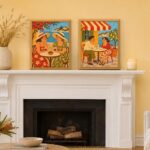
A friend moves into a new flat, or a parent has a birthday coming, and you find yourself staring at a bare wall working out what to put on it. The gap is never taste. It is the detail you cannot see from the outside: the paint colour, the light at four in the afternoon, the frame that already matches the sideboard. Art gifts chosen without that detail can end up behind a wardrobe.
What follows is the order that works. Read the wall they already have, let the occasion narrow the field, pick a size that will not overwhelm the room, decide between framed and bare, weigh up whether two pieces beat one, then find a picture with a story attached. None of it requires an art history degree.
The short version
- Notice the paint colour, the timber tones and the spare wall space before you buy anything.
- Let the occasion pick the subject, from paper for a first anniversary to a name print for a newborn.
- Without a measurement, a middle size such as A3 or a 30 x 40 cm framed piece carries less risk.
- A framed print turns up ready to hang, in a 20 mm frame in oak look, black or white, with perspex in front.
- A bare art print comes on 200gsm archival matte paper, which suits a house that already owns frames.
- Buy a pair and one set of options keeps every piece identical in format, frame and size.
Start with what they already hang
Next time you are in their house, look past the person and at the wall. Paint colour sets the argument: a pale coastal scene disappears against a strong hue, while a dark, high-contrast picture can dominate a room that is already busy. Timber tones follow the same logic. A house full of warm wood takes an oak look frame happily, and a run of white walls with black metal is asking for black.
Scale comes next. High ceilings and a long hallway will carry a large piece or a pair, where a small flat is better served by one picture sized for the strip beside a door. Then work out which rooms they actually use: the kitchen wall they face while the kettle boils, the study wall behind the desk, the spare room nobody sits in. Seeing the three formats in one place makes that comparison easier, which is why the full wall art range lists them together.
Matching the picture to the occasion
Once you know what the gift marks, the field narrows by itself. You get a subject, a colour direction and something to say when the wrapping comes off, and you stop buying the picture you would have bought for yourself.
- A first anniversary. The first year is the paper year, and a picture printed on paper answers the tradition without a detour into stationery. Keep the scale modest while the couple is still furnishing.
- A new home. Pick colours the room already uses, or two pieces if there is a hallway to fill. For the practical side of a move, our housewarming gift ideas cover the rest of the parcel.
- A new baby. A personalised name print sets the child’s name beneath an Australian animal, and it arrives framed and ready to hang.
- A milestone birthday. Something larger than they would buy for themselves, in a size you have checked against their wall rather than assumed.
- Christmas. A subject that suits the room it will live in, not the season, so it stays up in February.
- A retirement. A place they know or a subject they have talked about for years, in a format that asks nothing more of them once it arrives.
- A thank you. An A4 or A3 framed print is easy to carry to a dinner and easy to hang once they are home.
Choosing a size when you cannot see the wall
Buying without a tape measure is the usual situation, and it argues for a middle size. A3 and 30 x 40 cm framed prints will hold a hallway, the wall over a desk or the space beside a bed without crowding any of them. A large piece is a generous gift when the destination is known. Otherwise it becomes furniture the person has to arrange a room around.
There is a second reason to read the size list before you fall for a picture. A shape appears on an artwork page only where the image fills it after a slight trim and the file carries detail at that scale. Crop a tall composition to a wide shape and too much of the scene goes; enlarge a small file and it stops holding. Rather than force either, the size is left off the page. The preview shows how your chosen shape will crop the picture, which is worth a look before you commit.
Weighing framed against unframed
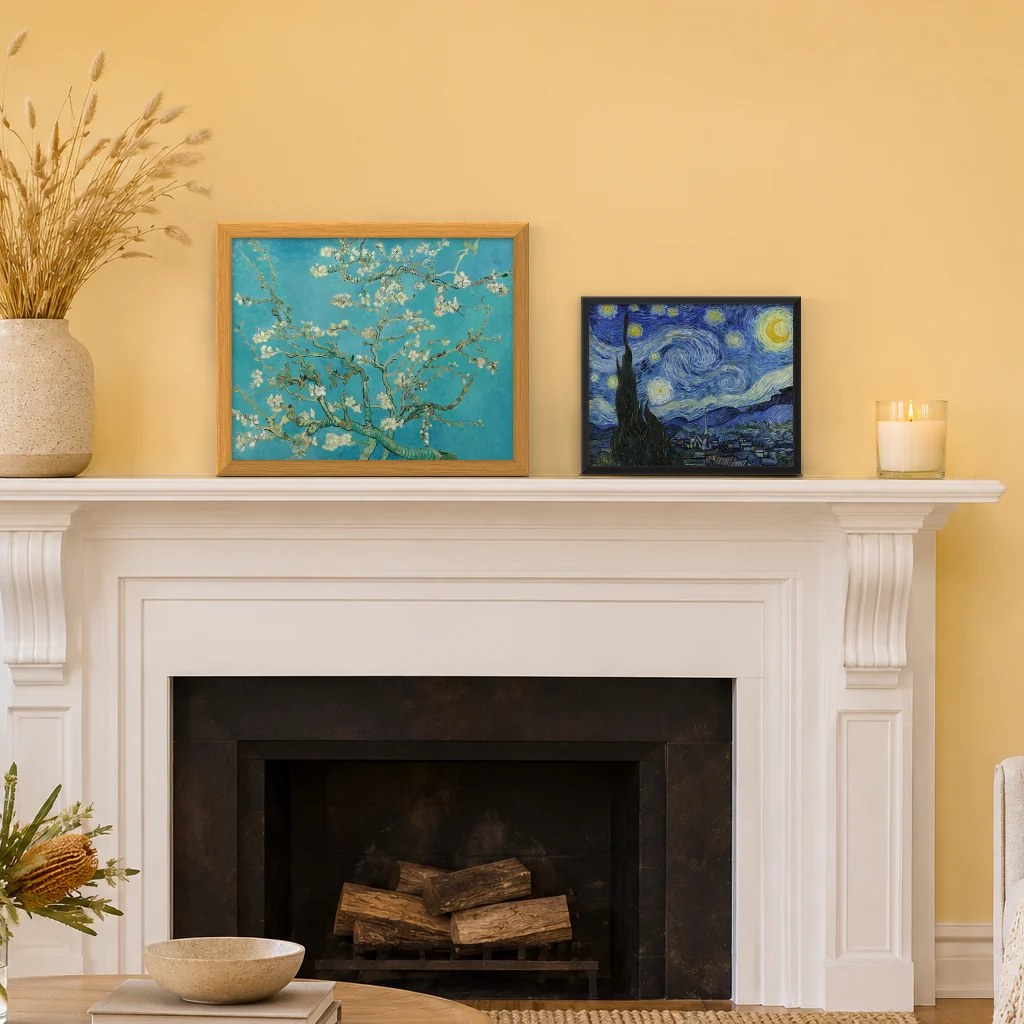
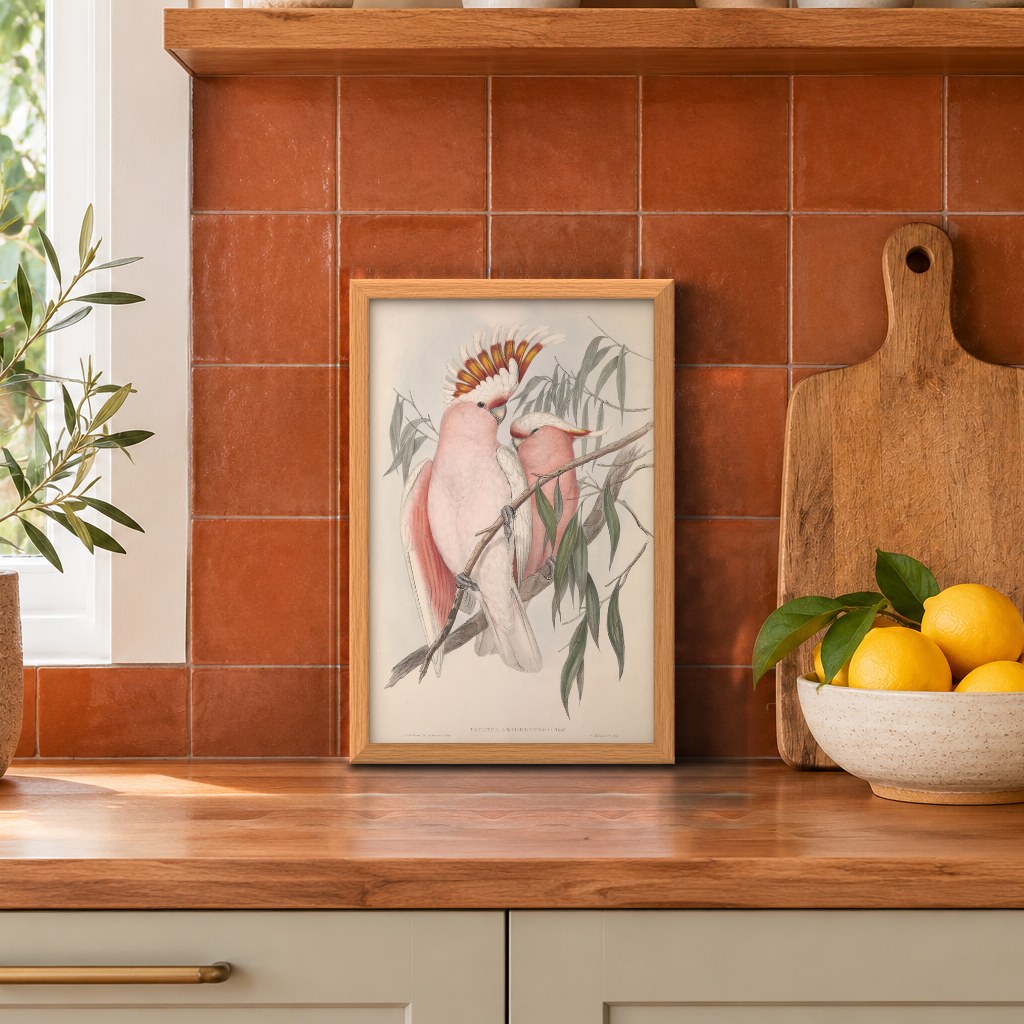
A framed piece reaches them with the work already done: a 20 mm frame in oak look, black or white, perspex where glass would normally sit, and a white mount only if you order one. Nothing goes to a framer and nothing needs collecting. For a gift, that means the picture can go up the evening it is unwrapped.
The bare choice is a single sheet, an archival giclée on 200gsm matte paper, with a textured etching stock available on some sizes for a visible grain. It is the right present for a household with frames already waiting, or for someone who would rather pick the moulding themselves, and the archival art print range holds those sheets. Canvas is the third route: printed on 400gsm with no glazing over the image, so nothing catches the light, and it arrives without hanging hardware, worth knowing if the recipient is not one for a drill.
Giving a pair or a set
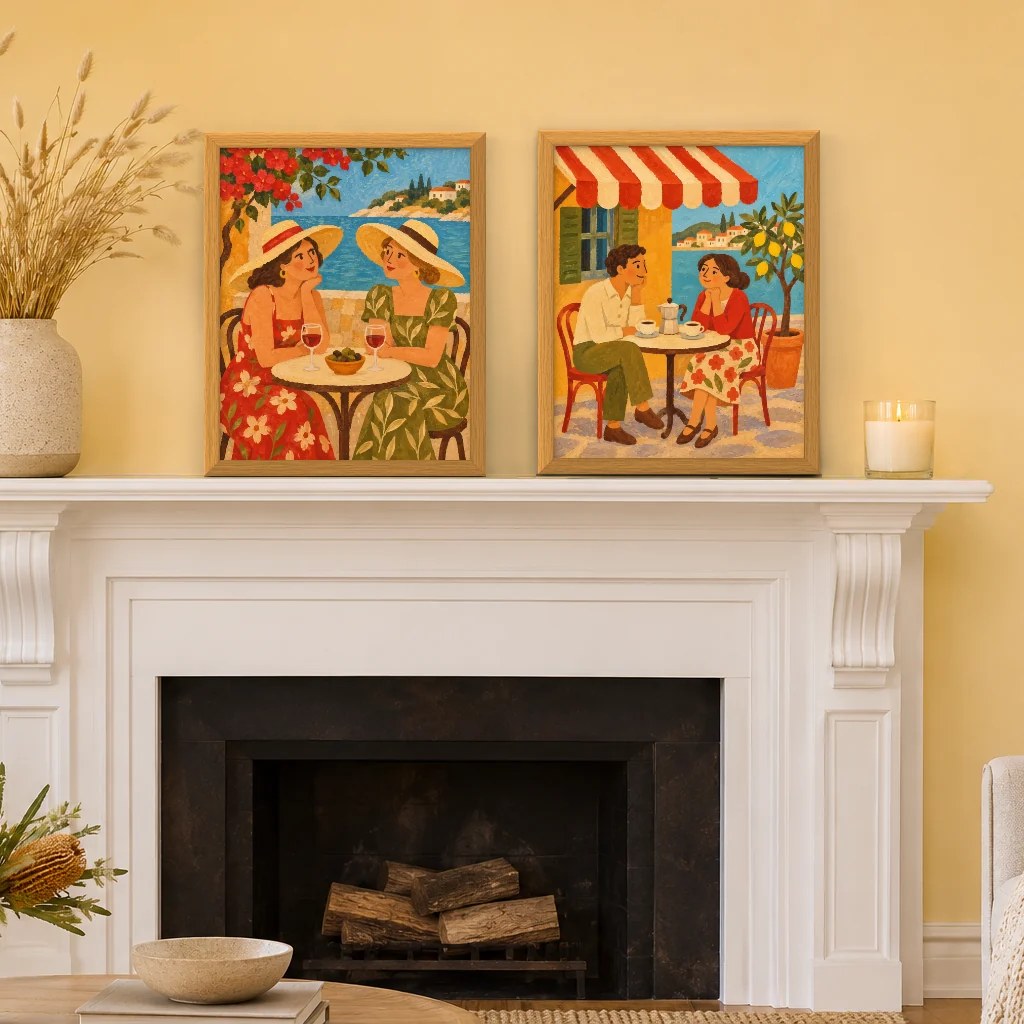
Two pictures fill a wall that one leaves bare, as long as they agree with each other. A gallery wall set settles that for you. Choose the format, the frame colour and the size once, and the whole group prints to that one decision. The gallery wall pairs and sets collection explains how a group comes together, and the comparison is built from the single listings so you can check the sum yourself.
Pairs earn their place with couples, in a new house with a hallway to dress, over two bedside tables, or for anyone who likes symmetry. If you want to pick the subjects yourself, order two single pieces instead: each artwork keeps its own page, with its own options and its own picture. Hang the group as a single thing: tape the full layout on the wall before any hook goes in, keep the gaps even, and stay narrower than the sideboard or sofa below so the arrangement does not look like it is floating.
Choosing a picture with a story they can tell
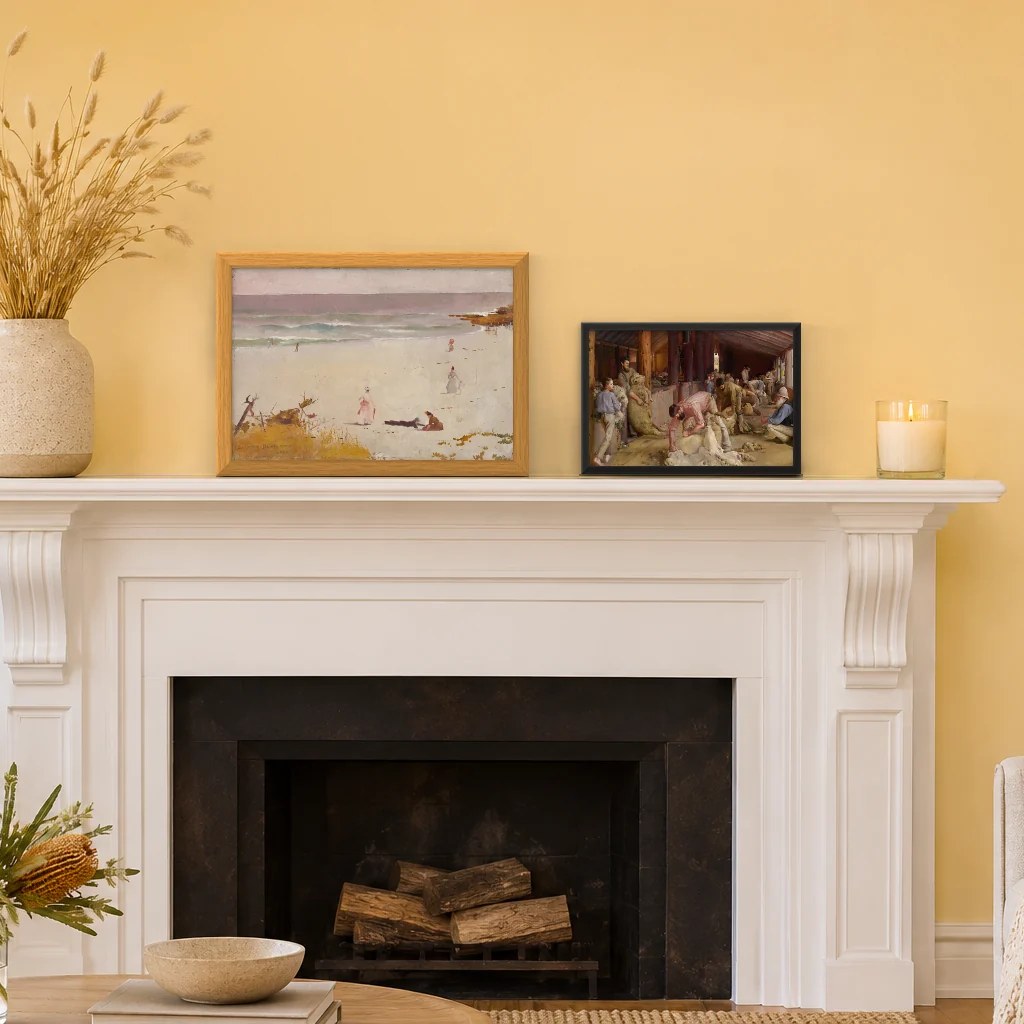
A place they know does half your work. Charles Conder’s Bronte Beach, painted in 1888, shows pale sand, dry scrub and a woman in a pink dress, and the National Gallery of Australia looks after the original. The person does not need to have grown up there. A beach they swam at each summer, or a suburb they have just left behind, gives the picture a reason to stay up.
A bird they love works much the same way. John Gould’s laughing kookaburra and Major Mitchell’s cockatoo are hand-coloured lithographs from 1848, plates made for The Birds of Australia, and the files behind our prints were scanned from copies held by Smithsonian Libraries and Archives. Cream, brown, sage and teal make the kookaburra forgiving on a kitchen or hallway wall, while the cockatoo keeps its red and yellow at the crest and settles above a sideboard in a room of neutral walls.
Then there is the ground under their feet. Someone who grew up on the coast, or who married a few streets from the water, will read a landscape of a known place faster than any abstract. Our Range & Reef collection works through Australian places in two editions, so you choose the treatment as well as the location. The Bondi piece takes the ocean pool at the south end and the long sweep of sand in the Poster edition, with flat colour and bold lettering. The Byron Bay piece sets the lighthouse above the bay on a cream ground in the Painted edition, closer to a picture than a sign. Both are printed in Australia, designed by our team in Melbourne with digital tools.
The painter they admire is the hardest to get right and the most rewarding when you do. Every artwork page tells the picture’s story and, where our records allow, names the collection that looks after the original, so you can check the detail and pass it on with the gift. For gifts for art lovers, that story is often worth more than the sheet it is printed on: it is what they will say when a visitor asks where it came from. A picture with a story gets told. One without gets dusted.
Frequently asked questions
What size art print makes a safe gift?
When the wall is unknown, a middle size is the safer bet. An A3 or a 30 x 40 cm framed print asks less of a room than a very large piece, and still works in a hallway or beside a bed, where a big picture needs a wall you know. Check the size list on the artwork itself, because a shape is listed only where the picture can fill it after a slight trim. The preview shows how your chosen shape will crop the image.
Should I give art framed or unframed?
A framed print does the work before it reaches them: a slim 20 mm frame in oak look, black or white, perspex in place of glass, and it arrives ready to hang. The white mount is an optional extra rather than standard, so mention it if the person would want one. An unframed sheet on 200gsm matte paper suits a household that already has frames waiting, or a recipient who enjoys choosing their own.
What makes a good paper anniversary gift?
Paper marks a first anniversary, and a print on paper answers it directly. Our art prints are an archival giclée on 200gsm matte stock, and the same sheet sits inside our framed versions. Choose a subject that fits the home the couple is building, then pick a middle size if the wall is still a mystery to you.
What art suits a new baby gift?
A personalised name print gives the child’s name the front of the page, with a picture above it, and it arrives framed and ready to hang. Layout is one of four choices, and the Birth details layout adds the date, time, place, weight and length beneath the name. The Little Wattle animals run to eight: koala, wombat, platypus, kookaburra, echidna, cockatoo, possum with the moon and kangaroo with a joey, or you can build a character instead. A required tick box confirms the spelling before the print reaches your cart.
Can I give a pair of prints that match?
Yes. Inside a gallery wall set, one set of options governs the whole group: format, frame colour and size are chosen once and each picture prints the same way, so nothing clashes. A pair sits well on a narrow stretch of wall or over two bedside tables. Every artwork also keeps its own page, so you can order a single piece instead.
Are the Museum Collection prints real reproductions?
They are printed copies, never originals. The Museum Collection holds pictures whose makers died more than 70 years ago, which puts them out of copyright in Australia. The digital files are sourced from public image archives, libraries and museums, and the studio lifts dust, marks and colour drift from the scan without repainting anything. The holding collection is credited only where our records name it, and no institution endorses the result.