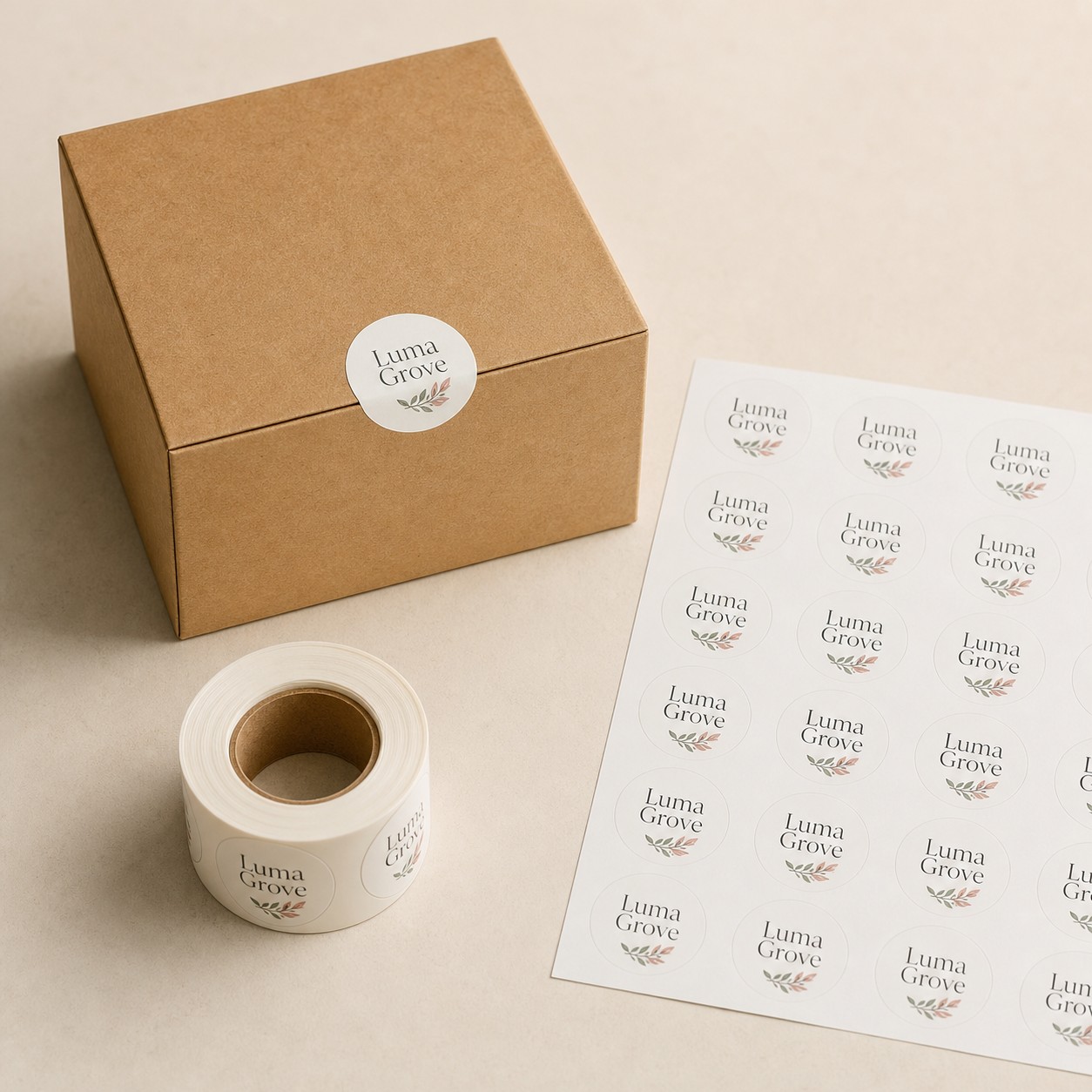
A round jar lid looks simple until the label diameter is compared with the flat panel it has to sit in. The outside lip of a lid and its printable surface are not the same measurement. Circle labels work well on lids, caps and seals, but the sizing step is where most jobs go wrong.
This guide covers the circle sizes available on roll, the two standard stocks and finishes, the roll format, and the routes to take when a honey jar, rectangle panel or custom shape is the better fit.
Measure the flat panel, not the outside lip
The number on a jar is not a label size. A jar that holds 500ml may share a lid with a smaller jar, or the same jar may have a shallow recess instead of a flat top. Measure the flat area where the label will sit. On a recessed lid, that means the panel inside the rim. On a flat cap, measure the level surface, not the total outside diameter that includes the rim or lip.
For a label that wraps around a cylindrical jar body, measure the straight zone with a paper strip or soft tape. Decide the seam gap, then subtract that gap from the circumference to get the label width. There is no universal gap or top margin, and an overlap is a different brief that needs confirmation.
If you are working through the method for the first time, the bottle and jar label sizing guide sets out the measuring steps.
The circle sizes available on roll
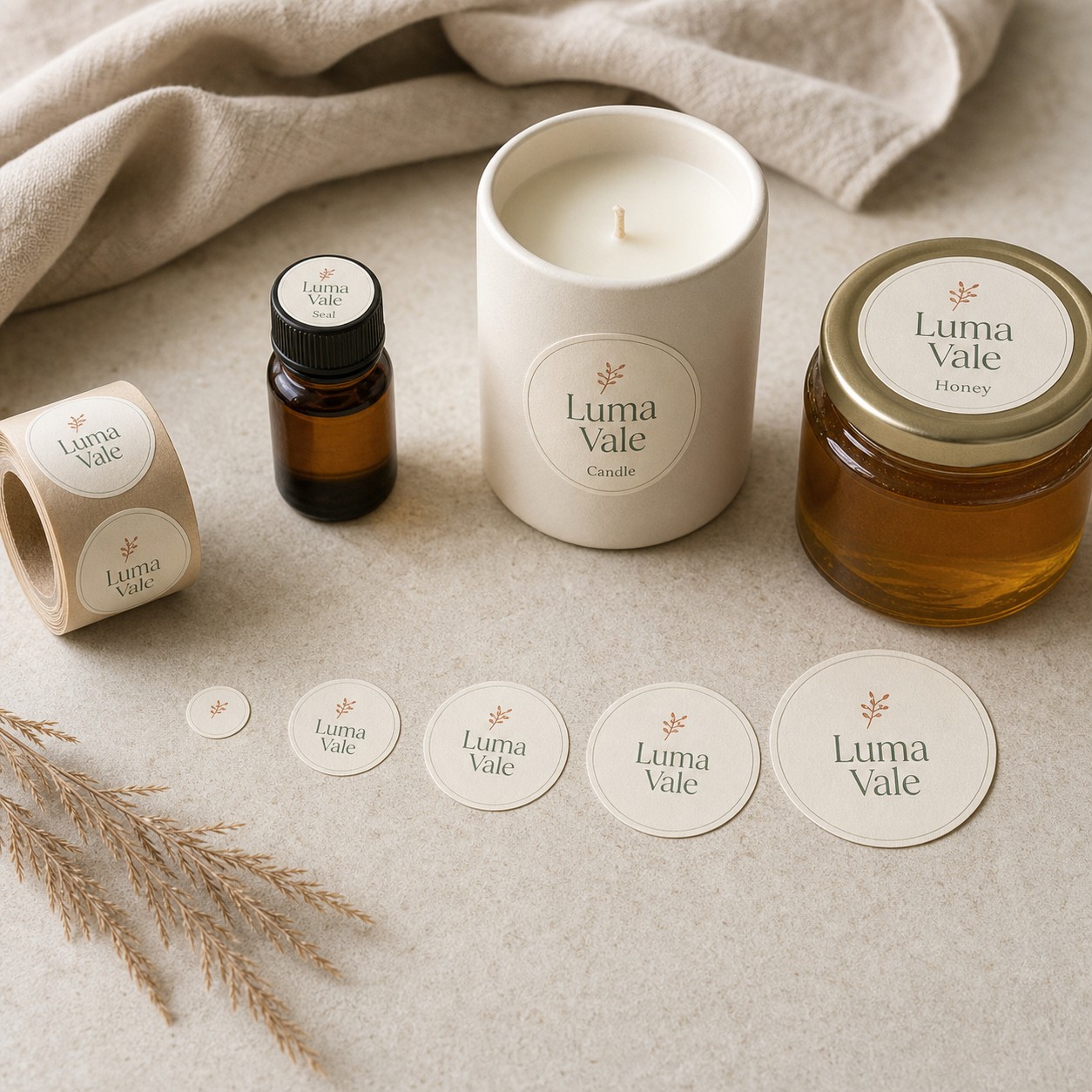
The standard Circle Labels product carries eight flat diameter sizes: 30mm, 40mm, 50mm, 60mm, 75mm, 90mm, 100mm and 150mm. Choose a circle that sits fully inside the measured flat panel and leaves the clearance you want around the edge. A size that extends into the rim or over a curved edge can crease.
The 76mm core on the roll is a core size, not a label diameter. The two measurements live in different parts of the job.
Each design and each size is supplied on its own one-up roll of 500 labels. Three designs at 500 labels each means three rolls and 1,500 labels in total, which meets the 500 minimum for each design. A design cannot borrow quantity from another design or size.
Stock and finish choices
The circle roll line uses two stocks. White cast paper suits dry indoor packaging and pantry shelves where moisture is controlled. White synthetic film is the waterproof stock for jars that meet condensation, wiping or frequent handling.
In this product, both stock options use a permanent adhesive. Permanent describes the removal intent, not the underlying chemistry, and this range does not offer a selectable removable adhesive.
Both stocks can be ordered with matte or gloss laminate. The finish changes the surface appearance and how the label reads on your packaging. Test the chosen stock and finish on the actual container before committing a full run, especially if the jar will be wiped down often.
Apply the label to a clean, dry container. For coated glass or plastics, cleaning compatibility can vary, so test any cleaner on a discreet area and follow the supplier’s dwell guidance before the labelled jar meets moisture.
White synthetic is moisture resistant for typical wet use, but it is not a universal guarantee against heavy oil, chemical exposure, freezer conditions or dishwasher cycles. For candle containers, ask the supplier whether the chosen stock suits the actual use conditions before ordering.
Roll format or circle stickers
Roll circle labels are supplied one-up on a 76mm core, ready for hand application or a semi-automatic or automatic label applicator. You can request the unwind direction at proofing. That format suits a product run where you will label a large batch in one session.
If you want a shorter trial or a promotional pack, circle stickers are a separate range with a minimum of 10 per design. A sticker order does not test the roll-label stock and adhesive on your jar, so keep the two buying decisions separate.
Honey and jam labels add clear and other shapes
Preserve and honey makers often need a lid circle plus a rectangular or oval body label. The honey and jam labels range covers those shapes in one place and adds clear synthetic film with gloss varnish for a no-label look on glass.
White ink can form white printed areas on clear synthetic, or sit beneath coloured areas where opacity is needed. The honey and jam page shows 3mm bleed guidance for artwork, while the circle labels product page has its own template. Follow the instructions on the product you choose rather than assuming every page uses the same file settings.
The honey and jam range allows up to five designs in one order, each design on its own 500-label roll. Different shapes, sizes, stocks or finishes still need to be set up as separate configurations.
Layout and text in a circle
The circular shape removes corners, which can reduce catch points on a flat lid. But a circle does not stay readable at every angle. Text still has a reading position. If the entire design rotates unnoticed, batch details and ingredient lines can end up sideways.
Centre the primary text within the round frame. Curved secondary text can follow the outer arc, but keep fine text away from the trim. Use the safe area shown in the product template to set the border.
The honey and jam jar label layouts guide shows how a front, lid and back label split can be planned on a single jar.
Pairing circle lids with other shapes
A circle suits a flat lid, cap or seal very well. A body panel with a long ingredient list or barcode often needs more room, so a rectangle label may be cleaner. The common pairing is a round label on the lid and a rectangle or oval on the jar body.
The jar labels range is built for that combination and uses the same roll minimum of 500 labels per design and size. If the container needs a non-standard silhouette, the die-cut labels product can follow a custom outline. All of these sit inside the wider custom labels category.
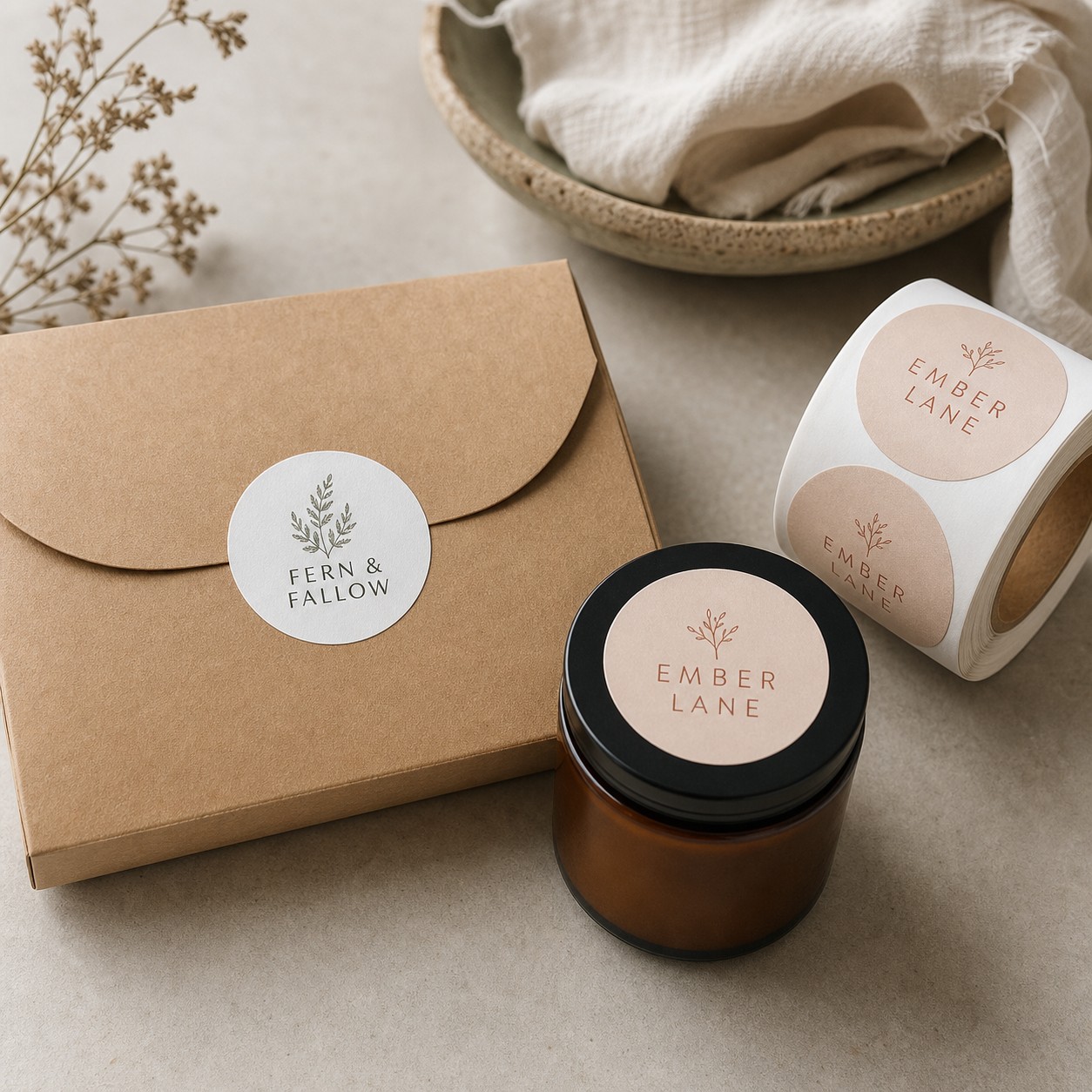
Circle labels also work as packaging seals on mailers, boxes and tissue wrap. For the outer packaging itself, custom kraft mailer boxes are a separate route.
Ordering and proof checks
The roll order flow is straightforward: choose the shape, size, stock and finish, select the number of designs and quantity, then upload artwork. A proof is emailed before printing. Once you approve it, production takes 48 hours. Delivery is separate and adds freight time on top.
The digital proof checks layout, text and the dimensions you declared. It does not verify physical colour, adhesion or stock performance. Printing approval is not regulatory approval, so confirm the wording requirements for your product category before final artwork.
Frequently asked questions
What circle label sizes are available?
The standard circle roll range is 30mm, 40mm, 50mm, 60mm, 75mm, 90mm, 100mm and 150mm flat diameter. Each diameter and each design is supplied on its own roll of 500 labels.
Are clear circle labels available?
The standard circle labels page uses white cast paper and white synthetic. Clear synthetic film with gloss varnish is available through the honey and jam labels range when you want a no-label look on glass.
Are circle labels waterproof?
White synthetic is the waterproof stock for typical condensation, wiping and handling on jars. It is not a guarantee for heavy oil, chemical exposure, freezer conditions or dishwasher cycles. Test the stock on your actual container before a full run.
What is the minimum order for circle labels?
Roll circle labels have a minimum of 500 labels per roll, applied separately per design and size. Three designs at 500 labels each gives 1,500 labels across three rolls and meets each design’s minimum. Circle stickers are a separate range with a minimum of 10 per design.
How do I measure a jar lid for a circle label?
Measure the flat area where the label will sit, not the outside lip. For a wrap-around body label, measure the straight circumference and subtract your chosen seam gap. Tapered, ribbed or shouldered surfaces need a paper fit test.
What does the proof check?
The emailed proof checks layout, text and the dimensions you declared. It does not verify physical colour, adhesion or stock performance, and it is not a legal compliance review.