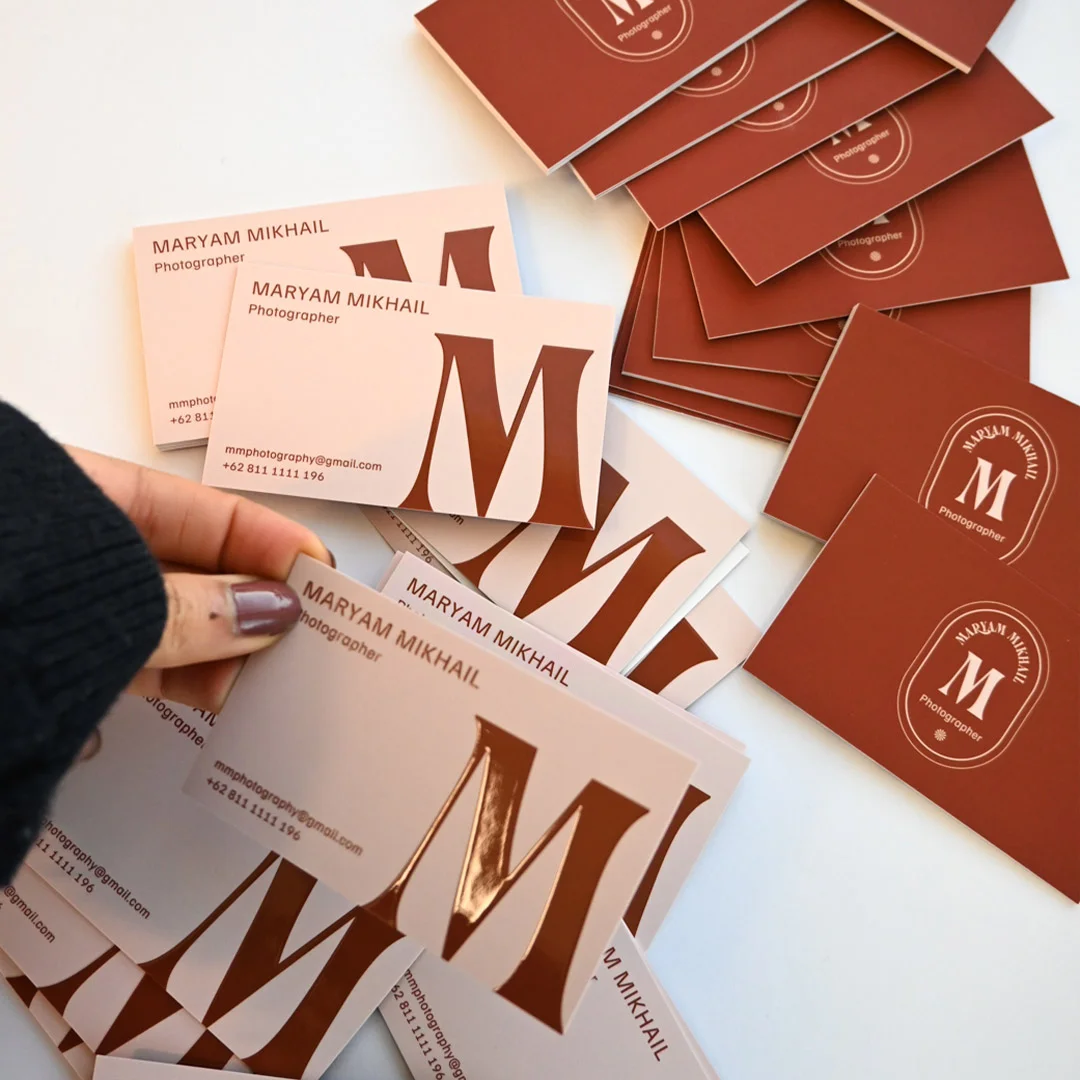
When someone asks for “embossed business cards” in Australia, they usually have a clear picture in mind: a card that feels elevated, that has texture and depth, that communicates quality the moment it is held. What is less clear, even to experienced buyers, is which printing technique actually delivers that result, at what price, and from which supplier. This guide untangles the terminology, compares every relevant technique available in the AU market in 2026, and gives you a clear path to the tactile card your brand deserves.
TL;DR: Tactile Business Card Finishes at a Glance
| Finish Type | Tactile Depth | Visual Impact | Cost Tier (AUD inc GST) | Best For |
|---|---|---|---|---|
| Raised Foil | High (relief + metallic) | Very high (mirror shine) | From $0.24/card | Legal, finance, luxury retail, architecture |
| Scodix Raised Gloss | Medium-high (clear/colour UV) | High (selective gloss depth) | From $0.20/card | Creative agencies, hospitality, photographers |
| Flat Foil | None (surface only) | High (mirror shine) | From $0.18/card | Budget-conscious metallic look |
| Spot UV | Low (subtle gloss contrast) | Medium | From $0.14/card | Volume runs needing polish without high spend |
| Duplex | None (thickness only) | Premium weight feel | From $2.27/card | Pairing with any finish for max substance |
| Offset Blind Emboss | Very high (pure relief, no ink) | Subtle (invisible unless angled) | Premium, specialist-only | Ultra-luxury invitations, bespoke stationery |
The Terminology Problem: What “Embossed” Actually Means in Australia in 2026
If you search “embossed business cards Australia” you will encounter the term used to describe at least five different printing techniques. Understanding which is which before you place an order saves money, prevents disappointment, and helps you brief your designer correctly.
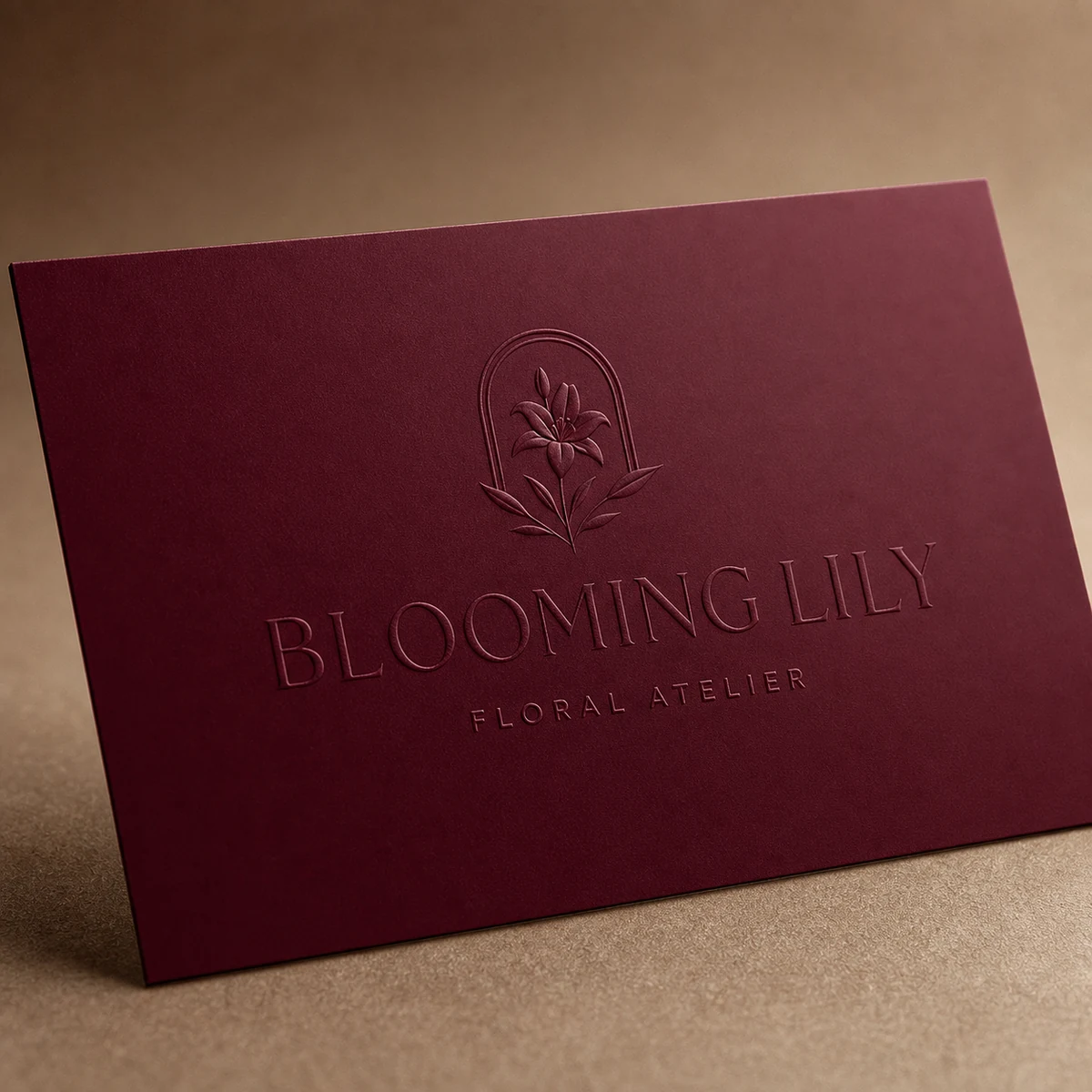
Traditionally, embossing refers to a mechanical offset process where a custom metal die presses into paper stock from behind, creating a raised, three-dimensional relief visible from the front. No ink is added. The result is a tactile impression defined purely by the paper itself. This is sometimes called blind embossing or dry embossing.
In practice, when AU print shops advertise “embossed business cards” in 2026, they are almost never referring to true offset blind-emboss. The term is used loosely to describe any finish that creates a raised, tactile, or premium effect. Specifically:
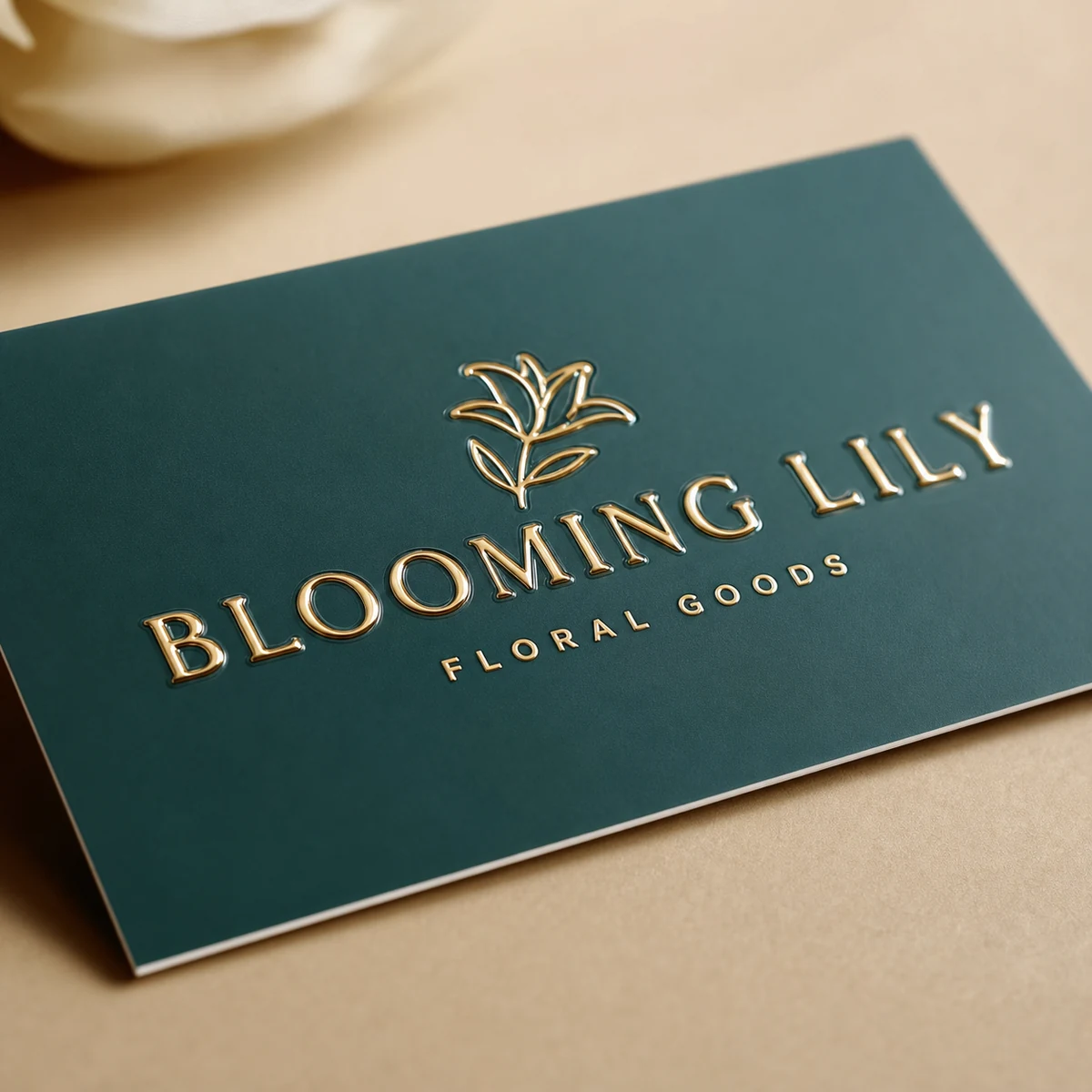
- Raised foil: A heated metallic foil layer is applied over a raised UV film, creating a metallic relief that is tactile and visually striking. This is the closest match to the “embossed look” most buyers have in mind.
- Scodix raised gloss: A digital UV deposition process applies a clear or coloured raised coat to selected areas, creating tactile texture without metallic finish. Often marketed as “raised gloss,” “3D gloss,” or “Scodix emboss.”
- Letterpress: A typographic printing process where a plate presses the ink into cotton fibres, creating a debossed impression (recessed, not raised). The result is sometimes sold as “embossed letterpress” despite being the technical opposite. Paperlust offers this finish as letterpress business cards in one PMS colour on 300gsm Wild Cotton.
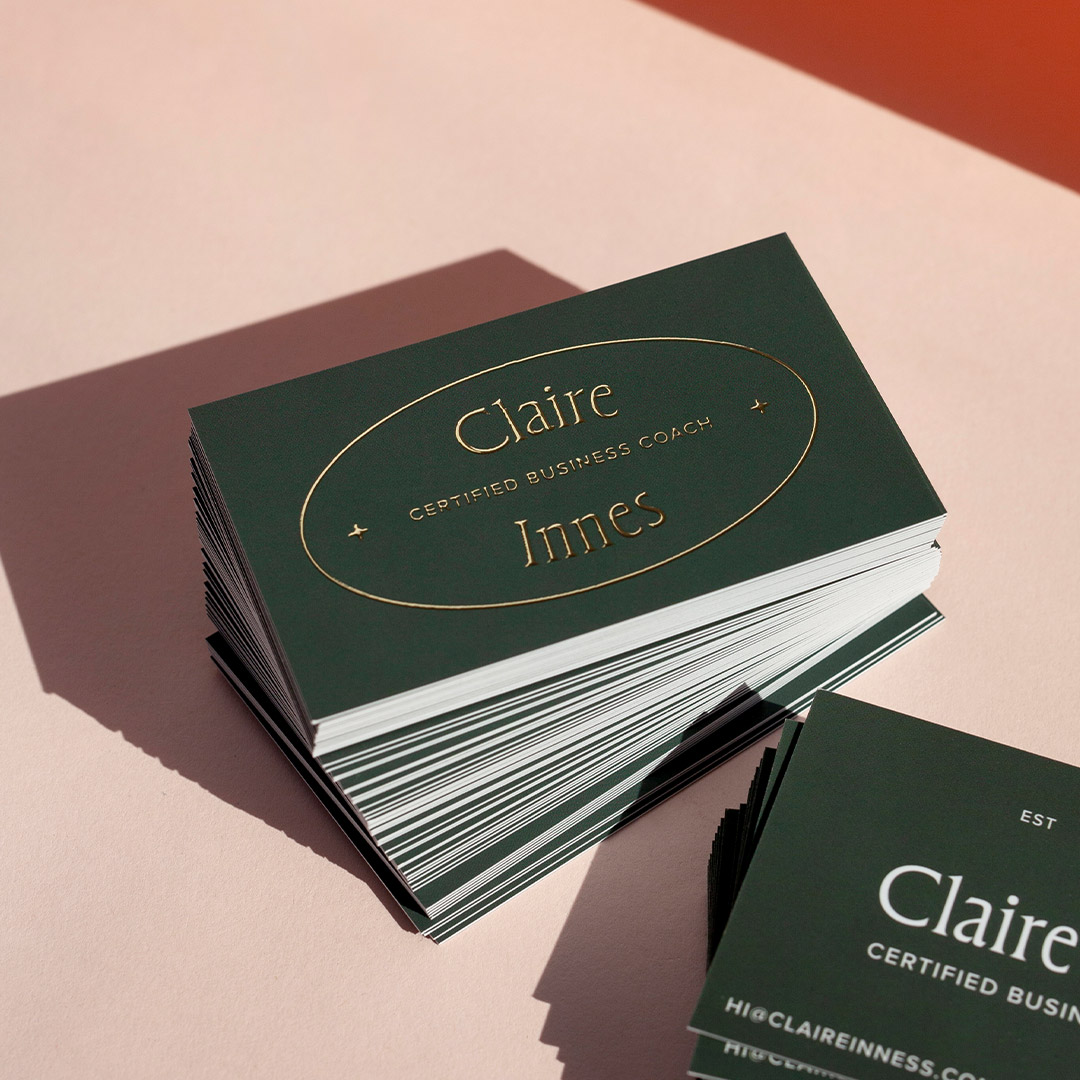
- Foil stamp: Heat and pressure from a custom die transfer metallic foil into the card surface, so the foil becomes a real metallic layer sitting in a recessed impression. Technically debossed, visually premium. Paperlust produces this as foil stamped business cards in one foil colour per card.
- Embossed foil: A single combined die handles foil and emboss together, leaving the foil raised and perfectly aligned with the raised area. The emboss and foil are the same area, not two separate effects. Paperlust offers this finish as embossed foil business cards on white 300gsm Wild Cotton.
This guide uses precise terminology throughout. When we say “embossed feel,” we mean a finish that reads as raised and tactile to the touch. When we say “traditional offset blind-emboss,” we mean the specialist die-press technique. And when we recommend a product, we are clear about which technique it uses and where you can order it.
Embossed vs Debossed vs Raised Foil vs Scodix vs Letterpress: Full Comparison
The table below places each technique side by side across the dimensions that matter most to a buyer: tactile depth, visual impact, compatible paper, minimum order quantity, cost tier, and lead time in the AU market.
| Technique | Effect | Tactile Depth | Paper Compatibility | Typical MOQ (AU) | Cost Tier | Lead Time |
|---|---|---|---|---|---|---|
| Raised Foil | Metallic relief (raised) | High | Smooth coated, uncoated (350-450gsm) | 50-100 cards | Medium-high | 3-5 business days |
| Scodix Raised Gloss | Clear/colour UV relief (raised) | Medium-high | Smooth coated, uncoated | 50-100 cards | Medium | 3-5 business days |
| Offset Blind-Emboss | Paper relief only (raised, no ink) | Very high | Heavy uncoated (400gsm+) | 500-1,000+ cards | High to very high | 2-3+ weeks (specialist) |
| Deboss / Foil Stamp | Recessed impression with metallic | Medium (recessed) | Cotton, textured stock | 50+ | Medium-high | 3-7 business days |
| Letterpress | Debossed ink impression | Medium (recessed) | Cotton only (300-600gsm) | 50+ | High | 10-15 business days |
| Spot UV | Selective gloss contrast (flat) | Low (minimal) | Coated matte stock | 50+ | Low-medium | 1-3 business days |
| Flat Foil | Metallic surface (flat, no relief) | None | Matte, premium, colour stock | 10+ | Medium | 1-3 business days (24hr available) |
Two techniques stand out for buyers who want a card that is both raised and available from Australian print shops at reasonable quantities: raised foil business cards and Scodix raised gloss business cards. The rest of this guide examines both in depth, alongside the specialist techniques they are often confused with.
How Raised Foil Business Cards Achieve an Embossed Effect
Raised foil is the finish many buyers picture when they search “embossed business cards”, because it pairs tactile relief with metallic brilliance. For a foil finish that is pressed into cotton board as a raised emboss, Paperlust’s embossed business cards use one combined die to lift the foil in perfect alignment.
The Print Science Behind Raised Foil
The process works in two stages. First, a raised UV film is digitally deposited onto selected areas of the card stock, creating a physical relief layer. This UV layer is cured under ultraviolet light until it is rigid and stable. Second, a metallic foil carrier is heat-pressed over the raised UV layer. The heat activates an adhesive that transfers the foil precisely to the raised areas, while the flat areas of the card remain unaffected.
The result is a card element (typically a logo, monogram, name, or graphic accent) that is simultaneously raised by several microns above the card surface and covered in a mirror-bright metallic finish. Run your fingernail across a raised-foil logo and you will feel a distinct ridge at its edges. That tactile quality is what buyers mean when they say “embossed.”
Available Foil Colours
Paperlust Print Shop offers raised foil business cards in a full colour range, including:
- Gold (warm and classic)
- Silver (cool, corporate, architectural)
- Rose gold (warm, modern, popular with hospitality and beauty brands)
- Copper (earthy, creative-industry favourite)
- Holographic (multi-spectrum, strong visual impact at events)
Best Paper for Raised Foil
Smooth coated stocks perform best with raised foil because they provide a flat, stable substrate that maximises the contrast between the raised metallic element and the surrounding card surface. Rough or heavily textured stocks can cause edge-bleeding on fine detail. Standard weights for raised foil business cards run 350gsm to 450gsm, with duplex constructions (two layers bonded together) adding extra rigidity and perceived weight. Read more about design and stock choices in the Paperlust Print Shop business card design guide.
Get the Raised Embossed Look
Raised foil business cards from Paperlust Print Shop deliver metallic relief in gold, silver, rose gold, copper and holographic finishes. Available from 50 cards.
How Scodix Raised Gloss Business Cards Create Tactile Impact
Scodix is a digital enhancement technology that deposits UV-curable polymer resin onto printed card stock in precisely controlled layers, creating raised areas of clear or tinted gloss. It is the technique most often used when a buyer wants tactile texture without the metallic finish of foil.
The Print Science Behind Scodix
Unlike traditional spot UV (which applies a flat, thin gloss coat), Scodix uses inkjet-style digital print heads to build up polymer in multiple layers, achieving a measurable physical height above the card surface. The depth of the raised effect is programmable, so a designer can call for a shallow texture on a background pattern and a deeper, more pronounced raise on a logo or headline.
The polymer is crystal clear, which means it sits over and amplifies the printed colour beneath it. A midnight-blue logo receives a Scodix coat and the blue becomes deeper, richer, more dimensional. A gold pantone receives a clear raise and reads as almost embossed gold without any foil transfer involved. For brands that want dimensional texture without metallic shine, Scodix offers the closest digital equivalent to traditional blind-emboss.
Scodix also supports coloured UV polymer options, allowing the raised element to carry a distinct tint independent of the printed artwork beneath it. This technique, sometimes called “Scodix Foil” by the trade, allows a pearl, gold, or bronze raised coat to be applied digitally without a physical foil carrier, at lower MOQs than traditional foil-stamp.
Scodix vs Spot UV: The Key Difference
These two techniques are frequently confused. Spot UV is a screen-applied flat lacquer: it adds gloss contrast but has minimal tactile height. Scodix is a digitally deposited polymer that builds genuine physical relief. If tactile depth matters, Scodix is the correct choice. If you want a gloss-over-matte visual contrast at lower cost, spot UV business cards are a more affordable entry point. The foil business cards guide covers both finish families in more depth.
Traditional Offset Blind-Emboss: What It Is and Why Most AU Print Shops Don’t Stock It
Traditional offset blind-embossing is the technique behind the “embossed” effect on luxury letterheads, high-end corporate stationery, and premium real estate collateral. It is worth understanding how it works, and why it is rarely available from standard Australian commercial print shops in 2026.
How Offset Blind-Emboss Works
The process begins with a custom metal die (typically magnesium or brass) machined to the exact negative shape of the element to be embossed. A matching counter-die is created for the back of the sheet. The paper is placed between the two dies and the press applies high pressure, physically deforming the paper fibre to create a permanent three-dimensional relief. No ink, foil, or coating is added. The result is pure form, visible only when light rakes across the card surface at an angle.
The technique is beautiful, but it has several commercial constraints that limit its availability in the AU market:
- Die cost: A single custom brass die typically costs $150-$400 AUD or more, depending on complexity. This cost is amortised only at volume.
- MOQ: Most specialist embossing suppliers in Australia quote minimum runs of 500-1,000 units per design to make the die cost viable.
- Lead time: Die production alone can take 5-10 business days. Full production and finishing runs 2-3 weeks from order.
- Paper constraints: True blind-emboss requires heavy, uncoated, fibre-rich stocks (typically 400gsm or above). Standard business card stocks may not emboss cleanly.
Paperlust Print Shop does not offer traditional offset blind-emboss business cards, the pure paper relief made when a metal die raises the sheet without ink or foil. For tactile height, Paperlust covers two routes. Raised foil and Scodix are digital finishes on coated stock that give relief at accessible order minimums. The die-pressed option, Paperlust’s embossed foil cards, uses a combined die to press foil and emboss into 300gsm Wild Cotton in runs of 100 to 250 cards, with an 18 to 23 working day lead time from design approval, including delivery to an Australian address. For ultra-luxury jobs like a board presentation package or bespoke real estate campaign, pure blind-emboss is best placed with a specialist embossing studio.
Paper Stock for Embossed-Feel Business Cards
The paper you choose determines how well a raised finish reads, both visually and tactilely. Getting the stock right is as important as the finishing technique itself.
Weight and Thickness
Embossed-feel cards need substance. For raised foil and Scodix on coated stock, the standard working range is 350gsm to 450gsm. Many premium orders use duplex business cards, which provide exceptional rigidity, a satisfying weight in the hand, and a premium cross-section edge that can be exposed or colour-finished. A pressed finish shapes the board itself instead of sitting on top, which is why Paperlust runs its embossed foil cards on 300gsm Wild Cotton, a cotton stock that holds that kind of impression cleanly.
Surface Texture
- Smooth coated: Best for raised foil. The smooth surface maximises reflectivity of the foil and allows the die or UV layer to achieve sharp, defined edges. Ideal for logos with fine detail, serif typography, and geometric mark work.
- Uncoated matte: Best for Scodix. The uncoated surface gives the card a natural, organic feel that contrasts beautifully with a raised Scodix element. Popular in architecture, interior design, and creative industries.
- Coloured paper: Both raised foil and Scodix work on coloured stocks, though the results differ. Gold raised foil on black card is a high-contrast luxury combination frequently requested by legal and finance clients. Coloured paper business cards give you a coloured base as the starting point; raised foil or Scodix can then be layered on top.
- Cream and natural tones: A raised foil logo on cream stock reads as warmer and more heritage-inflected than on bright white. Common in legal firms, private schools, and high-end hospitality brands.
Double-Sided Considerations
Raised foil and Scodix can be applied to one or both sides of a card. However, raised elements on both sides of a card create thickness and surface tension that can cause very slight warping on thinner stocks. For double-sided raised finishes, duplex construction is strongly recommended as the laminated core provides sufficient rigidity. For one-sided raised finish with a flat printed reverse, any 350gsm or above single-ply stock performs reliably.
Design Rules for Raised-Finish Business Cards
Raised finishes require design adjustments that most standard business card templates do not account for. The following rules apply to both raised foil and Scodix applications.
Minimum Stroke Width
For raised foil: minimum 0.75pt stroke on any element that will receive the foil treatment. Below this threshold, the raised UV layer loses adhesion at the edges and the foil transfer becomes unreliable, resulting in ragged or incomplete coverage. For Scodix: a minimum of 0.5pt is workable because the digital deposition is more precise, but 0.75pt remains the safer choice for predictable results.
Type Size Limits
Very fine text (below 6pt for raised foil, below 5pt for Scodix) does not translate well as a raised element. The physical height of the raised layer can cause adjacent letterforms to merge, particularly at condensed tracking values. If you want a raised typographic element, use it selectively: a name, a monogram, a headline, a domain. Not a full paragraph of contact details.
Spacing and Isolation
Adjacent raised elements need breathing room. Two raised elements placed within 1mm of each other risk merging in the UV layer step, losing their individual definition. In practice: if two items should be read as distinct, leave at least 2mm of non-raised space between them.
What Works Best as a Raised Element
- Logos with clean vectors and clear negative space
- Monograms (a single raised letter is a classic and reliable choice)
- Abstract geometric marks with generous stroke weights
- Brand name or surname at display size (18pt+)
- Decorative borders applied at the card edge (minimum 3mm from trim line)
What to Avoid as a Raised Element
- Photographic or raster-based artwork (vector paths are required for foil; Scodix is more forgiving but results are better with clean vector shapes)
- Very fine hairline serifs at small sizes
- Full-surface raised coverage (this is technically possible but very expensive and prone to cracking)
- Elements within 3mm of the card trim, as guillotine tolerance can cut into the raised layer
The 2026 business card design trends guide covers the broader design landscape and is worth reviewing alongside these technical constraints.
Industry Recommendations: Which Finish Suits Your Business
The right tactile finish depends on what your card needs to say when it is handed over. Different industries have different implicit visual languages, and choosing a finish that matches those expectations makes a card feel appropriate rather than ostentatious.
Legal and Corporate Finance
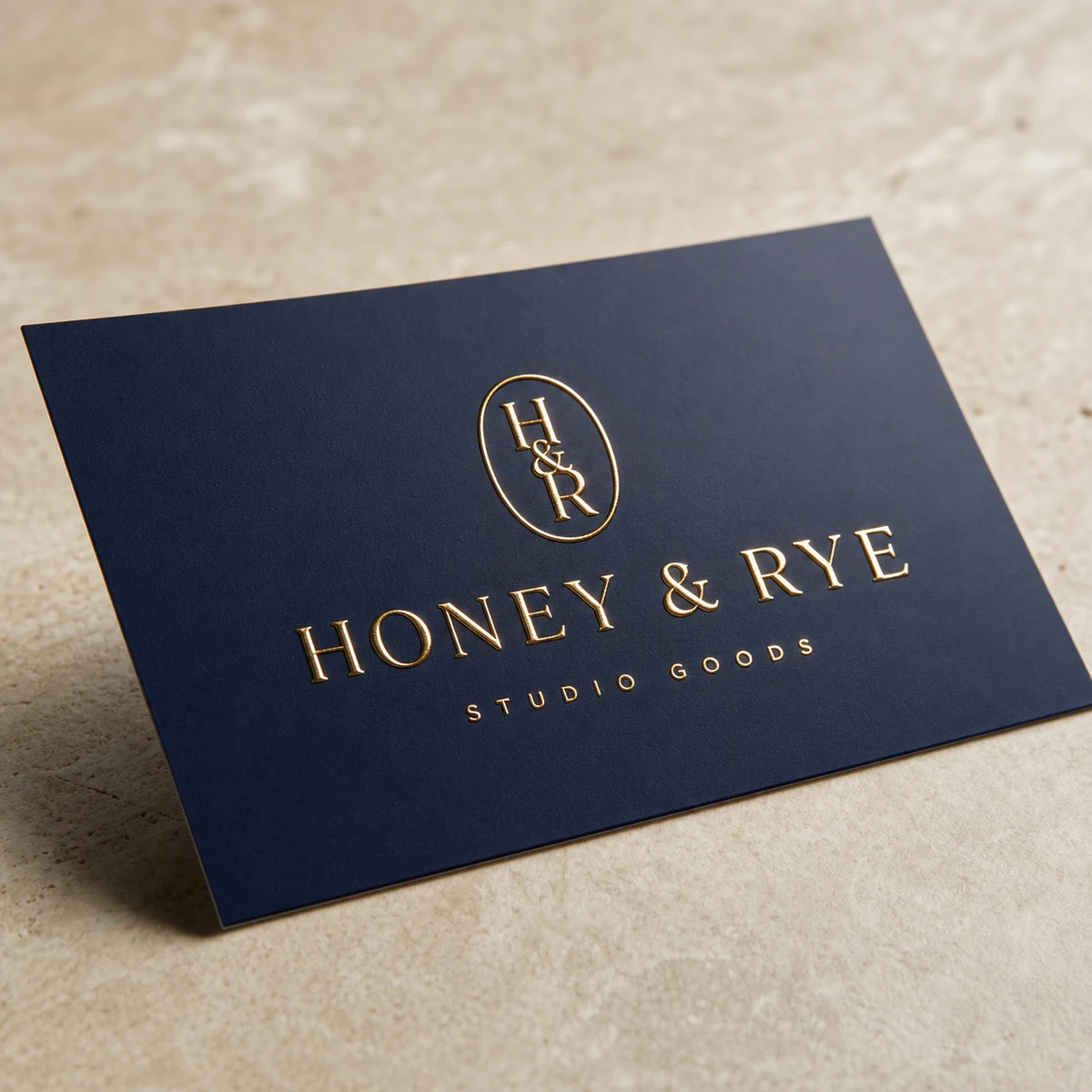
The implicit visual language of legal and corporate finance is restraint, precision, and substance. Raised foil in silver or gold on cream or white stock, combined with a duplex construction, is the strongest choice here. The tactile quality signals care and investment without being showy. A gold raised monogram on a 700gsm duplex white card, handed across a boardroom table, communicates exactly what a senior partner wants it to communicate: this firm is established and takes quality seriously. Pair with raised foil cards on a duplex base for maximum impact.
Real Estate
Real estate agents hand out more business cards than almost any other profession. The card needs to stand out in a stack on a prospect’s kitchen bench. Raised foil in gold on a dark navy or black coloured stock is highly effective: it reads as premium, it photographs well for social media, and it survives handbag and wallet handling better than purely printed cards. For luxury residential agents, a Scodix raised gloss finish on matte white with a single-colour palette reads as curated and architectural.
Architecture and Interior Design
These audiences value material intelligence. Scodix raised gloss on uncoated matte stock, with a restrained monochrome or duotone palette, is the natural fit. The clear raised element demonstrates craft without screaming for attention. A subtle Scodix-raised floor plan fragment or architectural line over a matte dark grey card is a calling card that architects actually want to keep. Explore the full range of options for architecture and design clients on the custom business cards page.
Luxury Retail and Beauty
Rose gold raised foil is consistently the top choice for luxury retail and beauty brands in the AU market. The warm metallic finish aligns with the jewel-toned, warm-palette aesthetics common in this sector, and the raised element creates a jewellery-like quality in the hand. Cream stock with rose gold raised foil and no other colour is a combination that reads as immediately premium across retail, wedding, skincare, and hospitality contexts.
Hospitality and Food and Beverage
Restaurants and bars benefit from cards that feel tactile but not corporate. Scodix raised gloss on a warm cream or kraft-style stock adds textural interest without metallic shine, which can feel cold in a warm hospitality environment. For high-end dining establishments, a Scodix-raised logo on a 400gsm matte white card with a second-colour printed reverse is a combination that reads as considered and current.
Creative Agencies and Graphic Designers
Holographic raised foil is consistently popular in creative industries, both because it stands out and because it demonstrates technical knowledge (clients understand it is not a standard print run). Scodix with a partial-coverage pattern across the full card back is another strong choice: it creates an all-over textural surface that reads as contemporary and high-production. The how to choose the right business cards guide covers the broader decision-making process for all industry types.
Commercial Photography
Photographers at the commercial tier need a card that competes in a portfolio leave-behind context alongside printed proofs and USB drives. Scodix raised gloss applied to a full-bleed photographic print (your best image, full card back) is a powerful combination: the raised coat gives the printed image a gallery-quality feel without adding any competing colour element. On the front, a clean raised foil or Scodix monogram on matte white creates a strong typographic presence.
File Preparation for Raised Foil and Scodix Business Cards
Correct file prep is the single biggest source of delays and reproof cycles for raised-finish cards. Get it right at the briefing stage and your card ships on time with no surprises.
File Prep for Raised Foil
- Artwork file: Your base artwork file is standard CMYK print-ready PDF or AI (300dpi minimum for any raster elements, fonts outlined).
- Raised foil layer: Prepare a separate layer or file that shows only the elements that will receive the foil. This layer must use a single spot colour named exactly “Raised Foil” (or as specified by your print supplier). Do not use a CMYK approximation of gold or silver for this layer: the spot colour name is what drives the press workflow, not the colour appearance on screen.
- Vector only: All artwork in the foil layer must be vector paths. No raster images or placed photos in the foil layer. If your logo includes a gradient, ask your designer to convert it to vector regions with defined foil and non-foil zones.
- Overprint setting: The foil spot colour layer should be set to overprint. This ensures the foil layer renders correctly on top of the base artwork rather than knocking it out.
File Prep for Scodix Raised Gloss
- Artwork file: Same base file requirements as above (CMYK, 300dpi, fonts outlined).
- Scodix layer: Prepare a separate layer using a single spot colour named “Scodix” or “Raised Gloss” (confirm the exact name with Paperlust Print Shop before submitting). This layer defines the areas that will receive the raised UV polymer.
- Raster acceptable: Unlike raised foil, Scodix can process raster-based artwork in the raised layer (photographic textures, gradient shapes, soft-edge patterns). This is because Scodix uses digital inkjet deposition rather than a die-cut foil transfer, and it can follow the contours of a raster shape with reasonable fidelity.
- Height variation: If your artwork calls for varying heights of raised gloss (deeper on a logo, shallower on a background pattern), communicate this via percentage values in your spot colour or via a separate technical brief to the prepress team. A 100% spot coverage area will receive maximum Scodix height; a 30% tint of the spot colour will receive a proportionally shallower raise.
If you are uncertain about file preparation, the common business card mistakes guide covers the most frequent errors seen in file submissions, including misnamed spot colours and incorrect bleed setups.
Cost Guide: AUD Pricing by Quantity
Understanding the cost structure of raised-finish cards helps you set accurate budget expectations and choose the right technique for your print run size.
All prices below are from pricing (inc GST) sourced from Paperlust Print Shop. Actual order totals vary by quantity, paper selection, duplex construction, and any additional finishes. Use the per-card “from” prices as a baseline comparison; request a formal quote for your specific configuration.
| Technique | From (inc GST, per card) | Typical 100-card order | Typical 500-card order | Cost Driver |
|---|---|---|---|---|
| Raised Foil | $0.24/card | From ~$24 | Volume discount applies | Foil carrier + UV layer setup |
| Scodix Raised Gloss | $0.20/card | From ~$20 | Volume discount applies | Digital UV polymer deposition |
| Spot UV | $0.14/card | From ~$14 | Volume discount applies | Screen UV application |
| Standard | $0.08/card | From ~$44 | Volume discount applies | CMYK digital print only |
| Flat Foil | $0.18/card | From ~$159 | Volume discount applies | Foil carrier, no raise |
| Duplex | $2.27/card | From ~$227 | Volume discount applies | Double-laminate bonded construction |
| Offset Blind-Emboss | Not available via PS | Specialist quote required | Typically 500+ MOQ | Custom die + specialist press |
What Drives the Price of Raised-Finish Cards
The per-card price is only part of the cost picture. Key drivers include:
- Quantity: Per-card cost drops significantly at higher volumes. If you are in a profession where you distribute 500+ cards per year, ordering 500 at once is substantially more cost-effective than two runs of 250.
- Duplex construction: Adding a duplex base to a raised foil card adds a premium to the per-card price but delivers a substantial improvement in perceived quality and card longevity. For buyers comparing raised foil alone versus raised foil on duplex, the latter is almost always the stronger investment at 250 cards and above.
- Number of raised elements: A single raised logo requires a single foil setup. Multiple raised elements (logo on front, monogram on back) may require additional setup steps. Confirm with the print supplier at briefing stage.
- Coloured stock: Coloured paper bases typically carry a premium over standard white or cream, but pairing a dark coloured stock with a metallic raised foil is a high-return investment in terms of visual impact per dollar spent.
Not Sure Which Finish to Order? Try Before You Commit
The Paperlust Print Shop business cards sample pack gives you physical examples of raised foil, Scodix, spot UV, duplex, flat foil, and standard cards so you can compare the feel and finish before placing your full order.
Lead Times: From Order to Delivery
Raised-finish cards take longer than standard digital print cards to produce. The additional steps (UV layer deposition, foil transfer, Scodix deposition, curing) each add time to the production schedule. Build this into your timeline, particularly if the cards are needed for a conference, event, or new business launch.
| Finish | Production Time | AU Delivery (after dispatch) | Total Estimated Timeline |
|---|---|---|---|
| Raised Foil | Standard $10 or express $15 per order | 4-7 business days with express delivery | |
| Scodix Raised Gloss | Standard $10 or express $15 per order | 4-7 business days with express delivery | |
| Spot UV | Standard $10 or express $15 per order | 2-5 business days with express delivery | |
| Standard, Flat Foil, Coloured Paper | Standard $10 or express $15 per order | As fast as 2-3 business days with express delivery | |
| Duplex | Standard $10 or express $15 per order | 4-7 business days with express delivery | |
| Offset Blind-Emboss (specialist) | 2-3 weeks (die + press) | Varies by supplier | 3-4 weeks minimum |
Delivery is not included in the card price: standard delivery is $10 per order and express delivery is $15 per order, Australia-wide. Express shipping is 1-2 business days for metro and 3-5 business days for regional, using Startrack. The timeline variable is production. If you need cards urgently, standard, flat foil, or coloured paper cards with 24-hour production are the pragmatic choice. If you have 5+ business days available, raised foil or Scodix are well within reach for a typical conference or client meeting.
When to Skip the Emboss-Style Finish
Not every card benefits from a raised finish. There are specific situations where a simpler finish is the stronger choice.
When Flat Foil Is Better
Flat foil delivers the same mirror-bright metallic shine as raised foil without the physical relief. For brands where the metallic visual is the priority and tactile depth is secondary, flat foil business cards are a strong choice. They also support 24-hour production, making them the better option when turnaround time matters. The visual impact is comparable in most lighting conditions; the tactile difference is only noticeable on direct handling.
When Spot UV Is Better
If your primary goal is a contrast between a matte base and a gloss accent, spot UV achieves this at a lower per-card cost than Scodix with a shorter lead time. The tactile depth of spot UV is minimal compared to Scodix, but the visual contrast between matte and gloss is strong and legible in photography, making spot UV a good choice for cards that will be photographed for social media or portfolio use. Read the foil and finish comparison for a deeper look at when each technique earns its place.
When Standard 350gsm Uncoated Is Enough
A well-designed card on 350gsm uncoated stock with a clean two-colour print communicates quality through restraint. If your brand identity is built on minimalism, texture-matching, or Scandinavian-influenced design, the right stock choice and print execution will outperform a poorly chosen raised finish. A heavy, well-cut, uncoated card with precise CMYK printing is a strong card. It does not need embellishment for the sake of it.
When a Raised Finish Can Work Against You
- Very high-frequency distribution: If you distribute 1,000+ cards per quarter at trade shows or community events, a standard card at lower cost-per-unit is the more sustainable choice. Reserve raised-finish cards for key client and prospect contacts.
- Brands in cost-sensitive service categories: A tradesperson or small service business that hands out cards to cost-conscious residential clients may find that a premium finish creates an expectation mismatch. An expensive-looking card can work against you in certain pricing contexts.
- Cards that will be written on: If recipients regularly write notes on the back of your card (a common practice with real estate agents), an uncoated or matte-finish reverse is preferable. Raised or gloss-coated backs do not accept ballpoint or felt-tip pen reliably.
Decision Aid: Find Your Finish in 60 Seconds
Use this flowchart to narrow your choice based on what matters most to you.
- I want metallic shine AND a tactile raised texture: Raised foil business cards. Gold, silver, rose gold, copper, or holographic.
- I want tactile raised texture WITHOUT metallic: Scodix raised gloss. Clear UV polymer over your printed artwork.
- I want metallic shine but I need cards quickly (within 2 days): Flat foil business cards. 24-hour production, mirror-bright, no tactile raise.
- I want gloss contrast without tactile depth, at the lowest cost: Spot UV business cards. Visual gloss-over-matte contrast, minimal relief.
- I want maximum card thickness and weight above all else: Duplex business cards (bonded double-stock). Pair with raised foil or Scodix for both weight and texture.
- I want the purest traditional blind-emboss effect (pure paper relief, no ink): This is not available via Paperlust Print Shop. You will need to approach a specialist letterpress and embossing studio. Expect 500+ MOQ and 3-4 week lead times.
- I want to try the finishes before ordering: Order the business cards sample pack and compare in hand.
- I am not sure where to start: The business card selection guide walks through the full decision process from brand type to budget.
Ready to Design Your Tactile Business Card?
Scodix raised gloss cards from Paperlust Print Shop deliver genuine tactile depth without metallic finish, from $0.20 per card (inc GST). Delivery is not included in the card price: standard delivery is $10 per order and express delivery is $15 per order, Australia-wide.
Frequently Asked Questions
Does Paperlust Print Shop offer traditional offset blind-emboss business cards?
No. Paperlust Print Shop does not offer traditional offset blind-emboss business cards, the technique where a custom metal die presses a raised relief into paper without ink or foil. What we do offer are raised foil business cards and Scodix raised gloss business cards, digital finishes on coated card that deliver tactile raised texture. We also offer embossed foil business cards, where one combined die presses foil and emboss into 300gsm Wild Cotton, leaving the foil raised and aligned perfectly with the embossed area. For pure blind-emboss, approach a specialist letterpress and embossing studio.
What is the difference between raised foil and embossed?
Traditional “embossed” refers to a pure paper relief created by pressing a metal die into stock without ink or coating. Raised foil creates a similar raised profile by depositing a UV film on the card surface and then heat-transferring metallic foil onto it. The physical result is comparable in tactile terms (both are raised above the card surface), but raised foil also delivers a metallic finish that traditional blind-emboss does not. In the Australian print market in 2026, “raised foil” is the most widely available route to a tactile, raised business card element.
Is Scodix the same as embossed?
Not technically. Scodix is a digital UV deposition process that builds a clear or coloured polymer relief on the card surface. Traditional embossing uses mechanical die pressure on paper fibre with no added material. The tactile result is similar: both are raised to the touch. The visual result differs: traditional blind-emboss is invisible except at raking light angles; Scodix adds a gloss element that is visible in most lighting. For practical purposes, Scodix is the most accessible digital route to a tactile raised business card element without metallic shine.
Can I emboss text on a coloured paper card?
Yes. Both raised foil and Scodix can be applied to coloured paper stocks. Raised foil on black or dark navy card is a popular premium combination: the metallic foil creates a high-contrast, jewel-like quality that reads as very high-end. Scodix on a coloured stock adds a subtle raised texture over the colour, with the clear gloss polymer amplifying the colour beneath it. See the coloured paper business cards page for available stock options.
What is the minimum order for raised foil business cards in Australia?
Paperlust Print Shop raised foil business cards are available from 50 cards, making them accessible to sole traders, boutique studios, and independent professionals who do not need large volume runs. Per-card pricing starts from $0.24 (inc GST) and decreases at higher quantities.
How long does Scodix raised gloss take to deliver?
Scodix raised gloss business cards at Paperlust Print Shop have a standard production time of 3-5 business days. Delivery is not included in the card price: standard delivery is $10 per order and express delivery is $15 per order, Australia-wide. Your total estimated timeline from order to delivery is 4-7 business days with express shipping.
Can you emboss a photo on a business card?
For raised foil, the raised layer must use vector artwork only. Photographs cannot be faithfully reproduced as a foil element because foil transfers as a solid coverage, not a continuous-tone image. For Scodix, raster artwork is supported in the raised layer, so a photograph or photographic texture can be given a Scodix raised gloss coat. This creates a gallery-quality tactile effect over a photographic surface. Commercial photographers frequently use this technique on the card back to make a full-bleed image print feel dimensional.
What is the cheapest way to get a tactile premium card?
Spot UV business cards (from $0.14/card inc GST) are the most affordable way to add a tactile-feeling premium element to a business card. The raised depth of spot UV is minimal compared to Scodix or raised foil, but the gloss-over-matte contrast is visually striking and the lower cost makes it practical for high-volume distributions. If you want genuine physical relief at a step up in cost, Scodix (from $0.20/card) is the next tier. See the spot UV business cards page for current pricing.
What foil colours are available for raised foil business cards?
Paperlust Print Shop raised foil business cards are available in gold, silver, rose gold, copper, and holographic. Gold is the most popular choice for corporate and professional services clients. Rose gold dominates in beauty, retail, and hospitality. Holographic is the standout choice for creative agencies and event-facing businesses where visual impact at distance matters.
Can I use duplex stock with a raised finish?
Yes, and this is one of the strongest combinations available. Duplex business cards bond two sheets together (typically 700gsm total) for a card that is satisfyingly heavy and rigid. Adding raised foil or Scodix to a duplex base creates a card that ticks every premium-quality indicator: weight, thickness, surface texture, and metallic or tactile finish. This combination is the go-to for senior professionals in legal, finance, real estate, and architecture.
How do I set up my file for raised foil or Scodix?
For raised foil: supply a standard CMYK print-ready PDF for your base artwork, plus a separate file or layer containing only the foil elements, using a single spot colour named “Raised Foil” with all artwork in vector format. For Scodix: the same structure applies, but the Scodix layer spot colour should be named “Scodix” or “Raised Gloss” (confirm with Paperlust Print Shop before submitting). Raster artwork is acceptable in the Scodix layer. See the file prep section above for full detail, and the common business card mistakes guide for file submission errors to avoid.
Is raised foil durable? Will it peel or crack over time?
When applied correctly to a suitable paper stock at sufficient weight (350gsm+), raised foil is durable for normal business card handling. The UV base layer creates a stable adhesion point. The most common durability issue is using raised foil on card stock that is too thin or too flexible: flex stress on a light stock causes the UV layer to crack at its edges, which then lifts the foil. For long-lasting raised foil, use 400gsm or above, or a duplex construction. Avoid storing cards in direct sunlight or high-humidity environments, which can degrade the adhesive layer.
Can I add raised foil to just one element, like my logo, while keeping the rest of the card standard?
Yes. Selective raised foil application (one element on an otherwise standard-print card) is the most common usage pattern and is exactly what the file preparation workflow is designed for. You provide the full CMYK print artwork plus a separate spot-colour layer showing only the logo (or other element) that will receive the foil treatment. Everything outside the foil layer prints normally. This selective approach is also the most cost-effective way to use raised foil, as the foil material and setup apply only to the specific element, not the full card surface.
What happens if I want traditional blind-emboss but my timeline or budget doesn’t allow for a specialist?
The practical alternative is raised foil on an uncoated stock with a matte laminate finish. This combination reads closer to traditional blind-emboss in terms of the tactile quality of the raised element, while the matte laminate reduces the metallic shine to a softer, more subdued level. It is not the same as true blind-emboss, but for buyers who want the tactile quality without the specialist lead time and high MOQ, it is the best accessible approximation available in the AU market today. Order through the custom business cards page to discuss your specific requirements with the Paperlust Print Shop team.