Event posters get noticed or they get ignored. Whether you are promoting a gig at a local venue, running a club night, coordinating a street campaign for a touring act, or advertising a community market, the right print decisions make the difference between a poster that pulls attention and one that gets papered over by the next bill. This guide covers the practical decisions: sizes for Australian venues, stock choices for short runs and bulk campaigns, artwork setup, and how to order.
At a glance
- Most used gig poster size: A2 (420 x 594 mm) for venue and bar placement; A1 (594 x 841 mm) for high-traffic corridors and foyers
- Short-run economics: smaller print runs cost more per unit but avoid waste on time-limited events
- Stock: 200gsm synthetic for durable venue display; gloss or satin art paper for short-run indoor promotion
- Artwork: CMYK PDF, 150 dpi at print size for A2, 3 mm bleed on all sides
- Order: upload your print-ready file at the Paperlust Print Shop poster page
Which Size Works for Which Venue?
Australian event promoters generally work across three sizes. A3 is the lower threshold, A2 is the workhorse, and A1 is used when you need a poster to own a wall. Here is how they translate into real venue contexts.
| Size | Dimensions (mm) | Typical placement | Print run size |
|---|---|---|---|
| A3 | 297 x 420 | Behind bar, notice boards, record shop displays, smaller venues | 20-100 |
| A2 | 420 x 594 | Venue windows, bathroom walls, foyer boards, cafe counters | 50-300 |
| A1 | 594 x 841 | Pub corridors, campus concourses, festival entrance points, approved outdoor sites | 25-150 |
A2 is the format most venue owners and bar managers are happy to display. It is visible from across a room without dominating the space, fits standard poster display boards, and is easy to handle and install. If your campaign involves submitting posters to multiple venues, A2 is the safest default.
A1 is chosen when impact is the priority over placement flexibility. A single A1 poster on a venue wall or corridor reads from 5 to 8 metres. For headline shows, festival announcements, and club nights with visual branding worth showcasing, the extra size justifies the slightly higher cost per unit.
A3 is useful for tight display spaces, record shops, and smaller community venues. It also works as a table-tent format for in-venue promotion where a full wall poster is not practical.
For A0 and oversized formats used at trade stands, conference events, and feature walls, see our large format poster printing guide.
Paper Stock for Event Posters
Paper choice affects how the poster looks on the wall and how long it survives in a venue environment. Venues with high humidity (near kitchen or bar areas), high traffic, or outdoor window display all demand more from the stock than a dry office environment.
| Stock | Surface | Weight | Best for | Durability |
|---|---|---|---|---|
| 200gsm Synthetic | Semi-matte | 200gsm | Venue display, outdoor-adjacent, long-run campaigns | High: moisture-resistant, tear-resistant |
| 170gsm Gloss art | High gloss | 170gsm | Short-run indoor events, premium-look single-show posters | Moderate: vivid colour, not moisture-resistant |
| 150gsm Satin | Low sheen | 150gsm | Music photography, art-focused gig posters, gallery-style events | Moderate: less glare than gloss, good for photographic content |
| 130gsm Bond | Matte uncoated | 130gsm | High-volume short-duration campaigns, draft print runs | Low: economical but tears easily and absorbs moisture |
For most event poster work, 200gsm synthetic is the most practical choice. It holds colour well, resists moisture from condensation on windows or bar surfaces, and survives the handling involved in transporting, installing, and replacing posters across multiple venues. Venues that receive many posters know the difference: a synthetic print stays flat and readable for weeks; a lightweight bond print can curl and fade within days in a humid bar environment.
Gloss art paper gives a premium, high-contrast look that works well for short-run single-show posters with strong photography or bold graphic design. The tradeoff is that gloss is more susceptible to moisture and fingerprints. If you are printing 25 to 50 posters for a single night at a controlled indoor venue, gloss delivers strong visual impact at a practical price per unit.
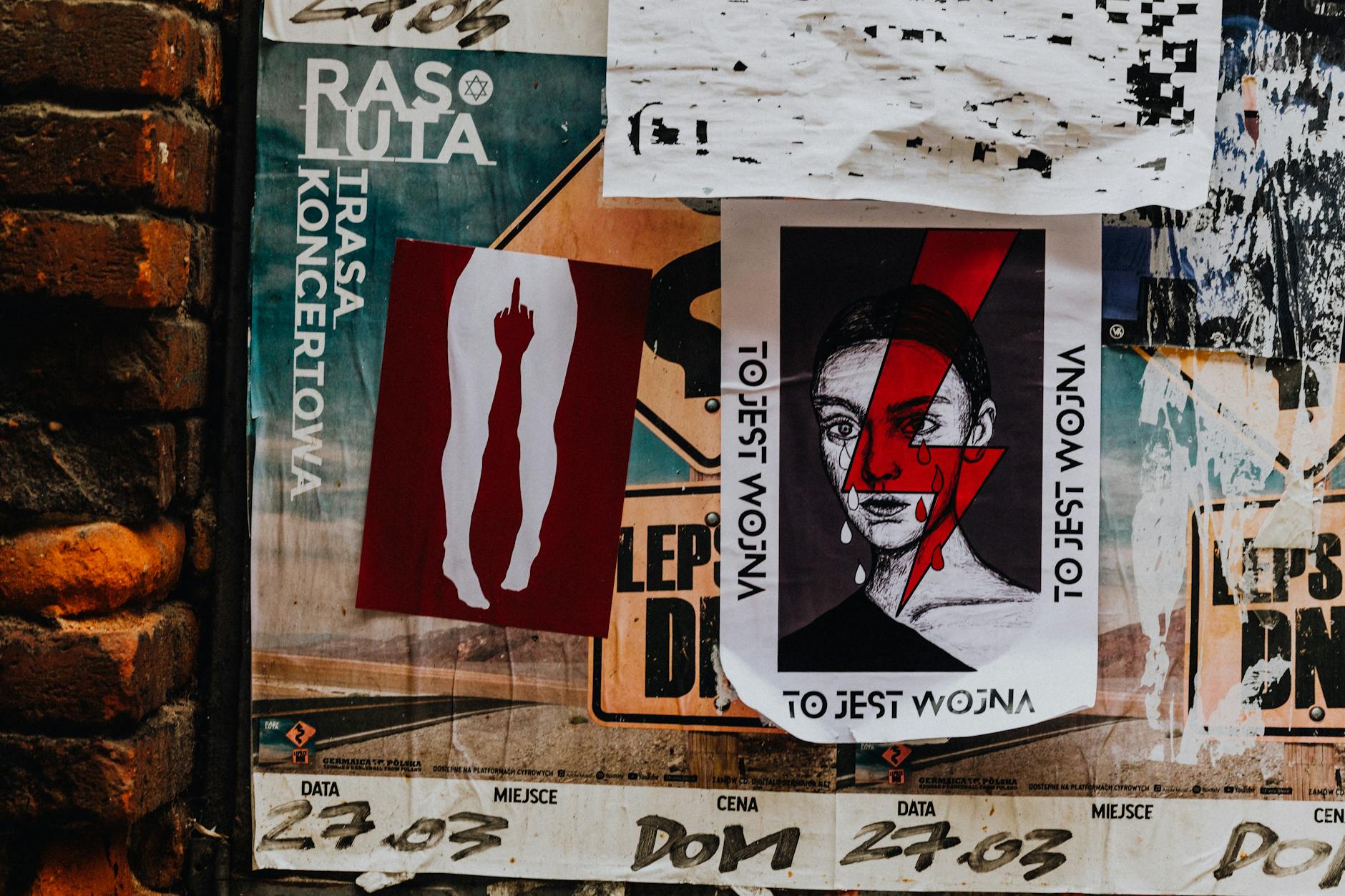
Short Run vs Bulk Print Runs
Event poster print runs are almost always time-limited, which changes the economics compared to evergreen marketing materials.
Short runs (under 50 copies):
Short runs are appropriate for single shows, residencies, or small campaigns covering a handful of local venues. Per-unit cost is higher, but you avoid ending up with hundreds of outdated posters after the event. Digital printing makes short runs economical: there is no plate setup cost, and you can print as few as a single copy.
Medium runs (50-200 copies):
The sweet spot for most mid-size events. Enough copies to cover a city’s worth of venues, cafes, and record shops, with a per-unit cost that has dropped to a comfortable level. Splitting between A2 (for most venues) and A1 (for high-impact sites) is common at this scale.
Bulk runs (200+ copies):
Used for touring acts, recurring club nights with consistent branding, or campaigns that span multiple cities. At volume, per-unit cost drops significantly. If your event branding stays stable across a season, printing in bulk and updating dates with a sticker or overprint is a proven way to reduce costs.
Tip: For recurring events (weekly club nights, monthly gig series), consider keeping a consistent poster template and reprinting with updated details each time. Consistent branding across a run builds recognition with regular venue visitors.
Venue and Club Promotions: What Works
Different venue contexts call for different design and print approaches.
Pub and bar venues: Display space is competitive. Bold typography and a strong single visual element work better than detailed information-dense layouts. Posters are typically handled by venue staff who may fold, roll, or pin them. 200gsm synthetic holds up to this treatment.
Club nights and dance events: Large-format, visually arresting design with high contrast and clear hierarchy (artist, date, venue). Club environments are often dark, so bold colour and strong contrast matter more than at daytime events. A1 is common for corridor and entrance display.
Music festivals and outdoor events: A1 and A2 are used for venue and partner site placement. Outdoor or semi-outdoor display calls for moisture-resistant stock. If posters will be placed in windows with sun exposure, synthetic stock resists UV yellowing better than standard art paper.
Community events and markets: A3 and A2 are practical. Community noticeboards and shop windows typically accommodate A4 to A3; A2 is displayable but may not fit all board formats. Check the display constraints of your target venues before committing to a single size.
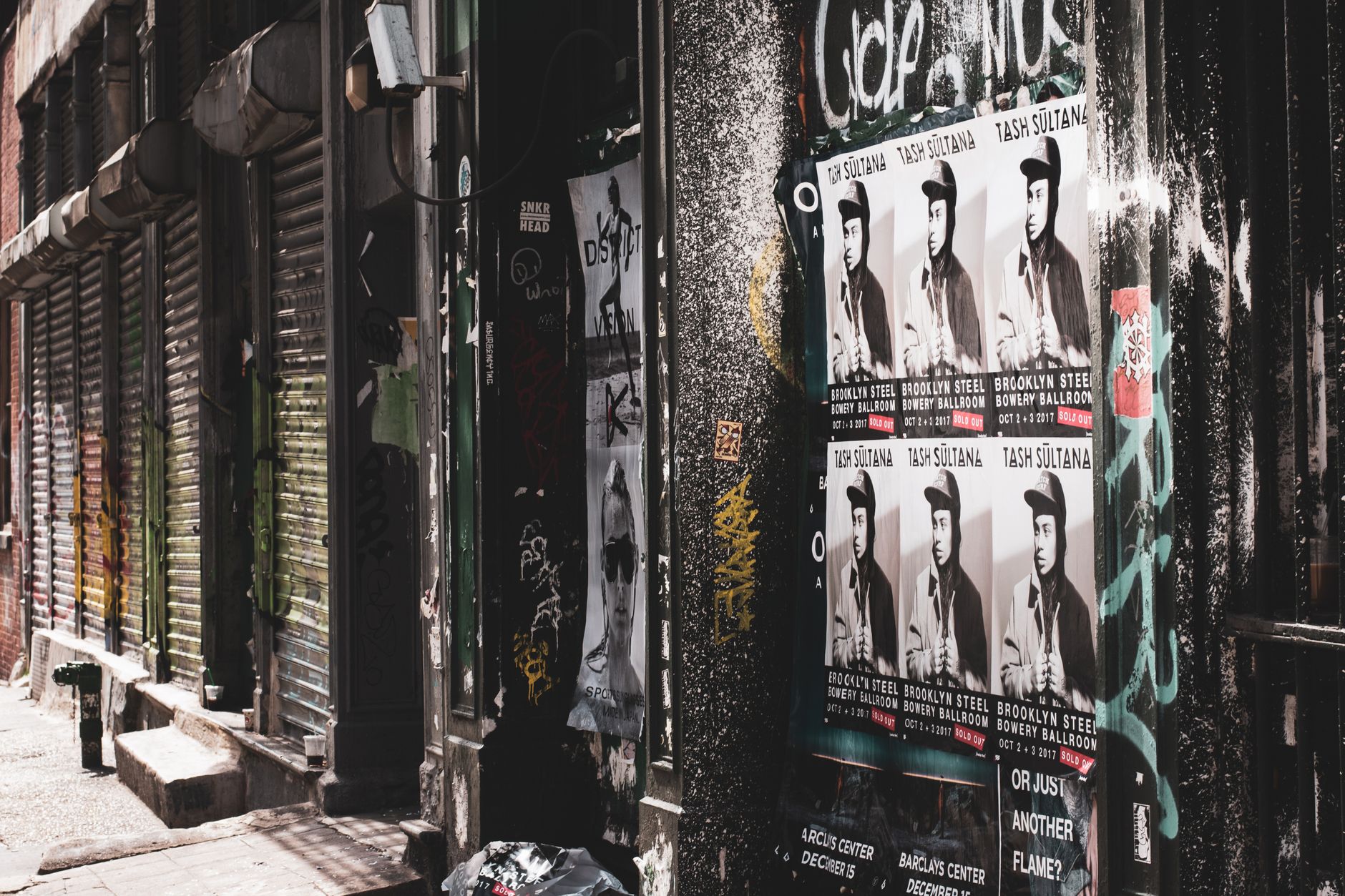
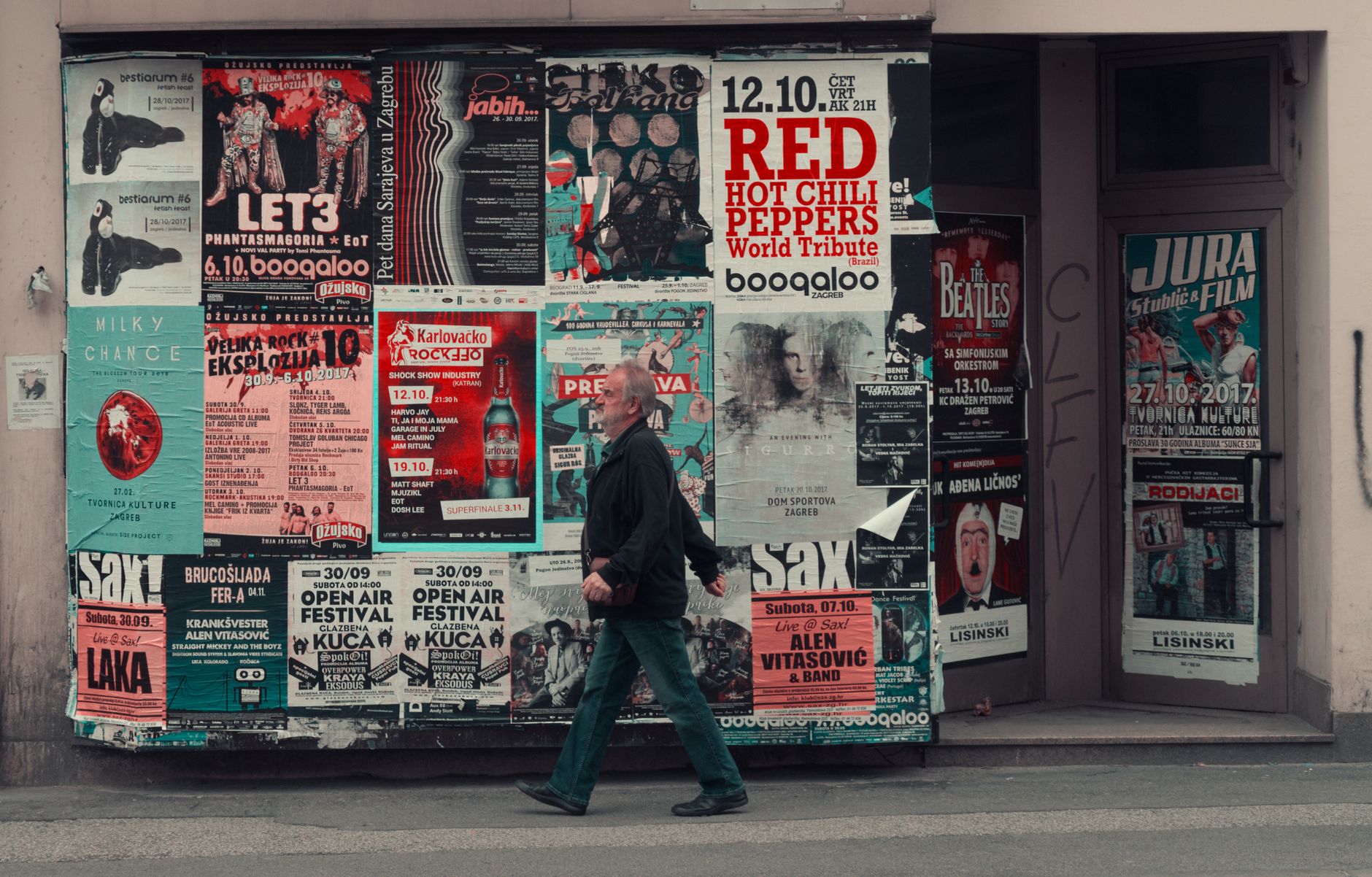
Street postering campaigns: Where local council bylaws permit street postering (approved community boards, permit sites), A2 and A3 are the standard formats used by poster distribution services. Paste-on street campaigns use standard bond or satin stock. Check your local council’s postering regulations before running a street campaign.
Setting Up Your Artwork for Event Posters
The most common print problem with event posters is images that looked sharp on a laptop screen but appear soft at A2 or A1. Applying these basics before you send to print avoids a disappointing result.
Resolution
- A3: 200 dpi at final print size (minimum 150 dpi)
- A2: 150-200 dpi at final print size
- A1: 150 dpi at final print size
“At final print size” is the key phrase. A photo that is 72 dpi at 10 x 14 cm will not print crisply at A2; it needs to have sufficient pixels at the full 420 x 594 mm output dimension.
Artist photography and venue imagery should ideally come from a DSLR or mirrorless camera rather than a compressed phone photo. If your source image is low-resolution, a vector-based design (type, graphic elements, minimal photography) is a safer choice for large-format print.
Bleed and safe zone
Add 3 mm bleed on all four sides beyond your trim size. For A2, your document is set up at 426 x 600 mm; for A1, at 600 x 847 mm. Keep all critical content (artist names, dates, venue, ticket URL) at least 5 mm inside the trim edge. Background colour or full-bleed imagery must extend to the bleed edge.
Colour mode
Set your document to CMYK. RGB files are converted on press, and the conversion can shift colours. Vibrant blues and greens are particularly prone to shifting on conversion. If your design uses specific brand colours, set the CMYK values explicitly in your source file.
File format
Export as a print-ready PDF with bleed, crop marks, and embedded (or outlined) fonts. Flatten transparency before exporting. Do not supply JPEGs for final print files.
For a full artwork setup walkthrough, the poster design guide covers resolution, bleed, and colour setup in detail.
How to Order Event Posters in Australia
- Visit the Paperlust Print Shop posters page and choose your size.
- Select your quantity and stock option.
- Upload your print-ready PDF. The system will flag any obvious file issues (low resolution, missing bleed).
- Review your proof and approve.
- Your order goes to fast Australian production.
Flat-rate shipping applies Australia-wide. See the product page for current pricing and turnaround times, which vary by quantity and time of year.
Frequently Asked Questions
What size poster is standard for gigs in Australia?
A2 (420 x 594 mm) is the most practical all-round size for gig promotion in Australia. It fits most venue display boards and windows, is cost-effective to print in quantities of 50 to 200, and reads clearly from across a room. A1 (594 x 841 mm) is used when impact is the primary consideration, such as for headline shows, festival announcements, or high-traffic corridor display.
What paper stock should I use for venue posters?
200gsm synthetic is the most durable choice for venue environments: it is moisture-resistant, holds colour well, and survives handling by venue staff. For premium single-show posters at controlled indoor venues, 170gsm gloss or 150gsm satin art paper delivers strong visual impact. For high-volume short-duration campaigns, 130gsm bond is an economical option where longevity is less important than quantity.
How many posters should I print for a gig campaign?
A typical small-to-mid-size city event campaign covers 20-60 venues, shops, and cafes. Allowing for 2-3 posters per venue gives a starting estimate of 50-180 copies at A2 or A3. For a first campaign in a new city, 100 copies across A2 and A3 is a practical starting quantity that avoids waste while covering enough sites to create visible presence.
Can I use the same poster design at A2 and A1?
Yes. The same print-ready file can be used at both sizes provided the resolution is sufficient at the larger size. A file set up at A1 print size will downscale cleanly to A2. A file set up specifically at A2 may be underresolved at A1 if the source images were low-resolution originals.
How long before the show should I get posters printed?
For a city campaign, allow at least two weeks before the event date: time for printing, delivery, and physical distribution across venues. For a major event requiring street campaign permits or poster distribution services, four weeks is a safer lead time. Fast Australian production turnaround means you are not waiting long for the print itself; the lead time is usually the distribution logistics.
Are event posters suitable for outdoor use?
200gsm synthetic stock is moisture-resistant and handles outdoor-adjacent settings (windows, sheltered outdoor noticeboards) well for short to medium durations. For genuine outdoor exposure (rain, direct UV for weeks), a corflute sign or weatherproof substrate is more appropriate. Most gig campaigns are indoor or sheltered-outdoor; synthetic poster stock handles this without issue.
What resolution do I need for an A2 event poster?
A minimum of 150 dpi at the actual A2 print dimensions (420 x 594 mm). At 150 dpi, text will print sharply and photographic content will reproduce acceptably. For photographic poster designs where image quality is central to the artwork, aim for 200 dpi or higher at print size.
Can I print a small quantity for a one-off show?
Yes. Digital printing makes short-run poster printing economical with no minimum order requirements that force you into hundreds of copies. You can print as few copies as you need for a single event, with per-unit costs that are higher than bulk but entirely practical for a one-off promotion.
Order Your Event Posters
Ready to print? Visit the Paperlust Print Shop poster page to select your size, upload your artwork, and get into fast Australian production.