
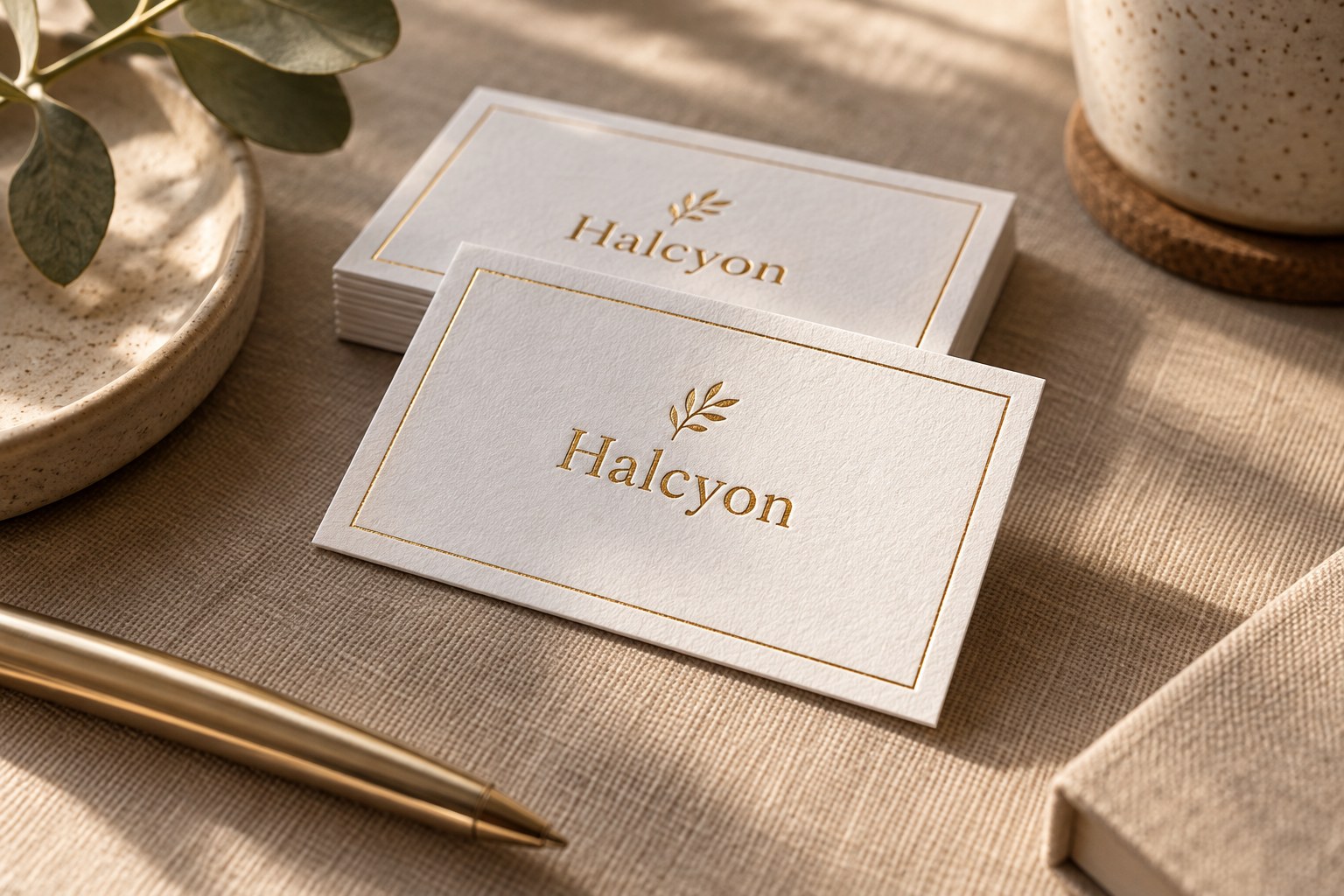
You ask three suppliers for foil business cards and the quotes come back looking like three different products. One is pressed and recessed and takes close to a month. One sits flush and is ready in days. One looks raised, but nobody explains why. The problem is not the foil itself. The problem is that the word foil hides several processes, and each one suits a different brief. What most people mean by foil stamping is only one of them.
Foil stamping, in its strict sense, is a press process where a hot metal die transfers metallic foil film into the sheet using heat and pressure. The die is made to match a single design, so the result is a true metallic surface, not an ink. That is the finish most people picture when they ask for gold lettering on a cotton card. But it is not the only foil finish a business card buyer will meet.
This guide works through how the die does its job, the four foil finishes side by side, cold foil, the lead times and minimums that catch people out, foil on stickers and labels, and how to choose. You will finish with one honest rule: the brief decides the process.
The short version
- Foil stamping relies on a metal die warmed for the press to release foil film from a carrier roll through heat and pressure.
- On soft uncoated board the die leaves a slight recessed impression, and the foil sits inside it.
- Digital foil follows printed toner with no die and sits flush with the paper.
- Embossed foil raises the foil in one hit, with the foiled artwork in exact register.
- Pressed foil cards take 18 to 23 working days; digital foil cards run a few working days after proof approval.
- Holographic foil is available on flat foil only.
What foil stamping is and why the die matters
Hot foil stamping, also called hot stamping, starts with a metal die that has been heated for the press. A thin foil film on a carrier roll sits between the die and the sheet. When the die presses down, heat and pressure release the foil wherever the die touches, and the film stays on the carrier everywhere else. The result is a sharp metallic edge, not a printed edge.
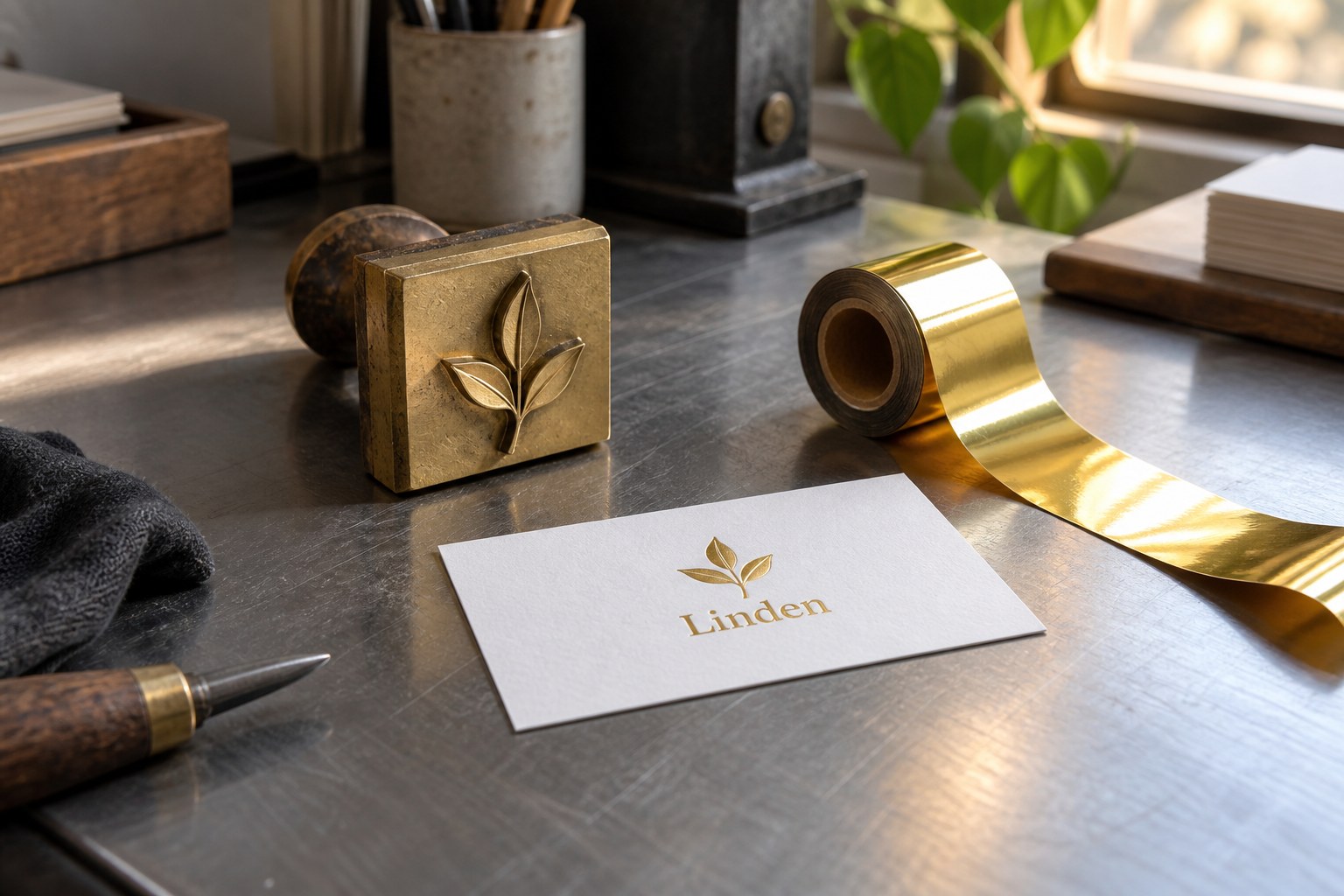
That sharpness has a setup step. A die is made to match each design before anything is stamped. If the artwork changes, a new die is made. On a soft uncoated board, the die also leaves a slight recessed impression, with the foil sitting inside it. The recess is subtle, but you can feel it with a fingertip.
Foil is a metallic film, which is why it reflects light in a way metallic ink cannot. That difference is visible at arm’s length. A foil edge reads as a clean line of metal, while metallic ink tends to read as a printed colour with a sparkle.
The four foil finishes on business cards compared
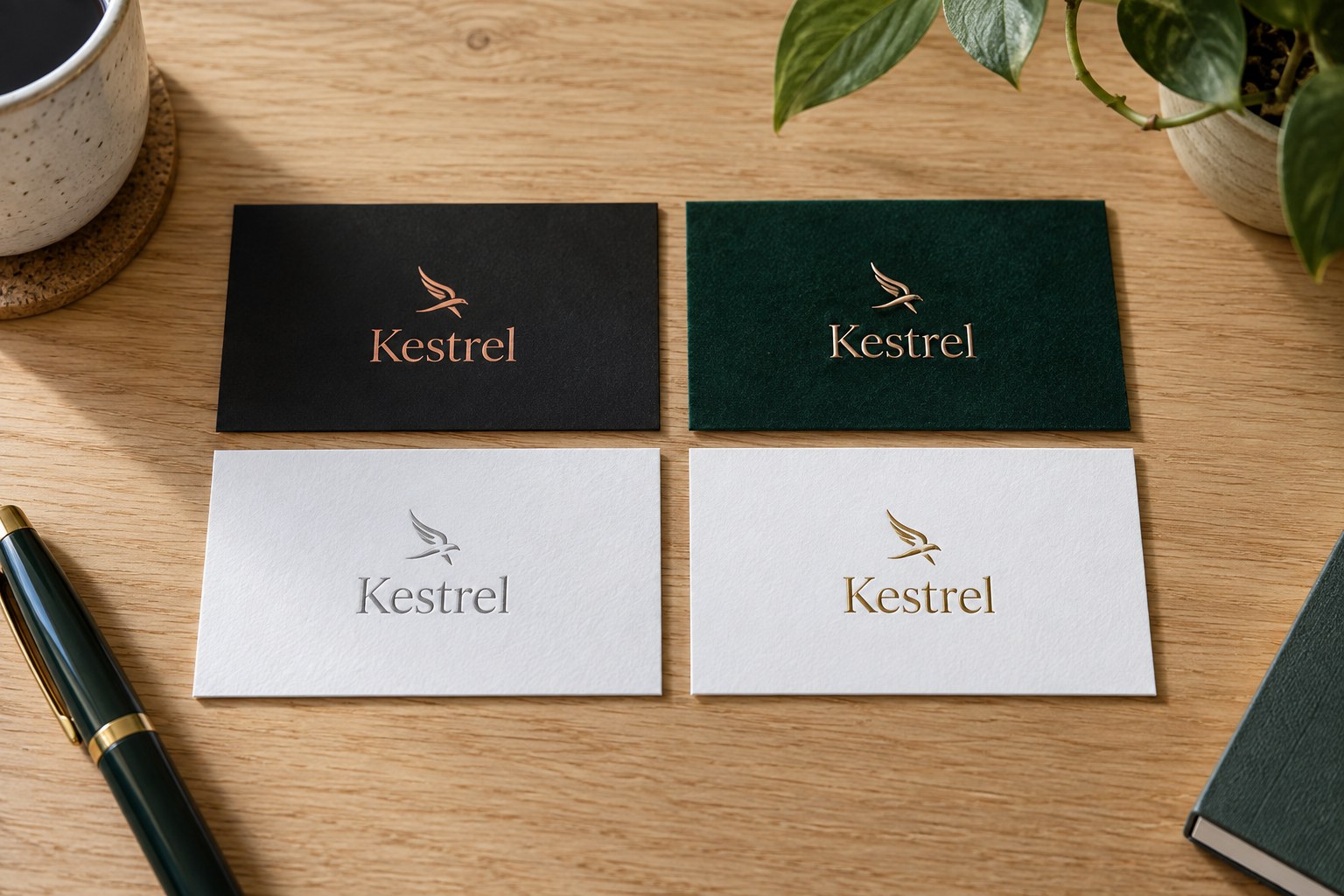
The word foil splits into four finishes you will meet on business cards. They are made in different ways, sit on different stocks, and are ordered on different timelines. The table puts the basics side by side.
| Finish | How the foil goes on | Surface | Stock | Minimum order | Lead time |
|---|---|---|---|---|---|
| Foil stamped | A heated die presses metallic foil into the board with heat and pressure. A single foil colour on each card. | Recessed impression | White 300gsm Wild Cotton premium cotton board, uncoated | 100 cards, then steps of 10 to 250. Larger runs by custom quote. | 18 to 23 working days from design approval, including delivery |
| Embossed foil | A combined die applies foil and emboss in a single press hit. A single metallic colour on each card. | Raised, in exact register | White 300gsm Wild Cotton premium cotton board, uncoated | 100 cards, then steps of 10 to 250. Larger runs by custom quote. | 18 to 23 working days from design approval, including delivery |
| Flat foil | The card is printed digitally, then foil film bonds to the printed toner by heat and pressure. No custom die. | Flush with the paper, no texture | 300 GSM Matte, 360 GSM Premium, 350 GSM Heavyweight, 270 GSM Navy, 270 GSM Black | 100 cards | 3 to 5 working days after the design proof is approved, delivery not included |
| Raised foil | Combines embossing with metallic foil. Raised metallic elements are typically 100 to 200 microns high. A single foil colour on each card. | Raised | 450 GSM Artboard with Velvet Laminate | 250 cards | 2 to 4 working days after the design proof is approved, delivery not included |
Foil stamped business cards are the traditional press finish. A heated die presses metallic foil into uncoated board, so the foil sits in a recessed impression rather than on top of the sheet. The card is printed front only, with one foil colour only, in copper, rose gold, silver or gold. Other colours are available on request.
Embossed foil business cards add a second movement in the same press hit. A combined die applies foil and emboss together, so the foiled artwork sits raised in exact register on white 300gsm Wild Cotton board. The back is left unprinted, and the order is front only with a single metallic colour on each card.
Flat foil business cards come from a different route. The card is printed on a digital press, then foil film is bonded to the printed toner with heat and pressure, with no custom die. The foil sits flush with the paper and has no texture. This is the finish to choose when both sides need to be printed, because foil is applied to one face only while both sides can be printed.
Raised foil business cards combine embossing with metallic foil. The raised metallic elements are typically 100 to 200 microns high, printed on 450 GSM Artboard with Velvet Laminate. Foil is normally applied to a single face, one metallic colour on each card, in gold, rose gold or silver.
Hot foil stamping and digital foil: why they sit on different stocks
Digital foil, sometimes called sleeking, starts at the printer rather than the die maker. The card is printed on a digital press, then metallic foil film is fused to the printed toner using heat and pressure. The foil takes only where toner is printed, and because there is no custom die, the surface stays flush. The process runs on these stocks: 300 GSM Matte, 360 GSM Premium, 350 GSM Heavyweight, 270 GSM Navy and 270 GSM Black.
Hot foil stamping is the opposite in almost every way. It needs a metal die warmed to pressing temperature, and the die does its work on an uncoated board. The pressed foil cards use white 300gsm Wild Cotton premium cotton board. The board is soft enough to take a recessed impression, and the uncoated surface lets the foil sit into the fibre rather than float on a coated layer.
Why the two families sit on different stocks comes down to the mechanism. A pressed die needs a stock that can compress, which is why uncoated cotton board is the natural home for foil stamping. The same logic pushes raised foil onto its own substrate. Raised foil business cards combine embossing with metallic foil on 450 GSM Artboard with Velvet Laminate.
Where cold foil fits in the foil family
Cold foil is a third process, and it is often confused with the other two. In cold foil, an adhesive is printed onto the sheet and foil is applied to it without heat, inline on a printing press. That inline step matters. Cold foil is typical of long runs of labels and packaging, where the job can keep moving on press without stopping for a separate die or a second pass.
It is not the same as hot foil stamping, which uses a heated die to release foil from a carrier roll under pressure. It is also not the same as digital foil, which bonds foil to printed toner. The terms get mixed up because all three produce a metallic surface, but the machinery, the setup and the feel are different.
Foil lead times and minimums in working days
Pressed foil cards are made to order. Foil stamped and embossed foil business cards run from 100 to 250 cards in steps of 10, with larger runs by custom quote. They take 18 to 23 working days from design approval, including delivery to an Australian address. That lead time already includes the time in transit, which matters when you compare options.
Flat foil runs from 100 cards and takes 3 to 5 working days after the design proof is approved. Raised foil starts at 250 cards and takes 2 to 4 working days after proof approval. These digital production windows do not include delivery, so the gap between a pressed card and a flat foil card is smaller than the raw numbers suggest, but it is still real.
Before anything is pressed, the pressed cards come with unlimited proof rounds. Nothing is pressed until the design is approved. If your artwork is still moving, the pressed route gives you room. If the deadline is fixed and the design is final, digital foil gives you the shorter window.
Foil stickers and foil labels: from ten to rolls of 500
Foil stickers drop the minimum to 10 per design. Sizes run from 20 x 20 mm to 295 x 425 mm, with foil in gold, silver, rose gold, copper and holographic. Foil can be combined with full-colour printing on the same sticker, which is useful when a metallic logo sits inside a coloured illustration or photo background.
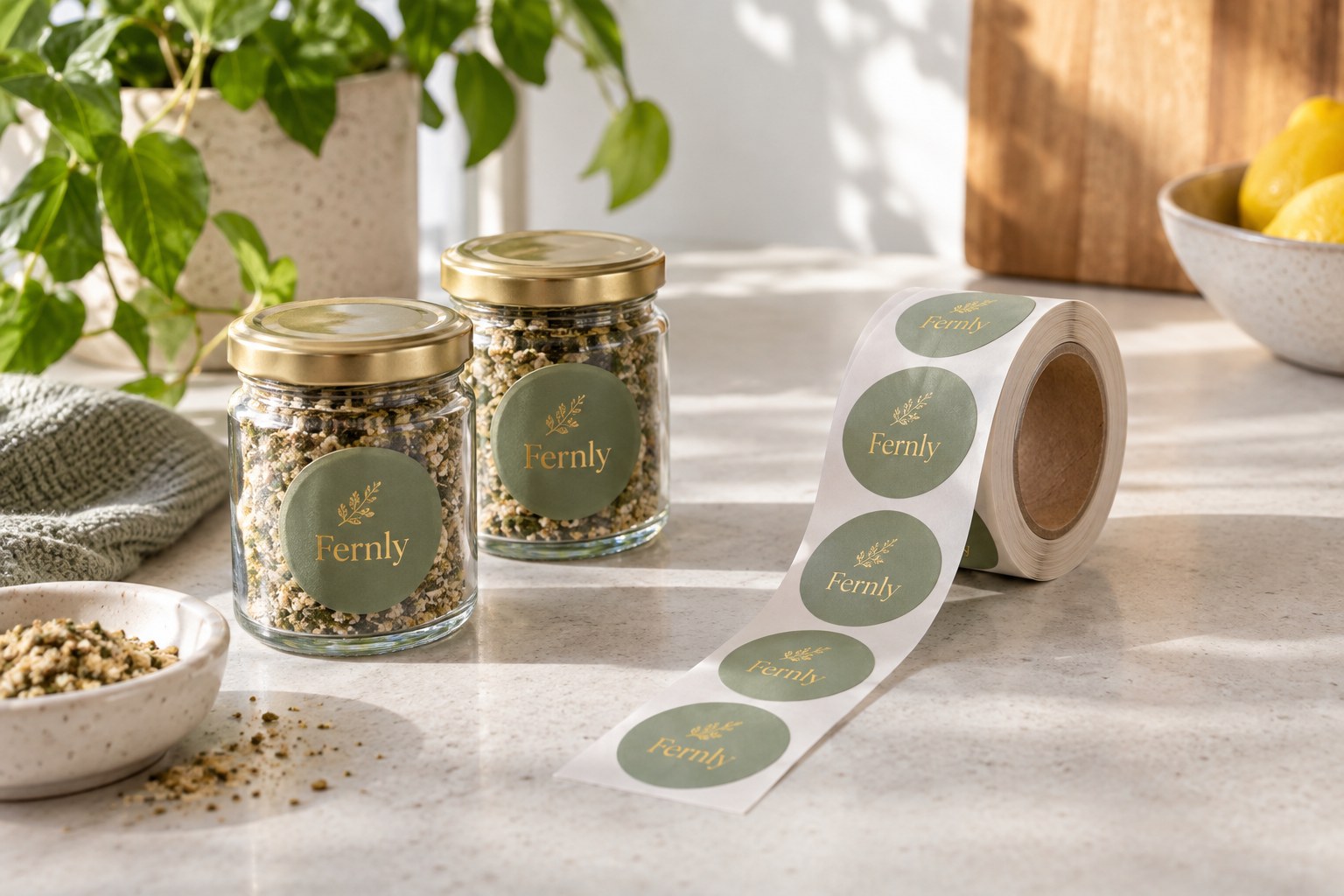
Foil labels suit product packaging and are supplied on rolls of 500 per design and size. They carry flat metallic foil in gold, silver or rose gold applied over the printed label. In the artwork, the foil is set up from a separate named spot-colour layer, so the metallic area is called out before the file goes to print.
How to choose the right foil finish
Start with how you want the foil to feel. A pressed impression and a traditional feel point to foil stamped cards. If you want the metal to stand proud, choose embossed foil for an uncoated cotton card or raised foil for 450 GSM Artboard with Velvet Laminate. Flat foil is the one that can sit flush and let the design do the talking.
Then check the constraints. A short run, holographic or copper on a dark stock, or both sides printed points to flat foil. Holographic foil is available on flat foil only, while raised foil comes in gold, silver and rose gold. If the deadline is under a week, the pressed cards are ruled out, because they take 18 to 23 working days from design approval including delivery.
The brief decides the process. Every finish is a response to a specific problem: stock, feel, run size, timeline, and whether the back needs to be printed. Work backwards from the job. If you are still weighing whether the finish is worth the extra layer at all, our look at the foil upgrade for business cards sets out the case without the gloss.
Frequently asked questions
What is the difference between hot foil stamping and digital foil?
Hot foil stamping uses a metal die heated on the press to release foil film from a carrier roll with heat and pressure, and on a soft uncoated board the die leaves a slight recessed impression. Digital foil prints the card on a digital press first, then bonds foil film to the printed toner using heat and pressure without a custom die. The foil takes only where toner is printed and sits flush with the paper, with no texture.
What is cold foil stamping?
Cold foil is a different process from hot foil stamping and digital foil. An adhesive is printed onto the sheet, and foil is applied to it without heat, inline on a printing press. It is typical of long runs of labels and packaging.
Does foil stamping give a raised effect?
It depends on the process. Foil stamped cards on soft uncoated board leave a slight recessed impression, not a raised one. Embossed foil uses a combined die to apply foil and emboss in a single press hit, so the foiled artwork sits raised in exact register. Raised foil combines embossing with metallic foil, with the raised metallic elements typically 100 to 200 microns high on 450 GSM Artboard with Velvet Laminate.
Which foil colours, including rose gold, are available on foil business cards?
Foil stamped and embossed foil cards come in rose gold, silver, gold or copper, with other colours on request. Flat foil adds holographic to copper, gold, rose gold and silver. Raised foil comes in silver, rose gold and gold. Each card carries a single foil colour, and foil is normally applied to one face only.
How long do foil stamped business cards take?
Foil stamped business cards are made to order and take 18 to 23 working days from design approval, including delivery to an Australian address. There is no maximum number of proof rounds, and nothing is pressed until the design is approved.
Can foil go on both sides of a card, or is it limited to one side?
Pressed foil cards are printed front only, with the back left unprinted. A plain digitally printed back is available by custom quote. Flat foil is limited to a single face, while both sides can be printed. Raised foil usually appears on one face only.