
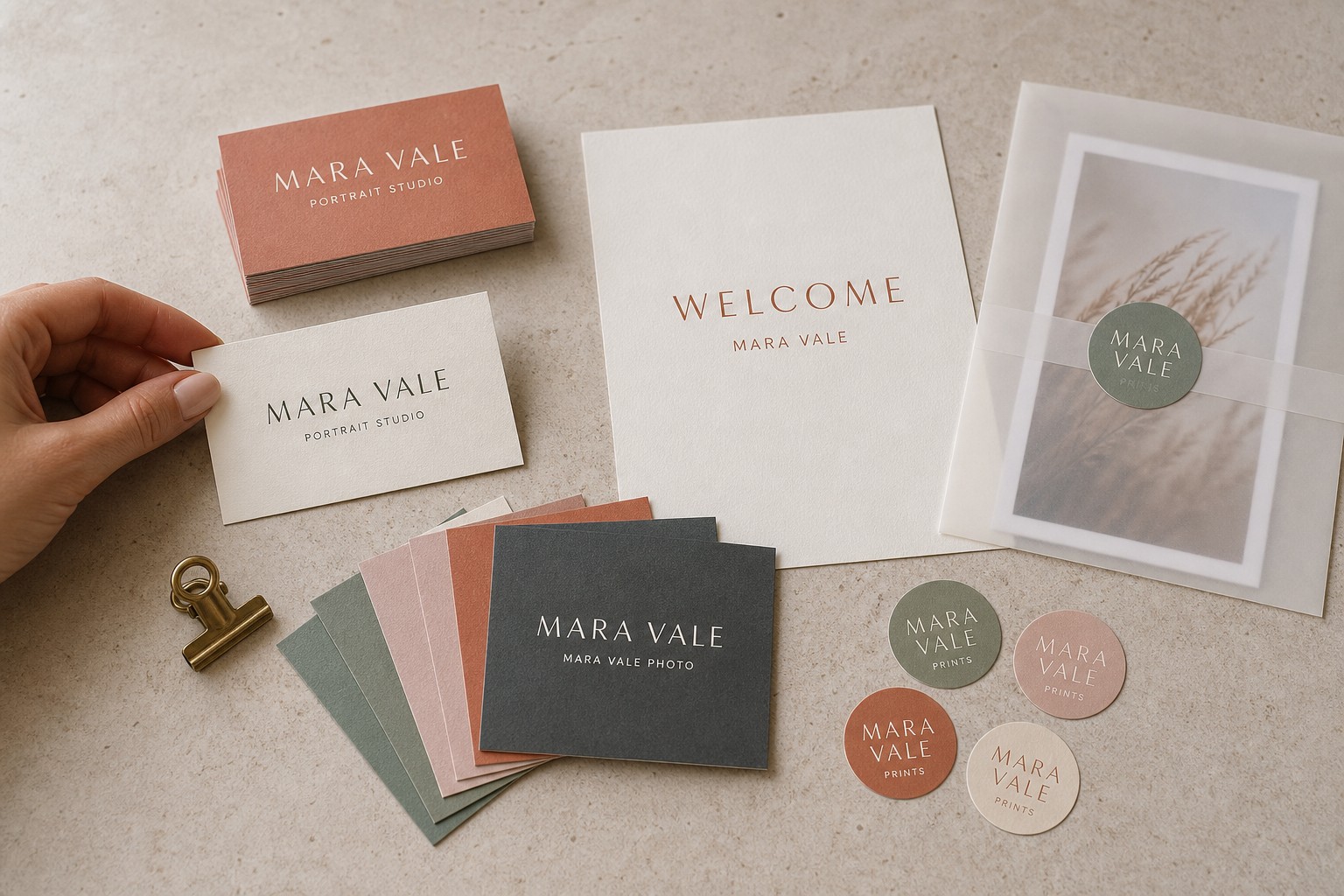
Clients book photographers based on their portfolio. They refer photographers based on how the whole experience felt, and that includes every physical piece of print you hand over. A well-assembled print kit tells clients you take your business as seriously as you take your craft.
This guide covers the print essentials for photographers and creative studios in Australia: what to order, which finishes signal premium quality, and how to build a cohesive kit that makes your brand memorable long after the gallery goes live.
The same core print kit applies across niches. The weight and finish of each piece is where you signal quality.
Cheat sheet
- Core kit: business cards, packaging stickers or seals, thank-you cards, price guide or welcome packet
- AU standard business card size: 90mm x 55mm; also available in rounded corners, circle, and oval
- Finish upgrades worth the investment: velvet laminate, Scodix raised gloss, soft-touch, spot UV
- Minimum orders: 50 standard cards, 250 Scodix cards, 10 foil stickers
- Production speed: standard cards available in as little as 24 hours; Scodix 7-10 working days after proof approval
- Flat-rate shipping Australia-wide
- Build in stages: start with cards and seals, add welcome packets as your client base grows
Your Business Card Is Your Portfolio in Miniature
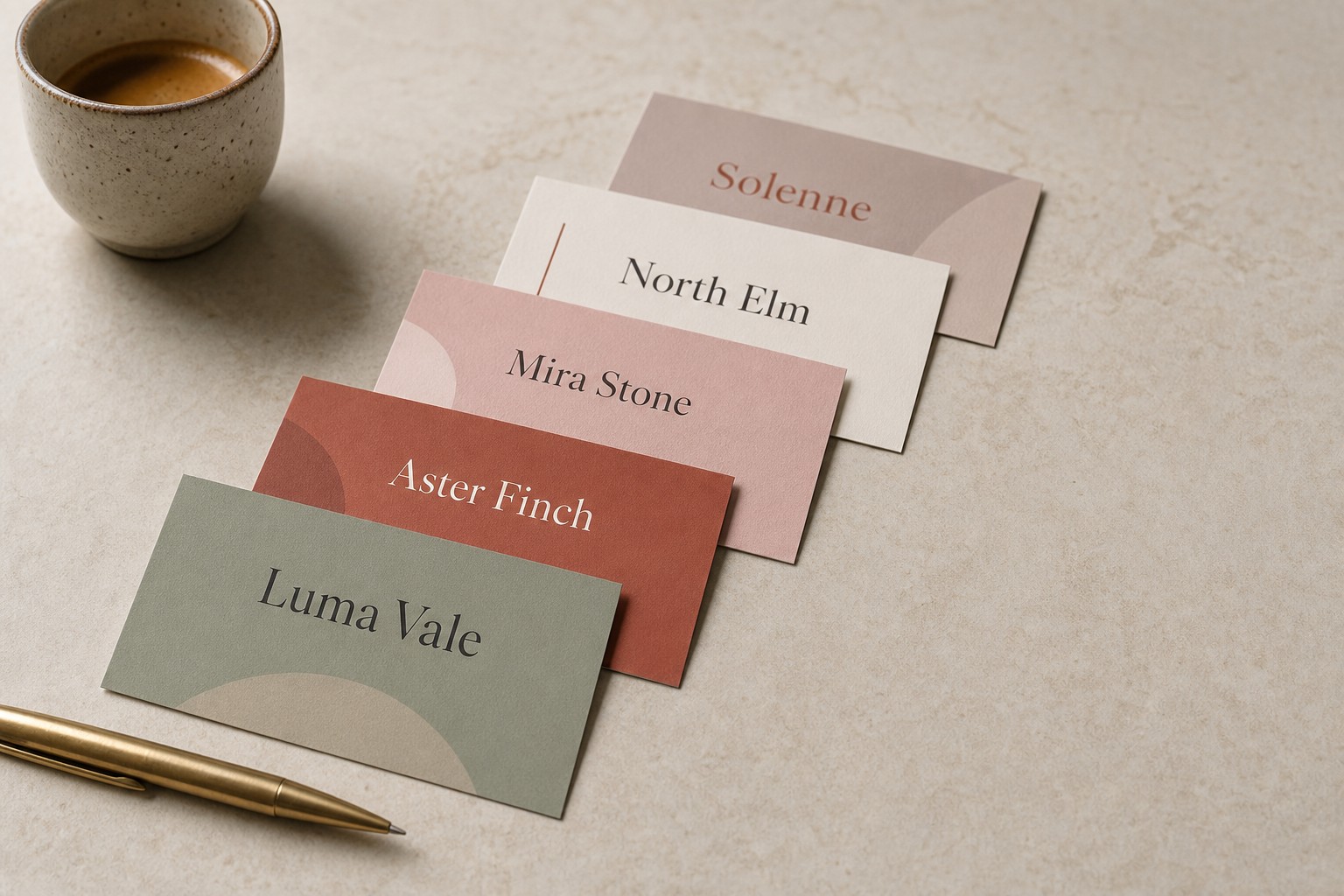
A business card is passed hand to hand. Unlike a website or an Instagram profile, it travels into spaces where you are not present, it sits on a desk, it ends up in a wallet. For photographers and creative studios, the quality of the card itself communicates something before the recipient even reads it.
The 90mm x 55mm AU standard card size gives you a clean canvas to work with. Stock choice matters here. For a studio that shoots lifestyle and commercial content, artboard with velvet laminate has a tactile softness that matches the warmth of the work. For a studio focused on fashion or editorial, a metallic stock reads sleek and polished. Linen stock suits photographers who want a textured finish that echoes a handcrafted, artisanal aesthetic.
Paperlust standard business cards are available in multiple stock types, including linen, cotton, metallic, matte, and artboard with velvet laminate. You can print front only or front and back, and minimum orders start at 50 cards, which keeps the initial investment low while you refine your branding.
24-hour production is available on standard cards for urgent requirements.
Premium Finish Upgrades That Signal Quality
Standard cards look polished. But for a creative studio presenting to premium clients or trying to stand out at events alongside other designers, art directors, and marketing managers, a finish upgrade makes the card worth keeping.
Scodix raised gloss is the standout choice for studios that want maximum tactile impact. Scodix applies a polymer coating to selected areas of the card, creating a raised, three-dimensional surface you can feel with your fingertips. It draws attention immediately to your logo or the most important element of your layout. Scodix business cards are printed on 450gsm artboard with velvet laminate, combining a soft-touch matte field with sharp raised gloss highlights. Minimum order is 250 cards and production runs 7-10 working days after proof approval, so plan ahead for events and launches.
Spot UV creates a similar contrast effect. A matte base with spot gloss on your logo or a key graphic element delivers a striking, high-end finish. It suits studios that want a clean, modern look without the full raised dimension of Scodix.
Soft-touch laminate adds a silky coating across the full card surface, handles repeated contact without deteriorating, and photographs well in styled flat-lays for social media.
For most studios, the upgrade path makes sense in stages: standard cards on a premium stock to start, then Scodix or spot UV for your primary card once you are booking at higher rates.
Stickers and Seals: Brand Every Touchpoint
The business card earns referrals. Stickers and seals are how your brand shows up consistently across the rest of the client experience.
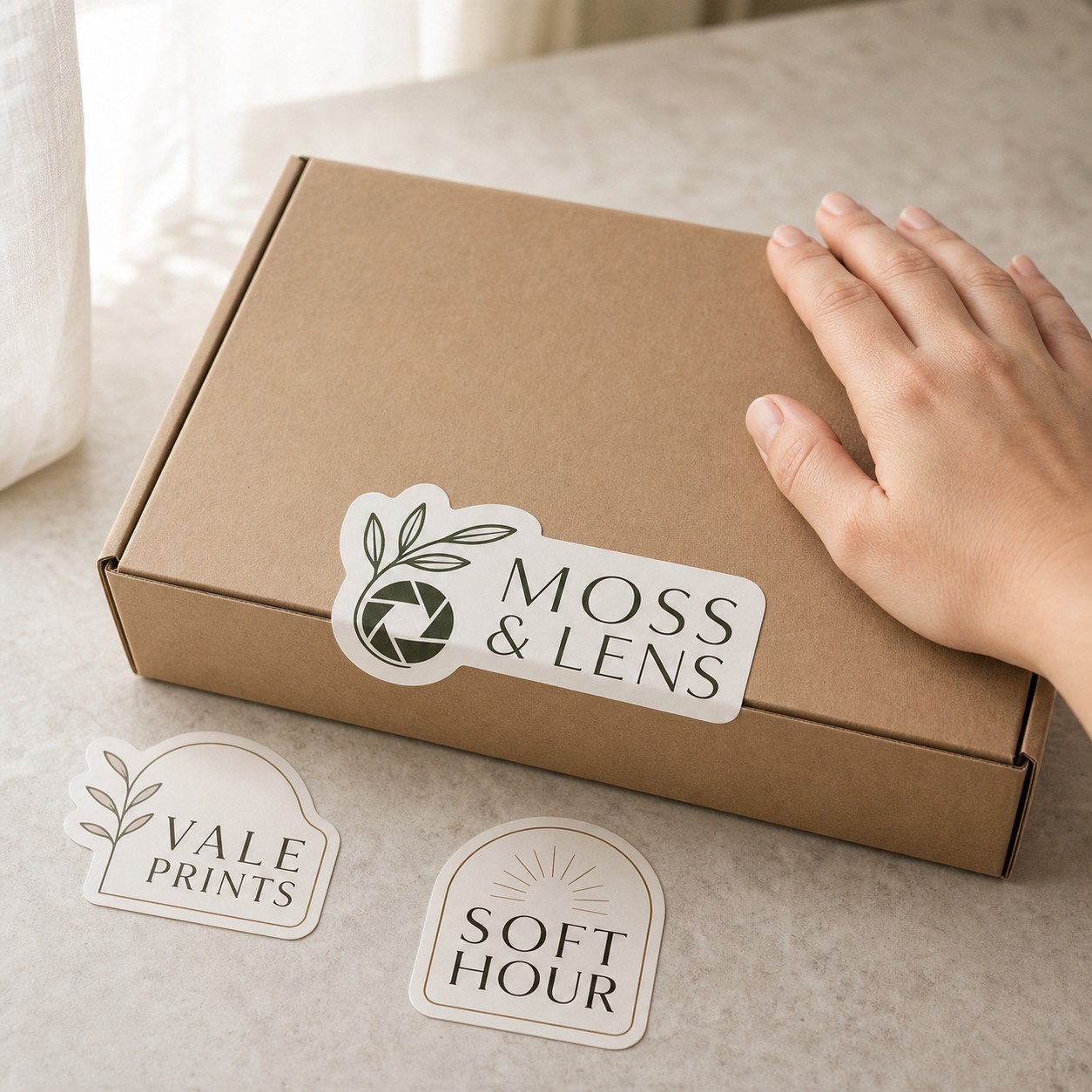
For photographers, the moments where packaging comes into play are predictable: USB wallets, print delivery boxes, thank-you bags, gift-with-order inserts, and physical deliveries sent by post. A foil seal on a kraft envelope or a branded sticker on a packaging box signals care for detail. It shows that the experience was designed, not assembled from whatever was on hand.
Gold and rose gold foil stickers work particularly well for studios with warm, premium aesthetics. Copper suits earthy and botanical brands. Silver and holographic finishes suit contemporary or fashion-focused studios. Foil stickers start at a minimum of just 10 units, so you can test a design without committing to a large print run.
Foil stickers are available from 20mm x 20mm up to 295mm x 425mm, covering small circular seals through to larger branded overlays for presentation packaging.
Thank-You Cards and With-Compliments Notes
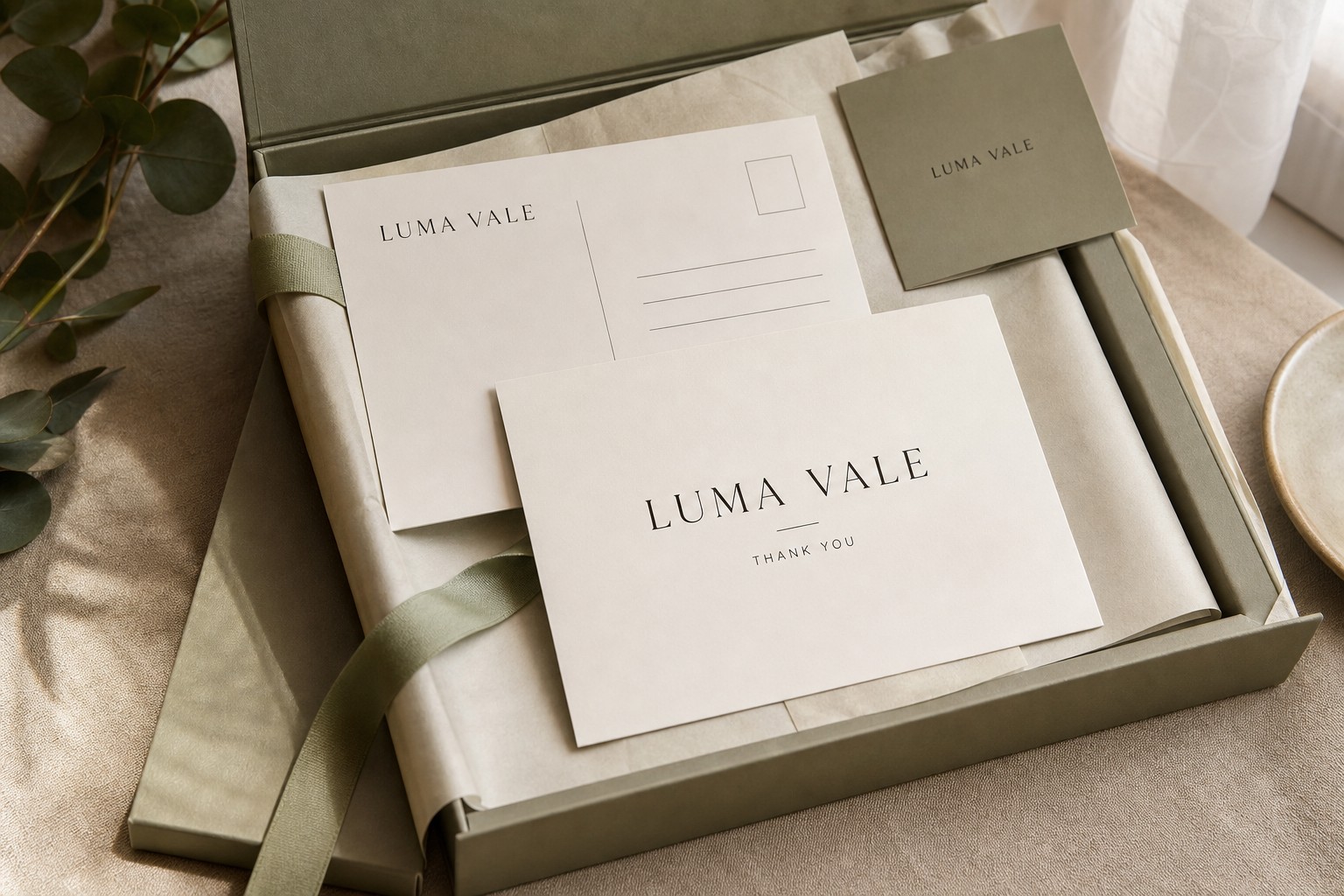
The moment a client receives their gallery link or their print order, a handwritten note on quality card shifts how they remember the experience. It is a small print decision with a disproportionate referral return.
A with-compliments card, sized to fit inside a standard delivery envelope and printed on cotton or premium stock, does not need to be elaborate. It needs to feel considered and consistent with your brand. Matching the card weight and finish across your business cards and your notes creates a cohesive impression that clients register without analysing.
Price Guides and Welcome Packets
A printed price guide serves a different function to a digital one. It removes friction from the booking conversation. When a potential client has a physical guide to look over after a consultation, they are more likely to share it with a partner or pass it to a friend who asks for a recommendation. It also reinforces positioning: studios that print their materials at the same quality level as their cards signal that they are serious operators with consistent standards.
Keep a printed price guide concise. A single folded A5 card works well for a straightforward offering. Matte stock reads clearly and handles repeated folding without cracking.
For welcome packets, include the essentials: what to expect at the shoot, how delivery works, your contact details, and a with-compliments card. A slim, well-designed packet that a client keeps is more likely to be passed to a friend than a digital folder buried in email.
Building the Kit in Stages
You do not need the entire kit on day one. A staged approach is sensible for growing studios and avoids wasted print if your branding is still being refined.
Stage 1 (launch or rebrand): Standard business cards on a premium stock in a quantity of 250 to 500. A small run of foil logo stickers or plain brand seals for packaging.
Stage 2 (first 6-12 months): Add a with-compliments or thank-you card in a matching stock. Consider a folded A5 price guide if you are delivering in-person consultations or offering packaged services.
Stage 3 (established studio): Upgrade your primary business card to Scodix or spot UV for events and high-value pitches. Order a larger sticker run with multiple sizes to cover different packaging applications.
Each stage builds on the last. The stock and finish choices you make at Stage 1 should carry through the full kit so it reads as deliberate.
Frequently Asked Questions
What type of business card finish works best for photographers?
For photographers presenting to premium clients, velvet laminate combined with a Scodix raised gloss highlight creates a tactile card that people keep. For studios on a tighter budget, thick cotton stock printed front and back still outperforms a standard gloss card at most networking events.
How many business cards should a photographer order?
Start with 250 to 500 cards per print run. Minimum order is 50, which is a good first run to test a new design. Ordering closer to 250 reduces the per-card cost and ensures you do not run out between reprints.
Can I get foil stickers that match my business card finish?
Yes. If your business card includes a gold or rose gold design element, matching foil stickers in the same colour create a cohesive kit. Foil stickers are available in gold, rose gold, silver, copper, and holographic finishes, so most brand colour palettes have a matching option available.
How long does it take to receive Scodix business cards?
Scodix cards require 7-10 working days production after proof approval, plus delivery time. Plan your order at least two to three weeks before any event, launch, or photoshoot where you need the cards in hand. Standard business cards, by contrast, are available in as little as 24 hours for urgent runs.
Do I need different print products for different photography niches?
The core kit applies across niches. Wedding and portrait studios generally suit warmer stocks, soft-touch laminates, and gold or rose gold foil. Commercial and corporate studios suit matte metallic stocks and silver or spot UV finishes. The structure stays consistent; the aesthetic is adjusted to the niche.
What is the minimum order for foil stickers?
Foil stickers have a minimum order of 10 units, making them accessible for small studios without committing to a large print run. Bulk pricing applies as quantities increase.