Choosing between single and double-sided printing, then picking the right paper weight and finish, shapes how your flyer looks, how long it lasts, and what it costs per unit. Get the spec right and your flyer does its job whether it is sitting on a cafe counter, being handed out at a market stall, or dropped through 5,000 letterboxes. Get it wrong and you are paying for stock that buckles, prints that show through, or a finish that fights your design.
This guide covers the core flyer spec decisions: one side versus two, which GSM works for which use case, and when to choose gloss, matte or uncoated stock. For a look at how size and format affect the decision, see our flyer printing Australia guide.
At a glance
- Single-sided: best for letterbox drops, handouts, DL inserts. 115-150gsm is the standard range.
- Double-sided: adds a back panel for more information. Use at least 150gsm to prevent show-through.
- 250gsm+: counter flyers, premium event handouts, anything that needs to survive repeated handling.
- Gloss: makes photos and bold colour pop. Best for event, food, and retail campaigns.
- Matte: cleaner for text-heavy or professional designs. Less glare under fluorescent lighting.
- Uncoated: best for writing on (forms, vouchers, takeaway menus used as flyers).
Single-Sided vs Double-Sided: When Each Wins
The choice is mostly about how much information you need to carry and what happens to the flyer after it lands in someone’s hand.
Single-Sided Flyers
Single-sided printing is the default for high-volume campaigns where cost per unit matters. If your flyer is going into a letterbox or being handed to someone at speed, the back is almost never read. Single-sided also lets you print on lighter stock without worrying about show-through, which keeps volume costs down.
Single-sided works best for:
- Letterbox drop campaigns (volume 1,000-20,000+)
- Newspaper or catalogue inserts
- Event promotions with one simple message
- DL rack cards in a hotel, real estate agency, or cafe
- Any design where the back would just be white space
Double-Sided Flyers
Double-sided printing earns its cost when you genuinely have a back panel worth reading. A real estate open-home flyer needs a floor plan on the back. A gym promotion benefits from a class schedule. A restaurant flyer works harder with a QR menu on the reverse. The extra spend is only justified when both sides pull weight.
Double-sided works best for:
- Real estate and property listings (front hero image, back floor plan and specs)
- Menus, class timetables, and event schedules
- Product catalogues condensed to a single sheet
- Takeaway and food-delivery campaigns
- Professional services where credentials or case studies need space

The Core Comparison Table
| Spec | Single-Sided | Double-Sided |
|---|---|---|
| Typical GSM | 115-150gsm | 150-250gsm |
| Minimum GSM | 115gsm | 150gsm (to prevent show-through) |
| Premium option | 250gsm | 300gsm+ |
| Best finish | Gloss or matte | Gloss or matte (coated stock recommended) |
| Letterbox drop | Ideal | Possible, adds postage/delivery weight |
| Counter display | Works at 150gsm+ | Works well at 250gsm+ |
| Cost per unit | Lower | Slightly higher (2-sided print cost) |
| Print complexity | Straightforward | Requires register alignment on press |
GSM Choices for Flyers: What Each Weight Delivers
GSM (grams per square metre) is the single most important spec decision after size. It controls how a flyer feels in the hand, whether print bleeds through to the other side, and how well the sheet holds up to handling, humidity, and time.
115gsm
The lightest commercial coated stock used for flyers. At 115gsm, a flyer feels noticeably thin and flexible. It is cost-effective for very high-volume single-sided runs, such as large letterbox campaigns or newspaper inserts, where the goal is reach at low cost and the flyer is designed to be read once.
Limitations: 115gsm is not suitable for double-sided printing with any dark or ink-heavy design. The stock is thin enough that coverage on one side will ghost through to the other, especially with backgrounds in blue, black, or dark red. Single-sided only.
150gsm
The most popular weight for general-purpose flyers in Australia. At 150gsm you get a noticeably more confident feel than 115gsm without a significant cost jump. It holds up well through letterbox slots and standard handling. For single-sided designs with moderate coverage, 150gsm is the sweet spot. For double-sided work, 150gsm is the recommended minimum, though keep in mind that heavily inked designs (dark backgrounds, full-bleed photography) can still show faint ghosting on thinner 150gsm coated stock.
Best for: event flyers, retail promotions, café and restaurant handouts, real estate inserts.
200-250gsm
Once you cross into 200gsm territory, a flyer starts to feel much closer to a business card or postcard in the hand. This is the right zone for counter-display flyers, premium event programmes, and anything that will be picked up, pocketed, and pulled out again. At this weight, double-sided printing is clean regardless of coverage.
250gsm is also the weight where you stop feeling like print is going to crease on the first fold of a reader’s hand. If your campaign has a strong brand impression goal alongside an information goal, 250gsm lands differently than 150gsm.
Best for: premium event invitations printed as flat cards, showroom handouts, trade show leave-behinds, hospitality and luxury retail.
300gsm and Above
At 300gsm, a flyer is functioning as a promotional card. This weight is uncommon for mass-distribution flyers due to cost, but it is the right call for very short runs where the physical quality of the piece needs to match a premium brand or service price point. Architects, law firms, and luxury retailers sometimes use 300gsm+ A5 or DL sheets as a premium alternative to a standard brochure.
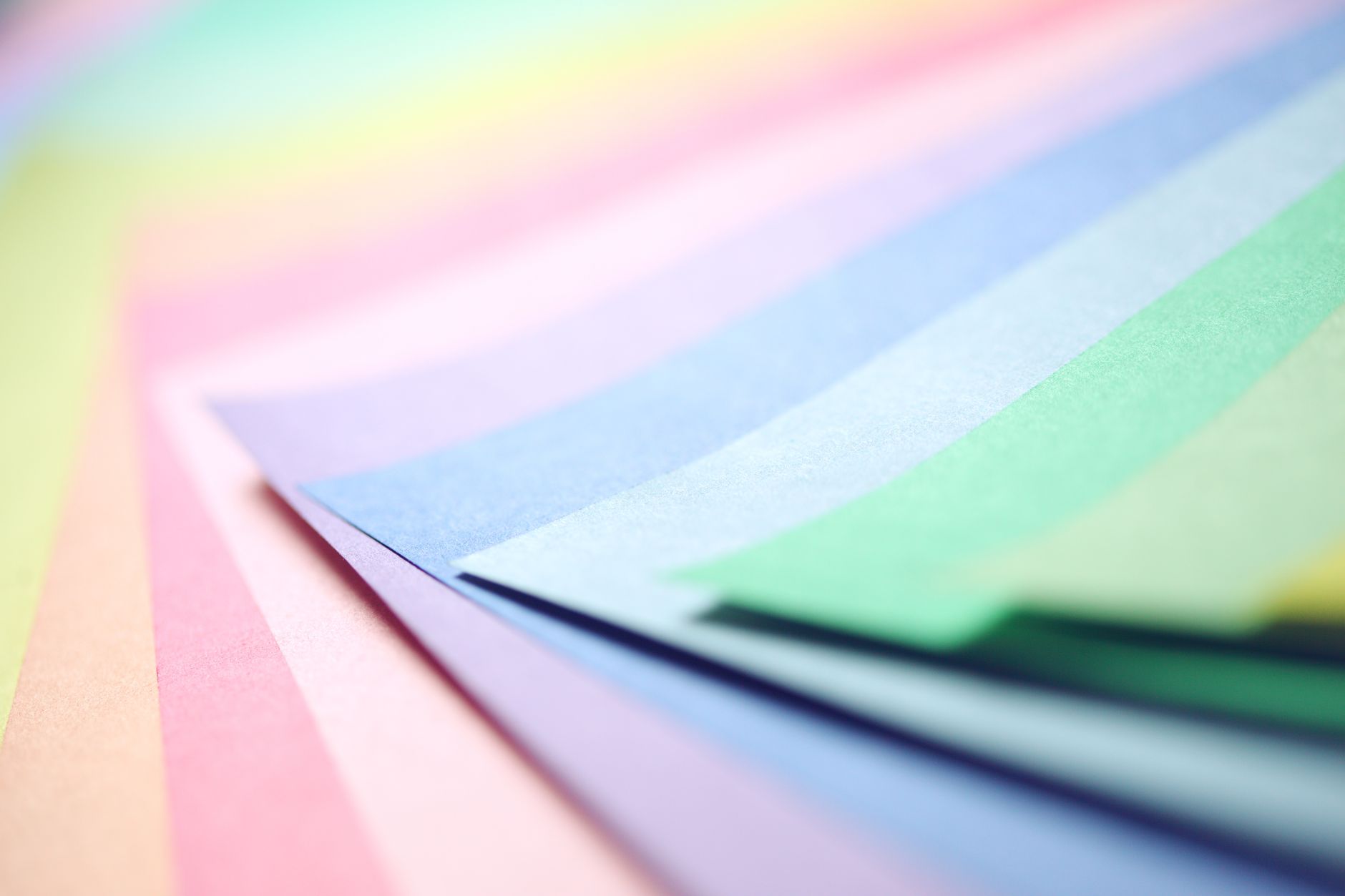
Gloss vs Matte vs Uncoated: Finish Guide for Flyers
The finish is the coating applied to the surface of the paper after printing. It affects how the flyer looks, how the colours read, and how it feels.
Gloss Finish
Gloss is the most common finish for flyers because it makes colour-heavy designs look their sharpest. The coating reflects light, which deepens perceived saturation and sharpens photographic imagery. A food photography shot, a product lifestyle image, or a bold event graphic will almost always look better on gloss than any other finish.
The trade-off: gloss surfaces show fingerprints in handling, and under certain lighting conditions (direct fluorescent overhead, for example), the reflective surface can make reading body text uncomfortable.
Choose gloss when:
- Your design is image-driven or colour-heavy
- You want maximum visual impact in a retail or event setting
- The flyer will be seen from a short handling distance
Matte Finish
Matte stock absorbs light rather than reflecting it. The surface feels softer and warmer in the hand, and text-heavy designs are noticeably easier to read at angle and under overhead lighting. Many professional services brands (law, finance, health) prefer matte because it reads as more considered and less commercial than gloss.
Matte also photographs better if you expect the flyer to be shared via social media, because there is no hotspot or glare to manage. The perceived colour saturation is slightly lower than gloss, so if you are working with bold, punchy brand colours, gloss will always land more vividly.
Choose matte when:
- Your design is text-heavy or typographically complex
- The flyer will be displayed under fluorescent retail or office lighting
- Your brand identity is understated, premium, or professional
- You want a tactile feel that reads as considered rather than commercial
Uncoated Stock
Uncoated paper has no surface coating. It absorbs ink rather than letting it sit on a coated surface, which means colours are less saturated and photographic imagery loses sharpness. Uncoated is not a premium finish for flyers, but it has a specific use: anything where you need to write on the flyer after printing (feedback forms, competition entry slips, vouchers, or handout worksheets) requires uncoated stock. Ballpoint pen and marker do not adhere reliably to coated surfaces.
Choose uncoated when:
- The flyer includes a fill-in section (name, contact, voucher code)
- You want an intentionally raw, craft or artisan feel
- Budget is the primary constraint and colour accuracy is secondary
Use Case Decision Finder
| Use Case | GSM | Finish | Single or Double |
|---|---|---|---|
| Letterbox drop, high volume | 115-150gsm | Gloss or matte | Single |
| Event handout, standard | 150gsm | Gloss | Single or double |
| Cafe or retail counter | 150-250gsm | Gloss or matte | Double |
| Real estate listing sheet | 200-250gsm | Gloss | Double |
| Trade show leave-behind | 250gsm | Matte | Double |
| Premium brand presentation | 300gsm+ | Matte | Double |
| Voucher or competition entry | 300gsm or 360gsm | Matt | Single |
| Newspaper or catalogue insert | 115gsm | Gloss | Single |
How to Decide: A Short Checklist
Work through these questions in order and your spec will be clear before you get to the product page.
- How will this flyer be distributed? Letterbox or insert = 115-150gsm single-sided. Handed directly or left on a counter = 150gsm minimum. Premium leave-behind = 250gsm.
- Do you have a genuine second side? If the back will carry real information (a menu, schedule, floor plan, credentials), go double-sided at 150gsm minimum. If the back would just be white, save the cost.
- Is your design image-led or text-led? Image-led = gloss. Text-led or brand-considered = matte. Write-on = uncoated.
- What is the print run? Larger runs (2,000+) benefit more from a lighter stock because the per-unit savings on 115gsm vs 150gsm compound. Short premium runs (100-500) can justify 250gsm without the cost becoming significant.
- What is the venue or environment? Outdoor or humid environments call for a heavier coated stock. Indoor retail is fine with standard weights.
Ordering Flyers in Australia
Paperlust Print Shop prints flyers in DL, A6, A5, and A4 sizes with the stock and finish options covered in this guide. Order online, upload your print-ready artwork, and choose your weight and finish on the product page.
Order flyers at Paperlust Print Shop
If you are still working out the right format, the DL flyer vs leaflet guide compares DL and A5 for letterbox drop campaigns, and the print run calculator guide helps you work out the right quantity for your campaign.
Frequently Asked Questions
What is the minimum paper weight for double-sided flyer printing?
150gsm is the accepted minimum for double-sided flyer printing where design coverage is moderate. For designs with dark or full-bleed backgrounds on both sides, 200gsm or above will give you a cleaner result with no show-through. Anything below 150gsm risks ghosting where the print on one side is faintly visible from the other.
Does double-sided printing cost significantly more than single-sided?
Double-sided printing adds to unit cost, but the increase is typically modest relative to paper cost, especially at higher volumes. The bigger question is whether the second side is genuinely used. If your back panel carries real information that improves response rates, the added cost is easily justified. If it is just a white panel, single-sided is the better spend.
What is the best GSM for a letterbox drop in Australia?
115gsm to 150gsm coated gloss or matte is the standard range for letterbox campaigns in Australia. 115gsm is the most cost-effective option for large volumes. 150gsm feels more substantial and holds up better through letterboxes that grip or have heavy flaps. Both weights are accepted by most letterbox distribution services.
Should I use gloss or matte for a food or event flyer?
Gloss. Photographic imagery and bold colour look sharper on gloss stock. If your campaign is built around food photography, event lifestyle shots, or strong brand colour, gloss finish will give you the most vivid result. Matte is a better choice when your design is typography-led or when you want a premium, understated look.
Can I get double-sided flyers printed same week in Australia?
Fast turnarounds are available on most flyer orders placed with print-ready artwork. Check the current lead time on the flyer product page, as availability depends on stock weight and run size.
What finish is best for a flyer that will be handled a lot?
Matte-laminated or gloss-laminated stock at 250gsm+ is the most durable option for frequent handling. Standard coated matte or gloss at 150gsm holds up well for normal use, but if the flyer will be repeatedly picked up and put down over days or weeks (a counter card, a services menu), upgrading to 250gsm with a laminate is worth the cost.
Is uncoated paper good for flyers?
Uncoated paper is a good choice specifically when part of the flyer needs to be written on after printing, such as a coupon, a competition entry, or a feedback form. For image-heavy or colour-saturated designs, coated stock (gloss or matte) will always produce a sharper, more vivid result than uncoated.
What size is most common for flyers in Australia?
A5 (148 x 210mm) is the most common flyer size in Australia for event promotions and general marketing. DL (99 x 210mm) is standard for rack cards and letterbox DL-envelope campaigns. A6 suits compact handouts and inserts. For a direct comparison of these formats, see the DL flyer vs leaflet guide.