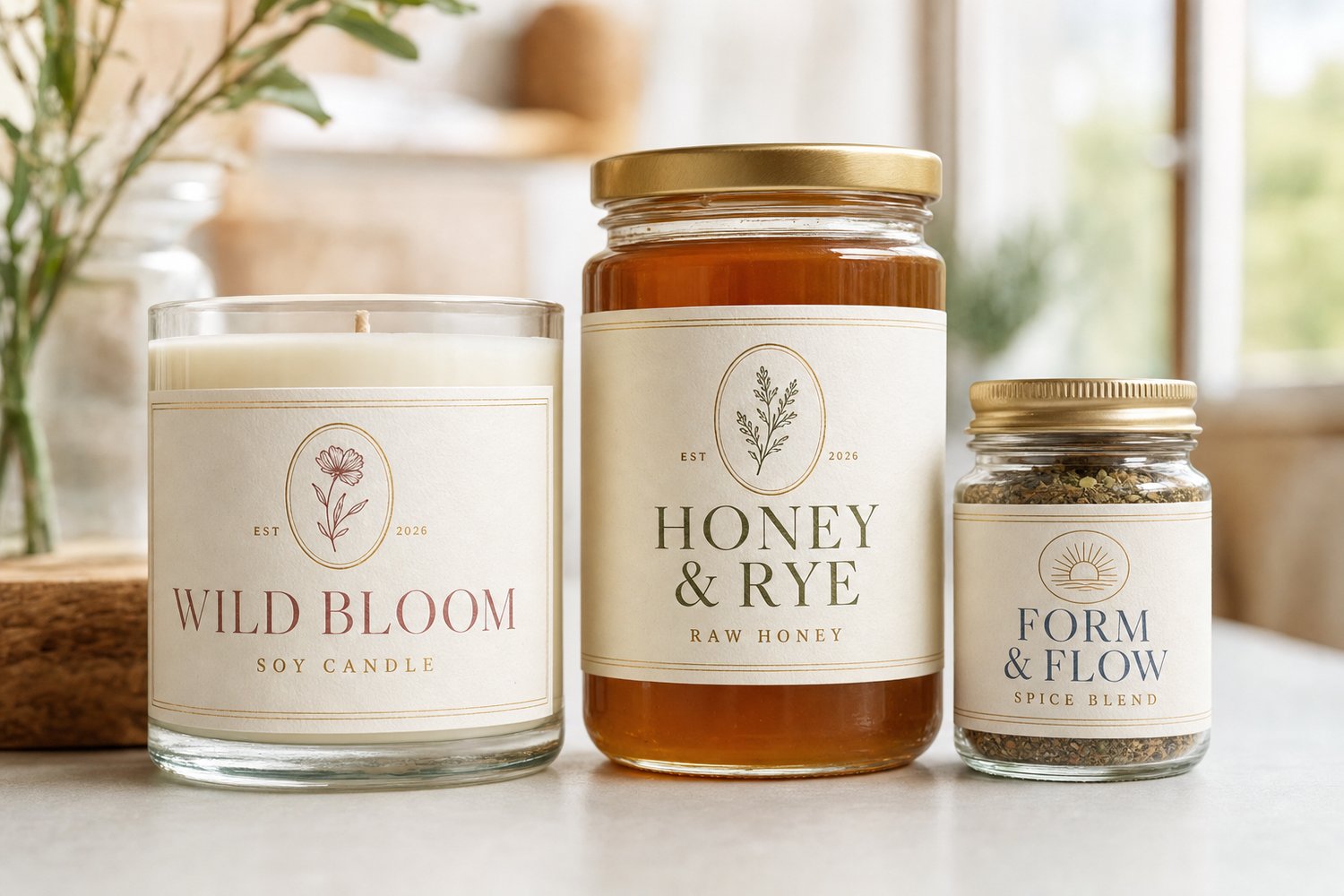
The label decision usually shows up when a jar leaves the place it was expected to sit. A pantry jam stays dry. A sauce bottle gets wiped down near the stove. A candle vessel warms on a bedside table. The same artwork, ordered on the wrong roll stock, can lift, fog or scuff in one of those spots and behave perfectly in another. The useful question is not which label is toughest. It is which stock matches the way the pack is stored, handled and sold.
This guide covers stock selection, measuring, quantities and artwork setup for Jar Labels, Candle Labels, Food Labels and Honey & Jam Labels. It also marks the points where a specialist requirement, such as removable adhesive or a custom shape, should be confirmed before the order goes into production.
Match the roll stock to the job
The roll label pages are built around the same stock types, but shapes, sizes and finishes vary from page to page. Check the product page you are ordering from before you settle on a selection.
White Cast Paper is the cost effective stock for dry goods and indoor products. White Synthetic is the waterproof, scuff resistant film for moisture, condensation, oils and handling. Clear Synthetic is a transparent film with a gloss varnish, made for a no label look on glass and coloured containers.
On product pages that list White Synthetic, the waterproof vinyl labels page describes that stock as a polypropylene film with a permanent acrylic adhesive. That makes it the wet use option for jars that get wiped down or chilled. It is not a guarantee for every oil, chemical or prolonged heat exposure, so test it on the actual container. The Food Labels range is the roll label route for packaged food, bakery boxes, pouches and tubs. Labels in that range go on the outside of the pack, not on the food itself, and no stock in the range is rated for repeated dishwasher cycles.
| Application | Stock | Finish | Decision |
|---|---|---|---|
| Dry pantry jar or spice jar | White Cast Paper | Matte or Gloss Laminate | Use when the jar stays dry and indoors. Not the wet use choice. |
| Damp jar, fridge shelf or wiped down pack | White Synthetic | Matte or Gloss Laminate | Choose when moisture, condensation, oils or repeated handling are expected. Test on the actual container. |
| Candle exterior | White Synthetic | Matte or Gloss Laminate | Choose for a handled or wiped vessel. Confirm heat suitability for the actual service conditions before finalising. |
| Clear glass jar or coloured container | Clear Synthetic | Gloss Varnish | Choose when you want the product to show through the label. White ink underprinting is available. |
| Jar lid or cap | Same stock as the body label | Same finish as the body label | Keep lid and body consistent. A 60mm or 75mm round is a common lid size, but your jar decides the fit. |
Before application, make sure the container surface is clean and dry. Use a cleaning method suited to the vessel, follow the supplier’s application instructions and allow the supplier’s recommended dwell time before the label meets moisture or handling. On coated glass and plastics, test one label on the actual container because surface behaviour can vary.
Candle vessels and heat
Candle jars can warm in use, and the label sits on the outside of that vessel. The Candle Labels page carries the same White Synthetic and laminate options described above. White Synthetic is the stock we suggest when the vessel may be handled, wiped or exposed to fragrance oil and moisture. It does not mean the label is automatically safe for every heat or burn condition. If the vessel will warm, confirm material suitability for that vessel and its service conditions with the relevant suppliers before you finalise the design. A print approval is not a heat or safety certification.
Clear labels and white ink underprinting
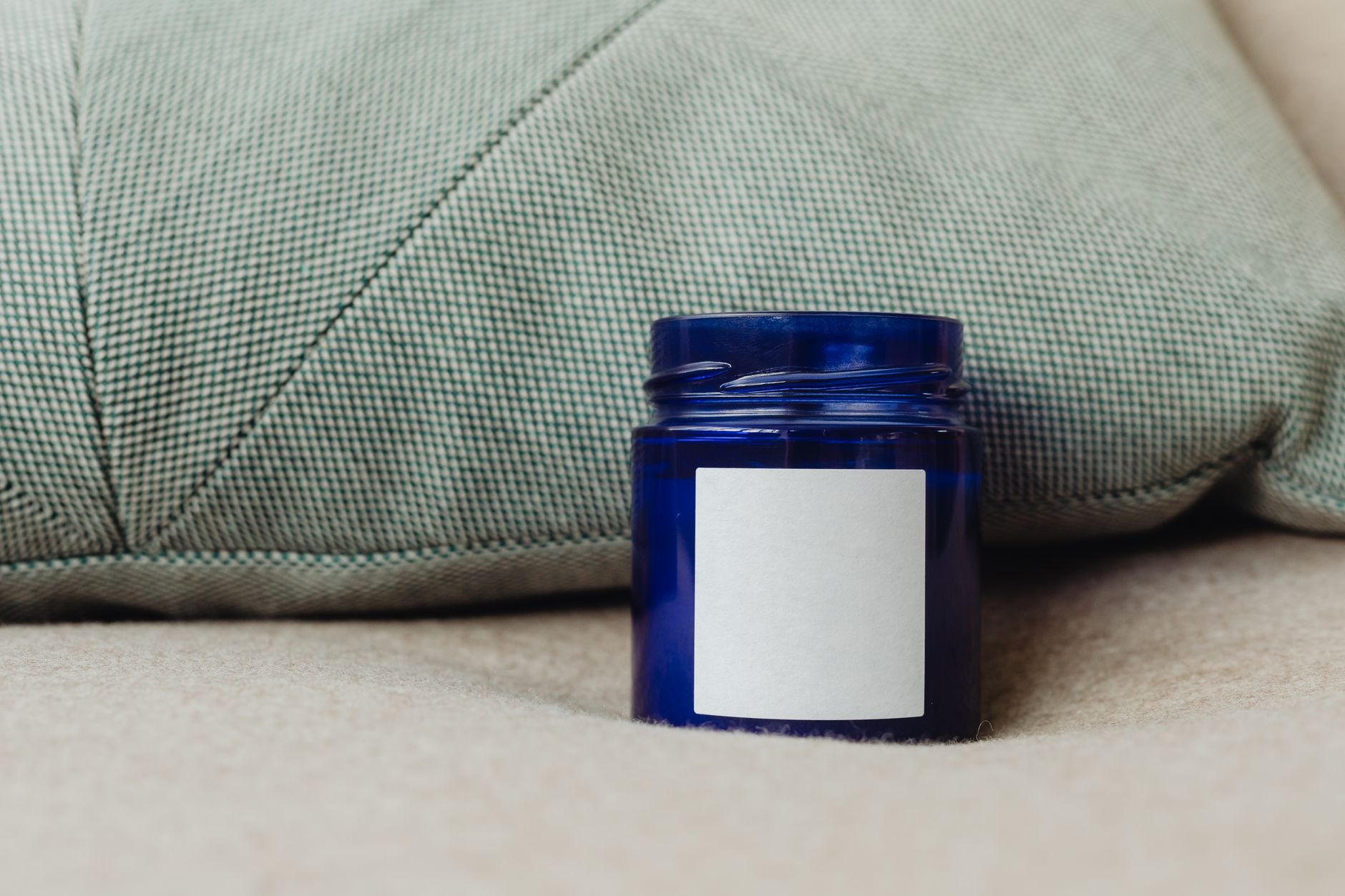
Clear Synthetic with Gloss Varnish is the transparent roll film for a no label look. It is not clear PVC, and it is not a frosted, translucent or matte clear stock. White ink underprinting is available on this clear stock. White ink creates solid white printed areas, and it can sit beneath coloured artwork to keep the print opaque on clear film. You supply or approve the white ink placement following the guidance on the chosen product page. The white underprint is added only where the design calls for it. The Clear Labels range is where this stock is offered.
Measuring jars, lids and wraps
Container capacity in millilitres or grams does not tell you the label panel size. Measure the actual vessel. For a straight cylindrical zone, wrap a paper strip or soft tape around the jar to find the circumference, then choose the seam gap you want. The wrap width is that measured circumference minus the chosen gap. If the surface tapers, has ribs or a shoulder, do a paper fit test and be ready to ask about a custom shape.
Flat body panels suit rectangle labels. A 60mm or 75mm round is a common lid size in the range, but your jar decides the fit. The Circle Labels range covers lid and cap applications, and the circle label guide explains round lid choices in more detail.
The bottle and jar label sizing guide includes a printable ruler with a 100mm calibration line. To avoid scale errors, print the page at actual size or 100%, turn off fit to page, and hold the line against a physical ruler before taking measurements.
Planning quantities across designs and faces
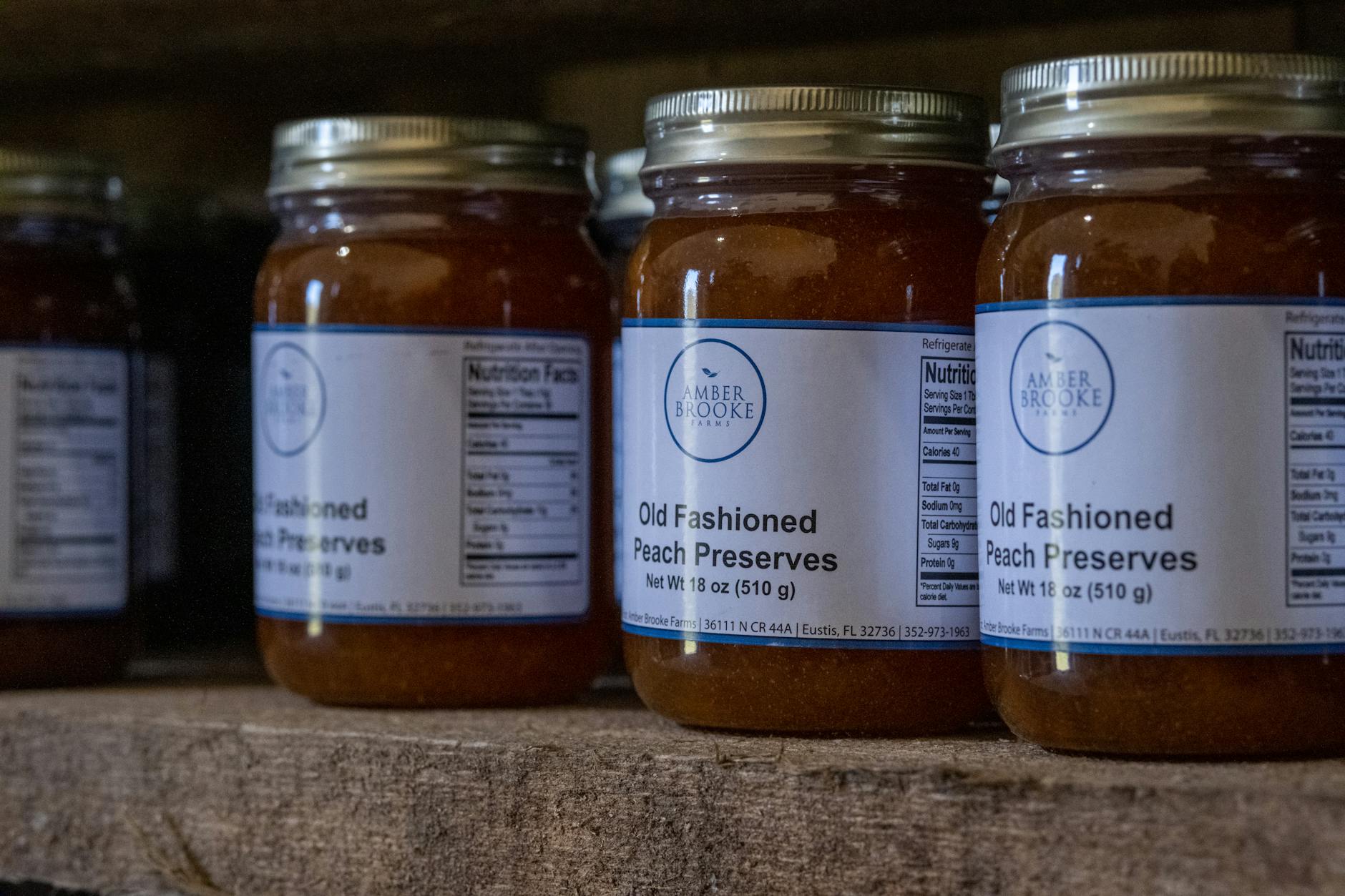
One jar can need more than one label: a front, a lid, and a back or base. Those are separate designs, and usually separate sizes. Each design and size starts at one roll of 500 labels. A 500 jar run with front, lid and back labels is not 500 labels. It is 1,500 labels across three designs. If you order 500 front labels, 500 lid labels and 500 back labels, each design meets its 500 label minimum.
On the Honey & Jam Labels page, up to five designs can be placed in one order, with each design on its own roll. When a job needs more than one size, stock or finish, plan each as a separate selection so the minimum and quoted setup stay clear. Price each selection on its live product page, and ask our team if you need help with a mixed brief.
Keep an artwork and quantity matrix with columns for variant, filename, shape, finished width by height in millimetres, material, finish, quantity, version and proof status. For a hypothetical three label jar, you might list a 60mm by 90mm front on White Synthetic gloss, a 60mm circle lid on White Synthetic matte, and a 30mm by 70mm base on White Cast Paper gloss in separate rows. Those sizes are examples only, not a fit guide. The standard roll workflow does not automatically vary each label. If each label must carry its own batch, date, barcode or code, ask our team before ordering.
Artwork setup and proofs
To order, choose shape, size, stock, finish, number of designs and quantity, then upload your artwork. A proof is emailed before production and nothing prints until you approve it. The custom labels category is a quick way to compare the shapes available.
The Honey & Jam Labels page shows a 3mm bleed. For exact file settings and safe areas, follow the instructions on the chosen product page rather than copying settings from another range. Keep document size, finished trim, bleed and safe area separate. A digital proof checks layout, text and declared dimensions. It does not test physical colour, adhesion or stock performance.
Legal wording routes
Food labelling generally follows the FSANZ business labelling guide. This article is a routing note, not a legal checklist. Check the requirements that apply to your product before you approve final artwork.
Sample checks before a bulk order
A material sample, a digital proof and a printed own artwork order answer different questions. The Sticker and Label Sample Pack is a preprinted, fixed assortment for comparing available samples. It is not a pick your own pack and may not include every finish you are considering. Record which material and finish you are handling, and confirm with our team if the sample identity is unclear. The sticker sample testing guide covers a practical bench approach.
An own artwork print order is separate from a material sample and carries its own minimum quantity. If you need to test a specific size or stock, ask our team about the options. For honey and jam front, lid and back placement, the honey and jam jar label layouts guide is the right reference.
The goal is not a label that looks right on the proof. It is a label that stays clean and legible under the same conditions your jar actually faces.
Frequently asked questions
Which roll stock should I choose for a food jar that goes in the fridge?
Start with White Synthetic in a matte or gloss laminate. It is the waterproof, scuff resistant option for condensation, moisture and handling, and the Jar Labels product page lists its acrylic adhesive service range as minus 20 degrees Celsius to 80 degrees Celsius. Test it on the actual jar and lid before committing to a full run.
How does the 500 label roll minimum work when a jar has a lid and body label?
Each design and each size starts at one roll of 500 labels. A 500 jar run with a front, lid and back label works out to 1,500 labels across three designs. If you order 500 labels for each design, every design meets its minimum. Plan separate selections when the sizes, stocks or finishes differ.
Can I order a removable adhesive roll label?
The standard roll label range does not include removable adhesive as an option. Permanent and removable adhesive are still useful concepts. A removable adhesive is one that is designed to peel cleanly after deliberate removal. If your container needs that behaviour, tell our team before ordering so the requirement can be confirmed.
What does the digital proof check?
The proof checks layout, text and declared dimensions. It does not test physical colour, stock texture, adhesion or performance on the container. Production takes 48 hours after you approve the proof.
Is Clear Synthetic the same as clear PVC?
No. The clear roll stock in this range is a transparent synthetic film with a gloss varnish. It is not clear PVC, and it is not a frosted, translucent or matte clear stock. White ink underprinting is available for white text or solid white areas.
Does a print approval make my food label legally compliant?
No. Printing approval is not regulatory approval. Food labels generally follow the FSANZ business labelling guide, but confirm the exact wording and claims for your product before final artwork.