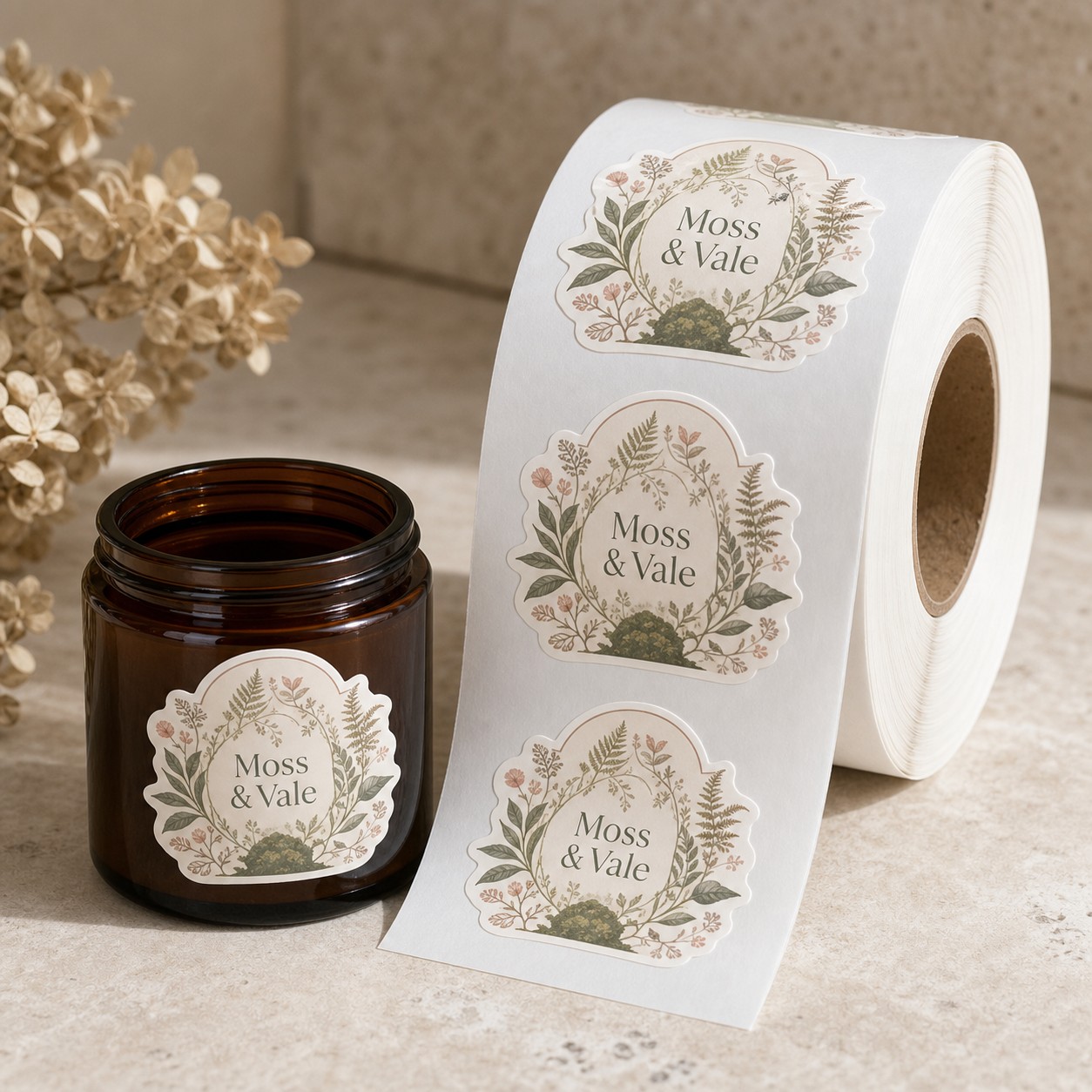
Most labels arrive in a fixed shape: rectangle, oval, or circle. They get the job done, but they rarely make a product stand out on a shelf. Die-cut labels are different. The label is cut to the exact outline of your artwork, so a logo shaped like a leaf gets a leaf-shaped label, and a badge design gets a badge-shaped label.
Paperlust Print Shop produces custom die-cut labels in Melbourne, supplied on rolls and ready to apply by hand or machine. Whether you are labelling artisan jars, a skincare range, or a batch of corporate gifts, a custom-cut shape adds a level of finish that a standard rectangle cannot match.
This guide covers what die-cut labels are, how rolls work, which materials suit which products, how to set up your artwork, and what to expect from the ordering process.
Cheat sheet
- Die-cut labels are cut to the silhouette of your artwork, not to a standard rectangle or oval.
- Supplied on rolls, compatible with hand application and automated label dispensing equipment.
- Two stock options: premium white cast paper (smooth, dry environments) and synthetic paper (water-resistant, tear-resistant).
- Two laminate finishes: gloss (vibrant colour, hard protective surface) and matte (non-reflective, fingerprint-resistant, premium feel).
- Minimum order is one roll of 500 labels.
- Pricing from $0.36 inc. GST per label, reducing to as low as $0.06 per label at volume.
- Standard turnaround is 2-3 working days post-approval. A design proof is included with every order.
- Produced in Melbourne with flat-rate shipping Australia-wide.
What Are Die-Cut Labels?
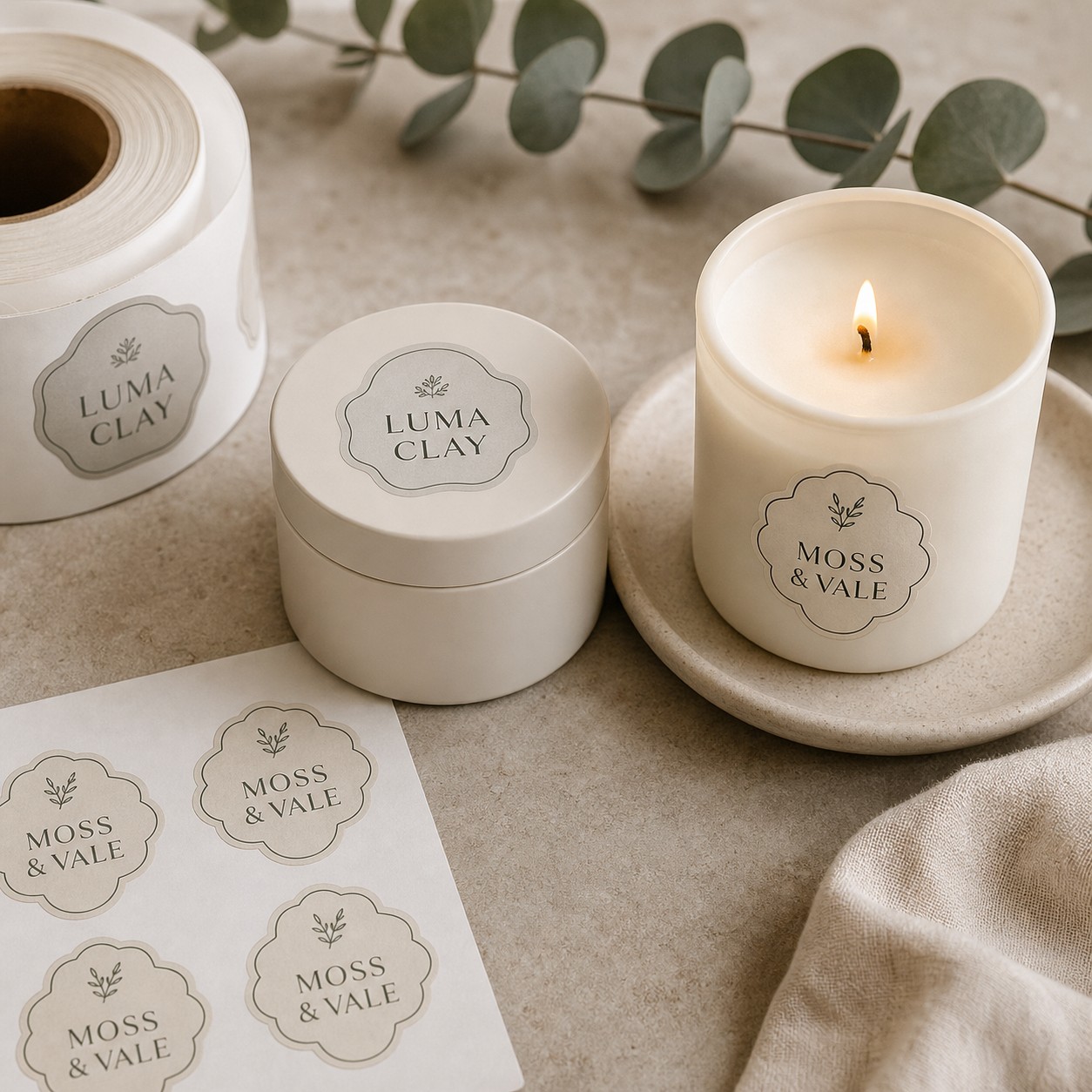
A standard label is trimmed to a fixed shape regardless of what the artwork looks like. A die-cut label is trimmed to the outline of the design itself. The cutting process follows a custom path drawn from your artwork file, so the finished label carries a shape unique to your brand.
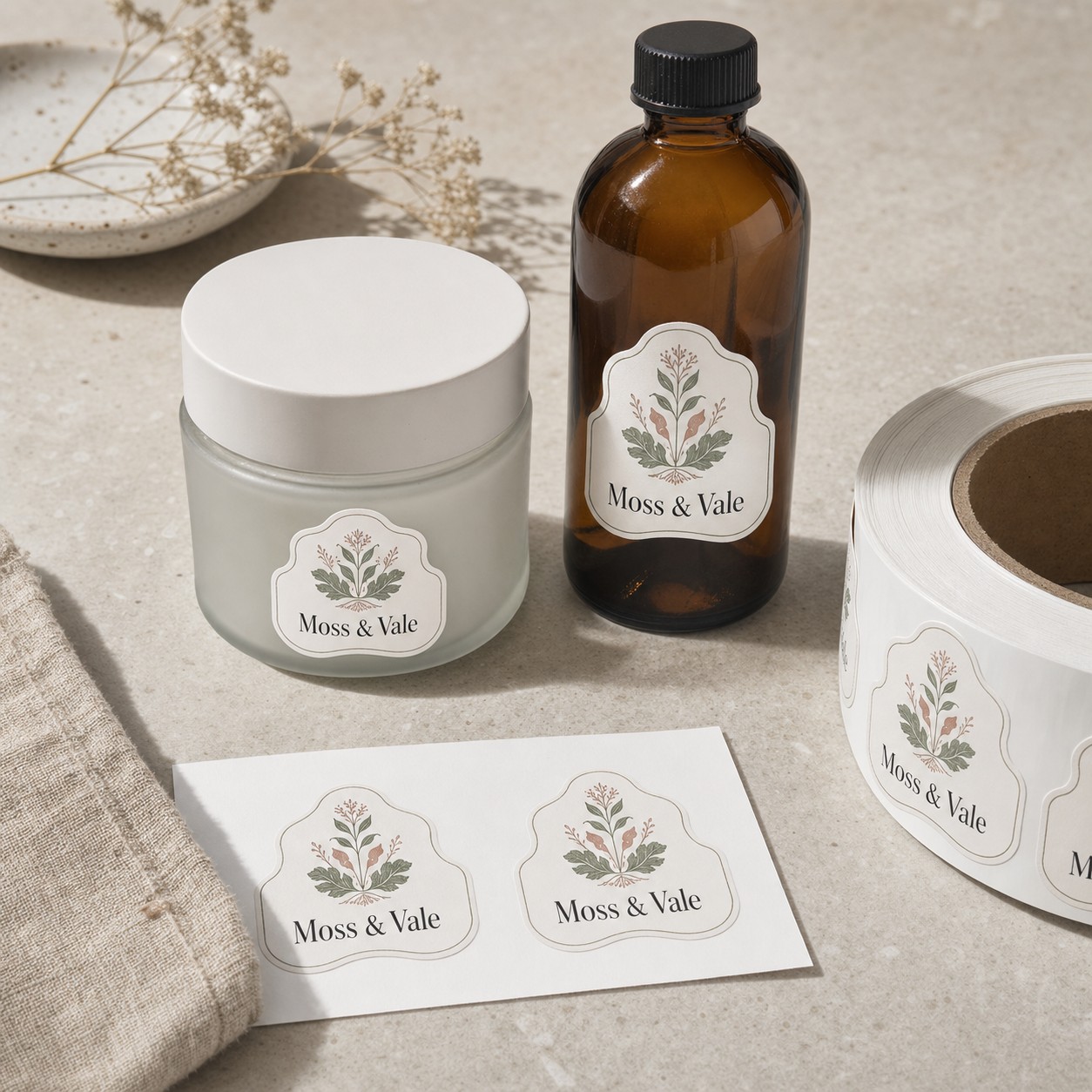
Common shapes include ovals, shields, badges, circles, modified rectangles with rounded or angled corners, logo silhouettes, and fully custom outlines. If you can define it as a closed vector path, it can be produced as a label shape.
The practical effect on shelf is significant. A label that follows the contour of a leaf, a bottle neck, or a brand mark reads as intentional and premium. It also removes the white negative space visible around designs printed on a standard rectangle, giving the product a cleaner presentation overall.
How Roll Supply Works
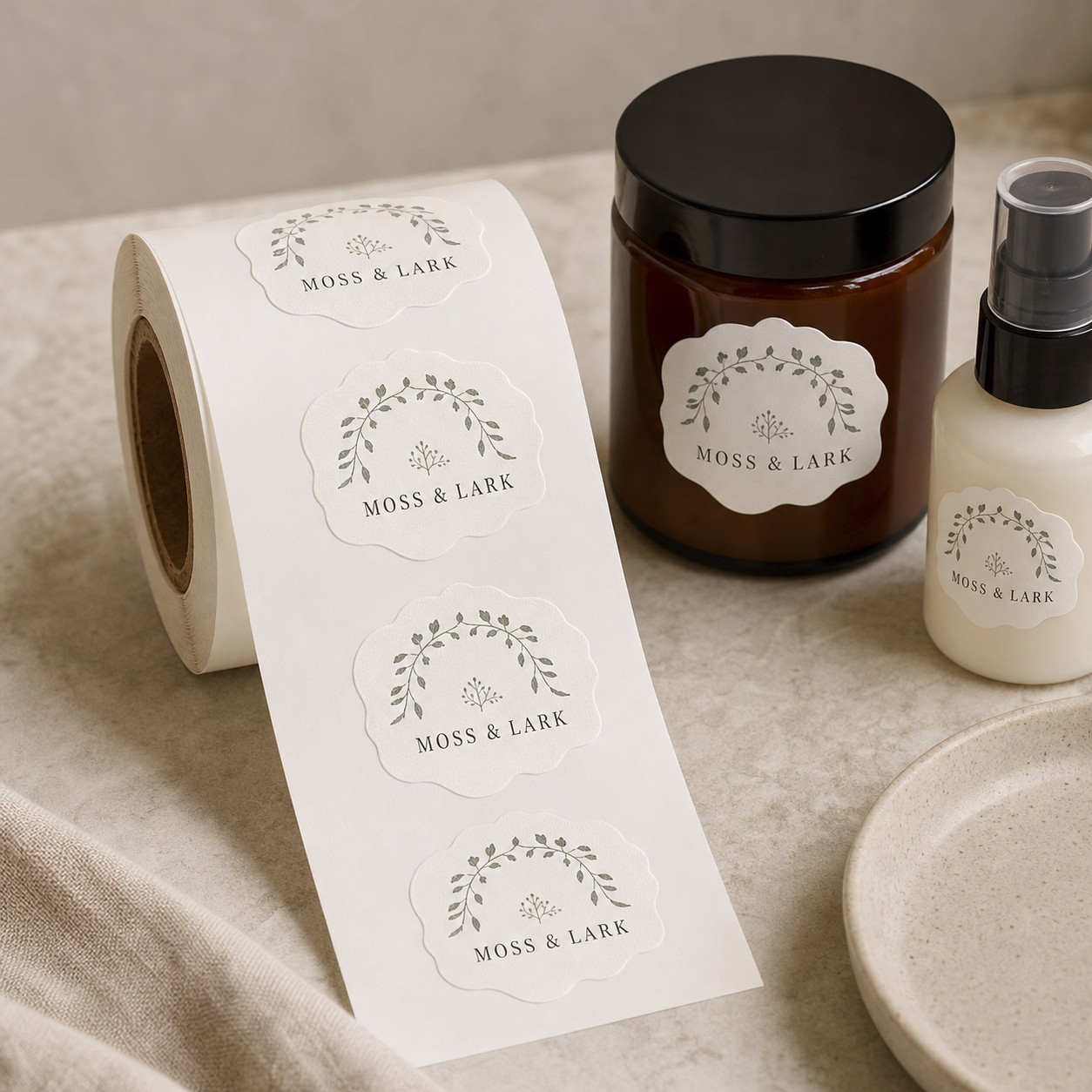
Die-cut labels from Paperlust Print Shop are supplied on rolls. Each roll contains a set number of labels wound onto a core, with labels peeling cleanly from a backing paper one at a time.
Roll supply suits most product labelling workflows. Labels feed directly into automated applicators if you scale up production, storage is compact, and the backing paper keeps labels flat and clean between uses. If you are applying by hand, rolls are straightforward: peel, position, press. The consistent spacing means each label comes off in the same orientation, which speeds up application across a run.
The minimum order is one roll of 500 labels. Higher-volume orders reduce the per-label cost, making die-cut labels a practical choice for businesses labelling hundreds of units per week.
Choosing Your Material
Material choice is the most important decision in a label brief. Two stocks are available.
Premium White Cast Paper
Cast paper is a smooth, bright white stock that prints with accurate colour and holds fine detail well. It is the right choice for designs with small text, precise brand colours, or intricate artwork, in dry storage and display environments.
It suits candles, dry food packaging, retail shelf products, gift items, and packaging boxes. It is not recommended for products exposed to moisture, condensation, or refrigeration.
Synthetic Paper
Synthetic paper is engineered for durability. It is water-resistant and tear-resistant, which makes it the correct material for products that encounter moisture during storage, shipping, or use.
Typical applications include refrigerated beverage bottles, skincare and cosmetic products used in wet environments, condiment jars in cool rooms, and products handled frequently in variable conditions. Synthetic paper maintains its adhesion and appearance where standard paper stock would bubble or peel.
Laminate Finishes
Both stocks are available with either gloss or matte laminate.
Gloss laminate enhances colour saturation and provides a hard protective surface. It reads as bright and commercial, and suits products where vibrancy is the priority. Matte laminate gives a soft, non-reflective finish with a premium tactile feel. It resists fingerprints and performs well in natural-light photography. Matte is increasingly common in premium food, cosmetic, and artisan product branding across Australia.
Common Use Cases
Die-cut labels suit a wide range of product categories. Typical applications include:
Food and beverage: Condiment jars, sauce bottles, honey, jam, spice shakers, cold-pressed juice, craft beer, and wine. Synthetic paper with gloss laminate handles the condensation and handling that food products experience in refrigerated environments.
Cosmetics and skincare: Serums, moisturisers, body scrubs, perfume bottles, and haircare products. Matte laminate on synthetic paper is the finish most commonly associated with premium cosmetic branding in Australia.
Artisan and handmade products: Candles, soaps, bath salts, and gift items used in dry conditions. Cast paper prints fine detail cleanly on these applications and suits the handmade aesthetic well.
Corporate and event gifting: Custom-shaped labels on hamper jars, bottles, and boxes provide a professional finish for bulk gift orders and add a brand-consistent detail across a product set.
Retail packaging: Secondary labels with barcodes or batch information on cartons, where the shape of the label reinforces the product tier on shelf.
Artwork and Cut-Line Setup
Die-cut labels require a cut path in the artwork file. The cut path tells the machine where to trim. Without it, a custom shape cannot be produced. Here is what to prepare.
File format: Supply artwork as a vector file, PDF or AI preferred. The cut path should sit on a separate, clearly named layer (such as “Cut Line” or “Die Line”) and be drawn as a closed shape with a stroke in a spot colour, typically magenta, so the pre-press team can identify it immediately.
Bleed and safe zone: Add at least 2-3mm of bleed outside the cut line so no white edge is visible if the cut runs slightly off-centre. Keep all critical content at least 2-3mm inside the cut line to protect text and key design elements from trimming tolerances.
Minimum detail size: Avoid shapes with points narrower than 2mm or internal cutouts smaller than 5mm, particularly at small label sizes. Fine detail close to the edge is worth discussing with the Print Shop team before committing to an order.
If you are not sure how to set up a cut path, note this when placing your order. The team reviews every file before printing and can advise on the correct setup. A design proof is sent for approval before the print run begins. Review it carefully, checking the relationship between the artwork and the cut line before approving.
Ordering and Quantities
The minimum order is one roll of 500 labels. For most small to mid-size product businesses, this is a practical starting point. It is enough to run a product line without over-committing stock, and enough volume for the per-label cost to work.
Pricing starts from $0.36 inc. GST per label. Volume orders reduce this to as low as $0.06 per label at higher quantities. If your design is stable and you label regularly, a larger run is typically more economical than frequent small reprints.
Turnaround is 2-3 working days post-approval for standard die-cut labels. Foil die-cut label variants carry a turnaround of 4-5 working days.
Visit the custom die-cut labels page to start your order or request a quote.
If your design works within a standard rectangle format, rectangle labels are a cost-effective alternative with no custom cut-path setup required. For products with circular lids, caps, or openings, circle labels are worth comparing for purpose-built circular coverage. Every shape is listed side by side across the product labels range if you want to compare before committing to a cut path.
Frequently Asked Questions
What is the difference between a die-cut label and a standard label?
A standard label is trimmed to a fixed shape, typically a rectangle, oval, or circle, regardless of the artwork. A die-cut label is trimmed to the outline of your artwork, so the label shape matches your design. This removes the white background visible around a design on a standard-shaped label and gives the product a more deliberate, custom finish.
What materials are available for die-cut labels?
Die-cut labels are available on premium white cast paper (smooth, bright, suited to dry environments) and synthetic paper (water-resistant and tear-resistant, suited to wet or refrigerated conditions). Both stocks are available with gloss or matte laminate.
What is the minimum order quantity?
The minimum order is one roll of 500 labels. Volume pricing is available at larger quantities, with the per-label cost reducing significantly as volume increases.
Do I need to supply a cut path in my artwork file?
Yes. A cut path is required to define the trim shape. Supply it as a closed vector path on a separate, named layer in a spot colour such as magenta. If you are unsure how to set this up, the Print Shop team can advise when you place your order.
How long does production take?
Standard die-cut labels are produced in 2-3 working days post-approval. A design proof is sent before printing begins. Foil die-cut label variants take 4-5 working days.
Can die-cut labels be used on bottles and jars?
Yes. Synthetic paper with gloss or matte laminate is the recommended material for bottles and jars, particularly products stored in fridges or used in wet environments. Synthetic paper maintains its adhesion and appearance where standard paper stock would fail.