Both are vinyl. Both stick. Both print sharp. But make the wrong call and your candle label peels in a warm bathroom, or your branded sticker sheet costs three times what the job needed. The material is the same; the product is built differently, and those differences matter for every application from cosmetic jars to market-stall giveaways.
– Vinyl labels: thinner film stock on sheets or rolls; adhesive tuned for known surfaces (bottles, jars, containers); permanent, removable, freezer-grade, and food-safe adhesive options available. Best for product packaging, cosmetics, candles, and food goods.
– Vinyl stickers: heavier face stock with stronger pressure-sensitive bond; built to travel with a customer across surfaces they choose. Best for laptops, vehicles, windows, merchandise, and giveaways.
– Both resist water, oil, and temperature swings as a raw material. What differs is the construction, minimum order, format, and intended surface.
– If it goes on a product you make: order labels. If it goes wherever your customer takes it: order stickers.
– Still deciding? Browse custom vinyl labels or browse vinyl stickers.
What the Vinyl Material Actually Means
Vinyl (polyvinyl chloride film) is a flexible polymer that resists water, oil, and temperature changes better than standard paper or cardstock. That durability is why it shows up across both labels and stickers – but the base characteristic gets engineered differently depending on what the finished product needs to do.
A vinyl label is die-cut or kiss-cut to a precise shape, supplied on sheets or rolls, and finished with an adhesive chosen for a specific kind of surface. A vinyl sticker also uses die-cut film, but it carries a heavier face stock and a stronger, more universal pressure-sensitive bond designed to perform across surfaces the manufacturer has never tested.
The practical difference shows up the moment you consider a glass olive oil bottle versus a vinyl cling on a shop window. The bottle label needs to sit flat on a curved surface, survive refrigeration without lifting at the edges, and stay legible for the full shelf life of the product. The shop window sticker needs to survive UV exposure, summer heat, and the possibility that someone peels and re-applies it before it finds a permanent home.
Same raw material. Very different engineering.
Vinyl Labels: Built for Known Surfaces
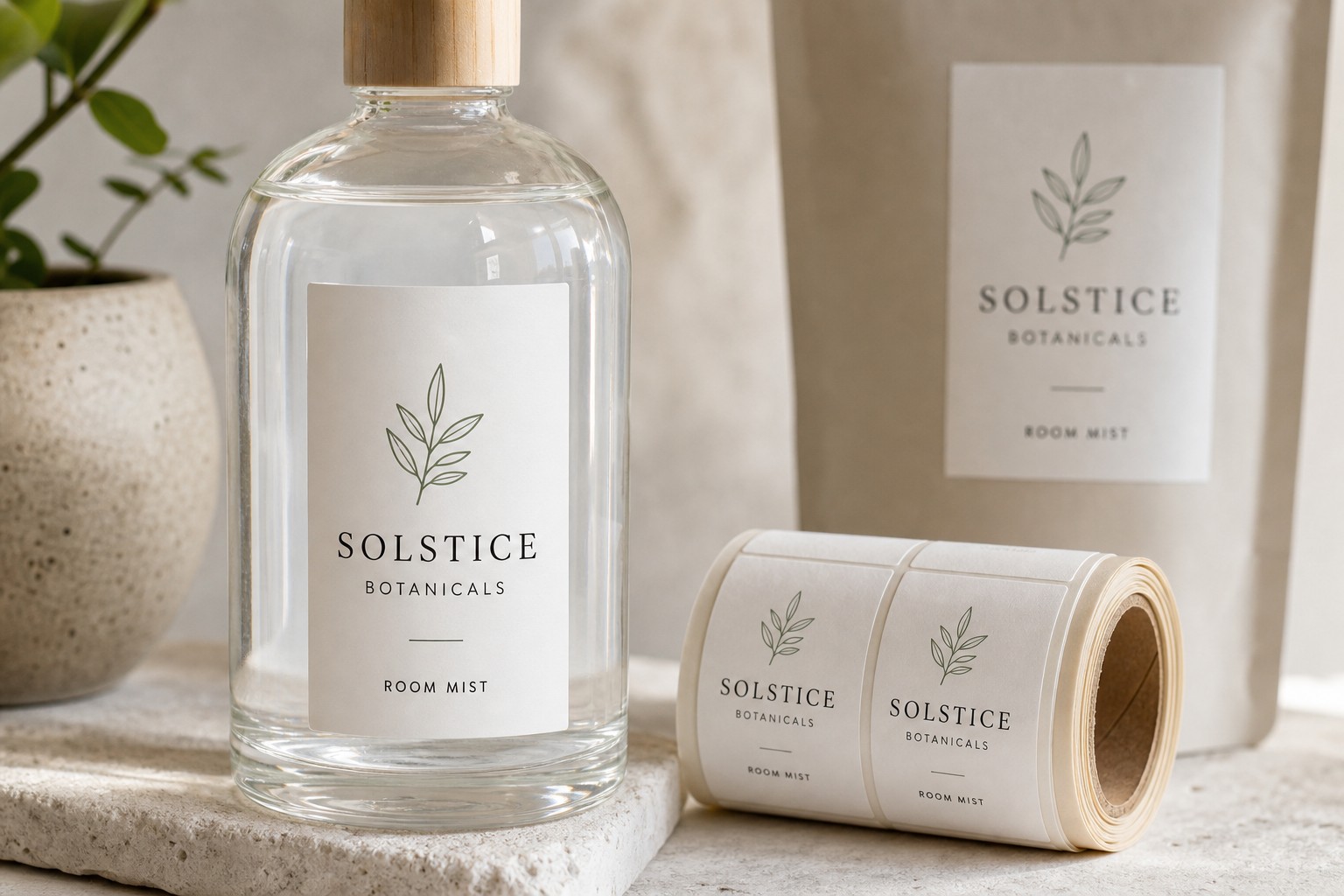
A vinyl label’s job is identification on a specific, controlled surface. The manufacturer knows exactly where the label is going, what that surface is made of, and what conditions the product will face on a shelf, in a fridge, or in a bathroom cabinet. That knowledge drives the specification.
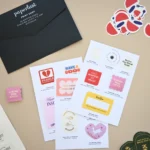
Paperlust Print Shop’s vinyl labels (white or clear) come with adhesive matched to the end application:
- Permanent adhesive – standard for most product labelling; sets fully within 24-48 hours of application
- Removable adhesive – designed to peel cleanly without residue; suited to refillable packaging, gift sets, and sample sizes
- Freezer-grade adhesive – maintains bond at sub-zero temperatures; essential for frozen food, ice cream, and chilled beverages
- Food-safe adhesive – food-contact compliant for applications where the label may come into contact with consumables
Laminate options (gloss, matte, satin) add abrasion resistance, which matters when labels are applied to products that go through a condensation cycle on cold drinks or are handled frequently at retail.
Vinyl label stock is thinner than sticker vinyl. That keeps the profile low on a jar or bottle, reduces the risk of lifting at curved edges, and cuts down on material waste in roll-to-roll application for small-batch producers. Volume pricing on vinyl labels starts at 500 units with breakpoints at 1,000 and 2,500 – relevant when you are costing a cosmetic range or a food product that will scale.
For die-cut and clear options, Paperlust Print Shop’s custom labels range covers shapes from 25 mm rounds to A4 single-piece cuts, with flat sheet or roll formats available on request.
Vinyl Stickers: Built to Travel
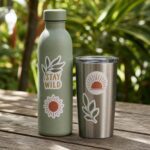
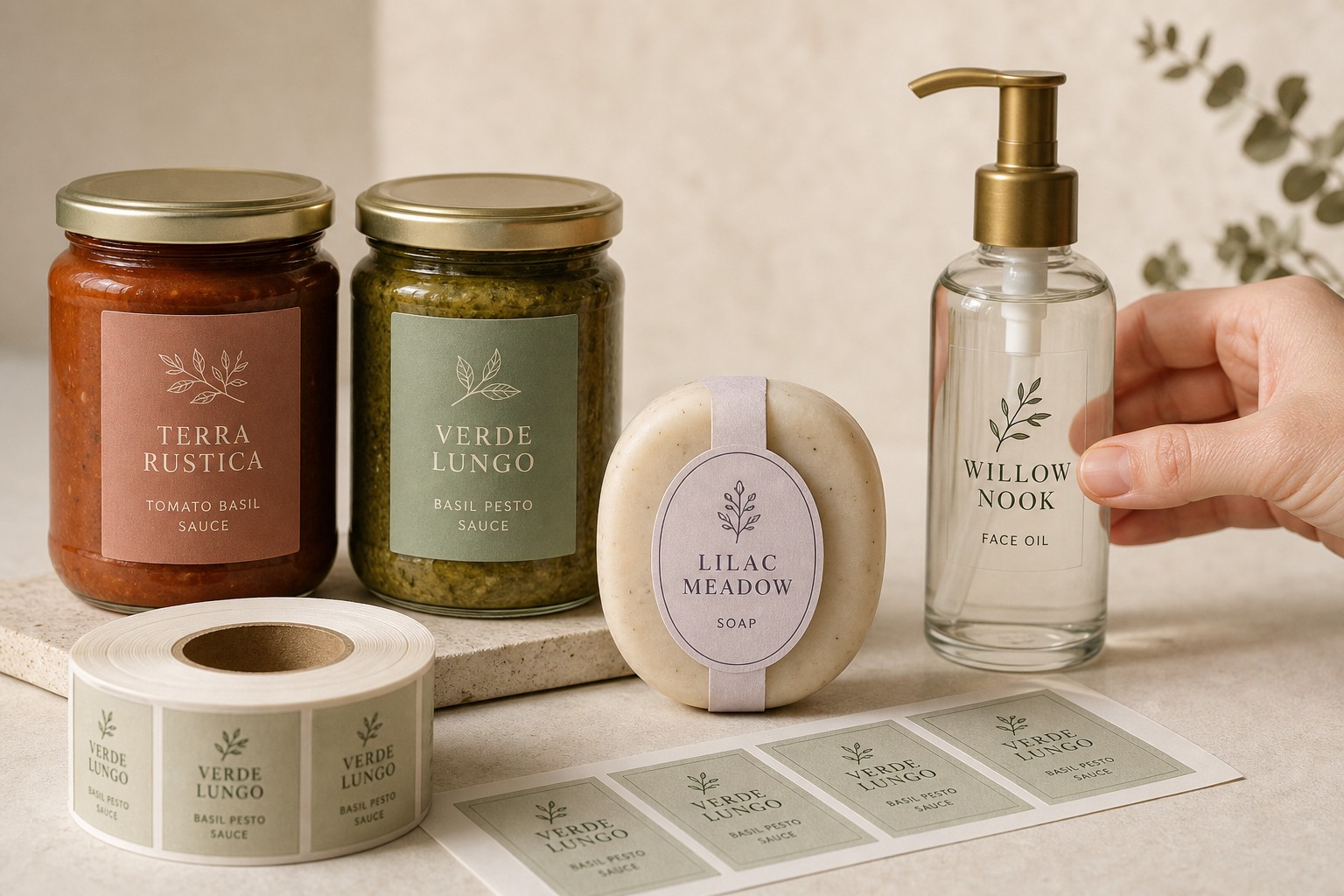
A vinyl sticker is designed to go wherever the customer decides. Because the manufacturer cannot know whether the finished product ends up on a laptop lid, a car bumper, a water bottle, or a guitar case, it is engineered for the broadest possible durability across all of those surfaces.
That means a heavier face stock than label vinyl, a stronger pressure-sensitive adhesive that bonds to glass, metal, plastic, and painted vehicle surfaces, and a construction that handles UV and abrasion without failing at the edges over years of handling.
Vinyl stickers resist conditions that would compromise a standard label: prolonged sun exposure, repeated wetting and drying, surface vibration on vehicles, and the general handling life of a branded item a customer keeps for years. This is why vinyl sticker durability is measured in outdoor years, not shelf-life weeks.
The practical trade-off is minimum order and per-unit cost. Vinyl stickers start from 10 units per run and are priced individually rather than in large-volume rolls. That makes them well-suited to brand runs, event merchandise, and promotional giveaways where you need quantity flexibility. Custom vinyl stickers and die-cut labels both live on the Print Shop – comparing the two product pages directly is worthwhile when your use case sits at the boundary.
Order Vinyl Labels When… / Order Vinyl Stickers When…
| Application | Vinyl Labels | Vinyl Stickers |
|---|---|---|
| Bottles and jars (cosmetics, candles, food) | Yes – adhesive tuned for curved glass and plastic | Heavier stock may lift at curved edges |
| Refrigerated goods (cold beverages, dairy) | Yes – freezer-grade adhesive available | Standard adhesive not rated for sustained low temperatures |
| Laptops, phones, luggage | Thinner stock not designed for heavy-handled items | Yes – built for exactly this surface and handling |
| Vehicle windows, bumpers, helmets | Not designed for outdoor UV and vibration | Yes – UV-resistant, weatherproof bond |
| Market stall and event giveaways | Label rolls are impractical for giveaway format | Yes – low minimums, easy to pack and distribute |
| Wholesale product range (500+ units) | Yes – volume pricing at 500, 1,000, and 2,500 breakpoints | Possible, but per-unit cost is higher at scale |
| Shop windows and glass signage | Not designed for large-format wall application | Yes – bonds cleanly to glass; removable options available |
| Refillable or reusable packaging | Yes – removable adhesive option for clean peel | Standard sticker adhesive may leave residue on removal |
Application Guide by Industry
Food and Beverage Producers
Vinyl labels are the standard for glass bottles, ceramic jars, and plastic containers in the food and beverage category. If your products go into a fridge or cool room, specify freezer-grade adhesive. If the product surface is wet during application (common in small-batch sauce or condiment production), ask about adhesives with a quicker initial tack rather than standard permanent options.
Clear vinyl labels on glass give a no-label look well suited to premium olive oil, cold-pressed juice, and natural skincare products. Transparency on a clear substrate requires a white ink underprint layer to keep printed colours accurate against the glass background.
Cosmetics and Personal Care
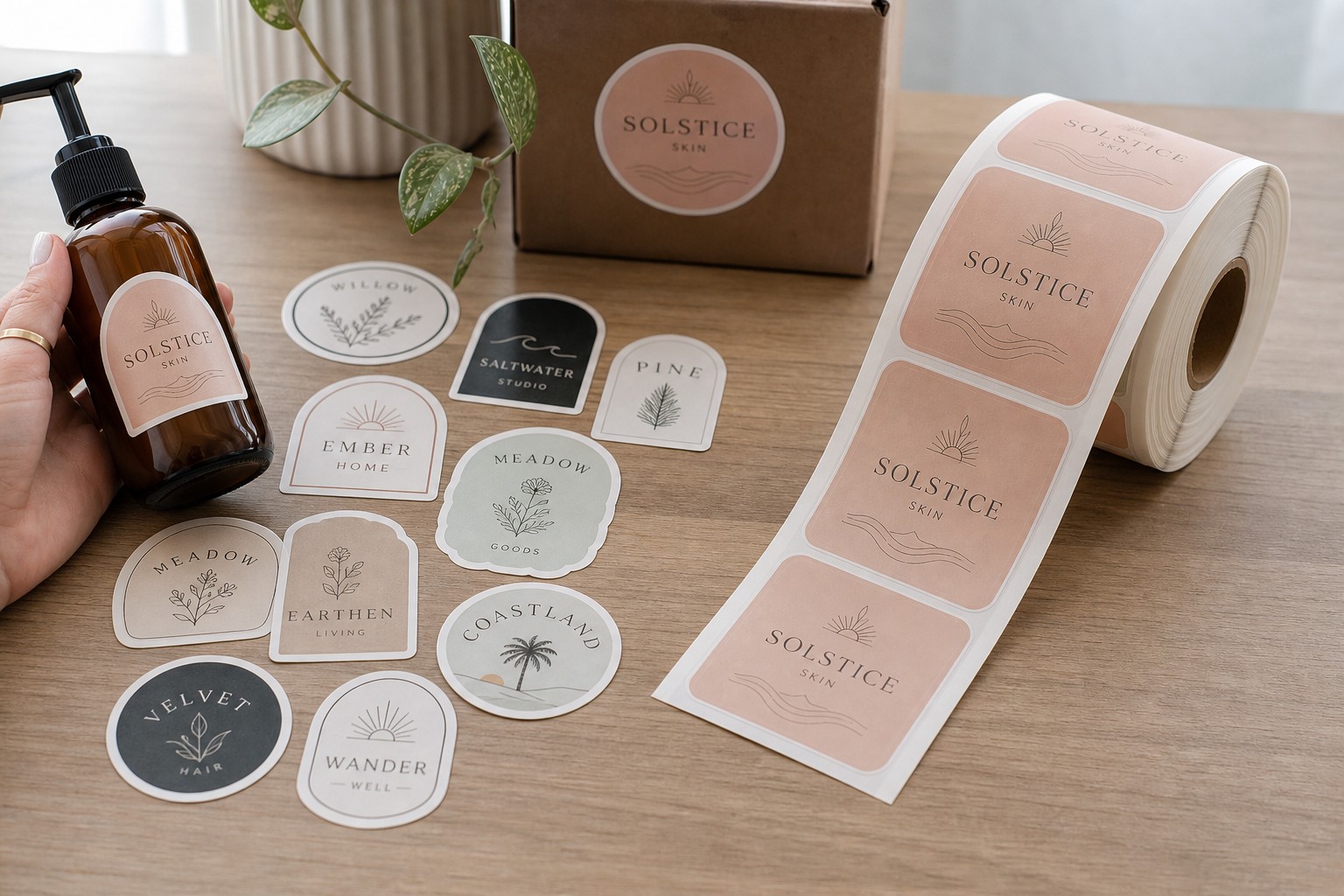
Vinyl labels on cosmetic packaging hold up to the humidity of a bathroom shelf and the handling of daily use. For pump bottles, cylinder packaging, and squeeze tubes, kiss-cut labels in sheet format speed up application. Matte laminate suits the premium aesthetic most cosmetic brands are working toward, while satin or gloss finishes photograph better for product catalogue shots.
Brewing and Beverage
Condensation-wet surfaces are the primary failure point for label adhesives. Vinyl with freezer-grade adhesive handles ice buckets, wet bars, and cold cabinets without bubbling or lifting at corners, which is the typical failure mode of standard paper labels in this environment.
Branded Merchandise, Events, and Marketing
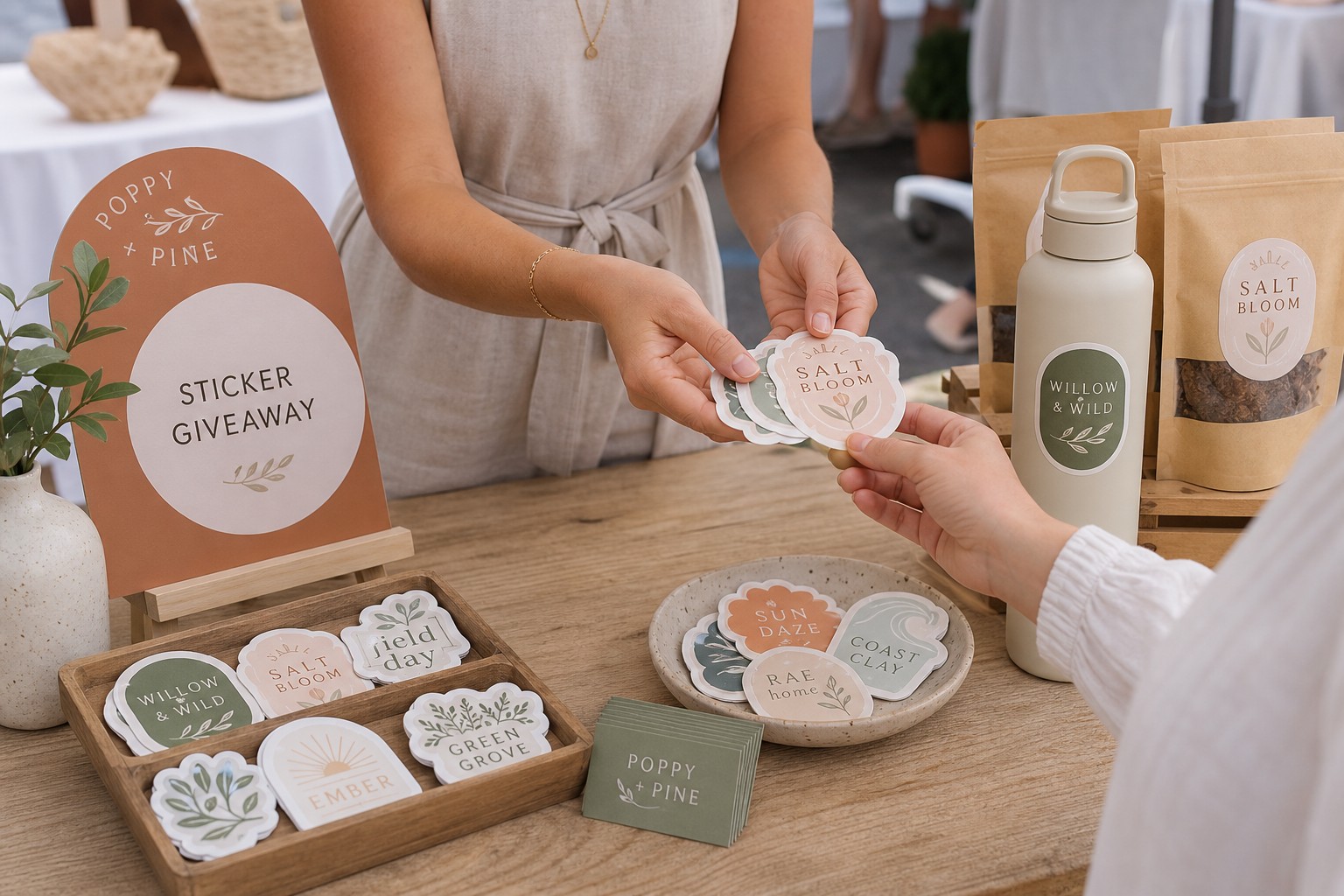
This is where vinyl stickers own the category. A die-cut sticker of your logo in the exact shape of your brand mark costs far less per unit than merchandise, distributes in seconds, and lands on customer property in spaces you could never buy as media. Minimum orders start at 10 units, so you can test a design before committing to a larger run.
Related Reading
- Labels vs Stickers: The Full Breakdown – covers the general case across all materials and when either format makes sense
- Vinyl Stickers vs Paper Stickers: Which for Your Brand? – deep dive on the material comparison for sticker-format products
FAQ
Are vinyl labels waterproof?
Vinyl labels resist water as a material, but full waterproofing also depends on the adhesive and laminate finish. A vinyl label with permanent adhesive and a gloss or matte laminate will handle condensation and brief wetting. For products that face sustained moisture – ice buckets, marine applications, or chilled beverages – specify a vinyl label with a waterproof laminate and verify the adhesive grade with the print shop before ordering.
Can I use vinyl stickers on product packaging instead of labels?
You can, but vinyl sticker stock is heavier than label film and the adhesive is optimised for a wide range of surfaces rather than a specific container. On curved surfaces like bottles, sticker stock may lift at the edges where label film would stay flat. For product packaging at volume, purpose-built vinyl labels are the right specification and the more cost-effective option at 500 or more units.
What is the minimum order for vinyl labels vs vinyl stickers?
Vinyl labels have volume pricing starting at 500 units with breaks at 1,000 and 2,500, suited to product lines that need consistent supply. Vinyl stickers start from 10 units per run, making them better suited to small brand runs, event giveaways, and merchandise testing before scaling up.
Do vinyl labels work in the freezer?
Standard vinyl label adhesive is rated for refrigeration but not sustained sub-zero temperatures. For frozen food, ice cream, or products stored in a commercial freezer, specify freezer-grade adhesive when ordering. This maintains the bond through temperature cycling between production, cold storage, and point of sale.
What is the difference between clear vinyl labels and clear stickers?
Both use clear vinyl film, but clear labels use thinner stock designed for specific known surfaces (typically product packaging) and are supplied on sheets or rolls with adhesive tuned for that surface. Clear stickers use heavier face stock with a stronger pressure-sensitive bond. On a flat surface the visual result is similar; the difference shows up on curved or textured surfaces and in how the product handles at scale.
Can vinyl labels be removed cleanly?
Yes, if you specify removable adhesive at the time of ordering. Permanent adhesive vinyl labels bond fully and resist clean removal. Removable adhesive labels are engineered to come away without residue, suited to refillable packaging, seasonal product labelling, and gift or sample applications.