For a portrait A6 postcard, the dimensions are 105mm x 148mm, which converts to 10.5cm x 14.8cm, or 4.13 x 5.83 inches. For a landscape A6 postcard, the dimensions are 148mm x 105mm, which converts to 14.8cm x 10.5cm, or 5.83 x 4.13 inches.
| Format | Millimetres | Centimetres | Inches |
|---|---|---|---|
| A6 postcard (portrait) | 105 x 148 mm | 10.5 x 14.8 cm | 4.13 x 5.83 in |
| A6 postcard (landscape) | 148 x 105 mm | 14.8 x 10.5 cm | 5.83 x 4.13 in |
For those who want the fuller picture: A6 is the most common direct-mail postcard size ordered by Australian businesses. It fits through a standard residential letterbox without folding, qualifies for Australia Post’s large letter postage rate, and gives a designer enough face area for a headline, a supporting image, and a clear call to action. Paperlust prints A6 postcards on 350 GSM Artboard, digital colour, on both sides, from 50 cards at $5.42 each down to $0.16 per card at 10,000.
- Trim size (portrait): 105mm x 148mm (4.13″ x 5.83″)
- Trim size (landscape): 148mm x 105mm
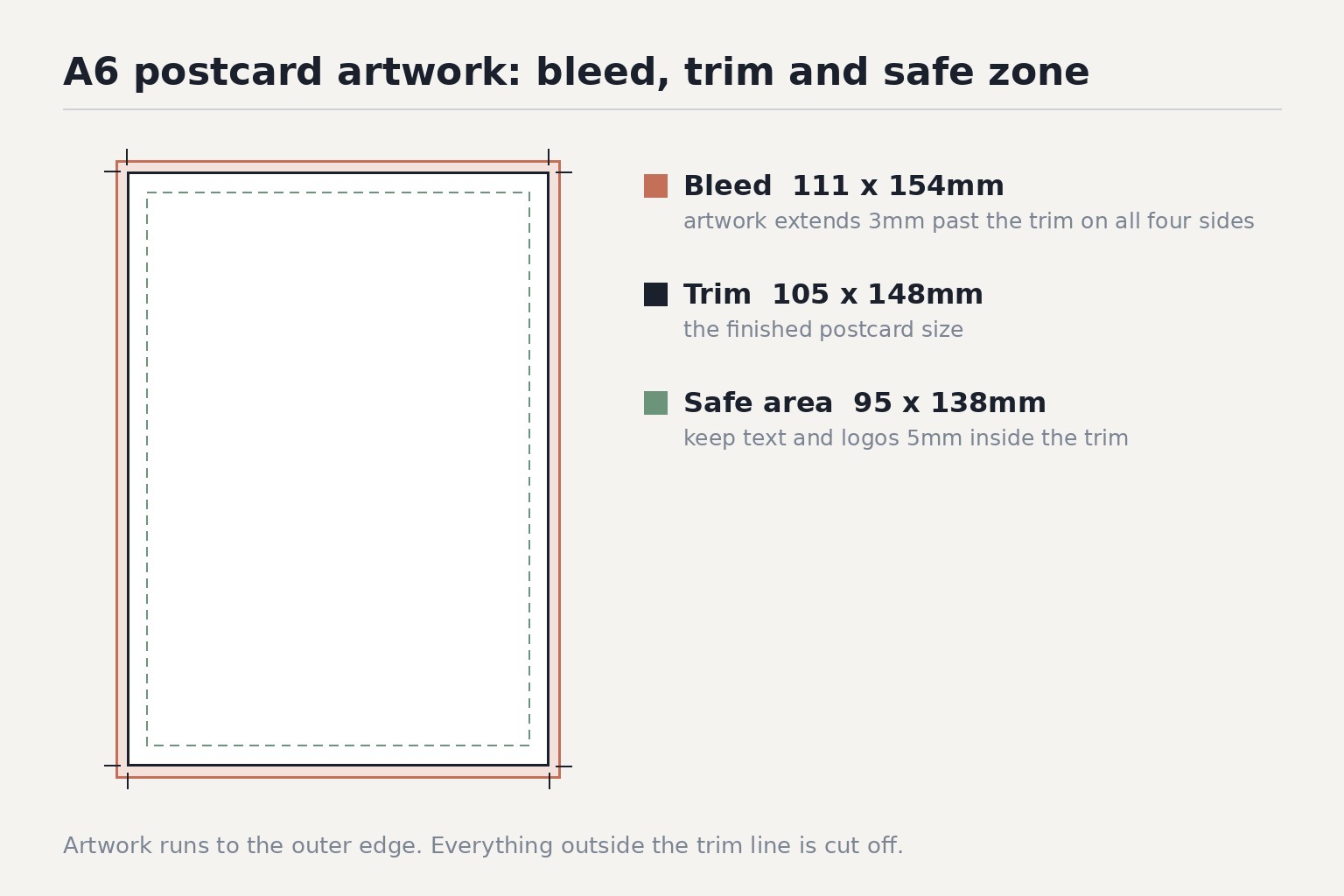
- Bleed document (portrait): 111mm x 154mm
- Canvas at 300 DPI with bleed (portrait): 1,311 x 1,819 pixels
- Canvas at 300 DPI trim only (portrait): 1,240 x 1,748 pixels
- Safe zone: keep critical content 5mm inside the trim edge
- Relationship to A series: half of A5, quarter of A4
- Stock: 350 GSM Artboard, digital colour, both sides
- Price: from $5.42 per card (qty 50) to $0.16 per card (qty 10,000)
This page covers A6, the most ordered postcard format at 105 x 148 mm, while DL and A5 are compared in the postcard sizes Australia guide.
Where A6 sits in the A paper series
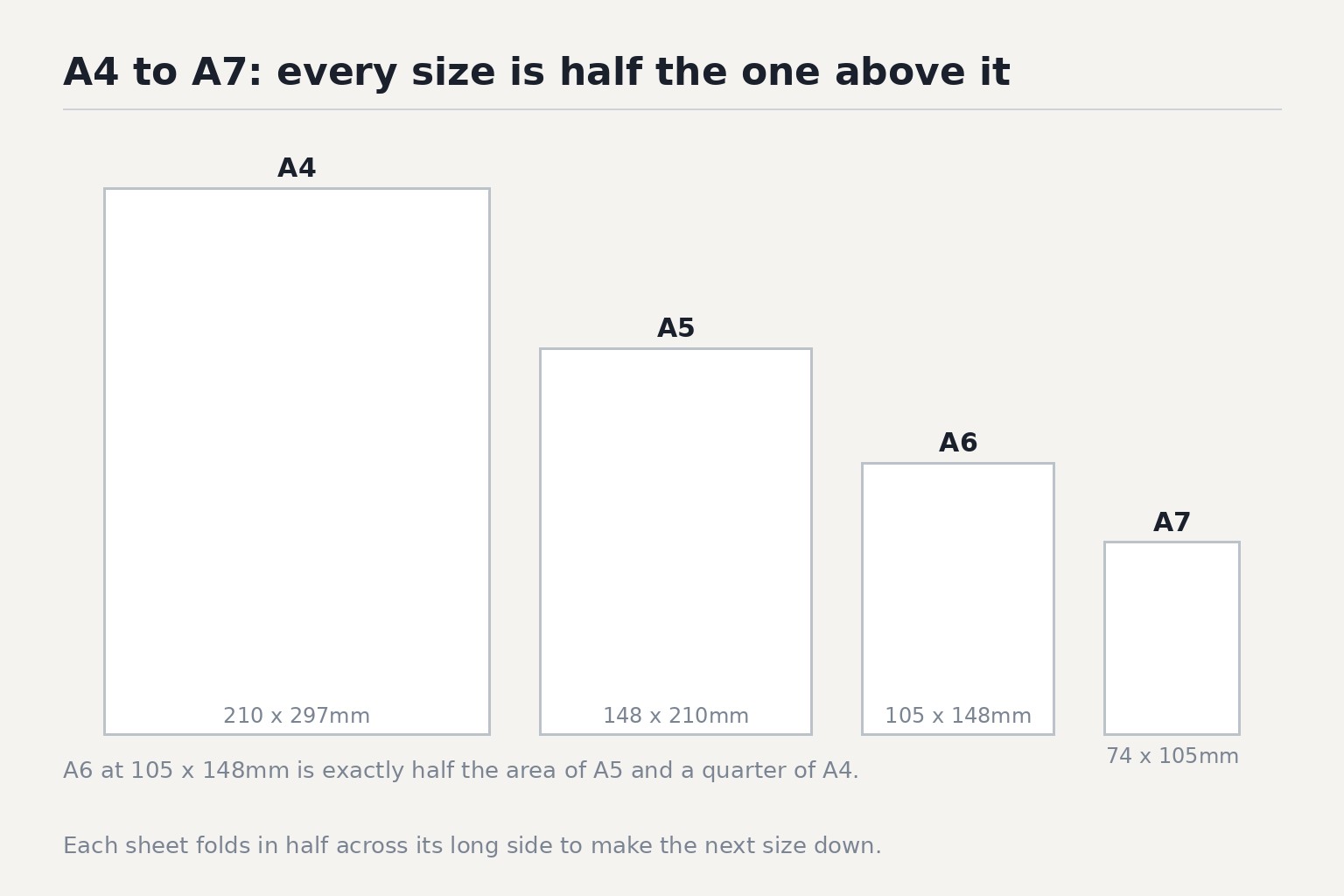
The ISO A series halves at each step. A6 is two steps down from the A4 sheet that sits in most office printers, and one step down from A5.
| Size | Dimensions | Relationship to A6 |
|---|---|---|
| A4 | 210mm x 297mm | 4 times the area of A6 |
| A5 | 148mm x 210mm | 2 times the area of A6 |
| A6 | 105mm x 148mm | This is A6 |
| A7 | 74mm x 105mm | Half the area of A6 |
This article covers A6 only. For a side-by-side look at A6 versus DL (99mm x 210mm) and A5 across different use cases, the custom postcard page lists all three formats with pricing.
Portrait versus landscape orientation
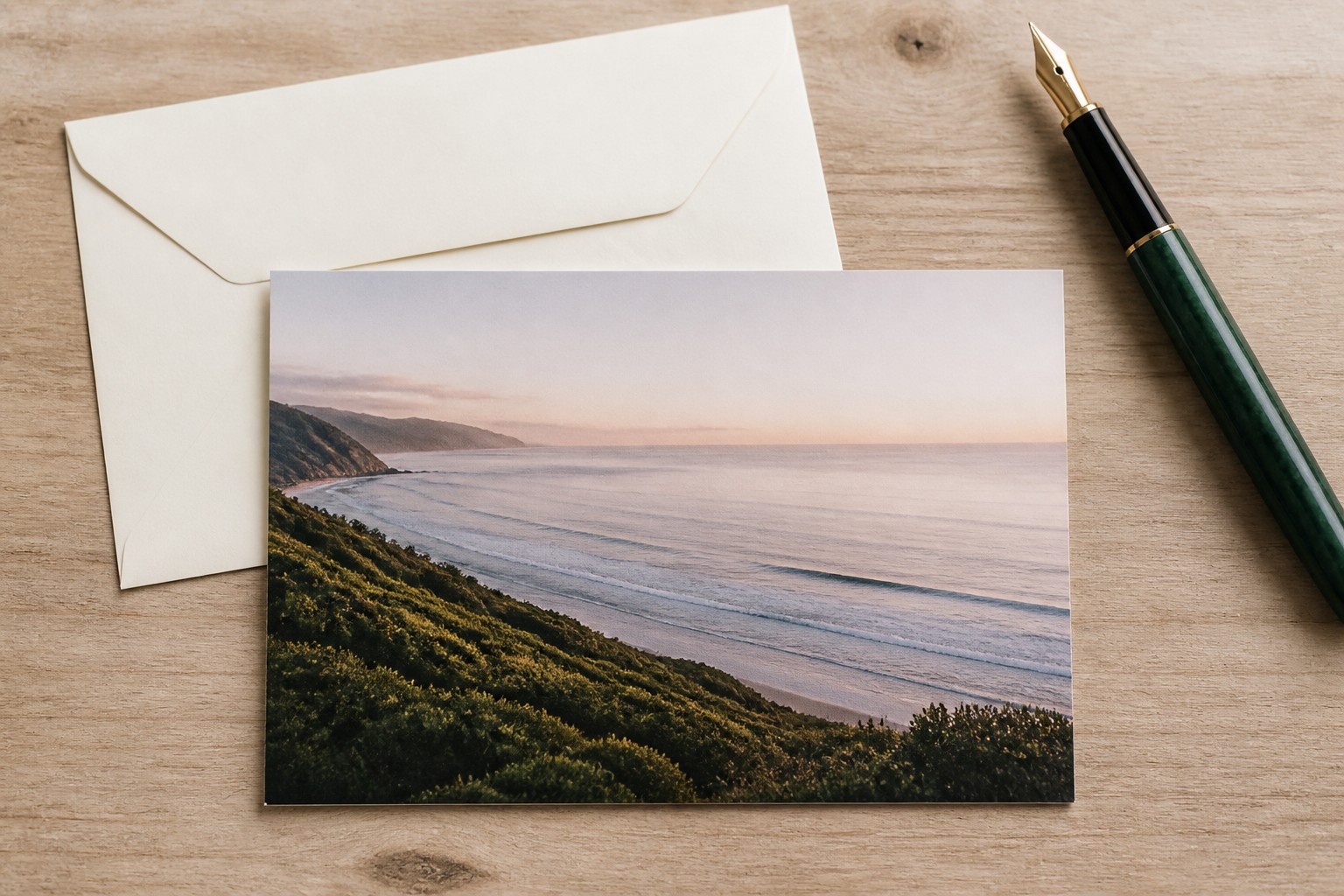
A6 portrait (105mm wide x 148mm tall) is the standard orientation for direct mail and the one most printers default to. The taller format suits a headline at the top, a hero image in the middle, and a phone number or address block at the foot. The reading direction runs naturally top to bottom, which matches how most people scan a piece of mail.
A6 landscape (148mm wide x 105mm tall) works better when:
- The design features a wide panoramic photograph or a horizontal product image
- The content is a menu, event schedule, or table that reads left to right
- A hospitality venue, photographer, or retailer wants a card that sits horizontally in a rack or on a counter
Both orientations use the same card stock and print at the same cost. Orientation is a design decision, not a pricing variable.
One practical note on landscape cards for mail: if you are sending through Australia Post, confirm with your mail house whether the address panel orientation meets current large letter guidelines. Portrait is more straightforward; landscape is not prohibited but may need attention to address placement.
Artwork setup at 300 DPI with 3mm bleed
Document dimensions
Always design to the bleed size, not the trim size. Bleed adds 3mm to every edge so that background colours and full-bleed photographs reach the cut line without leaving a white sliver.
| Orientation | Trim size | Bleed document size | Pixels at 300 DPI (bleed) |
|---|---|---|---|
| Portrait | 105mm x 148mm | 111mm x 154mm | 1,311 x 1,819 px |
| Landscape | 148mm x 105mm | 154mm x 111mm | 1,819 x 1,311 px |
The pixel figures above are at 300 DPI, which is the standard for sharp text, crisp logos, and fine line art.
Safe zone
Keep all critical content (body copy, phone numbers, URLs, logos, and QR codes) at least 5mm inside the trim edge. On a 105 x 148mm portrait card, the safe zone is 95mm x 138mm. Text placed outside this boundary risks being clipped during guillotine cutting, particularly in long print runs where stock can shift slightly.
Background fills, textures, and full-bleed photographs must extend to the full bleed edge, 3mm beyond trim, to avoid a white border appearing on the finished card.
Colour mode
Export artwork in CMYK colour mode as a PDF/X-1a or PDF/X-4 file. RGB files are converted on press and colours can shift, particularly in vivid blues and warm oranges. If your design relies on a specific brand colour, convert it to its CMYK equivalent before submitting.
How much copy realistically fits on a 105mm x 148mm face
This is one of the most practical questions a first-time postcard sender asks, and the answer depends on the layout.
Text-only layout
If the entire face carries body copy with 10mm margins on all sides, the live area is 85mm x 128mm. At a comfortable 9pt to 10pt body text size with standard 1.4 line spacing, that live area accommodates roughly 220 to 270 words. That is enough for a detailed product description, a short event brief, or a letter-format loyalty message.
In practice, a postcard formatted as a letter looks like a letter. Text-only layouts work for loyalty inserts and member communications but rarely for general promotional mail.
Promotional layout
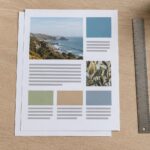
A typical direct-mail A6 postcard divides the face roughly as follows:
- Headline: 20mm height, one punchy sentence in large type
- Hero image or product shot: 60mm height, full card width
- Body copy: 40mm height, three to four short sentences
- Call to action and contact details: 20mm height, URL, phone number, or QR code
That allocation leaves room for 50 to 80 words of readable body copy, which is enough to name the offer, state the key benefit, and tell the reader what to do next.
The practical ceiling
If a message genuinely needs more than 100 words of body copy alongside a headline and a visual, A5 is a better choice. A6 rewards brevity. The format’s constraint is also its strength: it forces the sender to distil the message to its essentials, which tends to produce higher-converting mail than a busier, larger format.
Why A6 is the workhorse direct mail size in Australia
Three factors explain why A6 dominates Australian direct mail volumes.
Australia Post large letter rate
An A6 card (105mm x 148mm, up to 5mm thick, under 250g) qualifies for Australia Post’s large letter postage rate, the most cost-effective tier for unaddressed and addressed promotional mail. A5 cards fall into a higher pricing tier. For campaigns of several thousand units, the difference in postage cost across a run can offset a meaningful portion of the print spend.
Letterbox compatibility
Standard Australian residential letterboxes have an opening of approximately 230mm x 35mm. An A6 card passed through unfolded clears most letterbox slots without bending. A5 cards, being taller and wider, fold or stick in narrower slots, arriving creased and less professional.
Design efficiency
The A6 format forces brevity. A headline, a benefit statement, and a call to action is approximately all the space permits when a visual is included. That constraint tends to produce cleaner mailers than a larger format that invites the sender to keep writing. A well-designed A6 postcard is read in under ten seconds.
Printing: 350 GSM Artboard, digital colour, both sides
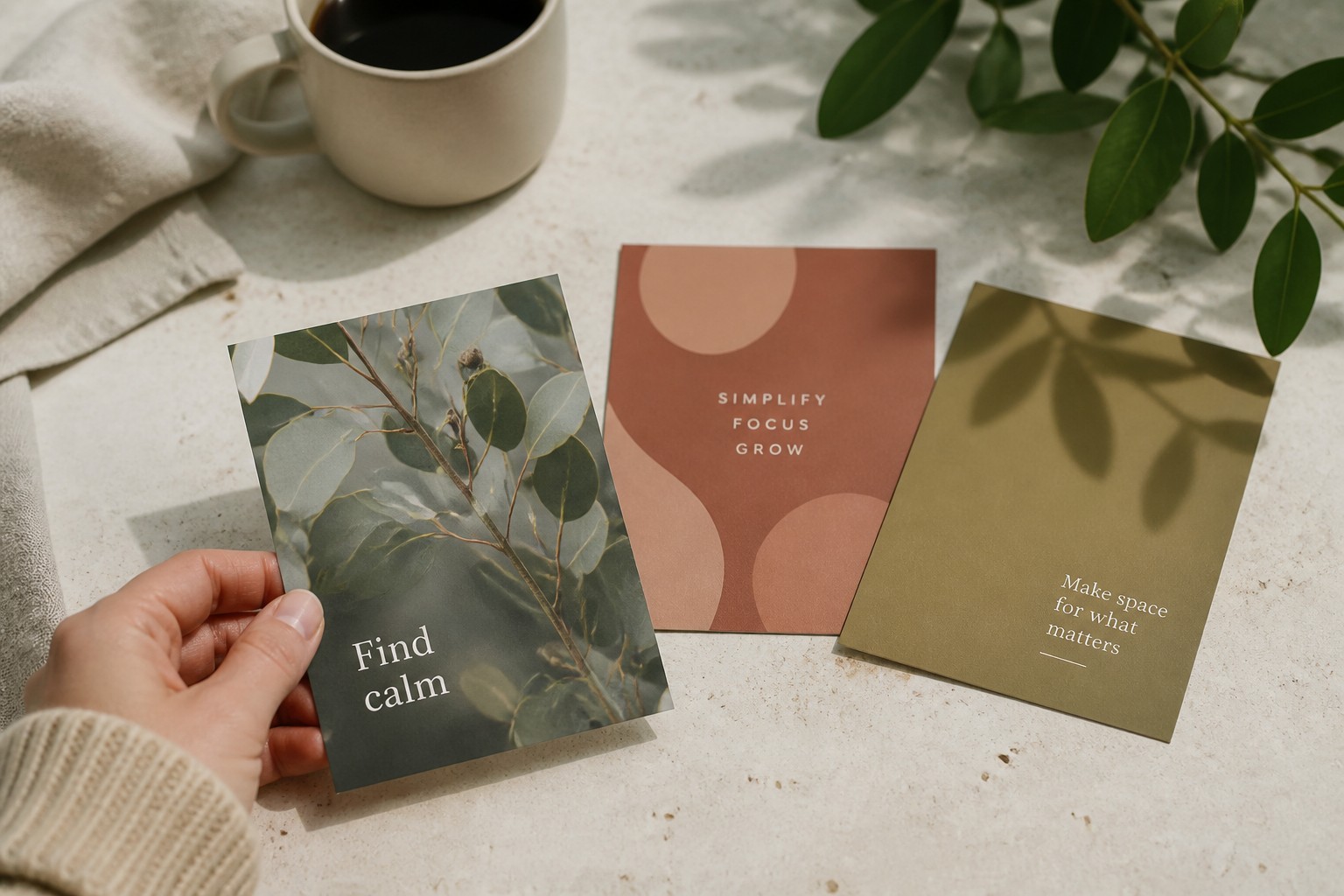
Paperlust prints A6 postcards on 350 GSM Artboard. This is a coated, rigid stock that holds its shape through postal handling without the corners buckling or the card curling in humidity. The coated surface delivers saturated, consistent digital colour on both sides.
Both sides printed is the standard, not an add-on. Every A6 postcard order includes full-colour printing on the front and the back. The reverse can carry an address panel, a map, a QR code, terms, a second creative message, or a reply-paid section. There is no extra charge for a designed reverse.
The price ladder runs from $5.42 per card at 50 to $0.16 per card at 10,000. For the full quantity and size options, including A5 and DL postcards, see the custom postcard printing page.
For a postcard with a shaped finish (a custom contour, a circular format, or an unusual silhouette), the die-cut postcard is available as a separate product.
Frequently Asked Questions
What is the exact size of an A6 postcard?
An A6 postcard is 105mm x 148mm in portrait orientation, or 148mm x 105mm in landscape. In inches, that is approximately 4.13″ x 5.83″. It is exactly half the area of an A5 sheet and a quarter of an A4.
What bleed size should I use for an A6 postcard?
Add 3mm to each edge of the trim size. For portrait orientation, the bleed document is 111mm x 154mm. At 300 DPI, that is a canvas of 1,311 x 1,819 pixels. Set crop marks at the trim edge (105mm x 148mm) inside the bleed document.
How does A6 compare to A5 for postcard printing?
A5 is 148mm x 210mm, which is exactly double the area of A6. A5 gives more space for copy and imagery but costs more to print per card and attracts a higher postage rate under Australia Post’s large letter categories. A6 is the better choice when the message is short and the budget is volume-driven.
Is A6 a standard Australia Post postcard size?
Yes. An A6 card at 105mm x 148mm falls within the large letter size range (maximum 130mm x 240mm x 5mm). It qualifies for the large letter postage rate, which is the standard tier for addressed and unaddressed promotional mail in Australia.
What resolution should my A6 artwork be?
300 DPI is the minimum recommended resolution for artwork containing text, logos, or line art. At 300 DPI, a portrait A6 canvas (trim size, no bleed) is 1,240 x 1,748 pixels. With 3mm bleed, the canvas is 1,311 x 1,819 pixels.
Is both-sides printing included in the price?
Yes. Paperlust’s A6 postcard is printed on both sides as standard. Upload separate artwork files for the front and back. There is no additional charge for a printed reverse.
How many words fit on an A6 postcard face?
A text-only layout with standard 10mm margins fits approximately 220 to 270 words. A standard promotional layout with a headline, a medium image, and a call to action fits around 50 to 80 words of body copy. A6 is suited to short, direct messages rather than long copy.
What paper weight is used for Paperlust A6 postcards?
Paperlust prints A6 postcards on 350 GSM Artboard, a coated rigid stock that holds its shape in the post and delivers sharp digital colour on both sides.