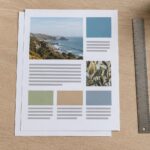
The first surprise with foam board printing is not the print quality. It is the gap between finding the product and getting a price. You are holding a deadline for a conference, a store window changeover or a property campaign, and one supplier hides the number behind an email form. The next prints one side only. By the third exchange you are no longer comparing output quality. You are comparing how much of the order the supplier is willing to publish.
That gap is the real difference in foam board printing Australia buyers need to plan around. The board itself is not exotic: a rigid sheet with a polystyrene foam core and paper facing on both sides. What changes between suppliers is what you are allowed to order without a phone call. A second printed face, a price at one board, a support on the back, a shape that is not a rectangle. Most of the market treats these as special jobs. Some of them are product options on the page you are about to read.
This guide covers what a printed foam board actually is, the four checks that matter before you order, the six published formats and two thicknesses, the strut and double sided rules, custom shapes, and the one place the board cannot go.
The short version
- A foam board is a rigid polystyrene foam core with a smooth paper liner on both faces, printed in full colour with direct UV.
- Six standard sizes, A4 210 x 297mm to A0 841 x 1189mm, plus the 600 x 900mm sign format.
- Choose a 5mm or 10mm core on every size.
- Print one side, or both sides for displays seen from either direction.
- Strut backing turns a one sided board into a free standing display, and cannot be combined with double sided printing.
- Order a single board; quantity prices are published from 1 to 100.
- Foam board is indoor use only, not weatherproof.
What foam board actually is
A foam board is a rigid sheet built around a polystyrene core. Both faces of that core carry a smooth paper liner. The paper liner is the surface that takes the print, and because it is on both faces, the sheet can be printed on one side or both. That is not a given everywhere. In much of the Australian field, a board with two printable faces is an option you have to chase.
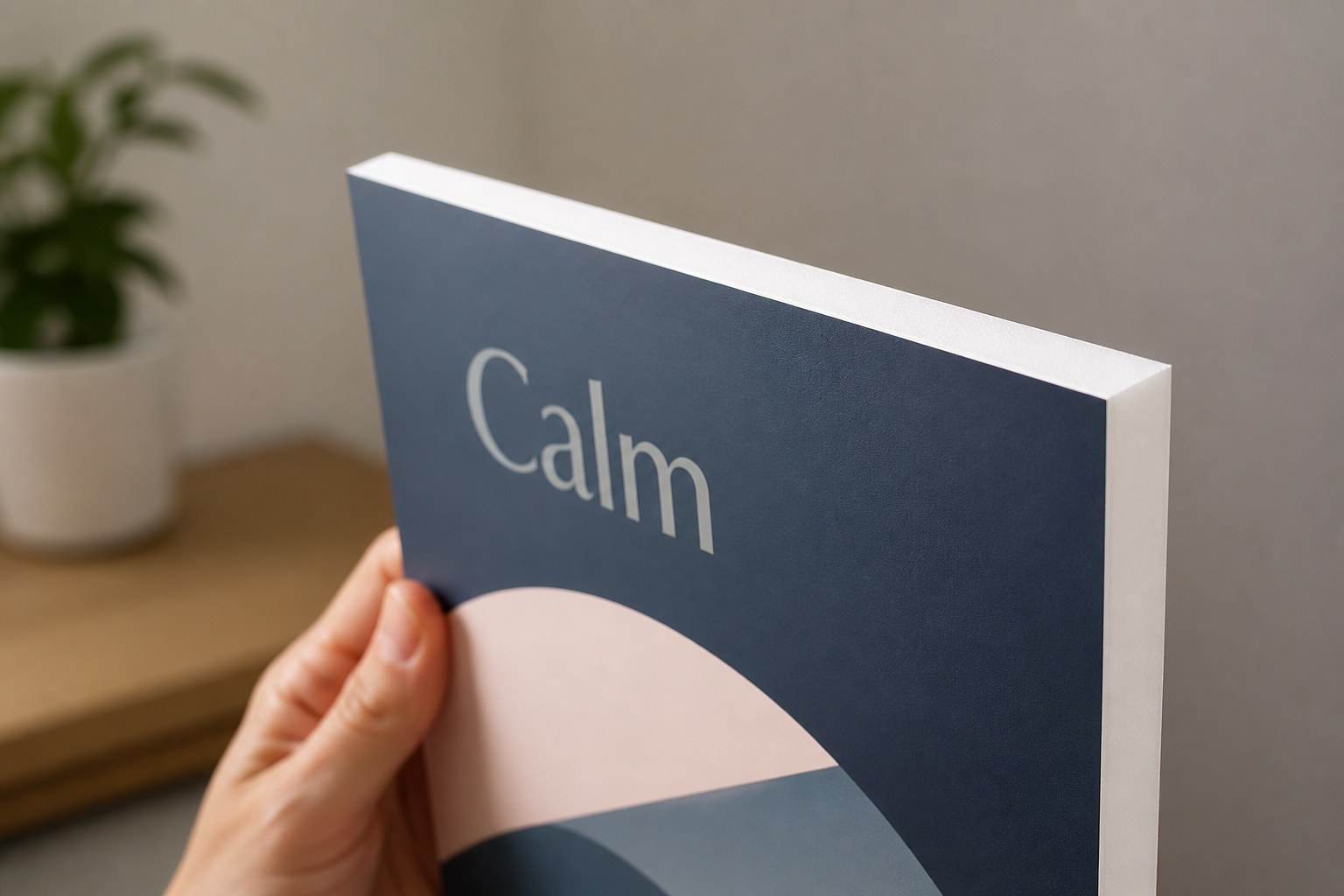
Printing is full colour direct UV, applied straight onto the board. The ink bonds to the surface rather than sitting in a film or a laminate. The result is a clean printed face with the board edge showing the raw core depth. You may see the same sheet searched as foam core board or foamcore. In this range it is the same rigid board.
The practical position is between a paper poster and a heavyweight rigid substrate. It is stiffer than a paper print and lighter than many solid plastic sheets, which makes it easy to move around a venue. But that also comes with a clear indoor limit later in this guide.
Four things to check before you order, including double sided
The differences between foam board suppliers are not really about colour quality. They are about what the product page lets you select. Four checks do most of the work.
First, whether both faces can be printed. One sided printing keeps the unprinted side plain white while the front carries full colour artwork. The paper faced reverse still looks clean mounted against a wall, so a one sided board is not a compromise for every job. But if the panel hangs in a doorway or sits on a table where people walk around it, double sided printing places artwork on each face and keeps the sign useful from either direction. Most suppliers stop at one side. This board does not.
Second, whether the quantity price is published. The usual pattern across the category is a quote or a phone call before any price appears. Here the quantity ladder is public, with breaks at 1, 2, 3, 5, 10, 20, 50 and 100 boards. The price sits against every rung. You can see the cost of a single board and the cost of a run without sending an inquiry.
Third, whether strut backing and custom shapes are part of the product or a separate quoted job. A strut backing is a fold out cardboard support fixed to the reverse face. A custom shape is a router cut that changes the outside edge of the board. Many suppliers take both out of the online build and send you to a quote. On this product they are options, selected as the order is built.
Fourth, what artwork the supplier expects. For a shaped board, the usual request is a vector cut file or an outline path that you prepare. That request can quietly turn a simple shape into a design job. Here you supply artwork only. The cutting line is built from the artwork, so no vector cut file is required.
| What to check | The usual pattern | What you get here |
|---|---|---|
| Double sided printing | Print one side only, with the reverse left blank | One sided or double sided printing on a board with both faces paper lined |
| Published quantity prices | A quote or phone call needed before a price appears | Quantity breaks from 1 to 100 with a published price at every break |
| Strut Backing and custom shape | Handled as separate quoted jobs | Selectable product options when the order is built |
| Custom cut file | Supplier asks you to supply a vector cut file or outline path | Artwork only. The cutting line is built for you |
Keep these four on a checklist and most of the surprises in the order disappear.
The six standard sizes, from A4 to A0
The product page sells six fixed sizes, and the dimensions are fixed rather than a guess on your part.
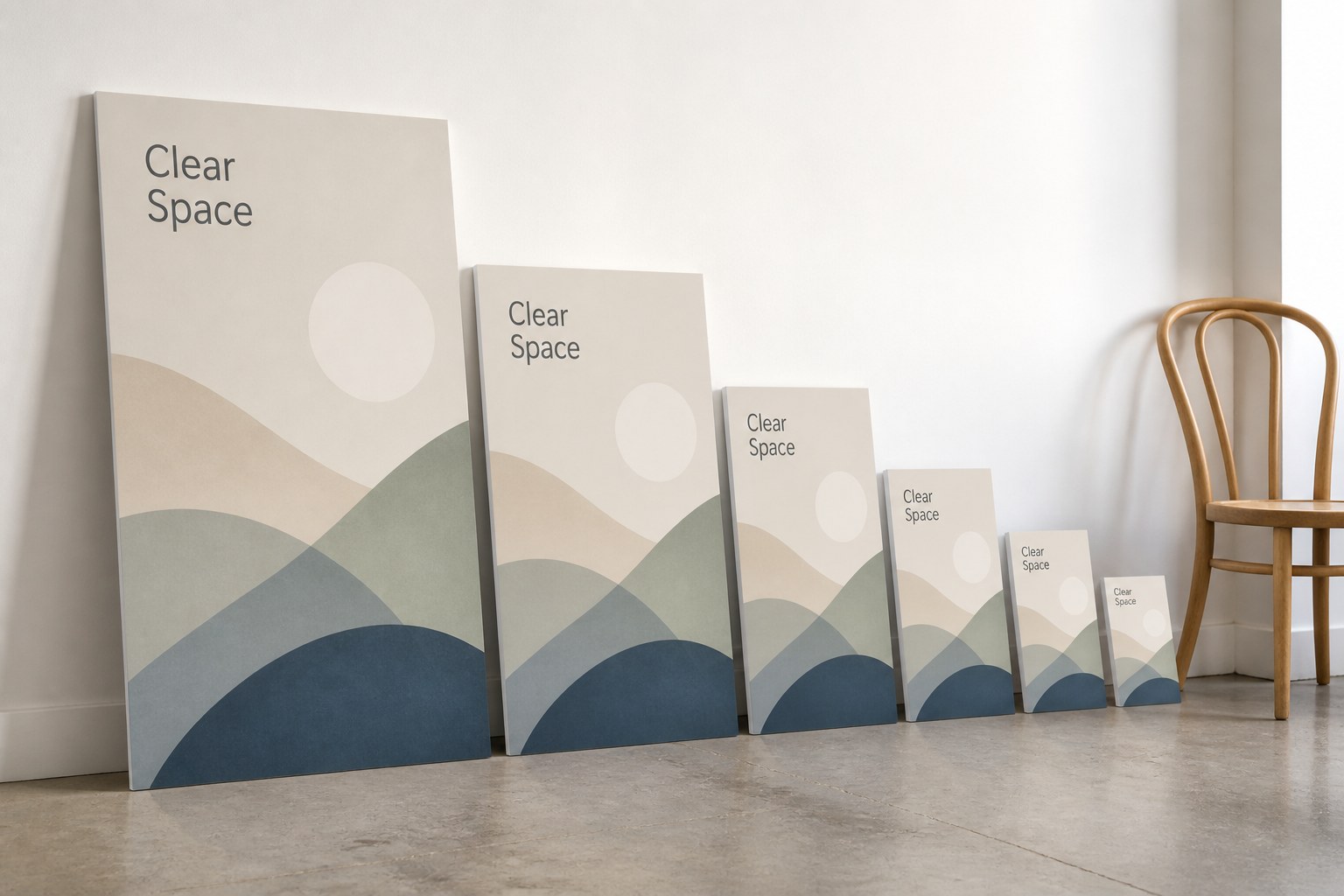
- A4 210 x 297mm
- A3 297 x 420mm
- A2 420 x 594mm
- A1 594 x 841mm
- 600 x 900mm
- A0 841 x 1189mm
The 600 x 900mm board is not an A series size. It matches the common corflute signage format, and it suits property boards, event and venue signage, and floor standing displays that need a wider face than A1. It is an important option because a surprisingly large share of retail and real estate signage follows that proportion.
Every one of those sizes is available in a 5mm or 10mm core. 5mm is the standard core depth and suits most indoor signage. 10mm doubles the core depth, resists bowing on larger formats and gives a deeper visible white edge. It is the choice for A1, 600 x 900mm and A0, for boards handled repeatedly, and for free standing displays. For foam board signs at an event, the A1 or 600 x 900mm format is usually where 10mm starts to earn its keep.
The complete foam board sizes from A4 to A0 guide covers which format suits which job, and it is worth reading before you commit to the larger sizes.
Single sided, double sided and the strut rule
One sided printing puts full colour artwork on the front and leaves the back plain white. That clean reverse is the right choice for boards mounted against a wall, leaned on a shelf or displayed on an existing stand. Double sided printing places artwork on both sides of the sheet, which changes how the board behaves in a room. It works in doorways, hanging displays and queues where people approach from two directions. It also lets the back carry a second message or a second language.
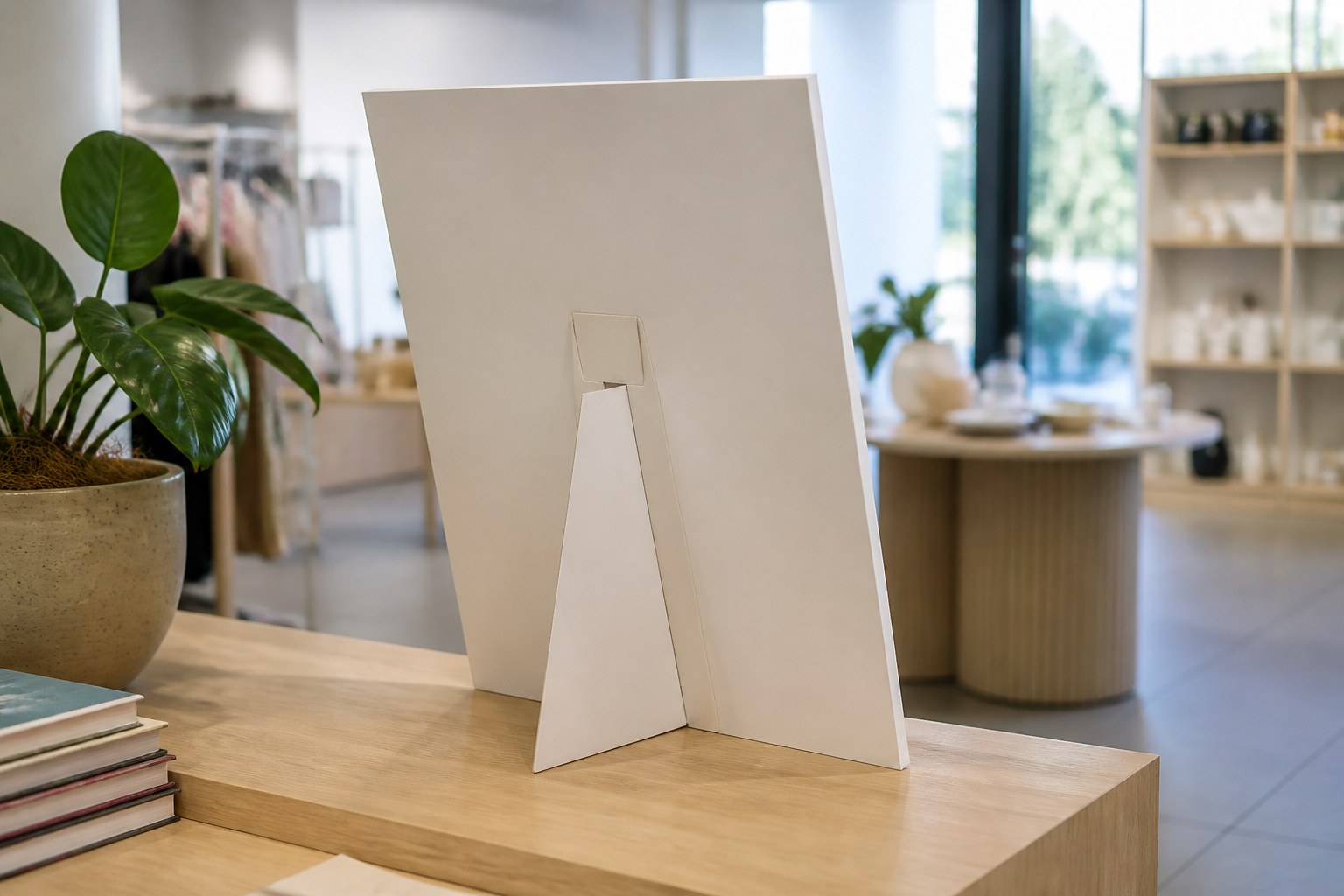
When you add Strut Backing, the fold out cardboard support is fixed to the board’s reverse face. It turns the board into a free standing display with no easel required, and it is available on every size including A0. The cost is priced per board. Because the strut is fitted to the reverse, it is only available on one sided boards. A strut and double sided printing cannot be combined. The planning consequence is simple: a sign readable from both directions needs a stand, and a sign that stands on its own speaks in one direction.
The default is no strut, which is right for boards that will be mounted, hung, leaned or displayed on an existing stand. If you are supplying the board to a retail site, ask how it will be presented before adding a strut. A flat panel with a strut is not the same object as a shaped free standing display, and the point of sale standees range is the better comparison when the display needs to stand out from the shelving.
Custom shape options and the real size ceiling
A standard order is cut rectangle, trimmed square to the selected size. That is not the only shape on the shelf. Custom Shapes is a router cut following any outline. You do not rebuild the artwork around a cutting path. Supply artwork only, and the team builds the cutting line from the design. A vector cut file is not required, and the cutting is charged per order, not per board.
Common shapes are arched tops, logo shapes and life size figure cutouts. An arched top suits a welcome sign at a function. A logo shape makes a trade show panel read as brand, not just information. A life size cutout is the piece a venue photographer ends up beside. For a custom foam board shape like these, the shape is part of the build, not a separate service.
The honest boundary matters. Outside the six stock formats, a custom size rectangle is selected and priced online through Custom Dimension in the Size menu, with width and height in millimetres, up to the 1200 x 2400mm flatbed sheet. Anything bigger than that sheet cannot be made. Intricate or three dimensional shapes are quoted separately as well.
That means this is the moment to decide whether the board needs to be a one off silhouette or a standard panel. For the six listed sizes, custom shape foam board cutting is an option in the build. For anything else, the right step is to ask for a quote before you draw the artwork too far.
Where foam board belongs indoors, and where it does not
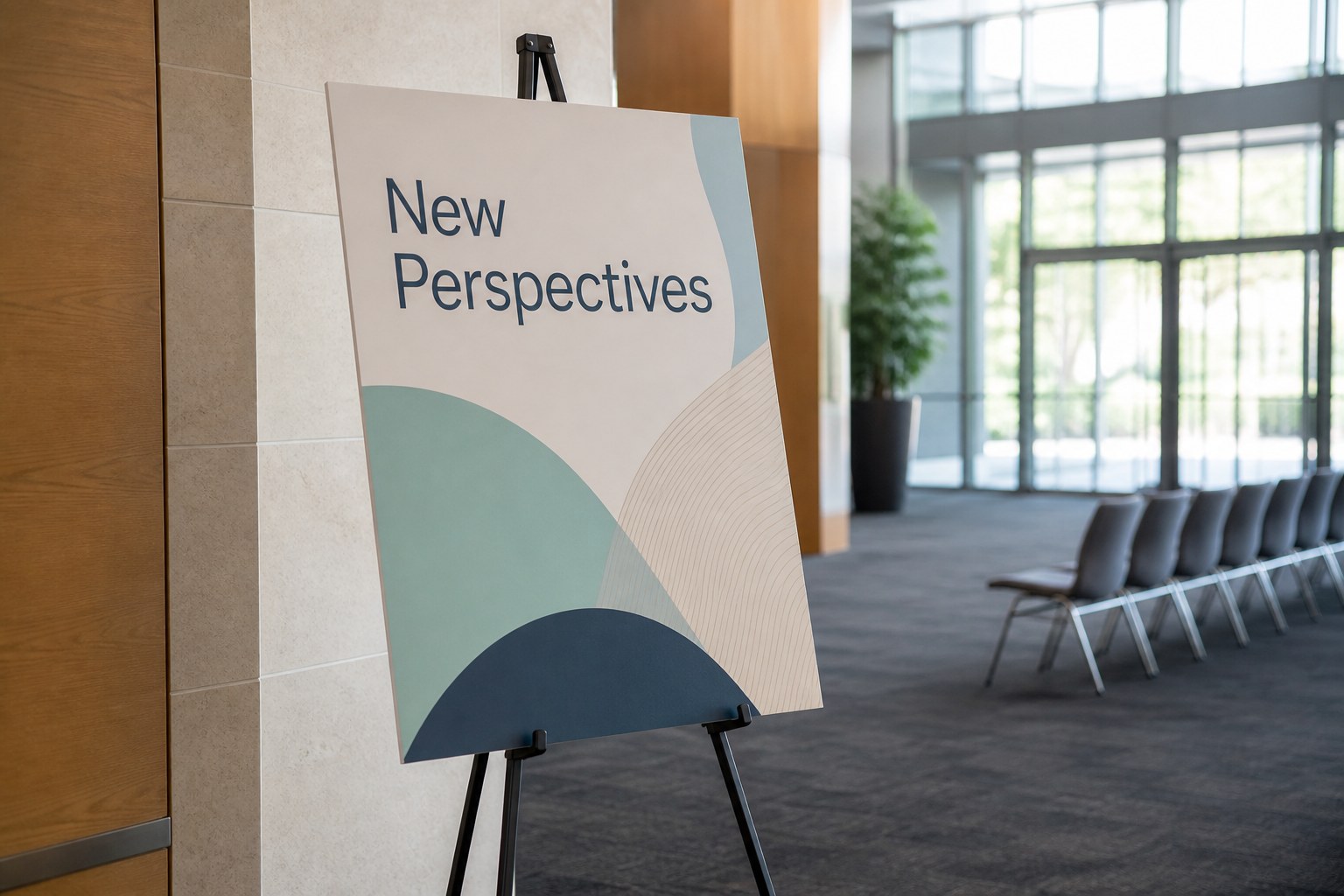
Foam board is built for controlled indoor environments. The jobs it suits are the ones where you need something rigid, clean and temporary. Retail displays, trade show graphics, conference signage, event welcome signs, seating charts for functions and awards nights, presentation boards, photo enlargements and property boards all fit this material.
Then the limit. Foam board cannot go outside. The foam core is not weatherproof and is sensitive to heat and moisture, which can cause warping and surface damage. The core is heat affected at 85 degrees Celsius and above. A panel left in a hot front window or a summer car can distort quickly. This is the single most common wrong purchase in the category, because the board looks rigid enough to survive outdoors and it is not.
For outdoor signage the recommendation is corflute, a rigid weatherproof corrugated plastic. If the job needs a rigid board in a sheltered or conditional space, the foamed PVC signage boards comparison is worth reading before you commit. And if the board is being mounted rather than left freestanding, the mounting a poster on a rigid board guide covers the wall side of the decision, including the fixings your installer supplies.
The short version is indoor use only. Use it for controlled spaces, and hand the outdoor job to a material made for weather.
Ordering from one board to 100, and what it costs to start
The quantity ladder is published, and it starts at one board. The breaks are 1, 2, 3, 5, 10, 20, 50 and 100, with a price at every break and no minimum order. You do not need to buy ten to see a number.
The entry price is $68.95 including GST for one A4 board at 5mm, printed one side, rectangle cut, no strut. That is the starting point, not a special. From there the per board price falls substantially as quantity rises, which is why spare boards belong in the same run rather than a reorder two weeks later.
Ordering is artwork in and a printed board out. You supply the artwork, and the board is printed and finished. Boards are made to order in Australia and delivered Australia wide, and they are printed in Australia.
For a small run with no minimum, foam board printing in Australia becomes a planning exercise rather than a negotiation. One board is enough to start, and the published ladder lets you see where the next quantity makes economic sense.
Frequently asked questions
What is foam core board made of?
Foam core board is a rigid sheet with a polystyrene foam core and a paper liner on each face. That liner is the printable surface. Printing is full colour direct UV, applied straight onto the board so the ink bonds to the surface. Because both sides are paper lined, the same board can be printed on one side or both. Foamcore is another name for the same material. Use it for indoor signs and displays, not outdoor panels.
Can foam board be printed double sided?
Yes. When you order double sided, artwork appears on both faces. One sided printing leaves the back plain white. That matters for displays seen from both directions, hanging signs, or a second message on the back. There is one hard rule. Strut backing fixes to the reverse face, so it is only available on one sided boards. A strut cannot be combined with double sided printing. If the sign needs to be read from both directions, plan for a stand rather than a fold out strut.
Can foam board be used outdoors?
No. Foam board cannot go outside. It is for indoor spaces only. The foam core is not weatherproof and is sensitive to heat and moisture, which can cause warping and surface damage. The core is heat affected at 85 degrees Celsius and above. For outdoor signage the recommendation is corflute, a rigid weatherproof corrugated plastic. If the job must sit in sun, rain or a hot vehicle, switch materials before you commit to foam board.
Is no vector cut file needed for a custom shape?
Correct. You do not need a vector cut file for a custom shape. You supply artwork only, and the team builds the cutting line from that artwork. Custom Shapes is a router cut following any outline, and it is charged per order, not per board. Common shapes include arched tops, logo shapes and life size figure cutouts. That removes the usual step where a supplier asks you to prepare an outline path before the order can be quoted.
Can I order just one board?
Yes. The minimum order is one board. Quantity breaks are 1, 2, 3, 5, 10, 20, 50 and 100, with a published price at every break. The starting price is $68.95 including GST for one A4 board at 5mm, printed one side, rectangle cut, no strut. There is no requirement to buy a run before you can see a price, and the per board cost falls substantially as quantity rises.
Can I order a custom size outside the six standard formats?
A custom size is a quote, not an online option. The product page sells six fixed formats: A4 210 x 297mm, A3 297 x 420mm, A2 420 x 594mm, A1 594 x 841mm, 600 x 900mm and A0 841 x 1189mm. A size outside that list goes through custom quoting. The flatbed printing equipment has a maximum sheet of 1200 x 2400mm. If your panel sits beyond that, it cannot be printed on this equipment.