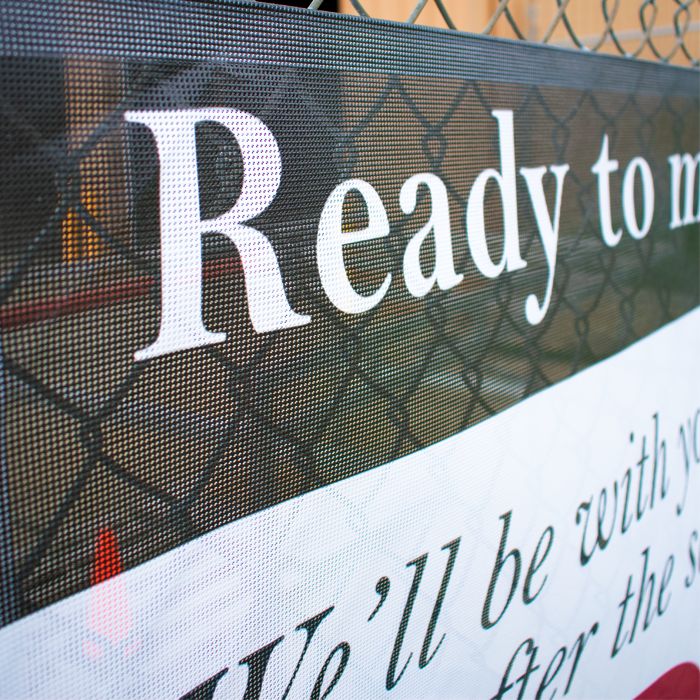
Choosing the right banner material is important for effective advertising. Among the most popular options are mesh and polyester banners, each bringing unique benefits to the table. By understanding the differences between these materials, you can make a well-informed decision that will enhance your advertising efforts and protect your investment.
This guide covers both materials in depth – what they’re made of, how they perform in different environments, what they cost relative to each other, and which applications suit each one best. If you’re deciding between mesh and polyester for an upcoming event, campaign, or permanent installation, this is the place to start.
At a Glance
Mesh wins outdoors with wind. Polyester wins indoors with crisp print.
Mesh banner fabric has a perforated weave that lets wind pass through — essential for any outdoor banner over 2m wide. Polyester is a tighter weave that delivers sharper colour and stays cleaner indoors but acts like a sail outdoors.
- Default outdoor banner: Mesh — wind pass-through, no fence load, no tear risk
- Default indoor banner: Polyester — sharper print, no perforation visible from 2m
- Print quality: Polyester edges out mesh on photographic detail
- Lifespan outdoors: Mesh: 2–3 seasons. Polyester outdoors: 6 months max
- Cost: Roughly comparable per m² — pick by use case, not by price
Understanding Banner Materials: Mesh and Polyester
When selecting a banner, understanding the materials’ properties will help you match the right product to your advertising goal. Mesh banners are crafted from a perforated fabric that allows air to flow through. This feature reduces the effects of strong winds, making these banners an ideal choice for outdoor settings where secure installation is needed over extended periods. On the other hand, polyester banners boast a smooth finish that enhances vibrant colors and offers impressive image quality. They’re perfect for businesses that want to showcase eye-catching visuals and compelling brand messaging in indoor or controlled environments.
Both materials have their own advantages, depending on what you need. If your advertising is going outdoors, understanding how each material performs in windy conditions is critical. Here’s a quick summary:
- Mesh Banners: Wind-resistant, lightweight, and durable – built for outdoor use in exposed locations.
- Polyester Banners: Known for vibrant colors and a polished finish – ideal for indoor and sheltered applications where print quality matters most.
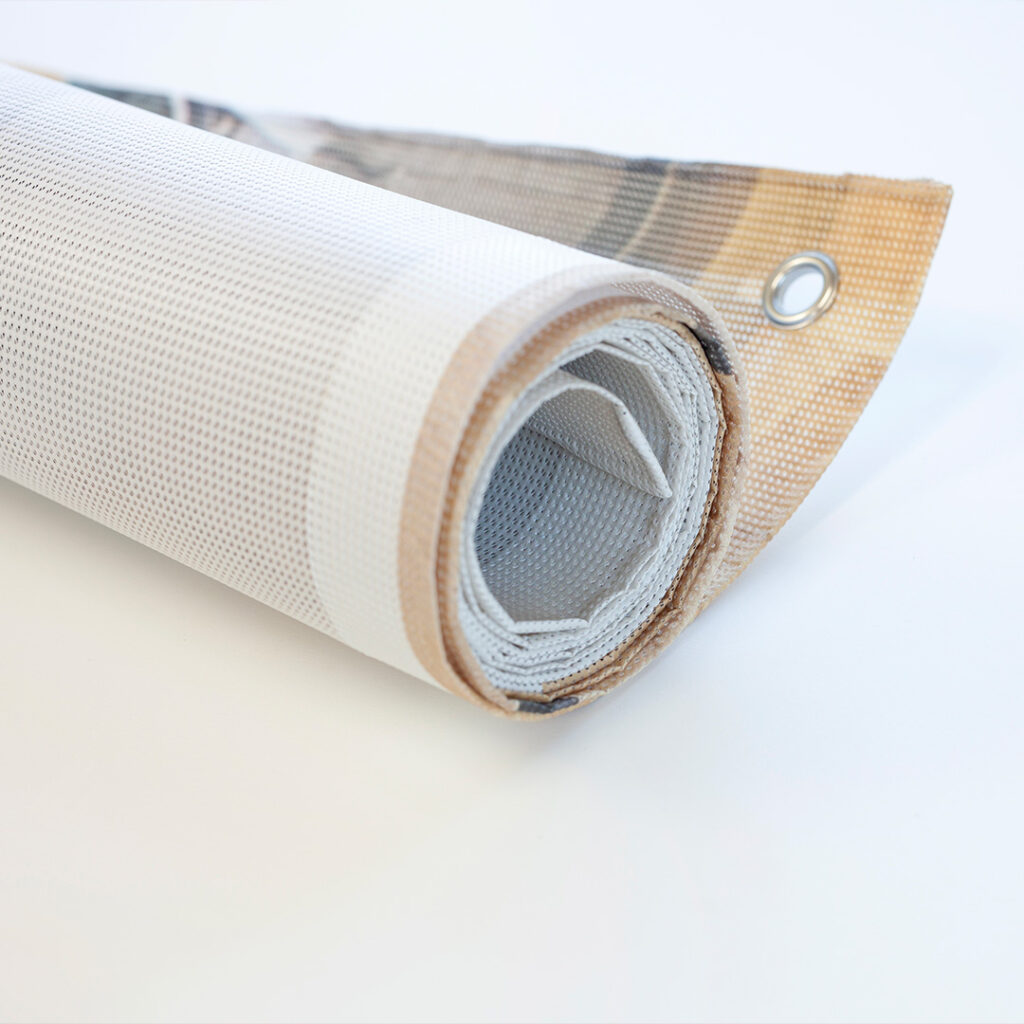
Mesh Banners: Features, Benefits, and Best Uses
Mesh banners are made from a robust, perforated material designed specifically to perform in windy conditions. The perforations let the wind pass through, which means less stress on the banner itself. This makes mesh banners particularly effective for outdoor settings like construction sites, fences, and building wraps. They’re often the preferred choice for large-scale promotions and events in exposed locations due to their durability even in tough weather.
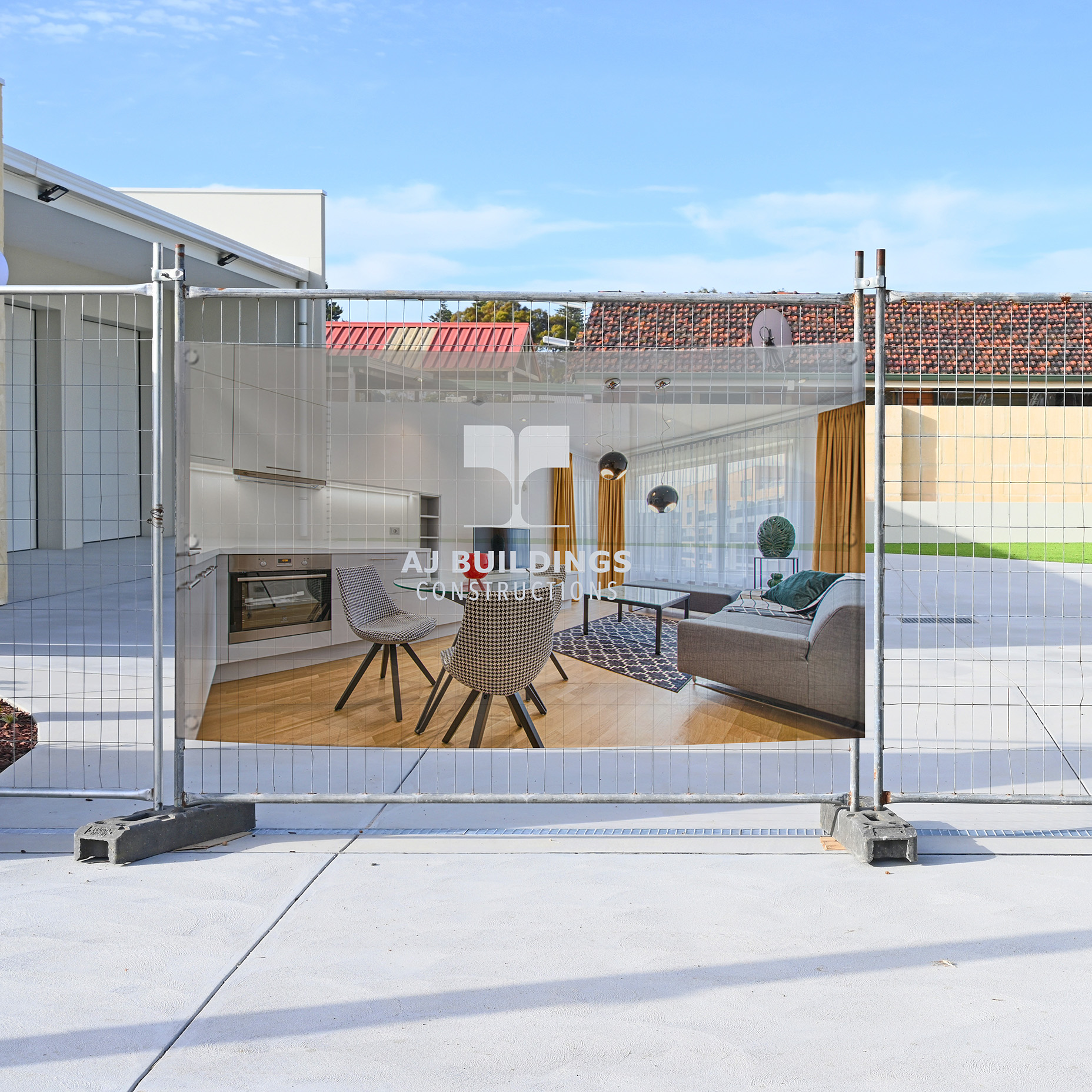
One of the key advantages of mesh banners is their lightweight nature, making installation and transportation straightforward. The breathable fabric also reduces noise in windy areas – a practical benefit when the banner is mounted close to pedestrian areas or workspaces.
Benefits of Mesh Banners
- Wind Resistance: Perforations allow airflow, which reduces the risk of tearing or structural damage to the mounting point.
- Durability: Excellent for long-term outdoor use – holds up against UV exposure, rain, and variable temperatures.
- Lightweight: Easy to handle and install, which simplifies setup on construction hoardings, fences, and scaffolding.
- Large-format capability: Mesh is available in wide and tall formats suitable for building wraps and large outdoor installations.
Where Mesh Banners Are Used
Construction companies use mesh banners to brand building hoardings, turn scaffolding into advertising space, and comply with council requirements for site signage. Sports venues use them on perimeter fencing where wind load would tear a solid banner. Outdoor markets, festivals, and large public events use mesh along boundary fences where permanent signage isn’t possible. Any installation that will face sustained wind over days or weeks should use mesh rather than solid material.
Print Quality on Mesh
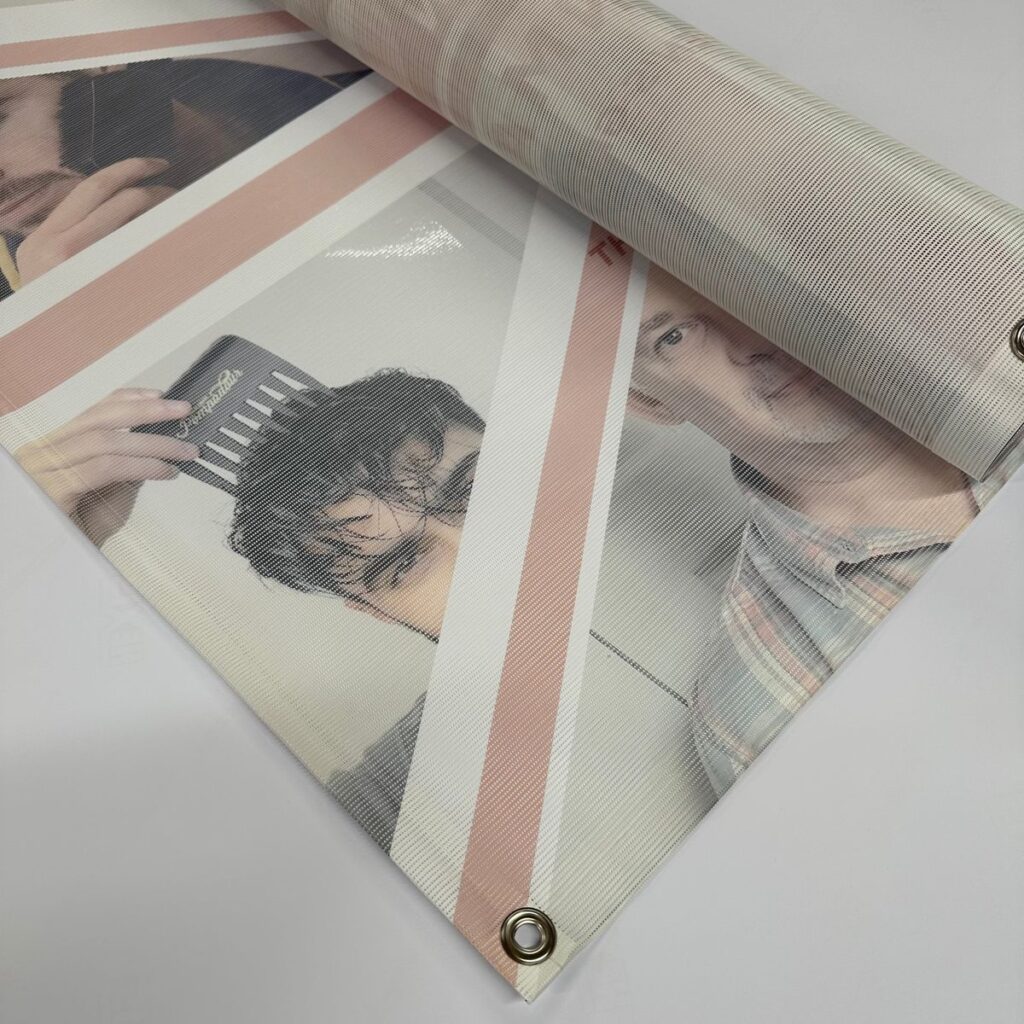
Because mesh is perforated, the effective print area is smaller than on a solid material. This means images and text appear slightly less sharp when viewed at close range, but at typical viewing distances for large outdoor installations (10 meters or more), the print quality is more than adequate. Use bold graphics and large text for mesh installations – intricate fine-line designs or small type are not suited to mesh because the perforations reduce legibility at close range.
Polyester Banners: Features, Benefits, and Best Uses
Polyester banners are celebrated for their sharp, vibrant graphics. The smooth continuous surface enhances detailed image reproduction, making these banners the preferred choice in environments where high image quality is important. Whether it’s trade shows, indoor events, or retail settings, polyester banners deliver with vibrant color and a professional appearance.
Need an outdoor banner that survives wind?
Mesh banners with reinforced eyelets — built for fences, scaffolding, and event hoarding. Custom sizes up to 6m.
These banners bring a polished, professional look that suits showcasing products, services, or brand messaging in close-range viewing situations. While they are versatile, secure installation is essential in any windy conditions – polyester is a solid fabric that catches wind rather than letting it pass through.
Benefits of Polyester Banners
- Vibrant Colors: The smooth surface allows for high-definition graphics with rich color depth, ideal for photography, gradients, and detailed imagery.
- Professional Appearance: A premium textile look that’s appropriate for corporate events, media backdrops, and retail brand activations.
- Lightweight and packable: Polyester fabric folds without permanent creasing, making it easier to transport and store than rigid PVC.
- Versatile for indoor use: Works well in conference centers, exhibition halls, retail environments, and any indoor setting where visual quality matters.
Where Polyester Banners Are Used
Corporate event teams use polyester banners for media walls, stage backdrops, and sponsor boards – anywhere that will appear in photography or video coverage. Retailers use polyester for in-store displays that need a premium, fabric-quality look. Exhibition organizers use polyester for booth backdrops at trade shows, where the close viewing distance demands higher image quality than PVC or mesh can deliver. Any indoor application where the banner will be seen from within 3-5 meters benefits from polyester’s superior print resolution.
Caring for Polyester Banners
Polyester banners can be gently hand-washed with mild detergent if they become marked or dirty. They should be air-dried and stored loosely folded or rolled to prevent permanent creasing. Avoid folding on the same crease lines repeatedly – over time this can cause visible wear lines in the print. Stored correctly, a quality polyester banner used for indoor events can last for many seasons without reprinting.
Planning event signage beyond banners? Paperlust’s wedding signs collection covers everything from seating charts to welcome boards.
Related reading:
Mesh Banners vs Polyester Banners: Side-by-Side Comparison
When weighing the options between mesh and polyester banners, it helps to see the key differences clearly. Here’s a direct comparison across the factors that matter most to most buyers:
| Factor | Mesh Banners | Polyester Banners |
|---|---|---|
| Wind resistance | Excellent – perforations allow airflow | Poor – solid fabric catches wind |
| Print quality | Good at distance, reduced up close | Excellent – sharp and vibrant |
| Best environment | Outdoor, exposed locations | Indoor, sheltered environments |
| Weight | Lightweight | Lightweight |
| Durability outdoors | High – UV and weather resistant | Moderate – not designed for harsh outdoor use |
| Typical use | Construction sites, fence signage, outdoor events | Trade shows, corporate events, media walls |
| Storage | Rolls or folds | Folds without permanent creasing |
When Mesh Is the Clear Choice
Choose mesh when the banner will be installed outdoors in an exposed position that cannot be monitored daily. Any installation where wind load could damage the banner, its frame, or the structure it’s attached to requires mesh. Construction hoardings, perimeter fencing at events, scaffolding covers, and roadside displays in open areas all demand mesh. If there’s any doubt about whether wind will be an issue, choose mesh – the cost difference is small and the protection it provides is significant.
When Polyester Is the Clear Choice
Choose polyester for indoor events where print quality is visible to people within a few meters of the banner. Trade show booths, exhibition backdrops, conference signage, retail point-of-sale displays, and photography backdrops all benefit from polyester’s superior image reproduction. Polyester is also the right choice for corporate events where the banner will appear in photos and video – the richer, sharper print quality is immediately visible in media coverage compared to mesh or PVC alternatives.
When it comes to selecting between mesh and polyester banners, keep in mind your environment, marketing goals, and the kind of impact you want to create. Both options present unique benefits tailored to various advertising needs, ensuring your campaign will be effective and visually engaging.
Artwork and Installation: Practical Tips for Both Materials
Whether you’re ordering mesh or polyester, getting the artwork and installation right makes a significant difference in the final result. Here are the practical considerations for each.
Artwork for Mesh Banners
Because mesh is a perforated material, fine details and small text can lose clarity. Design for impact at distance – use large, bold text (minimum 80-100pt for standard viewing distances), strong contrasting colors, and simple layouts with a clear hierarchy. Logos should be clean and vector-based. Avoid photographic detail that relies on fine gradients or subtle tone variations, as the perforation pattern will interrupt these at close range.
Supply mesh banner artwork at 300 DPI at full size. Always include a 5mm bleed on all edges and convert text to outlines before exporting. Submit as a CMYK PDF, EPS, or AI file.
Artwork for Polyester Banners
Polyester handles photographic imagery and fine detail well. Use this to your advantage – lifestyle photography, detailed product shots, and nuanced gradient backgrounds all reproduce cleanly on polyester. The material’s smooth surface allows a wider color gamut and sharper edge definition than mesh or standard PVC. Supply artwork at the same resolution as mesh (300 DPI at full size), in CMYK color mode with 5mm bleed and all fonts outlined.
Installation Considerations
Mesh banners are typically installed using rope, cable ties, or bungee cords through reinforced metal eyelets. The eyelets should be spaced no more than 500mm apart for large installations in high-wind areas. Always use UV-stabilized fixing materials – standard plastic zip ties degrade in sunlight and can fail, dropping the banner.
Polyester banners for indoor events are typically mounted using stretch fabric media wall frames, clamp systems, or tensioned display hardware. Avoid using heat or direct steam on polyester banners – the synthetic fiber can shrink or distort. Store folded fabric banners in a cool, dry location away from direct sunlight when not in use.
How to Choose Between Mesh and Polyester for Your Job
The decision boils down to wind exposure, viewing distance, and how long the banner needs to last. Outdoor wind exposure makes mesh non-negotiable above 2m; below that, polyester works in calm sites. Indoor jobs almost always go polyester for the sharper print — the mesh weave is visible up close and reads as utility-grade for retail or photo backdrops. If the display needs to stand on its own outdoors rather than hang flat, custom bow flags are printed on the same dye-sublimated polyester family and come with their own pole set and base.
Before you order: 5 questions that pick the material for you
- Outdoor or indoor? — Outdoor + wind → mesh. Indoor → polyester
- Banner width — Above 2m wide outdoors → mesh mandatory (wind load)
- Viewing distance — Under 1m → polyester. Above 3m → either works
- Lifespan needed — 12+ months outdoor → mesh with UV inks
- Reuse plan — Multi-event polyester → folds and stores cleanly. Mesh creases stay
Indoor banner with photographic detail
Polyester banners with high-resolution print — for trade shows, retail backdrops, and pop-ups. Hemmed edges and grommets included.
If your application needs a portable free-standing format rather than a wall-mounted banner (think outdoor markets, retail forecourts, real estate open homes, or trade-show entrances), consider teardrop flags instead. They use the same dye-sublimated polyester print quality but mount on a fibreglass pole with a ground spike or cross base, so they free-stand and stay readable from any angle.
Frequently Asked Questions
What is the main difference between mesh and polyester banners?
Mesh banners have small perforations across the material that allow wind to pass through, reducing load on the structure they’re attached to. Polyester banners are a solid woven fabric with no perforations, which means they catch wind and require secure anchoring in exposed locations. Polyester produces sharper, more vibrant print quality because the ink sits on a continuous surface rather than through holes. Mesh is the safer choice for large outdoor installations where wind is a factor. Polyester suits indoor displays, events with minimal wind exposure, or applications where print clarity is the priority.
When should I use a mesh banner outdoors?
Use mesh banners outdoors whenever the installation is exposed to wind and the banner cannot be taken down during adverse weather. Common applications include construction site hoardings, building wraps, fence signage at sports venues, and road-facing display panels. The perforated structure reduces wind load by up to 50%, which extends the life of both the banner and its fixings. If the banner is in a sheltered outdoor area such as under an awning, polyester may be a better option for print quality.
How do polyester banners compare to PVC banners?
Polyester banners are a fabric-based material that is lighter and softer than PVC. They fold without creasing permanently and are often preferred for indoor events, retail displays, and exhibitions where a premium textile look is desired. PVC banners are heavier, more rigid, and more resistant to moisture – making them better suited to demanding outdoor conditions. PVC is generally less expensive per square meter. Polyester prints tend to have a warmer, richer tone, while PVC prints appear brighter and more saturated. For long-term outdoor use in harsh conditions, PVC or mesh PVC is the more durable choice over standard polyester.
What file requirements should I follow when submitting banner artwork?
Submit banner artwork as a high-resolution PDF, EPS, or AI file. For large-format banners, a working resolution of 300 DPI at full size is standard. Include a 5mm bleed on all sides. Convert all fonts to outlines to avoid substitution issues. Use CMYK color mode – RGB colors will shift during print conversion. Clearly label the file with dimensions and orientation. If you’re building artwork from scratch, contact the Paperlust Print Shop team before submitting if you’re unsure about sizing or file specifications.
How long do outdoor banners last?
The lifespan of an outdoor banner depends on material, UV exposure, and wind load. Mesh PVC banners used in standard outdoor conditions typically last 2-3 years before fading or material degradation becomes visible. Polyester banners in sheltered outdoor settings can last 1-2 years. UV-resistant inks and laminate options extend lifespan significantly. Banners exposed to constant direct sun or coastal salt air will degrade faster. Rolling or folding banners for storage during periods of non-use – especially in winter or storm seasons – significantly extends their working life.