
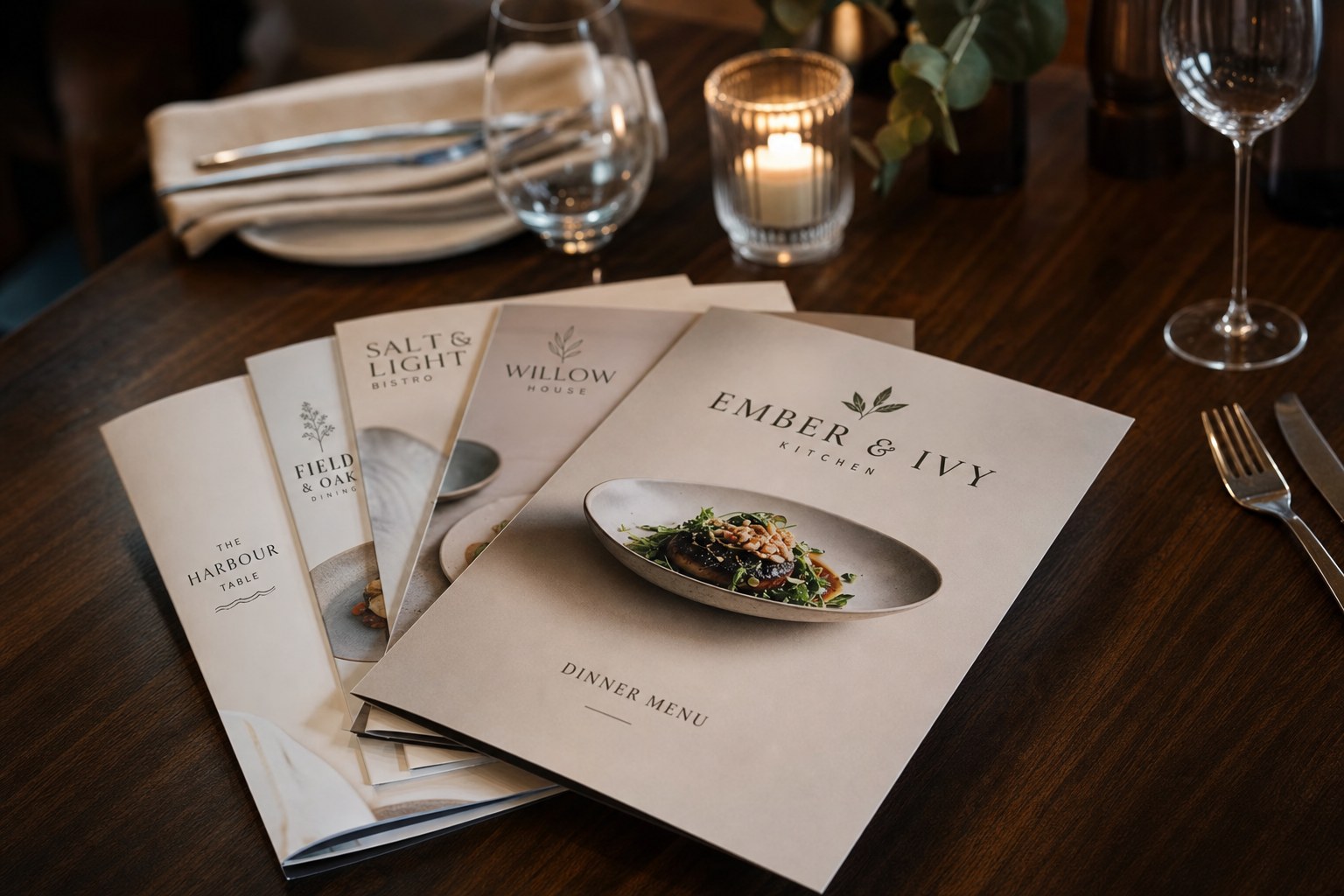
Running a restaurant means your menus take a beating every single service. Greasy fingers, splashed water, hurried staff folding and unfolding dozens of times a night: a menu that looks great on day one can be tatty and limp within a week if it is printed on the wrong stock. This guide covers the paper weights, lamination types, finishes and size formats that work in a real hospitality environment, so you order confidently and get menus that hold up through the seasons.
CHEAT SHEET
- 300gsm matte with lamination is the durability standard for dine-in restaurants; 170gsm silk suits lower-turnover venues or event inserts.
- Gloss lamination is the most wipe-clean, water-resistant option; matte lamination gives a premium tactile feel but shows fingerprints more readily.
- A4 is the most common dine-in format; DL suits drinks lists and specials cards; A5 works well for compact tables or prix fixe menus.
- Reprint every 3-6 months if you update pricing or specials; laminated menus on stable menus can run 12+ months before they look tired.
Australian restaurants generally choose between two tiers of menu. High-turnover everyday venues want a hard-wearing laminated menu that survives nightly service, while venues positioning at the premium end invest in restaurant menu printing with metallic foil that makes a statement the moment a diner sits down. This guide walks through both, starting with the stock and lamination choices that apply to every menu.
Why Paper Weight and Lamination Are the Two Biggest Decisions
Most restaurants focus on design before they think about substrate, and that is backwards. The paper and finish you choose determine how long the menu survives in daily service, how easy it is to clean, and how it feels when a diner picks it up.
Paper weight is measured in grams per square metre (GSM). A heavier GSM means a thicker, stiffer sheet that resists creasing and holds its form on the table. Lamination adds a thin protective film over the printed surface, giving you a cleanable, moisture-resistant barrier between the ink and whatever your customers put on the table.
For restaurants where menus are handled every cover, these two decisions matter more than font choice or layout. Get them right and you spend less on reprints.
Paper Weights for Menus: 170gsm vs 300gsm
Paperlust’s standard menu printing is available on a range of stocks. The two most common menu weights are:
| Stock | GSM | Finish | Best For |
|---|---|---|---|
| Silk paper | 170gsm | Subtle sheen | Wine lists, event inserts, prix fixe cards, lower-turnover venues |
| Matte paper | 300gsm | Smooth, flat | High-turnover dine-in, shared table menus, venues wanting a premium hand feel |
170gsm silk is a lighter card with a gentle sheen that makes food photography and deep colours look vivid. It is appropriate for menus that do not get handled repeatedly, such as a tasting menu card placed at each setting once per night, a drinks list inserted into a leather holder, or a seasonal insert slotted inside a more permanent bound cover. It is not the right choice for a menu that sits loose on a table and gets picked up by fifty different people over a Friday night service.
300gsm matte is twice the weight and substantially stiffer. It resists dog-earing at corners, holds its shape when carried, and accepts lamination. For most dine-in restaurants with moderate to high turnover, 300gsm matte is the minimum practical weight for a loose-leaf menu. For a plain explanation of the weight numbers and how menu stocks differ, see the paper weight and GSM guide.
Lamination Types: Gloss, Matte and When to Use Each
Lamination is available on the 300gsm matte stock, adding a thin film across both faces of the printed sheet. It is the most practical durability upgrade you can make to a restaurant menu.
| Lamination | Surface | Spill Resistance | Fingerprints | Clean With |
|---|---|---|---|---|
| Gloss | High-shine, reflective | Excellent | Low visibility | Damp cloth, light sanitiser |
| Matte | Flat, tactile, soft-touch | Very good | More visible | Damp cloth, gentle wipe |
Gloss lamination creates a mirror-bright surface that repels water, wine and food oils. Spills bead up rather than soaking in. Under the bright lighting typical of many restaurants, gloss can create reflections that make the menu harder to read, but for venues with softer lighting it is the most practical choice for daily cleaning. A quick wipe with a damp cloth removes most food residue.
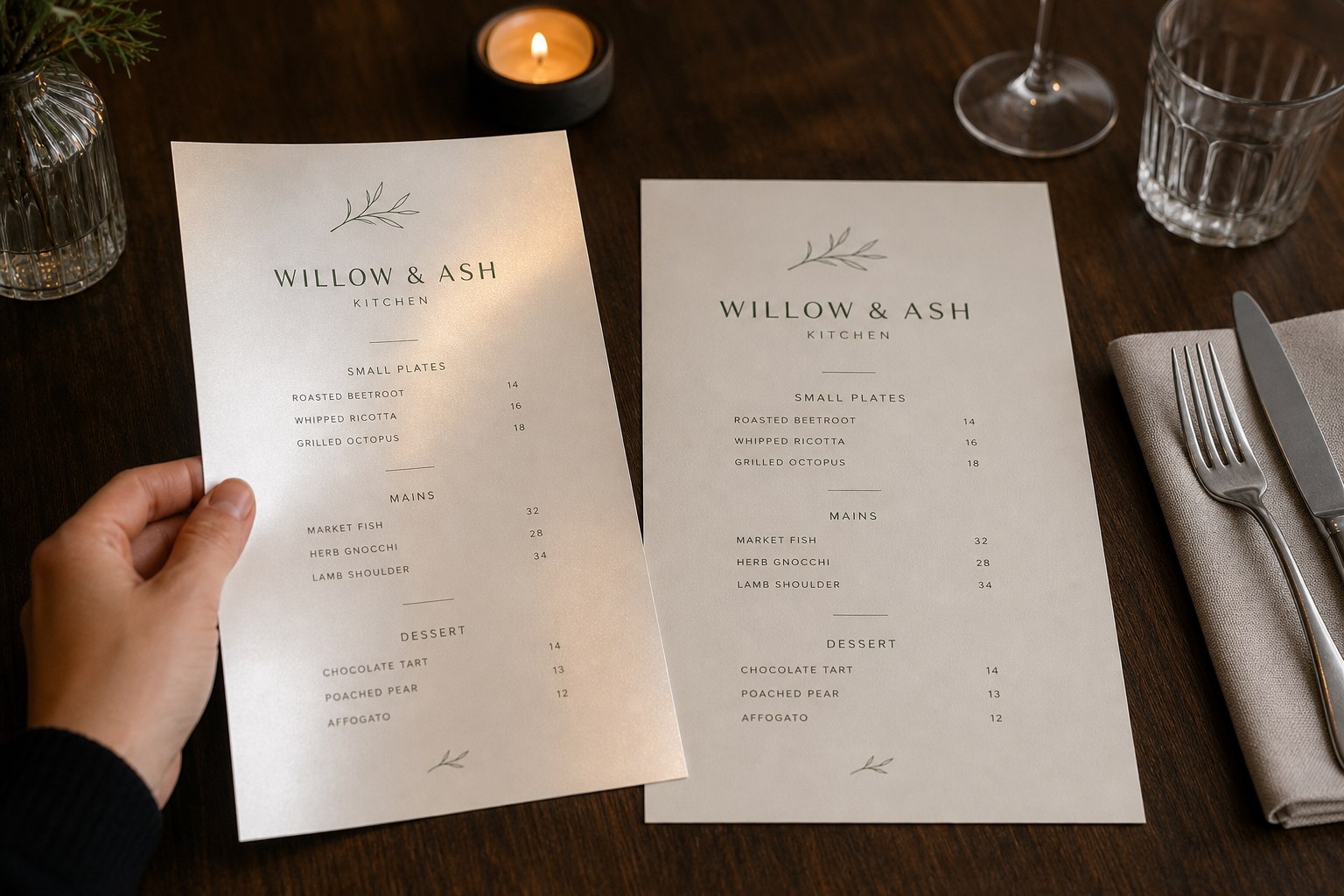
Matte lamination (sometimes called soft-touch lamination) produces a velvety, flat surface that feels premium in the hand. It is popular in fine-dining and contemporary casual settings where a glossy surface would feel too cheap or corporate. Matte lamination is still substantially more spill-resistant than an unlaminated print, but it shows fingerprints and smudges more readily than gloss, particularly on dark-coloured covers. Budget for more frequent cleaning with a matte finish.
Unlaminated 300gsm matte is an option where budget is tight and menu changes are frequent; the heavier stock alone provides decent short-term durability. If you update your menu every 4-6 weeks, the per-reprint cost of an unlaminated run can make more sense than paying for lamination on a menu that is about to change.
Standard Menu Sizes: Which Format Works in Your Venue
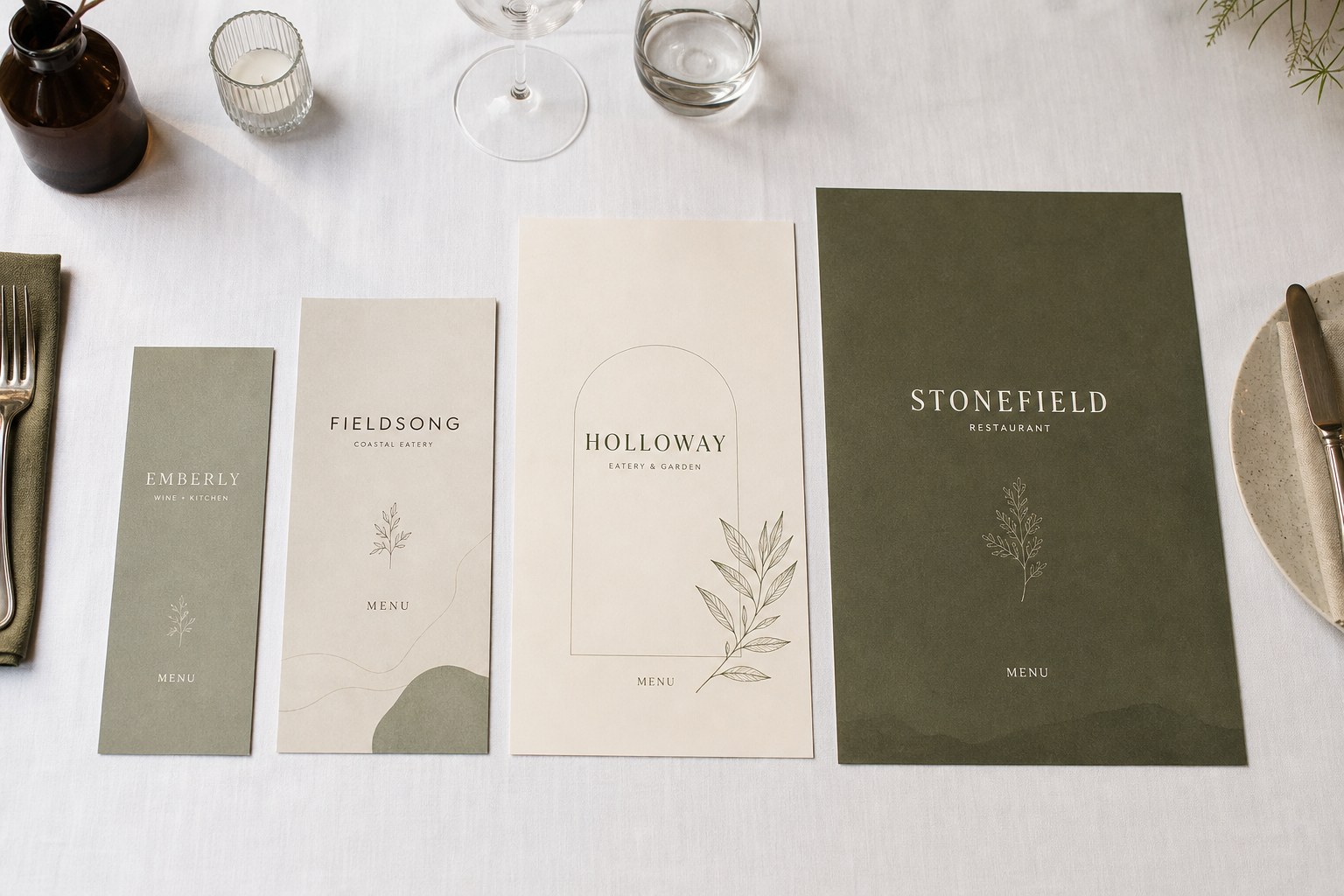
Paperlust prints menus in four sizes. Each has a natural use case.
| Size | Dimensions | Typical Use |
|---|---|---|
| DL | 99 x 210mm | Drinks lists, cocktail menus, specials cards |
| A5 | 148 x 210mm | Compact table menus, prix fixe, cafe-style venues |
| A4 | 210 x 297mm | Full dine-in menus, the industry standard |
| A3 | 297 x 420mm | Shared table menus, pub food boards, large-format display |
A4 is where the majority of Australian restaurants land. It fits standard menu holders, is easy for designers to lay out, and is familiar to diners. If in doubt, start here.
DL is narrow and tall, matching the dimensions of a standard envelope. It works well as a drinks or cocktail list placed alongside a larger food menu, or as a specials insert slipped into a holder. The format encourages concise copy and feels considered rather than cramped.
A5 prints at exactly half an A4 sheet, which makes it economical to produce and easy to handle at small tables. Cafes, brunch venues and quick-service restaurants often find A5 the sweet spot between legibility and table footprint; standard laminated menus in this size stand up well to constant daily handling.
A3 is a less common choice for individual menus but makes an impression at communal tables, beer gardens or venues where a large shared menu is placed between a group. Consider the lamination upgrade on A3 even more strongly, as the larger surface area makes it harder to handle without creasing.
Menus are supplied as flat sheets. Folded configurations are available with pre-scored fold lines for venues that prefer a bi-fold or tri-fold format, halving or thirding the effective panel size.
How Long Do Restaurant Menus Last? Reprint Cadence by Venue Type
There is no universal answer, but these benchmarks reflect common practice in the Australian hospitality industry:
High-turnover casual dining and pubs
- Unlaminated: 4-8 weeks before visible wear (corner damage, surface scuffs)
- Gloss laminated: 3-6 months, cleaned nightly
- Reprint trigger: Pricing change, seasonal menu update, or visible wear
Fine dining and contemporary casual
- Matte laminated: 6-12 months on a stable menu
- Reprint trigger: Menu overhaul, rebrand, or lamination lifting at edges
Seasonal and event-based
- Unlaminated lighter stock: Single-use or short-run per event (this is where 170gsm silk makes sense economically)
- Reprint trigger: Each new event or season
Planning reprints in advance rather than rushing them reduces per-unit cost. Ordering a larger quantity at a single time lowers cost per menu, and having a stock of menus in reserve means a busy weekend service is never caught short when a batch gets damaged.
For venues offering premium finishes, the foil menus and white ink menus ranges extend the same hospitality-grade quality to metallic and dark-stock formats.
File Setup for Menu Printing
Getting your file right prevents costly delays or a reprint.
Recommended file specifications
- Format: PDF (press-ready), CMYK colour mode
- Resolution: 300dpi minimum for all images and raster elements
- Bleed: 3mm on all edges beyond your final trim size
- Safe zone: Keep all critical text and logos at least 5mm from the final trim edge
- Fonts: Embed all fonts or convert to outlines before exporting
Photographs of food look best when edited in CMYK rather than RGB, since the conversion at print time can shift warm tones toward dull oranges or muddy browns. If your designer is working in Adobe InDesign or Illustrator, export directly to PDF/X-1a or PDF/X-4 for the cleanest result.
Avoid placing white text or fine lines near the edge of the design, as slight variations in trim position can clip detail. A 5mm safe zone on all sides is conservative enough to cover standard print tolerances.
Premium Menu Finishes for Fine Dining
If your venue positions at the premium end of the market, a standard laminated print may not match the room. Three specialist finishes extend further:
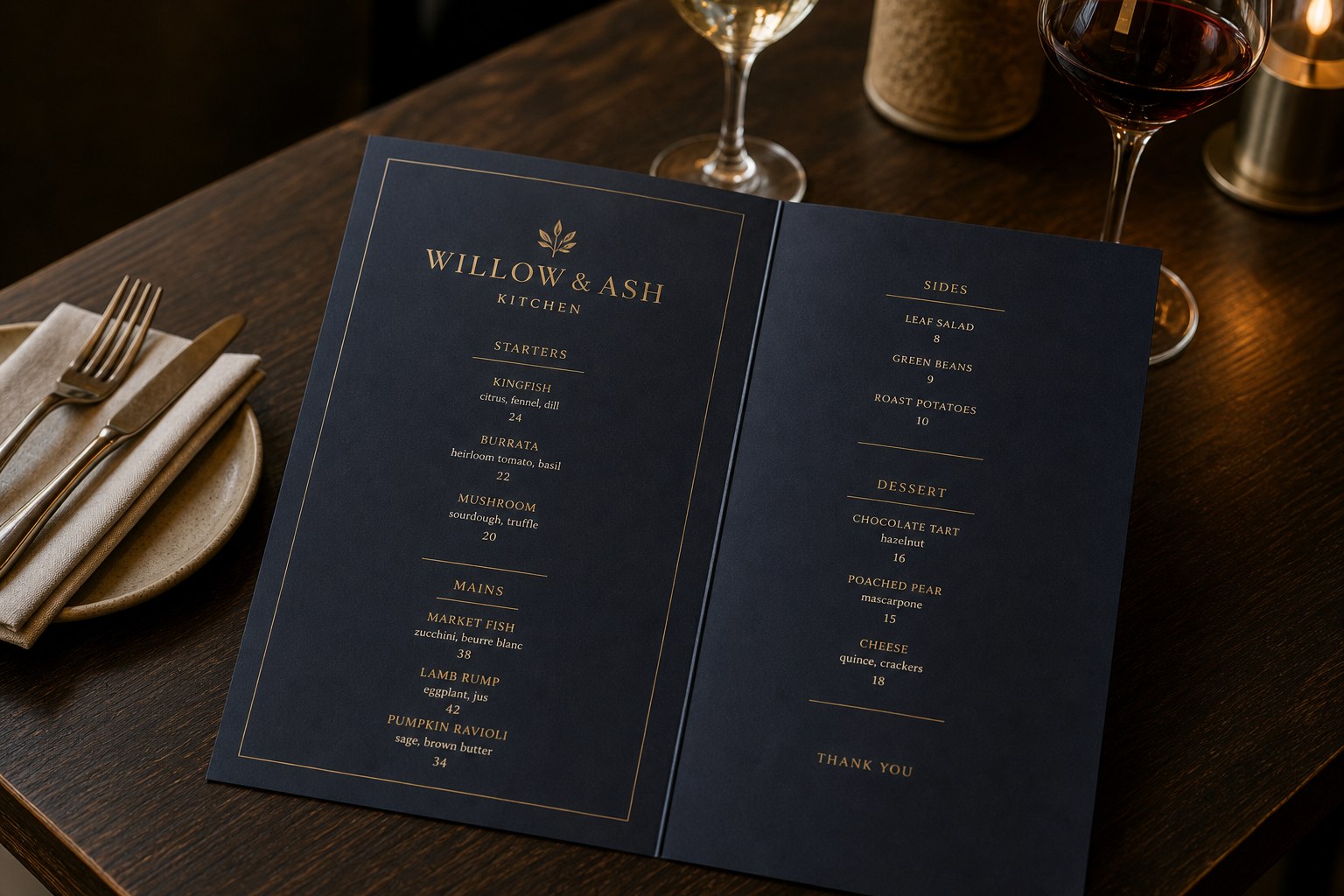
Foil menus add a metallic foil element (gold, silver, rose gold and a range of specialty foils) to your menu cover or headings. The contrast between a tactile matte laminated card and a sharp metallic foil is a genuine point of difference at the table. Our foil menu printing range carries the full palette and pairs it with the same hospitality-grade stocks covered above.
White ink menus print in white ink on dark card stocks, reversing the usual relationship between paper and text. A navy, black or charcoal menu with white typography and a food photograph creates immediate visual impact and signals a kitchen that takes its presentation seriously.
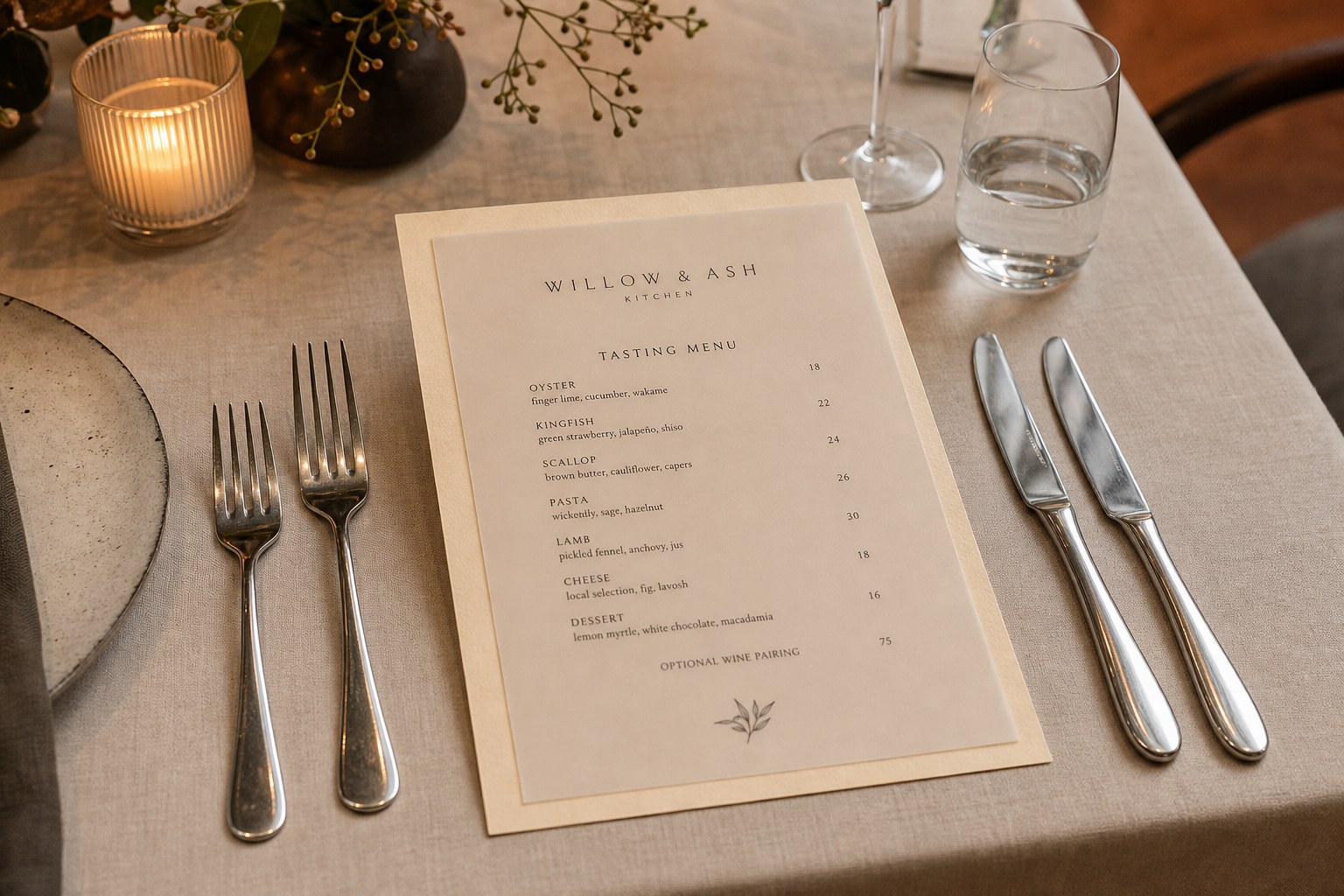
Vellum menus swap solid card for a smooth, semi-translucent sheet that light passes through. Printed with fine typography, vellum reads as soft and editorial, and it photographs beautifully under candlelight. It is a favourite for fine-dining tasting menus, degustation cards and wedding reception menus, where each guest receives a single considered menu rather than a shared sheet handled all night.
There are two common ways to use it. A vellum overlay is a translucent printed sheet laid over a backing card, so a colour, texture or food image on the base shows softly through the sheet above. A standalone vellum menu is a single translucent sheet, usually bound to a backing card with a ribbon, brad or wax seal for weight and legibility. Because ink sits on the surface of a non-porous sheet rather than soaking in, vellum pairs best with foil or a printed backing and is not a wipe-clean, high-turnover stock. Treat it as a special-occasion finish for a degustation or a plated wedding dinner, not the everyday menu for a busy bistro.
Vellum and other translucent stocks sit outside the standard menu range and are produced as a specialty order. If you want a vellum overlay or a translucent tasting-menu card, start from the foil menu printing range for the premium base and finish, then contact our team via live chat or email so we can quote the vellum component to your size and format.
Frequently Asked Questions
Q: Can I get menus printed quickly for an upcoming opening?
Paperlust prints most menu orders within 24-48 hours of proof approval. Metro Australian delivery runs 1-2 business days express or 2-5 business days standard; regional areas are 3-6 business days. If you have a firm opening date, order with enough lead time for production plus delivery, and factor in one round of proof review before printing begins.
Q: Is lamination available on all paper stocks?
The lamination upgrade is available on 300gsm matte stock. The 170gsm silk option does not carry a lamination upgrade. If spill resistance and wipe-clean durability are priorities, order on 300gsm matte and select the laminate at checkout.
Q: How many menus should I order for a 60-seat restaurant?
A common rule of thumb is 1.5 to 2 menus per seat for a restaurant with single sittings, accounting for menus that are in use, menus in reserve, and a buffer for damage. For a 60-seat venue, ordering 100-120 menus gives a working buffer without over-committing budget. If you run multiple sittings per night, factor in that menus may not need replacement between turns, only cleaning.
Q: What is the difference between gloss and matte lamination for menus?
Gloss lamination produces a high-shine, reflective surface that repels moisture and is easiest to wipe clean. Matte lamination produces a flat, soft-touch surface that feels more premium in hand but shows fingerprints more readily. Both offer strong protection against everyday spills and handling. The choice typically comes down to the aesthetic your venue is going for: gloss for casual dining and bright environments, matte for fine dining and darker settings.
Q: Do you print folded menus?
Folded menu formats are available with pre-scored fold lines supplied for on-site assembly. Common fold configurations include bi-fold (A4 to A5) and tri-fold. The score lines are accurate and fold cleanly; laminated folds require slightly more pressure than unlaminated stock.
Q: What should I do if I have a menu that changes frequently?
For venues that update pricing, specials or seasonal items regularly, unlaminated 300gsm matte may be the more economical choice, since the shorter lifespan aligns with your reprint cycle. Short print runs let you update content without writing off large stocks of outdated menus. Alternatively, consider a two-part approach: a laminated cover card with your permanent branding, paired with a short-run insert for weekly specials printed on 170gsm silk.
Q: Can I get vellum or translucent menus printed?
Vellum and translucent stocks sit outside the standard menu range and are produced as a specialty order. Vellum suits fine-dining tasting menus, degustation cards and wedding reception menus, used either as a translucent overlay over a printed backing card or as a single bound sheet. Because it is not a wipe-clean, high-turnover stock, it is best kept for special-occasion service rather than daily use. Start from the foil menu range for the premium base, then contact our team via live chat or email to quote the vellum component to your size and format.