The picture is leaning against the skirting board, the tape measure has been out and back three times, and the pencil is still behind your ear. Working out how high to hang pictures is the step where a new print stops being a purchase and turns into a hole in the wall, which is why the job keeps sliding to next weekend.
Treat the numbers below as common guides rather than rules, then adjust for your room and the way you use it. You will find the standing eye level figure, the gap that ties art to a sofa, bed or sideboard, how to size a piece for the wall, the ways to hang without nails, the hardware each format needs, and the measuring step that puts the hook in the right place.
The short version
- Centre the frame at about 145 to 150 cm from the floor, then check it against your own eye line.
- Leave 15 to 25 cm of clear wall above a sofa back, bed head or sideboard.
- Span roughly two thirds of the furniture’s width, alone or as a pair.
- No drill? Picture hanging strips, a picture rail or a leaning frame all work, within the load each fixing is rated to carry.
- Framed pieces arrive ready to hang; canvas has no hanging hardware in the box, so you choose a fixing to suit the wall.
- Measure from the frame’s upper edge to its hanging point, not up from the floor.
Start at eye level, around 145 to 150 cm
A common guide puts the centre of the picture 145 to 150 cm above the floor, close to where a standing adult’s eyes sit. What gets measured is the middle of the frame, not its upper edge, and the difference shows the moment you own more than one size. A top edge rule would push an A4 print up near the cornice and drag a 70 x 100 cm canvas down towards the couch. Working to the centre keeps both on one line.
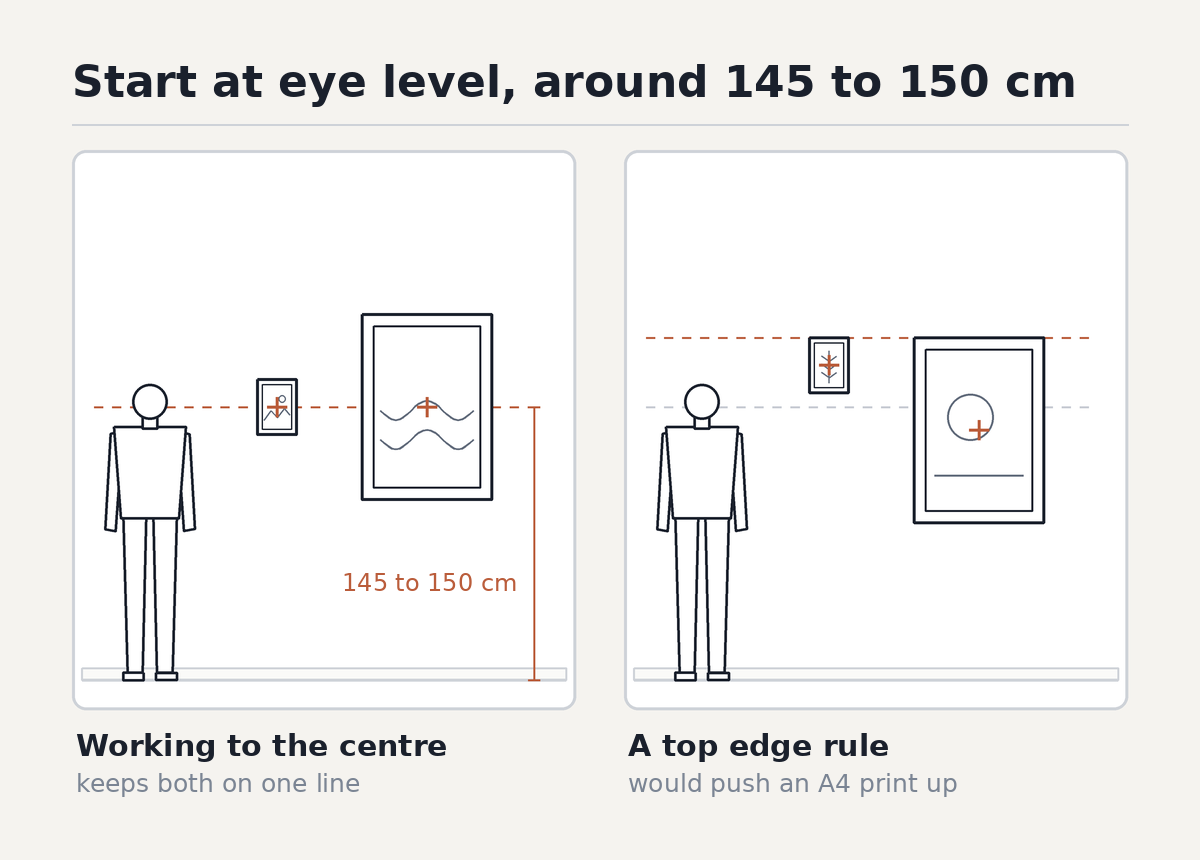
Take the number as a guide rather than a law. Where a room is mostly used from a chair, as in a dining space or a lounge with low seating, art can drop a little so it reads properly from there. A few centimetres either side changes nothing. What does look wrong is a piece placed without reference to the room around it.
Spacing art above a sofa, a bed or a sideboard
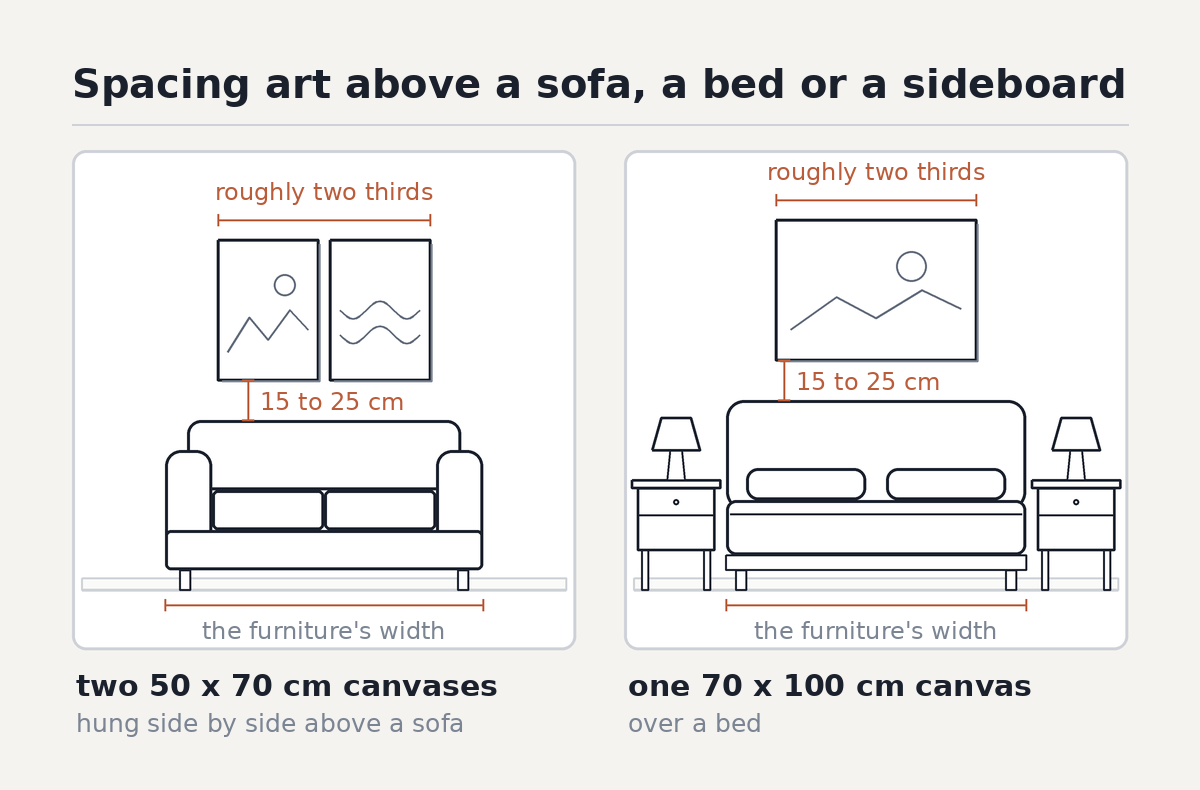
The second figure worth knowing is the gap. Leave about 15 to 25 cm of bare wall between the furniture’s upper edge and the frame’s lower edge, and the picture reads as part of the seating or the bed rather than something drifting towards the ceiling. Tighter than that and the arrangement feels pinched. Much wider and the art loses its anchor.
Width matters as much as height. Aim for a piece, or a pair, spanning roughly two thirds of the width of whatever sits below, whether that is a three seater or a bed. Our canvas wall art room photos show both arrangements working: two 50 x 70 cm canvases hung side by side above a sofa, and one 70 x 100 cm canvas over a bed, where a single large piece carries the wall alone.
How big to go for the wall you have
Size decides whether a wall comes together or swallows the picture. Art prints and framed prints run from A4 (21 x 29.7 cm) through A3, 30 x 40 cm, A2, 50 x 70 cm, A1, 60 x 90 cm and up to 70 x 100 cm. Canvas leaves out A2 and A1 and adds 40 x 50 cm, so its ladder reads A4, A3, 30 x 40 cm, 40 x 50 cm, 50 x 70 cm, 60 x 90 cm and 70 x 100 cm. A landscape picture turns the same figure on its side, swapping width for height.
A small piece alone on a wide wall tends to look lost, and careful centring will not rescue it. Go up a size or two, or group several smaller pieces so the arrangement reads as one shape. Each artwork page lists only the sizes its picture can fill after a slight trim, so the wall art range narrows once you have chosen a picture, and the preview shows the crop that prints. For the stretched formats, a separate guide to what size canvas suits a sofa, a bed or a hallway takes the canvas question further.
- A shelf, desk or picture ledge: A4 or A3, framed or leaning, set at about eye level when you stand at the desk.
- A hallway: a row of A3 or 30 x 40 cm frames along one line, or a single 50 x 70 cm print where the wall is too narrow for a row.
- Above a bed or a sofa: 50 x 70 cm, 60 x 90 cm or 70 x 100 cm, alone or in a pair.
- A long empty wall: 70 x 100 cm, or a group of smaller pieces covering a similar span.
None of these is a formula. The wall usually tells you when you have it right: the art should look tied to the furniture below it rather than to the ceiling above it.
How to hang pictures without nails
Some walls should not be drilled: a rental, a surface you would rather not touch, a spot where the frame may move before the year is out. Four options keep the drill in the cupboard.
- Adhesive picture hanging strips. The packet carries a rating, so check it against how heavy your frame is and read the guidance on which surfaces the strip suits.
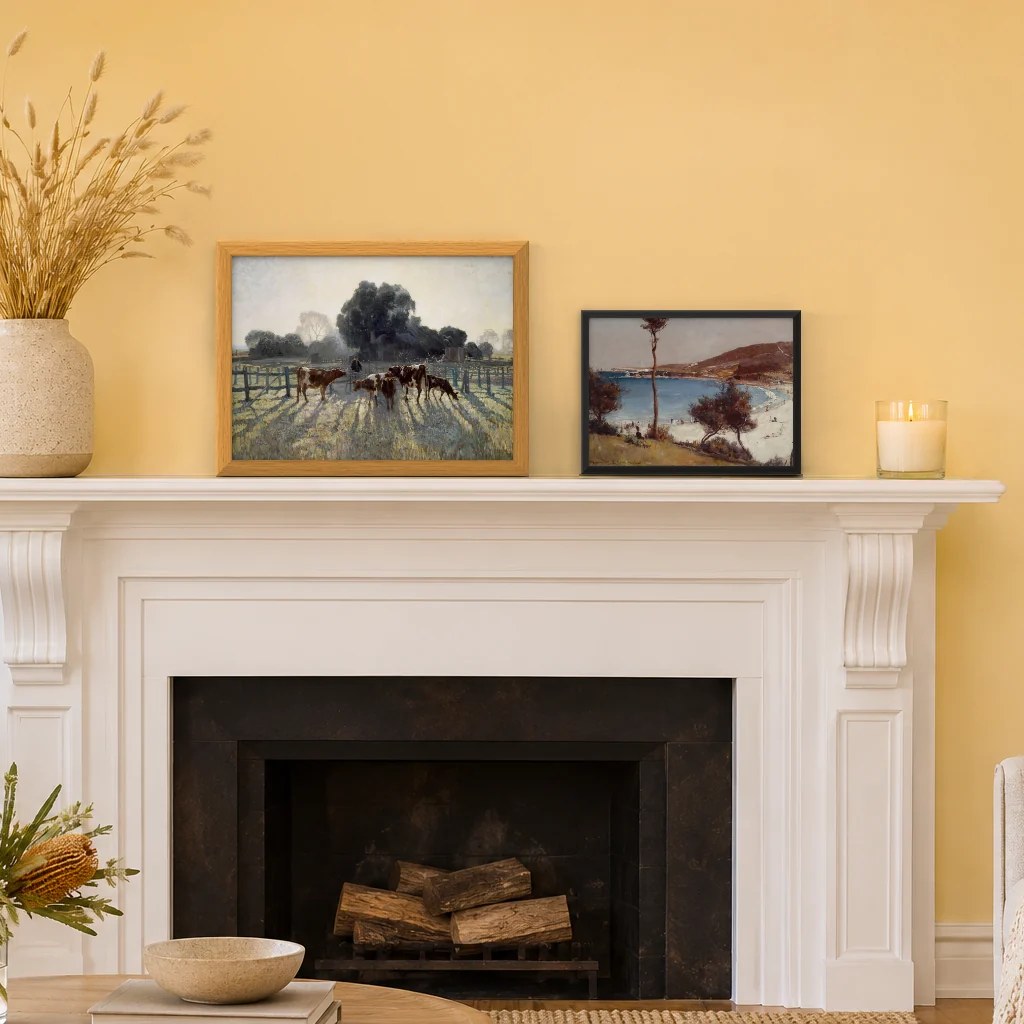
- A lean. An A4 and an A3 together, no mount, propped on a mantel, a shelf or a sideboard. Nothing goes into the wall and the piece reads as part of the room.
- A picture rail, if one is already fitted to the wall. Hooks and cord take the frame without a single fixing in the plaster.
- A rental. Read your lease first, or put the question to the property manager before anything goes into the wall.
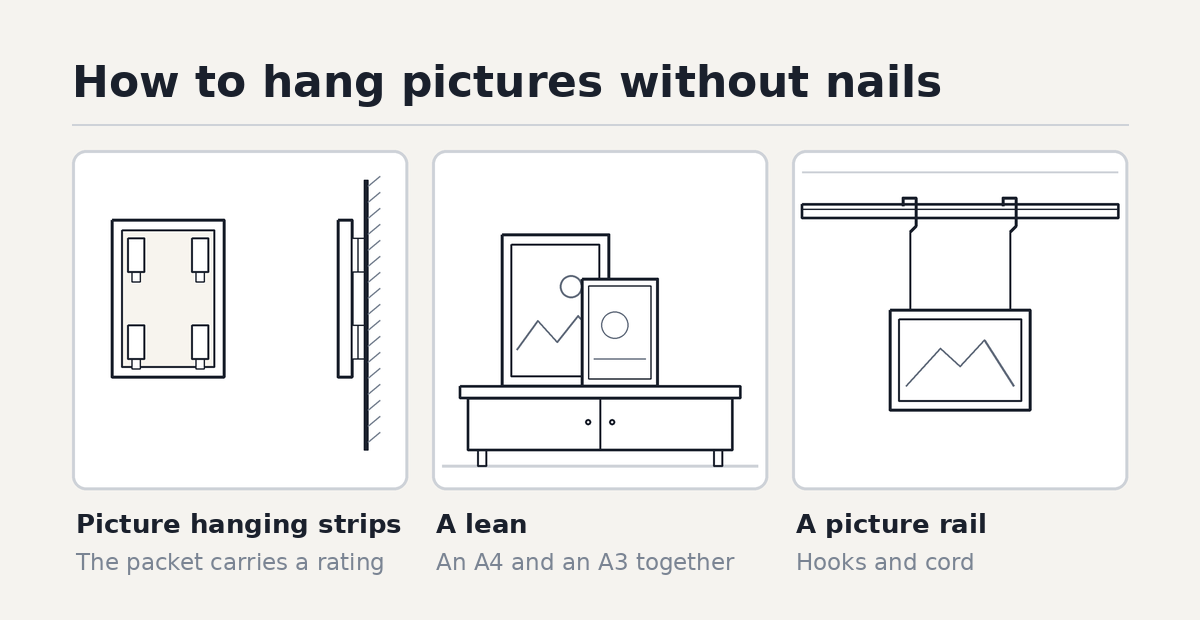
Whichever route you choose, the fixing still has to be rated for the load it carries, and that number sits on the packet rather than in the picture.
What hardware each format needs
Framed prints in our framed wall art range come ready to hang, so unpacking is the last step before the frame goes up. The front is perspex, not glass, which makes a large piece lighter to lift into position and means there is no sheet of glass inside the parcel. A soft, damp cloth is all it takes to clean.
Canvas works differently. No hardware for hanging comes in the box, so you buy a fixing that suits your wall, the size you have chosen and the weight of the piece. Plasterboard will carry a light picture on a hook, while anything heavier wants a fixing rated for the load. Brick and masonry call for a drill, a wall plug and a second pair of hands.
Finding the hook point without guessing
- Decide the centre height for the piece, whether that is the common guide or a figure of your own.
- Halve the height of the frame and add it to the centre height, which gives you the level where the upper edge will sit.
- Turn the frame over and measure from its upper edge down to the hanging point on the back, a wire pulled taut or whatever fitting the frame hangs from.
- Take that distance off the upper edge level, and you have the mark for the wall.
- Pencil it in, then hold the frame against the wall to check before you commit.
- Fix the hook, strip or plug on that mark.
- Hang the piece, check it with a spirit level and adjust.
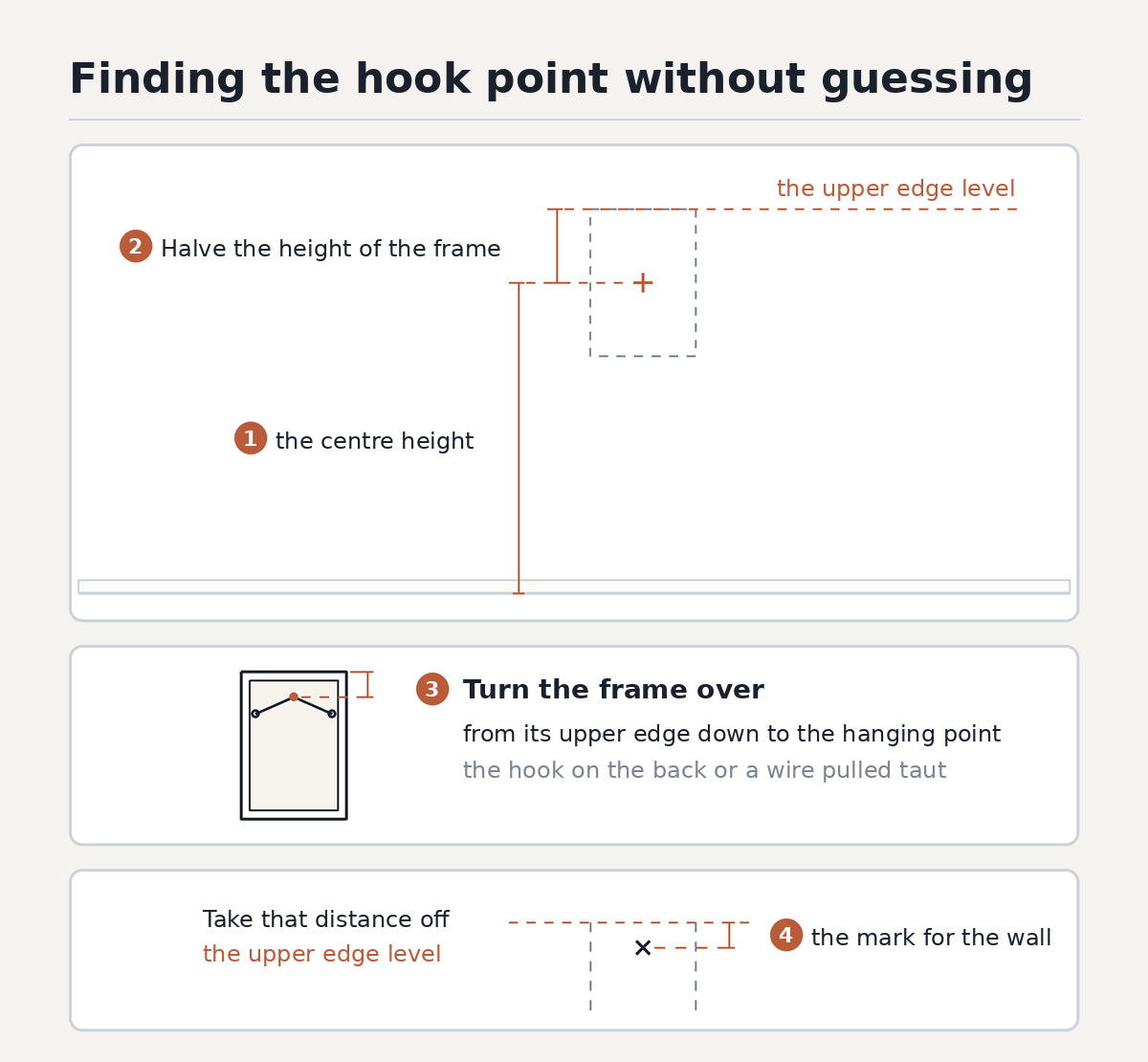
That drop from a frame’s upper edge to its hanging point changes with every piece you own, which is why guessing costs a second hole. Write the figure on the back in pencil and the next rearrangement takes half the time.
Frequently asked questions
What height should pictures hang at?
A common guide places the middle of a picture at 145 to 150 cm from the floor, close to the eye height of an adult standing in front of it. Work to the centre rather than the upper edge, so a small piece and a large one sit on one line. Treat it as a guide: a dining space or a lounge used from armchairs can take art a little lower.
How far above a sofa should a picture hang?
Aim for about 15 to 25 cm of clear wall between the sofa back and the frame’s lower edge, which keeps the art tied to the furniture instead of floating away from it. For width, look for something spanning around two thirds of the sofa. Two 50 x 70 cm canvases side by side is the arrangement in our room photos, and a 70 x 100 cm canvas covers a similar span alone.
Can picture hanging strips hold a framed print?
Only when the packet’s rating covers how heavy the piece is, so read it before you buy and follow the instructions on which surfaces the strip suits. A framed print has one thing in its favour here: the perspex front keeps it lighter than glass would in the same frame. Beyond that rating, or on a surface the packet rules out, use a hook or a wall plug.
Does a canvas come with hanging hardware?
No. Nothing for hanging comes fitted to the back of the canvas, and nothing in the parcel will fix it to the wall, so the hook, strip or plug is a separate purchase. Choose one made for your wall surface and able to carry how heavy the piece is. A float frame in oak look, black or white is optional if you want a surround on the stretched canvas.
How big should art be over a bed?
One 70 x 100 cm canvas is the arrangement in our room photos for a bed, and a single piece at that size carries the wall on its own. As a working guide, aim for art spanning about two thirds of the bed’s width. Each artwork page lists a size only where the picture can fill it, so check before you order.
How do I hang pictures while renting?
Start with your lease, or ask the property manager, before anything goes into the wall. If the answer is no, adhesive picture hanging strips that can carry the load, a picture rail, if the place came with one fitted, or a frame leaning on a mantel or shelf all avoid the drill. Where you can fix to the wall, a hook with a suitable rating will hold a framed print.