The Accounting and Professional Services Print Kit: Cards, Capability Docs and Folders
When a prospective client sits across the table from you, your print collateral does a lot of the talking before you open your mouth. In professional services, where trust is the product, a polished printed piece signals the same care you bring to a client’s affairs. This guide covers every print item an accounting firm, bookkeeping practice, financial advisory, or consulting business needs, organised by the touchpoint where it works hardest.
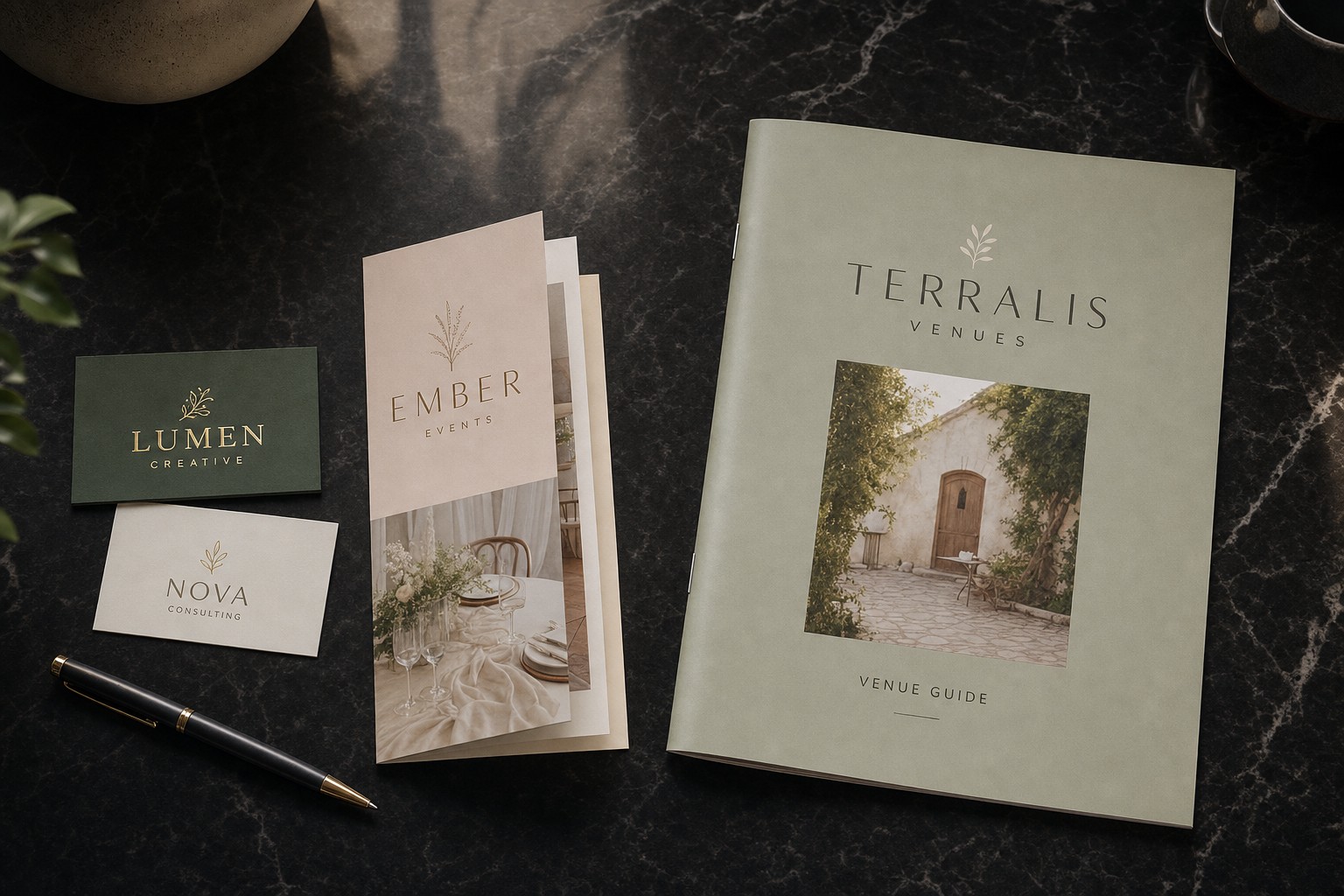
– Business cards remain non-negotiable: a 90 x 55 mm card on 350-400gsm stock in matte or Spot UV is the professional services standard.
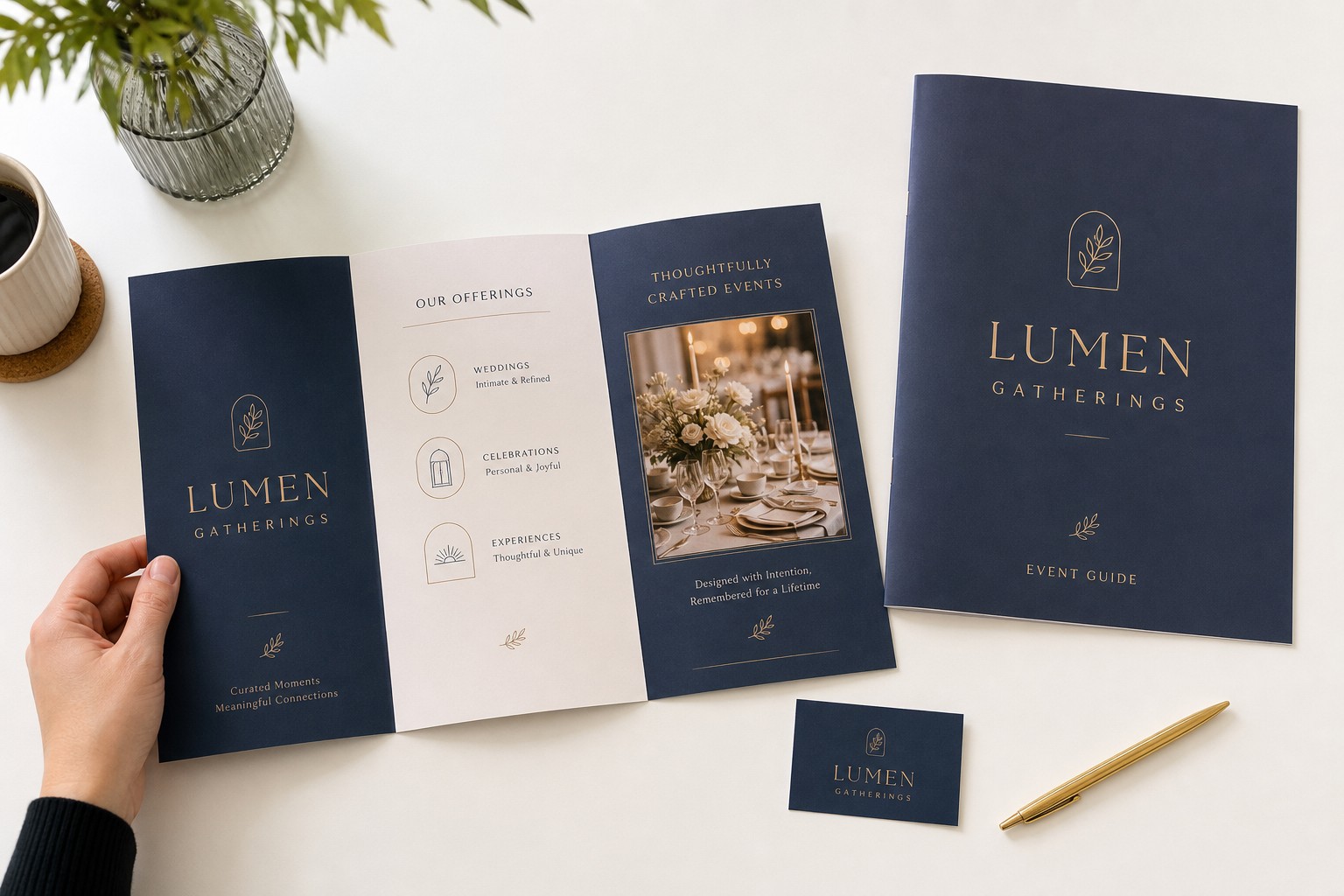
– A4 saddle-stapled booklets (from $17.71) function as a capability statement or services guide to leave after a client meeting.
– DL trifold brochures (from $1.01 per unit) summarise individual service lines and work well in waiting rooms and referral partner offices.
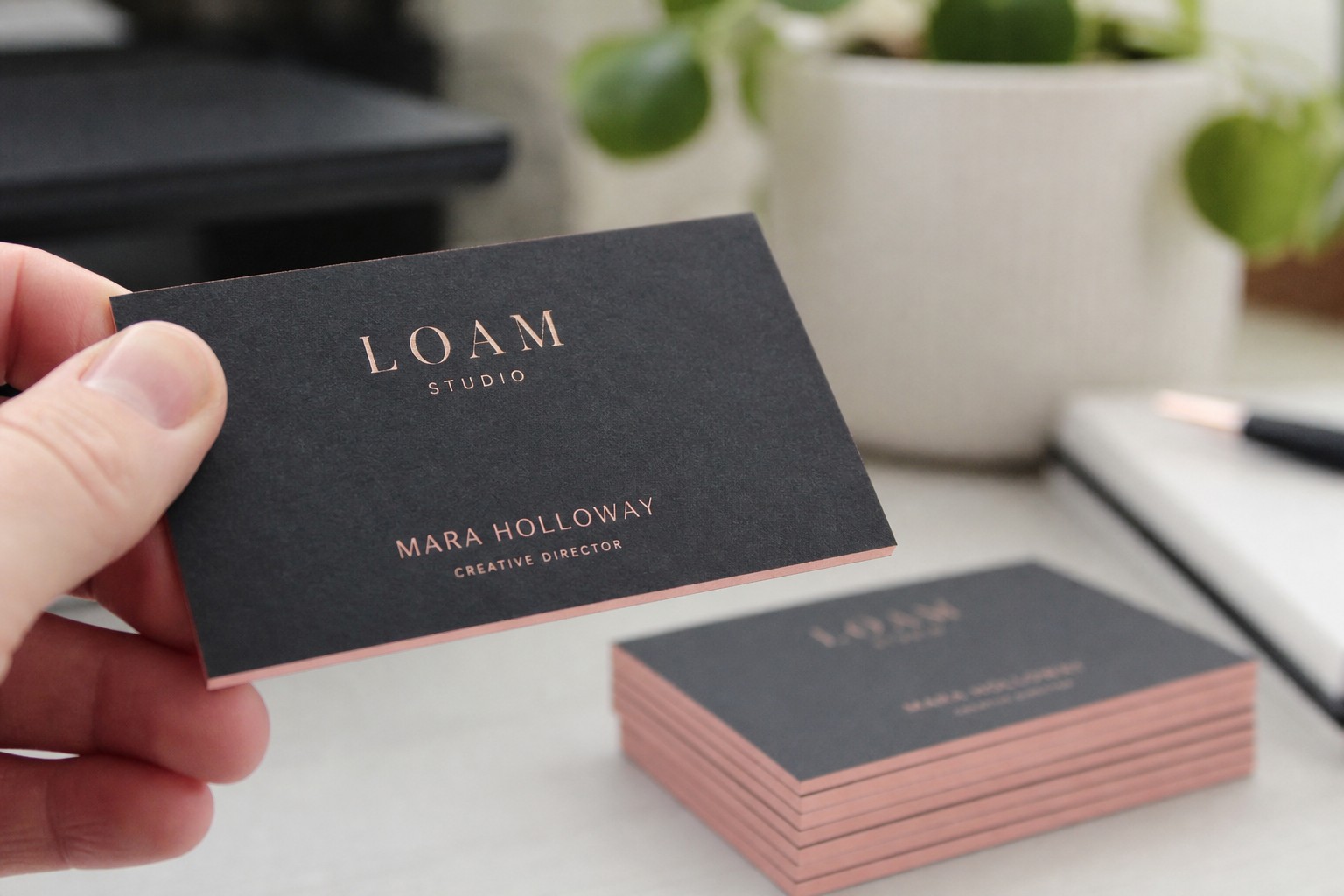
– Match your card finish to your market position: standard matte for approachable practices; Spot UV, Duplex, or Raised Foil for premium or specialist firms.
– 24-hour production is available on standard business cards; flat-rate shipping applies Australia-wide across the full range.
– Consolidating your card, brochure, and booklet into a single order ensures visual consistency across the suite.
Why Print Still Wins the Trust Game in Professional Services
Digital channels dominate awareness but they are rarely what closes a retainer. A referral from a mortgage broker, a handover at a networking breakfast, a name passed along at a professional association event, these moments require something physical to land. A card, a brochure, a booklet: each extends the conversation past the appointment and into the client’s hands.
The economics work differently than most firms expect. A run of 250 business cards on 400gsm cotton stock with a premium finish costs less than one billable hour, yet the card sits in a client’s wallet for months. A capability booklet left on a boardroom table after a new-client meeting becomes a reference point during their decision-making process.
Print also travels referral networks in ways digital assets cannot. A rack of DL brochures at a financial planner’s reception or a mortgage broker’s waiting room is a distribution channel that posts and profiles cannot replicate.
The Five-Piece Print Kit, by Touchpoint
Touch 1: First Impressions, the Business Card
A business card is the most-carried piece of collateral in professional services. The standard 90 x 55 mm format fits every cardholder and wallet; departures such as square (55 x 55 mm) or slim (90 x 40 mm) can work for creative-leaning consultants but tend to read as unconventional in accounting and financial advisory contexts.
The custom business cards range covers seven finishes: standard matte through to Spot UV, Flat Foil, Raised Foil, Scodix, Duplex, and Coloured Paper. All are available on 350-400gsm card stock, with standard and Flat Foil cards available for 24-hour production.
What to include: your name, credentials (CPA, CA, BAS Agent, CFP, or equivalent), direct mobile, professional domain email, and a QR code linking to your booking page or client portal. Drop the fax number, the full postal address, and any tagline longer than five words. Every element you add to a 90 x 55 mm face reduces legibility.
Touch 2: Client Meetings, Brochures and DL Inserts
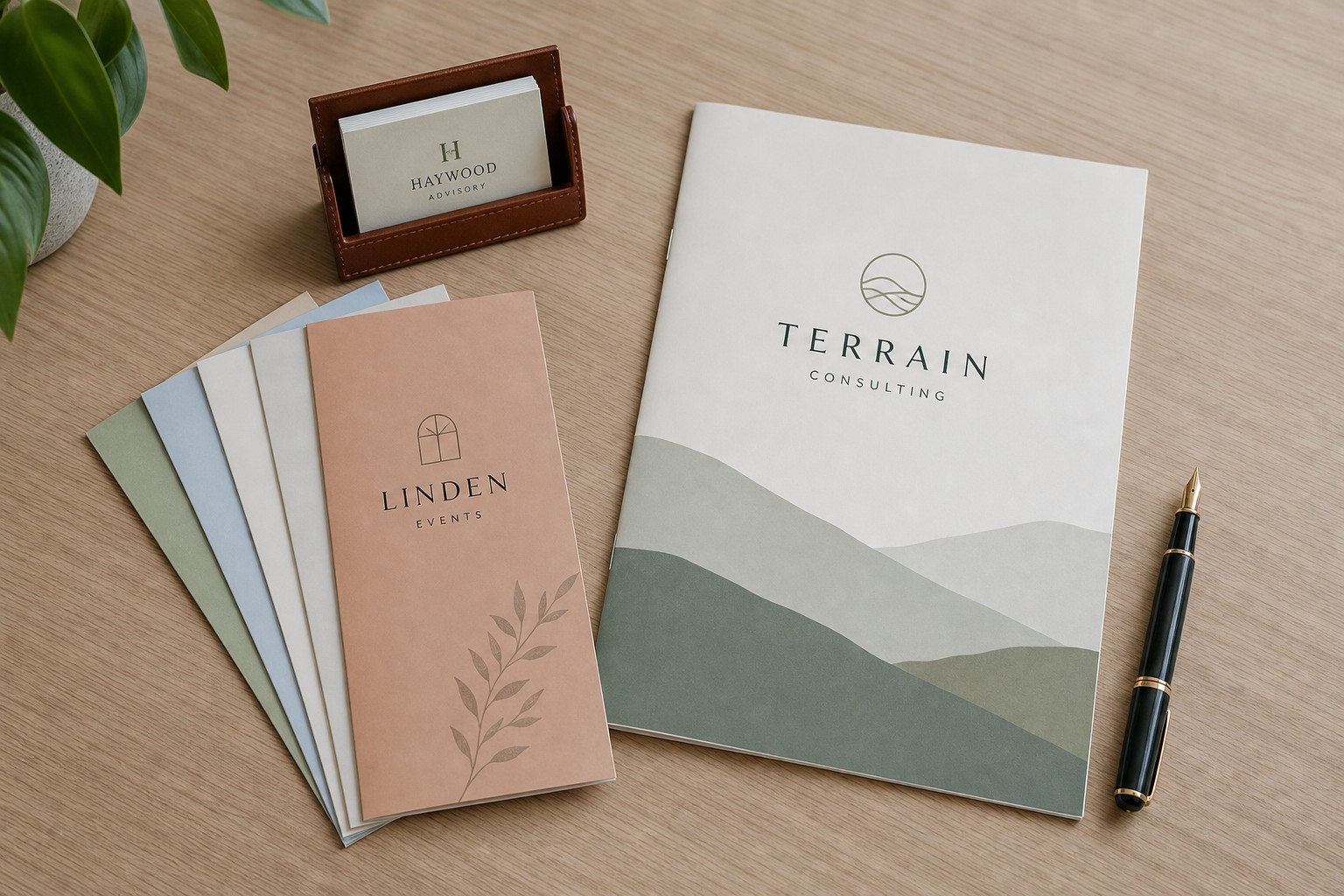
A DL trifold (A4 folded to a 99 x 210 mm panel) is the workhorse brochure format for professional services. It sits in a rack, drops into a proposal envelope, and folds flat in a jacket pocket. The brochures range includes DL Roll Trifold and DL Z-Trifold formats on stocks from 115gsm gloss through to 250gsm gloss and 170gsm matte, with production running 2-5 working days after proof approval.
One brochure per service line works better than a single catch-all piece. An accounting firm might produce three: tax and compliance, business advisory, and SMSF. A consultant might produce one per industry vertical. Each brochure then becomes genuinely useful collateral rather than a generic sheet that attempts to cover everything and persuades nothing.
Touch 3: Proposals and Pitch Meetings, the Capability Booklet
A printed capability statement is the piece most professional services firms do not yet have, and its absence is noticeable to a prospective client who has met with three firms that week.
A4 booklets (210 x 297 mm) start from $17.71 and come in page counts of 8, 24, 32, 48, and 64 pages on 250gsm cover stock with a matte or gloss laminate. Saddle-staple binding opens the booklet completely flat on a boardroom table, which matters when you are walking a client through a page together. Production runs 3-7 working days after proof approval.
Typical sections in a professional services capability booklet: firm overview and founding story; services summary (one page per pillar); team profiles with credentials; onboarding and reporting process; client outcome examples in general terms; and a next-steps contact page. A 16 to 24-page count is sufficient for most practices.
Touch 4: Ongoing Touchpoints, Appointment Cards and Follow-Up Notes
Appointment reminder cards (printed at business card dimensions or in a slim DL format) reduce no-shows and keep your branding in a client’s eyeline between meetings. Standard business cards start from $0.44 per card at 100 cards, or $27.20 inc. GST for 50 cards ($0.54 per card), with a minimum run of 50. The 24-hour production option means you can reorder a fresh batch of appointment cards quickly during peak tax season without disrupting your other print stock.
A branded note card slipped into a posted document or a client welcome pack adds a considered, personal touch that a follow-up email cannot replicate. The same stock and spec as your business card keeps the suite cohesive without requiring a separate print run.
Matching Card Finish to Firm Positioning
| Firm profile | Recommended finish | Why it reads right |
|---|---|---|
| Sole trader bookkeeper or BAS agent | Standard matte, 350gsm | Clean and professional; easy to reorder as credentials change |
| Multi-partner accounting practice | Spot UV on matte 400gsm | Selective gloss on logo or name adds visual hierarchy without excess |
| Financial adviser or wealth manager | Raised Foil or Duplex with coloured edge | Tactile weight and colour-core stock signal the premium segment |
| Management consultant or strategy firm | Spot UV or Scodix on 400gsm | Dimensional texture on a dark-ground card reads as confident and deliberate |
| Legal or IP firm | Flat Foil on cotton stock | Mirror-bright foil on a monogram or logo is timeless rather than trend-led |
Note that Spot UV, Raised Foil, Scodix, and Duplex cards require longer production runs than standard matte. Factor this into your timeline if a conference, client-intake event, or industry awards night is approaching.
Ordering as a Sole Trader vs a Multi-Partner Practice
For a sole trader or small practice, a practical first kit is: 250 business cards, a run of 500 DL trifold brochures across one or two service lines, and 50 copies of a capability booklet for priority prospective clients. Flat-rate shipping Australia-wide makes a consolidated order straightforward.
For a multi-partner firm, the variables multiply. Each partner typically needs a separate card run since credentials, practice-area focus, and direct contact details differ. Service-line brochures may require version control across teams. Capability booklets may come in a general version and a sector-specific edition. Ordering by team rather than by individual keeps per-unit costs down at volume.
The Paperlust Print Shop design team can assist with file preparation across a full collateral suite, particularly useful when you are rolling out a rebrand or coordinating print for a new team intake.
Related Reading
If your priority right now is the business card specifically, see our guides to business cards for accountants and bookkeepers and consultant business cards for finish-by-niche breakdowns and content guidance.
Frequently Asked Questions
What business card size do accounting firms use in Australia?
The standard is 90 x 55 mm landscape. This format fits every cardholder, business card wallet, and desktop scanner. Square (55 x 55 mm) or slim (90 x 40 mm) cards are options but are less conventional in accounting and financial services, where conforming to the client’s expectations is generally the safer signal.
How many business cards should an accounting or advisory firm order?
Most sole traders and small practices order between 250 and 500 cards per run. A multi-partner firm should order by individual rather than per firm, since credentials, direct numbers, and practice-area focus differ across partners. Placing a supply of cards at referral partner locations such as mortgage brokers, conveyancers, and financial planners extends your distribution without additional spend.
What should go in a capability booklet for a professional services firm?
A strong capability booklet typically covers: a firm overview, a services summary (one page per pillar), team profiles with credentials, your onboarding and reporting process, and a clear next-steps or contact page. A 16 to 24-page A4 saddle-stitched booklet on 250gsm cover stock is sufficient for most practices. Saddle-staple binding opens flat on a desk, which is useful when walking a prospect through the document together.
Which business card finish suits an accounting firm best?
For most accounting practices, a 400gsm matte or Spot UV card is the right balance of quality and budget. Spot UV applies a high-gloss coating to selected elements such as a logo or name while keeping the background matte, producing a considered contrast that reads as deliberate rather than flashy. Premium and specialist practices in wealth management or legal services typically step up to Duplex or Raised Foil.
How long does business card printing take?
Standard business cards and Flat Foil cards are available with 24-hour production at Paperlust Print Shop. Spot UV, Raised Foil, Scodix, and Duplex cards require additional production days. Confirm your timeline with the team if you have a conference or client-intake event coming up, particularly during peak periods.
Can I order business cards, brochures, and booklets together?
Yes. Paperlust Print Shop produces all three in parallel. Flat-rate shipping Australia-wide applies across the combined order, making a consolidated print run the most cost-effective approach. Ordering everything at the same time also ensures colour consistency across card, brochure, and booklet, which matters when a client sees all three pieces together.