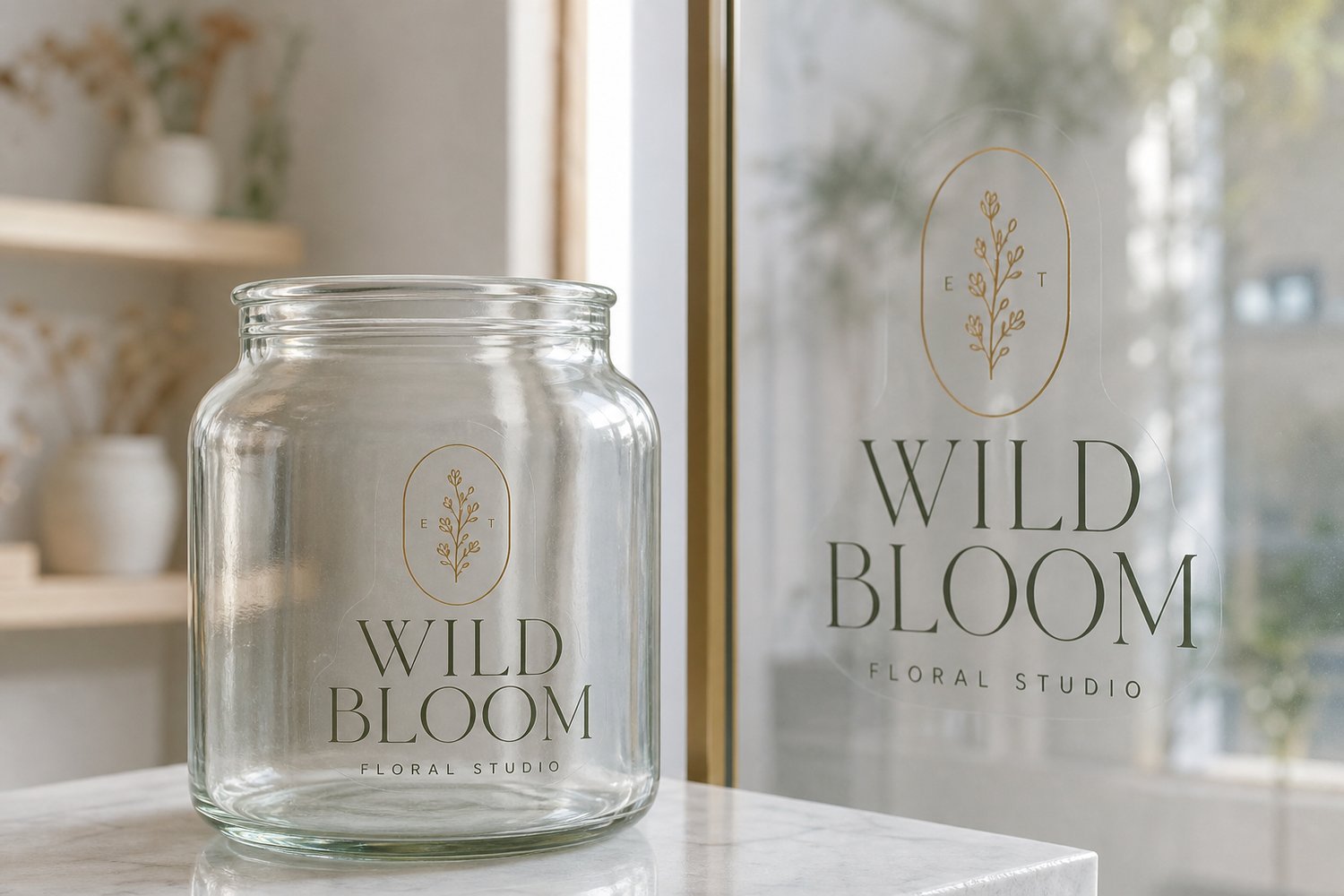
If you have ever admired a sleek product label that looks printed directly onto a glass jar or bottle, you have seen a clear sticker at its best. Transparent film stock unlocks a premium, no-label look that white paper or white vinyl simply cannot replicate. This guide covers exactly when clear stickers are the right call, how white ink underprinting works, and when you should stick with white stock instead.
CHEAT SHEET
- Clear stickers on light or clear surfaces give a premium “no-label” look; white stock gives maximum colour vibrancy on any surface.
- The white layer in your file decides which parts are opaque. Ask for white ink with a note at checkout.
- Use clear on: glass jars, clear plastic bottles, cosmetic packaging, craft beverages, premium retail products.
- Use white when: your labels go on dark or coloured containers, or your artwork has fine details requiring consistent colour accuracy.
- Eight preset sizes from 30 x 30 mm to 200 x 200 mm. Minimum order is 10 stickers per design.
What Makes Clear Sticker Printing Different
White label stock is a blank canvas: whatever colour you print, it appears true and opaque because the white base reflects inks back at full saturation. Clear film offers no such backing. CMYK inks on a transparent substrate are semi-translucent by nature, which means the surface underneath shows through unless you deliberately manage it.
That characteristic is both the appeal and the challenge. Managed correctly, it creates a floating-print effect where your logo and product name appear to sit directly on the container with no visible label border. Managed incorrectly, your brand colours look washed-out or muddy because the container colour bleeds through.
The key variable is white ink underprinting: an opaque white layer printed beneath your CMYK artwork to block what is underneath. A white layer can be used three ways in clear sticker artwork, and each is decided in your file, not by an order form setting.
White behind the whole design. Colours sit on a solid white base, so the design reads clearly on dark or busy surfaces, but the clear film effect disappears behind the artwork.
White behind chosen elements. Only key text, logos, or shapes get white, so those parts stay bright while the rest of the sticker stays see-through.
No white at all. Unprinted areas stay clear, and light colours in the artwork take on the colour of the surface behind the sticker. White areas of the file print as nothing.
On our Clear Stickers, white ink is requested with a note at checkout or through customer service.

The No-Label Look: Which Products Benefit Most
The no-label look is a premium presentation technique that originated in the spirits and cosmetics industries. It has since moved into craft beverages, health supplements, gourmet foods, and luxury retail.
Glass cosmetic and skincare packaging – Serum droppers, toner bottles, and glass lotion jars all benefit from clear labels because the material and texture of the container become part of the brand presentation. A clear label with selective underprint under the logo and key text lets the glass and its contents remain visible.
Craft and premium beverages – Amber beer bottles, clear spirits bottles, and green wine-style packaging all suit clear labels. The liquid and bottle colour are part of the visual story. A well-placed clear label with a white-underprinted logo panel achieves a screen-printed look at label-printing costs.
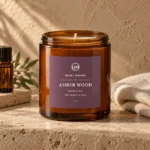
Candle jars – Clear glass candle jars with a transparent label showing the wax and wick inside present as a much higher-end product than an opaque white label that hides the contents. See also Post #7 in this series Jar, Candle and Food Label Printing: Heat and Oil-Resistant Options for material considerations specific to heat exposure.
Retail product packaging – Any product sold in clear or lightly tinted packaging can benefit: bath salts, spice blends, honey jars, artisan pantry goods. If the contents are attractive, show them.
Loyalty stickers and packaging seals – Clear stickers are also popular as tamper-evident seals and packaging closures where you want a branded seal that does not obscure the packaging design underneath.
When White Stock Beats Clear Film
Clear is not always the answer. There are situations where white stock delivers a better result.
Dark or opaque containers – A black lotion pump bottle or a dark green tin gives the clear label nothing useful to work with. Even full white underprint on clear film will not read as cleanly as white stock directly, because the film edges can still appear slightly different to a full white label.
Artwork with fine details or gradients – Selective white underprinting requires defining exactly which areas receive white ink. Complex artwork with fine-line detail, tight gradients, or intricate illustration can be difficult to mask accurately; any small misalignment makes the transparent edges visible in ways that distract.
Maximum colour vibrancy on any surface – White stock reflects inks at full brightness regardless of the container. If colour accuracy across unpredictable surfaces is the priority, white wins every time.
Refrigerated and high-moisture environments. Test a sample in the real conditions before a full run. Clear Labels on rolls are the format made for bottles and jars, supplied with a Gloss Varnish finish and a white ink underprint option.
| Scenario | Clear sticker | White stock |
|---|---|---|
| Clear glass jar or bottle | Best choice | Not ideal |
| Dark or coloured container | Full underprint needed | Better choice |
| No-label / floating-print look | Yes – selective underprint | Not possible |
| Maximum colour vibrancy | Selective or full underprint | Excellent |
| Fine-line artwork or complex gradients | Requires careful masking | Simpler |
| Transparent design elements (showing contents) | Yes | No |
| Candle jars (heat-exposed) | Test a sample near heat before ordering | Test a sample near heat before ordering |
| Outdoor use | Ask customer service before ordering | Vinyl Stickers, designed for smooth, flat surfaces indoors and out |
For a clear look with a cut edge that follows the artwork outline, vinyl stickers include a Clear Vinyl Sticker stock. They are designed for smooth, flat surfaces indoors and out.
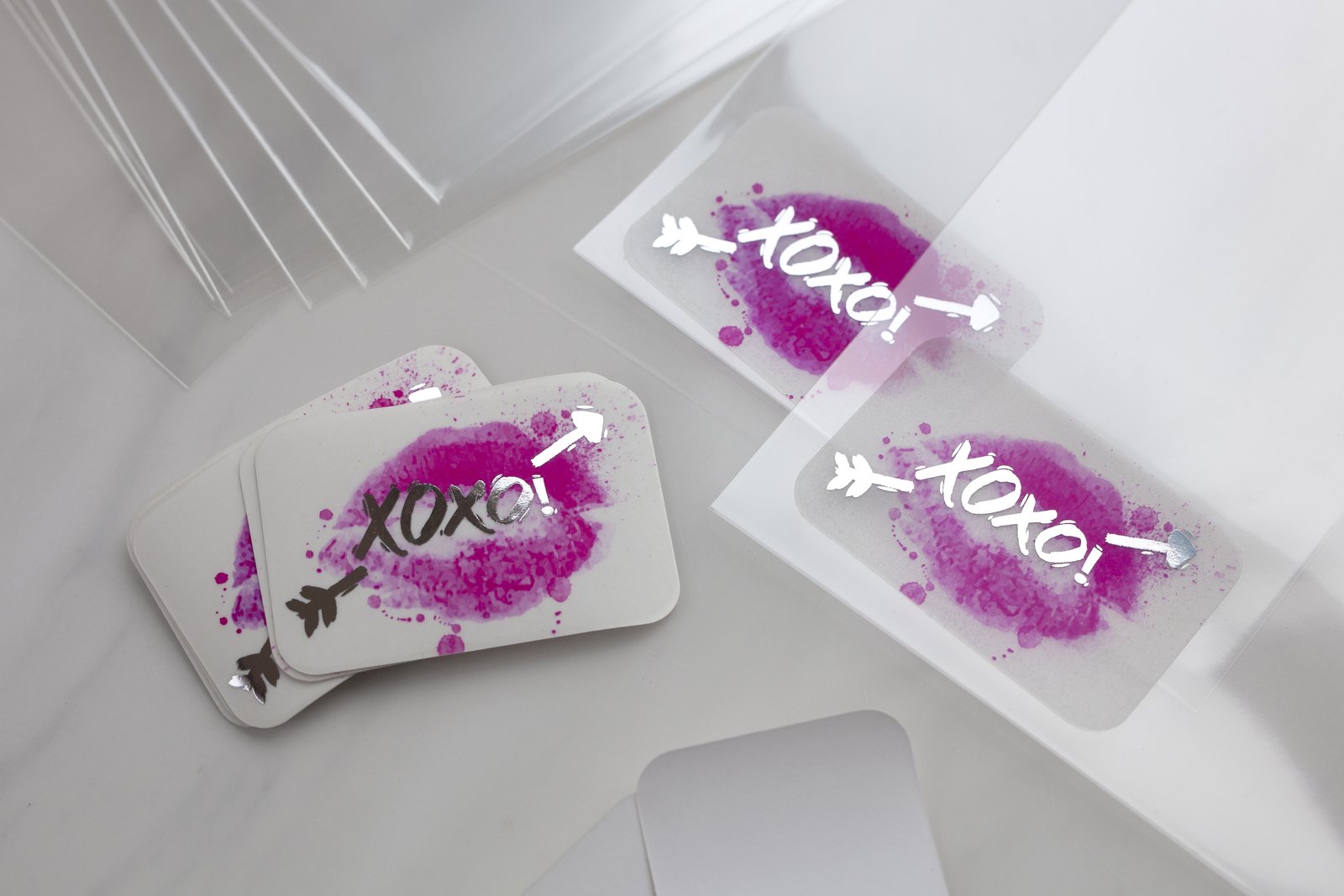
Artwork Setup for Clear Sticker Printing
Getting your file right avoids proof-stage surprises and extra rounds. The general principles are straightforward.
File format and settings
- Supply PDF, SVG, or Adobe Illustrator (.ai) files
- Include 3mm bleed and crop marks on all sides
- Outline all fonts so they do not require specific typefaces to be installed
- Embed all linked images
- If your design includes a dieline (custom shape), place it on its own layer in 100% Magenta Spot Colour at the top of the layer stack
Setting up the white ink layer
- Create a dedicated spot colour layer labelled “White” or “White Underprint”
- Apply this spot colour only to the areas where you want the white ink base: typically your logo mark, key text, and any colour block that needs to read accurately
- Leave all other areas of the design empty on this layer – those areas will print transparent
- Set the white layer to Overprint so the print production software handles the separation correctly
- Avoid gradients or feathered edges in the white layer unless you have confirmed with the printer that this is supported; most white underbase works best with solid, hard-edged shapes
If you are unsure about the white ink setup, ask before you order. A design proof is emailed before printing, and nothing prints until you approve it. Use the proof to confirm exactly where the white sits.

Sizes, Specs and What to Expect From Your Order
Clear Stickers are printed on a clear synthetic film with a clear permanent adhesive. The order form lists media durability of up to 5 years. Two finishes are available: Digital Print and Foil + Digital Print.
You can choose from eight preset sizes, from 30 x 30 mm to 200 x 200 mm, and the sticker is cut to the size chosen, not to the artwork outline. The minimum is 10 stickers per design, and one order can carry 1 to 5 designs.
The order form calculates the total as you choose your size, finish, and quantity. Check the clear stickers product page to see the options before you add a note about white ink.
Digital Print production takes 24 hours once the proof is approved before the factory’s daily cutoff, Foil + Digital Print takes 3 to 5 working days after proof approval, and shipping time is additional.
If your packaging requirements extend to custom shapes where the cut line closely follows your artwork, see Die-Cut Sticker Printing: Artwork Setup, Cut Lines and File Prep for a detailed guide on setting up dielines, safe zones, and cut-line tolerances.
For guidance on whether your application calls for a label rather than a sticker (the distinction matters more than it sounds for certain applications), Labels vs Stickers: The Difference and When to Use Each covers the functional differences in detail.
Die cut stickers are paper based white stock, cut to the artwork outline, and are not made in clear film. For a see-through sticker cut to the outline, Vinyl Stickers offer a Clear Vinyl Sticker stock.
For a deeper look at how white ink behaves on clear film, see the white ink underprint guide. For surface choices and ordering advice, start with the clear stickers buying guide.
US readers can find the same clear film through clear stickers in the US shop, and clear labels for roll and bottle formats.
Frequently Asked Questions
Will my white design elements print on clear film without white ink?
No. Standard colour printing has no white ink, so white areas in your file print as clear. To print white, ask for white ink with a note at checkout or through customer service, and set up a white layer in the file.
Can I get a clear sticker that looks like it is printed directly on the bottle?
Yes, by putting white only behind the logo and key text in your white layer, so the rest of the sticker stays clear. The sticker is cut to the size chosen, so keep the artwork well inside the edge.
How durable are clear stickers on packaging that gets handled regularly?
The stock is a clear synthetic film with a clear permanent adhesive, and the order form lists media durability of up to 5 years. For refrigeration, heavy moisture, or outdoor use, test a sample in the real conditions before a full run.
What is the minimum quantity for clear stickers?
The minimum order is 10 units. This makes it practical to order a small test run for a new product before committing to a larger quantity, or to produce short runs for limited-edition packaging.
Do I need to supply separate files for the white ink layer?
The white layer is a spot colour layer inside the same artwork file. It cannot be guessed from the colour artwork alone. Say you need white ink in a note at checkout, and confirm the white layer on the emailed proof before printing.
How does clear sticker printing differ from clear label printing?
Clear Stickers are cut singles in preset sizes with Digital Print or Foil + Digital Print. Clear Labels are transparent synthetic film with a Gloss Varnish finish, supplied on rolls. Clear Labels also include a white ink underprint option and a design team file review. Choose labels for roll or machine application.