
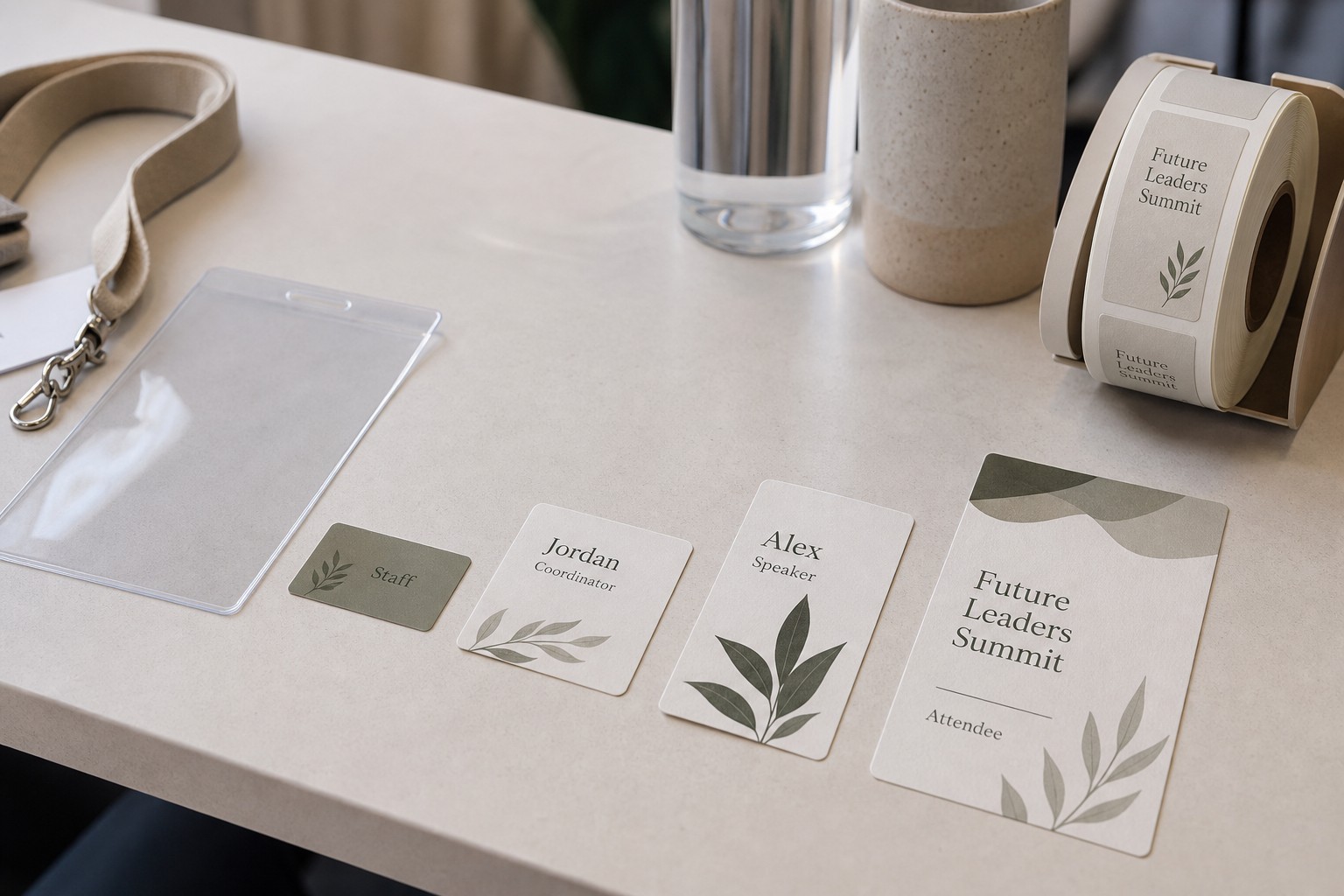
Standard name badge inserts in Australia are typically 75mm x 25mm for office staff badges and 102mm x 76mm for conference lanyards. Common adhesive name tags for events measure 76mm x 51mm or 89mm x 50mm. The full range of sizes, what each format is used for, and how they relate to printed business cards and adhesive labels is below.
Name badge hardware comes in plastic holders, clip-on frames, magnetic backs, and pin-back fittings. The printed insert that slides into the holder is a separate component, and it is that insert, or an adhesive label used in its place, where print quality matters most. Paperlust prints the insert and the label. Badge holders, lanyards, magnetic backs and pin fittings are not sold as self-serve products on the site, though the customer service team can quote a printed badge run on request.
- Office/corporate staff badge: 75mm x 25mm
- Conference lanyard insert (compact): 102mm x 76mm
- Conference lanyard insert (large): 102mm x 152mm
- A6 event pass: 105mm x 148mm
- Trade show networking badge: 89mm x 50mm
- Vertical retail/hospitality badge: 64mm x 89mm
- 3″ x 1″ badge insert in mm: 76mm x 25mm
- 3″ x 2″ badge insert in mm: 76mm x 51mm
- Australian standard business card: 90mm x 55mm
- Minimum first name type size (readable at 1m): 24pt
- Minimum secondary text (organisation, title): 10pt
Standard Name Badge Sizes in Australia
The table below covers the most commonly used name badge and name tag sizes. Measurements are given in millimetres first, with inches for reference.
| Format | Size (mm) | Size (inches) | Typical use |
|---|---|---|---|
| Standard office badge | 75 x 25mm | 3″ x 1″ | Staff ID, name and title |
| Conference badge (compact) | 102 x 76mm | 4″ x 3″ | Conference lanyard, name and organisation |
| Conference badge (large) | 102 x 152mm | 4″ x 6″ | Conference pass with QR code or schedule |
| A6 event pass | 105 x 148mm | 4.1″ x 5.8″ | ISO-based event passes and university events |
| Trade show badge | 89 x 50mm | 3.5″ x 2″ | Networking events, trade shows |
| Vertical retail badge | 64 x 89mm | 2.5″ x 3.5″ | Retail, hospitality, front-of-house staff |
| Adhesive event name tag | 76 x 51mm | 3″ x 2″ | One-day events, meetups, workshops |
| Small adhesive name tag | 58 x 19mm | 2.3″ x 0.75″ | Name-only office tags, minimalist format |
There is no single formally mandated standard in Australia, but the 75mm x 25mm slot is what most domestic badge hardware suppliers describe as “standard,” and 102mm x 76mm is what the events industry treats as the default conference insert.
The 3″ x 1″ and 3″ x 2″ Formats in Millimetres
Two sizes appear repeatedly on badge holder packaging and in badge-printing guides, particularly those written for the US market. Both are widely used in Australia because most badge holder hardware sold here is manufactured to these dimensions.
The 3″ x 1″ badge is 76mm x 25mm. This is the narrow horizontal format used for office and corporate staff badges. At 25mm high, it fits two lines of text comfortably: a name at a readable point size and a job title beneath it, but nothing more.
The 3″ x 2″ badge is 76mm x 51mm. This format has room for a name, title, organisation, and a small logo. It is frequently used for events where the wearer needs to be identified quickly from two or three metres away. This size also appears on sheets of adhesive name tags sold for one-off events and workshops.
Note that 75mm x 25mm (the size domestic suppliers call “standard”) and 76mm x 25mm (the 3″ x 1″ format) are functionally the same for most badge holders. The 1mm difference is absorbed by the holder’s tolerances.
Conference Badge Insert Sizes and Lanyard Badges
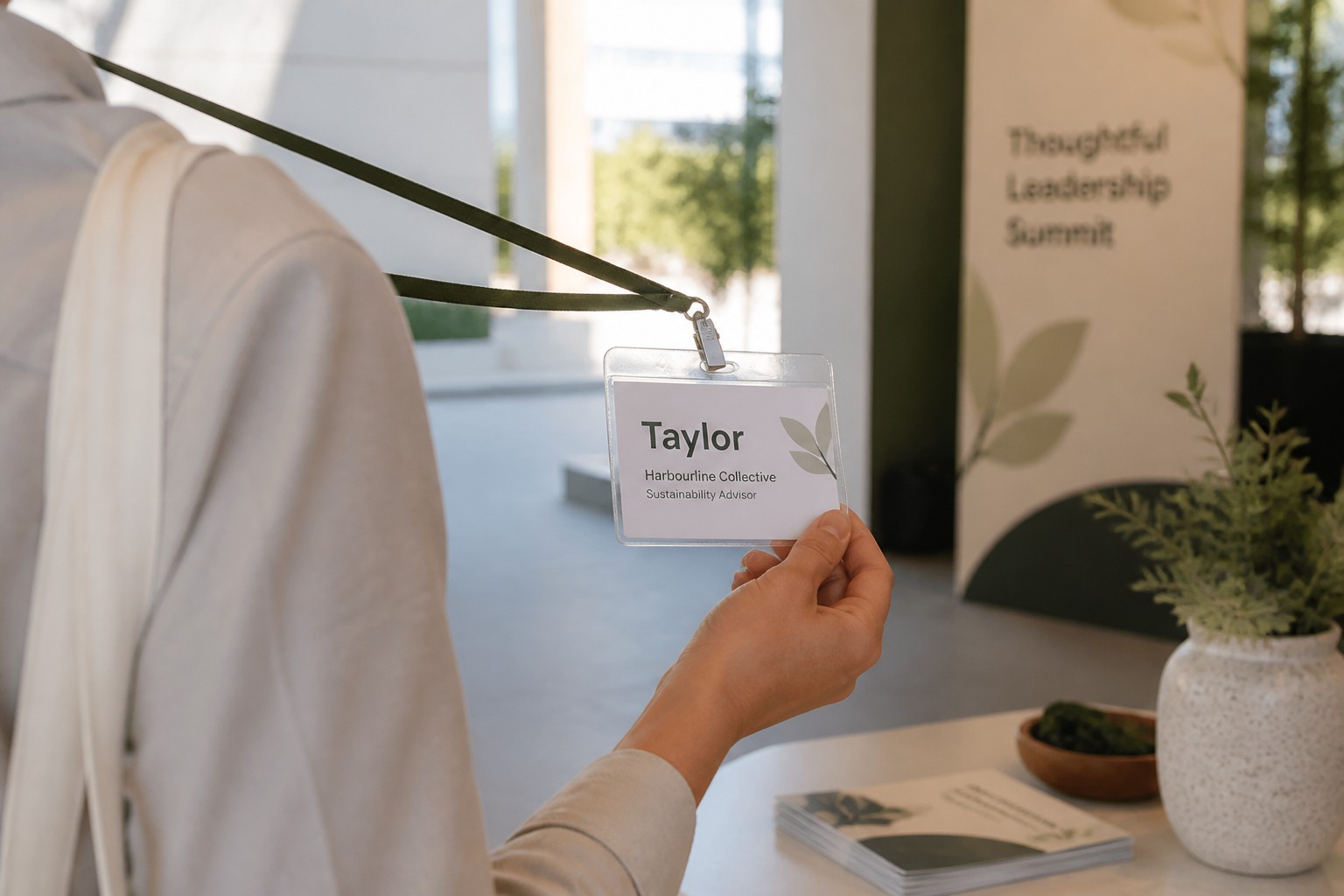
Conference lanyards hang a badge in front of the chest, typically at a distance of one to two metres from other attendees. The insert sits inside a clear plastic badge holder, usually in landscape orientation.
The two formats used in most Australian conferences are:
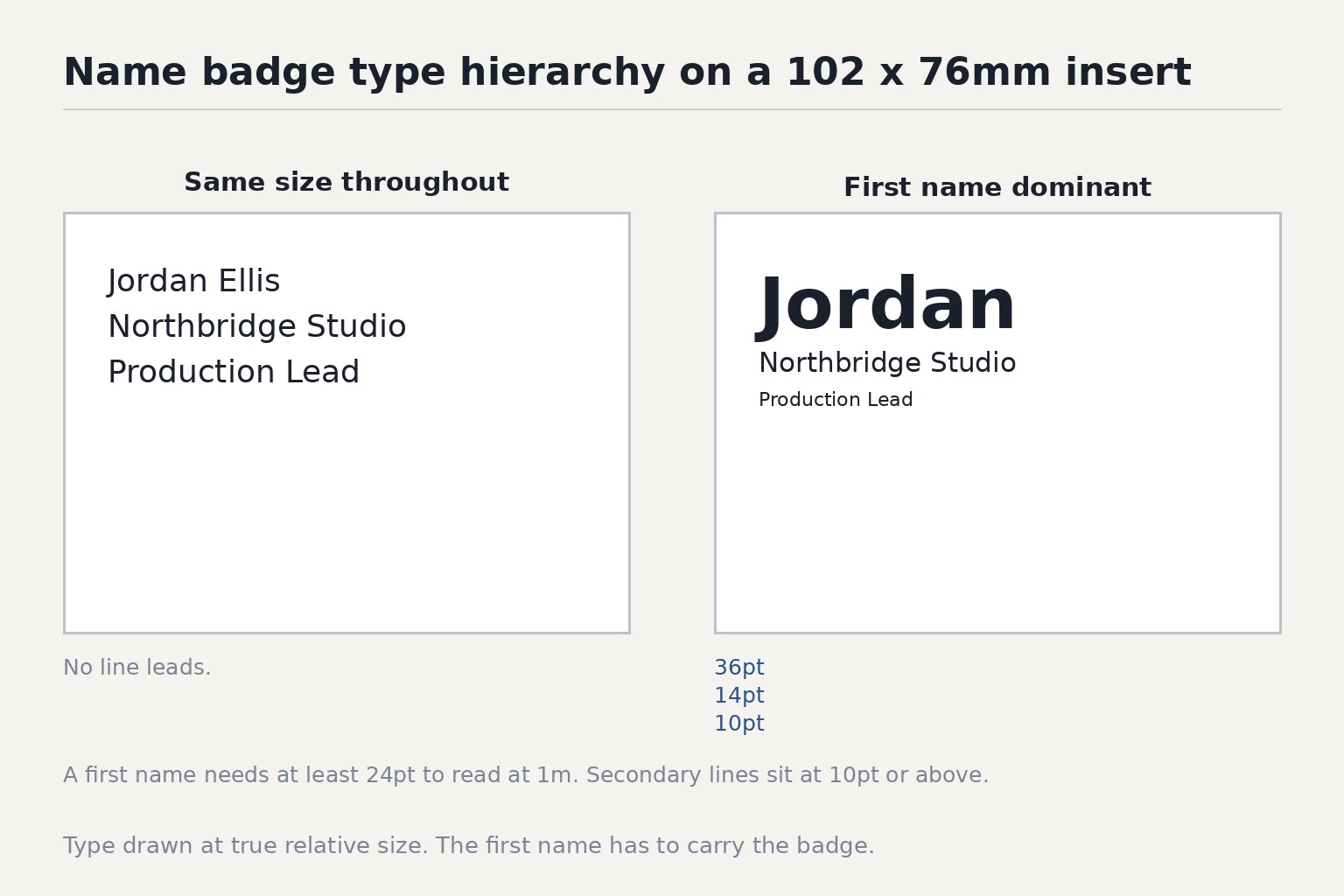
102mm x 76mm (4″ x 3″). This is the most common conference lanyard insert size in Australia. The format accommodates a first name at 36pt, an organisation name at 14pt, and a role or pronoun line at 10pt, with a small logo in the corner. Most lanyard badge holders sold at office supply stores are designed around this dimension.
102mm x 152mm (4″ x 6″). The larger conference pass format, used when the badge also carries a QR code for check-in scanning, a day or session schedule on the reverse, or sponsor logos. Some events print these double-sided on 300gsm card.
A6 (105mm x 148mm) is a common alternative to the 4″ x 6″ pass, particularly for university and professional association events that use ISO paper sizes throughout their materials. The dimensions are close enough that many A6 badge holders will accept a 102mm x 152mm insert.
How an Australian Business Card Relates to Badge Holder Sizes
The Australian standard business card is 90mm x 55mm. It is also the most accessible high-quality printed card format, with 300 GSM Matte stock, a 24-hour production turnaround, and pricing from $0.44 per card at 100 units.
A business card does not match any common badge holder size exactly, but it is close to the 89mm x 50mm trade show badge and will slide into many conference badge holders as a practical insert. In portrait orientation (55mm wide, 90mm tall) a business card fits neatly inside many vertical badge holders. In landscape (90mm wide, 55mm tall) it suits compact horizontal clip holders.
The practical advantage of using business cards as badge inserts is that the card doubles as a networking tool. Attendees take the insert with them rather than discarding it, which extends the value of the print run beyond the event itself.
For events where the badge holder is fixed at exactly 102mm x 76mm, the 90mm x 55mm card is a close but imperfect fit. In that case, adhesive name tag labels are the better option for the holder insert, and the business card stays as a separate handout.
Adhesive Name Tags for One-Day Events
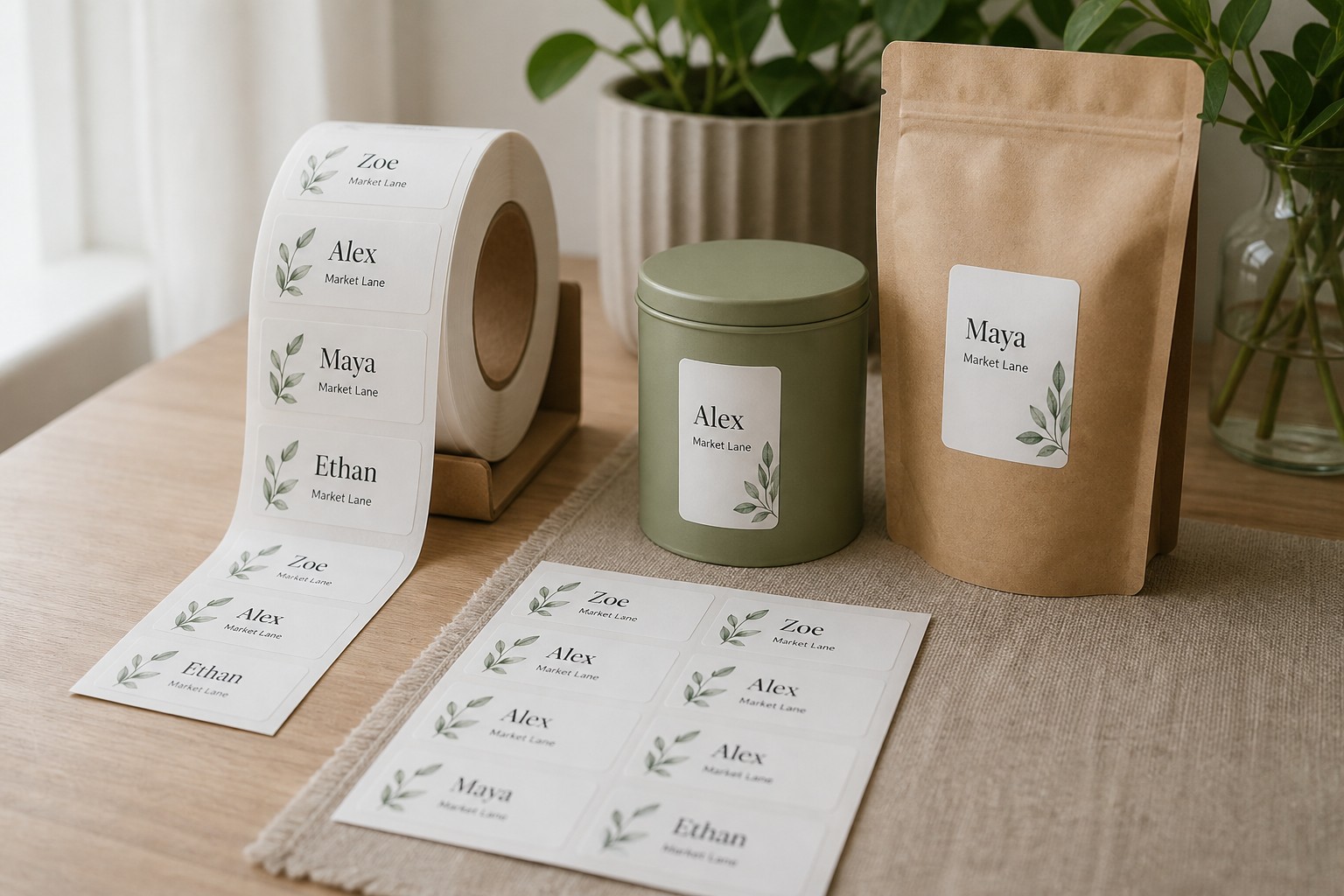
Peel-and-stick adhesive name tags suit events where badge holders are not provided: community meetups, workshops, casual industry events, and training sessions. Attendees write or print their name on the label and stick it to their shirt or lanyard loop.
Printed adhesive labels in the 76mm x 51mm (3″ x 2″) format give space for a pre-printed name and organisation, removing the need for handwriting on the day. Printing name tags in advance also produces a consistent look across the whole event, which reads as more professional and saves time at registration.
Rectangle labels from the Paperlust Print Shop custom labels range start at 25mm x 50mm by default. Custom sizes are available by contacting printshop@paperlust.co. Minimum order is 500 labels, making them suitable for events with a known attendee list and a need for a uniform professional finish.
Typography on Name Badges: Minimum Legible Type Sizes
Most name badge guides focus on physical dimensions and say very little about typography. This is where most printed badges fall short in practice.
At a reading distance of one to two metres, which is typical at conferences and networking events, text needs to be much larger than it would be on a card held in the hand.
First name: set it large
The first name should be the largest element on the badge, by a significant margin. On a 76mm x 51mm badge, 24pt is the practical minimum for the name to be readable at one metre by most people. On a 102mm x 76mm conference insert, 30 to 36pt gives comfortable legibility at two metres for most adults, including those with mild visual impairment. Many event designers use 36 to 48pt for the first name on conference inserts and find it reads as bold and intentional rather than oversized.
Secondary information: 10pt minimum
Title, organisation name, pronouns, and session codes sit at 10pt minimum. At 10pt on a 76mm x 51mm badge, the secondary line is readable at arm’s length but not from two metres. This is acceptable because secondary information is read only once a connection has been made and the person has moved closer. Below 10pt risks being illegible under typical event lighting or for older readers.
Why the first name should be disproportionately large
The purpose of a name badge at a networking event is to allow introductions without asking “sorry, what was your name?” The first name does that work. Every other element is supplementary. A common design mistake is setting the name and the organisation at the same or similar sizes. This forces the reader to scan the whole badge, which defeats the purpose.
A practical rule: the first name should be set at least twice the point size of the next largest element on the badge.
Recommended text hierarchy by badge size
| Text element | 102mm x 76mm insert | 76mm x 51mm badge | 75mm x 25mm office badge |
|---|---|---|---|
| First name | 36pt or larger | 24 to 30pt | 18 to 24pt |
| Surname | 18 to 24pt | 14 to 18pt | Not recommended at this size |
| Organisation | 12 to 14pt | 10 to 12pt | 10pt (one line only) |
| Role or title | 10 to 12pt | 9 to 10pt | Not recommended at this size |
| Pronouns or codes | 8 to 10pt | 8pt (if space allows) | Omit |
Before finalising your design, print a test tag at actual size, tape it to your chest at a realistic height, and read it from two metres. Test with at least one person who wears glasses.
What Paperlust Prints
Magnetic badge backs, pin-back fittings, badge holders, lanyards, and badge blank hardware are not listed as self-serve products on the site. The range is expanding, so anything not shown online can be quoted by the customer service team.
Paperlust prints two products that cover the most common name tag use cases.
Printed business cards as badge inserts. The Australian standard 90mm x 55mm business card on 300 GSM Matte is a practical insert for badge holders and doubles as a networking card after the event. Production is 24 hours. Pricing starts at $0.44 per card at 100 units, falling to $0.08 at 5,000. View standard business cards at printshop.paperlust.co/products/standard-business-cards.
Adhesive name tag labels. Printed rectangle labels peel and stick directly to clothing or badge holders. They suit events where badge hardware is not required or where names are pre-printed for a consistent look across all attendees. Minimum order is 500 labels. Browse the custom labels range at printshop.paperlust.co/categories/custom-labels.
If you need badge blanks, holders, magnetic backs, or pin fittings, send your quantity and event date to the Print Shop customer service team and they will tell you what can be quoted. Hardware the range does not cover is also stocked by office supply retailers and specialist badge suppliers.
Frequently Asked Questions
What is the standard name badge size in Australia?
There is no formally mandated standard, but the most common size for office and corporate staff badges is 75mm x 25mm, equivalent to the 3″ x 1″ format. For conference lanyards, 102mm x 76mm (4″ x 3″) is the most widely used insert size.
What size is a 3″ x 1″ name badge in mm?
A 3″ x 1″ badge is 76mm x 25mm. This is the narrow horizontal format used for office name badges with a name and title.
What size is a 3″ x 2″ name badge in mm?
A 3″ x 2″ badge is 76mm x 51mm. This format has space for a name, organisation, and small logo, making it popular for networking events and workshops.
What size should a conference lanyard badge be?
The most common conference lanyard insert in Australia is 102mm x 76mm (4″ x 3″). Larger conferences sometimes use 102mm x 152mm (4″ x 6″) for badges that include a QR code or schedule.
Will an Australian business card fit in a badge holder?
A standard Australian business card is 90mm x 55mm. It fits in many badge holders designed for the 89mm x 50mm trade show format. It will not fit precisely in a 75mm x 25mm office badge holder without trimming.
What is the minimum font size for a name badge?
For a name readable at one to two metres, the first name should be at least 24pt on a small badge and 36pt on a conference insert. Secondary information such as organisation and role should be a minimum of 10pt.
Can I use printed adhesive labels as name tags?
Yes. Printed adhesive rectangle labels are commonly used at workshops, meetups, and one-day events where badge holders are not provided. A pre-printed label gives a more consistent look than handwritten tags.
What is the difference between a name badge and a name tag?
In common use the two terms are interchangeable, but “name badge” often refers to a card insert in a rigid or semi-rigid holder, while “name tag” often refers to an adhesive label or a soft-format sticker worn directly on clothing.