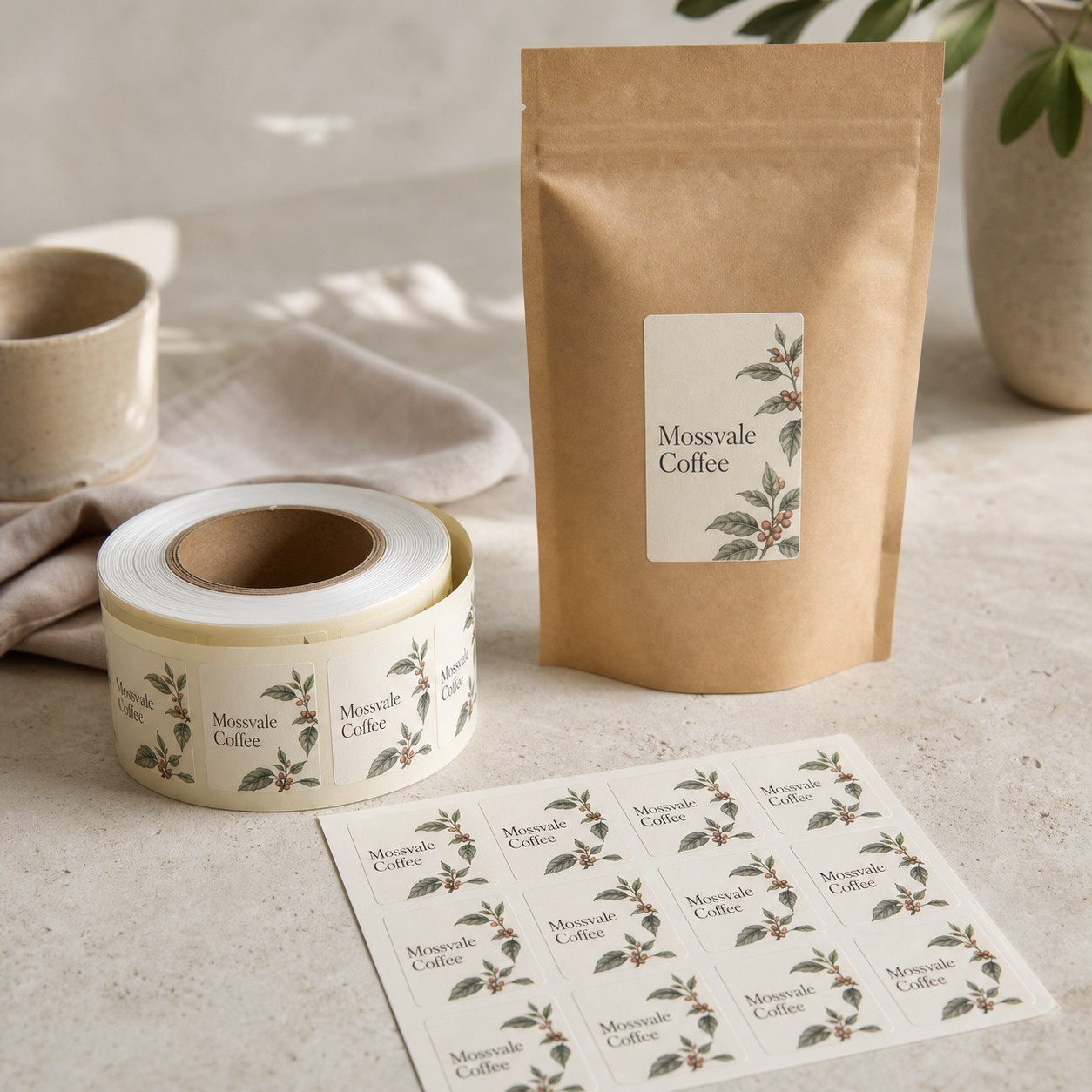
When you order custom labels for your products, the supply format matters as much as the design itself. Roll labels and sheet labels serve different workflows, different volumes, and different budgets. Pick the wrong one and you’re either wrestling with manual peeling on a busy production line, or paying for a roll minimum you won’t use for months.
This guide breaks down the practical differences between roll and sheet formats so you can make the right call before you place an order.
Cheat sheet
– Roll labels are supplied on a continuous spool and designed for label applicators or high-volume hand application
– Sheet labels are printed on flat A4 sheets, typically for short runs or home and office printing
– Roll labels carry a higher minimum order quantity (500 labels per roll is standard) but deliver a lower cost per label at volume
– Sheet labels suit small batches, events, or multi-design runs where flexibility matters more than scale
– Roll format offers wider material choices including waterproof vinyl, synthetic paper, and laminated finishes
– For product labelling in retail, food, beverage, or cosmetics, roll labels are the professional standard
– Both formats can be custom-printed; Paperlust Print Shop produces roll labels in-house in Melbourne
What Are Roll Labels?
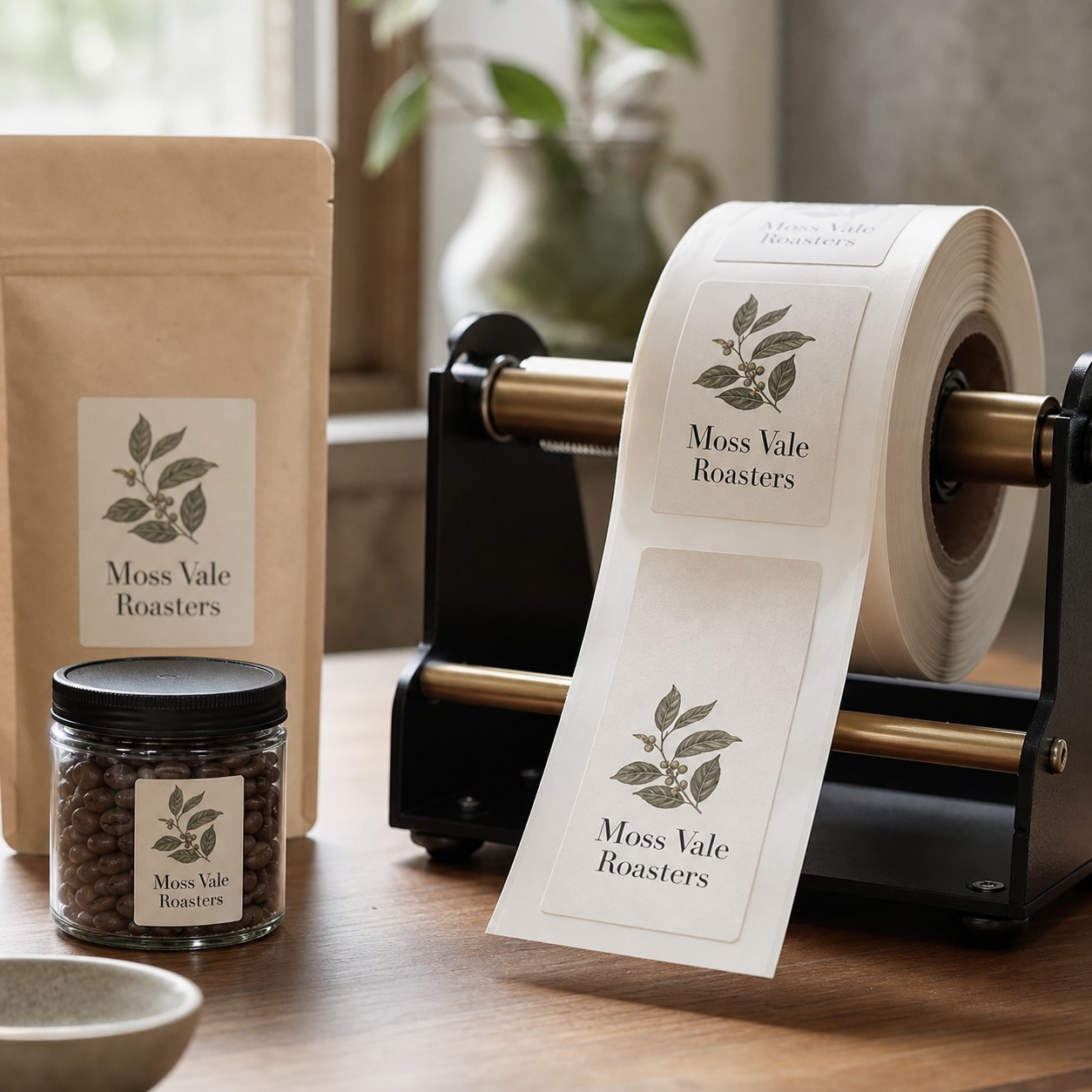
Roll labels are wound continuously onto a core spool, ready to feed through a label applicator or peel off one by one. Each label is kiss-cut (cut through the label but not the backing liner), so the labels dispense cleanly without tearing.
Most commercial label printers supply roll labels as their standard format because they are compatible with both manual dispensers and automatic applicator machines. If you’re labelling hundreds of products per day, a roll on a dispenser is far faster than peeling from a flat sheet. When you need a custom shape without giving up dispenser compatibility, our die-cut labels are supplied on rolls ready for your labelling machine.
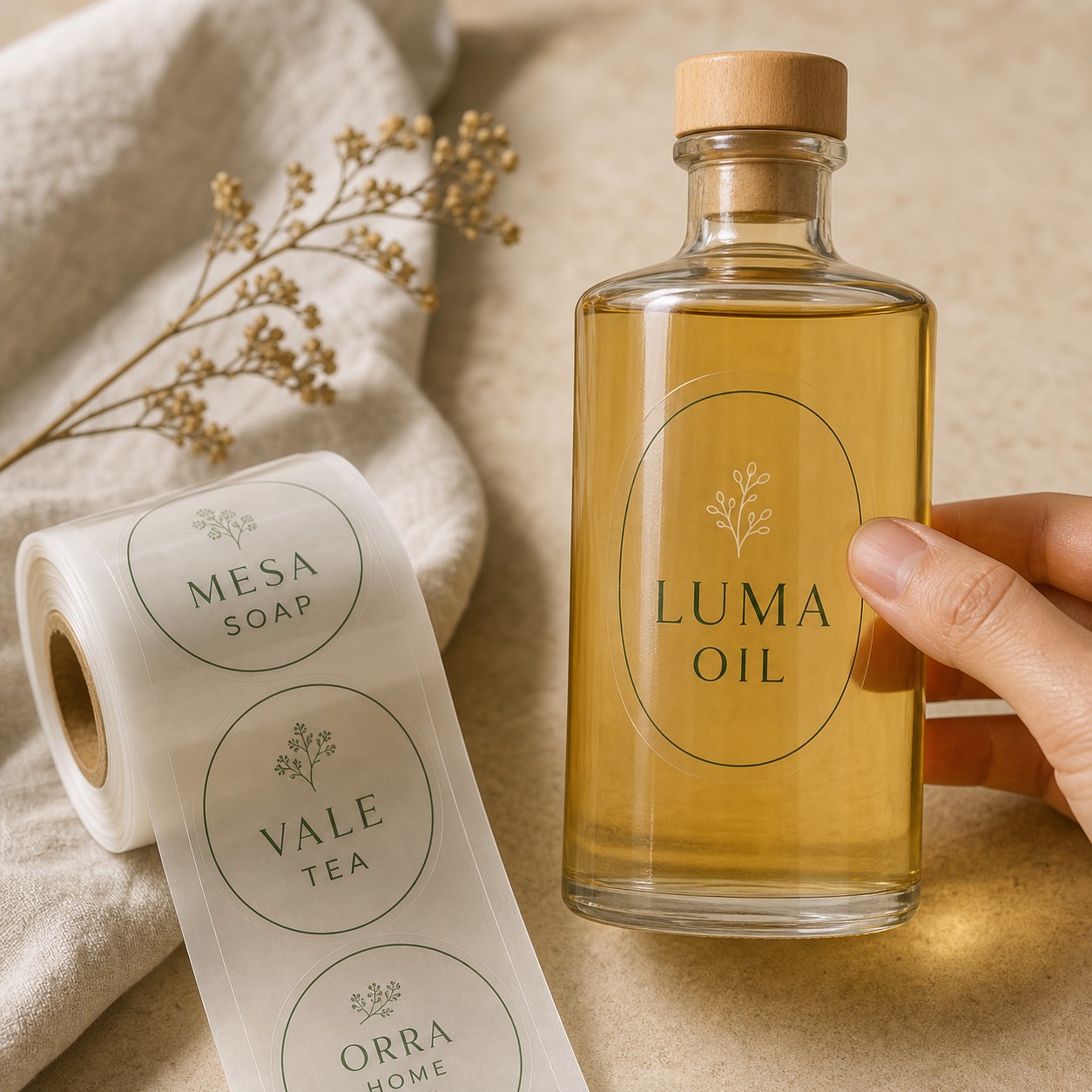
Clear labels from Paperlust Print Shop are supplied on rolls with a minimum of 500 labels per roll. Clear vinyl labels create a “no label” floating appearance on bottles and jars, making them popular for cosmetics, beverages, and candles where the packaging itself is part of the brand story.
What Are Sheet Labels?
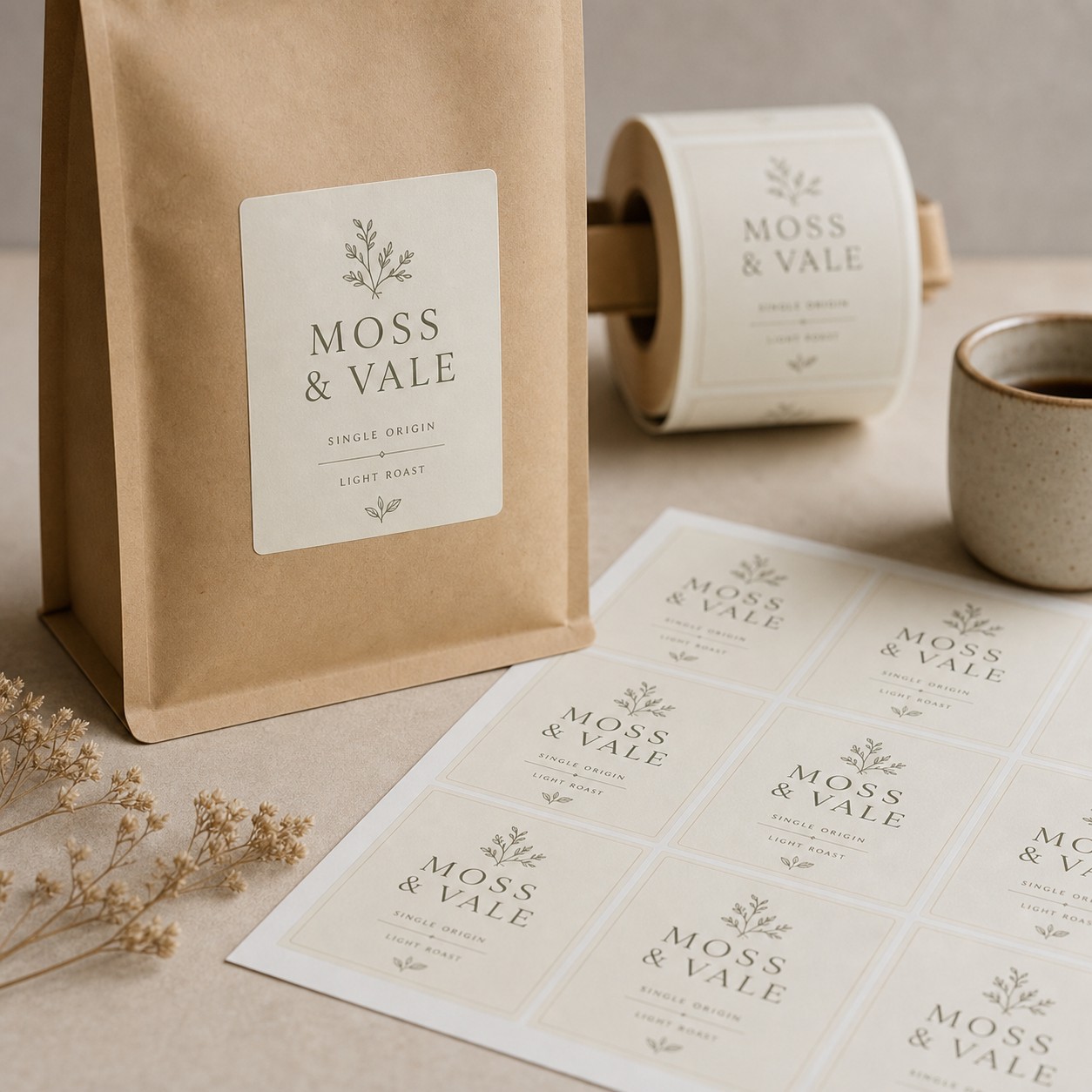
Sheet labels are printed on flat A4 sheets. This is the format you’d load into a standard office printer, or order in small quantities from a printer for occasional use. Labels on a sheet are arranged in a grid and peeled off individually.
Sheet labels work well when:
– You need fewer than 200-300 labels per design
– You want multiple different designs in one order
– You’re printing at home or in the office with a laser or inkjet printer
– You’re labelling event favours, market samples, or personalised gifts in small batches
The trade-off is cost efficiency. Sheet labels cost more per label at scale, and home-printed sheets have fewer material options. Waterproofing, food-safe adhesives, and laminate finishes are harder to achieve outside a commercial setup.
Application Method: Hand vs Applicator
This is often the deciding factor between the two formats.
Sheet labels are purely for hand application. You peel, place, and move on. That’s manageable for 50 labels. At 500 or 1,000 labels per day it becomes a bottleneck that slows the whole production line.
Roll labels give you three levels of application:
- Hand application with a dispenser – you still peel and place, but the dispenser holds the roll and peels the liner back automatically as you pull each label. This is faster and more accurate than working from a flat sheet.
- Semi-automatic applicator – you feed the product by hand but the machine applies the label consistently and quickly. A practical entry point for small-to-medium producers.
- Automatic inline applicator – fully automated; the machine indexes the product and applies labels at speed. This requires roll format. Sheet labels are not compatible.
If you plan to scale, starting with roll labels means you won’t need to reorder in a different format when you eventually add an applicator to your line.
Volume Economics
Here is where roll labels make the clearest financial case.
For very short runs, sheet labels can have a lower entry cost because there’s no roll minimum to meet. For anything beyond a small trial, roll labels consistently deliver a lower cost per label.
| Quantity per design | Recommended format | Why |
|---|---|---|
| Under 250 | Sheet labels | No roll minimum; easier to vary designs |
| 250 to 500 | Either (depends on applicator needs) | Evaluate whether an applicator is planned |
| 500 to 2,000 | Roll labels | Lower per-label cost; applicator-ready |
| 2,000+ | Roll labels | Significant cost saving; efficient for production runs |
The Paperlust Print Shop minimum is 500 labels per roll. For a small-to-medium product run, that’s typically a two to four week supply for a single SKU, which makes sense as a standing reorder.
Storage and Handling
Roll labels take up less space per label than sheet labels, and the core keeps them protected. Store rolls upright in a cool, dry location away from direct sunlight to preserve the adhesive.
Sheet labels store easily in a drawer or box, but they can curl at the edges in humidity. That curling causes problems during home printing and manual application.
In a commercial or food-production environment, rolls are generally easier to manage. They arrive on a core, dispense cleanly, and the liner rolls up on the take-up spool of your applicator.
Which Suits Your Business?
Choose roll labels if you:
- Label products for retail, hospitality, food service, or wholesale distribution
- Produce more than 200-300 labelled products per week
- Use or plan to use a label applicator, even a basic hand-held dispenser
- Need waterproof, food-safe, or specialist adhesive options
- Want a consistent, professional result at scale with room to grow
Choose sheet labels if you:
- Are testing a new product with a very low upfront investment
- Label event favours, market samples, or gift items in small batches
- Print at home or in the office
- Need multiple different designs in one order without a volume commitment
For most small Australian businesses moving into retail or ecommerce, the tipping point falls around 300 to 500 labels per design per month. At that level, roll labels pay for themselves quickly and open the door to faster application workflows.
Which Label Shape Should You Order?
Once you’ve decided on roll format, the shape of your label is the next question. Paperlust Print Shop offers several roll label options for different packaging needs:
- Clear labels – transparent vinyl for a border-free, floating look; ideal for glass or clear packaging where the container is part of the brand presentation
- Rectangle labels – clean and versatile; widely used for wine, food, personal care, and candle products
- Circle labels – a popular choice for jar lids, bottle caps, and minimalist branding designs
All three are produced in Melbourne and available with waterproof vinyl stock and a choice of matte or gloss finish.
The Verdict
For professional product labelling in Australia, roll labels are the right format once you’re past the trial stage. The volume economics are stronger, the material options are broader, and the format is compatible with applicators when you’re ready to speed up your production line.
Sheet labels suit testing, events, and home use. If you’re ordering custom-printed labels from a trade printer, roll format is almost always the better long-term investment once your design is finalised.
If you’re unsure which shape suits your product, start with clear labels for glass or clear containers, and rectangle labels for most other packaging. Both include a free design review and flat-rate shipping Australia-wide. Every shape and stock in the custom printed labels line is supplied the same way, on a roll of 500 wound on a 76mm core.
Frequently Asked Questions
What is the minimum order for roll labels at Paperlust Print Shop?
The minimum order is 500 labels per roll. This applies across clear, rectangle, circle, and die-cut label formats. If you need fewer than 500 labels, small-quantity custom stickers may be a better fit for your current volume.
Can I use roll labels with a standard inkjet printer?
No. Roll labels from a commercial printer arrive ready to apply; they are not designed for home or office inkjet printers. If you need to print labels yourself at home, you will need sheet labels formatted for A4 paper and compatible with your printer type.
Are roll labels waterproof?
Labels printed on vinyl or synthetic paper stock are waterproof and resistant to moisture, condensation, and regular handling. This makes them well suited to bottles, jars, and refrigerated products. White cast paper labels are better kept dry. For packaging that will face moisture or regular handling, vinyl labels are supplied on rolls in a synthetic waterproof stock suited to bottles, jars and cosmetics.
How long does it take to receive roll labels?
Paperlust Print Shop produces most label orders within 2-3 business days after design proof approval. Delivery time depends on your location and the shipping option selected at checkout.
Can I order multiple label designs on the same roll?
No. Each roll carries a single design. If you need several different designs, you order a separate roll per design. For small quantities of multiple designs, sheet labels may be a more practical option.
Do sheet labels work for bottle labelling?
Home-printed sheet labels are generally not recommended for bottles or containers that will be handled frequently or exposed to moisture. They tend to lift and peel under damp conditions. Commercially produced roll labels on vinyl stock are a more durable choice for product packaging intended for retail or ongoing use.